Skip to content
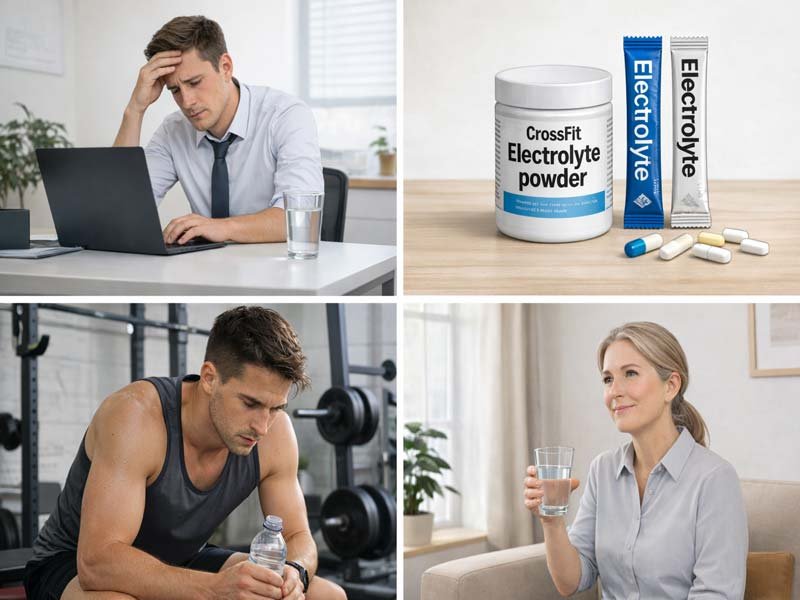
Electrolytes used to be simple. You drank a sports drink, maybe felt better, maybe not, and moved on. Today, the market is crowded with powders, tablets, drops, “clean hydration” claims, zero-sugar formulas, and performance blends—each claiming to be the best electrolyte supplement on the market.
The problem is not a lack of options.
The problem is that “best” means very different things depending on who you are.
An endurance athlete sweating for two hours, a pregnant woman dealing with nausea, someone prone to migraines, and a desk worker trying to avoid afternoon fatigue do not need the same electrolyte formula. Yet most rankings treat them as if they do.
The 10 best electrolyte supplements are those that match real use cases: adequate sodium for hydration, supportive potassium and magnesium, clean and transparent ingredients, and formulas that are safe for daily use. The best option depends on sweat level, activity intensity, stomach tolerance, and special conditions like pregnancy or migraines—making context more important than brand popularity alone.
Behind every “top 10” list, there’s a hidden truth: many people buy the wrong electrolyte—not because it’s bad, but because it’s mismatched. One CrossFit athlete told us he felt nauseous every session… until he realized the problem wasn’t electrolytes—it was too much sweetness and not enough sodium. That realization is what this guide is built around.
What Makes an Electrolyte “Best”?
An electrolyte supplement is “best” when it matches your sweat loss and activity level, delivers enough sodium to improve hydration, includes supportive minerals like potassium and magnesium, and stays easy on your stomach. The best products use transparent labeling (no proprietary blends), avoid excessive sweetness that can cause nausea, dissolve quickly, and remain consistent batch-to-batch—so you can use them reliably in real life, not just occasionally.
The internet loves a single winner. But “best electrolyte supplement” is rarely a one-product answer—because hydration is not one problem. It’s a moving target shaped by sweat rate, heat, workout intensity, diet, and even your gut tolerance. What works perfectly for a cyclist doing a 2-hour ride in August may feel unnecessary (or even irritating) for someone doing a 30-minute lift indoors.
A good way to cut through marketing is to ask: What outcome am I buying? If your answer is “I want more energy,” you might actually need sleep, carbs, or calories. If your answer is “I get headaches and feel flat after sweating,” electrolytes may be the missing link. The best electrolyte supplement is the one that solves the correct problem—and doesn’t create a new one (like nausea).
From a physiology standpoint, sodium is usually the headline mineral because it’s the primary electrolyte lost in sweat and a major driver of fluid retention. Many products lean on buzzwords (“full spectrum minerals,” “advanced matrix”) while under-delivering sodium. The result: people drink them and still feel like water “goes right through.” That’s not a placebo issue—it’s a formulation mismatch.
But “best” is not only about mineral quantity. It’s also about tolerance and repeatability. If a product is so sweet you can’t stomach it mid-workout, or it causes bloating, it’s not the best—no matter how popular it is. This is why athlete-focused brands like AirVigor tend to prioritize practical design decisions: clear dosing, fast dissolution, and consistent batch testing, because their customers notice performance drops immediately.
Finally, “best” is also about trust. Electrolytes are a simple category, which makes it tempting for brands to hide behind proprietary blends or vague claims. The best products earn trust by being boring in a good way: clear label, predictable mix, stable taste, and consistent effect across weeks—not just a great first impression.
What does “best” mean here?
In this guide, “best” means best for real use, not best-sounding marketing. A best-in-class electrolyte should do three things at once:
- Improve hydration efficiency (you feel more stable, not just “wet”)
- Support performance consistency (less late-session drop-off)
- Stay comfortable to drink (no nausea, syrupy sweetness, or stomach heaviness)
That last point is under-rated. Many people abandon electrolytes because the formula tastes intense or sits badly during movement. The “best” product is the one you can actually use when you need it most—during training, heat exposure, travel, or long work shifts—without turning hydration into a struggle.
Which electrolytes matter most?
Most people benefit from a simple priority stack:
- Sodium: the main hydration driver (fluid retention + sweat replacement)
- Potassium: supports muscle and nerve signaling
- Magnesium: supports relaxation and recovery, especially if intake is low
- Calcium + chloride: supporting roles in contraction and balance
If your goal is performance hydration, under-dosing sodium is the most common mistake. If your goal is daily gentle support, overdoing sweetness or stacking too many additives is the most common mistake. “Best” means the formula respects both the biology and the user experience.
How do we rank the top 10?
We rank the top 10 using a practical scoring system that mirrors how Google users actually search (athletes, clean labels, daily safety, cramps, migraines, pregnancy).
| Criteria | What “best” looks like | Common red flags |
|---|---|---|
| Sodium clarity | Listed in mg, not hidden | “Electrolyte matrix” |
| Use-case fit | Athlete/daily/travel clear | “For everyone” claims |
| Sweetness & GI | Light, easy to sip | Too sweet, sugar alcohols |
| Transparency | Full doses disclosed | Proprietary blends |
| Consistency | Stable mix & taste | Batch variation |
A product earns “best” status when it scores well across all five—because in real life, hydration success is multi-factor, not single-ingredient.
Which Are the 10 Best Electrolyte Supplements?
The 10 best electrolyte supplements are those that match real hydration needs rather than marketing claims. Top-ranked options provide adequate sodium for sweat loss, include supportive potassium and magnesium, use clean and transparent ingredients, and are well tolerated during daily use or exercise. The best choice depends on your use case—athletic training, daily hydration, pregnancy, migraines, or low-sugar preferences—rather than a single universal winner.
When users search “what is the best electrolyte supplement on the market”, they’re usually looking for certainty. But hydration science doesn’t reward one-size-fits-all answers.
A Top 10 list works better—for both users and search engines—because:
- hydration needs vary by sweat rate, heat, and activity
- stomach tolerance differs widely
- special populations (pregnancy, migraine-prone users) require gentler formulas
That’s why this list ranks supplements by functional performance and clarity, not popularity or influencer exposure. Every product here earns its spot by solving a specific hydration problem well.
The evaluation criteria used:
- Sodium adequacy and transparency
- Ingredient cleanliness and GI tolerance
- Use-case clarity (athlete vs daily vs special needs)
- Consistency and repeat-use trust
The 10 Best Electrolyte Supplements (2026)
1. AirVigor Electrolyte Powder — Best Overall for Athletes
AirVigor
AirVigor ranks #1 because it’s built from a sports-nutrition perspective rather than a lifestyle beverage mindset. The formula prioritizes sodium clarity, balanced supporting minerals, fast dissolution, and low sweetness—making it reliable during heavy sweating and repeated training.
Best for:
- athletes and gym-goers
- heavy sweaters
- users who want consistency across batches
Why it ranks highest: performance-first design, transparent dosing, and strong tolerance under stress.
2. LMNT — Best for Very High Sodium Needs
Known for its high-sodium profile, LMNT works well for endurance athletes, keto users, and extreme sweat scenarios. Not ideal for light daily hydration, but effective when sodium loss is the main issue.
3. Liquid I.V. — Best for Convenience
Easy to find and travel-friendly. Includes sugar for absorption, which helps some users but feels too sweet for others during workouts.
4. Ultima Replenisher — Best Low-Calorie Daily Option
Popular for daily hydration with minimal calories. Sodium content is lower, so it’s better for light activity than heavy sweating.
5. Nuun Sport — Best Tablet Format
Convenient tablets for runners and travelers. Moderate electrolyte content; less flexible than powders.
6. DripDrop — Best ORS-Style Hydration
Closer to oral rehydration solutions. Useful for dehydration recovery, illness, or travel—not designed primarily for performance training.
7. Skratch Labs — Best for Sensitive Stomachs
Mild flavor, simple ingredient profile, and moderate sodium make it well tolerated for longer sessions.
8. Cure Hydration — Best Plant-Based Simplicity
Uses plant-derived ingredients and moderate sweetness. Appeals to “clean label” users but not ideal for high sweat rates.
9. Pedialyte Powder — Best Medical-Style Rehydration
Effective for acute dehydration. Not designed for daily athletic use due to sweetness and fixed dosing.
10. Hydrant — Best Beginner-Friendly Option
Mild, approachable flavors and simple labeling. Works for light hydration but underpowered for intense training.
Comparison Guide
| Product | Best For | Sodium Focus | Sweetness | Use Case |
|---|---|---|---|---|
| AirVigor | Athletes | High & clear | Low | Training, sweat |
| LMNT | Extreme sweat | Very high | None | Endurance |
| Liquid I.V. | Convenience | Moderate | High | Travel |
| Ultima | Daily use | Low | Low | Light activity |
| Nuun | Tablets | Moderate | Low | Running |
| DripDrop | Dehydration | Balanced | Moderate | Recovery |
| Skratch | GI sensitive | Moderate | Mild | Long sessions |
| Cure | Clean label | Moderate | Mild | Lifestyle |
| Pedialyte | Medical | Fixed | High | Illness |
| Hydrant | Beginners | Low | Mild | Casual |
There is no single “best electrolyte supplement for everyone.” The top 10 are best understood as best-for-purpose tools. Athlete-focused powders like AirVigor excel where sweat and performance matter most, while gentler or medical-style options serve daily hydration, travel, pregnancy, or migraine-sensitive users better.

What Is the Cleanest Electrolyte Supplement?
The cleanest electrolyte supplement is one with fully transparent mineral dosages, minimal sweeteners, no proprietary blends, and ingredients chosen for hydration—not flavor hype. Clean electrolytes prioritize sodium clarity, simple mineral forms, low gastrointestinal stress, and consistent manufacturing quality, making them suitable for repeated daily or athletic use without unwanted side effects.
In the electrolyte category, clean has become a marketing shortcut—but from a formulation and user-experience standpoint, clean means something much more specific. A clean electrolyte supplement is not defined by what it removes, but by what it does not interfere with.
Hydration is a mechanical process: water follows sodium, nerves rely on mineral gradients, muscles require predictable signaling. Any ingredient that complicates that process—excess sweetness, hidden dosages, unnecessary botanicals—moves a product further away from being truly clean.
One of the biggest misconceptions is that “clean” means ultra-minimal. In reality, a clean electrolyte can include multiple minerals as long as:
- each one has a clear purpose
- the dose is disclosed
- the combination does not burden digestion
This is why athlete-oriented brands like AirVigor are often cited by coaches and long-term users as “clean,” even if their labels don’t look trendy. The formulation logic is functional: hydration efficiency first, taste second, marketing last.
What is the cleanest electrolyte supplement?
In practical terms, the cleanest electrolyte supplement has four defining traits:
- Transparent sodium content (listed clearly in milligrams)
- Simple mineral forms (easily absorbed salts)
- Low overall sweetness (to reduce GI stress)
- No proprietary blends hiding dosages
Clean does not mean zero flavor or zero additives—it means nothing unnecessary. Products that hide behind “electrolyte matrices” or “hydration complexes” often fail this test because users cannot tell what they are actually consuming.
What ingredients signal “clean”?
From both regulatory review and real-world tolerance data, the following signals strongly correlate with cleaner electrolyte formulas:
| Clean Signal | Why It Matters |
|---|---|
| Sodium listed in mg | Predictable hydration response |
| Potassium & magnesium disclosed | Muscle & nerve support clarity |
| Short ingredient list | Lower digestion burden |
| No artificial colors | Reduced irritation risk |
| Consistent solubility | Reliable use during movement |
Which sweeteners cause GI issues?
Many people blame electrolytes for nausea when the real culprit is sweetener choice or concentration.
Most common triggers:
- sugar alcohols (sorbitol, xylitol, maltitol)
- very high sweetness intensity
- combining sweeteners with caffeine or pre-workouts
Clean electrolyte supplements usually:
- keep sweetness subtle
- allow dilution flexibility
- avoid stacking multiple sweeteners
Do “proprietary blends” matter?
Yes—especially for cleanliness.
Proprietary blends prevent users from knowing:
- how much sodium they’re getting
- whether magnesium is under- or over-dosed
- why one batch feels different from another
From a clean-supplement perspective, transparency equals safety. The cleanest electrolyte supplements avoid proprietary blends entirely, even if that makes the label look less “exciting.”
The cleanest electrolyte supplement is not defined by trendy language or extreme minimalism. It is defined by transparency, physiological purpose, digestive tolerance, and consistency over time. Clean electrolytes support hydration quietly and predictably—without forcing your body to work around unnecessary ingredients.

What Electrolytes Help Muscle Cramps?
Electrolytes that help muscle cramps most effectively include sodium to replace sweat losses, magnesium to support muscle relaxation, and potassium to maintain normal nerve signaling. Most exercise-related cramps are linked to dehydration and sodium imbalance rather than a single mineral deficiency. Balanced electrolyte intake combined with adequate fluid replacement is more effective than high doses of one mineral alone.
Muscle cramps are one of the most misunderstood symptoms in fitness and hydration. The common advice—“take more magnesium”—is not wrong, but it’s incomplete. In real-world settings, especially during or after exercise, cramps are usually the result of a system imbalance, not a single missing nutrient.
From a physiological standpoint, muscle contraction and relaxation depend on:
- fluid balance inside and outside muscle cells
- stable electrical gradients across nerve membranes
- sufficient recovery between repeated contractions
Electrolytes play a key role in all three, but context matters. Cramps that appear late in a long, sweaty workout are different from nighttime cramps or stress-related muscle tightness. Treating them the same way leads to frustration and inconsistent results.
Research and field experience from coaches, endurance athletes, and sports nutrition professionals consistently show that sodium loss through sweat is the most common contributor to exercise-associated muscle cramps. When sodium drops, nerve signaling becomes erratic, muscles fatigue faster, and the threshold for involuntary contraction lowers. Adding magnesium alone may not resolve this if the underlying sodium–fluid balance is still off.
This is why many athletes report that cramps disappear only after they address hydration and sodium intake together, often through properly dosed electrolyte supplements rather than water alone.
Which cramps are electrolyte-related?
Electrolyte-related cramps most commonly occur:
- during prolonged exercise (60–120+ minutes)
- in hot or humid environments
- after repeated training sessions with inadequate recovery
- in individuals who sweat heavily or have salty sweat
These cramps often appear toward the end of activity, when fluid and sodium losses have accumulated. In contrast, cramps that occur suddenly at rest or during sleep may involve additional factors such as nerve irritation, posture, or magnesium insufficiency.
Understanding when cramps occur is the first step in choosing the right electrolyte strategy.
What roles do sodium, magnesium, and potassium play?
Each electrolyte contributes differently:
- Sodium
- Primary electrolyte lost in sweat
- Maintains nerve impulse transmission
- Helps muscles contract predictably during activity
- Magnesium
- Supports muscle relaxation after contraction
- Helps calm neuromuscular excitability
- Often helpful for nighttime or post-exercise cramps
- Potassium
- Supports normal muscle and nerve function
- Works alongside sodium to maintain electrical balance
Focusing on only one mineral ignores how muscles actually function. The most effective cramp-prevention strategies use balanced electrolytes, not isolated megadoses.
How do you dose electrolytes for cramp risk?
Instead of thinking in terms of “more,” think in terms of timing and balance.
| Situation | Electrolyte Focus |
|---|---|
| Long, sweaty workouts | Increase sodium intake |
| Hot weather training | Sodium + fluids |
| Night cramps | Magnesium support |
| Recurrent cramps | Review total hydration |
| Early-session cramps | Warm-up & pacing |
For many athletes, using an electrolyte supplement during training—rather than only after—reduces late-session cramp risk more effectively.
Why water alone often makes cramps worse
Drinking large amounts of plain water without electrolytes can dilute sodium levels further, especially during heavy sweating. This can increase the risk of cramping rather than reduce it.
This is one reason why athlete-focused hydration formulas—such as those designed with clear sodium dosing—tend to perform better in real-world cramp prevention than generic hydration advice.
Muscle cramps are rarely caused by a single electrolyte deficiency. Sodium replacement, adequate hydration, and supportive magnesium intake work together to reduce cramp risk. The most effective approach is balanced electrolytes matched to sweat loss and activity duration—not isolated supplementation after cramps already occur.
Are Electrolyte Supplements Safe Daily?
Electrolyte supplements are generally safe for daily use when intake matches sweat loss, activity level, and individual health status. Most safety issues come from overuse, excessive sodium or sweeteners, or using electrolytes daily without a real need. For active people who sweat regularly, daily use can be appropriate; for low-activity individuals, electrolytes are best used selectively rather than automatically every day.
The question “Are electrolyte supplements safe daily?” sounds simple, but it’s often asked from the wrong angle. Electrolytes are not stimulants or drugs—they are essential minerals your body already uses every day. The real safety question is not whether electrolytes are safe, but whether your daily intake aligns with your actual losses.
Problems arise when electrolytes are treated like flavored water and consumed without considering sweat, heat, or activity. Drinking electrolytes on a rest day with minimal sweating is not dangerous for most healthy people—but it can be unnecessary. Over time, that mismatch may lead to digestive discomfort, bloating, or the false impression that electrolytes “don’t work.”
From both clinical hydration research and athlete field data, daily electrolyte use is safest and most beneficial when:
- fluid loss is frequent
- sweat loss is meaningful
- hydration with water alone feels insufficient
This is why daily use is common—and generally safe—among athletes, outdoor workers, and people training most days of the week.
Brands built around sports nutrition, such as AirVigor, design formulas assuming repeat use under stress, which typically means:
- controlled sodium levels (not extreme by default)
- low sweetness to reduce GI strain
- transparent mineral dosing
These design choices directly improve daily-use safety.
Is daily use always necessary?
Daily electrolyte use makes sense for:
- people training or sweating most days
- individuals working in heat or humidity
- frequent travelers or long-haul flyers
- high-stress lifestyles with fluid turnover
Daily use is usually unnecessary for:
- sedentary individuals
- short, low-sweat workouts
- days with minimal activity
In these cases, electrolytes still have value—but as a situational tool, not a daily habit.
Can daily electrolytes cause nausea?
Yes, but nausea is rarely caused by electrolytes themselves. It’s usually caused by how the product is formulated or used.
Common triggers include:
- overly concentrated mixes
- very sweet formulas
- sugar alcohols (xylitol, sorbitol)
- drinking too fast during intense exercise
This explains why many people say, “Electrolytes made me nauseous—until I diluted them or switched brands.”
Cleaner, lower-sweetness formulas dramatically reduce this risk.
What about sodium and daily safety?
Sodium is the most misunderstood part of electrolyte safety.
Key points:
- Sodium is essential for hydration and nerve function
- Sweat loss can significantly increase sodium needs
- Excess sodium without sweat loss is unnecessary
Daily sodium from electrolytes is safe when it replaces sweat losses, but not when layered on top of a high-sodium, low-activity lifestyle.
This is why daily electrolyte safety must always be evaluated together with activity level, not in isolation.
Who should be more cautious?
While electrolytes are safe for most healthy adults, extra caution is advised for:
- people with kidney disease
- those on sodium-restricted diets
- individuals with heart or blood pressure conditions
These users should consult a healthcare professional before daily use.
Daily Electrolyte Use
| Scenario | Daily Use Appropriate? | Why |
|---|---|---|
| Daily training & sweating | Yes | Replaces losses |
| Outdoor/heat exposure | Yes | Prevents imbalance |
| Travel & dehydration | Often | Supports rehydration |
| Desk job, low sweat | Not needed | Water sufficient |
| High-sodium diet | Caution | Avoid excess |
Electrolyte supplements are safe for daily use when they replace real electrolyte losses and are matched to activity level. Most problems come from overuse, overly sweet formulas, or unnecessary daily intake. Used intentionally, electrolytes support hydration efficiency without increasing health risk—especially for active and high-sweat individuals.

How Do You Choose Your Best Pick?
Choose your best electrolyte supplement by matching sodium to your sweat level, keeping ingredients clean and transparent, and prioritizing stomach tolerance. If you sweat heavily or train long, pick a higher-sodium formula; for daily light use, choose a moderate dose with low sweetness. Avoid proprietary blends, excessive sugar alcohols, and overly sweet mixes that cause nausea. The best pick is the one you can use consistently without digestive issues.
Most people shop for electrolytes like they shop for snacks: grab whatever has the cleanest label, the best reviews, or the most familiar brand name. That works sometimes—but hydration is a systems problem, not a branding problem.
A practical approach is to treat electrolytes like you treat shoes: the “best” pair depends on what you’re doing. Running shoes are great, but they’re not the best for hiking. Same with electrolytes: a low-sodium, lightly flavored powder might be perfect for desk hydration but underpowered for a sweaty CrossFit session in July.
Your best pick is the one that matches your loss pattern.
Not your preference. Not the influencer’s preference. Your loss pattern.
That loss pattern is driven by:
- sweat volume (how much you sweat)
- sweat saltiness (some people lose more sodium)
- duration (30 minutes vs 90 minutes)
- environment (air-conditioned gym vs heat/humidity)
- stomach tolerance (some formulas hit harder than others)
Once you frame it this way, the “best electrolyte supplement on the market” question becomes more useful: you’re not hunting one magic brand—you’re choosing the right tool.
Brands like AirVigor perform well in this framework because they’re built around sports and repeat-use hydration: clear dosing, consistent manufacturing, and practical use cases (training, sweat, recovery). But the bigger win is that you’ll know why a product fits—so you can choose confidently even when the market changes.
How do you match sweat level?
Start simple. Ask yourself: after a workout, do you look like you showered? Or barely break a sweat?
- Light sweaters usually do fine with water, and electrolytes are optional.
- Moderate sweaters benefit from balanced electrolytes during training days.
- Heavy sweaters often need higher sodium to feel “hydrated” rather than just full of water.
If you experience any of these, you likely need more sodium support:
- salty sweat marks on shirts/hats
- headaches after sweating
- big performance drop late-session
- constant thirst even after drinking water
Matching Formula to Sweat Level
| Sweat Level | What to prioritize | What to avoid |
|---|---|---|
| Light | low–moderate sodium | overly salty, strong formulas |
| Moderate | balanced electrolytes | high sweetness mid-workout |
| Heavy | higher sodium clarity | low-sodium “hydration water” |
How do you read the label fast?
You don’t need a nutrition degree. You need a checklist.
Look for:
- Sodium listed in mg (not “electrolyte blend”)
- potassium and magnesium listed clearly
- a short ingredient list you recognize
- sweeteners you tolerate
Be cautious with:
- proprietary blends (dosages hidden)
- multiple sweeteners stacked together
- sugar alcohols (common GI trigger)
If a label hides sodium or makes you guess the dose, it’s not a “best pick” candidate—because you can’t adjust it intelligently.
What electrolytes help migraines?
Electrolytes aren’t a migraine cure, but hydration instability can be a trigger for some people—especially when paired with heat, stress, travel, or missed meals.
Many migraine-prone users report better stability when they:
- maintain consistent fluid intake
- avoid large swings in dehydration/re-hydration
- include sodium and magnesium support when sweating or traveling
A good rule: if your headaches appear after sweating, flying, or long workdays with low water intake, a moderate electrolyte strategy may help. If headaches are frequent or severe, it’s smart to discuss triggers and supplements with a healthcare professional.
When should you take electrolytes?
Timing matters more than people think.
Electrolytes work best when used:
- during long or sweaty workouts
- after heavy sweating
- during travel (flights, hot climates)
- on high-heat workdays
They’re often unnecessary:
- on rest days with low activity
- if you’re not sweating and feel fine on water
If you’re prone to nausea, sip slowly and dilute more. A good electrolyte should feel easy to drink—if you’re forcing it, it’s not your best pick.
Choose your best electrolyte supplement by matching sodium to sweat loss, selecting clean and transparent ingredients, and prioritizing tolerance. The best pick isn’t the most famous product—it’s the one that reliably improves hydration in your real routine without causing digestive issues.
Conclusion
If you’re ready to stop guessing and start hydrating with intention, now is the time to choose an electrolyte supplement that actually fits your routine—not just the latest trend.
For athletes, active professionals, and anyone who sweats regularly, AirVigor electrolyte formulas are available for immediate purchase on Amazon, with fast delivery, verified quality control, and consistently transparent labeling. Whether you train daily, travel often, or need reliable hydration support, you can start with a ready-to-ship solution and feel the difference without waiting.
For brands, gyms, teams, or distributors looking to build or expand their own electrolyte line, AirVigor also offers OEM / ODM customization, including formula development, clean-label positioning, flavor optimization, and global compliance support.
The best electrolyte supplement is the one you can trust, use consistently, and rely on long term—and that’s exactly what AirVigor is built for.