Skip to content
What Is the Best Daily Supplement Routine for Active People : A Simple Breakdown
# Your Trusted Dietary Supplement Brand In US
- Emily

Table of Contents
A good daily supplement routine should make an active life easier, not more complicated. Many people who work out, hike, run, cycle, do Pilates, travel often, or work long hours already have enough to manage. The problem is not always lack of motivation. It is usually an unclear routine: one product for the gym, another for hydration, another for recovery, another for daily wellness, and no clear idea of when each one should be used.
A good daily supplement routine for active people should support hydration, muscle function, daily nutrient intake, workout recovery, and long-term consistency. The most useful routine usually starts with electrolytes, protein when meals are low, creatine for strength-focused users, selected vitamins and minerals, and recovery support that fits training intensity, sweat level, travel, and daily schedule.
The best routine is the one a person can repeat on a normal Tuesday, not only during a perfect fitness week. Picture someone finishing work at 6:30 p.m., rushing to the gym, drinking plain water, skipping dinner until late, then waking up tired the next morning. A smarter routine does not need ten products. It needs the right products, used at the right moments, in a way that feels easy enough to keep.
What Is a Daily Supplement Routine?
A daily supplement routine is a simple plan for what to take, when to take it, and why it belongs in your day. For active people, it should support hydration, sweat loss, protein intake, muscle function, recovery, and daily nutrition gaps without turning wellness into a complicated checklist.
What Makes a Daily Supplement Routine Simple?
A simple daily supplement routine has clear timing, fewer repeated ingredients, and products that fit your real schedule. It should be easy to follow on workdays, gym days, outdoor days, and travel days.
Most people do not stop using supplements because they “do not care.” They stop because the routine becomes too hard to keep. One tub stays in the kitchen, capsules sit in the bathroom cabinet, a hydration drink is forgotten in the car, and the post-workout product only gets used when everything goes perfectly.
A simple routine should answer three questions quickly:
- What do I take daily?
- What do I take only when I train or sweat?
- What do I take when meals or recovery are not ideal?
For active people, the easiest structure is usually built around daily basics + activity support + recovery support. Daily basics may include vitamins, minerals, creatine, probiotics, or collagen depending on the person’s diet and goals. Activity support usually includes electrolytes when sweat, heat, or long movement increases. Recovery support may include protein, collagen, amino acids, minerals, or electrolyte formulas after harder sessions.
| Routine Part | Main Purpose | When to Use It | Example Product Type |
|---|---|---|---|
| Daily Basics | Keep the routine steady | Morning or with meals | Vitamins, minerals, creatine, probiotics |
| Hydration Support | Help with sweat and fluid balance | Before, during, or after sweaty activity | Electrolyte powder, hydration sticks |
| Protein Support | Fill protein gaps | When meals are low or delayed | Protein powder, collagen drink |
| Recovery Support | Support post-activity routine | After workouts, hikes, cycling, hot yoga | Collagen electrolytes, minerals, protein |
| Travel Support | Keep habits from breaking | Flights, hotels, road trips | Stick packs, capsules, gummies |
A good daily supplement routine should not require a perfect day. It should work when someone has a 7 a.m. meeting, trains after work, skips lunch, travels on Friday, or only has a regular water bottle available. This is why formats matter. Stick packs, capsules, gummies, and easy-mix powders often work better for active people than products that need measuring, scooping, or a full kitchen setup.
AirVigor’s routine-friendly product direction fits this need because active users usually want clear labels, realistic serving guidance, portable packaging, and formulas that do not feel hard to understand. The less effort it takes to use the product correctly, the more likely it becomes part of daily life.
Why Does a Daily Supplement Routine Matter?
A daily supplement routine matters because active people place repeat demands on the body. Sweat, movement, late meals, travel, and busy schedules can make hydration, minerals, protein, and recovery harder to manage consistently.
An active lifestyle does not always mean professional-level training. It can mean lifting weights three times a week, walking 10,000 steps during work, doing Pilates after office hours, cycling on weekends, taking hot yoga classes, or hiking outdoors. These habits are healthy, but they also create repeat needs. The body still needs fluids, minerals, protein, and recovery time.
Many customers notice problems in daily language, not scientific terms. They say things like:
“I drink water, but I still feel drained after sweating.” “I train after work, but dinner is always too late.”“I bought supplements, but I forget to use them.” “I want something that fits my gym bag or office drawer.” “I do not want five different products every day.”
These are exactly the problems a clear routine should solve. It helps people avoid random supplement use and gives each product a role. Electrolytes are not for every minute of the day; they are most useful when sweat, heat, travel, or long activity increases. Protein is not needed because everyone else is taking it; it is useful when meals do not provide enough. Creatine is not a one-time gym boost; it works best as a steady habit for suitable users.
| Common Customer Problem | What It Usually Means | Routine Fix |
|---|---|---|
| Feels tired after sweaty activity | Water intake may not cover fluid and mineral needs | Add electrolytes around sweat-heavy days |
| Skips breakfast or delays dinner | Protein and micronutrient intake may be inconsistent | Use protein or daily basics when meals fall short |
| Forgets products after a few days | Routine has too many steps or poor product placement | Keep products near water bottle, breakfast, gym bag |
| Gets confused by multiple supplements | Ingredient roles are unclear | Give each product one job |
| Travels often | Routine breaks away from home | Use stick packs, capsules, gummies, compact formats |
| Dislikes overly sweet drinks | Taste affects repeat use | Choose lighter flavors and easy-mix formats |
A daily supplement routine also helps with smarter purchasing. Instead of asking, “What is the strongest product?” customers can ask, “Does this product solve my daily problem?” That is a better question. A product with 20 ingredients may look impressive, but if the user cannot explain when to use it, the routine will probably fail.
For AirVigor, this creates a stronger customer connection. The brand can speak to real situations: training after work, traveling with stick packs, needing hydration after hot yoga, wanting collagen in a daily beauty routine, or using creatine without carrying multiple tubs. This kind of product education is easier for customers to trust because it sounds like their daily life.
How Does a Daily Supplement Routine Work?
A daily supplement routine works by matching the product to the moment. Morning routines support consistency, pre-activity routines prepare for sweat, post-activity routines support recovery, and rest-day routines keep important habits steady.
The routine should not feel like a strict schedule. It should feel like a set of simple decisions. A person can look at the day and know what belongs there.
On a normal workday, the focus may be hydration, selected daily nutrients, and keeping products visible. On a training day, electrolytes, creatine, and recovery support may become more important. On a rest day, the routine may be lighter but still include daily-use products. On a travel day, the routine should become more portable.
A realistic active-person routine may look like this:
| Time or Situation | Main Need | Useful Routine Choice | Example |
|---|---|---|---|
| Morning | Build consistency | Daily basics, hydration, creatine if used | Take capsules with breakfast; add one hydration stick if day is active |
| Before Workout | Prepare for sweat and movement | Electrolytes, water, creatine if preferred | Mix one electrolyte stick 30–60 minutes before training |
| During Workout | Keep drinking easier | Electrolyte drink for long or sweaty sessions | Sip during cycling, hiking, hot yoga, or outdoor work |
| After Workout | Support recovery | Protein, collagen, electrolytes, minerals | Use collagen electrolyte drink if dinner is delayed |
| Rest Day | Keep habits steady | Creatine, vitamins, minerals, hydration | Keep daily basics, skip unnecessary workout formulas |
| Travel Day | Prevent routine breakdown | Stick packs, capsules, gummies | Pack 3–5 servings in carry-on or gym pouch |
This approach is flexible enough for different users. A gym user may use creatine daily, electrolytes around training, and protein after workouts when meals are delayed. A Pilates user may prefer collagen electrolytes and daily minerals. A runner or cyclist may place more focus on hydration before and during activity. A busy office worker may keep a stick pack in the desk drawer for days when water intake is low.
The routine works better when products are placed where they are used. This sounds small, but it matters. A hydration product near the water bottle gets used more often. A post-workout stick in the gym bag is more useful than a tub at home. Capsules beside breakfast are easier to remember than capsules hidden in a cabinet.
Which Daily Supplement Routine Fits You?
The right daily supplement routine depends on your activity type, sweat level, meal timing, recovery needs, and daily schedule. A gym user, outdoor hiker, busy worker, and frequent traveler may all need supplements, but their routines should not look the same.
Daily Supplement Routine for Gym Days
A gym-day daily supplement routine should support training output, hydration, muscle function, and recovery. The goal is not to take more products, but to make sure the body has the right support before and after repeated effort.
Gym users often build their routine around a pre-workout product, but that is not always the best starting point. For many active people, the bigger gaps are hydration, creatine consistency, and post-training nutrition. Someone who lifts weights for 45 minutes in a cool gym may only need water, daily creatine, and a balanced meal afterward. Someone doing a 75-minute strength session, HIIT class, CrossFit workout, or hot group training may need more electrolyte support because sweat loss increases.
Protein also depends on meal timing. If a user finishes training and eats a protein-rich dinner soon after, a protein shake may not be necessary. If the workout ends late, dinner is delayed, or the person tends to eat low-protein meals, protein or collagen recovery support can make the routine easier to maintain.
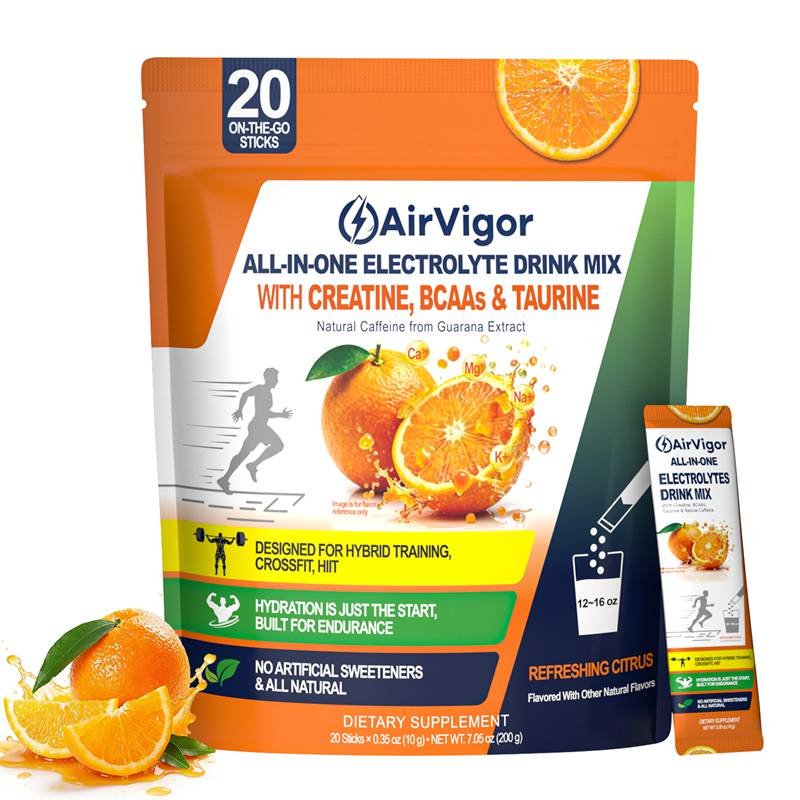
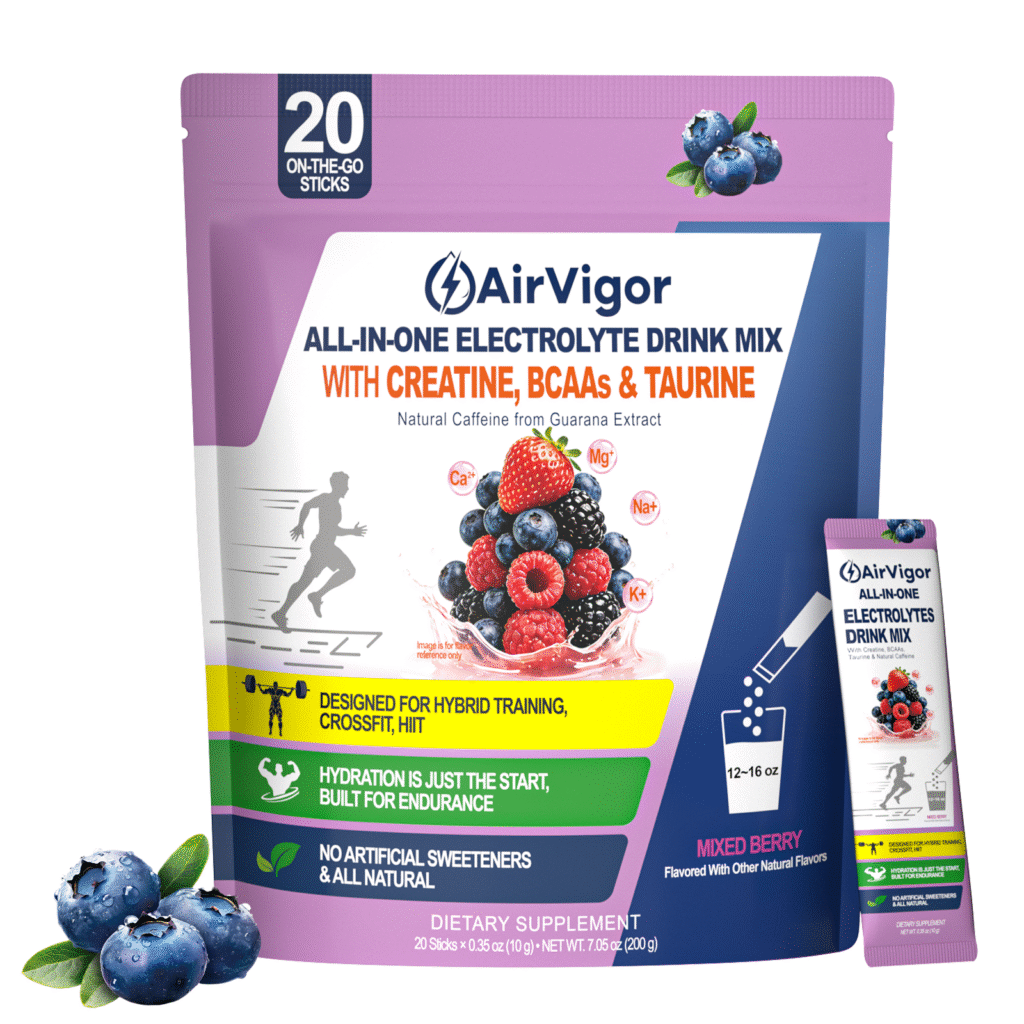
For gym users, the routine should feel direct: hydrate before training, use electrolytes when sweat is heavy, keep creatine consistent if it fits the goal, and support recovery when meals are delayed. This is where AirVigor electrolyte powder, creatine hydration formulas, and collagen electrolyte sticks can fit naturally without forcing users to carry several separate tubs.
| Gym Situation | What Usually Happens | Routine Focus | Suitable Product Direction |
|---|---|---|---|
| Light gym session | 30–45 minutes, moderate sweat | Water, daily basics, normal meals | Vitamins, minerals, creatine if used |
| Strength training | Repeated sets, heavier load | Creatine consistency, protein intake | Creatine hydration, protein support |
| HIIT or CrossFit | Fast pace, high sweat | Electrolytes, hydration, recovery | Electrolyte powder, creatine hydration |
| Evening workout | Workday fatigue, late dinner | Pre-workout hydration, post-workout support | Electrolytes before, protein or collagen after |
| Hot gym class | More fluid loss | Sweat and mineral support | Electrolyte stick during or after class |
A good gym routine should also consider convenience. If the user needs a shaker, three powders, and exact timing, the routine becomes harder to keep. Single-serve formats and clear serving directions help turn gym-day supplementation into a habit instead of a task.
Daily Supplement Routine for Outdoor Days
An outdoor-day daily supplement routine should focus on hydration, electrolytes, portability, and comfort. Heat, sun, wind, long movement, and limited access to food or water can make outdoor activity more demanding than it appears.
Outdoor activity can be deceptive. A person may be hiking, golfing, cycling, walking through a city, working outside, or spending a day at the beach without feeling like they are doing a formal workout. But the body may still lose fluid and minerals, especially in warm weather. Wind and dry air can also make sweat evaporate quickly, so the person may not realize how much fluid is being lost.
This is why outdoor routines should be planned around duration and environment. A short walk in cool weather may only require water. A long hike, bike ride, tennis match, golf day, outdoor job, or summer travel day may call for electrolytes before or after activity. For many users, the most practical option is a pre-measured stick pack that can be mixed in a regular bottle.
Taste and stomach comfort matter outdoors. Overly sweet drinks may become unpleasant during long activity, while gritty powders can discourage repeat use. A lighter electrolyte drink that mixes quickly is easier to keep using across several hours of movement.
| Outdoor Scenario | Customer Concern | Routine Focus | Suitable Product Direction |
|---|---|---|---|
| Hiking | Long time outdoors, limited refills | Hydration and mineral support | Electrolyte stick packs |
| Cycling | Sweat, wind, long duration | Bottle-friendly hydration | Electrolyte drink mix |
| Running | Heat, sweat, post-run fatigue | Pre-run and post-run support | Electrolytes, recovery hydration |
| Golf or tennis | Sun exposure, several hours outside | Fluid balance | Light electrolyte formula |
| Outdoor work | Repeated sweating across the day | Ongoing hydration support | Multiple portable servings |
| Beach or travel day | Heat, walking, irregular meals | Hydration plus daily basics | Stick packs, capsules, gummies |
AirVigor’s electrolyte and collagen electrolyte products can fit outdoor routines because they are portable, easy to explain, and useful in visible customer moments. The product solves a real situation: a person is away from home, sweating, moving, and needs something easier than carrying bottled drinks or large containers.
Daily Supplement Routine for Busy Days
A busy-day daily supplement routine should be built around speed, visibility, and low effort. It should help active people stay consistent when meetings, commuting, late meals, family schedules, and evening workouts make normal nutrition harder.
Busy customers often know what they “should” do. They should drink more water, eat enough protein, take daily supplements, and recover properly after workouts. The problem is execution. A long meeting pushes lunch back. Coffee replaces water. A gym session happens after a full workday. Dinner comes late. By the time the person remembers their supplements, the day is almost over.
A strong busy-day routine should reduce decision-making. Daily basics should be tied to breakfast or the first bottle of water. Hydration support should be placed where the user actually sees it, such as a desk drawer, laptop bag, car console, or gym pouch. Recovery support should be easy to use after training when a meal is not ready.
This kind of routine is especially important for people who train after work. They may start exercise already low on fluids, then skip proper recovery because they are rushing home. An electrolyte stick before training and a protein or collagen recovery option afterward can make the day feel more organized without adding a complicated plan.
| Busy-Day Situation | What Goes Wrong | Routine Fix | Better Format |
|---|---|---|---|
| Skipped breakfast | Low morning nutrition | Keep daily basics with first meal | Capsules, gummies, compact bottles |
| Too much coffee | Low water intake | Keep hydration support near water bottle | Electrolyte sticks |
| Late lunch | Protein intake drops | Use protein or collagen support when needed | Powder sticks or easy-mix drink |
| Evening workout | Starts training underhydrated | Use electrolytes before gym | Single-serve hydration formula |
| Late dinner | Recovery is delayed | Use recovery drink after training | Collagen electrolytes or protein support |
| Work-to-gym commute | Products left at home | Store servings in gym bag or car | Stick packs, capsules |
For busy users, AirVigor’s value is not only the formula. It is the ability to make the routine visible and repeatable. A product that can sit in an office drawer or gym bag has a better chance of becoming part of real life than a product that only works when the user is at home with extra time.
Daily Supplement Routine for Travel Days
A travel-day daily supplement routine should protect consistency when normal habits are interrupted. Flights, hotels, road trips, time zones, restaurant meals, and long schedules can make hydration, protein intake, and daily supplements harder to manage.
Travel is one of the fastest ways to break a routine. Large tubs are inconvenient. Scoops spill. Shaker bottles are hard to wash. Meals become irregular. Water intake often drops during flights and long drives. Even active people who follow a solid routine at home may lose structure when they are away.
The best travel routine is usually smaller, cleaner, and planned before leaving. A three-day trip does not require a full supplement shelf. It may only need daily basics, a few electrolyte servings, and one recovery option for workout or walking-heavy days. This keeps the routine organized without crowding luggage.
Hydration support is often the most useful travel category. Flights, dry cabin air, salty meals, warm destinations, alcohol, coffee, and long walking days can all make the body feel less balanced. Electrolyte stick packs are easy to mix after airport security, in a hotel room, at a conference, or after a long day outside.
| Travel Situation | Common Issue | Routine Focus | Suitable Product Direction |
|---|---|---|---|
| Flight day | Low water intake, dry cabin air | Hydration support after security or landing | Electrolyte stick packs |
| Hotel stay | No kitchen, limited tools | Simple daily basics | Capsules, gummies, stick packs |
| Business trip | Long meetings, skipped meals | Hydration and protein support | Daily formulas, collagen or protein |
| Road trip | Salty snacks, long sitting | Water intake and mineral balance | Hydration sticks in car bag |
| Active vacation | Walking, sun, sweat | Electrolytes before or after activity | Portable electrolyte formula |
| Hotel gym session | Routine feels different from home | Training and recovery support | Creatine hydration or recovery drink |
AirVigor’s stick packs and compact formats are especially suitable for travel because they reduce friction. Customers do not need to measure, scoop, or carry several containers. The product can fit into a suitcase, laptop bag, gym pouch, or carry-on, making the daily supplement routine easier to keep when the schedule changes.
Daily Supplement Routine by Activity Level
A daily supplement routine should match activity level. Someone who walks casually a few times per week does not need the same supplement structure as someone training five days a week, sweating heavily, or spending long hours outdoors.
Activity level is one of the easiest ways to make a routine more personal. It helps prevent two common problems: taking too little support for a demanding lifestyle, or buying too many products for a light routine. Customers usually feel more confident when they can identify where they fit.
Lightly active users may only need daily basics, balanced meals, and hydration support when the weather or schedule changes. Moderately active users may add electrolytes around workouts and protein support when meals are delayed. Highly active users often need a more consistent plan for sweat, creatine, protein, minerals, and recovery.
| Activity Level | Weekly Pattern | Main Routine Need | Suitable Product Direction |
|---|---|---|---|
| Lightly active | Walking, stretching, casual movement | Daily basics and hydration habits | Vitamins, minerals, light electrolyte use |
| Moderately active | 2–4 workouts per week | Hydration, protein awareness, recovery | Electrolytes, protein or collagen when needed |
| Highly active | 4–6 workouts per week | Sweat support and recovery structure | Electrolytes, creatine, protein, minerals |
| Outdoor active | Hiking, cycling, outdoor work | Fluid and mineral balance | Electrolyte sticks, portable hydration |
| Travel active | Frequent trips, hotel gyms, walking days | Portability and consistency | Stick packs, capsules, gummies |
| Strength focused | Lifting, HIIT, CrossFit | Creatine, protein, hydration | Creatine hydration, recovery support |
This activity-level approach is useful for product pages because it helps customers quickly understand whether a formula fits them. AirVigor can use this structure to present electrolyte powders, collagen electrolyte drinks, creatine hydration formulas, vitamins, minerals, and wellness products in a way that feels easier to choose.

What Should a Daily Supplement Routine Include?
A daily supplement routine should include products that solve real daily problems: hydration, sweat loss, low protein intake, strength training support, recovery, and nutrition gaps. For active people, the core routine usually starts with electrolytes, protein, creatine, vitamins, minerals, and recovery-focused nutrients.
Electrolytes in a Daily Supplement Routine
Electrolytes help active people manage sweat, heat, long workouts, outdoor activity, and travel-related dehydration. They are most useful when water alone does not fully match the body’s fluid and mineral needs.
Electrolytes are often the first category active people should review because hydration affects almost every active routine. When people sweat, they lose water and minerals. The amount varies widely by body size, temperature, humidity, clothing, workout type, and training duration. A short indoor session may not require extra electrolyte support, but a long run, heated fitness class, cycling day, hike, sauna session, or outdoor workday can create a much higher demand.
Many customers describe the need in simple ways. They may say they drink water but still feel dry, heavy, flat, or tired after sweating. Some notice salt marks on clothes. Others feel more drained during hot weather or after long activity. These are not always signs that someone needs a very strong formula, but they do show why a structured hydration routine matters.
A good electrolyte routine should be based on the day, not on habit alone. If the user is sitting indoors and eating balanced meals, plain water may be enough. If the user is sweating for an hour, traveling, or working outdoors, electrolytes become more useful.
| Situation | Why Electrolytes Matter | Practical Routine Choice |
|---|---|---|
| 30-minute light workout | Sweat loss is usually lower | Water may be enough |
| 60+ minute sweaty session | More fluid and mineral loss | Use electrolytes before or during activity |
| Hot yoga or sauna | Heavy sweat in a short time | Electrolytes after class or session |
| Outdoor hiking or cycling | Heat, wind, long duration | Carry electrolyte stick packs |
| Travel day | Low water intake, dry air, irregular meals | Use electrolytes after flight or long drive |
| Outdoor work | Repeated sweating across the day | Keep multiple servings available |
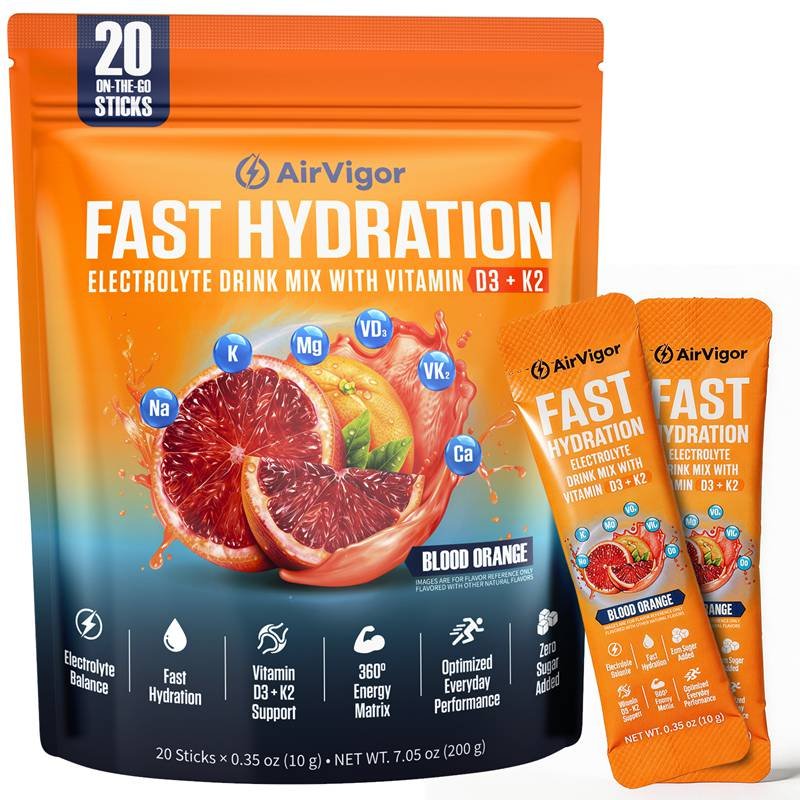
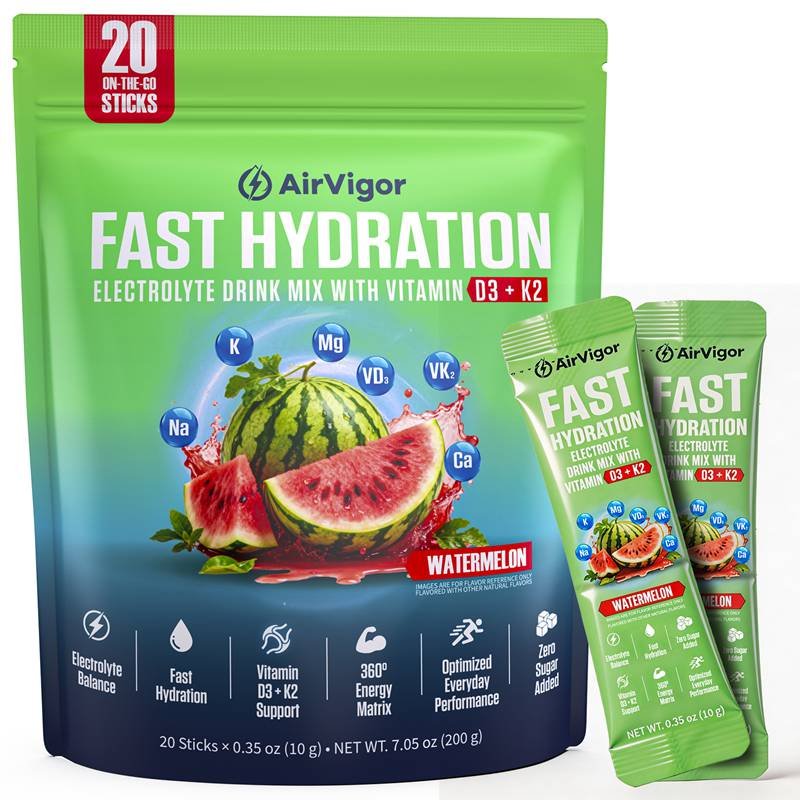
AirVigor electrolyte powder and hydration stick formats fit this need because they are easy to carry and simple to prepare. A user can keep them in a gym bag, desk drawer, car console, backpack, or suitcase. This matters because electrolyte support is often needed away from the kitchen.
Protein in a Daily Supplement Routine
Protein supports muscle maintenance, recovery, and daily nutrition. It becomes most useful when active people train regularly, eat low-protein meals, delay meals after workouts, or struggle to get enough protein from food.
Protein should not be treated as something every active person must drink every day. The better question is whether the person’s meals already provide enough. Someone eating eggs at breakfast, chicken or tofu at lunch, Greek yogurt as a snack, and fish or beans at dinner may not need much extra protein. Someone who skips breakfast, eats a light lunch, trains after work, and eats dinner late may have a real gap.
For active people, timing also matters. Protein after a workout is useful when the next full meal is delayed. It can also help during busy workdays when meals are rushed or travel days when food choices are limited. The goal is not to replace meals. The goal is to keep daily intake more consistent.
| Daily Pattern | Protein Risk | Better Routine Fit |
|---|---|---|
| Balanced meals all day | Lower risk of protein gap | Protein supplement may be occasional |
| Skipped breakfast | Morning intake is low | Protein support later in the day |
| Training after work | Dinner may be delayed | Post-workout protein or collagen drink |
| Frequent travel | Meals are unpredictable | Portable protein or collagen format |
| Light exercise only | Lower recovery demand | Focus first on meals and hydration |
| Strength training 3–5 times weekly | Higher recovery need | Protein awareness becomes more important |
Collagen can also fit a daily supplement routine, especially for people interested in beauty wellness, skin hydration support, joint-focused routines, and lighter post-activity drinks. It is not the same as a complete protein powder, but it can be useful when positioned correctly. For example, a Pilates user, runner, hiker, or busy office worker may prefer a collagen electrolyte drink because it feels lighter and easier to use than a heavy shake.
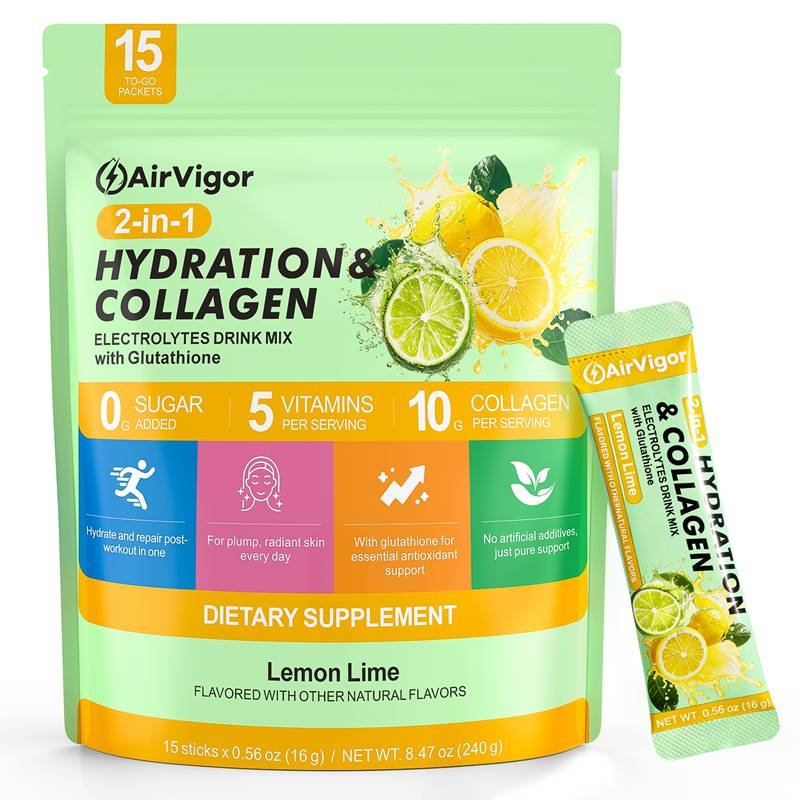
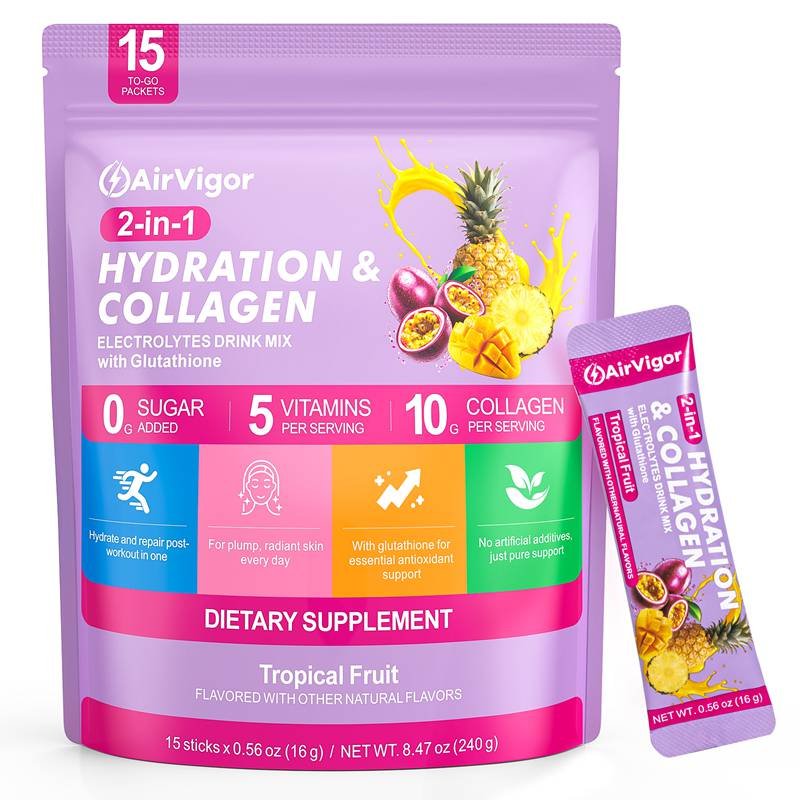
AirVigor collagen electrolyte products can fit users who want hydration and wellness support in one serving. This is especially useful for customers who do not want several separate products on the counter.
Creatine in a Daily Supplement Routine
Creatine fits daily supplement routines for people who lift weights, do HIIT, train for strength, play sports, or want support for repeated high-intensity movement. It usually works best when taken consistently, not randomly.
Creatine is one of the most common supplements for strength-focused active people, but many users overcomplicate it. They worry too much about the exact timing and not enough about repeat use. For most users, the easiest method is to take it once daily at a time they can remember. That may be with breakfast, before training, after training, or mixed into a hydration drink.
The reason creatine fits a daily routine is simple: it is not a “use only when you feel tired” product. Users who benefit from it usually keep it as a steady habit. This is why packaging and format matter. If creatine requires another tub, another scoop, and another step, many people forget. A creatine hydration formula can make sense for users who already want electrolytes and active training support.
| User Type | Why Creatine May Fit | Routine Tip |
|---|---|---|
| Strength training user | Repeated lifting and progressive training | Take daily at a consistent time |
| HIIT user | Repeated high-intensity intervals | Pair with hydration support |
| CrossFit user | Strength plus conditioning demand | Use around training or with daily routine |
| Sprint or court sport user | Short bursts and repeated effort | Keep intake consistent |
| Casual exerciser | May not need it as a priority | Start with hydration and meals first |
| Traveler who trains | Routine may break easily | Use compact or combination formats |
Creatine should also be considered within the full routine. If a customer already takes several sports products, labels should be checked to avoid duplication or confusion. A clearer formula can reduce the need for multiple separate products.
AirVigor’s creatine hydration direction can be useful for active people who want fewer steps. Instead of separating creatine, electrolytes, and workout hydration into different containers, one clear formula can help make the routine easier to repeat.
Vitamins and Minerals in a Daily Supplement Routine
Vitamins and minerals can support daily nutrition gaps, especially for active people with irregular meals, limited food variety, travel schedules, or higher sweat demands. They should be chosen based on real diet patterns, not random product stacking.
Many active people focus heavily on sports supplements but forget the basics. If meals are inconsistent, the body may not receive steady amounts of key vitamins and minerals. Busy workers, frequent travelers, people dieting for body composition, and users with limited food variety may need to pay closer attention.
Minerals are especially relevant for active people because magnesium, calcium, sodium, potassium, and other minerals are connected to muscle function, nerve signaling, fluid balance, and normal body processes. However, more is not always better. Since minerals can appear in electrolyte products, multivitamins, recovery formulas, and nighttime supplements, labels should be checked.
| Nutrient Category | Why Active People Care | Where It May Fit |
|---|---|---|
| Magnesium | Muscle and nerve function support | Recovery routines, mineral formulas |
| Calcium | Muscle function and bone support | Daily mineral support |
| Potassium | Fluid balance and muscle function | Electrolyte formulas |
| Sodium | Sweat and fluid balance | Training, hot weather, outdoor activity |
| B Vitamins | Energy metabolism support | Daily nutrition formulas |
| Vitamin C | Antioxidant and wellness support | Daily wellness, collagen formulas |
| Vitamin D | Common daily wellness focus | Daily vitamin routine |
A good vitamin and mineral routine should be boring in the best way. It should be steady, clear, and easy to understand. The user should know why the product is there and how it fits with food. If someone is already using an electrolyte product with minerals, plus a multivitamin, plus a recovery drink, it is worth reviewing the full label set.
AirVigor’s focus on clear ingredient expression helps here. Customers are more likely to trust a supplement routine when ingredient roles and serving directions are easy to understand.
Recovery Support in a Daily Supplement Routine
Recovery support helps active people manage the period after movement, sweating, and training. It can include fluids, electrolytes, protein, collagen, minerals, and daily habits that make the next active day easier to handle.
Recovery is not only about soreness. It is also about whether the user can return to normal life after activity. A person may need to go back to work after a lunchtime workout, drive home after a long run, sleep well after evening training, or stay active the next day. A recovery routine should support that transition.
The best recovery support depends on what the activity caused. If the session was sweaty, fluids and electrolytes matter. If it was strength-focused, protein and creatine consistency may be more relevant. If the user wants beauty wellness or joint-friendly daily support, collagen may fit. If the activity was light, a meal and water may be enough.
| Activity Type | Recovery Need | Better Routine Direction |
|---|---|---|
| Strength training | Muscle repair and daily protein intake | Protein, creatine consistency, balanced meals |
| Long run or cycling | Fluids, minerals, post-activity nutrition | Electrolytes and recovery drink |
| Hot yoga | Heavy sweat and gentle recovery | Electrolytes, minerals, collagen hydration |
| Hiking | Hydration, minerals, delayed meals | Electrolyte sticks and portable recovery support |
| Pilates | Light recovery and wellness support | Collagen electrolytes, daily minerals |
| Outdoor work | Repeated fluid loss | Electrolytes throughout the day |
AirVigor can position recovery support around real use moments instead of vague promises. A customer finishing a run, leaving a gym, getting out of a hot yoga class, or returning from a hike wants something simple. A stick pack that mixes quickly in a regular bottle often feels more realistic than a complicated recovery stack.
How to Time a Daily Supplement Routine?
A daily supplement routine should follow the rhythm of the day: morning basics, pre-activity hydration, post-activity recovery, and lighter support on rest days. Active people do not need perfect timing for every supplement. They need timing that is easy to remember and useful in real life.
Morning Daily Supplement Routine
A morning daily supplement routine should make the day easier to manage before work, training, travel, or family schedules get busy. It is best for daily-use products that need consistency more than exact workout timing.
Morning is often the easiest time to build a routine because the day has not become messy yet. Most people already have fixed habits in the morning: drinking water, making coffee, eating breakfast, packing a bag, or checking their schedule. Adding supplements to one of these existing habits is usually more reliable than trying to remember them at random times.
For active people, the morning routine should focus on products that support daily consistency. This may include selected vitamins, minerals, creatine, probiotics, collagen, or a simple hydration drink. If the day includes a workout, outdoor activity, travel, or long hours away from home, the morning is also a good time to place extra stick packs in a gym bag, work bag, car, or suitcase.
The most common mistake is trying to take every supplement in the morning just to “get it done.” That can make the routine feel heavy. A better approach is to use morning for the products that make sense with food, water, or daily consistency, then save sweat-focused or recovery-focused products for the moments when they are actually needed.
| Morning Situation | Common Need | Better Timing Choice | Product Direction |
|---|---|---|---|
| Normal workday | Simple daily consistency | Take daily basics with breakfast or first water bottle | Vitamins, minerals, probiotics |
| Morning workout | Hydration before movement | Use electrolytes before training if sweat is expected | Electrolyte powder |
| Strength training day | Creatine consistency | Take creatine in the morning if it helps memory | Creatine hydration or creatine formula |
| Outdoor schedule | Heat, walking, sweat | Pack extra hydration servings before leaving | Electrolyte stick packs |
| Travel day | Routine may break later | Prepare portable servings in advance | Stick packs, capsules, gummies |
| Low breakfast quality | Possible nutrition gap | Keep daily basics or protein support nearby | Capsules, protein, collagen |
For many users, the best morning setup is visual. If the product is placed near the water bottle, breakfast area, coffee machine, lunch bag, or gym bag, it is more likely to be used. A bottle or pouch hidden in a cabinet is easy to forget. AirVigor’s stick packs, capsules, gummies, and compact formats make this easier because they can be placed where the habit already happens.
Pre-Workout Daily Supplement Routine
A pre-workout daily supplement routine should prepare the body for movement, sweat, and repeated effort. It should focus on hydration, comfort, and training needs instead of automatically relying on strong stimulants or complicated formulas.
Before activity, the most useful question is simple: what kind of session is coming? A short walk, light stretch, or easy mobility session may only need water. A long gym workout, hot yoga class, HIIT session, cycling ride, outdoor run, or hike may need more hydration planning. Timing should follow the activity, not a fixed rule.
For most active people, pre-workout timing works best when it happens around 30–60 minutes before the session. This gives the user time to drink fluids, prepare mentally, and avoid starting activity underhydrated. Electrolytes are especially useful when the session will be sweaty, warm, long, or intense. Creatine can also be taken before training if that timing helps the user remember it, but it does not need to be treated like a last-minute boost.
Food timing also matters. If the user has not eaten for several hours, supplements alone may not be enough. A light meal or snack may be needed before longer or harder sessions. This is especially true for people training after work, doing morning workouts before breakfast, or exercising during travel days.
| Activity Type | Pre-Workout Need | Best Timing Direction | Product Direction |
|---|---|---|---|
| Light walk or stretching | Basic fluid intake | Water is usually enough | No complex routine needed |
| Strength training | Hydration and creatine consistency | 30–60 minutes before or with daily routine | Creatine hydration, electrolytes |
| HIIT or CrossFit | Sweat and repeated effort | Electrolytes before class | Electrolyte powder, creatine hydration |
| Hot yoga | Heavy sweat in a heated room | Hydrate before and after class | Electrolyte stick packs |
| Outdoor run or cycling | Heat, wind, fluid loss | Start hydrated before leaving | Bottle-ready electrolyte formula |
| After-work gym session | Low water intake from workday | Hydrate before training begins | Electrolytes, light recovery planning |
Pre-workout products should also feel comfortable. If a drink is too sweet, too heavy, or hard to mix, the user may avoid it before training. The best pre-workout routine is not the most intense one. It is the one that helps the user show up prepared and still feel good during movement.
AirVigor can fit this moment with electrolyte powder and creatine hydration formulas that are easy to prepare in a regular bottle. This is useful for people who leave work and go straight to the gym, pack for morning classes, or need hydration support before outdoor activity.
During-Workout Daily Supplement Routine
A during-workout daily supplement routine should only be used when the activity is long, sweaty, hot, or physically demanding. Short and light sessions may not need anything beyond water, while longer sessions may benefit from electrolytes.
Not every workout requires a drink mix during the session. For many people, plain water is enough during a short indoor workout. The need changes when the session becomes longer, hotter, or more sweat-heavy. Running, cycling, hiking, outdoor sports, high-intensity group classes, hot yoga, and physical work can all make during-activity hydration more relevant.
The goal during activity is not to drink as much as possible. It is to keep fluid intake steady enough that the user does not wait until thirst becomes uncomfortable. For longer sessions, electrolyte drinks can make water intake more useful and more enjoyable, especially when the flavor is light and the product mixes cleanly.
| During-Activity Situation | When Water May Be Enough | When Electrolytes May Help |
|---|---|---|
| Indoor gym under 45 minutes | Moderate sweat, cool room | Usually water is enough |
| Workout over 60 minutes | Sweat increases over time | Electrolytes may fit better |
| Hot yoga or sauna-style session | Heavy sweat in short time | Electrolytes after or during if suitable |
| Cycling or long run | Longer fluid loss | Bottle-ready electrolytes are practical |
| Outdoor work | Repeated sweating across hours | Multiple hydration moments may be needed |
| Hiking or sports day | Heat, sun, long movement | Carry stick packs or prepared bottle |
During-workout hydration should also fit the setting. A cyclist needs a bottle-friendly formula. A hiker needs something lightweight. A gym user may want a drink that does not feel sticky or overly sweet. An outdoor worker may need several easy servings across the day. This is why pre-measured stick packs are useful: they reduce guesswork and make the routine easier to manage away from home.
AirVigor electrolyte products can fit during-activity use because they are designed for active lifestyle routines, not only formal workouts. A user can mix one serving before a session, sip during longer movement, or keep another serving available for later.
Post-Workout Daily Supplement Routine
A post-workout daily supplement routine should help the body move from effort back into recovery. The right timing depends on sweat loss, workout intensity, meal timing, and whether the next full meal is coming soon.
After activity, the first thing to consider is what the session created. If the person sweated heavily, fluids and electrolytes matter. If the workout included strength training, protein intake and creatine consistency may matter more. If the activity was Pilates, yoga, walking, or lighter movement, collagen hydration or a gentle recovery drink may fit better than a heavy shake.
Meal timing is also important. If the user is going to eat a balanced meal soon, the post-workout supplement routine can stay lighter. If the person is commuting, returning to work, traveling, or eating dinner much later, a recovery drink can help bridge the gap. This is common for people who train during lunch breaks, after work, or while away from home.
| Post-Workout Situation | What the Body May Need | Better Routine Fit |
|---|---|---|
| Heavy strength session | Protein intake and recovery support | Protein or creatine routine plus meal |
| Sweaty cardio session | Fluids and minerals | Electrolytes after training |
| Hot yoga class | Rehydration and gentle support | Electrolytes, collagen hydration |
| Pilates or light training | Lighter recovery support | Collagen electrolytes or balanced meal |
| Late-night gym session | Dinner may be delayed | Easy recovery drink |
| Outdoor long activity | Sweat, sun, delayed meal | Electrolytes plus protein or collagen support |
The post-workout routine should not create pressure. Many people worry that they must drink something immediately after training or the workout is wasted. A better approach is to ask whether the next meal is close and whether the session was demanding. If the meal is delayed and the session was hard, a supplement can be helpful. If a good meal is ready, the routine may simply support fluids and normal eating.
AirVigor recovery-friendly products can fit this moment because they are easy to mix and easy to carry. A collagen electrolyte stick after Pilates, an electrolyte drink after running, or a creatine hydration formula around gym training can make the routine feel simple instead of scattered.
Do You Need a Daily Supplement Routine Every Day?
You do not need the exact same daily supplement routine every day. Active people usually do better with a steady base routine plus flexible support for training, sweat, travel, and recovery. The routine should change with the day, not become a rigid checklist.
Daily Supplement Routine on Training Days
A training-day daily supplement routine should support hydration, workout effort, and post-activity recovery. The harder, longer, or sweatier the session, the more important it becomes to plan fluids, electrolytes, protein, and recovery timing.
Training days are the days when most people think about supplements first, but they often focus only on the product taken right before exercise. A stronger routine looks at the whole day. What did the user eat before training? How much water did they drink during work? Will the workout be short and light, or long and sweat-heavy? Is dinner ready after training, or will the next meal be delayed?
A person doing a light 30-minute workout may not need a large supplement plan. Water, normal meals, and daily basics may be enough. A person doing heavy lifting, HIIT, CrossFit, running, cycling, hot yoga, or outdoor training may need more structure. In these cases, electrolytes can support hydration around sweat-heavy sessions, protein can help when meals are low or delayed, and creatine can stay consistent if it fits the user’s training goal.
| Training Situation | What Usually Happens | Better Routine Focus | Suitable Product Direction |
|---|---|---|---|
| Light indoor workout | Moderate effort, low sweat | Water, daily basics, balanced meal | Vitamins, minerals, daily hydration |
| Heavy strength training | Repeated sets, muscle demand | Creatine consistency, protein intake | Creatine hydration, protein support |
| HIIT or CrossFit | Fast pace, high sweat | Electrolytes before or during training | Electrolyte powder, creatine hydration |
| Running or cycling | Longer sweat and fluid loss | Hydration before, during, and after | Electrolyte stick packs |
| Hot yoga | Heavy sweat in short time | Electrolytes and gentle recovery | Electrolytes, collagen hydration |
| Evening gym session | Workday fatigue, late dinner | Pre-training hydration, post-training support | Electrolytes plus recovery drink |
Training-day routines should also consider timing. For many users, the most practical setup is to hydrate before training, use electrolytes when sweat is expected, keep creatine at a repeatable daily time, and use protein or collagen recovery support when the next meal is not close. This keeps the routine useful without making the user carry too many products.
AirVigor products can fit training days by reducing friction. A gym user can keep electrolyte sticks in a workout bag. A strength user can choose a creatine hydration formula instead of managing multiple separate containers. A Pilates or hot yoga user may prefer collagen electrolyte support after class. The routine becomes easier when the product matches the training moment.
Daily Supplement Routine on Rest Days
A rest-day daily supplement routine should be lighter than a training-day plan, but it should not disappear completely. Rest days are still important for hydration, daily nutrients, creatine consistency, protein intake, and recovery from previous activity.
Many active people treat rest days like “nothing days.” They stop every supplement, drink less water, and pay less attention to meals. Then they return to training feeling tight, tired, or less prepared. Rest days are not empty days. They are when the body catches up from previous effort and prepares for the next session.
The key is to separate daily-use products from activity-based products. Daily-use products may include creatine for strength users, selected vitamins, minerals, probiotics, collagen, or other wellness support depending on the user’s needs. Activity-based products, such as extra electrolyte servings or heavier recovery drinks, may be adjusted down when there is no sweat-heavy activity.
| Rest-Day Situation | What to Keep Consistent | What Can Be Reduced |
|---|---|---|
| Normal rest day at home | Water, meals, daily basics | Extra workout formulas |
| Sore after hard training | Protein awareness, fluids, minerals | Unneeded stimulant products |
| Strength-focused routine | Creatine consistency | Extra pre-workout style products |
| Light walk or stretching | Hydration and normal meals | Heavy recovery stack |
| Sauna or hot bath | Electrolytes if sweating heavily | Products unrelated to sweat or recovery |
| Busy work rest day | Daily basics and hydration | Extra training-only formulas |
Rest days are also a good time to review whether the routine is too complicated. If a person can only follow the routine on workout days but loses track on all other days, the structure may need to be simplified. For example, daily basics can stay near breakfast, electrolytes can be reserved for sweat-heavy days, and recovery drinks can be used only when meals are delayed or activity is demanding.
AirVigor’s product system can help users create this separation. Electrolyte powder can be positioned for sweat and active days. Creatine hydration can support consistent strength-focused routines. Collagen electrolyte products can fit lighter recovery or beauty wellness habits. Vitamins, minerals, probiotics, and daily wellness formulas can sit in the daily base routine.
Daily Supplement Routine for Travel Days
A travel-day daily supplement routine should be compact, easy to pack, and simple to use without a kitchen. Flights, hotels, road trips, time zones, and restaurant meals can interrupt hydration, protein intake, and normal supplement habits.
Travel is one of the most common reasons people stop their routine. At home, supplements may be organized on a counter or stored near breakfast. During travel, that structure disappears. A large tub is too bulky. A scoop can spill. A shaker bottle may be hard to clean. Meals become unpredictable. Water intake often drops during flights and long drives.
The better travel routine is smaller and more prepared. A user going away for three days may only need a few compact servings: daily basics, hydration support, and one recovery option if training, walking, hiking, or outdoor activity is planned. This keeps the routine realistic and prevents the suitcase from turning into a supplement cabinet.
| Travel Situation | Common Problem | Better Routine Focus | Suitable Format |
|---|---|---|---|
| Flight day | Dry cabin air, low water intake | Hydration support after security or landing | Electrolyte stick packs |
| Road trip | Salty snacks, long sitting | Fluids and mineral support | Hydration sticks in car bag |
| Hotel stay | No kitchen, no measuring tools | Simple serving control | Capsules, gummies, stick packs |
| Business trip | Coffee, meetings, skipped meals | Daily basics and portable recovery | Compact formulas |
| Active vacation | Walking, sun, sweat | Electrolytes and recovery hydration | Stick packs |
| Hotel gym | Routine feels different from home | Training and recovery support | Creatine hydration, collagen electrolytes |
Travel users usually care about convenience more than complex formulas. They want something that can fit in a carry-on, mix in a regular bottle, and be used without cleanup. This is why stick packs work well for travel-day routines. They remove measuring, reduce mess, and make it easier to keep serving size clear.
AirVigor’s travel-friendly formats can fit this customer need naturally. Electrolyte sticks, collagen hydration packets, capsules, gummies, and compact supplement formats help users maintain the routine in airports, hotels, cars, gyms, and outdoor destinations.
Daily Supplement Routine for Hot Weather Days
A hot-weather daily supplement routine should pay more attention to sweat, fluid intake, and minerals. Heat, humidity, sun exposure, and outdoor activity can increase hydration needs even when the workout itself does not feel intense.
Hot weather changes the way active people should think about daily supplements. A normal walk, light run, outdoor job, golf day, cycling session, or beach day may create more fluid loss than expected. Some users do not notice sweat because it evaporates quickly. Others drink more plain water but still feel thirsty or drained because sweat also contains minerals.
The routine should not wait until the user feels completely depleted. A better approach is to prepare hydration earlier in the day, use electrolytes when the activity is long or sweat-heavy, and keep recovery support available after outdoor movement. This is especially relevant for summer training, warm travel destinations, outdoor work, and heated indoor classes.
| Hot Weather Scenario | Main Challenge | Routine Direction |
|---|---|---|
| Summer gym commute | Starts workout already warm | Hydrate before training |
| Outdoor running | Sweat and heat build quickly | Electrolytes before or after run |
| Long walk or theme park day | Hours of sun and movement | Carry stick packs and refill water |
| Outdoor work | Repeated sweating across the day | Use multiple hydration moments |
| Beach or pool day | Sun, heat, low water intake | Hydration support between activities |
| Hot yoga | Heavy sweat in short time | Electrolytes after class |
Hot-weather routines should also be realistic about taste. A drink that feels too sweet can become harder to drink when the weather is hot. Light flavor, clean mixing, and a regular bottle-friendly format can improve repeat use. AirVigor electrolyte products can be positioned around these everyday summer moments, not only athletic training.
Daily Supplement Routine for Low-Activity Days
A low-activity daily supplement routine should stay simple. When the day does not include training, heavy sweat, or outdoor activity, many users only need daily basics, balanced meals, water, and selected supplements that support long-term consistency.
Not every day needs sports nutrition support. This is important because customers can lose trust when every product sounds like it must be used every day. A more honest routine helps users understand when to use a product and when to keep the day lighter.
Low-activity days are useful for maintaining the foundation. A person may still take creatine if it is part of their strength routine. They may still use selected vitamins, minerals, probiotics, collagen, or other wellness products if those are daily habits. But they may not need extra electrolyte servings, heavy recovery drinks, or workout-focused formulas unless there is another reason, such as travel, sauna use, hot weather, or poor meals.
| Low-Activity Situation | Better Routine Choice | What to Skip or Reduce |
|---|---|---|
| Desk workday | Water, meals, daily basics | Extra workout support |
| Light walking only | Hydration and balanced meals | Heavy recovery products |
| No sweat day | Normal fluids | Extra electrolyte servings unless needed |
| Meal quality is good | Food-first approach | Unneeded protein drink |
| Strength routine user | Keep creatine consistent | Extra training formulas |
| Wellness-focused user | Keep selected daily products | Random product stacking |
This kind of honesty can improve customer trust. It shows that the routine is not about using the maximum number of products. It is about using the right support on the right day. For AirVigor, this creates a more credible product experience because customers can see how each formula fits into real life.

Why Choose AirVigor Daily Supplement Routine?
AirVigor helps active people build a daily supplement routine that is clear, portable, and easy to repeat. The brand focuses on real ingredient expression, practical serving formats, quality-managed production, and supplement options for hydration, recovery, strength support, beauty wellness, and everyday nutrition.
Clear Daily Supplement Routine Formulas
Clear formulas make a daily supplement routine easier to understand and easier to follow. Active people want to know what a product is for, when to use it, and how it fits with training, work, travel, or recovery.
Many supplement users do not want another confusing label. They want to look at a product and quickly understand its role. Is it mainly for hydration? Is it for post-workout recovery? Is it a creatine formula for training days? Is it a collagen drink for beauty wellness and active recovery? If the answer is not clear, the product becomes harder to trust.
AirVigor focuses on direct formula expression. The goal is not to make every product sound like it does everything. Each product should have a clear place in the routine. Electrolyte powders can support hydration and sweat-heavy days. Creatine hydration formulas can fit strength training, HIIT, CrossFit, and gym routines. Collagen electrolyte sticks can support hydration, beauty wellness, and lighter recovery needs. Vitamins, minerals, probiotics, botanical extracts, and functional wellness formulas can support daily nutrition habits when they match the user’s lifestyle.
This clarity also helps customers avoid product overlap. A user may already have an electrolyte powder, a recovery drink, a multivitamin, and a collagen product. Without clear labels, it becomes difficult to know whether the products repeat the same ingredients. AirVigor’s approach helps users compare product roles more easily.
| AirVigor Product Direction | Main Routine Role | Customer Use Scenario |
|---|---|---|
| Electrolyte powder | Hydration and sweat support | Gym, running, cycling, outdoor work, hot weather |
| Creatine hydration formula | Strength and high-intensity training support | Weight training, HIIT, CrossFit, sports routines |
| Collagen electrolyte sticks | Hydration plus beauty and recovery support | Pilates, yoga, walking, hiking, daily wellness |
| Vitamins and minerals | Daily nutrition support | Busy schedules, irregular meals, wellness habits |
| Probiotics | Digestive wellness routine support | Daily wellness, travel, lifestyle routines |
| Botanical formulas | Functional daily wellness support | Stress rhythm, beauty, sleep, or energy routines |
| Protein or amino acid support | Recovery and intake support | Post-workout, low-protein meals, active days |
A clear daily supplement routine is easier to buy, easier to use, and easier to keep. For AirVigor, this means product pages, labels, and usage directions should help customers quickly answer one question: “Where does this fit in my day?”
Easy Daily Supplement Routine Formats
Easy formats help customers keep a daily supplement routine longer. If a product is portable, pre-measured, easy to mix, and simple to store, it has a much better chance of becoming part of real life.
A supplement routine often fails because the format does not match the customer’s schedule. A large tub may work at home but not in a gym bag. A scoop may spill during travel. A shaker bottle may be hard to clean at work. A bottle may be forgotten if it stays in a cabinet. Format is not just packaging; it directly affects whether the customer uses the product again.
AirVigor supports different routine needs with multiple formats, including stick packs, capsules, gummies, bottles, pouches, and powder formats. This is useful because active people do not all use supplements in the same place. Some use them at home before work. Some mix them in a bottle before the gym. Some keep them in a desk drawer. Some pack them for flights, hotel stays, hiking, or outdoor work.
| Format | Best Fit | Customer Benefit |
|---|---|---|
| Stick packs | Electrolytes, collagen drinks, creatine hydration, travel use | Pre-measured, portable, easy to mix |
| Capsules | Vitamins, minerals, probiotics, botanical extracts | Simple daily use, no mixing needed |
| Gummies | Daily wellness, beauty support, lifestyle formulas | Easy to take, pleasant format |
| Bottles | Capsules, tablets, gummies, drops | Clear serving control and home storage |
| Pouches | Powder refills or flexible storage | Lightweight, suitable for repeat use |
| Tubs | Home training or high-frequency powder routines | Larger supply for regular users |
| Drops | Liquid wellness formulas | Compact, easy to add into a routine |
For active users, the most convenient product is often the one that can be kept where life happens. A hydration stick in a gym bag is more useful than a tub left at home. A collagen electrolyte serving in a work drawer is easier to use than a product that needs a blender. A compact daily supplement in a travel pouch is more realistic than a full-size bottle packed at the last minute.
AirVigor’s format strategy should make the routine feel lighter. Customers should not need extra tools, long preparation, or confusing steps. The easier the format, the more likely the routine becomes a habit.
Trusted Daily Supplement Routine Quality
Trusted quality matters because active people may use supplements several times per week or every day. They expect stable taste, clear serving size, reliable packaging, and consistent product experience each time they reorder.
A daily supplement routine creates repeat contact between the customer and the product. This makes quality more important than a one-time purchase. If the flavor changes too much, the powder clumps, the label is unclear, the packet does not seal well, or the product feels inconsistent between orders, customers may not continue using it.
AirVigor’s quality direction starts before production. Raw materials are reviewed based on supplier qualification, ingredient suitability, formula needs, and product stability. Formulas are checked for ingredient structure, taste performance, solubility, dosage expression, and use scenario fit. Packaging is reviewed for sealing, moisture protection, storage, portability, and label clarity. Finished products are checked before release.
| Quality Area | What AirVigor Focuses On | Why Customers Care |
|---|---|---|
| Raw material review | Supplier qualification, ingredient suitability, purity direction | Helps support formula consistency |
| Formula review | Dosage expression, taste, solubility, stability | Makes the product easier to use repeatedly |
| Production control | Batch management, process checks, clean production procedures | Supports stable product experience |
| Packaging review | Sealing, moisture protection, portability | Helps protect product condition |
| Label review | Serving size, usage, ingredient expression, warnings | Reduces customer confusion |
| Finished product checks | Appearance, packaging, documentation, release review | Supports trust before shipment |
| Documentation support | COA, MSDS, quality records when needed | Useful for retail, platform, and B2B cooperation |
AirVigor’s manufacturing and quality system is supported by GMP, HACCP, ISO system, FSSC22000, and FDA registration-related frameworks. The brand also works with COA and MSDS documentation when required for product records, platform review, or cooperation needs.
For daily users, this quality system means the supplement is developed for repeat use, not only first impression. For business customers, it means the product has a stronger foundation for e-commerce, retail, private label, distributor channels, and long-term supply planning.
Daily Supplement Routine for Active Lifestyles
AirVigor products are designed for active lifestyles that include gym training, outdoor movement, workdays, travel, light wellness routines, and recovery needs. The routine should fit real schedules, not only perfect workout plans.
Active people are not all athletes. Many are office workers who train after work, parents who exercise when they can, travelers who want to stay consistent, outdoor users who sweat for hours, or wellness-focused customers who want hydration and collagen in a simple drink. AirVigor’s daily supplement routine should speak to these real users.
A routine for active lifestyles needs to be flexible. A customer may use electrolytes during summer workouts, collagen hydration after Pilates, creatine hydration on gym days, and vitamins or minerals as daily basics. Another customer may only use electrolyte sticks during travel and outdoor activity. The routine should be easy to adjust without becoming confusing.
| Lifestyle Type | Main Need | AirVigor Routine Fit |
|---|---|---|
| Gym user | Training support and recovery | Creatine hydration, electrolytes, protein support |
| Runner or cyclist | Sweat and endurance hydration | Electrolyte sticks, recovery hydration |
| Pilates or yoga user | Light recovery and beauty wellness | Collagen electrolyte sticks |
| Outdoor worker | Repeated sweat across the day | Portable electrolyte servings |
| Busy office worker | Convenience and daily nutrition habits | Stick packs, capsules, gummies |
| Frequent traveler | Compact routine away from home | Travel-friendly stick packs and daily basics |
| Wellness-focused user | Simple daily habit support | Vitamins, minerals, collagen, probiotics |
The best routine should not make customers feel like they are behind. It should help them feel organized. AirVigor can do this by showing use moments clearly: before gym, after hot yoga, during outdoor days, after running, at the office, while traveling, or as part of a morning habit.
This kind of lifestyle-based positioning is easier for customers to understand. It also helps AirVigor product pages feel more useful because the customer can quickly see where the product belongs.
Conclusion
A good daily supplement routine for active people should be simple, flexible, and easy to repeat. It should support hydration, sweat replacement, protein intake, creatine consistency, recovery, and daily wellness without making life more complicated.
Training days may need more electrolytes and recovery support. Rest days may focus on consistency. Travel days may need portable stick packs and clear serving directions. The best routine is not the biggest one. It is the one that fits real life.
AirVigor helps active people build better daily routines with clear formulas, practical formats, quality-focused production, and supplement options for hydration, recovery, beauty wellness, strength support, and everyday nutrition. For branded product orders or custom supplement inquiries, AirVigor can support product direction, sampling, packaging discussion, and formula development based on your market needs.
Share:
Contact Expert Team
At AirVigor, performance becomes effortless. We transform advanced nutrition science into clean, effective supplements that help you hydrate, recover, and feel stronger every day. Shop AirVigor Supplements on Amazon and experience athlete-trusted formulas—backed by real science and supported by our world-class R&D and production capabilities.
Trust AirVigor
At AirVigor, turning your performance goals into reality is no longer a struggle—it’s a science-driven journey we build together. Whether you’re a runner, lifter, cyclist, yogi, outdoor athlete, or someone simply seeking better daily energy, AirVigor transforms advanced nutrition research into clean, effective, and trustworthy supplements you can feel.
Backed by our U.S. scientific team, global certifications, and world-class production standards, every formula is engineered to deliver real hydration, real recovery, and real performance. And when you’re ready to experience the difference, you’ll find AirVigor products available on Amazon and other major platforms—fast shipping, consistent quality, and a community of athletes already seeing results.
Behind the scenes, our R&D and manufacturing ecosystem also supports specialized formulation development, ensuring AirVigor continues to lead with innovation while keeping quality and safety uncompromised. But at the core, everything we create is built for you—your health, your performance, your momentum.
Choose AirVigor. Feel the science. Elevate your every day.


Subscribe to our newsletter
Sign up to our newsletter and we’ll keep you up to date with the latest arrivals.