Skip to content
The electrolyte powder aisle looks easy until someone actually compares products carefully. One formula is built around sodium. Another leans on a broader mineral panel. One is clearly made for long, sweaty training. Another is sold as an all-day lifestyle drink. Some taste good but look weak on the label. Others look impressive on paper but turn out to be too salty, too sweet, too chalky, or too hard to drink consistently. That is why this topic matters. A good electrolyte powder is not the one with the loudest promise. It is the one that fits a real hydration situation, uses ingredient levels that make sense, and gives the customer a drink experience that is easy to repeat. MedlinePlus explains that electrolytes help balance the amount of water in the body, while the Cleveland Clinic notes that they help maintain the balance between fluids inside and outside cells.
A stronger product usually gets four things right. First, it matches the user’s actual hydration demand. Second, it uses a mineral profile that is easy to justify. Third, it avoids formula clutter that makes the label harder to trust. Fourth, it tastes and mixes well enough to become part of a routine instead of a one-time purchase. This is exactly where many products fail. A powder can look premium online and still disappoint because it has the wrong sodium level for the intended use, too much sweetness for daily drinking, or no clear explanation of why the formula is built the way it is. For AirVigor, this is a real opportunity: in a crowded category, customers usually trust brands more when the formula logic is clear, the quality system sounds stable, and the product is tied to real-life use instead of vague hydration language.
What Should an Electrolyte Powder Do?
A good electrolyte powder should support hydration in a way that matches the situation. It should help replace key minerals when fluid turnover rises, make hydration easier to maintain, and feel appropriate for the person using it. It does not need to do everything. It needs to do the right job clearly. MedlinePlus describes electrolytes as minerals that affect the amount of water in the body, nerve function, and muscle function, while the Cleveland Clinic explains that electrolytes help regulate chemical reactions and fluid balance.
What Is an Electrolyte Powder?
An electrolyte powder is a dissolvable drink mix that supplies minerals such as sodium, potassium, magnesium, calcium, or chloride to support fluid balance. That basic definition is simple, but the category is broader than many customers realize. Some powders are built for long endurance sessions. Some are designed for hard training in heat. Some are aimed at lighter daily hydration. Some are made for travel, hot weather, or recovery after fluid loss. According to MedlinePlus, electrolytes are minerals in blood and other body fluids that carry an electric charge and affect how the body functions in many ways.
This matters because customers often compare all electrolyte powders as if they are interchangeable. They are not. A formula designed for heavy sweat loss should not be judged the same way as a low-sugar office hydration mix. A daily hydration powder should not be expected to behave like a sports drink built for long events. When brands fail to explain those differences, customers often buy based on flavor, packaging, or visibility rather than formula fit. That usually leads to weaker satisfaction, even when the product itself is not objectively poor.
| Product type | Main purpose | Best-fit use |
|---|---|---|
| Sports hydration powder | Replace fluid and minerals lost through harder effort | Long training, repeated sweating |
| Daily hydration powder | Support routine fluid balance in a lighter way | Workdays, home use, light activity |
| Heat or travel hydration powder | Support hydration when the environment increases fluid stress | Flights, hot weather, outdoor exposure |
| Recovery hydration powder | Help rehydrate after intense effort or temporary fluid loss | Post-training, post-sweat recovery |
A stronger brand removes confusion early. It does not try to make every powder sound universal. It makes each formula easier to place.
How Does It Help Hydration?
An electrolyte powder helps hydration by doing more than adding fluid volume. Water is still the base, but electrolytes help the body manage and distribute that water more effectively when the body is under greater strain. MedlinePlus notes that electrolytes help balance the amount of water in your body. Cleveland Clinic explains that they help maintain the balance between fluids inside and outside your cells. In practical terms, hydration is not just about drinking more liquid. It is also about whether the body has the mineral balance needed to use that liquid well in the conditions it is facing.
This becomes much easier to understand in real life. On a mild indoor day, plain water may feel completely adequate. During a long workout in summer heat, or after repeated sweating, plain water may replace fluid volume, but still feel incomplete. That difference is practical, not abstract. Customers notice it when thirst seems to linger, muscles feel flat, or recovery feels slower than expected. A well-matched electrolyte powder can help close that gap in situations where the body is losing both water and minerals. Harvard Nutrition Source also points out that electrolyte beverages are often marketed as better than water, even though their usefulness depends heavily on the situation.
| Situation | Main hydration challenge | What often helps most |
|---|---|---|
| Mild indoor day | Routine fluid replacement | Water |
| Short, light exercise | Low to moderate fluid loss | Water, often enough alone |
| Long, sweaty training | Fluid plus mineral loss | Water plus electrolyte support |
| Hot outdoor work | Repeated fluid stress and sweat turnover | Structured hydration support |
| Travel and dry air exposure | Irregular intake and low-grade dehydration | More deliberate hydration support |
For customers, the value is straightforward. A good electrolyte powder should make hydration feel more complete when water alone is no longer the full answer.
Who Is It Really For?
A good electrolyte powder is for people whose hydration demands rise above what plain water comfortably covers in that moment. That often includes endurance athletes, people who sweat heavily, HIIT or CrossFit users, outdoor workers, people training or working in heat, and frequent travelers. Cleveland Clinic points out that electrolyte drinks can be useful after tough workouts or illness, but they should not be treated as a default all-day drink.
This is where many brands weaken their own message. They try to widen the audience so much that the product stops sounding specific. But customers usually trust formulas more when the intended user is clearer. A powder built for long training should say that directly. A lighter formula for daily hydration should say that directly, too. People do not want to guess whether the product was made for marathoners, hot yoga users, outdoor workers, or office staff. They want the brand to tell them plainly.
| User group | Does an electrolyte powder often make sense? | Why |
|---|---|---|
| Marathon runner or long-distance cyclist | Yes | Longer sweat duration and higher turnover |
| HIIT or CrossFit user | Often yes | High sweat in a shorter time |
| Outdoor laborer | Often yes | Heat plus repeated fluid loss |
| Frequent flyer | Sometimes yes | Dry air, disrupted intake, fatigue |
| Sedentary office worker | Often no | Water may cover normal daily need |
| Light daily wellness user | Depends | Climate, diet, and routine change the need |
When Is Water Enough?
Water is enough in many more situations than customers are often led to believe. Mayo Clinic explains that fluid needs vary with weather, activity, and health, but water remains the body’s primary hydration source. Harvard Nutrition Source also states that water is the best choice for quenching thirst.
That matters because a hydration brand sounds more honest when it admits that water still does most of the work on ordinary days. Customers do not need every drink to be optimized. They need to know when plain water is enough and when a powder starts becoming useful. For office days, light movement, mild weather, and normal home routines with balanced meals, water often works perfectly well. A serious hydration product should not try to replace that reality. It should step in when the hydration situation becomes more demanding.
| Situation | Is water usually enough? | Why |
|---|---|---|
| Work-from-home day | Yes | Low sweat and steady access to fluids |
| Office routine | Yes | Normal fluid turnover is usually manageable |
| Light workout under an hour | Often yes | Losses are often modest |
| Mild weather errands | Usually yes | No major heat or sweat load |
| Heavy sweating or repeated heat exposure | Often no | Fluid and mineral losses rise together |
A good electrolyte powder should not conceptually replace water. It should become useful when water is no longer the complete solution.

Which Ingredients Matter Most?
The ingredients that matter most are the ones that match the product’s actual hydration job. In most practical hydration situations, sodium matters first, while potassium and magnesium often help round out the formula. A stronger formula is not the one with the longest label. It is the one whose ingredient levels are easiest to justify. MedlinePlus helps explain what electrolytes are and what they do, while the American Heart Association gives important context on sodium intake and why dose interpretation matters.
Which Electrolytes Should It Contain?
Most customers expect an electrolyte powder to contain sodium and potassium first. That expectation makes sense. Sodium is central to fluid balance and sweat replacement, while potassium supports muscle and nerve function. MedlinePlus lists sodium, potassium, calcium, chloride, and magnesium among the body’s key electrolytes. But a stronger formula is not automatically the one with every possible mineral added. The better question is whether the mineral profile matches the use case.
A sports-focused formula may benefit from a broader structure. A lighter daily hydration mix may work well with a simpler profile that still feels balanced. Too many formulas still confuse ingredient count with formula strength. Customers are less impressed by that than they used to be. What they trust more is visible formula logic.
| Electrolyte | Why it matters | Better-fit logic |
|---|---|---|
| Sodium | Core fluid-balance support | Most relevant when sweat loss is meaningful |
| Potassium | Supports muscle and nerve function | Helps broaden the formula beyond sodium alone |
| Magnesium | Supports muscle, nerve, and enzyme function | Adds depth and a stronger sense of completeness |
| Calcium | Supports muscle and nerve function | Useful in some fuller formulations |
| Chloride | Supports fluid and acid-base balance | Often works alongside sodium |
Customers do not need the most crowded panel. They need a formula that makes sense on first reading and still makes sense after repeated use.
How Much Sodium Makes Sense?
Sodium deserves special attention because it is one of the most important hydration ingredients and one of the easiest to misunderstand. The American Heart Association recommends no more than 2,300 milligrams of sodium per day, with an ideal limit of 1,500 milligrams for most adults. It also says Americans consume over 3,300 milligrams daily on average, and more than 70% of that intake comes from packaged, prepared, and restaurant foods.
Those numbers make one point very clear: sodium in an electrolyte powder should never be judged without thinking about the rest of the day. A higher-sodium formula may be exactly right for a long run, a humid outdoor work shift, or a hard training block with repeated sweating. The same formula may feel excessive on a sedentary day built around restaurant meals.
| Use case | Sodium logic |
|---|---|
| Low-sweat daily hydration | Lower supplemental need |
| Hot-weather training | Higher need often makes sense |
| Long endurance session | Higher need is more justifiable |
| Sedentary day plus salty meals | Often lower supplemental need |
| Outdoor work in heat | Higher need may be appropriate |
A stronger brand does not hide sodium or apologize for it. It explains why the level is there and which situation makes that level sensible.
Do Potassium and Magnesium Matter?
Yes, but not in exactly the same way sodium does. Potassium helps with muscle contraction, nerve signaling, and heart rhythm. Magnesium supports muscle, nerve, and enzyme function and often increases the customer’s sense that the formula is more complete. As the Cleveland Clinic explains, potassium works alongside sodium to regulate fluid balance and also supports muscle and nerve function.
Customers are much quicker now to spot formulas that use tiny decorative amounts just to make the label look fuller. What they trust more is a formula where the broader mineral structure clearly supports the stated use case. A daily hydration powder may not need a heavy mineral panel. A broader sports or recovery formula may benefit from one. The important thing is that the mineral structure feels deliberate rather than padded.
| Ingredient | What customers often expect from it | Why it can help |
|---|---|---|
| Potassium | Broader hydration and muscle support | Balances the formula beyond sodium alone |
| Magnesium | Recovery and muscle-comfort value | Adds functional depth |
| Sodium-only formula | Direct hydration focus | Can work, but may feel narrow |
| Multi-electrolyte formula | More complete support | Often easier to position as premium |
This is one area where AirVigor’s formulation capability can become a visible advantage, because a more purposeful mineral structure is easier to explain and easier to trust.
What Else Should Be Included?
Beyond core electrolytes, extra ingredients should only be included when they clearly improve the formula’s job. Some powders include carbohydrates because they are built for longer exercise. Some include vitamins or recovery-oriented activities to support a broader use case. Some stay minimal because they are designed for lighter hydration. Harvard Nutrition Source explains that sugar and electrolytes in sports drinks are intended to support quick hydration and absorption during more demanding exercise. That is a useful reminder that extra ingredients are not automatically bad. They are only useful when the reason for including them is clear.
This is where many formulas lose discipline. They keep adding ingredients until the product sounds exciting, but the label becomes harder to explain, and the product feels less focused. A stronger formula asks a much simpler question: does this ingredient improve hydration, improve the user experience, or improve fit for the intended scenario? If the answer is vague, the ingredient may be weakening the product more than helping it.
| Ingredient type | When it makes sense | When it often does not |
|---|---|---|
| Carbohydrates or sugar | Longer, harder exercise | Light daily hydration |
| Vitamins | When tied to a clear formula role | When added only to decorate the label |
| Recovery-support actives | Post-exercise or broader recovery formulas | Basic hydration formulas with no recovery angle |
| Flavor system | Always matters for repeat use | Becomes a problem when it dominates the product story |
| Trend ingredients | Only with strong logic | When added for marketing noise |
The best powders are often not the busiest ones. They are the easiest to explain, honestly.

What Should You Avoid?
A good electrolyte powder is not only defined by what it includes. It is also defined by what it leaves out, how honestly it is positioned, and whether the formula creates new problems while trying to solve a hydration problem. This matters because many powders look clean from the front label but become much less convincing once customers read the ingredient panel closely. Some use more sugar than the situation really calls for. Some push sodium levels that may make sense after heavy sweating, but feel excessive in casual daily use. Some pack in trendy extras that make the formula sound more advanced than it really is. As the Cleveland Clinic explains, electrolyte drinks can help after hard workouts or illness, but they are not meant to be a default all-day beverage. And as the American Heart Association notes, most Americans already consume too much sodium each day, much of it from packaged, prepared, and restaurant foods.
That is why a hydration powder should never be judged by front-of-pack promise alone. Customers do not just want a product that sounds strong. They want one that makes sense in real life. A formula that is too sweet, too salty, too cluttered, or too vague often loses trust quickly, even if it looks exciting on the shelf. The strongest products are usually the ones that feel proportionate. They are built for a specific need, they explain themselves clearly, and they do not ask the customer to guess what the formula is really trying to do.
Do You Need Sugar?
Sugar is not automatically a problem, but it should have a clear job. In formulas designed for longer, harder exercise, carbohydrates can make sense because they support energy delivery and fluid uptake during more demanding sessions. The role of sugar in sports drinks is explained clearly by Harvard Nutrition Source, which notes that these drinks were created to replenish glucose, fluids, and electrolytes lost during strenuous exercise.
The problem begins when sugar is used without a matching use case. A customer drinking an electrolyte powder for office hydration, light daily support, or general lifestyle use usually does not need a sports-drink-style sugar load. In those cases, extra sugar may simply add calories, increase sweetness fatigue, and make the product harder to use consistently. Harvard also makes the broader point in its guidance on healthy drinks that water is the best choice for thirst in normal daily life, which helps explain why sweeter hydration products make more sense in specific conditions than in everyday casual use.
| Formula role | Does sugar often make sense? |
|---|---|
| Long endurance training | Yes |
| Hard workout over about an hour | Often yes |
| Short light workout | Often no |
| Office or workday hydration | Usually no |
| Travel or mild daily support | Often no |
A serious hydration brand does not treat sugar as automatically good or automatically bad. It explains when it belongs and when it does not.
Which Additives Raise Red Flags?
The biggest warning signs are not always dramatic. More often, they are signs that the formula is trying too hard to look impressive instead of staying focused. Powders overloaded with dyes, excessive sweeteners, filler-style trend ingredients, or vague proprietary blends often feel less trustworthy. As the Cleveland Clinic points out, many people want electrolyte support without picking up something that functions more like a sugary specialty drink than a targeted hydration product.
Customers usually notice these issues in a practical way rather than a technical one. The drink feels too artificial. The aftertaste is too strong. The label becomes harder to understand. The product sounds advanced, but the formula logic is weak. This is why cleaner formulas often feel more premium, even when the ingredient list is shorter. Customers are increasingly willing to trade “more stuff” for “better purpose,” especially in a category where overuse and unnecessary daily consumption are already concerns.
| Red flag | Why it matters |
|---|---|
| Heavy use of color additives | Can make the product feel less clean and less premium |
| Excessive sweetness | Makes repeat use harder |
| Long list of unrelated actives | Weakens the hydration focus |
| Proprietary blends with no clear amounts | Reduces trust |
| Front-label hype without formula explanation | Signals shallow product logic |
Is “More Electrolytes” Always Better?
No. More is not always better. In hydration, more only helps when the body actually needs more. A high-sodium formula may be very useful after long, sweaty exercise or repeated heat exposure. The same formula may be a poor fit for someone using it casually at a desk or alongside a diet that is already high in sodium. The American Heart Association says most adults should stay at no more than 2,300 mg of sodium per day, with an ideal target of 1,500 mg for most adults, while also noting that average intake in the United States is over 3,300 mg a day.
This is one of the biggest mindset changes customers need. Many people still compare hydration products the way they compare pre-workouts or protein powders. They assume the highest number must represent the strongest option. But hydration is not a “highest number wins” category. It is a fit category. The better question is whether the mineral level matches the user, the climate, the activity, and the daily diet. Cleveland Clinic makes the same practical point from another angle: electrolyte drinks have a purpose, but they should not be treated as all-purpose beverages.
| Formula style | Better for |
|---|---|
| Higher-sodium profile | Heavy sweat, hot conditions, longer effort |
| Moderate-sodium profile | Mixed or lighter hydration support |
| Broad multi-mineral profile | Customers wanting more complete support |
| Extremely heavy dosing across the board | Not automatically better |
A good brand helps customers choose the right level, not just the biggest one.
What Makes a Formula Hard to Trust?
A formula becomes hard to trust when the customer cannot quickly understand what it is built to do. If the label is crowded, the use case is vague, the sodium level has no explanation, and the ingredient structure feels padded, trust usually drops fast. Customers do not need every product to be simple, but they do need it to be explainable. That is especially true in electrolyte beverages, which Harvard Nutrition Source notes are heavily marketed and often positioned as if they hydrate better than water in every context.
A weak formula usually has one or more of these problems:
| Trust problem | What it signals |
|---|---|
| Unclear product purpose | Weak positioning |
| Hidden or vague ingredient amounts | Low transparency |
| Sodium level with no context | Poor formula explanation |
| Too many trend ingredients | Loss of focus |
| Confusing directions | Weak customer-centered design |
This is exactly why clear formula expression matters so much. Customers trust hydration products more when the formula answers obvious questions without making them work for it.
How Can You Judge Quality Fast?
Most customers do not have time to study every formula line by line, so the real-world question is how to judge quality quickly. A strong electrolyte powder should make sense in under a minute. The customer should be able to see what the product is for, how much sodium it provides, whether the supporting minerals are meaningful, whether sugar is there for a real reason, and whether the format suits ordinary use. The category is heavily marketed, as Harvard Nutrition Source explains, so speed of understanding becomes part of what makes one product feel more credible than another.
Good quality is not just about what is on the label. It is also about how the product behaves once opened. Does it dissolve fast? Does it taste balanced? Does it feel easy to use repeatedly? Does the packaging match the customer’s real routine? Those things shape repeat purchase just as much as the formula panel does. Cleveland Clinic reinforces the same practical idea: the right hydration beverage depends on the situation, not just the promise on the package.
How Should You Read the Label?
A smart label-reading routine starts with sodium, then moves to potassium and magnesium, then to sugar or sweeteners, then to serving size and directions. Sodium deserves the first look because it defines much of the hydration role. The American Heart Association makes it clear that sodium intake is already high for many Americans, so context matters immediately.
The most practical label questions are simple:
| Label question | Why it matters |
|---|---|
| How much sodium per serving? | Defines the formula’s core hydration strength |
| What other electrolytes are included? | Shows whether the profile is narrow or more complete |
| Is there sugar? | Helps identify whether the formula is sport-focused or lighter-use |
| How many servings will I realistically use? | Real intake matters more than label theory |
| Are use directions clear? | Good products are easier to use correctly |
Customers do not need to become nutrition experts. They just need a fast system for separating clear formulas from confusing ones.
What Does a Clean Formula Look Like?
A clean formula is not just a short formula. It is a formula where every ingredient feels justified. A cleaner electrolyte powder usually has visible mineral amounts, a sweetness system that matches the product role, a flavor profile designed for repeat use, and no obvious ingredient clutter. This aligns with what the Cleveland Clinic says about choosing electrolyte beverages carefully and using them when they actually fit the need.
In practical terms, a clean formula often looks like this:
| Cleaner formula trait | Why it helps |
|---|---|
| Clear mineral amounts | Improves transparency |
| Moderate sweetness | Makes repeat use easier |
| Limited unnecessary extras | Keeps the formula focused |
| Easy-to-explain purpose | Builds trust faster |
| Better ingredient logic | Makes comparison easier |
Customers increasingly trust products that feel intentional rather than overloaded.
Why Do Taste and Mixability Matter?
Taste and mixability matter because even a well-built formula fails if the customer does not want to drink it. Hydration products are repeat-use products. If the powder is chalky, gritty, too salty, too sweet, or leaves an unpleasant aftertaste, it loses value very quickly, no matter how good it looks on paper.
This is one of the most underrated parts of the category. Customers may buy based on ingredients, but they reorder based on experience. A powder that dissolves quickly, tastes clean, and stays easy to drink across repeated use usually outperforms a more dramatic formula that feels hard to tolerate. That practical repeat-use reality also helps explain why heavily marketed drinks do not always become strong long-term products. As Harvard Nutrition Source notes, electrolyte beverages are often sold as better-than-water options, but what really determines long-term value is whether the product fits the person and the moment.
| Experience factor | Why it affects repeat purchase |
|---|---|
| Fast dissolving | Feels more premium and convenient |
| No residue | Improves drinking comfort |
| Balanced flavor | Makes regular use realistic |
| No harsh aftertaste | Reduces drop-off |
| Consistent mixing experience | Builds confidence |
How Important Is Packaging?
Packaging matters because it affects whether the product actually gets used. A strong powder in the wrong format creates friction. If the customer travels often, stick packs may work best. If they hydrate at home every day, a tub may feel more natural. If they want better long-term value, refill or larger formats may fit better.
Format should follow behavior:
| Format | Best fit |
|---|---|
| Stick packs | Travel, gym, office, commuting |
| Tubs | Home routine, repeat users |
| Refill pouches | Long-term value and regular repurchase |
| Larger packs | Family, team, or high-frequency settings |
A good hydration product should not only protect the powder. It should make the formula easier to use correctly and more natural.
How Do Good Powders Fit Real Life?
A good electrolyte powder should feel like it belongs in a real routine, not just in an ad. People do not use hydration products in abstract “wellness moments.” They use them before early workouts, after sweaty training, during hot commutes, on flights, at job sites, on hikes, during travel, and on long days when plain water feels incomplete. That is why formula fit matters so much. The right powder for marathon training may be the wrong powder for office hydration. A formula designed for high sweat loss may feel too intense for mild indoor use. As Mayo Clinic explains, hydration needs change with weather, activity, and health status. That simple point is enough to explain why one electrolyte powder cannot honestly be the perfect answer for every person and every situation.
Customers usually respond best when a hydration product feels specific. It should be obvious whether the formula is built for exercise, heat, travel, recovery, or lighter daily use. When a brand tries to cover everything at once, the product often becomes harder to trust. The strongest powders are the ones that match the pace of real life: easy to carry, easy to mix, easy to explain, and easy to drink more than once.
Which Formula Fits Exercise Best?
The best exercise formula depends on sweat loss, duration, intensity, and environment. A person doing light indoor movement does not need the same hydration support as someone doing a long run, hard interval session, or high-sweat outdoor workout. Mayo Clinic notes that sports drinks can be more useful when exercise extends longer and includes meaningful sweat loss, especially when both fluid replacement and energy support matter.
This is why customers should stop asking whether a powder is “good for workouts” in a general sense. A better question is what kind of workout the formula fits. High sweat in a hot gym, a long ride in summer, a one-hour strength session, and a short walk are not the same hydration event.
| Exercise situation | Better formula direction |
|---|---|
| Short light workout | Water or lighter support |
| HIIT or CrossFit with heavy sweat | Stronger sodium-focused support |
| Long run or long ride | Electrolytes plus possible carbohydrate support |
| Hot gym or outdoor summer session | More attention to sweat replacement |
| Recovery after hard training | Balanced rehydration support |
Which Formula Fits Daily Hydration Best?
A daily hydration formula should feel lighter, cleaner, and easier to repeat. Customers using a powder for workdays, casual hydration, travel, or general routine support usually do not want a sports-drink-style formula with heavy sugar or an aggressive salt profile. They want something that makes hydration easier, not something that turns drinking water into a chore.
This is where many products misfire. They borrow the language of sports hydration and force it into daily use. The result is often a formula that feels too strong for ordinary life. A better daily hydration powder usually has a more moderate structure, smoother taste, and easier drinking profile. It should be something the customer can imagine keeping at a desk, carrying in a bag, or using during normal days without feeling like they are taking a “serious sports product.”
| Daily hydration need | Better formula style |
|---|---|
| Office routine | Lighter and cleaner |
| Mild heat exposure | Moderate support |
| General wellness use | Easy taste and clear label |
| Low-sweat day | Water-first logic, not overbuilt |
| Repeat daily use | Lower-friction formula |
How Do Travel and Heat Change Your Needs?
Travel and heat quietly increase hydration demand even for people who do not think of themselves as athletic users. Flights, dry hotel air, long drives, missed meals, hot weather, and outdoor events can all make hydration feel less stable. Mayo Clinic points out that higher temperatures and increased activity change fluid needs. That makes travel and heat very real hydration categories, not just marketing angles.
This matters commercially because these are highly relatable use cases. A person may never call themselves an endurance athlete, but they will understand feeling flat after a travel day or dehydrated after walking around in the sun. A powder positioned for travel or heat should be portable, simple, and moderate enough to use without feeling like a niche performance formula.
| Situation | Why support may help |
|---|---|
| Flight day | Dry air and irregular intake |
| Summer commute | Repeated low-grade fluid stress |
| Outdoor event | Heat plus movement |
| Hotel stay | Disrupted routine |
| Long road trip | Lower water intake and fatigue |
These are strong real-life entry points for a hydration brand because the need feels immediate and easy to understand.
What Format Is Easiest to Use?
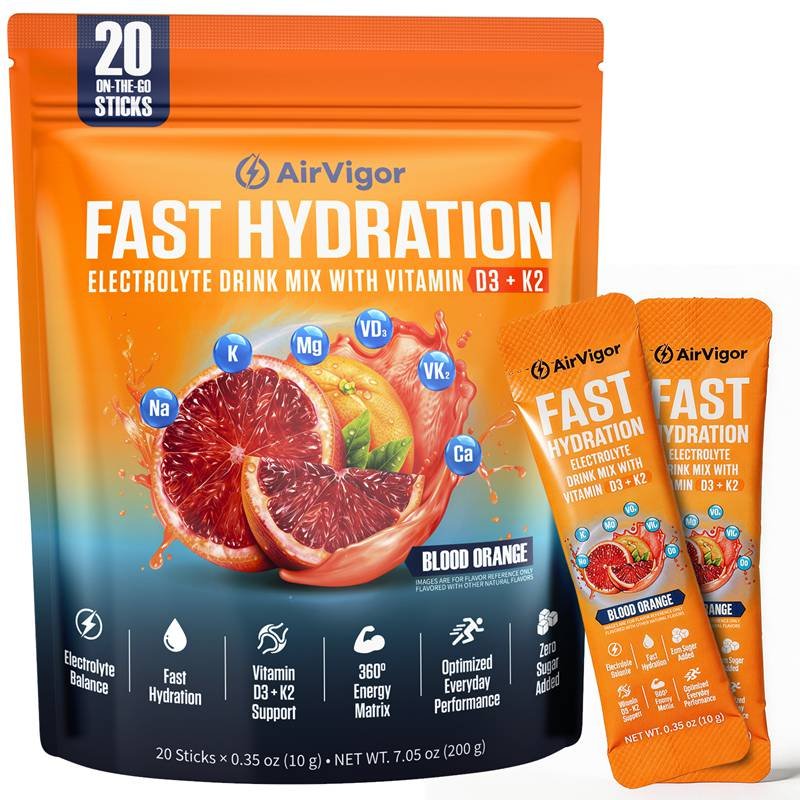
The easiest format is the one that fits the customer’s actual behavior with the least friction. Stick packs work well for travel, commuting, and gym bags. Tubs work better for home use and daily routines. Larger refill formats make sense for repeat users who already know they like the product and want value.
Format is not a minor packaging detail. It affects whether the product gets opened, mixed, and reordered. A strong formula in the wrong format creates unnecessary resistance. Customers care about convenience more than many brands realize.
| Format | Best fit |
|---|---|
| Stick packs | Gym bag, desk drawer, travel kit |
| Tubs | Kitchen counter, home routine |
| Refill pouches | Repeat users and value-focused customers |
| Larger formats | Family, team, or high-frequency settings |
AirVigor already has an advantage here because your company information shows clear attention to packaging structure, use scenario, and storage practicality. That makes the product feel more complete and more usable.
What Makes One Brand Stand Out?
In electrolyte powders, standing out takes more than a decent formula. Many products are acceptable. Far fewer feel clearly designed, clearly explained, and clearly reliable. Customers notice that difference quickly, even when they cannot describe it in technical language. They feel it when the formula seems easier to understand, the use case sounds more believable, and the product experience feels more repeatable.
This is where brand credibility matters. Customers are not only comparing sodium numbers or flavor names. They are also judging whether the company behind the product seems serious, stable, and transparent enough to trust long-term. In hydration, repeat purchase matters more than impulse excitement. A product that looks flashy but feels inconsistent will not hold the same value as one that feels measured, clear, and dependable.

What Makes AirVigor More Credible?
AirVigor becomes more credible when the company’s strengths are translated into customer advantages. Based on the information you provided, those strengths are not vague claims. They are operational signals that matter in a category where customers increasingly care about what is really in the formula and whether the product will stay consistent over time.
A few examples stand out:
| AirVigor strength | Why it matters |
|---|---|
| Real ingredient expression | Easier to compare and trust |
| High-standard raw material selection | Supports perceived quality |
| Internal testing capability | Signals better product control |
| Packaging built around use scenes | Improves real-world usability |
| Broad formulation capability | Helps fit products to real hydration needs |
That kind of structure gives customers more confidence than generic wellness language ever will. In a crowded market, clearer formulation logic is often more persuasive than louder branding.
How Do Quality Systems Protect Consistency?
Quality systems matter because customers do not buy a formula once. They buy a repeat experience. If the taste, texture, solubility, or general feel changes too much from batch to batch, trust falls quickly. For electrolyte powders, consistency is one of the strongest quality signals a brand can give.
From the company profile you shared, AirVigor’s advantage includes supplier review, formula review, process control, product testing, packaging checks, and broader quality management across production. Those are not abstract background details. They are what help keep the product stable over time.
| Quality system element | Customer-facing value |
|---|---|
| Supplier screening | More reliable raw materials |
| Formula verification | Better label confidence |
| Process control | More stable product performance |
| Batch-level checks | Better repeat consistency |
| Packaging review | Better storage and usability |
In hydration, consistency is part of product value. The formula is important, but so is whether the customer can trust the next order to feel like the last one.
Why Does Clear Formula Expression Matter?
Customers increasingly compare hydration products by label logic, not just slogans. They want to know what is inside, how much is inside, and why those ingredients are there. A formula that hides behind vague language becomes harder to trust. A formula that is easy to read becomes easier to buy again.
This fits AirVigor well because your brand story already emphasizes real ingredient inclusion, stable quality, and clear product communication. That should not stay in the background, company copies only. It should appear in how products are described, how labels are structured, and how product pages explain the formula’s purpose.
| Clear formula trait | Why it helps |
|---|---|
| Easy-to-read amounts | Faster understanding |
| Clear product role | Better customer fit |
| Honest use guidance | Stronger trust |
| Less clutter | More premium feel |
| Direct explanation | Easier reorder decision |
A strong formula does not need to sound complicated. It needs to make sense quickly and stay convincing after closer reading.
What Should Customers Ask Before Buying?
Before buying an electrolyte powder, customers should ask a few simple questions. These questions help separate good formulas from confusing ones and also help reduce disappointment after purchase.
| Question | Why it matters |
|---|---|
| What is this formula built for? | Clarifies fit |
| How much sodium is included? | Defines hydration role |
| Is sugar here for a real reason? | Helps judge formula purpose |
| Will I actually enjoy using this? | Affects repeat use |
| Does the brand explain the formula clearly? | Signals trustworthiness |
A good company helps customers ask better questions. It does not rely on confusion to make the product sound more advanced than it is.
Conclusion
A good electrolyte powder is not the one with the most dramatic claims or the longest label. It is the one that matches a real hydration need, uses ingredient levels that make sense, and gives the customer a drink they can realistically keep using. That is what drives repeat purchase, better reviews, and stronger brand trust over time.
For AirVigor, this category is a real opportunity. Your focus on real formula expression, carefully selected ingredients, testing capability, packaging practicality, and stable quality systems gives you the tools to build hydration products that are easier to trust and easier to position clearly in the market.
Whether the goal is to order finished AirVigor electrolyte products, build a stronger hydration line for your own brand, or develop an OEM or ODM electrolyte powder with better formula logic and clearer market fit, AirVigor has the structure to support both branded product sales and customized product development.