Skip to content

When most people look at an electrolyte formula, they understand sodium right away. Sodium is easy to explain: sweat, fluid balance, hydration support. Vitamin D3 is different. It is not the ingredient you notice in one sip, and it does not make a recovery drink feel stronger within ten minutes. That is exactly why it deserves more explanation, not less. In a formula like Recovery Electrolyte with D3K2, Vitamin D3 is not there to replace electrolytes. It is there to make the product do more than handle sweat loss alone. It pushes the formula toward a broader recovery role: one that speaks to calcium use, bone support, muscle-related function, indoor lifestyles, and the long-term demands of staying active week after week.
Vitamin D3 in Recovery Electrolyte with D3K2 mainly supports calcium absorption and helps maintain normal calcium and phosphate status in the body. That matters because active adults are not only losing sweat. They are also repeatedly stressing muscle, connective tissue, and bone through training, work, commuting, and daily movement. Current U.S. guidance continues to place recommended intake for most adults at about 15 mcg (600 IU) per day, rising to 20 mcg (800 IU) for older adults, while the adult upper limit remains 100 mcg (4,000 IU) per day from all sources.
This is where many customers start asking better questions. They stop asking only, “Does this product have electrolytes?” and start asking, “Does this formula actually fit the way I live?” If someone spends most of the day indoors, trains after work, wants fewer separate supplements, and prefers a product with broader recovery logic, Vitamin D3 becomes much more relevant. If someone only wants plain hydration after a short sweaty session, the value may feel less immediate. That difference matters. It is the difference between a formula that looks impressive on the label and one that makes sense in real life. And if you have ever wondered whether D3K2 in a recovery product is real value or just label decoration, Vitamin D3 is one of the clearest places to find the answer.
What Is Vitamin D3 in Recovery Electrolyte with D3K2?
Vitamin D3 in Recovery Electrolyte with D3K2 is a fat-soluble nutrient added for longer-range recovery support, not for direct sweat replacement. That distinction matters. When customers see an electrolyte formula, they usually expect ingredients that handle fluid balance right away, such as sodium or potassium. Vitamin D3 is different. It does not replace the minerals lost in sweat, and it does not make the drink work like a sports fuel. Its main role is to support calcium absorption, calcium balance, and the broader structural side of recovery, especially in a formula that is trying to do more than basic hydration alone. NIH materials continue to state that vitamin D promotes calcium absorption in the gut and helps maintain adequate serum calcium and phosphate concentrations for normal bone mineralization.
That is exactly why Vitamin D3 makes sense in a product named Recovery Electrolyte with D3K2. The electrolytes cover the immediate hydration job. Vitamin D3 helps expand the formula into something more complete for active adults who care about repeated training, daily nutrient support, bone health, and longer-term muscle and structural function. Many users today are not looking for a drink that only helps after a sweaty session. They want a formula that also fits an indoor lifestyle, long office hours, limited sunlight exposure, and a desire to reduce the number of separate products in their routine. In that context, Vitamin D3 is not random at all. It is part of the product’s “why.”
A simple ingredient-role table helps make this clearer:
| Ingredient | Main role in the formula | What the user is most likely to notice |
|---|---|---|
| Sodium | Sweat-loss replacement and hydration support | Better rehydration support |
| Potassium | Cellular electrolyte support | Better electrolyte balance logic |
| Magnesium | Muscle and nerve support | Better recovery-support positioning |
| Vitamin D3 | Calcium absorption and structural support | More complete daily-use value |
| Vitamin K2 | Calcium-use support | Stronger D3K2 pairing logic |
For customers, the biggest misunderstanding is often this: they assume Vitamin D3 is there to improve hydration directly. That is not really the point. Vitamin D3 is there because hydration is only one part of recovery. A brand that includes D3K2 is usually trying to say something bigger: this product is designed not only for what you lose in sweat, but also for what your body needs to keep recovering, adapting, and functioning well over time. That message becomes more important for people who train indoors, live in lower-sun routines, or want their electrolyte product to feel more complete than a plain mineral mix.
What Does Vitamin D3 in Recovery Electrolyte with D3K2 Do?
In practical terms, Vitamin D3 helps the body use calcium more effectively and supports the mineral side of long-term recovery.
Its main jobs include:
- helping calcium absorption in the gut
- helping maintain normal calcium and phosphate levels in the blood
- supporting bone mineralization
- contributing to normal muscle and neuromuscular function
These jobs are not “small extras.” They matter because active adults keep placing repeated demands on the body through training, commuting, standing, lifting, walking, and everyday movement. Recovery is not only about replacing fluid. It is also about supporting the systems that keep the body durable enough to keep training.
A practical function table:
| Function area | What Vitamin D3 helps with | Why it matters in a recovery formula |
|---|---|---|
| Calcium absorption | Helps the body absorb calcium | Makes calcium support more meaningful |
| Blood mineral balance | Helps maintain calcium and phosphate status | Supports normal mineral physiology |
| Bone support | Helps normal bone mineralization | Relevant for long-term active lifestyles |
| Muscle-related support | Helps normal neuromuscular function | Adds value beyond hydration alone |
For customers, the useful takeaway is simple: Vitamin D3 is not there to create a “felt effect” in one workout. It is there to support the body systems that make repeated activity sustainable.
Why Is Vitamin D3 in Recovery Electrolyte with D3K2 Important?
Vitamin D3 is important because many people now expect a recovery product to do more than solve one narrow problem.
A plain electrolyte product can be very useful for sweat loss and hydration. But a recovery formula often needs a broader reason to exist. Adding Vitamin D3 helps move the formula from “hydration only” to “hydration plus structural support.” That is a much stronger value proposition for users who train regularly, spend most of their day indoors, or want fewer separate products in their routine. NIH guidance continues to support Vitamin D’s role in calcium absorption and bone health, which is exactly why it is often paired with K2 rather than added alone without context.
This is especially relevant for customers in routines like these:
| User situation | Why Vitamin D3 becomes more relevant |
|---|---|
| Indoor office job + evening training | Less sunlight, more interest in complete support |
| Indoor gym training year-round | Broader nutrient support may matter more |
| Active adults over time | Bone and mineral support become more meaningful |
| Users simplifying supplement routines | D3K2 adds value in one product |
For these users, Vitamin D3 is important not because it sounds premium, but because it helps explain why the formula is called Recovery Electrolyte with D3K2 and not just “electrolyte powder.”
Is Vitamin D3 in Recovery Electrolyte with D3K2 Good for Daily Use?
For many adults, yes, as long as the serving amount fits the rest of the daily routine.
Current intake guidance continues to place recommended Vitamin D intake for most adults around 15 mcg (600 IU) per day, rising to 20 mcg (800 IU) in older adults, while the adult upper limit remains 100 mcg (4,000 IU) per day from all sources. That means a moderate D3 amount in a recovery electrolyte can fit daily use well, especially when the product is designed as part of a broader wellness routine rather than stacked carelessly on top of several other high-D3 products.
A practical daily-use table:
| Daily-use pattern | What to check |
|---|---|
| Recovery electrolyte only | Serving amount may fit easily |
| Electrolyte + multivitamin | Total Vitamin D intake matters more |
| Electrolyte + separate D3 supplement | Daily total should be reviewed |
| High-dose prescribed D3 already | Product label should be checked carefully |
For customers, the key point is simple: Vitamin D3 can work very well in a daily recovery formula, but it should be viewed as part of total daily Vitamin D intake, not as a completely separate category.
Which Users Need Vitamin D3 in Recovery Electrolyte with D3K2 Most?
Vitamin D3 tends to be most relevant for people whose lifestyle makes a broader recovery formula more useful than a plain electrolyte drink.
That often includes:
- indoor fitness users
- office workers with limited daylight exposure
- active adults who want more than hydration alone
- users who prefer all-in-one routines
- people who want a broader bone-and-mineral support story in their recovery product
A practical fit table:
| User type | Why D3 may fit well |
|---|---|
| Indoor gym user | Less sun exposure, stronger case for broader support |
| Office worker | Daily routine may make D3 more relevant |
| Active adult wanting fewer products | D3K2 adds convenience and formula depth |
| User focused only on sweat replacement | D3 may feel less immediately relevant |
For customers, the core message is this: Vitamin D3 is most useful when the goal is not only “replace what I lost in sweat” but also “support the bigger recovery picture around how I live, work, and train.”
How Much Vitamin D3 is in Recovery Electrolyte with D3K2?
Vitamin D3 amounts are usually shown in micrograms (mcg) or international units (IU), and many customers need both on the page to read the label confidently. The conversion is straightforward: 1 mcg = 40 IU, so 15 mcg = 600 IU, 20 mcg = 800 IU, and 25 mcg = 1,000 IU. For most adults, current guidance still centers around 15–20 mcg (600–800 IU) per day, while the adult upper limit remains 100 mcg (4,000 IU) per day from all sources.
How Much Vitamin D3 is in Recovery Electrolyte with D3K2 Per Serving?
In finished products, a practical D3 range often lands around 10–25 mcg (400–1,000 IU) per serving. This gives the formula a meaningful daily-support role without pushing intake close to the upper limit for most adults. Lower servings are often used when the product is expected to be stacked with a multivitamin. Higher servings are more common when the product is positioned as a more complete premium formula.
A practical serving table:
| Vitamin D3 per serving | IU equivalent | What it often suggests |
|---|---|---|
| 10 mcg | 400 IU | Light daily support |
| 15 mcg | 600 IU | Near common adult baseline intake |
| 20 mcg | 800 IU | Stronger daily-support positioning |
| 25 mcg | 1,000 IU | Broader premium-support positioning |
For customers, the important question is not only “Is this a good number?” It is “Does this number still make sense after I add in my other supplements, fortified foods, and daily routine?”
What Is the Upper Limit for Vitamin D3 in Recovery Electrolyte with D3K2?
For adults, the widely used upper limit remains 100 mcg (4,000 IU) per day from all sources. That includes everything: electrolyte formulas, multivitamins, standalone D3 capsules, fortified drinks, and other foods. Very high intake over time can raise the risk of adverse effects related to excessive vitamin D, especially through elevated blood calcium.
A simple context table helps:
| Total daily Vitamin D3 intake | Practical meaning |
|---|---|
| 15–20 mcg (600–800 IU) | Common recommended intake range |
| 25–50 mcg (1,000–2,000 IU) | Common supplemental-use range |
| 100 mcg (4,000 IU) | Adult upper limit |
| Above 100 mcg (4,000 IU) | Needs more caution unless medically directed |
For most customers, a recovery electrolyte alone is unlikely to create a problem. The more realistic issue is stacking several sources without realizing how quickly total intake adds up.

How Does Vitamin D3 in Recovery Electrolyte with D3K2 Work?
Vitamin D3 works in a very different way from sodium, potassium, or magnesium. It is not a sweat-replacement ingredient, and it does not make a hydration drink feel stronger within a few minutes. Its role is slower, broader, and more structural. Vitamin D3 helps the body absorb calcium in the gut and helps maintain normal calcium and phosphate levels in the blood, which are necessary for normal bone mineralization and neuromuscular function. That is the real reason it appears in a formula like Recovery Electrolyte with D3K2. It is there to make the product support more than fluid balance alone.
For customers, the most useful way to understand Vitamin D3 is this: electrolytes help the body deal with what training takes out right now, while Vitamin D3 helps support what the body needs to keep adapting over time. That makes D3 especially relevant in formulas aimed at daily use, indoor lifestyles, and active adults who want broader recovery support rather than a plain hydration-only product. Research and guidance continue to show that vitamin D’s clearest roles are tied to calcium handling, bone health, and broader musculoskeletal support, while performance effects are often more noticeable when starting vitamin D status is low.
A practical role table makes this easier to read:
| Ingredient type | Main role in the product |
|---|---|
| Sodium / potassium | Hydration and electrolyte balance |
| Magnesium | Muscle and nerve support |
| Vitamin D3 | Calcium absorption and broader structural support |
| Vitamin K2 | Calcium-use support and formula synergy |
That is why D3 belongs in this kind of formula. It is not trying to replace electrolytes. It is helping define the product as a more complete recovery-support system rather than only a sweat-replacement mix.
How Does Vitamin D3 in Recovery Electrolyte with D3K2 Work in the Body?
Vitamin D3 mainly works by helping the body manage calcium and phosphate properly.
The most important mechanism is intestinal calcium absorption. Vitamin D helps the body absorb calcium from food and supplements more effectively, and it also helps maintain blood levels of calcium and phosphate needed for normal bone mineralization. Without adequate vitamin D, calcium handling becomes less effective, and over time, that can weaken the structural support the body depends on. NIH materials continue to describe this as one of vitamin D’s core functions.
This matters for active adults because recovery is not only about water and minerals lost in sweat. It is also about repeated loading of the skeletal system, repeated muscle contraction, and the constant physical cost of training, walking, lifting, commuting, and daily movement.
A practical body-function table:
| Body system | What Vitamin D3 mainly supports |
|---|---|
| Gut absorption | Better calcium absorption |
| Blood mineral balance | Helps maintain calcium and phosphate levels |
| Skeletal system | Normal bone mineralization |
| Neuromuscular system | Supports normal muscle-related physiology |
For customers, the key idea is simple: Vitamin D3 is less about a “workout feeling” and more about helping the body manage the mineral side of long-term physical function.
How Does Vitamin D3 in Recovery Electrolyte with D3K2 Relate to Training?
Vitamin D3 does not act like caffeine, creatine, or carbohydrates. It does not acutely raise energy, improve pump, or directly fuel the session. Its relationship to training is more indirect, but still important.
The most useful way to think about it is this: Vitamin D3 matters more when someone’s baseline status is low. Reviews in athletes and active adults continue to suggest that vitamin D supplementation is more likely to show meaningful benefits in muscle-related outcomes or physical function when starting vitamin D status is insufficient or deficient. When status is already adequate, the effect on performance measures is often smaller or mixed.
That is why D3 can be especially relevant for:
- indoor athletes
- office workers who train after work
- users in lower-sun routines
- people who want a broader daily support formula
A practical training table:
| Training context | Why D3 may matter more |
|---|---|
| Indoor training year-round | Less sunlight may reduce vitamin D status |
| Regular strength or fitness training | Structural support becomes more relevant over time |
| Users with low baseline vitamin D | More likely to benefit from supplementation |
| Users already vitamin D sufficient | Extra gains may be smaller |
For customers, the honest message is clear: Vitamin D3 is not in the formula to make one workout feel bigger. It is there because training is a long-term stress, and D3 supports part of the body system that long-term training depends on.
How Does Vitamin D3 in Recovery Electrolyte with D3K2 Relate to Hydration?
Vitamin D3 is not a hydration nutrient in the same direct way as sodium, potassium, or other electrolytes.
It does not replace salt or sodium.
It does not help fluid retention like sodium can.
It does not directly solve dehydration during a workout.
So if the question is “Does Vitamin D3 hydrate me?” the practical answer is no.
But that does not make it out of place in a recovery electrolyte. It simply means its role is different. In a product like Recovery Electrolyte with D3K2, the electrolytes handle the immediate fluid and mineral replacement side, while Vitamin D3 supports the broader mineral-support side of the recovery story.
A simple comparison makes this clearer:
| Ingredient group | Main role |
|---|---|
| Electrolytes | Immediate hydration support |
| Vitamin D3 | Longer-range mineral and structural support |
| Vitamin K2 | Calcium-use support and formula depth |
For customers, the takeaway is straightforward: Vitamin D3 is in the formula next to hydration ingredients, not instead of them. It broadens the formula’s value without changing what the electrolytes are there to do.
What Evidence Supports Vitamin D3 in Recovery Electrolyte with D3K2?
The strongest evidence for Vitamin D3 is centered on calcium absorption, bone health, and broader musculoskeletal support, not on immediate hydration or guaranteed sports-performance gains.
NIH materials continue to be very clear here. Vitamin D promotes calcium absorption, helps maintain adequate calcium and phosphate concentrations in the blood, and is required for normal bone mineralization. Without enough vitamin D, bones can become thin, brittle, or poorly mineralized over time.
On the training side, the evidence is more nuanced. Reviews in athletes and active adults continue to show that vitamin D supplementation may be more useful when baseline status is low, while benefits in already sufficient individuals are often smaller or inconsistent. That is an important point for customers because it helps set realistic expectations. Vitamin D3 is a serious nutrient, but it is not a shortcut to instant performance changes.
A practical evidence table:
| Question | Practical answer |
|---|---|
| Is Vitamin D3 important for calcium absorption? | Yes |
| Is Vitamin D3 important for bone health? | Yes |
| Is Vitamin D3 a direct hydration ingredient? | No |
| Can it matter more when vitamin D status is low? | Yes |
| Does it guarantee better athletic performance? | No, results are mixed |
For customers, this is the most useful reading of the evidence: Vitamin D3 is a high-value structural-support nutrient, not a fast “performance booster.”
How Does Vitamin D3 in Recovery Electrolyte with D3K2 Work With Other Ingredients?
Vitamin D3 works best when it is not treated as a standalone ingredient. In a finished recovery formula, its value depends a lot on what else is around it. That is why Vitamin D3 makes much more sense in a formula that also includes Vitamin K2, calcium-related positioning, magnesium, and electrolytes than in a random drink where it has no clear role.
This is where formula logic matters. Customers are not only asking, “Is D3 good?” They are also asking, “Why is D3 in this product specifically?” The best answer is that D3 supports the mineral side of recovery, while the electrolytes support the fluid side of recovery.
A practical formula table:
| Ingredient | Main role in the system |
|---|---|
| Sodium | Hydration and sweat-loss replacement |
| Potassium | Cellular electrolyte support |
| Magnesium | Muscle and nerve support |
| Vitamin D3 | Calcium absorption and mineral regulation |
| Vitamin K2 | Calcium-use support and formula synergy |
That is what makes the system coherent. D3 is not there to look premium. It is there because it has a real place in a broader recovery-support formula.
How Does Vitamin D3 in Recovery Electrolyte with D3K2 Work With Calcium?
This is the most important relationship in the whole Vitamin D3 story.
Vitamin D3 helps the body absorb calcium in the gut and helps maintain the mineral environment needed for normal bone mineralization. That means calcium alone is not the full story. If Vitamin D status is poor, calcium use becomes less efficient. This is exactly why D3 and calcium are discussed together so often in nutrition guidance.
A practical pairing table:
| Ingredient | Main contribution |
|---|---|
| Calcium | The structural mineral |
| Vitamin D3 | Helps the body absorb and use calcium more effectively |
For customers, the takeaway is simple: calcium gives the formula structural value, but Vitamin D3 helps make that calcium support more meaningful.

How Does Vitamin D3 in Recovery Electrolyte with D3K2 Work With Vitamin K2?
Vitamin D3 and Vitamin K2 are often paired because they are commonly positioned as a calcium-support team.
Vitamin D3 helps increase calcium absorption. Vitamin K2 is often discussed in relation to calcium handling and bone-related support. Reviews continue to suggest that D and K may be complementary in bone-health contexts, even though outcome strength varies by population and study design.
A practical pairing table:
| Ingredient | Main role |
|---|---|
| Vitamin D3 | Helps absorb calcium |
| Vitamin K2 | Supports broader calcium-use logic |
For customers, this pairing matters because it gives the formula a clearer reason to exist. It signals that the product is not just about hydration. It is also about building a broader mineral-support story that makes sense for daily active use.
How Does Vitamin D3 in Recovery Electrolyte with D3K2 Work With Magnesium?
Magnesium and Vitamin D3 are different kinds of ingredients, but they complement each other well in a recovery formula.
Magnesium is more often associated with muscle function, nerve function, and energy-related processes. Vitamin D3 is more strongly associated with calcium handling and structural support. Some reviews also discuss magnesium as part of the broader mineral network relevant to musculoskeletal health and vitamin D metabolism.
A simple comparison table:
| Ingredient | Main support area |
|---|---|
| Magnesium | Muscle, nerve, and mineral support |
| Vitamin D3 | Calcium absorption and structural support |
For customers, the value of this pairing is that it makes the formula feel more complete. Magnesium supports the active-use side of the formula. Vitamin D3 supports the longer-range mineral side.
How Does Vitamin D3 in Recovery Electrolyte with D3K2 Work With Electrolytes?
Vitamin D3 and electrolytes work on different timelines and different jobs.
Electrolytes such as sodium and potassium are there to support hydration, fluid balance, and sweat-loss replacement right around the session. Vitamin D3 is there for broader nutrient support over time. It is not supposed to replace the role of electrolytes, and electrolytes do not replace the role of D3.
A practical role split table:
| Ingredient group | Main job |
|---|---|
| Electrolytes | Immediate hydration support |
| Vitamin D3 | Longer-range mineral and structural support |
For customers, this explains why the formula contains both. The electrolytes help the product feel useful now. Vitamin D3 helps make the formula more meaningful over time.
Who Should Use Vitamin D3 in Recovery Electrolyte with D3K2?
Vitamin D3 in Recovery Electrolyte with D3K2 makes the most sense for people who want a formula that does more than replace sweat. Electrolytes mainly support short-term hydration needs. Vitamin D3 adds a longer-range nutrition layer, especially for people who care about calcium use, bone support, muscle-related function, and a more complete active-lifestyle formula. NIH materials continue to note that vitamin D is essential for calcium absorption and bone mineralization, and low vitamin D status remains common enough that many adults use supplements to support adequacy.
That does not mean every person needs extra vitamin D3 from an electrolyte product. The best fit is often the person whose routine makes broader support useful: indoor training, low sun exposure, long work hours indoors, or a preference for fewer separate supplements. The weaker fit is often the person who already gets plenty of vitamin D from diet, fortified foods, sunlight, and other supplements. So the most practical question is not “Is vitamin D3 good?” The better question is: Does adding vitamin D3 to this recovery product make sense in my real routine?
A practical fit table looks like this:
| User group | Fit level | Why |
|---|---|---|
| Indoor gym users | High | Less sun exposure, more interest in complete recovery support |
| Office workers | High | Long indoor hours may make broader nutrient support more relevant |
| Active adults wanting fewer separate products | High | D3K2 adds value beyond basic hydration |
| Users already taking standalone D3 daily | Moderate | Total intake matters more |
| Heavy outdoor sun-exposed users | Lower to moderate | May already cover more vitamin D naturally |
| Users only wanting hydration | Lower | Electrolytes matter more than D3 |
For customers, this section matters because it helps answer a simple buying question: am I paying for an ingredient that fits my life, or just one that looks good on the label?
Who Benefits Most From Vitamin D3 in Recovery Electrolyte with D3K2?
The people who usually benefit most are the ones whose daily routine makes vitamin D support more relevant over time, not just on workout days.
That often includes:
- people who train mostly indoors
- office workers with limited daylight exposure
- active adults who want broader support than hydration alone
- users who prefer all-in-one supplement routines
- adults interested in bone and muscle support as part of recovery planning
NIH materials continue to note that vitamin D can come from sunlight, foods, and supplements, but many people still rely on supplements to help maintain adequate intake, especially when lifestyle limits sun exposure. Vitamin D insufficiency is also discussed often in athlete and active-adult literature, especially in indoor sports or winter settings.
A practical benefit table:
| User type | Why D3 may fit well |
|---|---|
| Indoor lifter or gym user | Less sun exposure, more interest in complete support |
| Office worker who trains after work | Daily routine may make broader nutrient support more useful |
| Active adult over 30 or 40 | Bone and mineral support may feel more relevant |
| User reducing supplement clutter | Recovery electrolyte with D3K2 can simplify the routine |
For these users, vitamin D3 is usually appealing because it helps the formula do more than address sweat. It helps position the product as part of a daily active-lifestyle support routine.
Who May Not Need Extra Vitamin D3 in Recovery Electrolyte with D3K2?
Not everyone needs more D3 from an electrolyte product.
Some users may already get enough vitamin D from a combination of:
- regular sun exposure
- fortified foods
- multivitamins
- standalone vitamin D supplements
- other active-nutrition products
This is where “more complete formula” and “more necessary formula” are not always the same thing. A product with vitamin D3 may still be a strong product, but it may not fill a meaningful gap for a user already covering vitamin D well from other sources. ODS materials continue to emphasize that vitamin D intake should be viewed across all sources, not just one product.
A practical table makes this easier:
| Situation | Is extra D3 always needed? |
|---|---|
| Daily standalone vitamin D supplement | Often not always |
| Multivitamin plus fortified foods | Maybe, depends on total intake |
| Regular sun exposure and balanced routine | Maybe less relevant |
| Indoor lifestyle with little sun | Often more relevant |
| User seeking hydration only | Often less relevant |
For customers, this prevents a common mistake: assuming every added ingredient is equally valuable for every person. Sometimes the extra ingredient is truly useful. Sometimes it is just redundant.
Who Should Be Careful With Vitamin D3 in Recovery Electrolyte with D3K2?
Vitamin D3 is widely used and generally well tolerated in normal supplemental ranges, but there are still situations where users should be more careful.
The main caution groups usually include:
- people already taking high-dose vitamin D separately
- people with conditions related to high blood calcium
- people with certain kidney conditions
- users on medically supervised vitamin D therapy
- people who regularly stack several fortified or supplemented products
The reason is simple: vitamin D can build up total daily exposure, and the adult upper limit remains 100 mcg (4,000 IU) per day from all sources. Vitamin D toxicity is uncommon, but when intake becomes excessive, it can lead to problems related to hypercalcemia, which can affect the kidneys, soft tissues, and heart. NIH materials continue to describe the upper limit and note that very high vitamin D intake can have adverse effects.
A practical caution table:
| Health or supplement situation | Practical guidance |
|---|---|
| Healthy adult using moderate D3 intake | Usually manageable |
| Multivitamin plus electrolyte with D3 | Check total daily intake |
| Standalone high-dose D3 use | Needs more awareness |
| History of hypercalcemia or kidney stones | Review more carefully |
| Medically supervised vitamin D therapy | Coordinate with care plan |
For customers, the takeaway is simple: vitamin D3 is useful, but it still counts toward your whole-day intake.
What Drug Interactions Matter for Vitamin D3 in Recovery Electrolyte with D3K2?
Vitamin D3 has more meaningful drug-interaction relevance than some people expect, especially because it affects calcium handling.
NIH ODS materials continue to identify several notable interaction areas. These include:
- orlistat, which can reduce vitamin D absorption
- statins, where interaction concerns may exist depending on the product and pathway
- steroids, which can impair vitamin D metabolism and calcium balance over time
- thiazide diuretics, which, in combination with vitamin D, may raise the risk of hypercalcemia in some users, especially older adults or those with compromised kidney function
That does not mean a recovery electrolyte with D3K2 is automatically unsafe. It means users already managing medication-related nutrient issues should not treat the vitamin D on the label as irrelevant.
A practical interaction table:
| Medication situation | Why extra attention may help |
|---|---|
| Thiazide diuretic use | Calcium-related effects may matter more |
| Long-term steroid use | Vitamin D status may already be relevant |
| Orlistat use | Absorption may be reduced |
| High-dose D3 prescribed already | Total intake should be tracked |
| No relevant medication issues | Usually easier to manage |
For customers, the safest message is this: if a doctor has already discussed calcium, vitamin D, kidneys, or long-term medication effects with you, the D3 amount in your recovery product should be part of that conversation too.

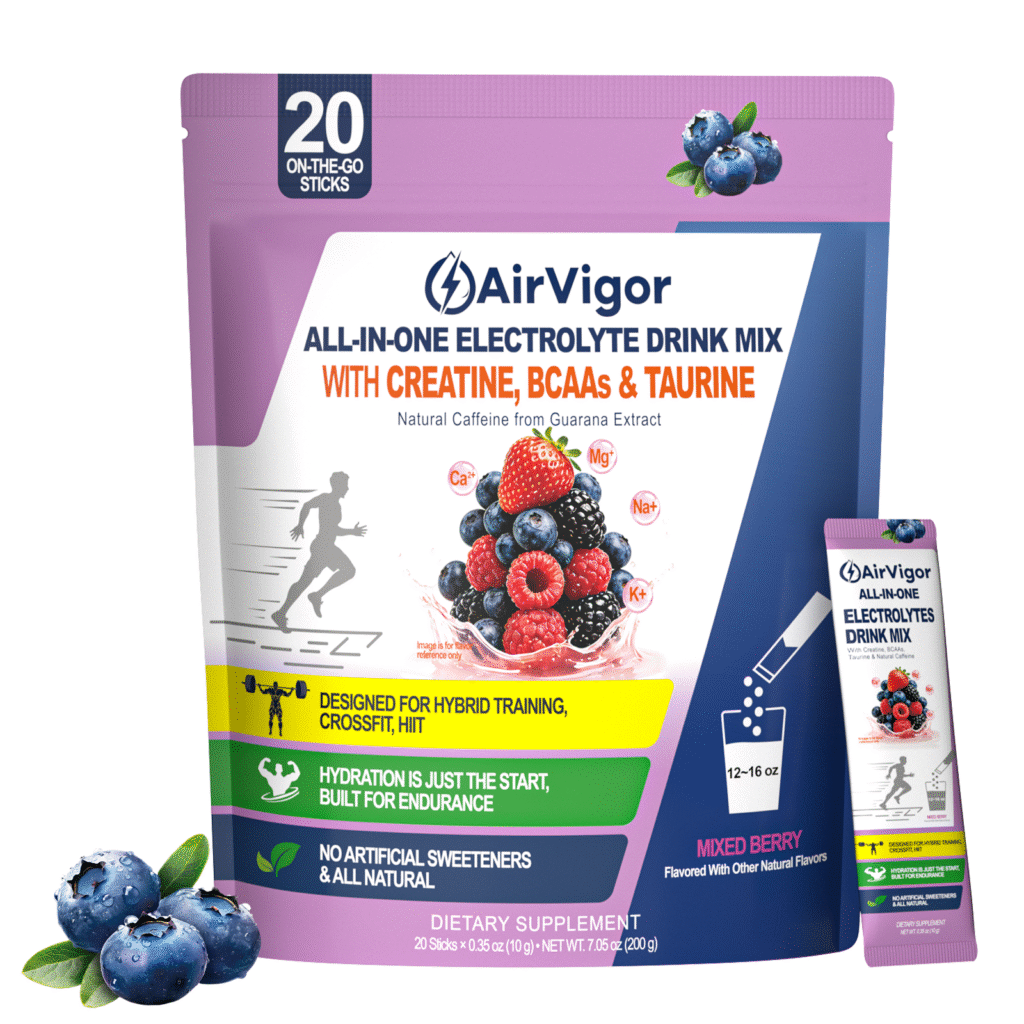
Working With AirVigor
Once you understand what vitamin D3 really does, Recovery Electrolyte with D3K2 becomes easier to evaluate. D3 is not there to make the product look more premium without purpose. It is there because some users want a formula that goes beyond basic electrolyte replacement and fits a broader recovery-support routine.
That matters for both end users and brand owners.
For end users, the real questions are:
- Does this product only hydrate, or does it also support a broader daily routine?
- Is the vitamin D3 amount meaningful without being excessive?
- Does it fit with the rest of my supplements?
- Does the D3K2 pairing make the formula feel more complete for long-term active use?
For businesses, vitamin D3 is one of the clearest ways to shift a product from “plain electrolyte” to “broader recovery and active-lifestyle formula.” But it only works when the dose, positioning, and partner ingredients make sense.
A smart formulation process should answer questions like:
- Is the product meant for daily use or occasional recovery only?
- Should the D3 dose be light, moderate, or more premium-positioned?
- How should D3 balance with K2, calcium, magnesium, and electrolytes?
- Is the target customer indoors, active, aging, convenience-focused, or all of the above?
- Does the formula solve a real need, or is D3 just being added because it sounds good?
Based on the company profile you provided, AirVigor is well-positioned to support both finished-product ordering and custom formula development. With its in-house R&D structure, testing systems, manufacturing standards, OEM/ODM capabilities, and multi-market supply network, AirVigor can help build recovery electrolyte products that combine real hydration function with broader nutrient support, including vitamin D3 and K2.
So whether you are:
- looking to order AirVigor branded products
- developing a private-label recovery electrolyte
- planning a custom D3K2 electrolyte formula for a specific market or audience
The next useful step is to define the real use case clearly. Is the product for office workers with low sun exposure? Indoor fitness users? General active adults? Daily recovery support? Once that use case is clear, the right D3 dose, K2 pairing, electrolyte balance, and positioning become much easier to build correctly.
If you want to explore product ordering, OEM/ODM development, or custom formula pricing, contacting the AirVigor team is the most practical next step. The best vitamin D3 recovery formula is not the one with the longest label. It is the one whose ingredients actually match the people who will use it.