Skip to content
Best Ingredients for Post-Workout Recovery: What Really Works?
# Your Trusted Dietary Supplement Brand In US
- Emily

Most people don’t struggle because they train too hard—they struggle because they don’t recover well enough. Soreness that lingers for days, heavy legs on stairs, poor sleep after workouts, or that “flat” feeling that kills motivation aren’t signs of weak discipline. They’re signs that recovery inputs don’t match training output.
Post-workout recovery isn’t about chasing more supplements—it’s about replacing what training actually depletes. Intense exercise drains fluids, electrolytes, energy stores, and amino acids, while creating muscle damage that needs raw materials to repair. Without the right ingredients, recovery stalls, fatigue accumulates, and performance quietly plateaus—even if your workouts look consistent on paper.
The ingredients that truly work for post-workout recovery are surprisingly simple: protein to rebuild muscle tissue, electrolytes (especially sodium and magnesium) to restore hydration and muscle function, creatine to replenish short-term energy capacity, and essential micronutrients that support contraction, relaxation, and sleep. This guide breaks down what actually matters, what’s optional, and how to build a recovery routine you can repeat—without overthinking it.
What Happens After a Workout?
After a workout, your body shifts into repair mode: muscle fibers rebuild, energy stores (ATP and glycogen) are replenished, and fluids plus electrolytes lost in sweat must be restored. Recovery is the process that turns training stress into adaptation—without it, soreness and fatigue accumulate and performance stalls.
Recovery is a Whole-Body Reset
Recovery isn’t one thing. It’s a chain of events across muscle tissue, nervous system, hydration status, and energy metabolism.
1) Microscopic muscle damage
Strength training and high-intensity work create microtears in muscle fibers. This is normal. Your body responds by repairing and reinforcing those fibers. That’s how you get stronger. But the repair requires building blocks—mainly amino acids from protein—plus adequate energy and micronutrients.
2) Energy depletion
ATP is your immediate energy currency. It drops fast during intense work. Glycogen (stored carbohydrate) is what fuels repeated efforts and longer sessions. When glycogen is low, workouts feel harder and recovery feels slower. You can still “push through,” but you’ll pay for it later—especially if you stack hard days back-to-back.
3) Hydration + electrolyte disruption.
Sweat isn’t just water. It contains sodium, chloride, and smaller amounts of potassium, magnesium, and calcium. If you only replace fluid and not electrolytes—especially after heavy sweating—you can end up feeling “hydrated but off”: headache, low energy, muscle tightness, or cramps.
4) Nervous system stress.
Hard training is a stress signal. Your nervous system and hormones (like cortisol) ramp up. Good recovery helps you “downshift.” Poor recovery keeps you stuck in a stressed state—sleep is lighter, heart rate stays elevated, and your next workout feels harder than it should.
A simple way to think about it: your workout creates a recovery “bill.” You pay it with protein, fluids, electrolytes, sleep, and smart timing. Pay it well, and you adapt. Don’t pay it, and the bill compounds.
| Time After Training | What Your Body Prioritizes | What Helps Most |
|---|---|---|
| 0–60 minutes | Rehydration, cooling down, nervous system shift | Water + electrolytes, light carbs if needed |
| 1–3 hours | Muscle protein synthesis support, glycogen refill begins | Protein meal/shake, carbs based on training volume |
| 3–24 hours | Tissue repair, inflammation management, sleep quality | Total daily protein, magnesium, hydration, sleep |
| 24–48 hours | Full recovery for many sessions; lingering fatigue if under-fueled | Consistency: protein, electrolytes, calories, rest |
Where AirVigor fits naturally:
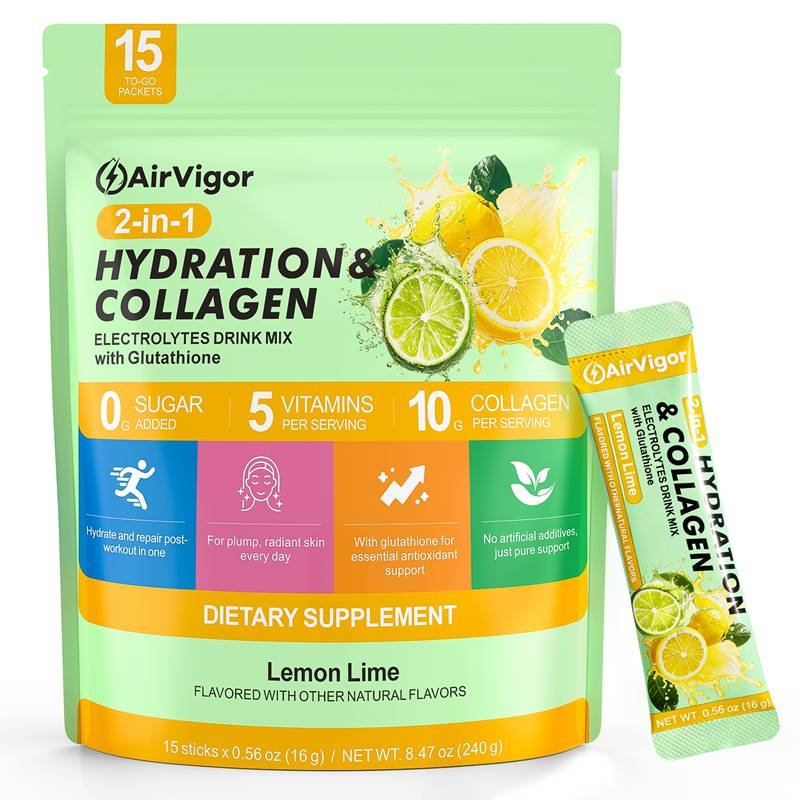
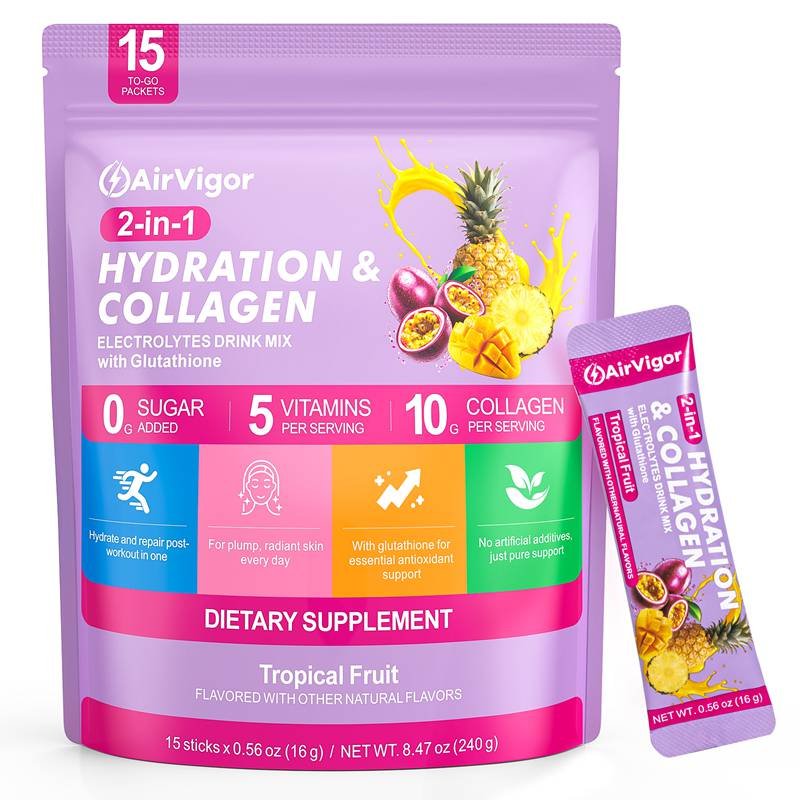
AirVigor products are designed around this timeline—electrolytes for the immediate “reset,” protein for rebuilding, and creatine for ongoing energy support. Recovery isn’t a single scoop. It’s a system you can execute.
Which Ingredients Support Muscle Recovery?
Muscle recovery is driven by sufficient protein (amino acids for repair) and smart fueling. Protein quality matters, but total daily intake matters more. A practical target for active people is consistent protein across the day, with a protein feeding after training when convenient.
Protein is the Foundation—But It’s Not a Magic Trick
If recovery had a “non-negotiable,” it’s protein. Your muscles are literally built from it. But the internet often turns protein into either a religion (“drink it immediately or you wasted your workout”) or a branding contest (“this one protein is superior”). The truth is more grounded: most people under-eat protein consistently, and they over-focus on timing.
Which Proteins Aid Repair?
Whey protein:
- Fast-digesting, high in leucine (a key trigger for muscle protein synthesis).
- Great right after training if you want something quick and easy.
Casein protein:
- Slower-digesting.
- Useful when you want protein that “sticks around” (often evening).
Plant proteins:
- Can absolutely work.
- Often best as blends (pea + rice, etc.) to improve amino acid profile.
Food counts too.
Chicken, Greek yogurt, eggs, tofu, lean beef, tempeh—these are “recovery supplements” in a different form. For many people, a normal meal 1–3 hours post-workout is perfect.
Practical daily target (simple, not obsessive):
- Most active people do well in the range of 1.6–2.2 g/kg/day.
- If you’re cutting calories, older, or training hard, aim toward the higher end.
How AirVigor helps:
If you’re the person who finishes training and doesn’t want a big meal, a well-formulated protein powder is basically compliance insurance. AirVigor focuses on solubility and a clean, consistent experience—because if a product is “technically great” but you hate drinking it, it doesn’t help.
What Is the 2-Hour Protein Rule?
The “2-hour protein rule” is a simplified version of an older idea: the anabolic window. Early research suggested that muscle-building signals are elevated after training, so protein intake soon after could be especially helpful.
Here’s the modern, practical take:
- Yes, protein after training is beneficial.
- No, you don’t need to panic if you don’t drink a shake immediately.
- Total daily protein and regular distribution matter more than hitting a stopwatch.
When the “2-hour rule” matters more:
- You trained fasted or with little protein earlier in the day
- You did a long session or double session
- You’re trying to maximize muscle gain and want to be consistent
When it matters less:
- You had a protein-rich meal within a couple hours before training
- Your daily protein is already adequate
- Your main goal is general fitness, not optimizing every variable
Simple rule that actually works:
Get protein within 1–3 hours after training most of the time, and hit your daily total consistently. That’s it.
| Situation | Best Post-Workout Option | Why |
|---|---|---|
| Appetite low | Protein shake | Easy calories + amino acids |
| Appetite normal | Normal meal | Works just as well |
| Training twice/day | Protein + carbs soon after | Faster refuel between sessions |
| Cutting weight | High-protein meal/shake | Preserves muscle during deficit |
Which Electrolytes Improve Recovery?
Electrolytes support recovery by restoring hydration, improving fluid retention, and supporting muscle and nerve function. The most important electrolyte for most athletes is sodium, followed by potassium and magnesium, depending on sweat loss and diet. Water alone is often not enough after heavy sweating.
“I Drank Water” Isn’t the Same as Rehydration
If you’ve ever finished a workout, drank a lot of water, and still felt… off—this section is for you. True rehydration is about fluid + electrolytes, not fluid alone.
What Electrolytes Are Lost in Sweat?
Sweat loss varies wildly. Two people can do the same workout and lose very different amounts of sodium. This is why “one-size-fits-all” hydration advice fails.
Most common sweat losses:
- Sodium (Na): primary loss, crucial for fluid retention and nerve signaling
- Chloride (Cl): pairs with sodium to maintain fluid balance
- Potassium (K): supports muscle function and cellular balance
- Magnesium (Mg): supports relaxation and nervous system regulation
- Calcium (Ca): contraction signaling and neuromuscular function
Signs you may need more electrolytes post-workout:
- Headache after training
- Feeling “flat” or unusually fatigued
- Muscle tightness/cramps later in the day
- Salt stains on clothing, heavy sweater
- Frequent bathroom trips after drinking lots of water (poor retention)
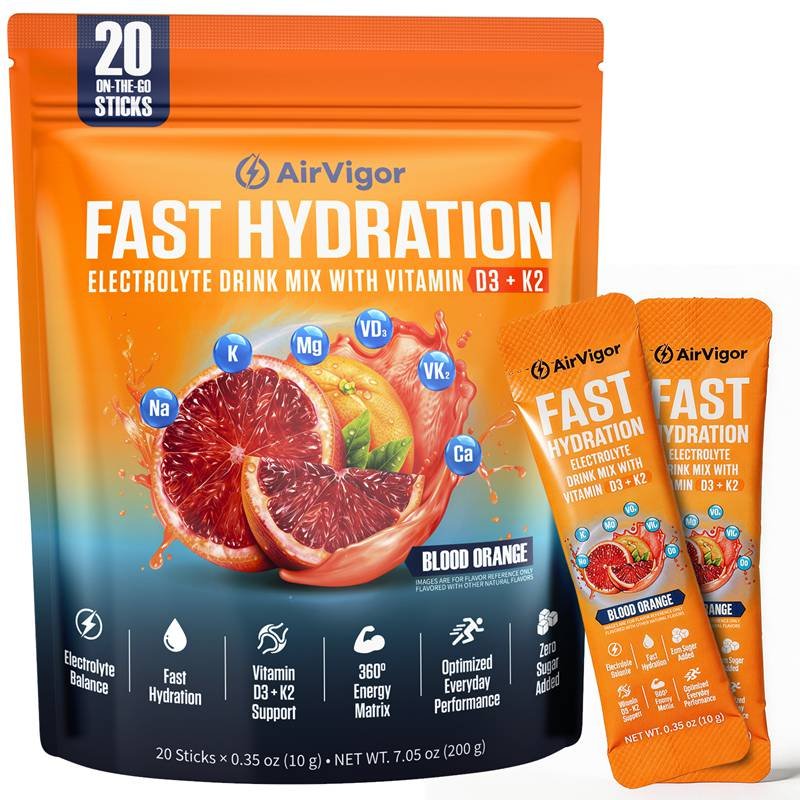
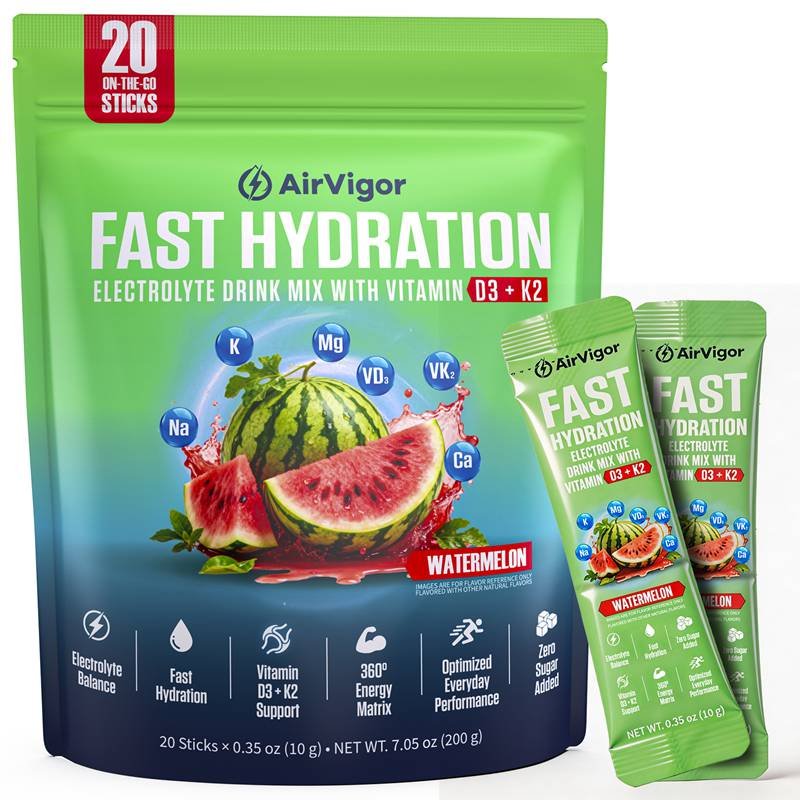
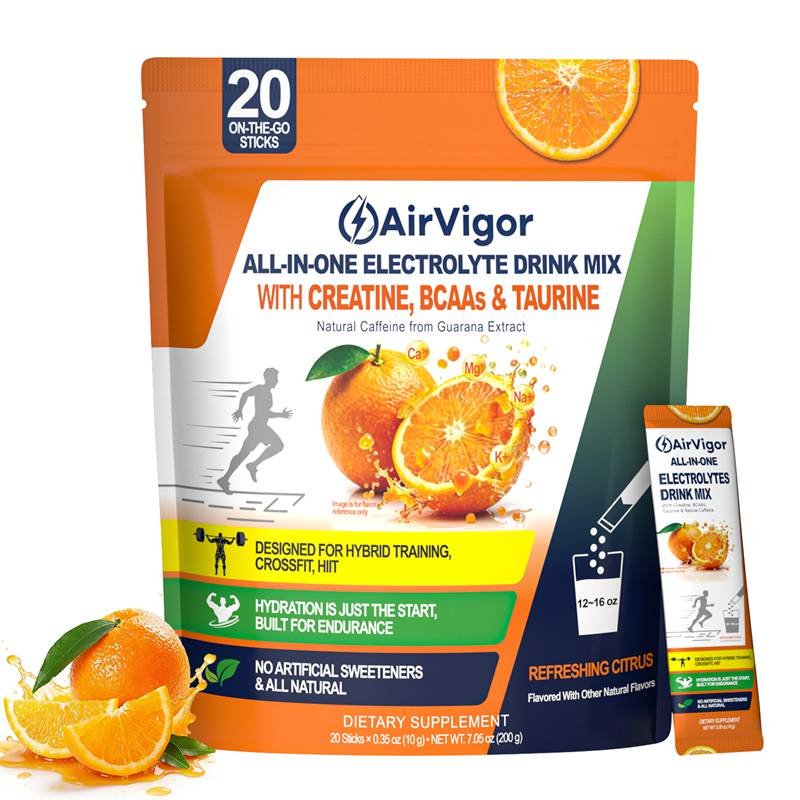
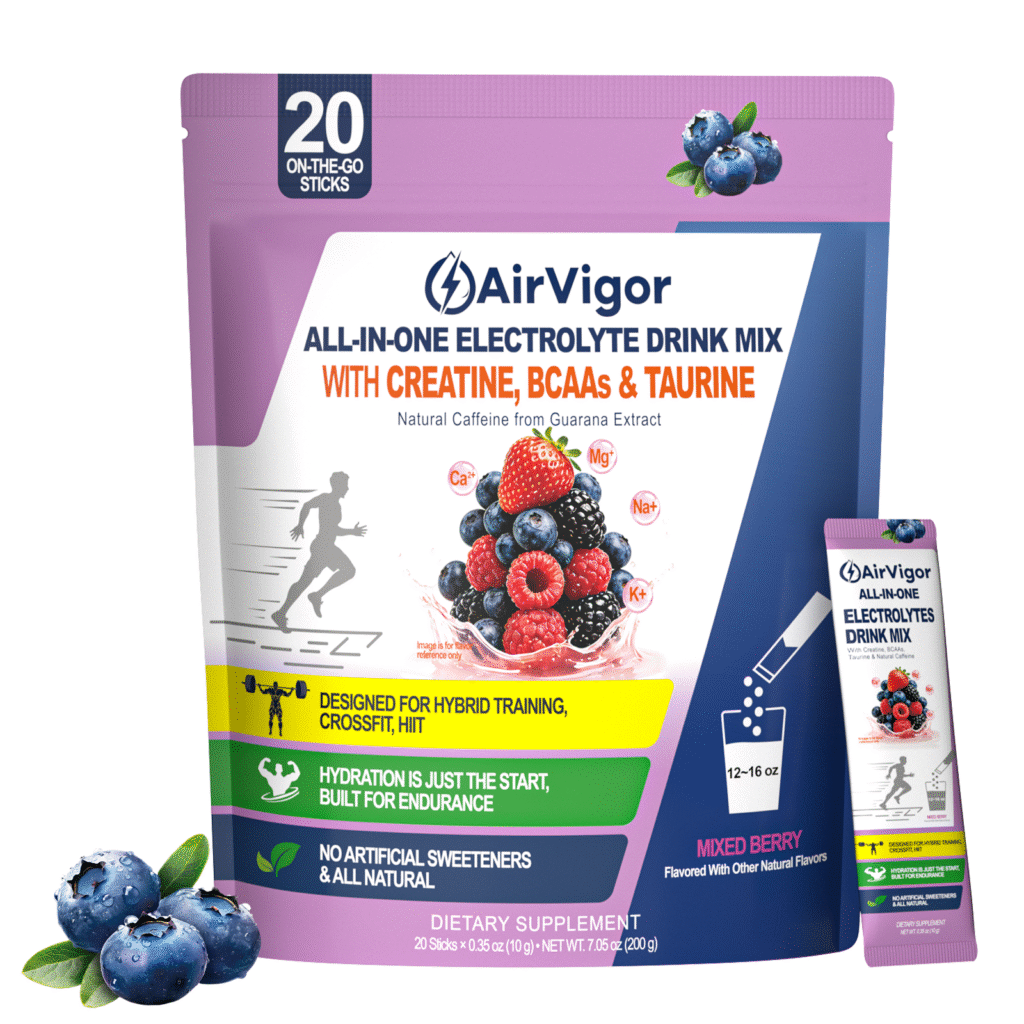
AirVigor electrolyte formulas are designed to match real-world use: fast dissolving, not overly sweet, and built for training conditions where you actually sweat and need results.
How Do Electrolytes Speed Recovery?
Electrolytes help recovery in three practical ways:
They help you retain the water you drink.
Sodium helps keep fluid in circulation instead of “in and out.”
They support muscle function and relaxation.
Magnesium and potassium support neuromuscular control—especially helpful if your post-workout issue is tightness rather than soreness.
They reduce recovery friction.
If you recover faster between sessions, you train more consistently. Consistency is the real performance enhancer.
| Training Condition | What You Lose Most | What to Prioritize |
|---|---|---|
| Hot / humid / heavy sweating | Sodium + fluid | Higher sodium electrolytes |
| Long endurance | Sodium + fluid + some potassium | Electrolytes + steady intake |
| Strength training (moderate sweat) | Some sodium + water | Moderate electrolytes |
| Tightness/cramps prone | Often magnesium + sodium | Electrolytes with magnesium |
| Low-carb / keto style | More sodium loss | Sodium-forward electrolytes |
How AirVigor fits:
AirVigor’s electrolyte powders are designed for people who want a reliable hydration tool—not a sugar bomb. If you’re training hard or sweating a lot, electrolytes are not optional. They’re the “invisible” ingredient that makes your protein and calories work better.

Does Creatine Help Post-Workout Recovery?
Yes. Creatine supports recovery by helping replenish ATP, improving training capacity, and reducing fatigue between hard sessions. It works best when taken consistently (daily), not only post-workout. Creatine is useful for strength, HIIT, and many endurance athletes who perform repeated surges.
Creatine is a Recovery Ingredient Disguised as a Performance One
Creatine gets marketed for muscle size, but its core benefit is energy recycling. If your workouts include heavy sets, sprints, intervals, CrossFit-style sessions, or repeated bursts, you’re constantly draining ATP.
Creatine supports:
- Faster ATP regeneration (better repeat efforts)
- Higher training quality (more effective reps)
- Better recovery between sessions (less “dead” feeling)
How Creatine Helps You Recover?
- You don’t necessarily feel a dramatic “boost” on day one.
- You notice you can maintain output and recover between hard days more reliably.
- Your training becomes more consistent, which compounds results.
Who benefits most?
- Strength training and hypertrophy
- HIIT, CrossFit, bootcamp
- Team sports, sprint cycling/running
- Endurance athletes doing intervals or hills
Timing: before or after?
Creatine timing is less important than people think. Daily consistency matters more. Many people take it:
- With a post-workout shake
- With a meal
- At the same time every day for habit
AirVigor angle (natural, not pushy):
AirVigor creatine is designed around purity and mixability. If you’ve tried gritty creatine or had stomach discomfort, formulation quality matters. A product that dissolves cleanly is a product you’ll actually keep taking—and creatine only works if you keep taking it.
| Goal | Typical Daily Approach | Notes |
|---|---|---|
| General performance | 3–5 g daily | No loading needed for most |
| Max saturation faster | Optional loading 20 g/day for 5–7 days | Split doses, drink enough water |
| Sensitive stomach | 3 g daily with food | Prioritize mixability |
| Endurance + intervals | 3–5 g daily | Helpful for surges/repeats |
Are Micronutrients Important for Recovery?
Yes. Micronutrients like magnesium, calcium, zinc, and vitamin D support muscle contraction, relaxation, tissue repair, sleep quality, and immune resilience. If you’re low in key micronutrients, recovery slows even if protein and calories are adequate.
The “Small” Nutrients That Decide Big Outcomes
Micronutrients are often ignored because they don’t feel exciting. But if you’ve ever done everything “right” (protein, sleep, training plan) and still recover poorly, micronutrient gaps are a common hidden reason.
Which Minerals Support Muscle Function?
Magnesium:
- Muscle relaxation, nervous system regulation
- Often relevant for tightness, cramps, sleep quality
- Can be depleted by sweat and stress
Calcium:
- Necessary for muscle contraction signaling
- Works in balance with magnesium
Zinc:
- Tissue repair, immune function
- Especially relevant during intense training blocks
Sodium + potassium (again):
- Not just “hydration minerals”—they help muscles fire properly
AirVigor’s recovery-focused electrolyte blends are designed for balanced support—especially for athletes who sweat and for everyday users who don’t want complicated routines.
Which Vitamins Aid Recovery?
Vitamin D:
- Muscle function and immune support
- Many indoor workers and winter months fall short
- Worth monitoring if recovery is consistently poor
Antioxidants: helpful or harmful?
This is nuanced. Your body needs inflammation to adapt. If you blunt it too aggressively with very high-dose antioxidant supplements right after training, you may reduce training adaptations.
The practical approach:
- Get antioxidants mainly from food
- Use moderate supplementation if needed
- Don’t chase “zero inflammation”—chase better recovery and better training quality
| Common Sign | What It Might Suggest | What to Do |
|---|---|---|
| Frequent cramps/tightness | Electrolyte/magnesium gap | Electrolytes + magnesium support |
| Poor sleep after training | Nervous system still “up” | Hydration, magnesium, routine |
| Always sore for days | Under-protein or under-calorie | Raise protein, review calories |
| “Flat” energy after workouts | Sodium + fluid not restored | Sodium-forward electrolytes |
| Frequent colds in hard blocks | High stress, low zinc/vit D | Review diet, consider testing |
How Should Recovery Ingredients Be Used?
Use recovery ingredients based on timing and need: electrolytes and fluid right after training (especially if you sweat), protein within a few hours, creatine daily, and micronutrients as consistent support. The best plan is the one you can repeat week after week.
Turn Ingredients Into a Routine You’ll Actually Follow
People don’t fail recovery because they lack information. They fail because routines become too complicated.
What’s the Best Thing to Have Right After a Workout?
If you want the best “right now” choice, it’s usually this:
- Water + electrolytes (especially sodium)
- Protein when convenient (shake or meal)
- Carbs if the session was long/hard or you’ll train again soon
If you sweat heavily, electrolytes often beat solid food in the first 15–30 minutes, because hydration status affects how well you digest and recover.
A simple post-workout sequence:
- Finish training → 500–750 ml water + electrolytes
- Within 1–3 hours → protein meal (or shake)
- Evening → hydration, normal dinner, good sleep
What’s the Best Thing for Workout Recovery?
The best “thing” is not a supplement. It’s a system:
- Sleep you can repeat
- Protein you hit most days
- Electrolytes when you sweat
- Creatine daily if your training demands it
- Calories that match your output
Supplements should reduce friction. That’s why AirVigor focuses on clear dosing, mixability, and consistent batches—because consistency beats novelty.
| Scenario | What to Use | Why |
|---|---|---|
| Most gym sessions | Electrolytes + protein | Covers hydration + repair |
| HIIT/CrossFit blocks | Electrolytes + protein + creatine | Supports repeat output + recovery |
| Long endurance | Electrolytes during/after + carbs + protein | Refill fluids and fuel |
| Travel / busy schedule | Portable electrolyte sticks + protein | Highest compliance tools |

What Should You Look for in Recovery Supplements?
Look for transparent dosing, clean labels, reliable manufacturing, and formulas matched to your training needs. A high-quality recovery supplement should dissolve well, feel good in your stomach, and provide meaningful amounts of key ingredients—not a long list of under-dosed extras.
Quality and Fit Matter More Than Hype
What Are the Best Products for Post-Workout Recovery?
The “best product” depends on what your workout actually cost you.
- If you sweat hard → electrolytes are top priority
- If you’re chasing strength/muscle → protein + creatine
- If you cramp or sleep poorly → electrolytes + magnesium support
- If you train twice/day → protein + carbs + electrolytes, structured
AirVigor advantage: a consistent product ecosystem (electrolytes, protein, creatine, and recovery blends) means you can build a routine without constantly switching brands and guessing doses.
| Your Goal / Problem | Best Product Category | What to Check on Label |
|---|---|---|
| Muscle gain | Protein + creatine | Protein dose + creatine 3–5 g/day |
| Heavy sweat workouts | Electrolytes | Sodium-forward formula, not sugar |
| Tightness/cramps | Electrolytes + magnesium | Magnesium included, balanced minerals |
| Endurance recovery | Electrolytes + carbs + protein | Mixability + tolerability |
| Daily wellness recovery | Moderate electrolytes | Clean taste, consistent use |
How to Choose a High-Quality Recovery Supplement?
Here’s what separates “good marketing” from “good products”:
- Transparent ingredient amounts (no mystery blends)
- Manufacturing standards (GMP, HACCP, ISO systems matter)
- Batch testing (COA/quality verification is a real trust signal)
- Solubility + gut comfort (if it bothers your stomach, you won’t use it)
- Realistic sweetness (sugar-heavy products can backfire post-workout)
AirVigor is positioned as both a brand and manufacturer with internal quality systems, multiple certifications, and a global supply chain—built for consistent, repeatable results. For long-term SEO and trust, that matters: users care about reliability, not just claims.
Conclusion
Effective post-workout recovery isn’t about stacking dozens of ingredients—it’s about consistency with the fundamentals. When protein intake supports muscle repair, electrolytes restore real hydration, creatine sustains energy capacity, and key micronutrients stay balanced, recovery becomes predictable instead of frustrating.
This system-first approach is exactly how AirVigor designs its products: clear dosing, practical formulas, and ingredients that work together in real training conditions. Whether you’re lifting after work, training in the heat, or stacking hard sessions week after week, recovery should feel reliable—not complicated.
Build around what actually works, repeat it consistently, and your training will take care of the rest.
Ready to Buy AirVigor Now or Build Your Own Line?
1) Buy AirVigor In-Stock on Amazon
If you want fast delivery and immediate use, shop AirVigor products on Amazon (Prime/FBA where available). Start with the category that matches your training: electrolytes, protein, or creatine.
2) Request OEM/ODM Custom Quotes
If you’re building a brand or expanding your supplement line, AirVigor (Atom Nexus Inc.) supports OEM/ODM including formula customization, packaging, labeling compliance, and scalable production.
Share:
Contact Expert Team
At AirVigor, performance becomes effortless. We transform advanced nutrition science into clean, effective supplements that help you hydrate, recover, and feel stronger every day. Shop AirVigor on Amazon and experience athlete-trusted formulas—backed by real science and supported by our world-class R&D and production capabilities.
Trust AirVigor
At AirVigor, turning your performance goals into reality is no longer a struggle—it’s a science-driven journey we build together. Whether you’re a runner, lifter, cyclist, yogi, outdoor athlete, or someone simply seeking better daily energy, AirVigor transforms advanced nutrition research into clean, effective, and trustworthy supplements you can feel.
Backed by our U.S. scientific team, global certifications, and world-class production standards, every formula is engineered to deliver real hydration, real recovery, and real performance. And when you’re ready to experience the difference, you’ll find AirVigor products available on Amazon and other major platforms—fast shipping, consistent quality, and a community of athletes already seeing results.
Behind the scenes, our R&D and manufacturing ecosystem also supports specialized formulation development, ensuring AirVigor continues to lead with innovation while keeping quality and safety uncompromised. But at the core, everything we create is built for you—your health, your performance, your momentum.
Choose AirVigor. Feel the science. Elevate your every day.


Subscribe to our newsletter
Sign up to our newsletter and we’ll keep you up to date with the latest arrivals.