Skip to content
Does Watermelon Have Electrolytes: A Nutrition & Hydration Guide
# Your Trusted Dietary Supplement Brand In US
- Emily

Table of Contents
Watermelon is often called nature’s sports drink. It’s refreshing, sweet, packed with water, and almost universally associated with summer hydration. After a hot workout or a long day in the sun, many people instinctively reach for watermelon believing it will “put back what sweat took out.” But does it actually work that way—or is that just a hydration myth that sounds good?
This question matters more than most people realize. Hydration is not just about water volume. It’s about what stays in your body, how fluids move into cells, and whether lost minerals are properly replaced. Athletes, outdoor workers, travelers, and even office workers with long sedentary hours are increasingly asking smarter questions: Does watermelon have electrolytes? Does it replenish them? And is fruit-based hydration really enough?
Yes, watermelon does contain electrolytes—primarily potassium—but only in small amounts. While its high water content helps with short-term hydration, watermelon is very low in sodium and other key electrolytes lost through sweat. This makes it refreshing but insufficient for replenishing electrolytes after intense exercise, heavy sweating, or dehydration. For those situations, a balanced electrolyte supplement provides more reliable hydration support.
At first glance, watermelon seems like the perfect solution: light, natural, and easy to digest. But hydration science is rarely that simple. To understand whether watermelon truly works as an electrolyte source—or where it falls short—we need to look deeper at how electrolytes work, what watermelon actually contains, and when food-based hydration stops being enough.
Let’s start with the fundamentals.
What Are Electrolytes and Why Do They Matter?
Electrolytes are minerals such as sodium, potassium, magnesium, calcium, and chloride that carry an electrical charge in the body. They regulate hydration, nerve signaling, muscle contraction, and blood pressure. Without sufficient electrolytes, water cannot be properly absorbed or retained, which is why electrolyte balance—not just fluid intake—is essential for effective hydration and physical performance.
What exactly are electrolytes in the human body?
Electrolytes are charged minerals dissolved in body fluids—including blood, sweat, and intracellular fluid. Their electrical charge allows them to participate in critical physiological processes that plain water alone cannot support.
The primary electrolytes include:
- Sodium (Na⁺): Regulates fluid retention, blood volume, and nerve impulses
- Potassium (K⁺): Controls fluid balance inside cells and supports muscle relaxation
- Magnesium (Mg²⁺): Involved in muscle relaxation, energy production, and nerve stability
- Calcium (Ca²⁺): Supports muscle contraction and nerve transmission
- Chloride (Cl⁻): Helps maintain acid–base balance and digestion
Together, these electrolytes form an interconnected system. A change in one—especially sodium—can disrupt the entire balance. This is why hydration is not simply about drinking more fluids, but about maintaining the right mineral environment for those fluids to function.
Why electrolytes—not water alone—determine hydration quality
A common misconception is that hydration equals water intake. In reality, hydration equals fluid retention and utilization, both of which depend on electrolytes.
Sodium plays the dominant role here. It helps retain water in the bloodstream and supports absorption in the small intestine via sodium-dependent transporters. Without adequate sodium, water passes through the body too quickly, leading to frequent urination and persistent thirst—even when total fluid intake is high.
This explains why people can drink large volumes of water and still feel dehydrated, foggy, or fatigued. Electrolytes determine whether the water you drink actually stays where it’s needed.
How electrolytes support nerves, muscles, and energy
Electrolytes are essential for electrical signaling. Every nerve impulse and muscle contraction relies on the movement of sodium and potassium across cell membranes.
- Low sodium can impair nerve signaling, leading to headaches, confusion, and weakness
- Low potassium can cause muscle cramps, irregular heartbeat, and fatigue
- Low magnesium often contributes to muscle tightness, poor recovery, and sleep issues
This is why electrolyte imbalance often presents as performance decline before it shows up in lab tests. Athletes may feel “flat,” office workers may experience brain fog, and travelers may notice unexplained fatigue—all before realizing electrolytes are the issue.
Are electrolytes good for headaches, fatigue, and brain fog?
Yes—particularly when these symptoms are linked to dehydration or sodium loss.
Many dehydration-related headaches are not caused by lack of water, but by reduced blood volume due to low sodium. When sodium drops, blood vessels constrict, reducing oxygen delivery to the brain and triggering headache or pressure sensations.
Electrolyte intake—especially sodium combined with potassium—helps restore plasma volume and nerve signaling, which is why people often report rapid relief after consuming an electrolyte drink compared to plain water.
This mechanism is especially relevant after sweating, long flights, illness, or extended screen-focused workdays.
Why electrolyte needs increase with sweat, heat, and activity
Sweat is not just water—it is rich in electrolytes, particularly sodium. Depending on genetics and conditions, sodium loss can range from 300 to over 1,000 mg per hour during exercise.
As sweat loss increases, relying on food or fruit alone becomes unreliable. Whole foods are slow to digest, inconsistent in mineral content, and often too low in sodium to keep pace with losses.
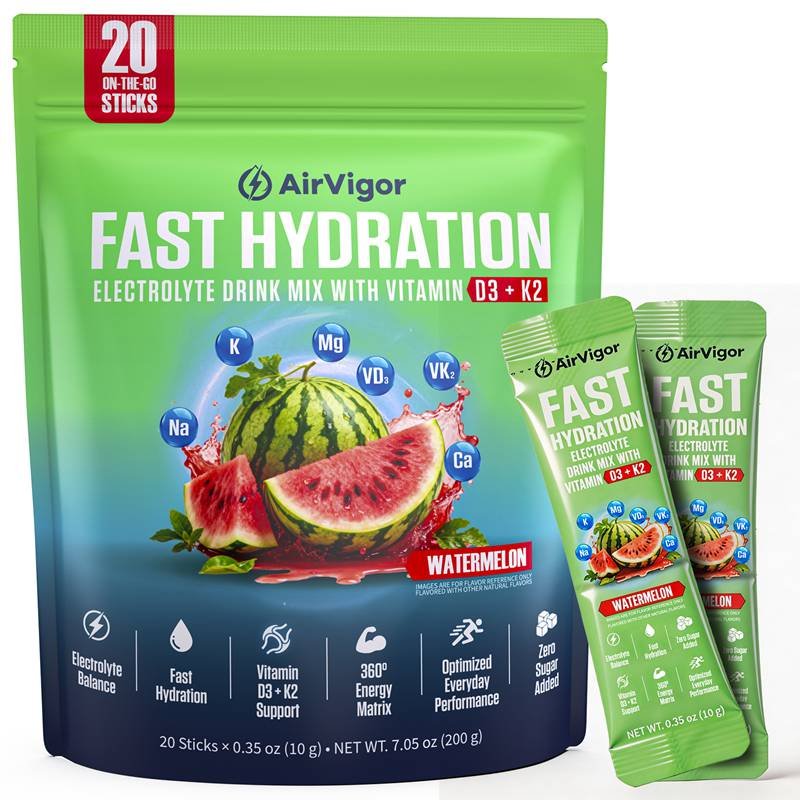
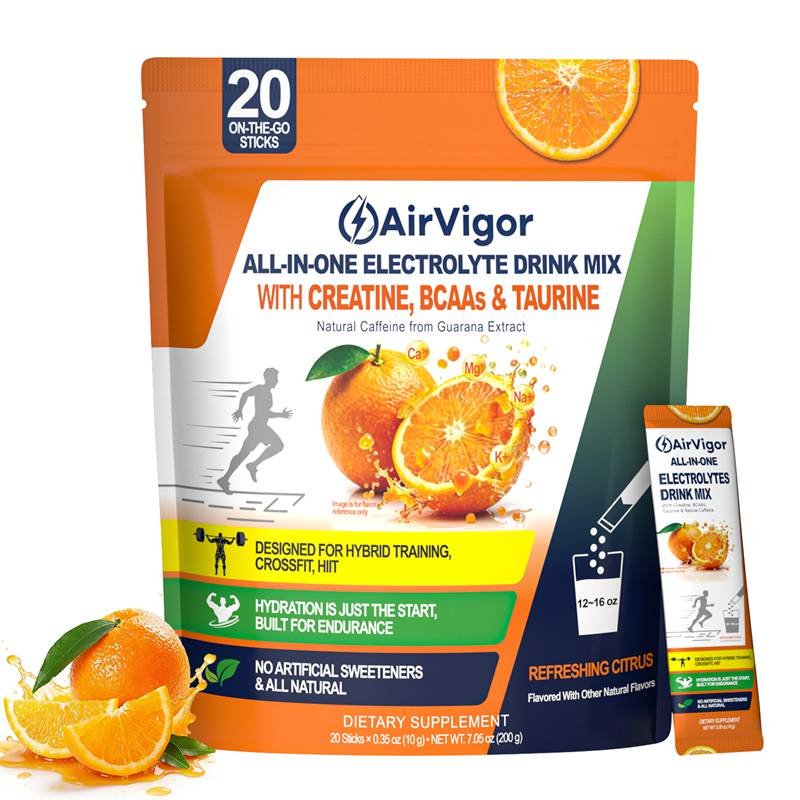
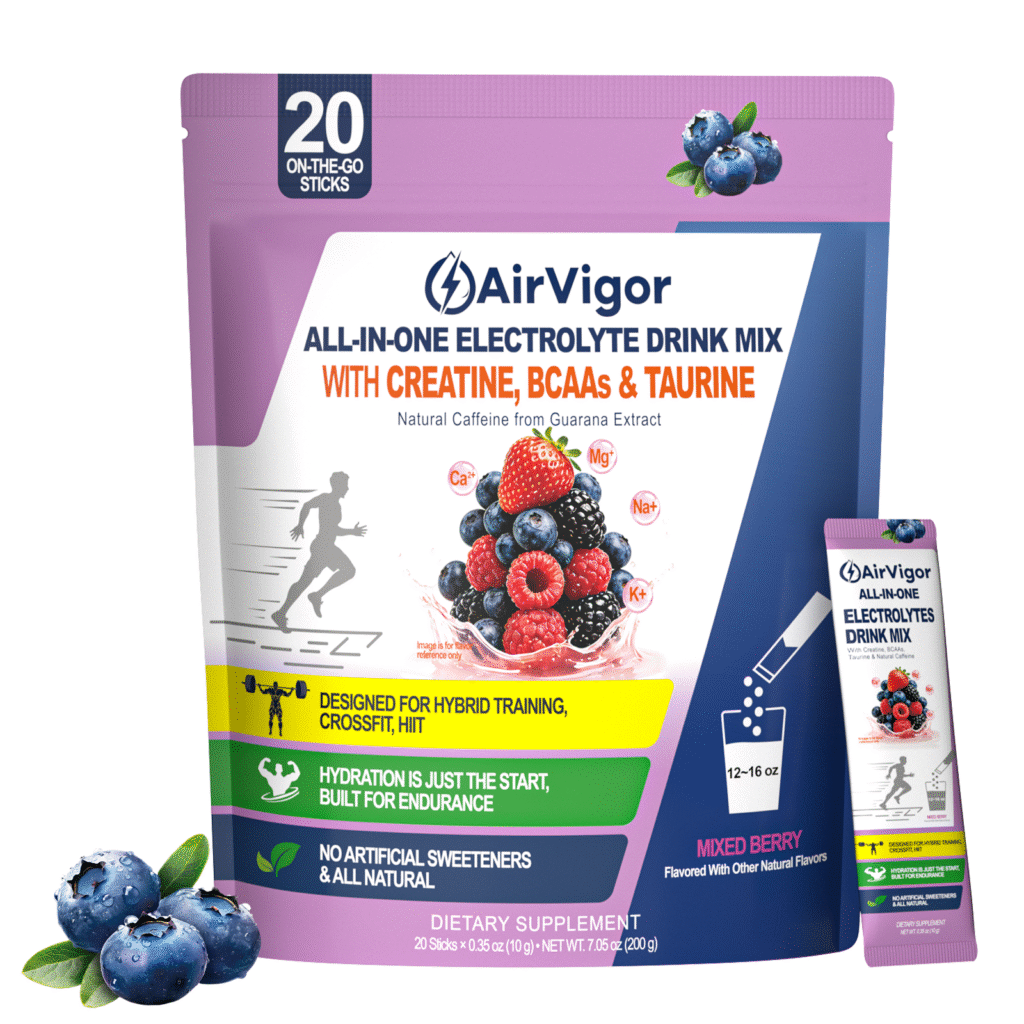
This is why structured electrolyte supplementation—such as AirVigor’s precisely dosed electrolyte powders—is designed to match real-world fluid and mineral loss patterns, ensuring hydration remains effective during training, heat exposure, and long workdays.
Electrolytes are not optional extras—they are the control system of hydration. Water without electrolytes cannot support nerve function, muscle performance, or sustained energy. Understanding this distinction is the foundation for evaluating whether foods like watermelon are sufficient—or when targeted electrolyte supplementation becomes necessary.
Does Watermelon Have Electrolytes?
Yes, watermelon does contain electrolytes, mainly potassium, with very small amounts of magnesium and calcium. However, it contains almost no sodium—the primary electrolyte lost through sweat. Because of this imbalance, watermelon can support light, short-term hydration but cannot effectively replenish electrolytes after exercise, heavy sweating, or dehydration.
Which electrolytes are naturally found in watermelon?
Watermelon contains a limited and unbalanced electrolyte profile. Its primary electrolyte contribution is potassium, while other electrolytes are present only in trace amounts.
A typical 2-cup (≈300 g) serving of watermelon contains approximately:
- Potassium: ~300 mg
- Magnesium: ~15–20 mg
- Calcium: ~15 mg
- Sodium: <5 mg
Potassium supports intracellular fluid balance and muscle function, which explains why watermelon feels refreshing. However, hydration depends on multiple electrolytes working together, not just one. The near absence of sodium is the most important limitation of watermelon as an electrolyte source.
From a hydration science perspective, watermelon provides hydration-friendly minerals, but not a functional electrolyte replacement.
Why potassium alone does not equal electrolyte replenishment
Potassium is essential—but it cannot replace sodium.
During sweating, the body loses far more sodium than potassium. In many active individuals, sodium loss can exceed 500–1,000 mg per hour, while potassium loss is relatively modest. Replacing potassium without sodium does not restore fluid balance and may even worsen hydration efficiency.
This is why consuming potassium-rich foods like watermelon after sweating can still leave people feeling thirsty, lightheaded, or fatigued. Without sodium, water absorption and retention are impaired, and fluids are quickly excreted rather than retained.
True electrolyte replenishment requires sodium first, with potassium and magnesium playing supportive roles.
Is watermelon considered a natural electrolyte food?
Watermelon is often described online as a “natural electrolyte food,” but this label is nutritionally misleading.
A more accurate classification would be:
- Hydrating fruit
- Potassium-containing food
- Complete electrolyte source
While watermelon contributes to daily mineral intake, it does not deliver electrolytes in ratios that match physiological losses from sweat, exercise, or heat exposure.
This distinction matters because many users searching “does watermelon have electrolytes” are actually asking a deeper question:
Can watermelon replace electrolyte drinks?
From a scientific standpoint, the answer is no.
How watermelon compares to electrolyte drinks and powders
To understand watermelon’s role, it helps to compare it directly with purpose-formulated electrolyte products:
| Criteria | Watermelon | Electrolyte Powder |
|---|---|---|
| Water content | Very high | Added via mixing |
| Sodium | Almost none | Adequate / adjustable |
| Potassium | Low–moderate | Controlled |
| Magnesium | Minimal | Functional dose |
| Sweat replacement | Poor | Effective |
| Hydration retention | Short-term | Sustained |
Electrolyte powders—such as AirVigor’s hydration formulas—are designed around measured sweat losses, not general nutrition. They provide sodium-led electrolyte structures that actively support fluid absorption, nerve signaling, and muscle performance.
Watermelon, by contrast, is food—not a hydration tool.
When watermelon helps—and when it clearly falls short
Watermelon can help when:
- Hydration needs are low
- Activity is light or sedentary
- Used alongside other electrolyte sources
- The goal is refreshment, not recovery
Watermelon falls short when:
- Sweating is significant
- Exercise exceeds 45–60 minutes
- Heat or humidity is high
- Headaches, cramps, or fatigue appear
In these situations, relying on watermelon alone can delay recovery and worsen dehydration symptoms—despite high fluid intake.
This is why athletes, outdoor workers, travelers, and high-performance individuals increasingly pair whole foods with structured electrolyte supplementation instead of choosing one or the other.
Watermelon does contain electrolytes, but only in small and incomplete amounts. Its potassium content supports light hydration, while its lack of sodium makes it ineffective for electrolyte replenishment after sweating or exercise. Watermelon works best as a refreshing food—not as a replacement for balanced electrolyte intake.
How Much Electrolytes Are in Watermelon?
Watermelon contains small amounts of electrolytes, primarily potassium, with minimal magnesium and calcium and almost no sodium. A typical serving provides roughly 300 mg of potassium but less than 5 mg of sodium. While watermelon contributes to daily mineral intake, its overall electrolyte density is low and insufficient for replacing electrolytes lost through sweat.
How much potassium is in one serving of watermelon?
Potassium is the most meaningful electrolyte found in watermelon, but the amount is moderate rather than high.
On average:
- Watermelon (2 cups / ~300 g): ~300 mg potassium
- Watermelon (1 cup): ~170 mg potassium
To put this into context, the recommended daily potassium intake for adults is around 2,600–3,400 mg, depending on sex and guidelines. This means even a generous serving of watermelon provides less than 10–12% of daily needs.
Potassium from watermelon supports basic cellular hydration and muscle function, but the amount is not concentrated enough to meaningfully correct electrolyte depletion—especially after sweating or exercise.
How much sodium, magnesium, and calcium does watermelon provide?
This is where watermelon’s limitations become clear.
Approximate electrolyte content per 2 cups of watermelon:
| Electrolyte | Amount | Physiological relevance |
|---|---|---|
| Sodium | <5 mg | Negligible |
| Magnesium | ~15–20 mg | Very low |
| Calcium | ~15 mg | Very low |
Sodium is the primary electrolyte lost in sweat, often at rates of 300–1,000+ mg per hour depending on the individual and conditions. Compared to that loss, watermelon’s sodium contribution is functionally irrelevant.
Magnesium and calcium are present, but only in trace amounts that do not meaningfully impact muscle relaxation, cramp prevention, or recovery.
Is watermelon high or low in electrolytes overall?
From a nutritional science perspective, watermelon is considered low in electrolytes.
Its defining characteristic is water content (over 90%), not mineral density. This makes it refreshing and easy to consume, but also means that electrolyte intake per calorie or per gram is very low.
In practical terms:
- You would need to eat large volumes of watermelon to approach meaningful potassium intake
- Even then, sodium intake would remain far below hydration needs
This is why watermelon is best described as hydration-supportive, not electrolyte-rich.
What fruit has the most electrolytes compared to watermelon?
Some fruits contain higher electrolyte levels than watermelon, particularly potassium:
| Fruit | Potassium (mg per serving) | Sodium |
|---|---|---|
| Banana (1 medium) | ~420 mg | ~1 mg |
| Orange juice (1 cup) | ~500 mg | ~2 mg |
| Avocado (½ fruit) | ~480 mg | ~5 mg |
| Coconut water (1 cup) | ~400–600 mg | ~40–60 mg |
Even the highest-ranking fruits still fall short on sodium compared to sweat losses. Coconut water comes closest, but its sodium content remains modest and inconsistent between brands.
This reinforces a key hydration principle: no fruit naturally matches the electrolyte profile required for sweat replacement.
How watermelon compares to electrolyte drinks and powders
Purpose-formulated electrolyte products are designed around physiological loss patterns, not general nutrition. They are built to replace the specific minerals lost through sweat—especially sodium—at doses that support fluid absorption, nerve signaling, and muscle function. Watermelon, by contrast, is a whole food optimized for hydration comfort and nutrition, not for matching real-world electrolyte depletion during exercise, heat exposure, or prolonged activity.
| Category | Watermelon | Electrolyte Powder |
|---|---|---|
| Electrolyte density | Low | High |
| Sodium adequacy | No | Yes |
| Potassium balance | Moderate | Controlled |
| Magnesium support | Minimal | Functional |
| Sweat replacement | Ineffective | Effective |
| Volume required | Large | Small |
Electrolyte powders—such as AirVigor’s hydration formulas—allow precise control over sodium, potassium, and magnesium intake without excessive food volume or sugar load. This is especially important for athletes, heavy sweaters, and people training in heat.
Why “electrolytes per serving” matters more than “natural”
A common search behavior is looking for natural electrolyte foods. While watermelon fits that label, natural does not equal sufficient.
Hydration efficiency depends on:
- Electrolyte concentration
- Electrolyte ratios
- Timing relative to sweat loss
Watermelon’s electrolytes are diluted by water and lack sodium dominance. As a result, its per-serving electrolyte impact is small and short-lived.
This is why advanced hydration strategies combine whole foods for general nutrition with structured electrolyte intake for performance and recovery.
Watermelon contains electrolytes, ut only in small and diluted amounts. Its potassium content is moderate, while sodium and other electrolytes are minimal. As a result, watermelon supports light hydration but cannot replace electrolyte losses from sweat. For meaningful electrolyte replenishment, especially during or after exercise, a balanced electrolyte supplement is far more effective.

Is Watermelon Good for Hydration?
Yes, watermelon is good for short-term hydration because it is over 90% water and easy to consume. It can help increase fluid intake and temporarily relieve thirst. However, because it contains very little sodium and limited electrolytes, watermelon does not support sustained hydration during sweating, exercise, or heat exposure.
Does a watermelon hydrate you in the short term?
Yes. Watermelon does hydrate you in the short term, primarily because of its extremely high water content. For people who struggle to drink enough fluids, watermelon provides hydration in a form that feels effortless and refreshing.
Chewing watermelon also slows intake compared to chugging water, which can make hydration feel more comfortable and less bloating. Small amounts of natural sugars and potassium slightly delay gastric emptying, creating a perception of longer-lasting hydration—especially in hot weather or casual daily settings.
For sedentary individuals, light activity, or as part of meals, watermelon meaningfully contributes to daily fluid intake.
How hydrating is watermelon compared to water and electrolyte drinks?
This is where a table helps clarify the differences clearly:
| Hydration Factor | Watermelon | Plain Water | Electrolyte Drink |
|---|---|---|---|
| Water content | Very high (90%+) | High | Depends on mix |
| Sodium content | Almost none | None | Moderate–high |
| Potassium | Low–moderate | None | Controlled |
| Fluid retention | Short-term | Short-term | Sustained |
| Best use case | Casual hydration | Baseline hydration | Exercise, sweat, heat |
Watermelon can feel more hydrating than water initially, but electrolyte drinks provide longer-lasting hydration because they replace sodium and support fluid retention.
Is watermelon more hydrating than water?
From a biological standpoint, watermelon is not more hydrating than water—but it can feel that way.
The sensation comes from:
- Slower fluid intake (chewing vs drinking)
- Small carbohydrate content
- Cooling and palatability effects
However, hydration effectiveness depends on absorption and retention, which require electrolytes. Since watermelon contains almost no sodium, its hydration effect does not last longer than water when sweating or heat stress is involved.
In practical terms:
- Watermelon may feel better
- It does not hydrate better in functional scenarios
When watermelon hydration is not enough
Watermelon alone becomes insufficient when hydration demands increase. As sweat loss, heat exposure, or physical intensity rise, the body’s need for electrolytes—especially sodium—outpaces what watermelon can provide. In these scenarios, relying solely on watermelon may relieve thirst temporarily but fails to support sustained hydration, fluid retention, and performance.
| Situation | Is Watermelon Enough? | Why |
|---|---|---|
| Office work / daily life | Yes | Low electrolyte loss |
| Light walking | Usually | Minimal sweat |
| Long workout (>45 min) | No | Sodium loss |
| Hot weather sweating | No | Rapid fluid turnover |
| Headache after sweating | No | Electrolyte imbalance |
Many people misinterpret early thirst relief as successful hydration, only to experience fatigue, headache, or dizziness later. This delay is a hallmark of electrolyte-deficient hydration.
Why sodium determines hydration retention
Sodium is the key electrolyte that determines whether water stays in your body.
- It enables water absorption in the gut
- It maintains blood volume
- It prevents excessive urine output
Watermelon contains less than 5 mg of sodium per serving, while sweat losses can exceed 500–1,000 mg per hour. This mismatch explains why hydration from watermelon is temporary when fluid loss is ongoing.
How watermelon fits into a smart hydration strategy
The most effective approach is not choosing between fruit and electrolytes, but combining them. Whole foods like watermelon support fluid intake and provide baseline nutrition, while electrolyte formulas address the specific mineral losses caused by sweat, heat, and physical stress. Used together, they create a hydration strategy that is both natural and functionally reliable across different activity levels and environments.
| Role | Best Option |
|---|---|
| Increase fluid intake | Watermelon |
| Replace sweat losses | Electrolyte powder |
| Sustain performance | Balanced electrolytes |
| Avoid sugar overload | Low-sugar formulas |
AirVigor electrolyte powders are designed to complement whole foods like watermelon by supplying sodium-forward, performance-aligned electrolyte ratios—ensuring that the water you consume actually hydrates and stays where it’s needed.
Watermelon is good for short-term hydration because of its high water content and easy consumption. However, it lacks the sodium required for sustained hydration during sweating or exercise. Watermelon works best as a hydrating food, while electrolyte drinks are necessary for fluid retention, performance, and recovery when hydration demands increase.
Can Watermelon Replace Electrolyte Drinks?
No, watermelon cannot replace electrolyte drinks when hydration demands are high. While it provides water and some potassium, it lacks sufficient sodium—the primary electrolyte lost through sweat. As a result, watermelon may relieve thirst briefly but cannot support sustained hydration, performance, or recovery during exercise, heat exposure, or dehydration.
Why many people think watermelon can replace electrolyte drinks
The idea that watermelon can replace electrolyte drinks comes from three common assumptions:
- “It’s mostly water, so it hydrates.”
- “It contains potassium, which is an electrolyte.”
- “It’s natural, so it must be better.”
While each statement is partially true, none addresses the core requirement of electrolyte replacement: matching the minerals actually lost from the body. Hydration during sweating is not about water volume or whether a food is natural—it’s about electrolyte composition and ratios.
This is where watermelon falls short.
Is watermelon good to replenish electrolytes after sweating?
After sweating, the body primarily loses sodium, not potassium.
Sweat composition (approximate ranges per liter):
| Electrolyte | Amount Lost in Sweat |
|---|---|
| Sodium | 500–1,000+ mg |
| Potassium | 100–200 mg |
| Magnesium | Small amounts |
Now compare that with watermelon:
| Source | Sodium | Potassium |
|---|---|---|
| Watermelon (2 cups) | <5 mg | ~300 mg |
| Electrolyte drink (1 serving) | 300–1,000 mg | 200–400 mg |
Watermelon replaces potassium disproportionately while leaving sodium almost untouched. This imbalance prevents effective fluid retention and can actually worsen hydration efficiency if relied on alone.
So while watermelon may feel refreshing post-sweat, it does not replenish electrolytes in a physiologically meaningful way.
Watermelon vs electrolyte drinks
This table highlights why the two are not interchangeable:
| Criteria | Watermelon | Electrolyte Drink |
|---|---|---|
| Primary purpose | Food / refreshment | Hydration tool |
| Sodium content | Extremely low | Moderate to high |
| Potassium | Low–moderate | Controlled |
| Magnesium | Trace | Functional dose |
| Hydration duration | Short-term | Sustained |
| Sweat replacement | Ineffective | Effective |
| Use during exercise | Impractical | Designed for it |
Electrolyte drinks are engineered around sweat loss and absorption mechanics. Watermelon is not.
Why sodium determines whether fluids actually hydrate
Sodium is the central electrolyte for hydration retention.
- Enables water absorption in the gut
- Maintains blood volume
- Prevents rapid fluid loss through urine
Without sodium, water moves through the body too quickly. This explains why people can drink large amounts of water or eat watery fruits and still feel dehydrated, lightheaded, or fatigued.
Watermelon’s near-zero sodium content makes it fundamentally incapable of replacing electrolyte drinks in any scenario involving sweat, heat, or prolonged activity.
When watermelon absolutely cannot replace electrolyte drinks
Watermelon is not sufficient in the following scenarios:
| Scenario | Can Watermelon Replace Electrolytes? | Reason |
|---|---|---|
| Endurance workouts | No | High sodium loss |
| HIIT / CrossFit | No | Rapid sweat + nerve demand |
| Hot weather training | No | Accelerated fluid turnover |
| Outdoor labor | No | Sustained electrolyte loss |
| Dehydration headaches | No | Sodium deficiency |
In these cases, watermelon may delay proper rehydration and prolong symptoms by creating a false sense of hydration.
How watermelon and electrolyte drinks can work together
The most effective hydration strategy is not replacement, but combination.
| Role | Best Choice |
|---|---|
| Fluid intake & comfort | Watermelon |
| Electrolyte replacement | Electrolyte powder |
| Sustained hydration | Sodium-forward formula |
| Performance & recovery | Balanced electrolytes |
This is where AirVigor electrolyte powders fit naturally. They are designed to complement whole foods by supplying the electrolytes watermelon lacks—particularly sodium and magnesium—without excessive sugar or artificial ingredients.
Instead of choosing between “natural” and “effective,” this approach delivers both.
Watermelon cannot replace electrolyte drinks when hydration demands are high. While it provides water and potassium, it lacks the sodium needed for fluid retention and sweat replacement. Watermelon works best as a refreshing food, while electrolyte drinks are necessary for sustained hydration, performance, and recovery during exercise or heat exposure.

Who Should Not Rely on Watermelon Alone?
People with high electrolyte loss—including athletes, heavy sweaters, outdoor workers, and anyone exercising or working in heat—should not rely on watermelon alone for hydration. While watermelon provides water and some potassium, it lacks sufficient sodium and balanced electrolytes needed to maintain fluid retention, performance, and recovery in these higher-demand situations.
Why watermelon hydration does not work for everyone
Watermelon is often promoted as a universally hydrating food, but hydration needs are not universal. The effectiveness of any hydration strategy depends on how much fluid and electrolytes a person loses—and how quickly those losses occur.
For individuals with low sweat rates and minimal physical stress, watermelon can meaningfully contribute to daily fluid intake. But as soon as sweat loss, heat exposure, or physical intensity increases, watermelon’s electrolyte profile becomes insufficient.
The key issue is not water availability—it is electrolyte replacement, especially sodium.
High-risk groups who should not rely on watermelon alone
The following table summarizes who watermelon does not work for as a primary hydration strategy:
| Group | Can Watermelon Alone Work? | Primary Limitation |
|---|---|---|
| Endurance athletes | No | High sodium loss |
| Strength / HIIT trainees | No | Nerve & muscle demand |
| Heavy sweaters | No | Rapid electrolyte depletion |
| Outdoor workers | No | Prolonged heat exposure |
| Hot-climate travelers | No | Accelerated fluid turnover |
| People with dehydration headaches | No | Sodium imbalance |
This table reflects a consistent pattern: when electrolyte loss is significant, watermelon cannot keep up—regardless of how much is consumed.
Athletes and frequent exercisers
Athletes lose electrolytes at rates far exceeding what food alone can replace in real time. Sodium losses during training commonly range from 500 to over 1,500 mg per hour, depending on intensity and individual sweat composition.
Watermelon provides almost no sodium, which means:
- Fluids are not retained efficiently
- Blood volume can drop
- Performance declines before thirst is fully perceived
This is why athletes who rely on fruit or water alone often experience cramps, dizziness, or sudden fatigue—even when they believe they are “hydrating enough.”
Heavy sweaters and heat-exposed individuals
Some people naturally lose more electrolytes through sweat. Signs of being a heavy sweater include:
- Salt residue on skin or clothing
- Burning or stinging eyes from sweat
- Rapid fatigue in warm conditions
For these individuals, watermelon may temporarily reduce thirst but cannot correct electrolyte imbalance. Over time, relying on watermelon alone may actually worsen symptoms by diluting sodium levels further.
People experiencing headaches, fatigue, or lightheadedness
Hydration-related symptoms are often misattributed to water deficiency, when they are actually caused by electrolyte imbalance.
If someone experiences:
- Headaches after sweating or workouts
- Lightheadedness when standing
- Persistent fatigue despite fluid intake
Then watermelon alone is unlikely to resolve the issue. These symptoms frequently improve only after sodium and electrolytes are restored—not after additional water or fruit.
Long workdays, travel, and cognitive fatigue
Electrolyte loss is not limited to exercise. Long flights, air-conditioned environments, skipped meals, and extended mental stress can all affect fluid balance.
In these cases, watermelon may improve comfort and hydration sensation, but it does not provide the electrolyte support required to maintain focus, energy, and stable hydration throughout the day.
This is why professionals with long work hours or frequent travel increasingly incorporate structured electrolyte intake rather than relying solely on food-based hydration.
When electrolyte supplementation becomes necessary
Electrolyte supplementation becomes necessary when hydration must be reliable and sustained, not just refreshing.
Typical triggers include:
- Exercise longer than 45–60 minutes
- Noticeable sweat loss
- Heat or humidity exposure
- Recurring cramps, headaches, or fatigue
This is where AirVigor electrolyte powders are intentionally positioned—not as replacements for whole foods, but as precision hydration tools. They supply sodium-forward, balanced electrolytes in amounts aligned with real-world losses that watermelon and other fruits cannot cover.
Watermelon is not sufficient for people with high electrolyte loss, including athletes, heavy sweaters, heat-exposed workers, and those experiencing dehydration symptoms. While it supports fluid intake, watermelon lacks the sodium and electrolyte balance required for sustained hydration. In higher-demand situations, electrolyte supplementation is essential for proper hydration, performance, and recovery.
Conclusion
Watermelon is refreshing, hydrating, and easy to enjoy—and it absolutely belongs in a healthy, balanced diet. Its high water content and natural potassium make it a great option for light, everyday hydration.
However, when hydration demands increase, watermelon reaches its limits. During exercise, sweating, heat exposure, or long, demanding days, the body loses electrolytes—especially sodium—at levels that watermelon simply cannot replace. In these situations, hydration is no longer just about water intake, but about electrolyte balance and fluid retention.
If your goal is casual refreshment or general fluid intake, watermelon works well.
If your goal is stable hydration, consistent performance, and faster recovery, a balanced electrolyte formula becomes essential.
Ready to hydrate smarter?
Buy AirVigor Electrolytes on Amazon
In-stock options, fast delivery, and formulas designed for athletes, active lifestyles, and real-world sweat loss.
Need custom electrolyte formulations or bulk supply?
AirVigor also offers OEM / ODM support for brands and partners—custom solutions available upon inquiry
Choose hydration that doesn’t just feel good in the moment, but actually supports your body when it matters most.
Share:
Contact Expert Team
At AirVigor, performance becomes effortless. We transform advanced nutrition science into clean, effective supplements that help you hydrate, recover, and feel stronger every day. Shop AirVigor on Amazon and experience athlete-trusted formulas—backed by real science and supported by our world-class R&D and production capabilities.
Trust AirVigor
At AirVigor, turning your performance goals into reality is no longer a struggle—it’s a science-driven journey we build together. Whether you’re a runner, lifter, cyclist, yogi, outdoor athlete, or someone simply seeking better daily energy, AirVigor transforms advanced nutrition research into clean, effective, and trustworthy supplements you can feel.
Backed by our U.S. scientific team, global certifications, and world-class production standards, every formula is engineered to deliver real hydration, real recovery, and real performance. And when you’re ready to experience the difference, you’ll find AirVigor products available on Amazon and other major platforms—fast shipping, consistent quality, and a community of athletes already seeing results.
Behind the scenes, our R&D and manufacturing ecosystem also supports specialized formulation development, ensuring AirVigor continues to lead with innovation while keeping quality and safety uncompromised. But at the core, everything we create is built for you—your health, your performance, your momentum.
Choose AirVigor. Feel the science. Elevate your every day.


Subscribe to our newsletter
Sign up to our newsletter and we’ll keep you up to date with the latest arrivals.