Skip to content
Electrolytes for Heat Exposure & Sun Fatigue: Smart Hydration Guide
# Your Trusted Dietary Supplement Brand In US
- Emily

Table of Contents
Spending time in the sun doesn’t have to involve intense workouts to leave you feeling drained. For many people, prolonged heat exposure—whether from outdoor work, travel, beach days, or warm indoor environments—creates a subtle but persistent form of fatigue. You may feel sluggish, light-headed, unfocused, or unusually tired even after drinking plenty of water. This experience is often dismissed as “normal heat tiredness,” yet physiologically, something more specific is happening beneath the surface.
Heat challenges the body’s ability to regulate fluids, minerals, and nerve signaling at the same time. Sweating is not just water loss—it’s a controlled release of electrolytes designed to cool the body. When that system is pushed too far, hydration becomes inefficient. This is why people frequently report feeling thirsty even after consuming large volumes of water, or why fatigue returns quickly after brief relief.
Electrolytes help the body manage heat exposure by improving fluid retention, supporting nerve and muscle function, and maintaining cellular hydration. In hot environments, sweat removes sodium, potassium, and other minerals that water alone cannot replace. Without restoring electrolytes, hydration remains incomplete, leading to fatigue, weakness, and reduced focus. Balanced electrolyte intake allows the body to absorb and use fluids more effectively during heat and sun exposure.
What makes heat-related fatigue particularly tricky is that it often develops quietly. There’s no dramatic collapse—just a slow erosion of energy, concentration, and comfort. Athletes, outdoor workers, travelers, and even office professionals in warm climates all experience this. Understanding how electrolytes function under heat stress is the first step toward smarter hydration—and toward avoiding the cycle of drinking more water without feeling better.
What Is Heat Exposure Fatigue?
Heat exposure fatigue is a state of physical and mental exhaustion caused by prolonged heat stress combined with fluid and electrolyte loss. Unlike simple dehydration, it can develop even when water intake appears sufficient. As sweating continues, sodium and other electrolytes decline, reducing the body’s ability to retain fluids, regulate nerves, and maintain energy—leading to weakness, brain fog, and reduced performance.
What causes sun fatigue?
Sun fatigue is the body’s response to sustained thermal stress, not just high temperatures or intense activity. When exposed to heat, the nervous system prioritizes cooling by increasing blood flow to the skin and activating sweat glands. This process is effective for temperature control—but metabolically expensive.
Sweating continuously removes electrolytes, especially sodium and chloride, which are essential for maintaining blood volume and nerve signaling. Over time, this creates a mismatch: the body loses minerals faster than it can replace them through normal eating and drinking. As a result, muscles receive weaker electrical signals, and the brain experiences reduced alertness.
What makes sun fatigue particularly deceptive is that it often occurs during low-intensity situations—walking outdoors, standing at work, sightseeing, or training lightly in warm environments. There is no obvious “overexertion,” yet the body remains under constant physiological load. This is why people frequently report feeling “drained for no clear reason” after long periods in the sun.
Another key factor is cumulative exposure. Several hours of moderate heat can be more exhausting than a short burst of intense exercise, especially when the hydration strategy does not account for electrolyte replacement.
Is sun fatigue the same as dehydration?
Sun fatigue and dehydration are closely related—but they are not the same condition. Dehydration refers specifically to a deficit in total body water. Sun fatigue, by contrast, often reflects inefficient hydration, where water intake is adequate but electrolyte balance is not.
In hot conditions, drinking plain water without replacing sodium can dilute blood electrolyte concentration. This triggers hormonal responses that increase urine output, causing fluids to be excreted rather than retained. The result is a paradoxical situation: frequent drinking paired with persistent fatigue, dizziness, or weakness.
This distinction explains why many people feel temporarily better after drinking water, only for symptoms to return quickly. The underlying issue is not volume—it is absorption and retention at the cellular level.
From a physiological perspective, sun fatigue sits at the intersection of:
- Heat-induced fluid loss
- Electrolyte depletion
- Reduced neuromuscular efficiency
Addressing only one of these factors rarely resolves the problem fully.
| Aspect | Heat Exposure Fatigue | Dehydration |
|---|---|---|
| Primary issue | Electrolyte imbalance + fluid loss | Low total body water |
| Can occur despite drinking water | Yes | Less common |
| Common symptoms | Fatigue, brain fog, weakness | Thirst, dry mouth |
| Best solution | Water + electrolytes | Water |
Why This Definition Matters?
Understanding heat exposure fatigue as more than “just dehydration” changes how hydration strategies should be approached. It shifts the focus from drinking more water to hydrating more effectively—a concept increasingly emphasized in sports nutrition and occupational health research.
This framework also explains why balanced electrolyte solutions are widely used not only by athletes, but by outdoor workers, travelers, and individuals living in warm climates. Hydration, in this context, is not about quantity—it is about functional balance.
How Does Heat Affect Electrolytes?
Heat increases electrolyte loss by accelerating sweat production. As the body cools itself, sodium, chloride, potassium, and magnesium are lost alongside water. This disrupts fluid retention, nerve signaling, and muscle function. Without timely electrolyte replacement, hydration becomes inefficient, leading to fatigue, weakness, and reduced heat tolerance—even when water intake is adequate.
How are you lost in the heat?
When the body is exposed to heat, it activates sweating as a primary cooling mechanism. This process is regulated by the nervous system and designed to protect core temperature—but it comes at a physiological cost.
Electrolyte loss during heat exposure happens through three predictable steps:
1. Increased sweat rate
As ambient temperature rises, sweat glands become more active—even during light movement or passive sun exposure. This increases total fluid loss per hour.
2. Mineral-rich sweat composition
Sweat is not pure water. It contains high concentrations of sodium and chloride, along with potassium and trace amounts of magnesium and calcium. Sodium is lost in the greatest quantity.
3. Cumulative depletion over time
Unlike acute exercise, heat exposure is often prolonged. Small, continuous losses accumulate over several hours, lowering baseline electrolyte levels without obvious warning signs.
A key challenge is that thirst lags behind electrolyte loss. Many people lose minerals faster than they feel the need to drink, which is why fatigue often appears before thirst becomes noticeable.
Does sweating remove more than water?
Yes—sweating removes both water and the minerals that make hydration effective. This distinction is critical.
Electrolytes play functional roles:
- Sodium enables water absorption and retention inside blood vessels and cells
- Potassium supports nerve impulses and muscle contraction
- Magnesium assists muscle relaxation and energy metabolism
- Chloride helps maintain osmotic balance and fluid movement
When these minerals decline, drinking plain water becomes less effective. Fluids pass through the body more quickly, urine output increases, and cells remain under-hydrated despite frequent drinking.
This explains a common heat-related experience:
“I’m drinking a lot of water, but I still feel tired and off.”
The issue is not intake volume—it is electrolyte-dependent fluid utilization.
| Electrolyte | Primary Function | Loss Rate in Heat | Impact of Low Levels |
|---|---|---|---|
| Sodium | Fluid retention | High | Rapid fatigue, dizziness |
| Chloride | Fluid balance | High | Poor hydration efficiency |
| Potassium | Muscle & nerves | Moderate | Weakness, shaky feeling |
| Magnesium | Muscle recovery | Low–Moderate | Cramping, tension |
Why Heat Amplifies Electrolyte Imbalance?
Heat affects electrolytes more aggressively than many people realize because it combines environmental stress with physiological regulation.
Three factors make heat particularly disruptive:
1. Loss without exertion
Electrolytes can be depleted even without “exercise.” Standing, walking, or sitting in heat is enough to trigger sweat loss.
2. Repeated daily exposure
In warm climates or during summer months, electrolyte loss occurs day after day, lowering tolerance over time.
3. Inadequate dietary replacement
Typical meals are not timed or formulated to replace sweat losses efficiently, especially sodium and magnesium.
As a result, heat-related electrolyte imbalance often develops silently, presenting as low energy, reduced focus, or poor workout tolerance rather than obvious dehydration symptoms
| Condition | Sweat Rate | Electrolyte Demand | Hydration Strategy |
|---|---|---|---|
| Cool environment | Low | Baseline | Water often sufficient |
| Warm environment | Moderate | Elevated | Water + electrolytes |
| Hot / humid | High | High | Electrolytes essential |
Understanding how heat affects electrolytes reframes hydration as a functional process, not just fluid intake. Effective hydration under heat stress requires replacing the minerals that allow water to be retained, absorbed, and used by muscles and nerves.
This is why structured electrolyte formulations—rather than water alone—are increasingly used by athletes, outdoor workers, travelers, and individuals living in hot climates. The goal is not excess supplementation, but restoring balance lost through heat-driven sweat.
Why Water Alone Is Not Enough?
Water alone is often insufficient in hot conditions because it does not replace electrolytes lost through sweat. Without sodium and potassium, fluids are poorly retained and quickly excreted, leading to inefficient cellular hydration. As a result, fatigue, weakness, and mental fog can persist even when water intake is high. Effective hydration in heat requires both fluid and electrolyte balance.
Why plain water fails in hot conditions?
At first glance, drinking more water seems like the logical response to heat. However, in hot environments, hydration is limited not by how much water you drink, but by how well your body can retain and utilize that water.
When you sweat, you lose water and electrolytes—especially sodium. If you replace only the water, two things happen:
1. Dilution of blood sodium levels
Large volumes of plain water dilute the concentration of sodium in the bloodstream. The body tightly regulates sodium balance, so even mild dilution triggers corrective mechanisms.
2. Increased urine output
To restore balance, the kidneys excrete excess water. This means much of the water you drink passes through quickly instead of hydrating tissues.
3. Poor cellular hydration
Without enough sodium, water cannot efficiently move into cells. Muscles, nerves, and the brain remain under-hydrated despite frequent drinking.
This phenomenon—often called the dilution effect—explains why people in hot conditions commonly say:
“I keep drinking water, but I still feel tired and off.”
In short, water restores volume, but electrolytes determine function.
Are low electrolytes linked to fatigue?
Yes. Electrolytes are essential for electrical signaling throughout the body. When levels drop, fatigue develops through several interconnected pathways:
1. Nerve signaling slows
Sodium and potassium regulate the electrical impulses that allow nerves to communicate. Low levels reduce signal efficiency, leading to sluggish reflexes and mental fog.
2. Muscle contraction becomes inefficient
Electrolyte imbalance disrupts the contraction–relaxation cycle of muscles. This causes early fatigue, weakness, and a heavy or uncoordinated feeling.
3. Energy perception declines
Even when muscles still have fuel, impaired signaling increases perceived effort. Tasks feel harder than they should, especially in heat.
These effects can occur before classic dehydration symptoms like thirst or dry mouth appear, making electrolyte-related fatigue easy to overlook.
| Hydration Method | Fluid Retention | Cellular Hydration | Energy Stability | Effectiveness in Heat |
|---|---|---|---|---|
| Plain water | Low | Limited | Unstable | ❌ |
| Sugary sports drink | Moderate | Moderate | Short-term | ⚠️ |
| Balanced electrolyte solution | High | Efficient | Stable | ✅ |
Why This Matters for Real-World Heat Exposure?
Heat exposure is rarely a single event—it is often repeated and prolonged. Daily outdoor work, travel, training, or simply living in a warm climate creates ongoing fluid and electrolyte loss. Relying on water alone in these scenarios leads to a cycle of temporary relief followed by recurring fatigue.
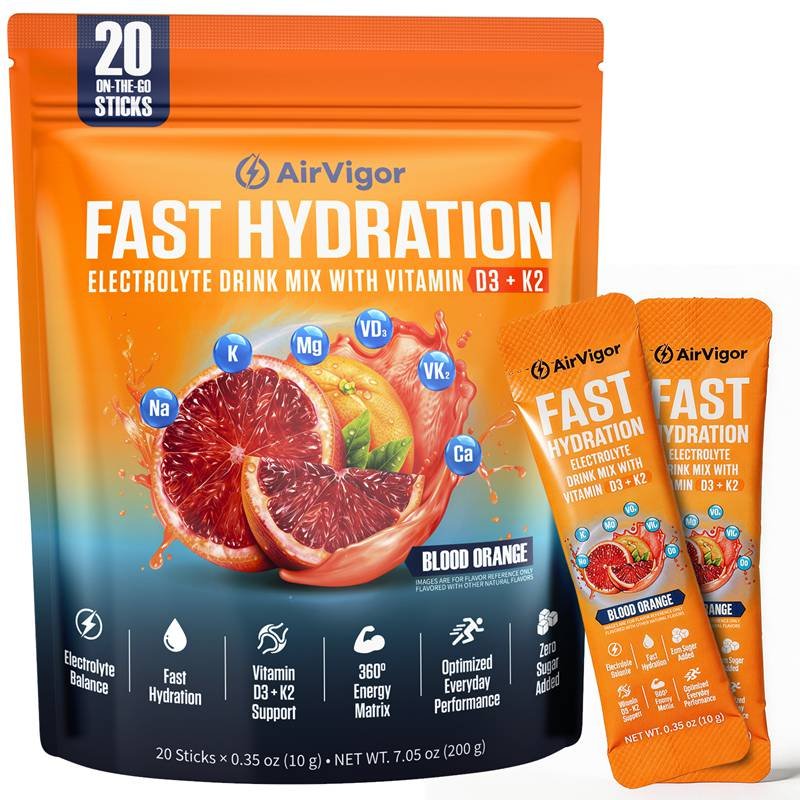
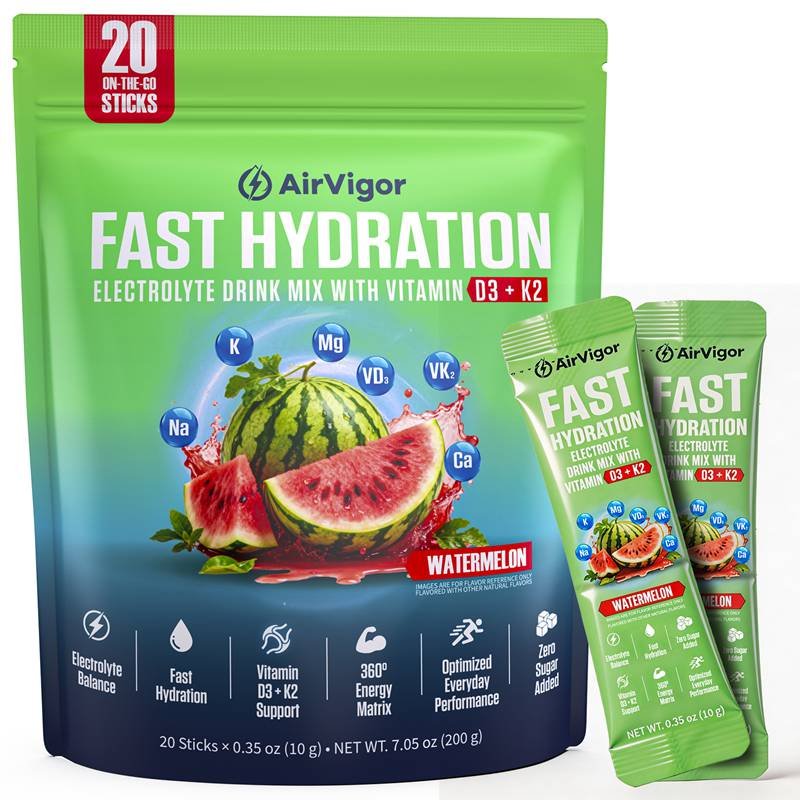
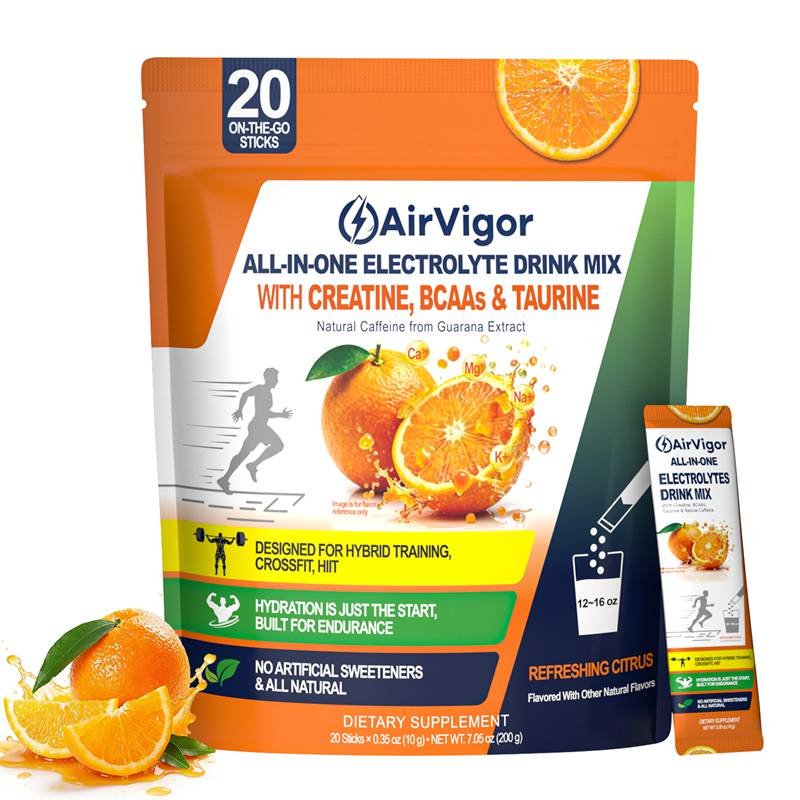
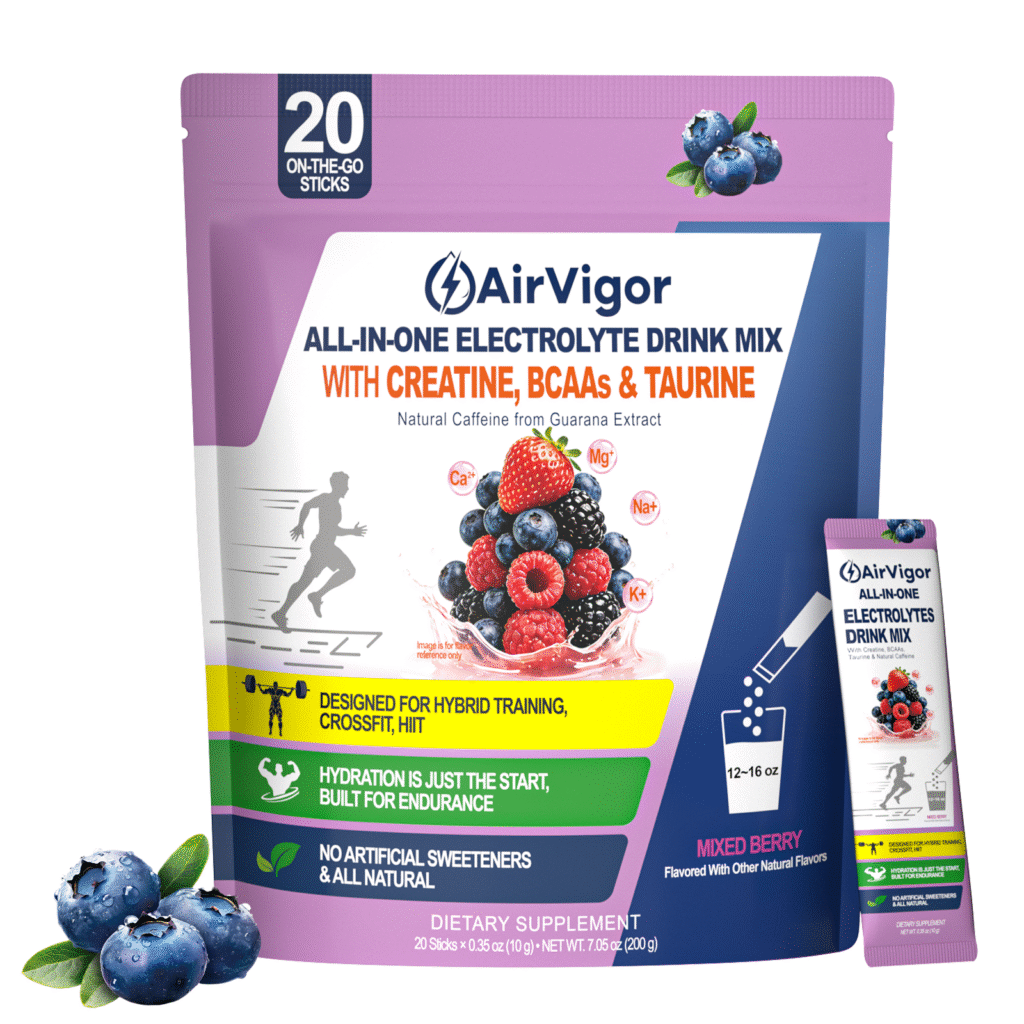
This is why modern hydration strategies emphasize balanced electrolyte intake, not excessive water consumption. Well-formulated electrolyte powders—such as those developed by AirVigor—are designed to support fluid retention and neuromuscular function without excessive sugar or unnecessary additives.
Hydration in heat is not about drinking more.
It’s about hydrating smarter.
Which Electrolytes Matter Most in Heat?
In hot conditions, sodium is the most critical electrolyte for hydration, followed by potassium for muscle and nerve function. Magnesium and chloride play supportive roles by aiding muscle relaxation and fluid balance. Effective heat hydration depends on maintaining the right electrolyte balance—not focusing on a single mineral—so the body can retain fluids, sustain energy, and tolerate heat stress.
Which minerals support heat resilience?
Not all electrolytes contribute equally during heat exposure. Their importance is determined by how much is lost through sweat and how essential each mineral is to hydration and neuromuscular function.
Sodium is the primary electrolyte lost in sweat and the most important for heat resilience. It enables water absorption in the intestines and helps retain fluid within blood vessels and cells. Without sufficient sodium, hydration becomes transient—water passes through the body instead of being used.
Potassium works alongside sodium to maintain electrical gradients across cell membranes. In hot conditions, declining potassium levels can impair muscle contraction and nerve signaling, leading to weakness, shaky movements, and reduced coordination.
Magnesium supports muscle relaxation and energy metabolism. While its sweat loss is lower than sodium or potassium, repeated heat exposure can gradually reduce magnesium levels, increasing susceptibility to cramping and lingering fatigue.
Chloride, often overlooked, is lost alongside sodium and plays a key role in maintaining osmotic balance and fluid movement. It also supports digestive processes involved in fluid absorption.
True heat resilience comes from maintaining ratios, not megadosing one mineral—an approach reflected in balanced electrolyte formulations rather than single-ingredient remedies.
Do electrolytes help in hot weather?
Yes—electrolytes directly improve the body’s ability to cope with heat by transforming water intake into effective hydration.
They help in hot weather through three core mechanisms:
1. Fluid retention
Sodium reduces excessive urine output, allowing fluids to remain in circulation longer.
2. Neuromuscular stability
Potassium and magnesium support nerve transmission and muscle contraction, preventing early fatigue and coordination loss.
3. Heat tolerance support
Proper hydration improves circulation and thermoregulation, making heat exposure feel less draining.
This explains why electrolyte solutions consistently outperform water alone in hot environments—even during low-intensity activity. The benefit is not stimulation, but physiological efficiency.
Brands such as AirVigor design electrolyte blends around these mechanisms, emphasizing balanced mineral profiles, clean sourcing, and fast solubility rather than excessive sweetness or marketing claims.
| Rank | Electrolyte | Primary Role in Heat | Relative Importance |
|---|---|---|---|
| 1 | Sodium | Fluid retention & absorption | Very High |
| 2 | Potassium | Muscle & nerve signaling | High |
| 3 | Chloride | Osmotic fluid balance | High |
| 4 | Magnesium | Muscle relaxation & recovery | Moderate |
In heat, more is not always better. Excessive intake of one electrolyte without others can create new imbalances, especially during prolonged exposure. Balanced formulations are designed to reflect sweat composition and physiological demand, allowing the body to self-regulate efficiently.
This balance-first approach is why structured electrolyte powders have become the preferred hydration strategy not only for athletes, but also for outdoor workers, travelers, and individuals living in warm climates.
Who Needs Electrolytes in Hot Weather?
Anyone exposed to prolonged heat may benefit from electrolytes—not only athletes. Heat increases sweat-related electrolyte loss during exercise, outdoor work, travel, and even daily activities in warm climates. When fluid loss is frequent or cumulative, electrolytes help maintain hydration efficiency, energy stability, and neuromuscular function. The need depends more on heat exposure and sweat rate than on athletic intensity.
Do athletes need more electrolytes in heat?
Yes. Athletes experience compound electrolyte loss because heat amplifies the demands already created by training. During endurance activities, sodium loss accumulates over time as sweat rates remain elevated for hours. In high-intensity or strength-based training, sweat loss may be shorter but more concentrated, especially in hot gyms or outdoor settings.
Heat also increases cardiovascular strain. More blood is directed to the skin for cooling, while muscles simultaneously demand oxygen and nutrients. Without sufficient electrolytes, this balance becomes harder to maintain, leading to early fatigue and performance drop-offs.
Another overlooked factor is training frequency. Athletes who train daily in hot conditions may not fully restore electrolyte balance between sessions, increasing the risk of chronic low-level fatigue rather than acute dehydration.
This is why many performance-focused hydration strategies emphasize structured electrolyte intake, not just water volume—an approach reflected in formulations developed by brands like AirVigor, which are designed for repeated use under heat stress.
Are electrolytes useful for non-athletes?
Absolutely. One of the most common hydration misconceptions is that electrolytes are “only for sports.” In reality, heat exposure—not exercise intensity—is the primary driver of electrolyte need.
Non-athletes often experience electrolyte loss through:
- Outdoor or semi-outdoor work
- Long periods of walking or standing in heat
- Travel, sightseeing, or commuting
- Warm indoor environments with limited airflow
Because these activities feel low effort, people rarely adjust hydration strategy. The result is gradual fatigue, headaches, reduced focus, or a feeling of being “worn down” by the heat.
Electrolytes help non-athletes by improving fluid retention and reducing the energy cost of thermoregulation. For many people, this translates to more stable energy across the day, not improved athletic performance.
| Activity Type | Heat Exposure | Sweat Loss | Electrolyte Need |
|---|---|---|---|
| Endurance training | High | High | Essential |
| HIIT / strength | Moderate–High | Moderate | Recommended |
| Outdoor labor | High | Moderate–High | Essential |
| Travel / sightseeing | Moderate | Low–Moderate | Helpful |
| Office work (hot climate) | Moderate | Low | Situational |
Who Often Underestimates Their Need?
Many people who benefit from electrolytes don’t identify as “active,” yet experience daily heat-related fatigue. This group includes:
- Delivery drivers, construction staff, landscapers
- Travelers in warm or humid regions
- Individuals living in consistently hot climates
- People who sweat easily, even at rest
These individuals may drink plenty of water but still feel tired because electrolyte replacement is inconsistent or absent.
| Scenario | Physical Effort | Heat Stress | Fatigue Risk |
|---|---|---|---|
| Short intense workout | High | Low | Moderate |
| Long walk in sun | Low | High | High |
| Standing outdoor work | Low | High | High |
| Gym training (air-conditioned) | Moderate | Low | Low–Moderate |
When are they most helpful?
Electrolytes tend to provide the greatest benefit when heat exposure is:
- Prolonged – lasting several hours
- Repeated – occurring daily or across consecutive days
- Paired with sweating – even light or unnoticed sweating
In these conditions, hydration becomes less about thirst and more about maintaining internal balance.
Electrolytes are not a niche product for elite athletes—they are a practical hydration tool for anyone whose daily life involves heat exposure. Whether the goal is sustained performance, improved comfort, or simply avoiding that drained feeling at the end of a hot day, electrolyte support helps make hydration more effective.
How to Use Electrolytes for Heat Recovery?
Electrolytes can be used before, during, or after heat exposure, depending on duration and sweat loss. Pre-hydration helps prepare the body to retain fluids, while post-exposure intake supports recovery from electrolyte depletion. Compared with single-food remedies like bananas or pickles, balanced electrolyte solutions provide more consistent and complete mineral replacement for effective heat recovery.
How to hydrate before heat exposure?
Pre-hydration is one of the most overlooked yet effective strategies for managing heat stress. When heat exposure is predictable—such as outdoor work, travel, training, or long periods in the sun—hydrating before sweating begins improves the body’s ability to cope.
The goal of pre-hydration is not to overload fluids, but to ensure electrolyte availability so that incoming water can be absorbed and retained efficiently once sweating starts. Consuming electrolytes 30–60 minutes before heat exposure helps stabilize fluid balance and reduces early fatigue.

This approach is especially useful in hot climates, where baseline electrolyte levels may already be lower due to repeated daily losses.
| Scenario | Timing | Hydration Focus |
|---|---|---|
| Outdoor work | 30–60 min before | Electrolytes + water |
| Travel / sightseeing | Before departure | Light electrolyte mix |
| Exercise in heat | 45 min before | Balanced electrolytes |
| Passive sun exposure | Before exposure | Moderate electrolytes |
Are bananas good for heat exhaustion?
Bananas are often recommended for heat exhaustion because they contain potassium. While potassium is important for muscle and nerve function, bananas provide very little sodium, the electrolyte most heavily lost through sweat.
Relying on bananas alone can therefore leave hydration incomplete. Additionally, whole foods digest slowly and are not always practical during or immediately after heat exposure, especially when appetite is low.
Bananas can be a helpful complement to hydration—particularly during meals—but they are not a replacement for structured electrolyte intake when heat-related fatigue is present.
Do pickles help with heat exhaustion?
Pickles and pickle juice are popular folk remedies for cramps and heat fatigue due to their high sodium content. Sodium can help restore fluid retention, which explains why some people feel temporary relief.
However, pickles have several limitations:
- Inconsistent sodium dosing
- High acidity, which may upset digestion
- Lack of potassium and magnesium
- Added sugars in some preparations
As a result, pickles may help short-term, but they do not provide complete or predictable electrolyte replacement for heat recovery.
| Option | Sodium | Potassium | Magnesium | Balance | Practical in Heat |
|---|---|---|---|---|---|
| Banana | ❌ | ✅ | ❌ | ❌ | ⚠️ |
| Pickles | ✅ | ❌ | ❌ | ❌ | ⚠️ |
| Electrolyte powder | ✅ | ✅ | ✅ | ✅ | ✅ |
When to Use Electrolytes for Heat Recovery?
Electrolytes are most effective when heat exposure is:
- Prolonged – several hours or more
- Repeated – occurring daily or across consecutive days
- Paired with sweating – even light or unnoticed
In these situations, post-exposure electrolyte intake helps restore balance, reduce lingering fatigue, and prepare the body for the next day’s heat exposure.
Balanced electrolyte powders—such as those developed by AirVigor—are designed for these real-world recovery needs, offering predictable mineral ratios, fast solubility, and easy use without excessive sugar.
| Timing | Goal | Recommended Approach |
|---|---|---|
| Before heat | Prepare retention | Electrolytes + water |
| During heat | Maintain balance | Light electrolyte sipping |
| After heat | Restore minerals | Full electrolyte serving |
Heat recovery is not about drinking as much water as possible—it’s about restoring what heat removes. Electrolytes provide the structure that allows hydration to work effectively, especially when exposure is prolonged or repeated. Used correctly, they support faster recovery, steadier energy, and better tolerance to hot conditions.
Are Electrolyte Powders Safe for Daily Use?
Electrolyte powders are generally safe for daily use when they are well-formulated and consumed according to recommended guidelines. Balanced electrolyte ratios help support hydration without overwhelming the body. Safety depends on formulation quality, mineral balance, sugar content, and individual heat or sweat exposure—not simply frequency of use.
Are electrolytes safe in hot climates?
Yes, electrolytes are considered safe for daily use in hot climates when there is regular fluid and sweat loss. In fact, warm environments increase electrolyte turnover, making consistent replenishment more relevant—not less.
The body has built-in mechanisms to regulate electrolyte levels through urine and sweat, as long as intake remains within reasonable ranges. Issues typically arise not from daily use itself, but from imbalanced formulas, such as:
- Excessively high sodium without complementary minerals
- High sugar content that disrupts digestion or energy stability
- Inconsistent dosing that leads to over- or under-consumption
For most healthy adults, using electrolytes daily during periods of heat exposure, outdoor activity, or frequent sweating supports hydration efficiency rather than causing imbalance.
Importantly, daily use does not mean constant high-dose intake. Many people benefit from moderate, consistent electrolyte support that aligns with their environment and lifestyle.
| Usage Pattern | Typical Scenario | Safety Profile | Effectiveness |
|---|---|---|---|
| Occasional use | Short heat exposure | Safe | Moderate |
| Daily moderate use | Hot climate / sweating | Safe | High |
| High-dose daily use | Low sweat, sedentary | ⚠️ | Unnecessary |
How quality and formulation matter?
Not all electrolyte powders are created equal. Long-term safety depends less on whether electrolytes are used, and more on how they are formulated.
A well-designed electrolyte powder focuses on:
- Balanced mineral ratios – reflecting sweat loss rather than megadosing
- Low or no added sugar – avoiding blood sugar spikes
- Transparent labeling – clear mineral amounts per serving
- Clean sourcing & manufacturing – compliance with GMP / HACCP standards
Poorly formulated products may feel effective short-term but create digestive discomfort or inconsistent hydration over time.
This is why brands such as AirVigor emphasize formulation testing, solubility, and ratio balance—designing electrolyte powders not just for intense workouts, but for repeated daily use across different heat scenarios.
| Feature | High-Quality Formula | Poor-Quality Formula |
|---|---|---|
| Sodium level | Moderate & balanced | Excessive or unclear |
| Potassium & magnesium | Included | Often missing |
| Sugar content | Low or none | High |
| Label transparency | Clear & detailed | Vague |
| Suitability for daily use | ✅ | ⚠️ |
Who Should Be More Mindful?
While electrolytes are safe for most people, certain individuals should be more intentional with usage:
- Those with medically prescribed sodium restrictions
- Individuals who rarely sweat but consume high doses daily
- People relying on electrolyte drinks as a replacement for meals
For these groups, adjusting dosage or frequency—rather than avoiding electrolytes entirely—is usually sufficient.
| Lifestyle / Environment | Daily Use Recommendation |
|---|---|
| Hot climate, frequent sweating | Recommended |
| Outdoor work or training | Recommended |
| Occasional heat exposure | Situational |
| Cool climate, sedentary | Minimal or as needed |
Electrolyte powders are safe for daily use when they are properly formulated, reasonably dosed, and matched to actual heat or sweat exposure. The goal is not excess supplementation, but restoring what the body consistently loses.
When used correctly, electrolytes support hydration efficiency, comfort, and daily energy—especially in warm environments where water alone often falls short.
Conclusion
Heat exposure and sun fatigue are not simply the result of “not drinking enough water.” As this guide has shown, they are the outcome of a more complex physiological process involving sweat-driven electrolyte loss, reduced fluid retention, and declining neuromuscular efficiency. This is why fatigue, brain fog, and weakness can persist even when water intake seems adequate—and why hydration strategies that focus on volume alone often fall short.
Electrolytes play a central role in making hydration functional. By supporting fluid absorption, stabilizing nerve and muscle signaling, and improving the body’s ability to tolerate heat stress, balanced electrolyte intake helps transform water into effective hydration. Importantly, this need is not limited to athletes. Outdoor workers, travelers, people living in hot climates, and even those with low-intensity daily activity can all experience cumulative electrolyte loss that affects energy and comfort.
The key takeaway is balance. Neither megadosing minerals nor relying on single-food remedies like bananas or pickles provides a reliable solution. Instead, well-formulated electrolyte powders—designed around sweat composition, moderate dosing, and long-term usability—offer a practical, scalable approach to hydration in heat.
For those looking to apply these principles in real life, products from AirVigor are developed with this balance-first philosophy in mind: transparent mineral ratios, low sugar, fast solubility, and suitability for repeated daily use across training, work, travel, and everyday heat exposure.
Hydration in hot conditions isn’t about drinking more—it’s about hydrating smarter.
When electrolytes are used intentionally and matched to real heat and sweat demands, they become a simple but powerful tool for maintaining energy, focus, and comfort all summer long—and beyond.
Share:
Contact Expert Team
At AirVigor, performance becomes effortless. We transform advanced nutrition science into clean, effective supplements that help you hydrate, recover, and feel stronger every day. Shop AirVigor on Amazon and experience athlete-trusted formulas—backed by real science and supported by our world-class R&D and production capabilities.
Trust AirVigor
At AirVigor, turning your performance goals into reality is no longer a struggle—it’s a science-driven journey we build together. Whether you’re a runner, lifter, cyclist, yogi, outdoor athlete, or someone simply seeking better daily energy, AirVigor transforms advanced nutrition research into clean, effective, and trustworthy supplements you can feel.
Backed by our U.S. scientific team, global certifications, and world-class production standards, every formula is engineered to deliver real hydration, real recovery, and real performance. And when you’re ready to experience the difference, you’ll find AirVigor products available on Amazon and other major platforms—fast shipping, consistent quality, and a community of athletes already seeing results.
Behind the scenes, our R&D and manufacturing ecosystem also supports specialized formulation development, ensuring AirVigor continues to lead with innovation while keeping quality and safety uncompromised. But at the core, everything we create is built for you—your health, your performance, your momentum.
Choose AirVigor. Feel the science. Elevate your every day.


Subscribe to our newsletter
Sign up to our newsletter and we’ll keep you up to date with the latest arrivals.