Skip to content

Electrolyte powders and tablets are often grouped together as if the choice were only about packaging. That is not how customers experience them in real life. The real difference appears in use: how much water people drink with the product, how easy the format is to carry, how precise the serving feels, and whether the goal is light daily support or more deliberate rehydration after sweat and heat. University Hospitals notes that electrolyte powders and tablets have both become popular because they are convenient to carry and can be added to water easily, while Banner Health highlights tablets for portability and exact dosing.
Electrolyte powder is often the stronger option when the goal is more deliberate hydration support, especially after sweating, in heat, or when fluid-plus-electrolyte intake needs to feel more substantial. Tablets often become the better option when the priority is portability, dose consistency, and low-clutter convenience. The better format usually depends less on trend and more on whether the customer needs stronger rehydration support or simpler routine usability. Verywell Fit’s expert comparison says drinks and powders generally offer greater hydration benefit than tablets because they usually provide more electrolytes together with more water, while Banner Health notes tablets may absorb more slowly and still require access to water.
This matters because the customer is rarely asking a laboratory question. The real questions are practical: What works better after a long, hot workout? What fits better in a travel pouch? What feels easier to repeat every day? What creates a clearer hydration routine without unnecessary hassle? Once those questions are put first, the comparison becomes much more useful. Powder and tablets can both work well, but they solve different parts of the hydration problem.
What Is the Difference Between Electrolyte Powder and Tablets?
The main difference is not that one contains electrolytes and the other does not. Both do. The more important difference is delivery logic. Powder is usually consumed as part of a fuller hydration act because it is mixed into a larger amount of water. Tablets are usually optimized around compact dosing, portability, and convenience, which can make them easier to carry but sometimes less fluid-forward as a hydration strategy. University Hospitals places powders and tablets in the same broad convenience category, while Banner Health draws a clearer line by emphasizing exact-dose portability for tablets and slower absorption compared with powders or drinks.
What does electrolyte powder do?
Electrolyte powder is generally designed to support rehydration in a more deliberate way. Because it is mixed into water, it naturally combines electrolyte intake with a more meaningful fluid intake. Verywell Fit’s expert review states that drinks and powders provide greater electrolyte and hydration benefits than tablets because they generally contain more electrolytes and more water for hydration. That does not mean every powder is automatically superior. It means the format often fits situations where the customer wants hydration support to feel more complete, not merely more convenient.
This distinction matters because many customers are not just trying to “take electrolytes.” They are trying to recover after heat, exercise, travel strain, or other fluid-demanding conditions. In those situations, powders often feel stronger because they align with a fuller rehydration behavior: mix, drink, and restore. MD Anderson’s guidance on when electrolyte support is most useful — after vomiting or diarrhea, before, during, and after prolonged sweating, or in extreme heat — matches this more structured pattern well. A powder format often supports that need better because it is easier to build around both fluid volume and mineral replacement at the same time.
A practical comparison helps show why powder is often favored in more demanding conditions:
| Product type | Main strength | Best-fit situations |
|---|---|---|
| Electrolyte powder | More deliberate hydration support | Heat, sweating, travel strain, structured recovery |
| Electrolyte tablets | Smaller, simpler dosing format | Portability, convenience, lighter on-the-go use |
That is why powder is usually best understood as a more fluid-forward support format, not just a flavored supplement.
What do electrolyte tablets do?
Electrolyte tablets are mainly valued for portability, exact dosing, and lower routine clutter. Banner Health says supplements such as tablets are convenient and portable, easy to take on the go, and provide an exact electrolyte dose without added sugar or calories, although they may take longer to absorb and still require drinking water. Those are meaningful advantages, especially for travel, commuting, hiking, workdays, or any routine where carrying a tub or multiple powder servings feels cumbersome.
This matters because convenience is not a superficial feature in hydration products. It strongly influences whether a person actually has the product available when needed. A tablet tube can sit in a work bag, carry-on, glove compartment, or jacket pocket with very little friction. That makes tablets especially strong as a reserve format. The tradeoff is that precision and portability do not automatically translate into the strongest rehydration effect. If the user needs a more complete fluid-and-electrolyte response after heavy sweating, tablets may feel less substantial than powders. In other words, tablets are often strongest when the main problem is availability and consistency, not when the main problem is more aggressive rehydration support.
A simple use-case table helps make that difference clearer:
| Tablet advantage | Why it matters |
|---|---|
| Exact dose | Easier serving consistency |
| Small format | Better for travel and pockets |
| Low clutter | No scoop, less mess |
| Reserve use | Easy to keep on hand |
That is why tablets often succeed not because they outperform powders in every physiological sense, but because they outperform them in specific routine logistics.
How are the two used differently?
The two formats are often used differently because customers are solving different problems with them. Powders are more often chosen when the person wants a clearer hydration event: mix, drink, and recover. Tablets are more often chosen when the person wants a compact, controlled, lightweight option that stays nearby until needed. University Hospitals notes that both formats are easy to add to water, but Banner Health’s comments about tablet portability and slower absorption show why they still feel different in practice.
This matters because “easy to use” has several meanings. Easy to carry is not the same as easy to turn into a fuller hydration routine. A tablet may be easier before the hydration moment happens, because it fits in small spaces and requires little prep. A powder may be easier once the hydration moment begins, because it naturally pushes the user toward a larger, more recovery-oriented fluid intake. The best product decision usually comes from defining the situation first. Is the customer trying to carry electrolytes easily all day, or actively rehydrating after strain? The answer to that question often determines the better format more reliably than any general claim about which one is “best.”
Which Is Better for Hydration?
For hydration specifically, powder often has the stronger case because it is generally consumed with more water and more often positioned around fuller rehydration support. Verywell Fit’s expert comparison says powders and drinks usually offer greater hydration benefit than tablets because they provide more electrolytes together with more water. Banner Health separately notes that tablets may take longer to absorb than powders or drinks. These two points do not make tablets ineffective. They do explain why powders often feel stronger when the hydration need is more immediate, more functional, or more substantial.
Is powder better for faster hydration?
In many targeted-use situations, yes. Powder often supports faster and more complete hydration, not because the powder itself is inherently superior, but because the format is usually tied to a larger fluid intake and a more defined rehydration behavior. Verywell Fit’s experts explicitly say that powders and drinks offer greater hydration benefits than tablets. Banner Health’s observation that tablets may absorb more slowly reinforces the same practical conclusion. When a customer wants a format that feels more recovery-oriented after heat or sweat loss, powder often fits that expectation better.
This matters because customers sometimes overvalue compactness and undervalue fluid volume. A tablet can feel modern and efficient, but the stronger hydration tool is often the one that makes it easier to drink more water with a clearer electrolyte structure. That is one reason powders are frequently favored after longer workouts, in hot weather, and in routines where the body is likely to be recovering from more visible fluid strain. In those conditions, powder often aligns more naturally with what the body appears to need: not just minerals, but minerals plus enough fluid to make the recovery step feel complete. MD Anderson’s guidance on electrolyte use in prolonged sweating and extreme heat fits this pattern closely.
A practical hydration comparison helps:
| Hydration goal | Better fit |
|---|---|
| Light convenience use | Tablets can be enough |
| More deliberate rehydration | Powder often fits better |
| Heat-heavy or sweat-heavy support | Powder often fits better |
| Carry-first convenience | Tablets often fit better |
That is why the hydration comparison should be judged by strain level and fluid need, not just by format elegance.
Do tablets work well enough for light use?
Yes, often they do. Tablets can work well when the need is modest, the user wants a compact option, and the hydration support does not need to feel especially substantial. Banner Health highlights tablet convenience, exact dosing, and portability, and the Cleveland Clinic’s general hydration guidance supports the broader idea that electrolyte supplements can work when used thoughtfully and when the formula is reviewed carefully. For light on-the-go use, tablets often make practical sense.
This matters because not every electrolyte moment is a heavy-recovery moment. A traveler wanting backup support, a commuter carrying a reserve option, or a customer with a mild convenience-oriented routine may not need the strongest hydration format available. In those situations, the best product is often the one that is actually with the user when needed. Tablets perform strongly here because they solve the portability problem extremely well. Their role is often sufficient and efficient, even if they are not always the strongest answer after major fluid loss.
Which one makes more sense after sweating or heat?
After significant sweating or heat exposure, powder often makes more sense because the hydration demand is usually higher and the need for fluid-plus-electrolyte replacement becomes more obvious. MD Anderson identifies prolonged sweating and extended heat exposure as exactly the kinds of situations where electrolyte support is especially useful. In those settings, Verywell Fit’s point about powders offering greater hydration benefit than tablets becomes much more relevant.
This matters because once the body is genuinely under more strain, compact convenience becomes less important than the quality of the rehydration response. Heat and heavy sweating often shift the need away from “easy to carry” and toward “more effective hydration support.” That is where powders typically gain a practical advantage. They are easier to build around a defined amount of water, and they more naturally support a fuller recovery step. For an article aimed at real customer decisions, that distinction is crucial: tablets may travel better, but powders often recover better when the loss is larger.
A practical situation table helps:
| Situation | Better fit |
|---|---|
| Mild routine support | Tablets may be enough |
| Travel backup use | Tablets often fit well |
| Heavy sweating | Powder often fits better |
| Heat-heavy recovery | Powder often fits better |
That is why hydration logic should start with the level of strain, not with which format feels neater in the hand.

Which Is Easier to Use?
Electrolyte tablets are usually easier to carry, store, and portion, while electrolyte powder is often easier to use when the goal is more deliberate hydration support. University Hospitals notes that both powders and tablets are convenient to carry and can be quickly added to water, while Banner Health highlights tablets for portability and exact dosing. Banner also notes that tablets may take longer to absorb than powders or drinks and still require access to water. (uhhospitals.org)
This distinction matters because convenience is not one thing. It includes portability, measuring accuracy, mixing effort, taste experience, storage, and how naturally the product fits into everyday life. A customer packing for a flight, commute, or hiking day may define convenience as small and easy to carry. A customer recovering after heat or heavy sweating may define convenience as easy to turn into a fuller hydration routine. The same format can therefore look easy in one context and less ideal in another.
Which one is easier to carry?
For pure portability, tablets usually have the advantage. Banner Health says supplements such as tablets are convenient and portable, which is one of the strongest reasons customers choose them. A small tube or strip of tablets generally takes up less room than a powder tub and often less room than several powder packets. This makes tablets especially attractive in travel, commuting, hiking, and workday routines where customers want hydration support available without carrying extra bulk. (bannerhealth.com)
This matters because a hydration product only helps if it is actually with the user when needed. Customers often underestimate how much carrying burden affects real usage. A product that is slightly less effective on paper may still be used more consistently if it is far easier to keep nearby. Tablets perform strongly here because they remove friction before the hydration moment begins. They are compact, lower-clutter, and easier to keep as a reserve option in a bag, suitcase, desk drawer, or glove compartment. That is a meaningful advantage, especially for customers whose routines are mobile and unpredictable.
A practical carry comparison helps:
| Carry question | Powder | Tablets |
|---|---|---|
| Fits in a pocket or very small pouch | Less often | More often |
| Easy to keep multiple servings nearby | Moderate | Strong |
| Better for travel-light routines | Moderate | Strong |
| Better for minimal bulk | Moderate | Strong |
That is why tablets often win the portability side of the comparison, even when they do not always win the broader hydration side.
Which one gives better portion control?
For precise serving logic, tablets often have the advantage. Banner Health specifically notes that supplements are useful for exact dosing, and that is one of the clearest strengths of the tablet format. A tablet creates a fixed serving unit, which reduces the chance of uneven scooping, casual overuse, or inconsistent mixing. For customers who care about repeatability, that can be a major benefit. (bannerhealth.com)
This matters because portion consistency is not just a convenience issue. It is also a trust issue. When servings drift, the customer no longer knows whether changes in taste, performance, or how they feel are coming from the product itself or from inconsistent use. Powders can still offer excellent portion control, especially when sold in stick packs, but loose powder formats require more user participation. Tablets lower that burden. They help create a cleaner, more disciplined routine, which is especially useful for travel, work use, and customers who want a predictable intake without carrying measuring tools or relying on rough estimates.
A portion-control comparison helps:
| Portion question | Powder | Tablets |
|---|---|---|
| Exact serving built in | Sometimes | Often |
| Risk of user measuring differently each time | Higher | Lower |
| Easier to repeat the same dose daily | Moderate | Strong |
That is why tablets often feel more organized and more reliable when dose precision is a high priority.
How do taste and mixing change the choice?
Taste and mixing often matter more than customers expect. Powders usually offer more flavor flexibility and often feel more like a complete beverage once mixed. Tablets can feel cleaner and more compact as a routine, but depending on the product, they may have a less satisfying drinking experience or a slower dissolve pattern. University Hospitals notes that powders and tablets can both be quickly added to water, but the sensory experience can still differ substantially in practice. (uhhospitals.org)
This matters because repeat use depends heavily on how the product feels in real life, not just how it performs on a label. A customer may choose tablets for their compactness and later decide the experience feels too clinical, too narrow in flavor, or less enjoyable. Another may choose powder for flavor and later decide the mixing step is inconvenient for fast-moving routines. This is why taste and handling should not be treated as secondary details. They often decide which product becomes sustainable over time. Powders usually feel more beverage-like and more adaptable. Tablets usually feel more efficient and more compact. The better choice depends on whether the customer wants a stronger drinking experience or a lower-fuss carrying experience.
A practical experience comparison helps:
| Experience question | Powder | Tablets |
|---|---|---|
| More beverage-like | Stronger | Less often |
| Lower physical clutter | Moderate | Stronger |
| More flavor variety | Usually stronger | Usually narrower |
| Better for mix-and-drink routines | Stronger | Moderate |
That is why “easy to use” should always include the drinking experience, not only the package size.
Which Is Better for Daily Use?
For daily use, the better choice usually depends on whether the customer needs portable light support or more deliberate hydration support. University Hospitals notes that powders and tablets are both popular because they are easy to carry and add to water. Cleveland Clinic also says powders and tablets can both help replenish electrolytes, as long as customers review formulas carefully and do not assume every product is automatically appropriate for routine use. (uhhospitals.org)
This matters because daily use is not a single use case. One customer may want a backup hydration option for work, travel, and commuting. Another may want something more substantial for training, heat, or repeated fluid strain. Those routines call for different strengths. Tablets often fit better when the need is light, compact, and convenience-centered. Powders often fit better when the routine requires a fuller hydration act and more structured recovery support. The better daily-use format depends on which kind of “daily” the customer is actually living.
Are tablets better for travel and convenience?
In many cases, yes. Tablets are often better for travel and convenience because they are smaller, easier to pack, and easier to store without creating clutter. Banner Health’s emphasis on portability and exact dosing makes tablets especially attractive for customers who want a compact hydration product that can stay in reserve until needed. (bannerhealth.com)
This matters because travel and convenience routines create two simultaneous problems: hydration becomes less predictable, and carrying extra product becomes more annoying. Tablets solve that problem elegantly. They are easy to keep in luggage, handbags, desk drawers, and day packs without much planning. Even when tablets are not always the strongest answer for more serious rehydration needs, they are often the easiest answer for preparedness. That makes them especially relevant for flights, road trips, conferences, long commutes, and hot days where the customer wants support nearby without carrying liquid weight or multiple powder servings.
A convenience map helps:
| Travel or convenience need | Powder | Tablets |
|---|---|---|
| Smallest carry format | Moderate | Strong |
| Easy backup option | Moderate | Strong |
| Lower packing hassle | Moderate | Strong |
| Minimal routine clutter | Moderate | Strong |
That is why tablets often win when convenience is defined primarily as carry-first simplicity.
Is powder better for targeted support?
Yes, in many situations. Verywell Fit’s expert review says drinks and powders usually provide greater hydration benefit than tablets because they typically deliver more electrolytes together with more water. That gives powder a stronger case when the routine is sweat-heavy, heat-heavy, workout-centered, or built around more obvious rehydration needs. (verywellfit.com)
This matters because targeted support is not only about ingredient presence. It is also about how the product guides the user’s behavior. Powder naturally encourages a more substantial amount of fluid intake at the same time, and that often makes the hydration step feel more complete. Tablets may still help, but powders often feel stronger when the customer is not merely topping up electrolytes lightly, but actively trying to recover after strain. This is especially relevant for sports, outdoor work, long hot days, and any routine where the hydration act itself needs to feel more meaningful.
A targeted-support comparison helps:
| Support question | Powder | Tablets |
|---|---|---|
| Better for a fuller hydration routine | Stronger | Moderate |
| Better after heavier sweating | Stronger | Moderate |
| Better for light backup use | Moderate | Stronger |
| Better for fluid-plus-electrolyte recovery | Stronger | Moderate |
That is why powders generally become more attractive as the hydration need becomes more functional and less casual.
Which one fits workouts and active routines better?
For more active routines, powder often has the advantage, especially when sweat loss and fluid replacement matter. University Hospitals notes that powders and tablets are both used by athletes and non-athletes, but Verywell Fit’s review points more strongly toward powders and drinks when the goal is broader hydration benefit. (uhhospitals.org)
This matters because workouts are not one category. A short, cool, low-sweat session may not require much more than convenience, and tablets may be entirely sufficient. A long, hot, sweat-heavy session creates a different demand. In those conditions, the better format is usually the one that supports more fluid intake and a clearer recovery pattern. Powders fit that logic well. Tablets still have value, especially before or after activity when portability matters, but they are often better understood as lighter-support tools rather than the strongest format for more demanding rehydration.
A workout comparison helps:
| Active routine | Better fit |
|---|---|
| Light exercise with low sweat loss | Tablets may be enough |
| Travel workout backup | Tablets often fit well |
| Long session with heavy sweating | Powder often fits better |
| Heat-heavy recovery | Powder often fits better |
That is why the best daily-use choice depends on what “daily” actually means in the customer’s life: light support and portability, or more deliberate hydration recovery.
What Should You Look For in the Formula?
When customers compare electrolyte powder and tablets, the format is only one part of the decision. The formula often matters more. Cleveland Clinic notes that powders and tablets can both help replenish electrolytes, but they should be reviewed carefully so the customer gets the electrolytes they want without unnecessary sugar or dyes. The American Heart Association also notes that electrolyte products can vary widely in sodium, potassium, magnesium, sugar, and calories.
This matters because “powder versus tablets” can become a distracting question if the composition is poorly matched to the routine. A tablet may feel neat and efficient, yet still be too light for heavy sweat loss. A powder may sound stronger, yet still be too sugary or too concentrated for mild daily use. The more useful comparison is not simply delivery format. It is whether the formula fits the actual hydration demand: light support, travel backup, sweat-heavy recovery, heat exposure, or repeated active use.
Which electrolytes matter most?
For many hydration situations, the electrolytes that matter most are usually sodium and potassium, with magnesium adding broader support value. The American Heart Association highlights sodium, potassium, and magnesium among the minerals that vary substantially across electrolyte products. Cleveland Clinic also frames electrolyte replacement around these core minerals and emphasizes moderation.
This matters because customers often compare products by the number of ingredients instead of by hydration logic. A longer label is not automatically a better one. If the product is meant for heavy sweating, sodium becomes especially important because sweat loss is largely sodium-driven, as Ohio State explains. If the product is meant for lighter daily support, a lower-intensity formula may be entirely appropriate. In practice, the best formula is usually the one that clearly reflects the hydration problem it is supposed to solve, rather than trying to sound comprehensive for every possible scenario.
A practical ingredient guide helps:
| Electrolyte | Why it matters |
|---|---|
| Sodium | Core support for fluid balance, especially after sweat loss |
| Potassium | Broad electrolyte balance and muscle support |
| Magnesium | Adds muscle- and nerve-support value |
| Chloride | Works alongside sodium in hydration balance |
That is why customers should look first for a clear electrolyte pattern, not just a preferred format.
Is the sodium level more important than the format?
In many workout, heat, and recovery situations, yes. Ohio State notes that sodium is the primary electrolyte people lose in sweat, and the American Heart Association emphasizes that sodium intake matters because excess sodium is already a broad issue in the general diet. It also reports that Americans consume about 3,400 milligrams of sodium a day on average, well above ideal targets.
This matters because customers often choose a format first and only later look at the formula. But if the real use case is sweat-heavy training or hot-weather recovery, sodium level may be more informative than whether the product arrives as a powder or a tablet. A portable tablet with a weak sodium profile may be less helpful after heavy sweating than a powder designed around clearer replacement logic. On the other hand, for a calm office day or light travel use, a lower-intensity tablet may be entirely reasonable. The more useful question is therefore not “Which format is stronger?” but “Does this product’s sodium level make sense for the loss pattern I am trying to address?”
A practical comparison helps:
| Recovery question | Lower-sodium formula | More sodium-aware formula |
|---|---|---|
| Light routine support | May be enough | May be unnecessary |
| Heavy sweating or heat | May feel insufficient | Often makes more sense |
| Structured rehydration need | Sometimes limited | Often a better fit |
That is why the sodium level often tells a more useful story than the package format alone.
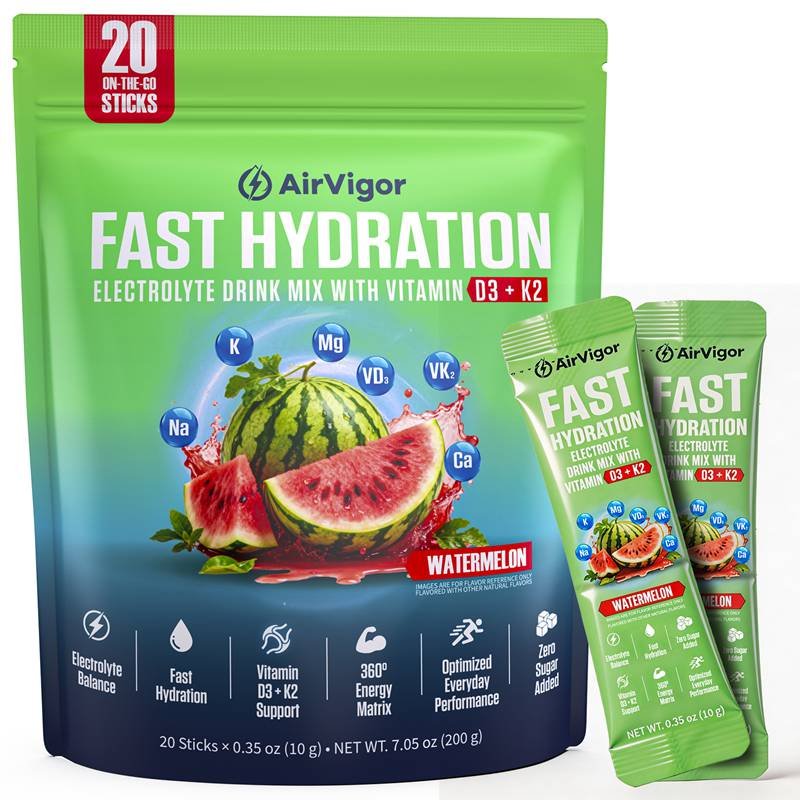
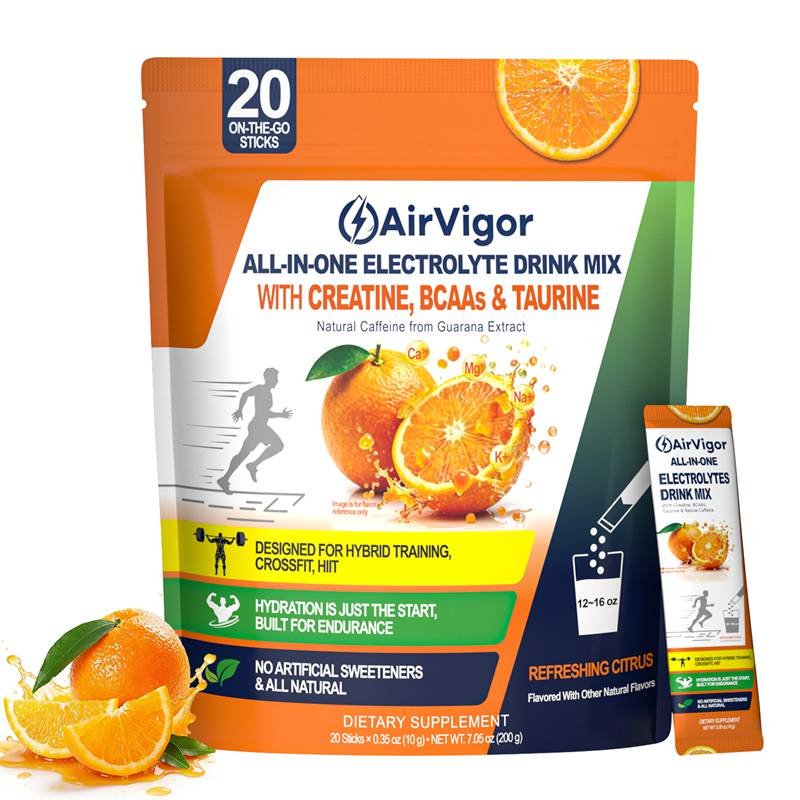
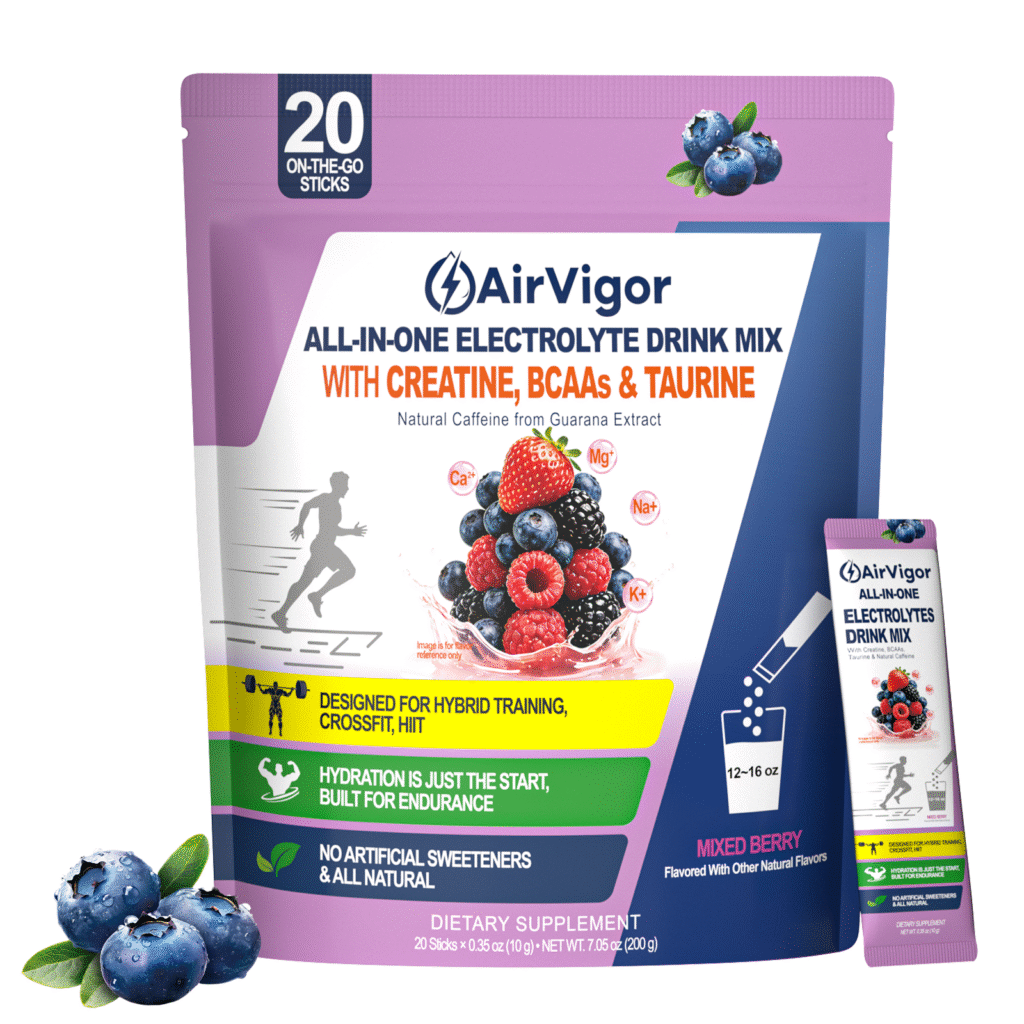
How can AirVigor position the better option?
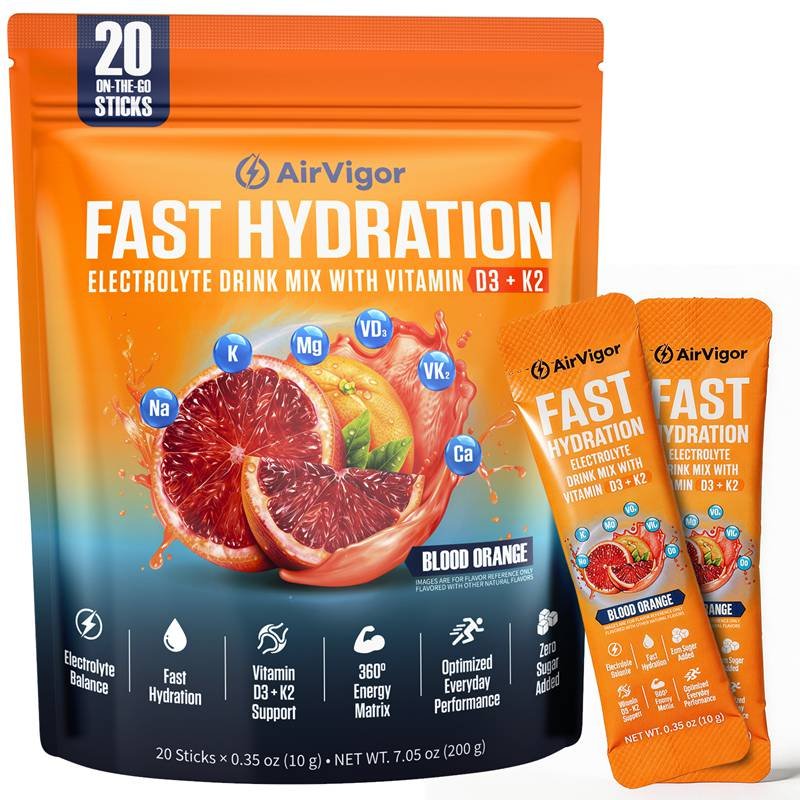
AirVigor can position the stronger option by refusing to argue that one format wins in every situation. Banner Health says powders are good for customization and portability, while tablets are useful for precise dosing and easy on-the-go use. Verywell Fit adds that powders and drinks often provide greater hydration benefit than tablets because they usually deliver more electrolytes together with more water. Taken together, those points support a much more credible message: powder is often better for stronger hydration support, while tablets are often better for compact convenience and dose control.
This matters commercially because customers trust brands more when the use case is specific. AirVigor does not need to claim that powder is always better than tablets. A stronger and more believable position is to explain that the better option depends on what the customer actually values: fuller hydration support after sweating and heat, or lighter, more exact, more portable routine support. That message is also more useful for OEM and ODM development, because it gives product teams a clearer path: design around the user’s routine first, then choose the delivery format that best fits that routine.
A positioning comparison makes that clearer:
| Positioning style | How it sounds | Commercial strength |
|---|---|---|
| “Powder is always better” | Too broad | Weaker |
| “Tablets are always more convenient” | Too narrow | Weaker |
| “Powder for stronger hydration support, tablets for lighter portable use” | Clear and believable | Strongest |
That is where AirVigor can stand out most effectively: not by making a bigger claim, but by making a more precise one.
Final Thoughts
Electrolyte powder and tablets are both useful formats, but they are not best understood as identical tools. Powders often become the stronger option when hydration support needs to feel more complete, especially after heavy sweating, in heat, or in more structured recovery settings. Tablets often become the stronger option when portability, dose precision, and low-clutter convenience matter most. University Hospitals, Banner Health, and Verywell Fit all support that broader distinction from slightly different angles.
That is why the best customer question is not simply “Which one is better?” The better question is “What kind of routine am I trying to support?” If the routine is travel-heavy, tablet convenience may matter more. If the routine is sweat-heavy or heat-heavy, powder may make much more sense. For a brand like AirVigor, that creates a clear opportunity: not to force one format into every scenario, but to explain more accurately when each format solves the hydration problem better.
Looking to Source a Better Electrolyte Product or Build Your Own?
If the goal is to develop an electrolyte product that performs well in travel routines, daily portability, workout recovery, or heat-heavy hydration support, the better starting point is not “powder or tablets” in the abstract. The better starting point is the user scenario: how much sweat loss is expected, how much fluid intake the routine supports, how important portability is, and how exact the serving needs to be. Once that is clear, the stronger format choice usually becomes much easier.
AirVigor can support both finished branded products and private-label or custom formulation projects. The strongest products in this category are the ones that solve a real use problem clearly, and that is exactly where a well-positioned electrolyte powder or tablet can create stronger long-term value.