Skip to content
Should I Take Creatine:A Complete Guide
# Your Trusted Dietary Supplement Brand In US
- Emily

Table of Contents
Most people do not start looking into collagen because they suddenly care about ingredient science. They start because their body begins to feel different in ways that are hard to ignore. A run that used to feel easy now leaves the knees feeling tight. Strength training feels fine during the session, but the body feels heavier the next morning. A long workday followed by a workout creates more stiffness than expected. These are the kinds of real-life moments that make people ask whether collagen is actually useful for active living.
Collagen matters because an active lifestyle is not supported by muscle alone. Movement also depends on tendons, ligaments, cartilage, fascia, and other connective tissues that help the body absorb force, stabilize joints, and handle repeated stress. These tissues do not recover as quickly as muscle, and they are often the first place where small problems start to build. That is why many active adults feel “mostly fine” while still noticing subtle declines in comfort, mobility, and recovery quality.
Collagen helps support an active lifestyle by providing key structural amino acids used in connective tissues, especially those involved in joint comfort, tissue resilience, and movement support. It is not a substitute for complete protein, but it can be a valuable part of a daily routine for people who want better recovery support, smoother movement, and more consistency over time.
This matters even more when life gets busy. Many people are trying to train regularly while also dealing with long hours at a desk, irregular meals, poor sleep, commuting, travel, or family responsibilities. In that situation, recovery often breaks down long before motivation does. A person may still want to stay active, but the body does not always feel ready to keep up. That is where collagen becomes more than a beauty ingredient. It becomes part of a practical routine built around staying active with less friction.
Think about a 35-year-old who works all day, lifts weights three times a week, and plays tennis on weekends. The goal is not to become a professional athlete. The goal is to keep moving well, recover well enough to stay consistent, and avoid the pattern where small aches slowly turn into bigger limitations. That is the real reason collagen keeps coming up in conversations around active lifestyles.
What Is Collagen for Active Lifestyle?
Collagen for an active lifestyle refers to collagen used to support the connective tissues that help the body move, stabilize, and recover under regular physical stress. For active people, the value of collagen is less about appearance and more about how well the body holds up across workouts, daily movement, and long-term use.
What Is Collagen Made Of?
Collagen is a structural protein made mainly from glycine, proline, and hydroxyproline. These amino acids are especially concentrated in tissues that need a balance of strength, flexibility, and resilience. That includes tendons, ligaments, cartilage, skin, fascia, and parts of the bone matrix. In simple terms, collagen is one of the materials the body uses to build and maintain the framework that supports movement.
This is why collagen is different from standard protein powders. A complete protein such as whey is often used to support muscle protein synthesis because it provides all essential amino acids in a profile better suited to muscle-building needs. Collagen does not serve that same purpose. It is not the best tool for increasing muscle mass on its own, and it should not be marketed as if it works like whey. Customers need that distinction to be clear, because many people buy collagen expecting a fast, gym-style result and then judge it by the wrong standard.
A practical comparison makes this easier to understand:
| Protein Source | Primary Use | Amino Acid Strength | Best Fit |
|---|---|---|---|
| Whey Protein | Muscle recovery, strength support, daily protein intake | High in essential amino acids, especially leucine | Post-workout muscle support |
| Collagen Peptides | Connective tissue support, structural support | High in glycine, proline, hydroxyproline | Joints, tendons, ligaments, daily support |
| Plant Protein | Daily protein intake, broader nutrition goals | Varies by source and blend | General protein intake |
Collagen is also the most abundant protein in the human body. It accounts for a large share of the body’s structural protein content, which helps explain why it is so relevant beyond skin-focused use. For active users, that abundance matters because connective tissues are involved in nearly every movement pattern, from impact absorption during running to joint stabilization during lifting.
Customers often ask what collagen peptides actually mean. In most supplements, collagen is hydrolyzed into smaller peptide forms so it mixes more easily into liquids and fits more conveniently into a daily routine. From a customer-use perspective, that matters because poor solubility, heavy texture, or unpleasant taste can quickly reduce long-term consistency. A collagen product is only useful if people are willing to keep taking it.
Why Does Collagen Matter for Movement?
Most people think about movement in terms of muscles, but muscles only tell part of the story. In real movement, the body relies on a chain of structures working together. Muscles generate force, tendons transmit force, ligaments help joints stay stable, cartilage helps reduce friction and absorb load, and fascia helps coordinate movement across tissue layers. When these structures are handling stress well, movement feels smoother and more controlled. When they are under strain, movement can still happen, but it often feels tighter, less stable, and less comfortable.
This becomes more noticeable in people with repeated movement patterns. The issue is not always a major injury. In many cases, it is lower-level strain that builds slowly. A runner may add 10 to 15 extra miles per week and begin noticing morning stiffness in the knees or ankles. A gym user may increase bench press or overhead volume and feel more tension through the shoulders or elbows. A cyclist may spend several hours per week in the same movement pattern and feel hips or knees becoming less comfortable. A person doing yoga or Pilates may not feel pain, but notices that the body feels less responsive and takes longer to “open up.”
These movement patterns place different demands on connective tissues:
| Activity Type | Common Physical Demand | Areas That Often Take Repeated Stress |
|---|---|---|
| Running | Repetitive impact and landing force | Knees, ankles, hips, feet |
| Strength Training | Heavy force transfer and joint loading | Shoulders, elbows, knees, tendons |
| Cycling | High repetition with fixed lower-body pattern | Knees, hips, lower back |
| Yoga / Pilates | End-range control, mobility, and joint stability | Hips, shoulders, fascia, smaller stabilizers |
| Walking / Active Jobs | Daily repeated loading over long hours | Feet, knees, lower back |
This is where collagen often becomes relevant in a practical way. It is not because people suddenly stop being active. It is because they want movement to feel more sustainable. For many adults, especially after 30, the main concern is not whether they can still exercise. It is whether the body still feels ready to repeat that exercise several times per week without accumulating more tightness or recovery drag.
Another important point is that connective tissues usually adapt more slowly than muscles. A person can build strength or improve cardiovascular conditioning relatively quickly, but tendons and other support structures often take longer to keep up. That mismatch is one reason people sometimes feel physically capable but structurally less comfortable. The body may be strong enough for the session, but the supporting tissues may still feel overloaded.
Many customers recognize this pattern in a few common ways:
- They feel strong during the workout but unusually stiff later in the day
- They recover well from muscle soreness but not from joint tightness
- They can complete training, but the body feels less fresh by the second or third session of the week
- They notice more “small signals” from shoulders, knees, hips, or elbows than they used to
These are the kinds of real-life signs that make collagen more relevant to active users.
Is Collagen Only for Skin?
Collagen is often introduced through skin, beauty, or anti-aging messaging, which is why many consumers assume that is its main purpose. That view is incomplete. Skin support is one valid reason people use collagen, but it is not the only one, and for active users it may not even be the main one.
Collagen is distributed throughout major structural tissues in the body. It is part of cartilage that cushions joints, tendons that connect muscle to bone, ligaments that help stabilize joints, fascia that supports tissue glide and movement efficiency, and the bone matrix that contributes to overall structural integrity. This broader role is one reason collagen has become relevant across several categories at once: beauty, fitness, mobility, recovery, and long-term wellness.
A clearer picture looks like this:
| Body Area | Why Collagen Matters There | What Users Often Care About |
|---|---|---|
| Skin | Supports structure and elasticity | Skin texture, appearance, dryness concerns |
| Cartilage | Helps support joint cushioning | Joint comfort during movement |
| Tendons | Helps support force transfer | Durability in running and lifting |
| Ligaments | Helps support joint stability | Stability and control during activity |
| Fascia / Connective Tissue | Helps support smooth movement | Less tightness, better movement quality |
This is why collagen appeals to more than one type of customer. Some want skin support. Others want better joint comfort or recovery support. Many want both. A 32-year-old woman doing Pilates may care about hair, skin, and movement quality at the same time. A 41-year-old man who lifts and plays weekend tennis may care less about appearance and more about staying consistent without feeling beat up. A traveler who walks a lot and sleeps poorly may care about recovery, hydration, and overall body feel rather than any single performance goal.
That broader relevance is one of collagen’s strengths, but it also creates unrealistic expectations when products are oversold. Collagen is not an instant transformation product. It does not work like a pre-workout, and it does not replace complete protein, sleep, hydration, or intelligent training. The more realistic value is that it can support structural tissues over time when used consistently.
For many active users, the most meaningful outcome is not dramatic. It is practical and cumulative. They may notice that movement feels easier to repeat, warm-ups feel smoother, stiffness feels less persistent, or their routine feels more manageable across the week. Those are not flashy promises, but they are exactly the kind of results many customers care about most because they directly affect whether an active lifestyle remains sustainable.
In that sense, collagen is best understood as a support ingredient for the people who want their body to keep cooperating with the life they are already trying to live.
How Does Collagen Help Active Lifestyle?
Collagen helps support an active lifestyle by reinforcing the connective tissues that handle repeated physical stress. For most active people, the main benefit is not a noticeable boost in strength or energy, but a more stable physical state across training sessions and daily movement. It supports how the body absorbs impact, transfers force, and recovers from repeated use over time.
In real use, people usually turn to collagen when they notice patterns such as:
- Joints feel stiff even when muscles feel recovered
- The body needs longer to “warm up” before movement feels smooth
- Recovery between sessions becomes less consistent
- Minor discomfort starts appearing in knees, shoulders, or elbows
- Daily activity creates more fatigue than expected
These patterns often reflect stress on connective tissues rather than muscle alone. Collagen fits into this gap by supporting the structures that are responsible for stability and movement efficiency.
How Does Collagen Support Joints?
Joint comfort is one of the most practical reasons people use collagen. Joints are not just hinges; they are supported by cartilage, tendons, ligaments, and surrounding connective tissues that work together to reduce friction and absorb load.
When these structures are under repeated stress, people may notice:
- Morning stiffness in knees or hips
- Discomfort during repetitive movements
- Reduced range of motion in certain joints
- Slower transition from rest to active movement
Collagen provides amino acids that are concentrated in these tissues. Over time, consistent intake can help support how these structures maintain their function under repeated load.
Typical intake patterns used by active individuals:
| Daily Intake | Usage Context |
|---|---|
| 5 g | Light activity, basic support |
| 8–10 g | Regular exercise (3–4 times per week) |
| 10–15 g | High-frequency training or higher joint load |
Joint-related feedback from users is usually gradual rather than immediate. Over several weeks, some people report:
- Less noticeable stiffness when starting activity
- More stable joint comfort across sessions
- Reduced need for extended warm-up routines
These changes may seem small, but they directly influence whether people stay consistent with training.
How Does Collagen Help Recovery?
Recovery is often associated with muscle soreness, but connective tissue recovery is equally important. Tendons and ligaments recover more slowly than muscle and are more sensitive to repeated strain.
Many active individuals experience recovery patterns such as:
- Muscles feel ready, but joints still feel tired
- Upper body strength is stable, but elbows or shoulders feel overused
- Lower body fatigue shows more in joints than muscles
- Recovery feels inconsistent from one session to the next
Collagen helps support the structural side of recovery. It does not replace protein, but it complements it by targeting tissues that are not fully addressed by standard nutrition.
A practical comparison:
| Recovery Area | What Supports It | Common User Focus |
|---|---|---|
| Muscle repair | Protein, calories, rest | Strength and soreness |
| Hydration recovery | Fluids, electrolytes | Fatigue and cramps |
| Structural recovery | Collagen, consistency | Joint comfort and stability |
For many users, the benefit is not a faster “recovery feeling” after one session. It is a reduction in accumulated strain over multiple sessions.
For example:
- A runner may feel less tightness after consecutive training days
- A lifter may notice more stable joint comfort during higher volume weeks
- A recreational athlete may feel less overall “wear” after activity
This type of support is especially important for people training more than three times per week.
How Does Collagen Handle Repetitive Stress?
Repetitive stress is one of the most common sources of physical strain, especially in endurance activities and structured training programs.
Examples include:
- Running the same distance multiple times per week
- Performing repeated lifting movements
- Cycling for extended durations
- Practicing the same sport-specific motion
This type of stress is different from one-time high-intensity effort. It builds gradually and often affects connective tissues first.
Common signs of repetitive stress include:
- Tightness that returns quickly after stretching
- Localized discomfort during specific movements
- Reduced comfort during longer sessions
- Fatigue that feels structural rather than muscular
Collagen supports tissues that absorb and distribute this type of load. Over time, this may help reduce how quickly stress accumulates.
A simple breakdown:
| Stress Type | Example | What the Body Needs |
|---|---|---|
| High intensity | Heavy lifting | Strength and recovery |
| Repetitive | Running, cycling | Tissue resilience |
| Mixed | Sports, hybrid training | Combined support |
For users with repetitive routines, collagen is often used as a long-term support strategy rather than a short-term fix.
How Does Collagen Support Daily Physical Stress?
Not all physical strain comes from exercise. Daily routines can place continuous load on the body, especially in modern lifestyles.
Common patterns include:
- Sitting for long hours (office work)
- Standing for extended periods (retail, healthcare)
- Carrying weight (bags, equipment, children)
- Limited movement variety (same posture daily)
These patterns create low-intensity but constant stress, which can lead to:
- Hip stiffness from prolonged sitting
- Lower back fatigue from posture imbalance
- Foot and knee discomfort from standing
- Reduced mobility over time
Daily stress vs training stress:
| Source | Intensity | Frequency | Impact |
|---|---|---|---|
| Workout | Moderate–high | Several times per week | Direct fatigue |
| Sitting | Low | Daily | Accumulated stiffness |
| Standing | Moderate | Daily | Joint load |
| Commuting | Low–moderate | Daily | Repetitive strain |
Collagen can support the body in these situations by helping maintain tissue quality under continuous use. This is particularly relevant for people who combine work stress with training stress.
Why Collagen Works Best as Part of a Routine
One of the most important points for customers is that collagen works best when it is used consistently and combined with other basic support habits.
Collagen alone cannot replace:
- Adequate protein intake
- Hydration
- Sleep
- Reasonable training volume
However, when used alongside these factors, it can contribute to a more stable overall routine.
A practical structure looks like this:
| Need | Supporting Factor |
|---|---|
| Hydration | Water and electrolytes |
| Muscle recovery | Protein and calories |
| Tissue support | Collagen |
| Movement quality | Mobility and consistency |
For many users, the real benefit of collagen is not a single noticeable effect. It is the reduction of small problems that interrupt consistency.
When those small issues are reduced:
- Training becomes easier to repeat
- Daily movement feels less restrictive
- Recovery becomes more predictable
That is the role collagen plays in an active lifestyle. It supports the conditions that allow people to stay active over time, rather than pushing performance in a single moment.

Who Needs Collagen for Active Lifestyle?
Collagen for an active lifestyle is most relevant for people who place repeated stress on their bodies and begin to notice that recovery, joint comfort, or movement quality is not as consistent as before. This does not only apply to athletes. It applies to a wide range of individuals whose daily routines combine physical activity, work demands, and imperfect recovery habits.
In practical terms, people who benefit most from collagen usually share one or more of the following patterns:
- They are physically active multiple times per week
- They experience recurring stiffness rather than acute injury
- Their recovery feels slower than expected
- Their daily routine makes consistent nutrition and recovery difficult
- They want to maintain long-term activity rather than short-term performance
A simple way to identify relevance is to look at how often the body is under load:
| Lifestyle Pattern | Weekly Load | Typical Body Feedback |
|---|---|---|
| Light activity | 1–2 sessions | Occasional soreness |
| Moderate activity | 3–4 sessions | Repeated tightness, slower recovery |
| High frequency | 5–7 sessions | Accumulated fatigue, joint stress |
Collagen becomes more useful as the frequency and repetition of physical stress increase.
People Who Train Regularly
Individuals who exercise three or more times per week often place consistent strain on connective tissues. This includes gym users, runners, cyclists, and those following structured programs.
A common pattern for this group is:
- Strength or endurance improves
- Training volume increases
- Recovery begins to feel less stable
Typical signs include:
- Joints feel more noticeable during movement
- Warm-ups take longer to feel effective
- The second or third session of the week feels heavier than the first
This happens because connective tissues adapt more slowly than muscle. As training progresses, the structural side of movement becomes the limiting factor rather than strength itself.
Collagen is often used in this group to support the structures that allow training to continue without interruption.
People with Repetitive Movement Patterns
Repetitive movement is one of the most common sources of physical stress, even outside of structured training.
This includes:
- Runners logging weekly mileage
- Cyclists maintaining steady cadence
- Workers performing repeated physical tasks
- Athletes practicing the same movement patterns
Repetition creates a specific type of strain:
- The same joints and tissues are loaded repeatedly
- Small stress accumulates over time
- Recovery may feel incomplete between sessions
Examples of what people report:
- Knee tightness after running several days in a row
- Elbow or shoulder discomfort during repeated lifting patterns
- Hip stiffness after cycling or sitting for long periods
A breakdown of repetitive stress:
| Activity Type | Repetition Level | Common Stress Area |
|---|---|---|
| Running | High | Knees, ankles |
| Cycling | High | Knees, hips |
| Weightlifting | Moderate–high | Shoulders, elbows |
| Work-related tasks | Moderate | Back, joints |
Collagen is relevant here because it supports the tissues that handle repeated load rather than single high-intensity events.
People with Physically Demanding Daily Routines
Many people experience more physical strain from daily life than from exercise. This group is often overlooked because they do not identify as athletes.
Common scenarios include:
- Sitting for 8–10 hours per day
- Standing for long work shifts
- Carrying children, bags, or equipment
- Limited movement variety throughout the day
These patterns lead to:
- Reduced mobility
- Postural stress
- Low-level but constant strain on joints
Typical feedback from this group:
- Stiffness when standing up after sitting
- Lower back fatigue by the end of the day
- Tight hips and shoulders
- General feeling of reduced flexibility
Daily stress compared to training stress:
| Stress Source | Intensity | Frequency | Long-Term Effect |
|---|---|---|---|
| Workout | Moderate–high | Several times per week | Noticeable fatigue |
| Sitting | Low | Daily | Accumulated stiffness |
| Standing | Moderate | Daily | Joint fatigue |
| Carrying load | Moderate | Frequent | Structural strain |
Collagen fits this group because it supports tissue quality under continuous use, even when the stress is not perceived as “exercise.”
Adults Over 30 with Active Routines
Age is one of the most consistent factors influencing collagen use.
Collagen production in the body gradually declines over time. This does not stop people from staying active, but it changes how the body responds to stress.
Typical changes reported by active adults include:
- Recovery takes longer than in earlier years
- Joints feel tighter, especially in the morning
- Consecutive training days feel more demanding
- Minor discomfort appears more frequently
These changes often begin in the early 30s and become more noticeable over time.
A simplified comparison:
| Age Range | Recovery Pattern | Common Experience |
|---|---|---|
| 20–30 | Faster recovery | High tolerance for frequent training |
| 30–40 | Moderate recovery | More noticeable stiffness |
| 40+ | Slower recovery | Greater need for structured support |
Collagen is often used by this group as a way to maintain consistency rather than increase intensity.
People with Inconsistent Recovery Habits
Another important group includes individuals whose lifestyle makes it difficult to maintain consistent recovery practices.
Common patterns:
- Skipping post-workout nutrition
- Irregular meal timing
- Poor sleep quality
- High work-related stress
These factors reduce the body’s ability to recover effectively, even if training volume is not extreme.
The result is:
| Habit Issue | Impact on Body |
|---|---|
| Skipped nutrition | Slower tissue repair |
| Poor sleep | Reduced recovery efficiency |
| High stress | Increased fatigue load |
| Irregular routine | Inconsistent recovery patterns |
Collagen is often chosen here because it is easy to integrate:
- Quick to consume
- Does not require preparation
- Can be added to existing habits
For this group, the main benefit is not complexity. It is the ability to maintain a simple, repeatable routine.
People Focused on Long-Term Activity, Not Short-Term Results
Some users are not chasing performance at all. Their goal is to stay active over time without accumulating discomfort that forces them to stop.
This includes:
- Recreational athletes
- People returning to exercise after a break
- Individuals focused on general health and mobility
- People who want to avoid long-term joint issues
Their priorities are different:
| Goal | What Matters Most |
|---|---|
| Short-term performance | Strength, speed, intensity |
| Long-term activity | Consistency, comfort, sustainability |
Collagen aligns more with the second category.
For these users, success is defined by:
- Being able to train regularly without interruption
- Maintaining comfortable movement across weeks and months
- Avoiding the pattern where small issues become limiting factors
This is where collagen is most relevant. It supports the ability to continue rather than the ability to push harder.
Overall, collagen for an active lifestyle is not limited to one type of person. It is relevant for anyone whose body is under repeated physical demand and who wants to maintain movement quality over time. The more consistent the stress, and the more important long-term activity becomes, the more useful collagen tends to be as part of a daily routine.
How to Take Collagen for Active Lifestyle?
Taking collagen for an active lifestyle is less about precision and more about building a routine that can be followed consistently. The goal is to provide steady support to connective tissues over time rather than trying to create a short-term effect. For most users, results depend more on daily adherence than on exact timing or complex combinations.
In practical use, collagen works best when it is:
- Taken daily rather than occasionally
- Used in an amount that matches activity level
- Placed at a time that fits naturally into an existing routine
- Combined with basic habits such as hydration and balanced nutrition
Many users make the mistake of treating collagen like a fast-acting supplement. In reality, it behaves more like a long-term input that supports how the body handles repeated stress.
How Much Collagen Should You Take?
Most active individuals fall within a daily intake range of 5 to 15 grams. The appropriate amount depends on how often the body is under physical load and how consistent that load is.
A practical guideline:
| Activity Level | Weekly Pattern | Recommended Daily Intake |
|---|---|---|
| Light activity | 1–2 sessions per week | 5–8 g |
| Moderate activity | 3–4 sessions per week | 8–12 g |
| High frequency | 5–7 sessions per week | 10–15 g |
It is not necessary to take large amounts at once. Smaller, consistent daily intake is generally more useful than irregular high doses.
From a customer perspective, the most common mistakes are:
- Taking collagen only on training days
- Using it inconsistently for short periods
- Expecting results after a few servings
A more effective approach is to treat collagen as part of daily intake, similar to how people approach hydration or basic nutrition.
When Is the Best Time to Take Collagen?
There is no single timing that works for everyone. The most effective timing is the one that can be repeated consistently.
However, several common timing patterns tend to work well in real life:
| Timing Option | Why People Choose It |
|---|---|
| Morning | Easy to pair with coffee or water |
| Before activity | Feels like preparation for movement |
| After activity | Fits naturally into recovery habits |
| Between meals | Helps maintain daily intake consistency |
For many active users, the most practical timing is:
- Within 30 minutes after physical activity
- Or at a fixed daily moment (such as morning or early afternoon)
The reason post-activity timing works well is not because of strict biological timing, but because it aligns with behavior:
- People are already thinking about recovery
- Hydration is already part of the routine
- It reduces the chance of forgetting
A simple real-life routine might look like this:
- Finish workout
- Drink water or an electrolyte mix
- Take collagen as part of the same step
This approach reduces friction and makes long-term use more likely.
Do You Need to Combine Collagen with Other Nutrients?
Collagen does not need a complex stack to be effective, but it works best when basic nutritional needs are met.
There are three practical factors to consider:
1. Protein Intake
Collagen should not replace complete protein. Active individuals still need sufficient daily protein from sources such as:
- Meat, fish, eggs
- Dairy or plant protein
- Protein powders if needed
Collagen complements this by supporting connective tissue rather than muscle protein synthesis.
2. Vitamin C
Vitamin C plays a role in collagen formation in the body. In most cases, people already get enough from their diet.
Examples of common sources:
| Food Source | Approximate Vitamin C Content |
|---|---|
| Orange (1 medium) | ~70 mg |
| Bell pepper (1/2 cup) | ~90 mg |
| Strawberries (1/2 cup) | ~50 mg |
If daily meals include fruits or vegetables, additional supplementation is usually unnecessary. If diet quality is low or inconsistent, combining collagen with a small amount of Vitamin C may be helpful.
3. Hydration
Hydration supports overall recovery and tissue function. Many users find collagen easier to integrate when taken with fluids.
This is one reason collagen is often combined with hydration routines, especially after exercise or during active days.
Powder vs Capsules: What Works Better in Practice?
While collagen is available in multiple formats, real-world usage often favors powder for active individuals.
Comparison:
| Format | Daily Use Experience | Limitation |
|---|---|---|
| Powder | Flexible, easy to mix, allows full dosage | Requires liquid |
| Capsules | Convenient for travel | High number needed for full dose |
| Ready-to-drink | Simple to use | Limited flexibility in dosage |
To reach an effective intake of around 10 grams:
- Capsules may require 6–10 servings depending on product strength
- Powder typically requires one serving
This difference affects consistency. Many users stop using capsules because the volume becomes inconvenient.
Powder fits better into:
- Post-workout hydration
- Morning drinks
- Daily routines where fluids are already consumed
Why Consistency Matters More Than Optimization
A key factor in collagen use is adherence. Many users focus on finding the “perfect” timing or combination but overlook the importance of consistency.
A simple comparison:
| Approach | Result Over Time |
|---|---|
| Perfect plan, inconsistent use | Limited benefit |
| Simple plan, daily use | More stable outcome |
This is why ease of use matters:
- Products that mix quickly are used more often
- Neutral taste supports long-term use
- Portable formats increase adherence
For most people, the best strategy is:
- Choose a format that fits daily habits
- Use the same timing each day
- Maintain intake for several weeks or longer
How Collagen Fits into a Real Daily Routine
Collagen is most effective when it becomes part of an existing routine rather than an added task.
A realistic structure:
| Time of Day | Routine Element | Where Collagen Fits |
|---|---|---|
| Morning | Hydration or coffee | Optional intake |
| Workout | Training session | Not required during |
| Post-workout | Hydration + recovery | Common intake point |
| Afternoon | Light nutrition | Alternative intake time |
For many active users, the most natural placement is:
- After physical activity
- Combined with hydration
This works because it aligns with behavior and reduces the need for additional steps.
Another practical observation is that many people do not want a heavy shake immediately after activity. In these cases, a lighter collagen-based drink can feel easier to consume, which improves consistency.
What Most Users Get Wrong
Several common mistakes reduce the effectiveness of collagen use:
- Expecting immediate results
- Taking collagen only when discomfort appears
- Using it inconsistently
- Replacing protein with collagen
- Choosing products that are difficult to use daily
A more effective approach focuses on:
- Daily intake
- Simple routine integration
- Realistic expectations
When used this way, collagen becomes part of a broader system that supports long-term activity rather than a short-term solution.
Taking collagen for an active lifestyle is about building a routine that is easy to follow and sustainable over time. The goal is not to optimize every detail, but to maintain a consistent input that supports how the body handles repeated movement, daily stress, and recovery demands.

How to Choose Collagen for Active Lifestyle?
Choosing collagen for an active lifestyle is less about brand positioning and more about whether the product can actually be used every day and deliver consistent support over time. Many products appear similar at first glance, but differ significantly in dosage, raw material quality, formulation clarity, and real usability. For active users, the right choice is the one that fits both the body’s needs and daily habits.
A useful way to approach selection is to focus on four core factors:
- Type of collagen used
- Actual dosage per serving
- Product format and usability
- Manufacturing and quality control
Each of these directly affects whether the product will deliver value in real use.
Which Collagen Type Is Relevant for Active Use?
Collagen exists in multiple forms, but for most active individuals, the focus should remain on the types that support connective tissue.
The most commonly used types:
| Collagen Type | Primary Function | Where It Matters |
|---|---|---|
| Type I | Structural strength | Tendons, ligaments, skin |
| Type II | Cartilage support | Joint cushioning |
| Type III | Tissue elasticity | Fascia, connective layers |
In practice:
- Type I and Type III are the most widely used for general active lifestyle support
- Type II is more specialized and often used in smaller, targeted amounts for joint-specific needs
For most users, a well-formulated collagen peptide product based on Type I and III is sufficient. Adding too many types does not always improve results and can make the product more complex without clear benefit.
How Much Collagen Is Actually in One Serving?
One of the most important but often overlooked factors is the actual amount of collagen per serving.
Many products highlight collagen on the front label but contain relatively low amounts per dose. For active users, dosage clarity matters more than branding.
A practical reference:
| Label Claim | What It Often Means |
|---|---|
| “Collagen blend” | May contain low or mixed amounts |
| “Proprietary formula” | Exact dosage may not be clear |
| “10 g collagen per serving” | Clear and usable amount |
Typical effective daily intake for active users:
- 8–12 grams for moderate activity
- 10–15 grams for higher training frequency
If a product provides only 2–3 grams per serving, it may require multiple servings to reach a useful level. This often reduces long-term adherence.
A simple rule:
- Choose products that clearly state grams per serving
- Avoid products where dosage is unclear
Is the Source and Processing Quality Reliable?
Collagen quality depends heavily on raw material sourcing and processing methods.
Common sources include:
| Source | Characteristics | Common Use |
|---|---|---|
| Bovine | Widely available, stable supply | General collagen peptides |
| Marine | Lighter taste, smaller peptides | Beauty-focused or premium positioning |
Key quality considerations:
- Raw material should come from verified, traceable sources
- Products should be tested for heavy metals and contaminants
- Hydrolyzed collagen (collagen peptides) should dissolve easily in water
From a user perspective, poor-quality collagen often shows up as:
- Poor solubility (clumping in water)
- Strong or unpleasant taste
- Inconsistent texture
These factors directly affect whether people continue using the product.
Which Format Works Best in Real Daily Use?
Product format has a direct impact on consistency. Even a well-formulated product will not be effective if it is difficult to use regularly.
Comparison of common formats:
| Format | Daily Experience | Limitation |
|---|---|---|
| Powder | Flexible dosage, easy to mix, suitable for higher intake | Requires liquid |
| Capsules | Convenient for travel | Large number needed for full dose |
| Ready-to-drink | Simple and fast | Limited flexibility in dosage |
For active users aiming for 8–12 grams daily:
- Powder usually requires one serving
- Capsules may require multiple servings
This is why powder is often preferred for active lifestyles. It integrates easily into:
- Post-workout hydration
- Morning routines
- Daily fluid intake
Another important factor is taste. A product with a strong or artificial taste is less likely to be used consistently over time. Neutral or lightly flavored options tend to perform better in real-world usage.
Does the Product Fit Your Routine?
A product may be technically well-designed but still fail if it does not fit into daily habits.
Questions to consider:
- Can it be used immediately after activity without preparation?
- Is it easy to carry (for work, gym, travel)?
- Does it require multiple steps or additional mixing?
Real-world usage patterns show that:
| Product Type | Likelihood of Daily Use |
|---|---|
| Simple, portable formats | High |
| Complex or time-consuming formats | Low |
For busy users, convenience often determines whether the product becomes part of a routine.
Are There Additional Ingredients That Make Sense?
Some collagen products include additional ingredients such as electrolytes, vitamins, or other nutrients.
This can be useful when:
- The added ingredients match real needs
- The formulation reduces the number of separate products required
Examples of useful combinations:
| Combination | Practical Benefit |
|---|---|
| Collagen + electrolytes | Supports hydration and recovery together |
| Collagen + Vitamin C | Supports collagen formation |
| Collagen + minerals | May support overall tissue function |
However, not all additions improve usability. Overly complex formulas can make products harder to understand and less appealing for daily use.
A practical guideline:
- Choose combinations that simplify routines
- Avoid formulas that add complexity without clear purpose
How Important Are Manufacturing Standards?
Manufacturing quality is not always visible, but it affects product reliability.
Key standards to look for:
- GMP (Good Manufacturing Practice)
- HACCP (food safety management)
- ISO or similar certifications
These indicate that the product is produced under controlled conditions with consistent quality checks.
For customers, this translates into:
- More consistent product quality
- Better reliability across batches
- Lower risk of contamination or inconsistency
What Makes a Collagen Product Work Long-Term?
The most important factor is not the ingredient alone, but whether the product supports long-term use.
A useful comparison:
| Factor | Short-Term Focus | Long-Term Focus |
|---|---|---|
| Marketing | Claims and appearance | Practical usability |
| Dosage | Highlighted but unclear | Clearly stated and usable |
| Format | Looks convenient | Actually fits daily habits |
| Taste | Initial appeal | Sustainable over time |
In practice, a collagen product works when:
- It provides a clear and sufficient daily dose
- It is easy to mix and consume
- It fits naturally into an existing routine
- It can be used consistently for weeks or months
A simple decision principle:
- If a product feels difficult to use every day, it is unlikely to deliver long-term value
- If a product fits easily into daily habits, consistency becomes much easier
Choosing collagen for an active lifestyle is ultimately a practical decision. The goal is not to find the most complex or heavily marketed product, but the one that aligns with how the body is used and how daily routines actually work.
Is Collagen Worth It for Active Lifestyle?
Collagen is worth considering for an active lifestyle when the goal is to stay consistent with movement over time, reduce the buildup of stiffness or discomfort, and support how the body handles repeated stress. It is not designed to deliver immediate performance gains. Its value is tied to long-term use and how it supports connective tissues that are involved in nearly every type of activity.
For many users, the decision comes down to a simple question: does the body feel harder to maintain than it used to? If the answer is yes, collagen becomes more relevant.
A useful way to evaluate value is to compare common goals with what collagen can realistically support:
| Goal | What Collagen May Support | What It Does Not Replace |
|---|---|---|
| Stay consistent with workouts | Improved tolerance to repeated movement | Training plan, discipline |
| Reduce joint stiffness | Support for connective tissues | Medical treatment for injury |
| Improve recovery feel | More stable recovery patterns over time | Sleep, nutrition, hydration |
| Maintain long-term activity | Structural support for joints and tissues | Muscle-building protein intake |
This helps set expectations correctly. Collagen is not a shortcut. It is a support tool.
How Long Does It Take to Notice a Difference?
Collagen works gradually. Most users do not feel a change after a few servings. Instead, changes are usually noticed over several weeks of consistent use.
Typical timelines reported in real-world use:
| Time Period | What Users Commonly Notice |
|---|---|
| 2–3 weeks | Slight reduction in tightness after activity |
| 4–6 weeks | More stable recovery between sessions |
| 8–12 weeks | Improved overall comfort in joints and movement |
These changes are often subtle. For example:
- A runner may feel less stiffness after back-to-back runs
- A gym user may notice that joints feel more stable during higher volume weeks
- A person with a busy routine may feel less overall “wear” at the end of the day
The key point is that collagen works through accumulation. Stopping and starting frequently reduces its effectiveness.
What Results Do Active People Actually Care About?
Most active users are not looking for dramatic changes. They are looking for practical improvements that allow them to continue their routines.
Common priorities include:
- Being able to train multiple times per week without increasing discomfort
- Feeling ready to move without extended warm-up periods
- Avoiding the pattern where small issues interrupt consistency
- Maintaining mobility and comfort over time
A breakdown of what users tend to value:
| Outcome Type | What It Looks Like in Practice |
|---|---|
| Short-term feeling | Less noticeable stiffness after activity |
| Weekly consistency | Ability to complete planned sessions |
| Monthly trend | Fewer interruptions due to discomfort |
| Long-term pattern | Sustained ability to stay active |
These outcomes are not always easy to measure, but they directly affect lifestyle quality.
Where Collagen Makes the Most Difference
Collagen tends to be more useful in certain situations than others.
It is more relevant when:
- Training frequency is moderate to high
- Movement patterns are repetitive
- Daily routine includes physical stress (work or lifestyle)
- Recovery habits are not always consistent
- Age-related changes in recovery are noticeable
It is less relevant when:
- Activity level is very low
- Primary goal is muscle gain only
- Nutrition and recovery are already optimized at a high level
A practical comparison:
| User Profile | Likely Value of Collagen |
|---|---|
| Active 3–5 times/week | Moderate to high |
| High-frequency training | High |
| Sedentary lifestyle | Low to moderate |
| Focus on bodybuilding only | Limited without full protein support |
This helps position collagen correctly within a broader routine.
What Collagen Does Not Do
Understanding limitations is important for making a realistic decision.
Collagen does not:
- Build muscle directly in the same way as complete protein
- Provide immediate energy or performance enhancement
- Replace proper recovery practices
- Address acute injuries or medical conditions
Common misconceptions include:
- Expecting collagen to work like a pre-workout supplement
- Using collagen instead of protein
- Expecting visible results within a few days
These expectations often lead to dissatisfaction, even when the product is used correctly.
Why Some People See Better Results Than Others
Results from collagen use vary, and the difference usually comes from how it is used rather than the ingredient itself.
Factors that influence outcomes:
| Factor | Impact on Results |
|---|---|
| Consistency | Daily use leads to more stable effects |
| Dosage | Adequate intake supports effectiveness |
| Routine fit | Easier integration improves adherence |
| Overall lifestyle | Sleep, nutrition, and training affect results |
For example:
- A user taking 10 grams daily for 8 weeks is more likely to notice changes than someone taking it sporadically
- A product that mixes easily into daily drinks is more likely to be used consistently
- A person combining collagen with hydration and proper nutrition may experience more stable results
Cost vs Value in Real Use
Another practical consideration is cost relative to use.
Typical monthly usage:
| Daily Intake | Monthly Requirement |
|---|---|
| 5 g | ~150 g |
| 10 g | ~300 g |
| 15 g | ~450 g |
When evaluating value, it is useful to consider:
- Cost per gram rather than cost per container
- Whether the product will actually be used daily
- Whether it replaces or complements other products
For many users, collagen becomes part of a daily routine similar to hydration or basic nutrition. The value is not in a single purchase, but in consistent use over time.
How Collagen Fits into Long-Term Activity
The most important role of collagen is supporting sustainability.
An active lifestyle is not defined by a single workout or a short training phase. It is defined by the ability to repeat activity over weeks, months, and years.
Barriers to long-term activity often include:
- Accumulated stiffness
- Minor joint discomfort
- Inconsistent recovery
- Reduced motivation due to physical fatigue
Collagen can support the structural side of these challenges. It does not remove all limitations, but it can reduce the friction that makes routines harder to maintain.
A simple comparison:
| Focus | Short-Term Approach | Long-Term Approach |
|---|---|---|
| Performance | Push intensity | Maintain consistency |
| Recovery | React to soreness | Support ongoing structure |
| Supplements | Immediate effect | Cumulative support |
For users focused on staying active over time, this shift in approach is often more important than any single performance improvement.
Collagen is worth it for an active lifestyle when expectations are aligned with how it works. It is not a quick solution, but it can be a practical part of a routine designed to support movement, reduce accumulated strain, and help the body stay consistent under regular use.
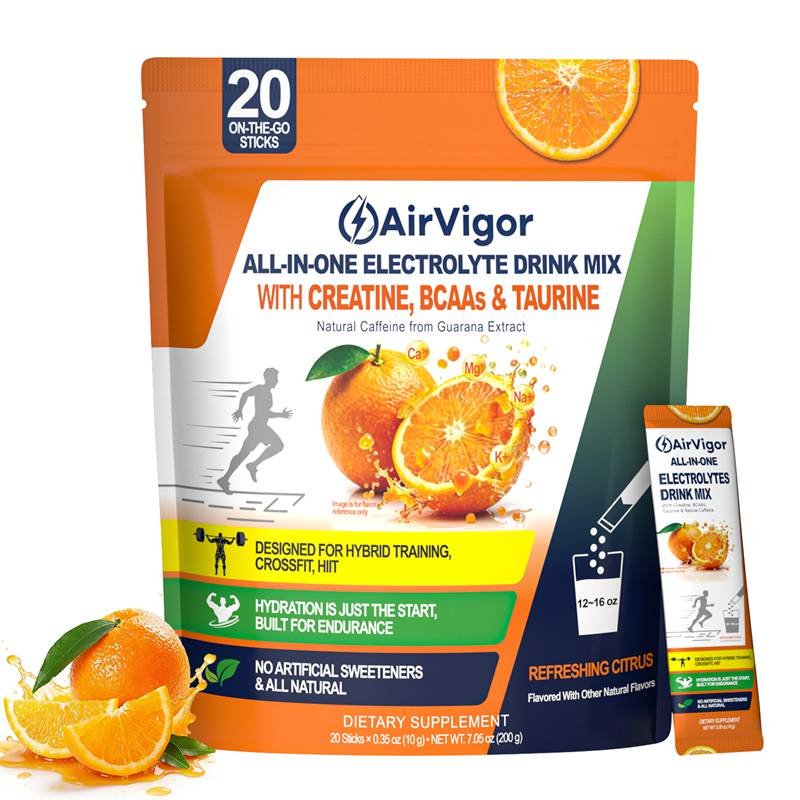
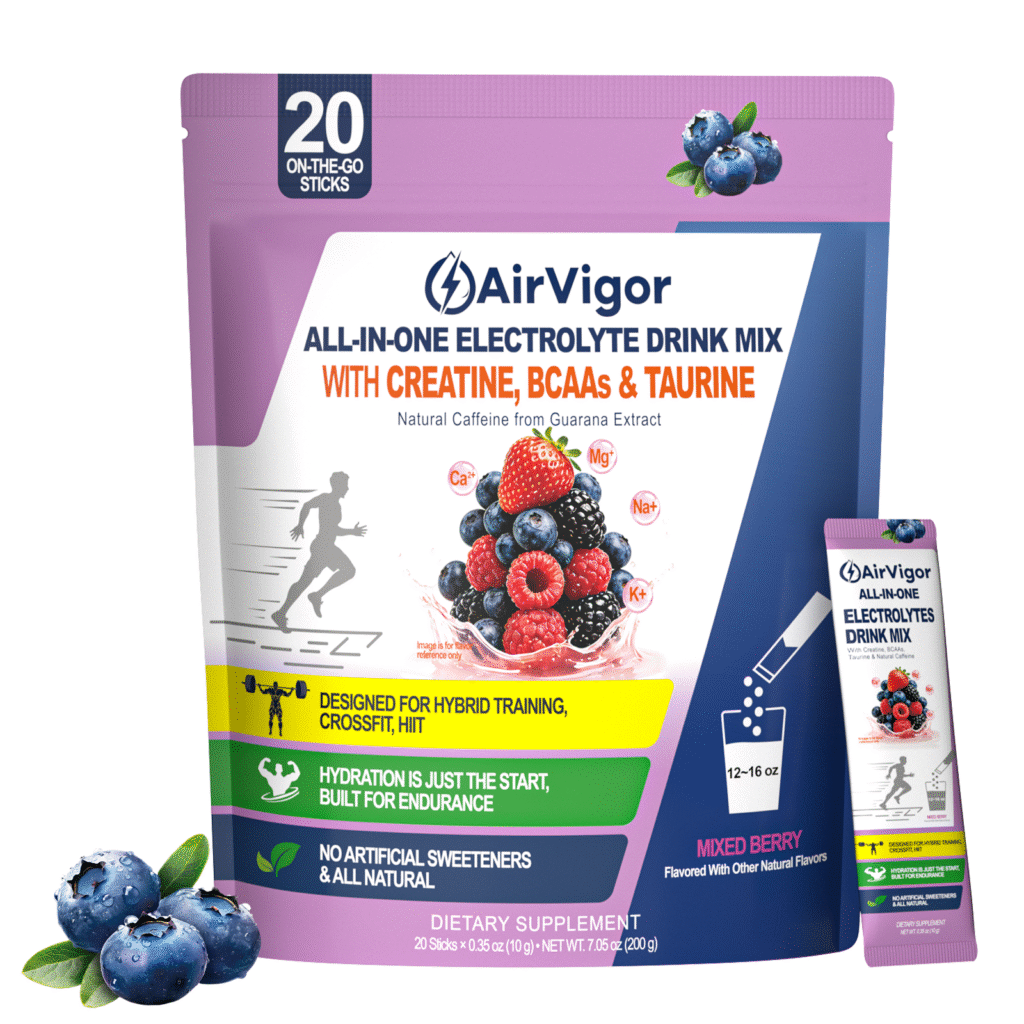
Conclusion: Building a More Practical Routine with AirVigor
Understanding collagen is useful, but applying it consistently is what creates results.
In real life, most people do not struggle with knowledge. They struggle with:
- Too many separate supplements
- Complicated routines
- Products that feel heavy or inconvenient
- Inconsistent habits
AirVigor focuses on solving these problems through formulation and design.
Key approach:
- Real ingredient dosing (no underdosing)
- Clear labeling (easy to understand)
- Light, easy-to-drink formats
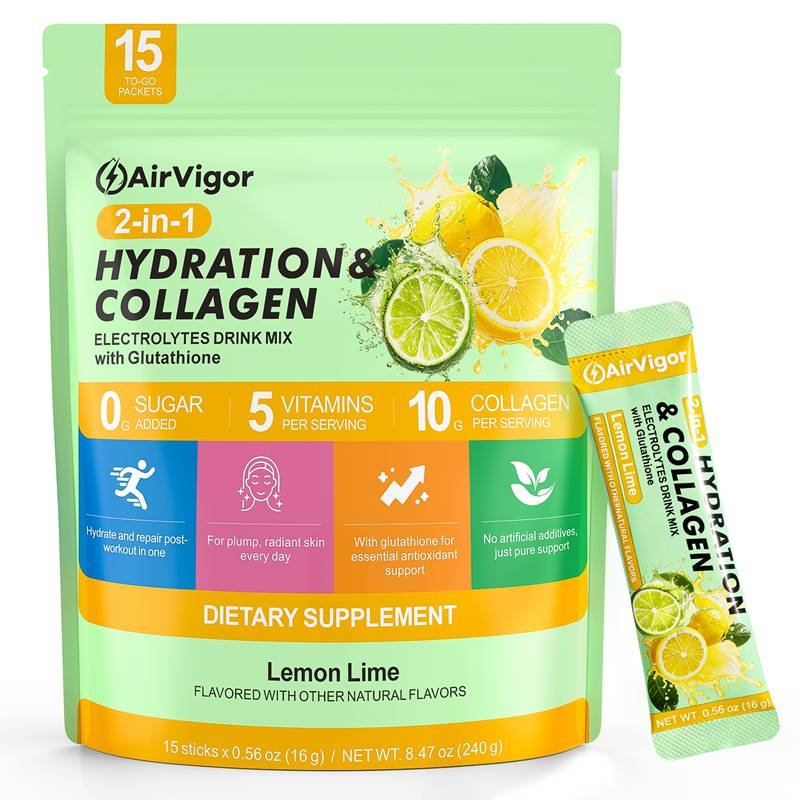
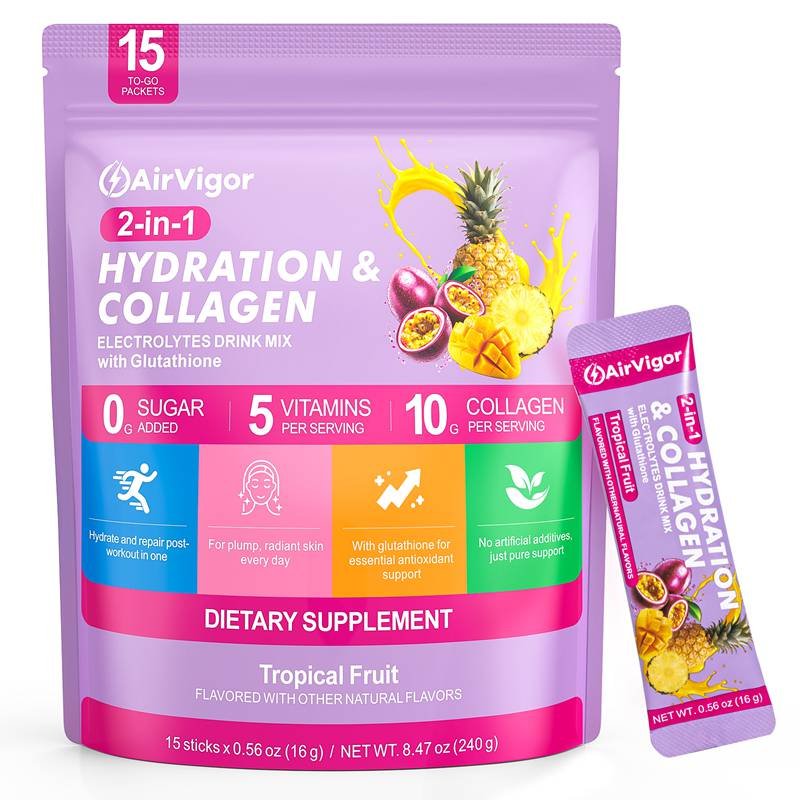
- Combinations that reduce steps (collagen + hydration support)
Instead of asking users to manage multiple products, the goal is:
one simple step that fits naturally into daily life
Final Perspective
For an active lifestyle, the goal is not to push harder every day. The goal is to stay consistent without the body becoming the limiting factor.
Collagen fits into that goal by supporting how the body handles repeated movement, daily stress, and recovery patterns over time.
It is not about doing more.
It is about making what you already do easier to sustain.
Share:
Contact Expert Team
At AirVigor, performance becomes effortless. We transform advanced nutrition science into clean, effective supplements that help you hydrate, recover, and feel stronger every day. Shop AirVigor Supplements on Amazon and experience athlete-trusted formulas—backed by real science and supported by our world-class R&D and production capabilities.
Trust AirVigor
At AirVigor, turning your performance goals into reality is no longer a struggle—it’s a science-driven journey we build together. Whether you’re a runner, lifter, cyclist, yogi, outdoor athlete, or someone simply seeking better daily energy, AirVigor transforms advanced nutrition research into clean, effective, and trustworthy supplements you can feel.
Backed by our U.S. scientific team, global certifications, and world-class production standards, every formula is engineered to deliver real hydration, real recovery, and real performance. And when you’re ready to experience the difference, you’ll find AirVigor products available on Amazon and other major platforms—fast shipping, consistent quality, and a community of athletes already seeing results.
Behind the scenes, our R&D and manufacturing ecosystem also supports specialized formulation development, ensuring AirVigor continues to lead with innovation while keeping quality and safety uncompromised. But at the core, everything we create is built for you—your health, your performance, your momentum.
Choose AirVigor. Feel the science. Elevate your every day.


Subscribe to our newsletter
Sign up to our newsletter and we’ll keep you up to date with the latest arrivals.