Skip to content
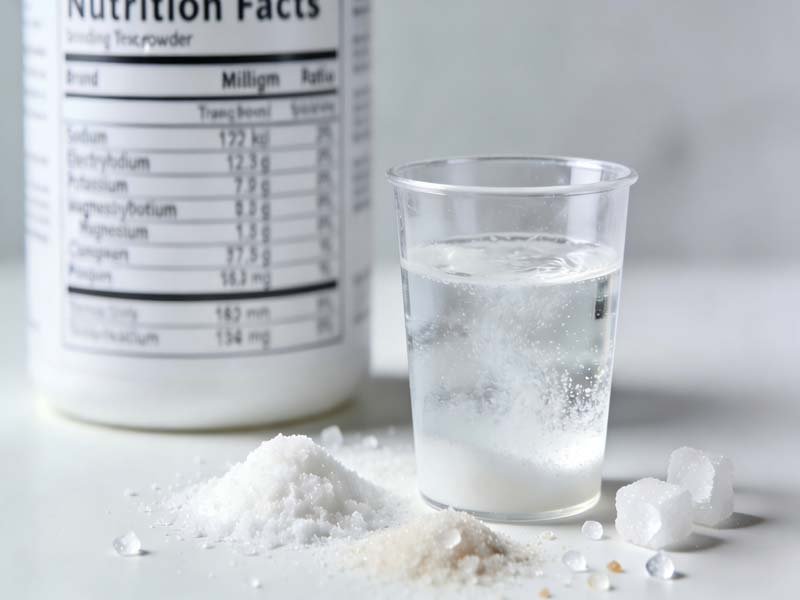
Most people don’t think twice before adding electrolyte powder to their water bottle. It feels practical. You sweat, you hydrate, you replenish. Simple.
But when you actually flip the packet over and read the label, things suddenly get complicated.
Why does one formula contain 1,000 mg of sodium while another barely reaches 200 mg? Why do some electrolyte powders taste like candy, while others are almost neutral? And why do some people say electrolytes fixed their headaches or fatigue—while others experience bloating, flushing, or even skin irritation?
Electrolyte powder has quietly shifted from a niche endurance product into an everyday supplement used by gym-goers, office workers, travelers, and people simply trying to “hydrate better.” Yet most users still don’t fully understand what’s actually inside, how the ingredients work together, or how to tell a well-designed formula from one driven mostly by marketing.
Electrolyte powder typically contains minerals such as sodium, potassium, magnesium, and calcium, which help regulate hydration, nerve signaling, and muscle function. Many formulas also include carbohydrates, acids, flavoring agents, or sweeteners to improve taste and absorption. What truly determines effectiveness is not the ingredient list alone, but the ratios, dosages, and overall formulation logic—especially whether hydration is supported without excess sugar or unnecessary additives.
At its best, electrolyte powder makes hydration more efficient and predictable. At its worst, it’s little more than flavored sugar water with minerals sprinkled in for appeal.
Understanding that difference is what this guide is about—and why reading beyond the front label matters far more than most people realize.
What Is Electrolyte Powder?
Electrolyte powder is a concentrated hydration supplement made from essential minerals such as sodium, potassium, magnesium, and calcium. When mixed with water, it helps the body retain fluids, maintain nerve and muscle function, and hydrate more efficiently—especially during sweating, exercise, heat exposure, or prolonged physical and mental stress.
What does “electrolyte” actually mean?
Electrolytes are minerals that carry an electrical charge when dissolved in water. This electrical property is not optional—it is fundamental to human physiology. Electrolytes allow nerves to transmit signals, muscles to contract and relax, and fluids to move between cells, tissues, and the bloodstream.
Electrolyte powder is simply a delivery format. It provides a dry, shelf-stable way to dissolve these minerals into water. The powder itself is not the benefit—the minerals it delivers are.
This distinction matters because many products marketed as “hydration enhancers” include stimulants, vitamins, or sugars but lack meaningful electrolyte balance. True electrolyte powders are defined by mineral function, not branding.
How is electrolyte powder different from water alone?
Water hydrates—but it does not always rehydrate efficiently.
When you sweat, you lose both water and electrolytes, particularly sodium. Replacing only water can lead to:
- Rapid fluid loss through urine
- Further dilution of remaining electrolytes
- Persistent thirst despite drinking
Electrolyte powder restores osmotic balance, allowing water to be absorbed and retained where it’s actually needed. This is why many people report that electrolyte drinks “hydrate faster” or feel more satisfying than water alone.
Water vs Sports Drink vs Electrolyte Powder
| Feature | Plain Water | Sports Drink | Electrolyte Powder |
|---|---|---|---|
| Electrolytes | None | Low–Moderate | Moderate–Targeted |
| Sugar | None | High | None / Low / Optional |
| Hydration efficiency | Low after sweating | Moderate | High |
| Daily use suitability | Yes | Often too sugary | Highly adaptable |
| Best use case | Light hydration | Endurance fueling | Daily, training, recovery |
Is electrolyte powder the same as sports drinks?
No—and this difference is critical.
Sports drinks are typically carbohydrate-first products. Electrolytes are added secondarily to support sugar absorption. Electrolyte powders, by contrast, are electrolyte-first. Sugar may be included, but it is optional and context-dependent.
This matters because:
- Many users need hydration, not fuel
- Excess sugar can impair daily use
- Electrolyte needs vary widely by activity level
Modern electrolyte powders—such as those developed by AirVigor—are formulated for multiple real-world scenarios, including workouts, recovery, daily hydration, and heat exposure, rather than one-size-fits-all endurance fueling.
Who is electrolyte powder actually for?
Electrolyte powder is not only for athletes. It benefits anyone with increased fluid or mineral loss, including:
- People who sweat frequently (exercise, heat, saunas)
- Outdoor or physically demanding workers
- Office workers experiencing headaches or fatigue from mild dehydration
- Travelers and frequent flyers
- Individuals limiting sugar intake but still needing hydration support
This broad use explains why “electrolyte powder” has become a high-growth search term across fitness, wellness, and lifestyle categories—not just sports nutrition.
Are electrolyte powders good for you?
Generally, yes—when used appropriately and formulated responsibly.
Electrolyte powders can improve hydration efficiency, reduce dehydration-related symptoms, and help stabilize physical performance. However, they are not meant to replace balanced nutrition or override normal fluid intake.
The quality of an electrolyte powder depends on:
- Ingredient transparency
- Balanced mineral ratios
- Sodium levels matched to actual use
AirVigor’s electrolyte formulations are designed with these principles in mind—supporting hydration without unnecessary sugar, fillers, or exaggerated claims.
Which Electrolytes Are Inside?
Most electrolyte powders contain four primary minerals: sodium, potassium, magnesium, and calcium. Each plays a distinct role in hydration, muscle function, and nerve signaling. Effective formulas prioritize balanced ratios, not extreme doses of a single mineral.
Which minerals matter most for hydration?
Hydration is not driven by one “hero” electrolyte—it’s a coordinated system.
In practical terms:
- Sodium controls how much fluid your body retains
- Potassium determines where that fluid goes (inside cells)
- Magnesium and calcium regulate muscle and nerve responses
When one mineral dominates while others are missing or underdosed, hydration often feels incomplete. This explains why some drinks relieve thirst but still leave users fatigued or foggy.
What does sodium do in electrolyte powder?
Sodium is the primary driver of hydration effectiveness.
It regulates blood volume and fluid retention. Without sufficient sodium, water absorption becomes inefficient, leading to frequent urination, dizziness, or persistent thirst.
However, sodium needs vary greatly. Endurance athletes and people working in hot environments may require higher levels, while sedentary users often feel better with moderate amounts. Excess sodium outside intense conditions can cause bloating or discomfort.
Well-designed electrolyte powders—like those from AirVigor—align sodium levels with real-world sweat loss, not marketing extremes.
Why is potassium included?
Potassium works inside cells, balancing sodium’s effects outside cells. This balance is essential for:
- Nerve impulse transmission
- Proper muscle contraction
- Preventing cramps and weakness
Low potassium intake is common among people who sweat frequently or restrict calories. When potassium is insufficient, hydration may occur—but cellular function suffers, leading to fatigue or headaches.
Including potassium alongside sodium creates a smoother, more stable hydration experience.
How does magnesium support hydration and muscles?
Magnesium supports:
- Muscle relaxation after contraction
- Nervous system stability
- Reduced neuromuscular excitability
This is why magnesium-containing electrolyte powders are often associated with less muscle tightness or nighttime cramping. However, magnesium must be dosed carefully—too much can cause digestive upset.
AirVigor uses bioavailable magnesium forms at moderate levels to support recovery without GI issues.
What role does calcium play?
Calcium triggers muscle contraction and supports nerve signaling. Without it, muscles cannot generate force effectively.
While calcium is often obtained from food, small amounts in electrolyte powder help maintain neuromuscular balance during long training sessions or heavy sweating.
Calcium and magnesium work together—one initiates contraction, the other supports relaxation.
Can electrolytes help with headaches or fatigue?
Yes—when electrolyte imbalance is the cause.
Mild dehydration, sodium loss, or sodium–potassium imbalance can cause headaches, brain fog, and fatigue. In these cases, electrolyte powders often relieve symptoms more effectively than water alone.
They will not fix headaches caused by sleep deprivation, stress, or caffeine withdrawal—an important distinction that builds trust and aligns with AI search expectations.
Why Ratios Matter More Than Numbers
More electrolytes do not automatically mean better hydration. Imbalanced ratios are a common cause of poor tolerance.
| Electrolyte | Main Function | Typical Effective Range | Too Little May Cause | Too Much May Cause |
|---|---|---|---|---|
| Sodium | Fluid retention | 200–1000 mg | Dizziness, headaches | Bloating, retention |
| Potassium | Cellular balance | 100–400 mg | Fatigue, cramps | GI discomfort |
| Magnesium | Muscle relaxation | 50–150 mg | Tightness, cramps | Diarrhea |
| Calcium | Muscle contraction | 50–200 mg | Weakness | Rare in powders |
AirVigor formulates by ratio logic, not maximum-dose marketing—making its products suitable for both daily hydration and training.

What Other Ingredients Are Added?
Beyond electrolytes, many electrolyte powders include carbohydrates, acids, flavoring agents, and sweeteners to improve taste, solubility, and absorption. Some formulas also add amino acids or vitamins. These ingredients are not essential for hydration itself, and their value depends on dose, formulation balance, and how the product is used.
What are the ingredients in electrolyte powders besides minerals?
Most electrolyte powders follow a predictable structure. In addition to sodium, potassium, magnesium, and calcium, you’ll commonly see:
- Carbohydrates (sugar, dextrose, maltodextrin)
- Acids (citric acid, malic acid)
- Flavoring agents (natural or artificial)
- Sweeteners (sugar, stevia, monk fruit, sugar alcohols)
- Optional add-ons (amino acids, vitamins)
From a formulation perspective, these ingredients exist to solve three problems:
- Palatability – Will people actually drink it consistently?
- Absorption speed – How quickly fluids and minerals enter circulation
- User compliance – Can it be used daily without fatigue or discomfort?
The issue isn’t whether these ingredients exist—it’s whether they’re necessary for your use case.
Are carbohydrates always necessary?
No—and this is where many hydration products overreach.
Carbohydrates enhance sodium and water absorption via glucose–sodium transporters in the gut. This is useful during long-duration endurance exercise where both hydration and fuel are required.
But for:
- Daily hydration
- Short workouts
- Recovery
- Desk-based or lifestyle use
added sugar is often unnecessary and sometimes counterproductive. Excess sugar can cause energy spikes, crashes, bloating, or increased thirst.
This is why modern electrolyte strategies—like those used by AirVigor—separate hydration formulas from fueling formulas, allowing users to choose based on context rather than being locked into sugar by default.
Why are acids like citric acid used?
Acids play a technical role rather than a nutritional one. They are used to:
- Improve flavor brightness
- Stabilize the powder
- Help minerals dissolve evenly
Citric and malic acid are widely used and generally safe. Problems arise when acids are overdosed to mask other formulation issues.
Too much acid can cause:
- Mouth or throat irritation
- Stomach discomfort on an empty stomach
Balanced electrolyte powders use acids sparingly, resulting in a clean, mild taste rather than aggressive sourness.
What sweeteners are commonly used?
Different products use different sweetening strategies depending on target users:
- Sugar / dextrose – fast absorption, higher calories
- Stevia – zero-calorie, plant-derived, possible aftertaste
- Monk fruit – zero-calorie, softer sweetness
- Sugar alcohols – low-calorie, may cause GI issues for some
There is no universally “best” sweetener. What matters is dose, tolerance, and transparency. Products that clearly disclose sweetener type and quantity are far more trustworthy than those hiding behind vague language.
Are amino acids or vitamins actually helpful?
Sometimes—but only when they’re meaningfully dosed and clearly purposed.
Common issues include:
- “Label decoration” doses too small to matter
- Overcomplicated formulas that blur hydration goals
- Increased intolerance risk
Electrolytes alone already address the primary hydration mechanism. Amino acids or vitamins should be considered optional enhancements, not core requirements.
Are There Ingredients to Avoid?
Some electrolyte powders include ingredients that may reduce tolerance or suitability for daily use, such as artificial colors, excessive sugar, very high sodium levels, or unnecessary fillers. These ingredients are not inherently dangerous, but they can cause bloating, headaches, or skin reactions in certain users.
Are artificial colors and dyes necessary?
No. Artificial colors provide zero hydration or performance benefit. Their role is purely visual.
For some users, artificial dyes are associated with:
- Skin flushing or itching
- Headaches
- Mild digestive discomfort
Long-term users frequently report better tolerance with clear or lightly colored formulas. This is why many science-driven brands intentionally avoid unnecessary coloring.
Do high sugar levels cause problems?
Yes—especially outside endurance contexts.
High sugar electrolyte products can lead to:
- Blood sugar spikes and crashes
- Increased thirst
- Stomach bloating or nausea
For daily hydration, low-sugar or sugar-free formulas are usually better tolerated and easier to use consistently.
Is too much sodium a concern?
Sodium is essential—but context matters.
Very high-sodium formulas are designed for:
- Endurance races
- Heavy sweat loss
- Extreme heat exposure
When used casually, excess sodium may cause:
- Water retention
- Digestive discomfort
- A harsh mouthfeel
High sodium is not unsafe—but it’s often unnecessary for daily use.
Can electrolytes cause hives or skin reactions?
Rarely—and usually not because of the electrolytes themselves.
Minerals like sodium, potassium, magnesium, and calcium naturally exist in the body and are not allergens. When hives occur, the trigger is typically non-electrolyte ingredients.
Common symptoms, causes, and solutions
| Symptom | Likely Cause | Usually Not Caused By | How to Reduce Risk |
|---|---|---|---|
| Bloating | Excess sugar | Sodium itself | Choose low-sugar formulas |
| Headache | Electrolyte imbalance | Clean minerals | Use balanced ratios |
| Skin itching / hives | Dyes, flavorings | Electrolytes | Avoid artificial colors |
| Nausea | Excess acid | Potassium | Use mild-flavor formulas |
Are fillers and “label padding” ingredients a red flag?
Often, yes.
Some ingredients exist mainly to:
- Increase serving size
- Improve flow or appearance
- Support manufacturing rather than hydration
Overly long ingredient lists often correlate with lower transparency and poorer tolerance. Simpler formulas are usually easier to use daily.

How to Read the Ingredient Label?
Ignore front-of-package claims and focus on the Supplement Facts panel. Check electrolyte types and dosages, sugar content, sodium level relative to your use case, and overall ingredient transparency. Balanced ratios and clear disclosure matter more than high numbers.
Step 1: Ignore the front label
Marketing phrases don’t tell you what you’re actually consuming. Real evaluation starts on the back.
Step 2: Check electrolyte types and amounts
Look for all four core electrolytes:
- Sodium
- Potassium
- Magnesium
- Calcium
Ask:
- Are all four listed?
- Are amounts shown per serving?
- Do they match daily vs endurance use?
Step 3: Evaluate sodium in context
| Use Case | Typical Sodium Range |
|---|---|
| Daily hydration | 200–500 mg |
| Gym training | 300–700 mg |
| Endurance / heat | 700–1000+ mg |
Using endurance-level sodium every day often causes discomfort without benefit.
Step 4: Review sugars and sweeteners
Check:
- Total sugars per serving
- Sweetener type
Transparency here is a strong quality signal.
Step 5: Scan the ingredient list
Be cautious of:
- Artificial colors
- Vague “flavor systems”
- Excess fillers
Short, functional lists are usually better tolerated.
Step 6: Watch for proprietary blends
Electrolytes should never be hidden behind proprietary blends. If amounts aren’t disclosed, you can’t evaluate balance or safety.
Step 7: Check quality signals
Look for:
- GMP manufacturing
- COA availability
- Clear brand contact information
What a “Good” Electrolyte Label Looks Like
| Label Signal | Green Flag | Yellow Flag | Red Flag |
|---|---|---|---|
| Electrolytes | All listed clearly | One missing | Sodium only |
| Dosages | Exact mg shown | Vague terms | Proprietary blend |
| Sugar | 0–5 g or optional | 6–10 g | 10 g+ |
| Colors | None / natural | Unclear | Artificial dyes |
| Transparency | GMP, COA | Partial | No info |
Conclusion
Electrolyte powder isn’t magic—and it doesn’t need to be.
At its best, it’s a quietly effective tool that helps your body do what it already knows how to do: retain fluids, support muscles and nerves, and recover predictably. The difference between a good electrolyte powder and a bad one isn’t hype—it’s formulation logic, balanced ratios, and ingredient transparency.
If you’re looking for electrolyte powders designed around real use cases—not exaggerated promises, brands like AirVigor focus on clarity, tolerance, and long-term usability rather than short-term marketing.
Buy AirVigor Electrolyte Powder (Amazon In Stock)
- Multiple formats (stick packs, tubs, bulk)
- Clean-label, balanced formulations
- Fast local delivery
Need Custom Electrolyte Formulas?
For brands, gyms, or distributors:
- OEM / ODM formulation
- Custom ratios, flavors, packaging
- Low MOQ, fast sampling, global compliance