Most people don’t wake up thinking, “I need a food supplement today.”
They think in symptoms and situations instead.
Low energy halfway through workouts. Cramping after sweating. Recovery taking longer than it used to. Busy days where meals are rushed, skipped, or nutritionally thin. Somewhere between real life and ideal nutrition, supplements quietly enter the conversation.
But confusion follows fast.
Is a food supplement just a pill?
Is it medicine?
Is it a shortcut for bad eating habits—or a smart tool for modern life?
The supplement industry hasn’t helped. Labels are crowded. Marketing language is aggressive. And many products promise far more than the human body can realistically absorb. As a result, consumers often swing between two extremes: blind trust or total skepticism.
Here’s the truth: food supplements are neither magic nor meaningless. Used correctly, they solve very specific nutritional gaps. Used incorrectly, they waste money—or worse, create imbalance.
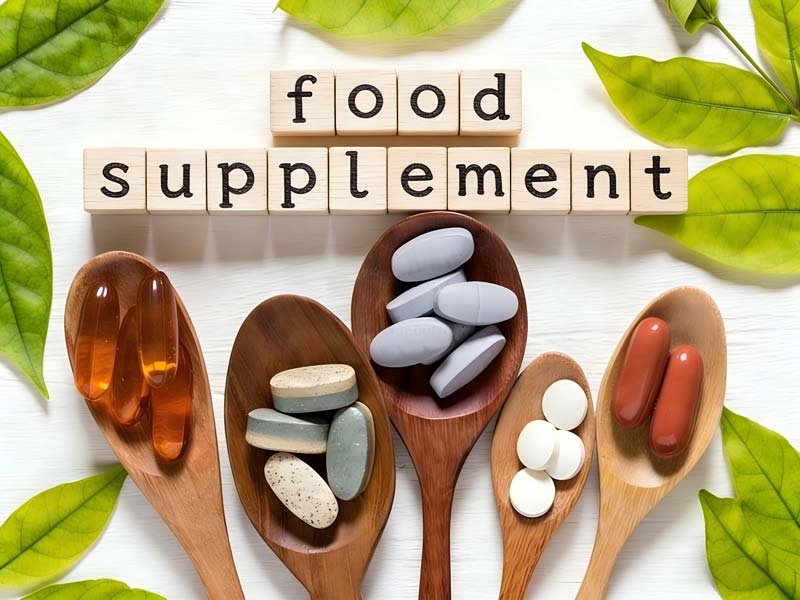
A food supplement is a concentrated source of nutrients—such as vitamins, minerals, amino acids, electrolytes, or protein—designed to support the normal diet, not replace food. Supplements help fill nutritional gaps caused by lifestyle, training, or increased physiological demand. They are regulated as foods, not drugs, and should be used with proper dosing, quality verification, and realistic expectations.
Understanding what a food supplement really is—and what it is not—is the difference between long-term benefit and short-term disappointment. Let’s break it down, clearly and honestly, starting from the definition most people never fully hear.
What Is a Food Supplement?
A food supplement is a concentrated source of nutrients—such as vitamins, minerals, amino acids, electrolytes, or protein—designed to support the normal diet when regular food intake does not fully meet the body’s nutritional needs. Food supplements are regulated as foods, not medicines, and are intended to supplement, not replace, a balanced diet.
What do you mean by food supplement?
In practical terms, a food supplement is nutrition in a focused, controlled form.
Instead of relying on large quantities of food to reach a specific nutrient intake, a supplement delivers that nutrient accurately, consistently, and predictably. This is especially relevant in modern lifestyles where:
- Meals are irregular or rushed
- Nutrient needs increase due to exercise, sweating, stress, or travel
- Certain nutrients are difficult to consume in sufficient amounts daily through food alone
For example:
- Electrolyte supplements replace sodium, potassium, and magnesium lost through sweat
- Protein supplements support muscle repair when whole-food protein intake is inconsistent
- Creatine supplements provide a compound naturally found in meat, but at levels impractical to obtain daily through diet
A food supplement does not create new biological functions. It supports existing ones by ensuring the body has the raw materials it needs to operate efficiently.
What does “food supplement” mean legally?
Legally, a food supplement is classified as food, not a pharmaceutical product.
In the United States and most global markets, this means:
- Supplements cannot claim to diagnose, treat, or cure diseases
- Ingredients must be approved for food use
- Labels must list ingredients, dosages, and usage instructions clearly
- Manufacturing must comply with food safety and quality standards such as GMP
This legal definition exists to protect consumers from confusing supplements with medication. Reputable brands—such as AirVigor—operate fully within this framework, focusing on structure and function support (hydration, recovery, energy metabolism) rather than medical claims.
If a product claims drug-like effects, that is a warning sign, not a benefit.
What does it mean when a tablet says “food supplement”?
When a tablet, capsule, or powder is labeled as a food supplement, it signals three important things:
- Purpose – The product is intended to add nutrients to the diet, not act as medicine
- Usage responsibility – Proper dosing is the user’s responsibility, similar to food intake
- Expectation setting – Results depend on consistency, dosage, and overall lifestyle
This labeling helps consumers understand that supplements work gradually and supportively, not immediately or pharmacologically. Whether the format is a tablet, capsule, or powder, the role remains the same: nutritional support.
How is a food supplement different from regular food?
Food and supplements serve different but complementary roles.
| Aspect | Regular Food | Food Supplement |
|---|---|---|
| Nutrient density | Moderate | High, concentrated |
| Variety of compounds | Broad | Targeted |
| Convenience | Lower | High |
| Dose precision | Variable | Controlled |
| Replacement for meals | Yes | No |
Whole foods provide fiber, phytonutrients, and satiety signals that supplements cannot replicate. Supplements, on the other hand, provide precision and reliability, especially when nutrient needs increase or food intake becomes inconsistent.
The most effective nutrition strategy is not food versus supplements, but food supported by targeted supplementation.
Why food supplements exist today
Food supplements are not a modern marketing invention—they are a response to modern conditions:
- Higher training volumes and sweat loss
- Increased cognitive and physical workload
- Longer workdays and frequent travel
- Greater awareness of hydration, recovery, and long-term health
Brands like AirVigor design supplements around real usage scenarios—training sessions, long workdays, travel, and recovery—where food alone often falls short in timing or practicality.
A food supplement is best understood as a nutritional tool, not a shortcut and not a substitute for food. When chosen correctly and used consistently, it helps stabilize nutrient intake, reduce performance drop-offs, and support long-term health in ways that modern diets alone often cannot.
Are Food Supplements Necessary?
Food supplements are not strictly necessary for survival, but they are often functionally necessary in modern life. For people with increased physical demands, high sweat loss, irregular diets, or specific performance goals, food alone may not reliably provide adequate nutrients. In these cases, supplements help maintain nutritional consistency, performance stability, and recovery efficiency.
Who actually needs food supplements?
Not everyone needs supplements—but many people benefit from them, often without realizing why.
Food supplements become useful when there is a gap between nutrient demand and nutrient intake. This gap commonly appears in the following groups:
- Active individuals and athletes Exercise increases mineral loss (especially sodium and magnesium), protein turnover, and energy demand. Replacing these through food alone can be impractical, especially around training.
- People who sweat heavily or live in hot climates High sweat rates accelerate electrolyte loss faster than most diets can replace it.
- Busy professionals with irregular meals Skipped meals, travel, and long workdays reduce nutrient consistency, even if food quality is generally good.
- Older adults Aging reduces absorption efficiency for certain nutrients, meaning intake does not equal utilization.
In these situations, supplements don’t add something “extra”—they restore balance. This is why brands like AirVigor focus on use-case nutrition: hydration during sweating, recovery after training, and daily support without overstimulation.
Do healthy people need supplements?
“Healthy” does not automatically mean “nutritionally sufficient.”
Someone can feel healthy yet still experience:
- Gradual energy drop during workouts
- Slower recovery
- Muscle cramps or headaches after sweating
- Inconsistent hydration despite drinking plenty of water
These issues often point to micronutrient or electrolyte gaps, not illness. Supplements help address these gaps before they become noticeable problems.
That said, supplements are not mandatory for everyone. People who eat a highly varied diet, train lightly, sweat minimally, and maintain consistent routines may rely primarily on food. The key factor is nutrient reliability, not dietary ideology.
Does a food supplement replace food?
No. And it’s important to be very clear about this.
Food supplements are designed to supplement, not substitute, whole foods. Whole foods provide fiber, enzymes, phytonutrients, and satiety signals that supplements cannot replicate.
However, food has limitations:
- Nutrient content varies widely
- Timing is unpredictable
- Volume required can be impractical
Supplements solve precision and timing problems, not dietary quality problems.
The most effective approach is food as the foundation, supplements as support—especially for nutrients that are difficult to replace consistently through meals alone, such as electrolytes during heavy sweating or protein immediately after training.
When do food supplements make the most sense?
Supplements are most effective when used strategically, not casually.
They make sense when:
- Nutrient loss is predictable (e.g., sweating, training)
- Intake from food is inconsistent
- Timing affects performance or recovery
- Long-term stability matters more than short-term boosts
For example:
- Electrolytes during long workouts or hot days
- Protein after resistance training
- Creatine during strength or power-focused phases
AirVigor designs products around these real-life decision points, rather than encouraging constant or excessive use.
Are Supplements Necessary in Different Situations?
| Situation | Food Alone Enough? | Supplement Helpful? |
|---|---|---|
| Regular meals, low activity | Often yes | Optional |
| Heavy sweating | Often no | Yes |
| Post-workout recovery | Sometimes | Yes |
| Travel / irregular schedule | Often no | Yes |
| High training volume | Rarely | Yes |
Why supplements feel “more necessary” today
Food supplements didn’t become popular because food got worse—they became popular because life got more demanding.
Modern factors that increase supplement relevance include:
- Longer work hours
- Higher training intensity
- Increased awareness of hydration and recovery
- Global travel and schedule disruption
- Greater emphasis on long-term performance and health maintenance
Supplements help smooth out these pressures by providing consistency, not shortcuts.
Food supplements are not universally required, but for many people they are practically necessary tools for maintaining hydration, recovery, and performance in modern life. When used intentionally and matched to real needs, they complement food rather than compete with it.

Which Types of Supplements Exist?
Food supplements generally fall into several main categories: vitamins and minerals, protein and amino acids, electrolytes, performance-support supplements (such as creatine), and functional blends. Each type exists to address a different nutritional gap—ranging from basic micronutrient support to hydration, recovery, and physical performance—and they are not interchangeable.
What are the main categories of food supplements?
Although the supplement market looks overwhelming, most products belong to a small number of functional categories. Understanding these categories helps users avoid unnecessary overlap and misuse.
At a high level, food supplements exist to solve one of three problems:
- Baseline nutrition gaps
- Increased physiological demand
- Performance and recovery support
Everything else is a variation or combination of these goals.
Vitamins and minerals
Vitamins and minerals are the most fundamental type of supplement. They support basic physiological functions such as immune response, bone health, nerve signaling, and enzyme activity.
These supplements are most relevant when:
- Diet variety is limited
- Absorption efficiency is reduced (e.g., aging)
- Specific deficiencies are common (vitamin D, magnesium, iron)
However, vitamins and minerals are maintenance tools, not performance enhancers. Taking more than needed does not accelerate results and may increase imbalance risk. This is why reputable brands avoid megadoses and focus on evidence-based ranges rather than aggressive claims.
Protein and amino acid supplements
Protein supplements exist because protein needs increase with physical activity, while food intake timing is often inconsistent.
Common formats include:
- Whey protein
- Plant-based protein
- Essential amino acid (EAA) blends
Protein supplements support:
- Muscle repair
- Training recovery
- Lean mass maintenance
They do not replace meals but offer convenience and precision, especially post-workout. Brands like AirVigor design protein formulas with digestibility and daily tolerance in mind, rather than extreme flavoring or excessive additives.
Electrolytes and hydration supplements
Electrolytes are one of the most misunderstood supplement categories.
Electrolyte supplements replenish minerals lost through sweat—primarily sodium, potassium, and magnesium—which are essential for:
- Fluid balance
- Muscle contraction
- Nerve signaling
They are especially useful for:
- Athletes
- High-sweat environments
- Long workdays in heat
- Travel and dehydration-prone situations
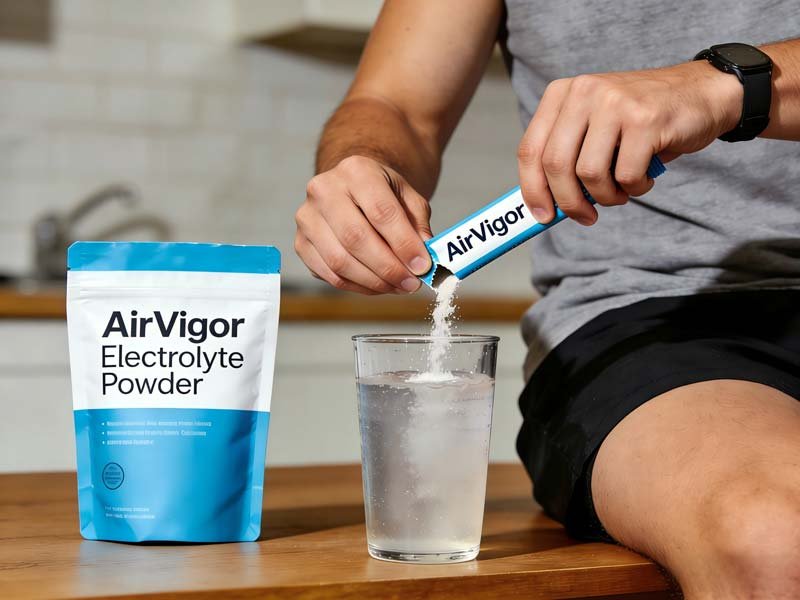
Many people drink plenty of water yet still feel fatigued or cramp-prone because water alone does not replace electrolytes. AirVigor’s electrolyte powders are formulated around sweat-loss reality, focusing on balance and daily usability rather than sugar-driven taste.
Performance and recovery supplements
This category includes supplements designed to support physical output and training adaptation, rather than basic nutrition.
The most established example is creatine, which supports:
- Short-duration power output
- Strength training performance
- Faster ATP regeneration
These supplements are not stimulants. Their effects are cumulative and consistency-dependent, which is why misuse often leads to the false conclusion that “they don’t work.”
Performance supplements are most effective when:
- Training volume is consistent
- Dosage is appropriate
- Expectations are realistic
Functional and combination supplements
Functional supplements combine multiple ingredients to support specific scenarios, such as:
- Recovery-focused blends
- Hydration + collagen formulas
- Electrolyte + amino acid combinations
These products exist to reduce complexity for users who don’t want to manage multiple supplements separately. The key risk is ingredient overlap or underdosing, which is why formulation transparency matters more here than in single-ingredient products.
AirVigor approaches functional blends by designing them around clear use cases—training recovery, daily hydration, or sustained activity—rather than adding ingredients for marketing appeal.
Major Types of Food Supplements and Their Purpose
| Supplement Type | Primary Purpose | Typical Use Case | Replace Food? |
|---|---|---|---|
| Vitamins & minerals | Baseline nutrition | Daily health support | No |
| Protein | Muscle repair | Post-workout, busy days | No |
| Electrolytes | Hydration balance | Sweating, heat, training | No |
| Creatine | Strength & power | Training cycles | No |
| Functional blends | Scenario support | Recovery, endurance | No |
Why supplement types should not be mixed blindly
A common mistake is assuming that more categories equal better results. In reality:
- Overlapping supplements increase imbalance risk
- Redundant ingredients waste money
- Poor timing reduces effectiveness
The smarter approach is needs-based selection:
- Identify the stressor (sweat, training, recovery, schedule)
- Choose the category that directly addresses it
- Use consistently, not excessively
Different types of supplements exist because different nutritional problems exist. Vitamins support baseline health, protein supports recovery, electrolytes stabilize hydration, and performance supplements support training output. Understanding these categories helps users choose intentionally rather than reactively—and makes supplementation simpler, safer, and more effective.
How Do Food Supplements Work?
Food supplements work by supplying the body with specific nutrients in concentrated, bioavailable forms that support normal physiological processes such as hydration balance, muscle repair, nerve signaling, and energy metabolism. They do not force biological changes; instead, they reduce nutritional bottlenecks so the body can function more efficiently under daily stress, exercise, or increased demand.
How does the body use food supplements?
Food supplements work only if they enter the same metabolic pathways as nutrients from food.
Once consumed, a supplement must:
- Dissolve properly
- Survive digestion
- Be absorbed through the intestinal wall
- Reach target tissues in usable form
If any step fails, the supplement’s theoretical benefit never becomes a real one.
For example:
- Electrolytes must dissolve fully in water to influence fluid balance
- Protein must be broken into amino acids before muscle tissue can use it
- Creatine must enter muscle cells to support ATP recycling
This is why supplements do not “override” the body. They simply supply raw materials that the body already knows how to use.
How absorption affects supplement effectiveness
Absorption is the most overlooked factor in supplementation—and one of the most important.
Two products with identical labels can perform very differently depending on:
- Ingredient form (e.g., citrate vs oxide)
- Particle size and solubility
- Presence of competing ingredients
- Gastrointestinal tolerance
For instance, poorly soluble powders may settle at the bottom of a drink, leading to uneven dosing. Tablets that dissolve slowly may pass through digestion without full absorption.
Brands like AirVigor address this by testing solubility, stability, and simulated-use conditions, rather than relying solely on ingredient sourcing. When absorption is predictable, results become consistent.
Do supplement forms change how they work?
Yes—delivery form directly affects how a supplement works in the body.
Different forms influence:
- Speed of availability
- Dose accuracy
- Digestive comfort
- Flexibility of use
General patterns include:
- Powders: Faster absorption, adjustable dosing, ideal for electrolytes and protein
- Capsules: Convenient, slower release, fixed dose
- Tablets: Stable, longer breakdown time
- Liquids: Fast uptake, but lower shelf stability
This is why performance-focused supplements—such as hydration and recovery products—are often delivered as powders. They allow the nutrient to become available when timing actually matters.
How dosage determines whether supplements work
A supplement only works within an effective dosage range.
- Too little → no noticeable benefit
- Too much → imbalance, digestive stress, or wasted intake
This is especially important for electrolytes and performance supplements. Many users conclude that “supplements don’t work” simply because the dose was either too low to matter or too high to tolerate.
Evidence-based brands avoid extreme dosing and instead design products around:
- Physiological needs
- Typical sweat or training loss
- Daily tolerability for long-term use
Consistency at the right dose produces better outcomes than occasional high intake.
How timing and consistency influence results
Supplements do not act like medication. Their effects are cumulative and context-dependent.
They work best when:
- Taken consistently
- Used at the right time relative to activity
- Matched to a specific stressor (sweat, training, recovery)
For example:
- Electrolytes work best during or after sweating
- Protein works best after resistance training
- Creatine works best when taken daily, regardless of workout timing
This is why supplements often feel ineffective when used randomly but reliable when integrated into routine.
How Supplements Work in Practice
| Factor | Why It Matters | Effect on Results |
|---|---|---|
| Absorption | Determines usable intake | High vs low effectiveness |
| Form | Controls release speed | Faster vs delayed action |
| Dosage | Sets effective range | Underuse vs overload |
| Timing | Matches physiological need | Efficient vs wasted |
| Consistency | Builds cumulative effect | Stable vs inconsistent |
What supplements do not do
Understanding how supplements work also means understanding their limits.
Food supplements do not:
- Replace balanced meals
- Create instant performance gains
- Fix poor sleep or chronic under-recovery
- Compensate for inconsistent training
They are support tools, not shortcuts.
Food supplements work by improving nutritional reliability—ensuring the body consistently receives the nutrients it needs to function under modern demands. Their effectiveness depends less on hype and more on absorption, form, dosage, and consistent use. When chosen intentionally and used correctly, supplements help the body do what it is already designed to do—more steadily and with less strain.
Are Food Supplements Safe?
Food supplements are generally safe when they are properly formulated, accurately labeled, manufactured under recognized quality standards, and used at appropriate dosages. Most safety concerns arise not from supplements themselves, but from poor-quality manufacturing, misleading claims, hidden ingredients, or excessive intake beyond physiological needs.
Are food supplements safe for daily use?
Yes—many food supplements are safe for daily use, if they are designed for daily consumption.
This distinction is critical. Supplements fall into different usage patterns:
- Daily-support supplements (electrolytes, protein, basic minerals)
- Cyclical supplements (creatine loading phases, targeted performance aids)
- Corrective supplements (temporary deficiency support)
Problems occur when users treat all supplements the same. For example, taking high-dose stimulatory products every day or stacking multiple formulas with overlapping ingredients increases risk unnecessarily.
Brands like AirVigor formulate daily-use products with long-term tolerance in mind—avoiding excessive sugar, stimulants, or megadoses that accumulate over time. Safety isn’t just about what’s included, but also what’s intentionally left out.
What makes some supplements unsafe?
Most supplement-related safety issues trace back to systemic failures, not individual ingredients.
Common risk factors include:
- Inaccurate or incomplete labeling
- Hidden or undisclosed ingredients
- Poor raw material sourcing
- Contamination during manufacturing
- Excessive dosages without scientific justification
Another major issue is consumer misuse—combining multiple supplements with similar ingredients (for example, stacking electrolyte drinks, pre-workouts, and recovery blends) without realizing the cumulative intake.
Unsafe outcomes are rarely caused by a single responsible product; they emerge from poor transparency plus poor usage guidance.
Are supplements regulated or tested?
Food supplements are regulated as foods, not drugs, which shapes how safety is enforced.
In the United States and most global markets:
- Ingredients must be approved for food use
- Manufacturing facilities must follow food safety standards
- Labels must accurately list ingredients and dosages
- Disease-treatment claims are prohibited
However, regulation alone is not enough. Reputable manufacturers go beyond minimum requirements by implementing:
- GMP-certified production
- Batch-level COA testing
- Raw material purity verification
- Stability and shelf-life testing
AirVigor’s vertically integrated manufacturing system allows tighter control over these variables, reducing the chance of batch-to-batch inconsistency—one of the most overlooked safety risks in long-term supplement use.
How dosage affects supplement safety
Dosage determines whether a supplement is supportive or problematic.
- Below effective range → no benefit, wasted intake
- Within effective range → safe and useful
- Above tolerable range → imbalance, digestive stress, or side effects
Unlike medication, supplements rely on self-regulated dosing. This makes clear instructions and realistic serving sizes essential. Products that encourage extreme intake or “more is better” thinking undermine safety by design.
Safe vs Risky Supplement Characteristics
| Factor | Safer Supplement | Riskier Supplement |
|---|---|---|
| Label transparency | Exact ingredient amounts | Proprietary blends |
| Dosage logic | Evidence-based ranges | Megadoses |
| Manufacturing | GMP-certified facility | Unknown origin |
| Testing | COA per batch | No testing data |
| Claims | Support-focused | Cure or treatment claims |
Are food supplements safe for athletes?
For athletes, supplements are often more necessary—and more sensitive.
Athletes experience:
- Higher sweat loss
- Greater electrolyte depletion
- Increased protein turnover
- Higher cumulative intake over time
This makes precision and consistency even more important. Athlete-focused supplements must balance effectiveness with daily tolerability. Overly aggressive formulas may feel strong short term but increase burnout or digestive issues long term.
AirVigor’s athlete-facing products prioritize repeatable performance, not spikes—making them suitable for long training cycles rather than occasional use.
Who should be cautious with supplements?
While most healthy adults can use supplements safely, extra caution is recommended for:
- People with kidney or metabolic conditions
- Pregnant or breastfeeding individuals
- Those taking prescription medications
- Individuals stacking multiple supplement products
In these cases, supplements should be chosen conservatively and—when appropriate—discussed with a healthcare professional.
Food supplements are safe when quality, dosage, and usage match real physiological needs. Most risks come not from supplements themselves, but from poor manufacturing, unclear labeling, excessive intake, or unrealistic expectations. Choosing transparent brands, following evidence-based dosing, and using supplements intentionally makes long-term use both safe and effective.
How Do You Choose One?
To choose a food supplement, start with your actual need (hydration, recovery, performance, or daily support), then verify ingredient transparency, dosage accuracy, manufacturing quality, and real-world usability. The best supplement is not the most popular or complex one, but the one that matches your routine, goals, and long-term tolerance.
Start with the problem, not the product
Most people choose supplements backward—they start with a product and hope it solves something.
A smarter approach is to ask:
- What problem am I trying to solve?
- When does it occur?
- How often does it occur?
For example:
- Frequent fatigue or cramping after sweating → electrolyte imbalance
- Slow recovery after training → insufficient protein or minerals
- Strength plateau despite training → possible creatine deficiency
Supplements work best when they target one clear bottleneck, not when they try to “do everything.” This is why experienced users often rely on a small, consistent stack, rather than rotating through dozens of products.
How to read supplement labels correctly
A label should make the product easier to understand—not harder.
When evaluating a supplement label, look for:
- Clear ingredient list – every ingredient named and quantified
- Exact dosages – no vague ranges or hidden blends
- Functional relevance – ingredients should match the stated purpose
- Usage instructions – timing and serving size explained
Be cautious with:
- Proprietary blends that hide individual dosages
- Long ingredient lists without clear justification
- Claims that sound medical rather than nutritional
Brands like AirVigor prioritize label clarity and scenario-based instructions, so users know exactly how and when to use a product without guesswork.
Which certifications actually matter?
Certifications are not marketing decorations—they indicate process discipline.
The most meaningful quality signals include:
- GMP (Good Manufacturing Practice): ensures controlled production
- FDA facility registration: confirms regulatory visibility
- COA (Certificate of Analysis): verifies batch-level testing
- HACCP / ISO22000: ensures food safety risk management
No single certification guarantees effectiveness, but multiple overlapping systems dramatically reduce the risk of contamination, mislabeling, or batch inconsistency—especially for long-term daily use.
Match the supplement to your routine
A supplement that doesn’t fit your routine won’t be used consistently—and consistency matters more than intensity.
Ask practical questions:
- Can I take this daily without discomfort?
- Does the form (powder, capsule) fit my schedule?
- Is it portable for travel or training?
- Does it mix or digest easily?
For example, many users abandon supplements not because they don’t work, but because they are:
- Too sweet
- Too heavy on the stomach
- Inconvenient to prepare
- Hard to carry
AirVigor designs products with daily usability in mind—neutral flavors, fast solubility, and flexible packaging—so supplementation becomes part of routine rather than a chore.
Don’t confuse “more ingredients” with “better”
Complex formulas often look impressive, but they can create problems:
- Underdosed key ingredients
- Redundant or competing compounds
- Increased digestive load
- Harder troubleshooting if issues arise
In many cases, simpler formulas with correct dosing outperform complex blends. Choosing supplements is about precision, not abundance.
How to Choose a Quality Food Supplement
| Decision Factor | What to Look For | Why It Matters |
|---|---|---|
| Purpose | Clear, single use case | Prevents misuse |
| Ingredients | Transparent, relevant | Ensures effectiveness |
| Dosage | Evidence-based ranges | Avoids under/overuse |
| Manufacturing | GMP, COA testing | Ensures safety |
| Usability | Mixes well, easy to take | Supports consistency |
When brand trust matters most
Brand credibility becomes especially important when:
- You use supplements daily
- You stack multiple products
- You train frequently or sweat heavily
- You rely on consistent results over time
In these cases, batch-to-batch consistency, transparent sourcing, and stable formulations matter more than short-term hype. AirVigor’s vertically integrated manufacturing and global compliance system help ensure that what you buy today works the same way next month.
Choosing a food supplement is not about finding the strongest or trendiest option. It’s about selecting a product that fits your real needs, uses transparent ingredients at appropriate dosages, and can be used consistently without burden. When those conditions are met, supplements become reliable tools rather than experiments.

Do Athletes Need Supplements?
Athletes do not need supplements to train or compete, but they often need them to maintain consistency, hydration, recovery, and performance under increased physical stress. As training volume, sweat loss, and recovery demands rise, food alone may become insufficient or impractical, making targeted supplementation a useful and sometimes necessary support tool.
Why athletes have higher nutritional demands
Athletes place repeated and predictable stress on the body. Compared with sedentary individuals, they experience:
- Higher sweat and electrolyte loss
- Greater muscle protein breakdown
- Faster depletion of energy substrates
- Increased nervous system fatigue
While whole food remains the foundation, it is not always efficient at replacing nutrients at the right time, in the right amount—especially around training.
For example:
- Replacing sweat sodium through meals alone can require impractical food volume
- Post-workout protein intake may be delayed by appetite or schedule
- Recovery nutrients may be missed during travel or competition
Supplements help close these gaps by improving timing, precision, and reliability.
Which supplements are most relevant for athletes?
Not all supplements are equally useful for athletic performance. The most consistently supported categories include:
- Electrolytes – to maintain hydration, nerve signaling, and muscle contraction during sweating
- Protein – to support muscle repair and adaptation after training
- Creatine – to support short-duration power output and strength performance
These supplements do not “boost” performance instantly. They reduce performance drop-offs caused by dehydration, inadequate recovery, or insufficient energy recycling.
Brands like AirVigor design athlete-focused formulas around these core needs—prioritizing balanced dosing, solubility, and daily tolerability rather than aggressive stimulation.
Do endurance and strength athletes need different supplements?
Yes—but the difference is in emphasis, not entirely different categories.
- Endurance athletes tend to benefit more from:
- Electrolytes (especially sodium)
- Carbohydrate-aware hydration strategies
- Recovery-focused protein intake
- Strength and power athletes tend to benefit more from:
- Protein for muscle repair
- Creatine for ATP regeneration
- Electrolytes to support training density and neural output
Most athletes fall somewhere in between, which is why modular supplementation—rather than one-size-fits-all blends—tends to work best long term.
When supplements are especially helpful for athletes
Supplements become more valuable when:
- Training frequency is high (4–6+ sessions per week)
- Sessions involve heavy sweating or heat exposure
- Recovery windows are short
- Travel disrupts normal eating patterns
- Performance consistency matters more than peak output
In these scenarios, supplements act as stability tools, not performance shortcuts.
Athlete Needs vs Supplement Support
| Athletic Stress | Food Alone Enough? | Supplement Helpful? |
|---|---|---|
| Light training, low sweat | Often yes | Optional |
| High sweat loss | Often no | Yes |
| Daily strength training | Sometimes | Yes |
| Multiple sessions/day | Rarely | Yes |
| Travel or competition | Often no | Yes |
When athletes may not need supplements
Athletes may rely primarily on food when:
- Training volume is low or infrequent
- Sweat loss is minimal
- Meals are consistent and well-planned
- Recovery time is ample
In these cases, supplements remain optional rather than necessary. The goal is not to force supplementation, but to use it when it meaningfully reduces friction.
Common mistakes athletes make with supplements
Some of the most common issues include:
- Overusing stimulants instead of supporting recovery
- Stacking multiple products with overlapping ingredients
- Expecting immediate performance jumps
- Ignoring hydration and electrolyte balance
These mistakes often lead to disappointment or digestive stress, reinforcing the false belief that “supplements don’t work,” when the real issue is misalignment between need and use.
Athletes don’t need supplements to be athletes—but they often need them to train consistently, recover reliably, and perform steadily over time. Supplements are most effective when used as targeted support for hydration, recovery, and energy systems, not as replacements for food or training discipline.
What Makes a Brand Trustworthy?
A trustworthy supplement brand is one that consistently delivers transparent labeling, verified quality testing, stable formulations, and regulatory compliance across batches and markets. Trust is built through repeatable processes—not marketing claims—and is demonstrated by how a brand controls sourcing, manufacturing, testing, and communication over time.
Transparency over marketing claims
The most trustworthy brands are usually the least dramatic.
Instead of relying on buzzwords like “miracle,” “breakthrough,” or “clinically proven” without context, credible brands focus on:
- Clear ingredient lists
- Exact dosages
- Plain explanations of what a product can and cannot do
Transparency means a consumer can look at a label and immediately understand:
- What they are consuming
- Why each ingredient is included
- How the product should be used
When information is intentionally vague—such as proprietary blends or undefined “complexes”—it becomes difficult for both users and algorithms to assess product legitimacy. Transparency reduces misuse, improves long-term satisfaction, and signals confidence in formulation.
Consistent manufacturing and quality control
Trust is not created by a single “good batch.”
It is created by repeatability.
A reliable supplement brand controls:
- Raw material sourcing
- Manufacturing environment
- Batch-to-batch consistency
- Storage and packaging integrity
This is where many brands fail quietly. Outsourced production with limited oversight can lead to variations in taste, solubility, or effectiveness—even if the label remains unchanged.
Brands like AirVigor invest in vertically integrated or closely supervised manufacturing systems, allowing tighter control over formulation execution and quality records. For long-term users, this consistency matters more than one-time performance.
Third-party testing and batch verification
Testing is one of the clearest signals of trustworthiness—if it is done correctly.
Meaningful testing includes:
- Raw material purity analysis
- Microbial and contaminant screening
- Active ingredient verification
- Batch-specific COA (Certificate of Analysis)
A trustworthy brand does not rely solely on supplier paperwork. It verifies ingredients after production, not just before. This reduces the risk of contamination, mislabeling, or degradation during processing and storage.
Equally important: testing should be repeatable and documented, not a one-time marketing event.
Regulatory compliance across markets
Trustworthy brands operate comfortably within regulatory boundaries rather than pushing against them.
This includes:
- Compliance with FDA food supplement regulations
- Adherence to GMP, HACCP, and ISO22000 standards
- Market-specific label adjustments for international sales
- Avoidance of disease-treatment claims
Global brands that sell across multiple regions must maintain formulation and labeling discipline, as regulatory inconsistencies are quickly exposed at scale. Consistent compliance across countries often reflects strong internal quality systems rather than reactive fixes.
Stability over novelty
Many supplement brands chase novelty—new ingredients, new flavors, new claims—at the expense of reliability.
Trustworthy brands prioritize:
- Formula stability over frequent changes
- Gradual improvement based on user feedback
- Long-term tolerance rather than short-term intensity
This approach may appear less exciting, but it aligns better with how supplements are actually used: daily, repeatedly, and over long periods. Stability reduces digestive issues, improves adherence, and builds user confidence.
Trustworthy vs Unreliable Supplement Brands
| Trust Signal | Trustworthy Brand | Unreliable Brand |
|---|---|---|
| Label clarity | Exact ingredients & dosages | Vague blends |
| Testing | Batch-level COA | No visible testing |
| Manufacturing | GMP-controlled | Unknown or shifting |
| Claims | Support-focused | Cure-oriented |
| Consistency | Stable formulas | Frequent changes |
How user experience reinforces trust
Trust is ultimately confirmed by repeat experience.
When users notice that:
- Products taste the same every time
- Solubility remains consistent
- Digestive comfort is predictable
- Performance support feels stable, not spiky
They begin to rely on the brand—not because of advertising, but because the product behaves as expected.
This is why high repeat-purchase rates and long-term users are often better trust indicators than influencer endorsements.
A trustworthy supplement brand earns confidence through transparency, controlled manufacturing, verified testing, and consistent user experience. Trust is not built by claims, trends, or novelty—it is built by systems that produce the same reliable result every time. For consumers seeking long-term supplementation, brand trust is not optional; it is foundational.
Is AirVigor a Food Supplement Brand?
Yes. AirVigor is a U.S.-based food supplement brand and manufacturer focused on sports nutrition and functional health supplements. Its products—including electrolyte powders, protein supplements, creatine, and functional blends—are formulated to support hydration, recovery, and performance, and are produced under internationally recognized food safety and quality systems.
What type of food supplement brand is AirVigor?
AirVigor is positioned as a science-driven sports nutrition and dietary supplement brand, rather than a marketing-led lifestyle label.
The brand focuses on functional food supplements—products designed to solve specific, repeatable nutritional problems such as:
- Electrolyte loss from sweating
- Inconsistent protein intake around training
- Recovery fatigue after repeated workouts
- Performance stability during strength or endurance training
Rather than producing a wide range of unrelated wellness products, AirVigor concentrates on core supplement categories that are well-supported by nutritional science and widely used by athletes and physically active individuals.
What products does AirVigor offer?
AirVigor’s food supplement portfolio includes:
- Electrolyte powders Designed to replenish sodium, potassium, magnesium, and other key minerals lost through sweat—without relying on excessive sugar or stimulants.
- Protein supplements Formulated to support muscle repair and recovery with attention to digestibility, solubility, and daily tolerance.
- Creatine supplements Focused on strength, power output, and ATP regeneration, using evidence-backed forms and dosing strategies.
- Functional combination supplements Products that integrate hydration, recovery, or support ingredients into a single, scenario-based formula to reduce complexity for users.
All products are developed as food supplements, not medical products, and are intended to supplement a balanced diet rather than replace food.
How does AirVigor ensure supplement quality and safety?
AirVigor’s credibility as a food supplement brand is built on manufacturing control and verification, not just branding.
Key quality pillars include:
- GMP-compliant production facilities
- HACCP and ISO22000 food safety systems
- FDA-registered manufacturing operations
- Batch-level COA (Certificate of Analysis) testing
- Raw material screening and supplier audits
Unlike brands that rely entirely on third-party contract manufacturers, AirVigor operates within a highly controlled production and quality management framework, allowing tighter oversight of formulation accuracy, batch consistency, and label compliance.
This system-level approach is especially important for long-term users who rely on supplements daily and expect consistent results over time.
Who are AirVigor supplements designed for?
AirVigor products are developed for people who want practical, repeatable nutritional support, including:
- Athletes and regular gym-goers
- Strength and endurance trainees
- People who sweat heavily or train in hot environments
- Busy professionals with irregular schedules
- Travelers and outdoor activity participants
- Health-conscious users focused on long-term performance stability
Rather than targeting only elite athletes, AirVigor designs supplements for real-world use, where consistency, digestion, and usability matter as much as peak performance.
How is AirVigor different from many supplement brands?
Several factors distinguish AirVigor from typical supplement brands:
- Use-case–driven formulation Products are designed around actual scenarios (training, sweating, recovery), not ingredient trends.
- Stability over hype Formulas prioritize long-term tolerability and repeat use rather than short-term intensity.
- Global compliance experience Products are adapted to regulatory requirements across multiple international markets, reinforcing internal quality discipline.
- Integrated quality systems Manufacturing, testing, labeling, and traceability are treated as one system—not disconnected steps.
This approach aligns with how food supplements are meant to be used: consistently, safely, and over time.
AirVigor as a Food Supplement Brand
| Evaluation Area | AirVigor Approach | Why It Matters |
|---|---|---|
| Product category | Food supplements | Clear regulatory scope |
| Core focus | Sports nutrition | Defined user needs |
| Manufacturing | GMP-controlled | Batch consistency |
| Testing | COA per batch | Safety & accuracy |
| Usage design | Daily & scenario-based | Long-term usability |
AirVigor is a legitimate food supplement brand built around sports nutrition, hydration, recovery, and performance support. Its credibility comes not from aggressive claims, but from controlled manufacturing, transparent formulation, and products designed for real-life use. For users seeking reliable, long-term supplementation rather than short-term hype, AirVigor fits squarely within the definition of a trustworthy food supplement brand.
Conclusion
If you’re looking for clean, stable, and evidence-driven food supplements, AirVigor products are available now on Amazon with fast local delivery—making it easy to start without risk or delay.
For brands, gyms, distributors, or startups seeking custom formulations, OEM/ODM services, or bulk supply, AirVigor offers low MOQs, rapid sampling, and full regulatory support across global markets.
Food supplements aren’t about shortcuts.
They’re about supporting the life you actually live—with clarity, consistency, and trust.