

Most women don’t wake up thinking, “Am I getting the right micronutrients today?”
They wake up thinking about work deadlines, family schedules, workouts, skin issues, fatigue, mood swings, or why recovery feels slower than it used to.
That’s exactly why the question “what vitamins should I take daily for a woman?” continues to attract attention.
Women’s nutritional needs are not static. They change with:
- hormonal cycles
- stress levels
- physical activity
- age and life stage
- sleep quality and recovery demands
Food alone can cover basics—but in reality, modern diets, long workdays, training stress, and nutrient-depleted foods make consistent adequacy difficult.
Most women benefit daily from vitamin D, B-complex (especially B6 and B12), folate, vitamin C, and vitamin E. These vitamins support hormone balance, energy metabolism, bone health, immune function, and skin integrity. Needs vary based on age, activity level, pregnancy, and stress. A targeted supplement routine—rather than random pills—helps fill real nutritional gaps safely and effectively.
If you’ve ever wondered why two women on the same diet feel completely different—or why supplements “worked before but not now”—the answer lies in context, timing, and formulation. Let’s break it down properly.
Which Vitamins Are Crucial for Women’s Health?
The most crucial vitamins for women’s health are vitamin D, vitamin B12, folate (vitamin B9), vitamin C, and vitamin E. These vitamins support bone density, energy metabolism, hormone regulation, immune defense, and skin integrity. Due to modern lifestyles, stress, and activity levels, many women do not meet optimal intake through diet alone, making targeted supplementation beneficial.
Why “Crucial” Means More Than “Essential”
When people ask “which vitamins are crucial for women’s health,” they are rarely asking for a biology textbook list.
They are really asking:
- Why am I tired even when I eat “well”?
- Why does my mood, skin, or recovery fluctuate?
- Why do symptoms worsen with stress, training, or age?
Crucial vitamins are the ones that break first under real life conditions—not theoretical deficiency, but functional insufficiency.
Most Crucial Vitamins for Women
| Vitamin | Primary Role for Women | Why It’s Often Low |
|---|---|---|
| Vitamin D | Bone density, immune & hormone signaling | Indoor lifestyle, sunscreen |
| Vitamin B12 | Energy, nerves, red blood cells | Stress, low animal intake |
| Folate (B9) | Cell growth, fertility, mood | Inadequate leafy greens |
| Vitamin C | Immunity, collagen, stress buffering | High stress, training |
| Vitamin E | Antioxidant, ovarian & skin support | Low-fat diets |
The Top 3 Most Important Vitamins for Women
1. Vitamin D — Structural & Hormonal Foundation
Vitamin D acts more like a hormone regulator than a simple vitamin.
Low vitamin D levels are consistently associated with:
- decreased bone mineral density
- weakened immune response
- worsened PMS and menopause symptoms
- increased fatigue and low mood
Studies estimate 40–60% of adult women are below optimal vitamin D status—even in sunny regions.
This is especially relevant for:
- women who train indoors
- office workers
- women over 35
- women with low dairy intake
This is why AirVigor treats vitamin D as a foundational nutrient, not an optional add-on.
2. Vitamin B12 — Energy Without Stimulants
Vitamin B12 is critical for:
- mitochondrial energy production
- nervous system stability
- red blood cell formation
Low B12 often shows up as:
- persistent fatigue
- brain fog
- tingling in hands or feet
- poor exercise recovery
Women who are:
- plant-forward
- highly stressed
- endurance or HIIT training
tend to burn through B12 faster, even if blood levels appear “normal.”
3. Folate (Vitamin B9) — Not Just for Pregnancy
Folate is commonly framed as a “pregnancy vitamin,” but that framing is incomplete.
Folate supports:
- DNA synthesis and repair
- red blood cell production
- estrogen metabolism
- neurotransmitter balance
Low folate is linked to:
- fatigue
- low mood
- poor recovery
- hormonal instability
For women of reproductive age and active women, folate is a daily structural nutrient, not a situational one.
The 7 Essential Vitamins for Women’s Daily Health
| Vitamin | Core Benefit |
|---|---|
| Vitamin A | Skin turnover, vision, immune barriers |
| Vitamin C | Collagen, immunity, iron absorption |
| Vitamin D | Bones, hormones, immunity |
| Vitamin E | Antioxidant, ovarian & skin support |
| Vitamin K | Calcium regulation, bone health |
| Vitamin B6 | Mood, PMS regulation |
| Vitamin B12 | Energy, nerves, cognition |
Important: “Essential” does not mean “equally critical every day.”
The priority shifts based on stress, age, activity, and hormones.
How Lifestyle Changes Which Vitamins Matter Most
| Lifestyle Factor | Vitamins That Matter More |
|---|---|
| Regular training | B12, C, D, magnesium |
| High stress / poor sleep | B6, C, magnesium |
| Desk job / low sun | Vitamin D |
| Skin & appearance focus | A, C, E |
| Hormonal symptoms | B6, D, E |
This is where many supplement routines fail:
they ignore context.
AirVigor’s product system is designed around use scenarios—training days, recovery days, workdays—not just nutrient lists.
Why Diet Alone Often Isn’t Enough
Even with a “healthy diet,” women often fall short because:
- modern foods contain fewer micronutrients
- caloric restriction reduces intake volume
- stress increases micronutrient demand
- sweating increases mineral & vitamin loss
This doesn’t mean “take everything.”
It means take the right things, consistently, at the right dose.
In theory, a balanced diet should provide all the vitamins a woman needs. In reality, modern lifestyles make this increasingly difficult. Today’s food supply contains fewer micronutrients than it did decades ago due to soil depletion, long storage times, and food processing. At the same time, many women intentionally reduce calorie intake for weight control, which also reduces total vitamin intake—even when food choices are “clean.”
Stress, regular exercise, and frequent sweating further increase vitamin demand, especially for B vitamins, vitamin C, and vitamin D. Hormonal fluctuations across the menstrual cycle, pregnancy, or menopause also raise nutritional requirements beyond what diet alone reliably covers. As a result, many women experience functional insufficiency—levels that are not clinically deficient, but still too low to support optimal energy, mood, recovery, and hormonal balance. This gap is where targeted, well-formulated supplementation becomes practical and effective.
How Do Vitamins Support Women’s Hormonal Balance?
Vitamins support women’s hormonal balance by acting as essential cofactors in hormone production, metabolism, and signaling. Key vitamins—including vitamin B6, vitamin D, vitamin E, vitamin C, and certain B vitamins—help regulate estrogen and progesterone levels, support neurotransmitter balance, reduce stress-related cortisol spikes, and improve hormonal stability across the menstrual cycle, pregnancy, and menopause.
Hormones do not function in isolation. Every step of hormone synthesis, conversion, transport, and clearance depends on adequate micronutrient availability. When vitamin intake is insufficient—even without clinical deficiency—hormonal signals become less efficient, leading to symptoms many women experience daily: mood swings, fatigue, PMS, irregular cycles, sleep disruption, and slower recovery.
Vitamins as Hormone Cofactors
A common misconception is that vitamins “change hormones directly.”
In reality, vitamins work upstream—as biochemical enablers.
Hormones such as estrogen, progesterone, cortisol, and serotonin require:
- enzyme activation
- receptor sensitivity
- proper liver metabolism
All three depend on vitamins.
Without enough micronutrients:
- estrogen clearance slows
- progesterone signaling weakens
- cortisol remains elevated longer
- neurotransmitter balance shifts
This is why blood hormone levels can appear “normal,” yet symptoms persist. The issue is often hormone efficiency, not hormone quantity.
Vitamin B6 and the Estrogen–Progesterone Balance
Vitamin B6 plays a critical role in:
- progesterone synthesis
- estrogen metabolism
- serotonin and GABA production
Low B6 intake is strongly associated with:
- PMS-related mood swings
- water retention and bloating
- irritability and fatigue before menstruation
B6 helps the body use progesterone more effectively, which is especially important in the second half of the menstrual cycle. In high-stress or highly active women, B6 demand increases due to higher neurotransmitter turnover.
This explains why women often feel hormonally “off” during busy or intense training periods—even when cycles remain regular.
Vitamin D as a Hormone-Regulating Signal Molecule
Vitamin D functions more like a steroid hormone than a traditional vitamin.
Vitamin D receptors are found in:
- ovaries
- adrenal glands
- hypothalamus and pituitary
Adequate vitamin D status supports:
- estrogen signaling efficiency
- regular ovulatory cycles
- improved insulin sensitivity
- reduced inflammation during hormonal shifts
Low vitamin D levels have been linked to:
- irregular cycles
- worsened PMS
- increased menopause symptom severity
Because modern lifestyles limit sun exposure, vitamin D insufficiency is one of the most common hidden contributors to hormonal instability in women.
Vitamin E and Antioxidant Protection During Hormonal Fluctuations
Hormonal changes increase oxidative stress—especially during:
- ovulation
- luteal phase
- perimenopause and menopause
Vitamin E helps by:
- protecting ovarian tissue
- reducing inflammation linked to estrogen fluctuation
- supporting cellular membrane stability
Clinical observations associate adequate vitamin E intake with:
- reduced breast tenderness
- milder hot flashes
- improved skin resilience during hormonal shifts
Rather than “boosting” hormones, vitamin E helps the body tolerate hormonal changes with less stress and damage.
Vitamin C, Cortisol, and Stress-Driven Hormonal Imbalance
Chronic stress is one of the fastest ways to disrupt female hormonal balance.
Vitamin C supports hormonal stability by:
- regulating cortisol production
- supporting adrenal function
- reducing oxidative stress
When cortisol remains elevated:
- progesterone production is suppressed
- estrogen dominance symptoms worsen
- sleep quality declines
Women under constant work, training, or emotional stress often have higher vitamin C requirements than standard RDAs suggest. Adequate intake helps shorten cortisol spikes and supports smoother hormonal recovery after stress.
Why Hormonal Support Requires a System, Not a Single Vitamin
No single vitamin “fixes hormones.”
Hormonal balance depends on:
- multiple pathways
- consistent intake
- correct ratios
- lifestyle context (stress, sleep, activity)
This is why isolated megadoses often fail.
A structured approach—combining B vitamins for neurotransmitters, vitamin D for signaling, antioxidants for protection, and minerals for nervous system stability—produces far more consistent results.
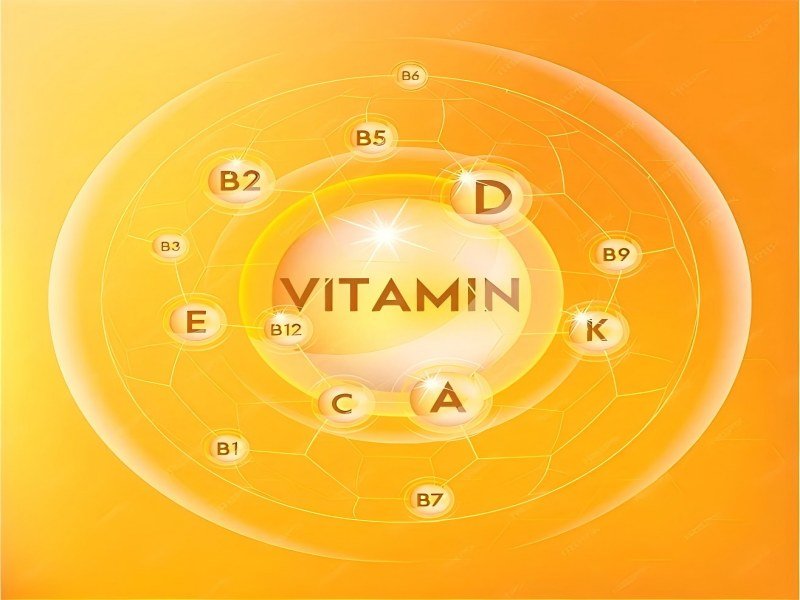
Are Multivitamins Effective for Women?
Yes, multivitamins can be effective for women—but only when they are properly formulated for female physiology, lifestyle, and life stage. A high-quality women’s multivitamin helps fill common nutrient gaps such as vitamin D, B vitamins, folate, magnesium, and antioxidants. Poorly designed multivitamins often fail due to incorrect dosages, low bioavailability, or unnecessary ingredients.
Why Many Women Feel Multivitamins “Don’t Work”
When women say multivitamins didn’t help, the issue is rarely that multivitamins are useless—it’s that most products are poorly designed.
Common reasons include:
- generic, one-size-fits-all formulas
- excessive or meaningless megadoses
- minerals in poorly absorbed forms
- ignoring female hormonal cycles and stress load
Many multivitamins are built to look impressive on labels, not to function effectively in the body.
Effective vs Ineffective Multivitamins for Women
| Factor | Effective Women’s Multivitamin | Typical Low-Quality Multivitamin |
|---|---|---|
| Target user | Female-specific needs | “Adults 18+” |
| Vitamin D | D3, meaningful dose | D2 or minimal |
| B Vitamins | Balanced, functional | Random megadoses |
| Folate | Active or well-absorbed | Cheap synthetic only |
| Minerals | Chelated, bioavailable | Oxides, carbonates |
| Iron | Conditional (not universal) | Always included |
| Purpose | Fill real gaps | Marketing-driven |
What Multivitamins Actually Do Well
A well-formulated multivitamin is not meant to replace food or act like a drug. Its real value lies in consistency.
For women, effective multivitamins help:
- stabilize baseline micronutrient status
- reduce fatigue caused by hidden insufficiencies
- support hormonal and immune resilience
- lower the “nutritional noise” caused by stress and training
This is especially helpful for women who:
- eat calorie-controlled diets
- train regularly or sweat often
- work long hours under stress
- travel frequently or sleep irregularly
In these scenarios, diet quality may be good—but nutrient reliability is not.
Why “More Vitamins” Is Not Better for Women
One of the biggest mistakes in multivitamin design is assuming more equals better.
In reality:
- excess iron can increase oxidative stress
- too much vitamin A can interfere with vitamin D
- unbalanced zinc can suppress copper
- high-dose B vitamins may cause jitteriness
Women’s bodies tend to respond better to moderate, balanced intake, not aggressive dosing.
This is why effective multivitamins focus on:
- synergy
- absorption
- tolerance for daily, long-term use
When Multivitamins Are Most Useful for Women
| Situation | Why a Multivitamin Helps |
|---|---|
| Busy work schedules | Inconsistent meals |
| Active lifestyle | Higher micronutrient turnover |
| Stress & poor sleep | Increased B & C demand |
| Seasonal eating | Nutrient variability |
| Simplified routines | Fewer bottles, better adherence |
Why Multivitamins Work Best as Part of a System
Multivitamins perform best when they:
- cover foundational gaps
- leave room for targeted supplements
- integrate with hydration, protein, and recovery
This system-based thinking comes from sports nutrition, where baseline adequacy is essential before performance optimization.
AirVigor applies this same logic to women’s daily health:
- multivitamin = foundation
- electrolytes = hydration & nerve signaling
- protein = recovery & structure
Each part supports the others, rather than overlapping or competing.
What Vitamins Help with Skin and Hair Health?
The most important vitamins for women’s skin and hair health are vitamin A, vitamin C, vitamin E, biotin (vitamin B7), and vitamin D. These nutrients support skin cell turnover, collagen synthesis, antioxidant protection, scalp health, and hair follicle function. Long-term skin and hair quality depends more on internal nutritional balance than topical products alone.
Why Skin and Hair Health Starts Internally
Many women focus almost exclusively on creams, serums, and shampoos, but skin and hair are biological tissues—not surface-level materials.
Their quality reflects:
- nutrient availability
- hormonal stability
- oxidative stress load
- recovery capacity
When vitamin intake is insufficient, the body prioritizes survival over appearance. Hair growth slows, skin becomes drier, and recovery from stress or sun exposure takes longer—even when topical care is excellent.
Key Vitamins for Skin and Hair
| Vitamin | Skin Benefits | Hair Benefits |
|---|---|---|
| Vitamin A | Cell renewal, oil balance | Healthy scalp |
| Vitamin C | Collagen synthesis | Hair shaft strength |
| Vitamin E | Antioxidant protection | Follicle protection |
| Biotin (B7) | Barrier integrity | Keratin production |
| Vitamin D | Skin immune function | Hair growth cycle |
Vitamin A — Skin Cell Turnover and Scalp Balance
Vitamin A regulates the rate at which skin cells are produced and shed.
Adequate intake supports:
- smoother skin texture
- balanced sebum production
- reduced clogged pores
For hair, vitamin A helps maintain a healthy scalp environment, which is essential for follicle function. Too little vitamin A can lead to dry skin and brittle hair, while excessive intake can cause hair thinning—making balanced dosing critical.
This is why effective formulations avoid megadoses and instead focus on physiological support, not aggressive stimulation.
Vitamin C — Collagen, Structure, and Recovery
Vitamin C is essential for collagen synthesis, the structural protein that gives skin firmness and elasticity.
Benefits include:
- improved skin resilience
- faster recovery from sun and environmental stress
- reduced appearance of fine lines over time
For hair, vitamin C strengthens the hair shaft and supports iron absorption—important because iron deficiency is a common contributor to hair shedding in women.
Stress, exercise, and pollution increase vitamin C demand, making consistent intake more important than occasional high doses.
Vitamin E — Antioxidant Defense for Skin and Follicles
Vitamin E protects skin and hair follicles from oxidative damage.
It supports:
- lipid barrier integrity
- reduced inflammation from UV exposure
- healthier aging of skin tissue
For hair, vitamin E helps protect follicles from oxidative stress that can disrupt the growth cycle. Women experiencing hormonal changes often benefit from adequate vitamin E intake due to its stabilizing effect during estrogen fluctuations.
Biotin (Vitamin B7) — Keratin and Hair Strength
Biotin is closely involved in keratin production, the primary structural protein in hair and nails.
Adequate biotin supports:
- reduced hair breakage
- stronger nails
- improved hair thickness over time
However, biotin is not a miracle nutrient. Many women already get enough, and excessive supplementation does not guarantee faster growth. Balanced intake works best when combined with sufficient protein and minerals.
This is why modern formulations emphasize moderate, supportive dosing, not extreme levels.
Vitamin D — Hair Growth Cycles and Skin Immunity
Vitamin D receptors exist in hair follicles and skin immune cells.
Vitamin D supports:
- proper hair growth cycling
- reduced inflammatory scalp conditions
- improved skin barrier defense
Low vitamin D levels have been associated with diffuse hair thinning and slower regrowth. Women with limited sun exposure, indoor work, or frequent sunscreen use are particularly prone to insufficiency.
Skin & Hair Symptoms and Possible Vitamin Support
| Symptom | Vitamins Commonly Involved |
|---|---|
| Dry, dull skin | A, C, E |
| Premature wrinkles | C, E |
| Hair shedding | D, biotin, iron-supporting nutrients |
| Brittle nails | Biotin, C |
| Slow hair growth | D, biotin |
Why Consistency Matters More Than Speed
Skin and hair respond slowly to nutritional changes.
Typical timelines:
- skin improvements: 4–8 weeks
- hair strength changes: 8–12 weeks
- visible regrowth: 3–6 months
This is why sporadic supplementation rarely delivers noticeable results. A consistent, well-structured routine produces gradual but sustainable improvement.
AirVigor’s approach emphasizes daily tolerance and long-term adherence, drawing from sports nutrition principles where recovery and tissue adaptation take time.

How Much of Each Vitamin Do Women Need Daily?
Women’s daily vitamin needs vary by age, activity level, stress, and life stage, but most benefit from consistent intake of vitamin D (600–2000 IU), vitamin B12 (2.4 mcg), folate (400 mcg), vitamin C (75–120 mg), vitamin A (700 mcg RAE), vitamin E (15 mg), and vitamin B6 (1.3–1.7 mg). Optimal intake focuses on balance and absorption rather than megadoses.
Why “Daily Needs” Are Not One-Size-Fits-All
Official recommendations like RDA (Recommended Dietary Allowance) are designed to prevent deficiency, not to optimize:
- energy levels
- hormonal stability
- skin and hair quality
- recovery from stress or exercise
For many women, especially those who are active, stressed, or calorie-restricted, minimum intake is not the same as optimal intake.
This is why so many women technically meet RDAs on paper—yet still feel tired, moody, or slow to recover.
Core Daily Vitamin Intake for Women
| Vitamin | RDA (Baseline) | Practical Daily Range | Why Needs Increase |
|---|---|---|---|
| Vitamin D | 600 IU | 800–2000 IU | Low sun, indoor life |
| Vitamin B12 | 2.4 mcg | 2.4–6 mcg | Stress, training |
| Folate (B9) | 400 mcg | 400–600 mcg | Cell turnover |
| Vitamin C | 75 mg | 75–120 mg | Stress, immunity |
| Vitamin A | 700 mcg RAE | 700–900 mcg RAE | Skin & immunity |
| Vitamin E | 15 mg | 15–20 mg | Oxidative stress |
| Vitamin B6 | 1.3 mg | 1.5–2 mg | PMS, mood |
These ranges reflect commonly cited clinical nutrition practice, not extreme supplementation protocols.
1. Vitamin D: Why Many Women Need More Than the Minimum
Vitamin D is one of the most commonly under-consumed nutrients among women worldwide.
Reasons include:
- limited sun exposure
- sunscreen use
- darker skin pigmentation
- indoor work environments
Research consistently shows that 800–2000 IU daily is often required to maintain sufficient blood levels, especially in women over 30 or those who exercise indoors.
Vitamin D also works synergistically with:
- calcium (bone health)
- magnesium (activation)
This is why intake should be consistent, not sporadic.
2. Vitamin B12: Small Number, Big Impact
Vitamin B12 requirements look small on paper—but deficiency symptoms can be severe.
Women may need more than the baseline if they:
- follow plant-forward diets
- experience chronic stress
- train frequently
- have digestive absorption issues
Because B12 is water-soluble, excess is excreted rather than stored long-term, making regular intake more important than high doses.
3. Folate (Vitamin B9): Daily Structural Support
Folate supports:
- DNA synthesis
- red blood cell formation
- estrogen metabolism
While 400 mcg meets basic needs, women with:
- high training volume
- pregnancy planning
- heavy menstrual cycles
often benefit from slightly higher—but still moderate—intake.
Importantly, more is not better. Balanced dosing supports long-term stability without interfering with other B vitamins.
4. Vitamin C: Stress, Immunity, and Collagen
Vitamin C requirements rise under:
- psychological stress
- frequent exercise
- poor sleep
- environmental exposure
While deficiency is rare, suboptimal intake is common.
For women managing busy schedules or training regularly, 75–120 mg daily supports:
- immune defense
- collagen synthesis
- cortisol regulation
Megadoses offer little added benefit and may cause GI discomfort.
5. Vitamin A: Necessary, but Dose-Sensitive
Vitamin A supports:
- skin cell turnover
- immune barrier integrity
- vision
However, it is fat-soluble and stored in the body.
This makes dose control essential, especially for women who may already get vitamin A from fortified foods or diet. Staying within physiological ranges supports skin and immune health without risk.
6. Vitamin E: Antioxidant Protection, Not a “Glow Pill”
Vitamin E helps protect cells during:
- hormonal fluctuations
- oxidative stress
- aging
Women with higher training intensity or environmental exposure may benefit from intake slightly above baseline, but extreme dosing is unnecessary.
7. Vitamin B6: Mood and Hormonal Support
Vitamin B6 demand increases with:
- stress
- PMS
- high protein intake
Women experiencing mood swings or fatigue often benefit from intake near the upper end of the normal range—without megadosing.
How Life Stage Changes Daily Vitamin Needs
| Life Stage | Vitamins That Matter More |
|---|---|
| Pregnancy | Folate, D, B6 |
| Postpartum | B-complex, C, D |
| Perimenopause | D, E, B6 |
| Menopause | D, calcium-supporting nutrients |
| Active lifestyle | B12, C, D |
This explains why the same supplement may feel “great” at one stage and ineffective later.
Why Consistency Beats Precision
Women often ask:
“Am I taking exactly the right amount?”
In practice, what matters most is:
- daily consistency
- correct combinations
- good absorption
- long-term tolerance
A well-designed routine that hits reliable ranges day after day outperforms sporadic “perfect” dosing.
This is why system-based approaches—common in sports nutrition—are increasingly applied to women’s daily health.
What Two Vitamins Should Not Be Taken Together?
Some vitamins and minerals should not be taken together because they compete for absorption or interfere with each other’s function. The most important combinations to avoid are iron with calcium, high-dose vitamin A with vitamin D, excessive zinc with copper, and iron with magnesium. Separating timing and keeping balanced doses improves effectiveness and reduces side effects.
Why Vitamin Interactions Matter More Than Most Women Realize
Most supplement problems are not caused by what women take—but how nutrients interact once inside the body.
Vitamins and minerals share:
- absorption pathways
- transport proteins
- metabolic enzymes
When taken together in the wrong combinations or ratios, one nutrient can block or reduce the absorption of another. This can lead to:
- poor results despite “doing everything right”
- digestive discomfort
- long-term imbalance
Understanding interactions helps women get more benefit from fewer supplements.
The Most Important Vitamin & Mineral Conflicts for Women
| Combination | Why It’s a Problem | What to Do Instead |
|---|---|---|
| Iron + Calcium | Calcium blocks iron absorption | Take 2–3 hours apart |
| Vitamin A + Vitamin D (high doses) | Compete for fat-soluble pathways | Keep balanced, avoid megadoses |
| Zinc (high) + Copper | Zinc suppresses copper uptake | Maintain proper ratio |
| Iron + Magnesium | Competes for absorption, GI upset | Separate timing |
| Calcium + Magnesium (very high doses) | Competing transport | Moderate doses, split intake |
Iron and Calcium — The Most Common Mistake
Iron and calcium compete directly for absorption in the intestine.
When taken together:
- iron absorption drops significantly
- calcium still absorbs efficiently
- iron deficiency risk increases over time
This is especially relevant for women who:
- supplement iron for fatigue or heavy periods
- take calcium for bone health
Best practice:
- take iron on an empty stomach or with vitamin C
- take calcium with meals, later in the day
This separation alone often improves iron status without increasing dosage.
Vitamin A and Vitamin D — Balance Matters
Both vitamin A and vitamin D are fat-soluble and stored in the body.
At physiological doses, they work together.
At high supplemental doses, they compete.
Excess vitamin A may:
- reduce vitamin D activity
- impair calcium metabolism
- negatively affect bone health
This issue arises most often from:
- high-dose retinol supplements
- stacking multiple fortified products
Women do best when vitamin A remains within normal dietary ranges while vitamin D is adjusted based on lifestyle and sun exposure.
Zinc and Copper — The Ratio Problem
Zinc and copper share intestinal transporters.
Chronically high zinc intake can:
- suppress copper absorption
- lead to anemia-like symptoms
- weaken connective tissue and immunity
This interaction is often overlooked because:
- zinc is common in skin, hair, and immune supplements
- copper is rarely supplemented alone
Balanced formulations prevent this issue without requiring complex scheduling.
Iron and Magnesium — Absorption and Tolerance Issues
Iron and magnesium can interfere with each other’s absorption and often cause digestive discomfort when taken together.
Common symptoms include:
- nausea
- bloating
- stomach cramps
For women supplementing both:
- take iron earlier in the day
- take magnesium in the evening
This also aligns with magnesium’s role in relaxation and sleep support.
Do All Vitamins Need to Be Separated?
No. Many vitamins work better together, such as:
- vitamin D + magnesium
- vitamin C + iron
- B vitamins as a complex
The goal is not separation—it’s smart pairing.
Vitamins That Work Well Together
| Combination | Benefit |
|---|---|
| Vitamin D + Magnesium | Improved activation |
| Vitamin C + Iron | Better iron absorption |
| B-Complex Vitamins | Energy & neurotransmitters |
| Vitamin D + Calcium (separate from iron) | Bone support |
Practical Daily Timing Strategy
A simple approach many women find effective:
- Morning: B vitamins, vitamin C
- Midday: Multivitamin (without iron if possible)
- Evening: Magnesium, calcium
- Iron (if needed): Separate, earlier in day
This reduces conflicts without overthinking.
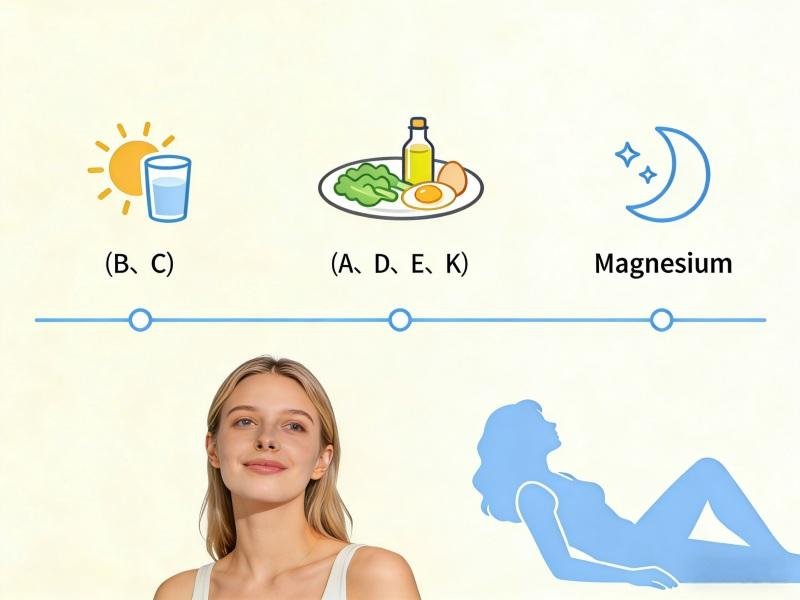
When Should a Woman Take Vitamins?
A woman should take vitamins based on how they are absorbed and how they affect energy, hormones, and digestion. Water-soluble vitamins such as B-complex and vitamin C are best taken in the morning. Fat-soluble vitamins (A, D, E, K) should be taken with meals. Magnesium is best taken in the evening. Proper timing improves absorption and reduces side effects.
Why Timing Matters More Than Most Women Think
Many women take all their vitamins at once simply because it’s convenient.
The problem is that vitamins do not absorb the same way, and timing can significantly affect:
- absorption efficiency
- stomach comfort
- energy levels
- sleep quality
- hormonal response
Poor timing doesn’t usually cause harm—but it often explains why supplements feel “ineffective” or cause nausea, bloating, or restlessness.
The Science Behind Vitamin Timing
Vitamins fall into two main categories:
- Water-soluble vitamins → absorbed quickly, not stored
- Fat-soluble vitamins → require dietary fat, stored in tissues
Minerals add another layer, as many compete for absorption.
Understanding this allows women to build a routine that works with the body instead of against it.
Best Time to Take Vitamins
| Time of Day | Vitamins That Work Best | Why |
|---|---|---|
| Morning | B-complex, B12, vitamin C | Support energy & focus |
| With meals | Vitamins A, D, E, K | Fat improves absorption |
| Midday | Multivitamin | Gentler on digestion |
| Evening | Magnesium | Supports relaxation & sleep |
| Separate timing | Iron | Avoids mineral interference |
Morning — Energy and Mental Clarity
Morning is ideal for water-soluble vitamins, especially:
- vitamin B12
- vitamin B6
- full B-complex
- vitamin C
These nutrients support:
- energy metabolism
- neurotransmitter production
- stress resilience
Taking them early helps avoid the “wired at night” feeling some women experience if B vitamins are taken too late.
Women with demanding workdays or morning workouts often notice better focus and stamina with consistent morning intake.
With Meals — Fat-Soluble Vitamin Absorption
Fat-soluble vitamins must be taken with food containing some fat.
These include:
- vitamin A
- vitamin D
- vitamin E
- vitamin K
Without dietary fat, absorption drops significantly.
This does not require a high-fat meal—normal meals containing eggs, yogurt, olive oil, nuts, or fish are sufficient.
Women who take vitamin D on an empty stomach often report minimal benefit, not because the dose is wrong, but because absorption is poor.
Midday — Multivitamins Without Discomfort
Multivitamins are best taken:
- with lunch or a substantial snack
This helps:
- reduce nausea
- improve mineral tolerance
- prevent energy spikes or crashes
Women who experience stomach upset from multivitamins often resolve it simply by adjusting timing—not switching products.
Evening — Magnesium and Hormonal Calm
Magnesium is best taken in the evening, ideally 1–2 hours before bed.
Benefits include:
- muscle relaxation
- nervous system calming
- improved sleep quality
- reduced PMS-related tension
For women experiencing:
- poor sleep
- muscle tightness
- stress-related fatigue
evening magnesium often improves recovery without stimulating the nervous system.
Iron Requires Special Timing
Iron absorption is easily blocked by other nutrients.
Iron should not be taken with:
- calcium
- magnesium
- zinc
- coffee or tea
Best practices:
- take iron earlier in the day
- take with vitamin C
- separate from other minerals by 2–3 hours
This is especially important for women supplementing iron due to heavy menstrual cycles or low ferritin.
This structure minimizes conflicts while keeping routines manageable.
Does Timing Really Make a Difference?
For many women, yes.
Proper timing can:
- improve absorption without increasing dosage
- reduce side effects
- make benefits more noticeable
- improve long-term consistency
In practice, women who align timing correctly often need fewer supplements, not more.
Do Women Need Extra Vitamins During Certain Life Stages?
Yes. Women often need extra or adjusted vitamin intake during specific life stages such as adolescence, pregnancy, postpartum, perimenopause, menopause, and periods of high physical or mental stress. Hormonal shifts, changes in nutrient absorption, and increased physiological demands make baseline intake insufficient for optimal energy, bone health, mood stability, and recovery during these phases.
Why Women’s Vitamin Needs Change Over Time
Women’s bodies are dynamic systems. Hormones, metabolism, bone turnover, and stress response all shift across life stages. As these systems change, micronutrient demand changes with them.
Importantly, these are not always dramatic deficiencies. Many women experience functional insufficiency—levels that technically fall within “normal” ranges but are too low to support optimal function during higher-demand phases.
This explains why the same supplement routine may feel effective at one stage of life and inadequate at another.
Key Life Stages Where Vitamin Needs Increase
| Life Stage | Why Needs Increase |
|---|---|
| Adolescence | Rapid growth, hormonal development |
| Pregnancy | Fetal development, blood volume increase |
| Postpartum | Recovery, breastfeeding demands |
| High-stress / active lifestyle | Higher nutrient turnover |
| Perimenopause | Hormonal fluctuation, sleep disruption |
| Menopause | Bone loss, metabolic changes |
Adolescence and Early Adulthood — Building the Foundation
During adolescence and early adulthood, women experience:
- rapid bone mineral accumulation
- establishment of hormonal cycles
- increased iron loss once menstruation begins
Key nutrients at this stage include:
- vitamin D (bone density)
- iron-supporting nutrients
- B vitamins (energy and mood regulation)
Inadequate intake during this phase can affect long-term bone strength and hormonal resilience later in life.
Pregnancy — Increased Needs, Higher Precision
Pregnancy dramatically increases nutritional demand due to:
- fetal tissue growth
- increased blood volume
- placental development
Key vitamins that require special attention include:
- folate (B9) for neural tube development
- vitamin B6 for nausea and neurotransmitter balance
- vitamin D for skeletal development
Pregnancy supplementation is not about “more of everything,” but about correct forms, timing, and balance. Excessive or poorly absorbed nutrients can be as problematic as deficiencies.
Postpartum and Breastfeeding — Recovery and Output
After childbirth, women face:
- physical recovery
- hormonal recalibration
- increased nutrient transfer through breast milk
Vitamin needs remain elevated, particularly for:
- B-complex vitamins (energy, mood stability)
- vitamin C (immune support and tissue repair)
- vitamin D (maternal and infant bone health)
This stage is often overlooked, yet it is one of the most nutritionally demanding periods in a woman’s life.
High-Stress or Physically Active Phases — Hidden Depletion
Women with demanding jobs, intense training schedules, or chronic stress often experience increased micronutrient turnover.
Stress and exercise increase demand for:
- B vitamins (neurotransmitter synthesis)
- vitamin C (cortisol regulation)
- magnesium (nervous system stability)
Even when diet quality is high, intake may not keep pace with demand, leading to fatigue, irritability, and slower recovery.
Perimenopause — Hormonal Variability and Instability
Perimenopause is marked by fluctuating estrogen and progesterone levels, often years before menopause begins.
Common challenges include:
- sleep disruption
- mood changes
- increased inflammation
Key supportive vitamins include:
- vitamin B6 (progesterone support)
- vitamin D (bone and immune health)
- vitamin E (antioxidant protection)
At this stage, consistency and tolerance become more important than aggressive dosing.
Menopause — Bone, Muscle, and Metabolic Support
After menopause, estrogen levels decline permanently, leading to:
- accelerated bone loss
- changes in fat distribution
- reduced insulin sensitivity
Vitamin priorities typically shift toward:
- vitamin D (calcium regulation)
- vitamin K (bone matrix support)
- antioxidants (cellular protection)
This stage benefits most from long-term, sustainable supplementation, rather than short-term interventions.
How to Adjust Without Over-Supplementing
| Strategy | Why It Works |
|---|---|
| Adjust doses gradually | Matches physiological change |
| Prioritize absorption | Reduces need for high doses |
| Reassess by life stage | Prevents unnecessary stacking |
| Focus on consistency | Supports long-term adaptation |
The goal is not to take more vitamins—but to take the right ones at the right time.
Conclusion
The real answer to “what vitamins should I take daily for a woman?” is not a single pill—it’s a routine.
A good system:
- fills real gaps
- respects absorption biology
- adapts to life stages
- supports movement, stress, and recovery
AirVigor applies sports nutrition logic to everyday women’s health—clean formulations, transparent labels, and globally compliant manufacturing.
Ready to Start?
- Buy AirVigor supplements on Amazon (fast U.S. delivery, Prime supported)
- Request custom formulations or bulk orders for your brand, gym, or wellness program