Skip to content
When people read an electrolyte label, they usually know why sodium is there. Sodium helps explain hydration fast. Vitamin K2 is different. It is not a sweat mineral, it is not a quick energy ingredient, and it does not create an immediate “I feel it” effect after one serving. That is exactly why it deserves a clearer explanation. In a formula like Recovery Electrolyte with D3K2, Vitamin K2 is there because many active adults want more than simple rehydration. They want a recovery product that also makes sense from a mineral-support point of view, especially when Vitamin D3 is already part of the formula. Current U.S. guidance still sets adequate intake for total vitamin K at 120 mcg per day for adult men and 90 mcg per day for adult women, while European reviews still note that there is not enough evidence to set a formal tolerable upper intake level for vitamin K.
Vitamin K2 in Recovery Electrolyte with D3K2 is mainly about the body’s use of vitamin K–dependent proteins, especially those connected with calcium-related physiology. That is why K2 is so often discussed next to D3. Vitamin D3 is associated with calcium absorption. Vitamin K2 is discussed in relation to activating proteins that help make calcium support more meaningful in the body. Recent reviews continue to connect K2 with osteocalcin carboxylation and broader bone-support logic, even though long-term outcome claims still need to be discussed carefully and honestly.
This matters to real customers because many of them are not shopping for “electrolytes only.” They are looking for a formula that fits the way they actually live: indoor training, office work, long sitting hours, fewer separate bottles, and a stronger reason to keep using the product daily. In that kind of product, K2 is not a random extra. It helps explain why the formula is called Recovery Electrolyte with D3K2 instead of just “electrolyte powder.” If you have ever looked at a D3K2 label and wondered whether the pairing is meaningful or just decorative, Vitamin K2 is one of the clearest places to find the answer.
What Is Vitamin K2 in Recovery Electrolyte with D3K2?
Vitamin K2 in Recovery Electrolyte with D3K2 is a fat-soluble vitamin added for mineral-support logic, not for direct sweat replacement. That distinction is the first thing customers need to understand. In a recovery electrolyte, sodium, potassium, and magnesium are the ingredients most closely tied to fluid balance and post-sweat replenishment. Vitamin K2 does a different job. It is included because the formula is trying to be more than a plain hydration product. It helps support the body’s use of vitamin K–dependent proteins, especially in a product that already contains Vitamin D3 and is positioned around broader recovery and active-lifestyle support. NIH consumer guidance continues to treat vitamin K as an essential nutrient, with adult adequate intake levels of 120 mcg/day for men and 90 mcg/day for women.
For customers, the practical meaning is simple: K2 is not there to make the drink feel stronger in 15 minutes. It is there because some people want a recovery formula that supports more than hydration alone. Recent reviews continue to discuss K2, especially menaquinone forms, in connection with osteocalcin carboxylation and broader bone-related physiology, which is one of the main reasons K2 is so often paired with D3 in premium recovery formulas. At the same time, evidence around long-term outcomes still needs to be read carefully, which is why a strong product should explain K2 honestly rather than using it as a decorative label ingredient.
A practical product-role table makes this easier to understand:
| Ingredient | Main role in the formula | What the customer is likely to care about |
|---|---|---|
| Sodium | Sweat-loss and hydration support | Better post-sweat recovery logic |
| Potassium | Electrolyte balance support | Better hydration completeness |
| Magnesium | Muscle and nerve support | Better recovery positioning |
| Vitamin D3 | Calcium absorption support | Stronger daily-use value |
| Vitamin K2 | Vitamin K–dependent protein support | Stronger D3K2 mineral-support logic |
This is why Vitamin K2 belongs in a formula called Recovery Electrolyte with D3K2. It helps explain why the product is trying to be more complete than a plain electrolyte mix. For customers who train indoors, work long office hours, want fewer separate supplements, or care about broader bone-and-mineral support, K2 can make the formula feel much more purposeful. For customers who only want rapid rehydration after sweat loss, K2 may feel less immediately relevant. That difference is important because it helps people decide whether the formula actually matches the way they live and recover.
What Does Vitamin K2 in Recovery Electrolyte with D3K2 Do?
In practical terms, Vitamin K2 mainly helps activate vitamin K–dependent proteins. That is the core mechanism customers should know. In recovery and mineral-support discussions, the most relevant example is osteocalcin, because recent reviews continue to connect K2 with osteocalcin carboxylation and bone-related support logic.
What this means for a customer is not “K2 is a hydration vitamin.” It means K2 helps make the formula’s mineral story more complete. In a D3K2 product, the jobs are different:
- Vitamin D3 is associated with calcium absorption.
- Vitamin K2 is associated with activating vitamin K–dependent proteins.
- Together, they create a stronger calcium-support explanation than either one alone.
A clear function table helps:
| Function area | What Vitamin K2 mainly contributes |
|---|---|
| Protein activation | Helps support vitamin K–dependent proteins |
| Bone-related positioning | Strengthens the formula’s mineral-support logic |
| D3 pairing | Makes the Vitamin D3 story feel more complete |
| Daily-use value | Helps the product feel broader than plain hydration |
For customers, the key point is simple: K2 is not there to replace electrolytes. It is there to help explain why this formula is about recovery plus mineral support, not hydration only.
Why Is Vitamin K2 in Recovery Electrolyte with D3K2 Important?
Vitamin K2 matters because many customers no longer want a recovery product that solves only one problem. A plain electrolyte powder can still be useful, especially after sweating. But a formula that includes D3K2 is usually trying to cover a wider use case: hydration support, broader mineral-support positioning, and stronger daily-use relevance.
That becomes especially meaningful for people in routines like these:
| User situation | Why K2 becomes more relevant |
|---|---|
| Office work + evening workouts | Product needs to feel useful beyond sweat replacement |
| Indoor training most of the year | D3K2 support often feels more logical |
| Active adults reducing supplement clutter | One formula can cover more ground |
| Customers focused on long-term consistency | Structural-support positioning matters more |
Recent literature continues to support the idea that K2 is most meaningful when discussed in a system, not in isolation. That system usually includes D3, calcium-related positioning, and broader bone-support logic. So K2 is important not because it creates an obvious short-term feeling, but because it gives the formula a stronger long-term reason to exist.
Is Vitamin K2 in Recovery Electrolyte with D3K2 Good for Daily Use?
For many adults, yes, but the real answer depends on the total routine. NIH guidance for total vitamin K remains 120 mcg/day for adult men and 90 mcg/day for adult women. At the same time, EFSA-related materials continue to indicate that there is no established tolerable upper intake level for vitamin K because the evidence has not supported setting one in the usual way.
That does not mean “more is always better.” It means daily use should be understood in context. The most important daily-use questions are usually these:
- Is K2 already in the user’s multivitamin?
- Is the person already taking a separate D3K2 product?
- Is the electrolyte used once a day or multiple times a day?
- Is the user on an anticoagulant where consistency matters more than the amount itself?
A practical daily-use table:
| Daily-use situation | What to check |
|---|---|
| Recovery electrolyte only | Serving amount may fit easily |
| Electrolyte + multivitamin | Total vitamin K intake matters more |
| Electrolyte + separate K2 supplement | Daily routine should be reviewed |
| Warfarin use | Intake consistency matters most |
For customers, the most useful rule is simple: Vitamin K2 can fit daily use well, but it should be viewed as part of the whole supplement pattern, not as a completely separate category.
Who Needs Vitamin K2 in Recovery Electrolyte with D3K2 Most?
Vitamin K2 tends to feel most relevant for customers who want a recovery product that does more than rehydrate. These are often users who appreciate the D3K2 pairing and want broader mineral-support value in the same product.
That often includes:
- indoor fitness users
- office workers with long indoor schedules
- active adults who want a stronger D3K2 formula story
- users who prefer fewer separate supplement bottles
- people who care about bone and mineral support as part of long-term active living
A practical fit table makes this clearer:
| User type | Why K2 may fit well |
|---|---|
| Indoor gym user | D3K2 support often feels more relevant |
| Office worker | Daily-use mineral support may be appealing |
| Active adult reducing supplement clutter | K2 adds value in one formula |
| User focused only on sweat replacement | K2 may feel less immediately relevant |
For customers, the main message is straightforward: K2 makes the most sense when the goal is not only to replace what I lost in sweat, but also to support the bigger recovery picture over time.
How Much Vitamin K2 in Recovery Electrolyte with D3K2 Is Common?
Vitamin K2 amounts are usually shown in micrograms (mcg), and the most useful question is not only “what number is on the label?” but “what does that number mean in a daily routine?” U.S. guidance still gives adequate intake targets for total vitamin K, but there is still no established tolerable upper intake level for vitamin K. That makes label reading more about context, dose positioning, and medication awareness than about chasing a fixed maximum number.
How Much Vitamin K2 in Recovery Electrolyte with D3K2 Per Serving?
In finished formulas, a practical Vitamin K2 range often lands around 45–120 mcg per serving. That range is common because it allows the formula to support a meaningful D3K2 story without making the serving look unrealistically high or disconnected from normal daily intake patterns.
A practical serving table:
| Vitamin K2 per serving | What it often suggests |
|---|---|
| 45 mcg | Light supportive positioning |
| 75 mcg | Moderate D3K2 positioning |
| 90 mcg | Strong daily-support positioning |
| 100–120 mcg | Broader premium-support positioning |
For customers, the important question is not whether one number is always better than another. It is whether the serving still makes sense once you include:
- a multivitamin
- a separate D3K2 product
- other fortified nutrition products
- how often the electrolyte is used per day or per week
What Is the Upper Limit for Vitamin K2 in Recovery Electrolyte with D3K2?
This is one of the most confusing parts of the Vitamin K2 topic.
At this time, a formal tolerable upper intake level for vitamin K has not been established. That does not mean “there is no ceiling and anything is fine.” It means the available evidence has not been strong enough to derive a formal UL in the same way authorities have done for nutrients like Vitamin D. EFSA materials continue to reflect that point.
A practical interpretation table helps:
| Intake concept | Practical meaning |
|---|---|
| 90 mcg/day | Adult adequate intake for women |
| 120 mcg/day | Adult adequate intake for men |
| No formal UL established | No official upper ceiling has been set |
| Medication context matters | Warfarin users need special caution |
For most healthy adults, the bigger real-world issue is not ordinary intake from a normal product. It is medication interaction and consistency, especially with anticoagulants.
If you want, I’ll continue by rewriting Batch 2 in this same cleaner, more detailed style so the full Vitamin K2 article stays completely consistent.

How Does Vitamin K2 in Recovery Electrolyte with D3K2 Work?
Vitamin K2 works very differently from sodium, potassium, or magnesium. It is not a sweat-loss ingredient, and it does not make an electrolyte drink feel stronger within a few minutes. Its role is slower, broader, and much more connected to how the body handles calcium-related proteins over time. In a formula like Recovery Electrolyte with D3K2, K2 is there to support the mineral-support side of recovery rather than the fluid-replacement side. That is why it belongs next to Vitamin D3, not in place of sodium. Recent reviews continue to describe Vitamin K2 mainly in connection with the carboxylation of vitamin K–dependent proteins such as osteocalcin, which is one of the main reasons K2 is linked to bone-support and D3K2 formulas.
For customers, the most useful way to understand K2 is simple: electrolytes help cover what sweating takes out now, while K2 helps support how the body uses minerals over time. This does not mean K2 is a fast performance ingredient. It means K2 helps give the formula a broader reason to exist. A product with K2 is usually trying to say something more complete than “drink this after sweating.” It is saying, “this formula supports hydration now and helps strengthen the mineral-support logic behind recovery over time.” For active adults who train indoors, sit for long hours, or want fewer separate supplements, that difference matters.
A practical role table makes the distinction clearer:
| Ingredient type | Main role in the product |
|---|---|
| Sodium / potassium | Hydration and electrolyte balance |
| Magnesium | Muscle and nerve support |
| Vitamin D3 | Calcium absorption support |
| Vitamin K2 | Calcium-related protein support |
So K2 is not trying to replace hydration ingredients. It is there to make the formula more complete for people who care about long-term active support as well as immediate rehydration.
How Does Vitamin K2 in Recovery Electrolyte with D3K2 Work in the Body?
Vitamin K2 mainly works by helping activate vitamin K–dependent proteins. That is the most important mechanism customers need to understand.
The clearest practical explanation is this: K2 helps the body “switch on” certain proteins that need vitamin K in order to function normally. In recovery and active-lifestyle discussions, the most relevant example is osteocalcin, which is associated with bone-related physiology. Reviews continue to describe K2 as relevant to osteocalcin carboxylation, which is why K2 appears so often in mineral-support and D3K2 products.
This matters because active adults are not only replacing sweat. They are also repeatedly loading muscles, joints, and the skeletal system through training and daily movement. A formula that includes K2 is trying to acknowledge that recovery is not only about water and salts.
A practical body-function table:
| Body system | What Vitamin K2 mainly supports |
|---|---|
| Protein activation | Helps activate vitamin K–dependent proteins |
| Bone-related physiology | Supports osteocalcin-related mineral logic |
| Mineral-support system | Helps make calcium support more coherent |
For customers, the key point is simple: K2 is less about what you feel during the workout and more about supporting the mineral-use side of recovery over time.
How Does Vitamin K2 in Recovery Electrolyte with D3K2 Relate to Training?
Vitamin K2 is not a stimulant, fuel, or direct performance driver. It does not work like caffeine, carbohydrates, or creatine. Its connection to training is more indirect, but still meaningful.
The practical way to think about it is this: training places repeated stress on the body, and many users want their recovery formula to support more than rehydration alone. K2 matters in that broader context because it helps the formula speak to bone-support and mineral-support logic, especially when paired with D3. That tends to matter more for people who train consistently over months and years than for someone judging a product only by how they feel in one workout. Recent reviews still discuss K2’s relevance in bone metabolism and skeletal-support contexts, while also staying careful about how strongly those mechanisms translate into every long-term clinical outcome.
A practical training table:
| Training context | Why K2 may matter more |
|---|---|
| Long-term consistent training | Structural support becomes more relevant |
| Indoor active lifestyles | Broader D3K2 support may feel more useful |
| Customers wanting more than hydration | K2 adds deeper formula logic |
| Users focused only on immediate workout feel | K2 may feel less obvious |
For customers, the honest message is clear: K2 is not in the formula to make a workout feel harder, faster, or stronger today. It is there because training is a long-term physical load, and some users want their recovery product to reflect that.
How Does Vitamin K2 in Recovery Electrolyte with D3K2 Relate to Hydration?
Vitamin K2 is not a hydration nutrient in the direct sense.
It does not replace sodium.
It does not improve fluid retention like sodium can.
It does not directly solve dehydration.
So if the question is, “Does K2 help me rehydrate after sweating?” the practical answer is no.
But that does not make it out of place in a recovery electrolyte. It simply means its job is different. In a product like Recovery Electrolyte with D3K2, the electrolytes handle the immediate fluid and sweat-loss side, while K2 supports the broader mineral-support side of the recovery concept.
A simple comparison helps:
| Ingredient group | Main role |
|---|---|
| Electrolytes | Immediate hydration support |
| Vitamin D3 + K2 | Broader calcium and mineral-support logic |
For customers, this explains why the formula contains both categories. The electrolytes help the product feel useful right away. K2 helps make the product feel more meaningful over time.
What Evidence Supports Vitamin K2 in Recovery Electrolyte with D3K2?
The strongest evidence for Vitamin K2 is centered on vitamin K–dependent protein activation, osteocalcin carboxylation, and bone-related support, not on direct hydration or immediate athletic performance.
That is an important distinction. Customers often assume that every ingredient in a recovery product should create a noticeable short-term effect. K2 is not really that kind of ingredient. Its value is more structural. Reviews published in 2024 and 2025 continue to discuss K2 in relation to osteocalcin activation and broader bone physiology, while also keeping some caution around how strongly those mechanisms translate into every long-term clinical outcome.
A practical evidence table:
| Question | Practical answer |
|---|---|
| Is K2 a hydration ingredient? | No |
| Is K2 relevant to vitamin K–dependent proteins? | Yes |
| Is K2 often discussed with osteocalcin and bone support? | Yes |
| Does K2 directly improve workout hydration? | No |
| Does K2 make more sense in a D3-containing formula? | Yes |
For customers, this is the most useful reading of the evidence: K2 is a supportive structural ingredient, not a fast-acting performance ingredient.
How Does Vitamin K2 in Recovery Electrolyte with D3K2 Work With Other Ingredients?
Vitamin K2 works best when it is not treated as a standalone ingredient. In a finished formula, its value depends a lot on what else is around it. That is why K2 makes much more sense in a recovery drink that also contains Vitamin D3, calcium-related positioning, and electrolytes than in a product where it has no clear role. Recent reviews continue to frame K2 as most meaningful in the context of calcium-related support, especially alongside Vitamin D.
This is where formula logic matters. Customers are not only asking, “Is K2 good?” They are also asking, “Why is K2 in this product specifically?” The best answer is that K2 supports the calcium-use side of the formula, while electrolytes support the fluid-replacement side.
A practical system table:
| Ingredient | Main role in the system |
|---|---|
| Sodium | Hydration and sweat-loss replacement |
| Potassium | Electrolyte balance |
| Magnesium | Muscle and nerve support |
| Vitamin D3 | Calcium absorption support |
| Vitamin K2 | Calcium-related protein support |
That is what makes the system coherent. K2 is not there for label decoration. It is there because it helps make the broader D3K2 recovery story make sense.
How Does Vitamin K2 in Recovery Electrolyte with D3K2 Work With Vitamin D3?
This is the most important pairing in the whole K2 discussion.
Vitamin D3 is associated with calcium absorption. Vitamin K2 is associated with vitamin K–dependent proteins that help make calcium-related support more coherent. That is why these two nutrients are paired so often in bone-support and active-lifestyle products. Reviews continue to describe D3 and K2 as complementary in skeletal-support contexts, even while acknowledging that the strength of long-term outcome data still varies across studies.
A practical pairing table:
| Ingredient | Main contribution |
|---|---|
| Vitamin D3 | Helps support calcium absorption |
| Vitamin K2 | Helps support calcium-related protein activation |
For customers, the takeaway is simple: K2 gives the D3 in the formula more logic. It helps explain why the product is called D3K2 rather than only “electrolytes plus Vitamin D.”
How Does Vitamin K2 in Recovery Electrolyte with D3K2 Work With Calcium?
K2 and calcium are connected through the broader mineral-support story of the formula.
Calcium is the mineral many customers think of first when they hear about bone support. But calcium on its own is not the whole conversation. A formula that includes calcium-related positioning becomes more coherent when Vitamin D3 and K2 are also present, because those nutrients help explain how the product is thinking about calcium support in a more complete way.
A practical comparison table:
| Ingredient | Main role |
|---|---|
| Calcium | Structural mineral |
| Vitamin D3 | Supports calcium absorption |
| Vitamin K2 | Supports calcium-related protein logic |
For customers, the key point is simple: calcium gives the formula mineral weight, but K2 helps make the calcium-support story feel more complete.
How Does Vitamin K2 in Recovery Electrolyte with D3K2 Work With Magnesium?
Magnesium and Vitamin K2 are different kinds of support ingredients, but they can still complement each other well in a recovery formula.
Magnesium is usually discussed in relation to muscle function, nerve function, and general mineral support. K2 is more often discussed in relation to calcium-related proteins and bone-support logic. They are not replacing each other, and they do not do the same job.
A practical support table:
| Ingredient | Main support area |
|---|---|
| Magnesium | Muscle, nerve, and mineral support |
| Vitamin K2 | Calcium-use and structural-support logic |
For customers, the value of this pairing is that it gives the product more depth. Magnesium helps the formula feel stronger on the muscle-support side. K2 helps the formula feel more complete on the mineral-support side.
How Does Vitamin K2 in Recovery Electrolyte with D3K2 Work With Electrolytes?
Vitamin K2 and electrolytes work on very different timelines and very different problems.
Electrolytes such as sodium and potassium are there to support hydration, fluid balance, and sweat-loss replacement around the session. K2 is there for a much broader nutritional role. It is not designed to replace electrolytes, and electrolytes do not replace K2.
A practical role split table:
| Ingredient group | Main job |
|---|---|
| Electrolytes | Immediate hydration support |
| Vitamin K2 | Longer-range mineral-support logic |
For customers, this is the easiest way to understand why both appear in the same formula. The electrolytes help the drink feel useful right away. K2 helps make the formula feel more meaningful over time.
I can continue with batch 3 in the same style.

Who Should Use Vitamin K2 in Recovery Electrolyte with D3K2?
Vitamin K2 in Recovery Electrolyte with D3K2 makes the most sense for people who want a formula that does more than replace sweat. Electrolytes mainly support short-term hydration. K2 adds a broader mineral-support layer, especially in formulas already built around the D3K2 pairing. That makes it more relevant for customers who care about bone-support logic, calcium-related support, and a more complete daily-use formula rather than a plain hydration product. Current U.S. guidance still lists adequate intake for total vitamin K at 120 mcg/day for adult men and 90 mcg/day for adult women.
That does not mean every person needs extra K2 in an electrolyte product. The strongest fit is often the customer whose routine makes broader support feel useful: indoor training, office-heavy schedules, lower daylight exposure, a preference for fewer separate supplements, or interest in D3K2 as a combined system rather than a simple “rehydration only” product. The weaker fit is often the user who only wants help with sweat and fluid replacement after exercise. For them, sodium and potassium may matter much more than K2. The most practical question is not “Is K2 good?” The better question is: Does K2 make this product match the way I actually live, train, and recover?
A practical fit table helps:
| User group | Fit level | Why |
|---|---|---|
| Indoor gym users | High | D3K2 support often feels more relevant |
| Office workers | High | Daily indoor routine may increase interest in mineral support |
| Active adults wanting fewer products | High | K2 adds value beyond plain hydration |
| Users already taking separate K2 | Moderate | Total routine matters more |
| Users wanting hydration only | Lower | Electrolytes matter more than K2 |
| Warfarin users | Special caution | Intake consistency and medical guidance matter most |
For customers, this section matters because it answers a simple buying question: Am I paying for an ingredient that fits my routine, or only for something that sounds advanced on the label?
Who Benefits Most From Vitamin K2 in Recovery Electrolyte with D3K2?
The people who usually benefit most are the ones who want a recovery drink that feels more complete than a simple electrolyte mix.
That often includes:
- indoor fitness users
- office workers who train after work
- active adults who like the D3K2 pairing
- people trying to reduce supplement clutter
- customers who care about long-term consistency, not only immediate rehydration
These customers usually are not choosing K2 because they expect to “feel” it during one workout. They value it because it helps the formula make more sense as a daily active-lifestyle product. When a drink includes D3K2, it signals that the formula is trying to support more than sweat replacement. It is trying to fit a bigger recovery story — one that includes mineral handling, bone-support logic, and broader daily use. Recent reviews continue to discuss K2 as relevant in bone-related physiology and vitamin K–dependent protein activation, which is exactly why this type of user may see more value in it.
A practical benefit table:
| User type | Why K2 may fit well |
|---|---|
| Indoor gym user | D3K2 support feels more logical |
| Office worker | Daily-use mineral support may be appealing |
| Active adult over time | Broader structural-support positioning matters more |
| User simplifying supplements | One formula covers more ground |
For these users, K2 is valuable because it helps the product feel more purposeful, not because it creates a quick short-term effect.
Who May Not Need Extra Vitamin K2 in Recovery Electrolyte with D3K2?
Not every customer needs more K2 from an electrolyte product.
Some users may already cover vitamin K well through:
- diet
- multivitamins
- separate D3K2 products
- broader wellness supplement routines
Others may simply not care about the D3K2 positioning. They may only want a product that helps them rehydrate after sweating. In those cases, K2 may still be a positive feature, but it may not be the reason to choose the product.
This is where “more complete formula” and “more necessary formula” are not always the same thing. A recovery electrolyte with K2 can still be well-designed, but it may not fill a meaningful gap for a user who already has a strong vitamin K intake pattern or who is shopping only for hydration support. U.S. guidance on vitamin K continues to focus on adequate intake rather than urging broad high-dose supplementation for everyone.
A practical decision table helps:
| Situation | Is extra K2 always needed? |
|---|---|
| User already taking a K2 product | Often not always |
| User mainly focused on hydration | Often less relevant |
| User with broad supplement coverage | Maybe less relevant |
| User interested in D3K2 support | Often more relevant |
For customers, this prevents a common mistake: assuming every extra ingredient is equally useful for every person.
Who Should Be Careful With Vitamin K2 in Recovery Electrolyte with D3K2?
The biggest caution point with Vitamin K2 is not usually “too much” in the general sense. The more important issue is medication interaction, especially with anticoagulants such as warfarin.
This matters because vitamin K intake can affect anticoagulant management. NIH consumer guidance continues to note that if you are taking a blood thinner such as warfarin, it is very important to get about the same amount of vitamin K each day. NHS guidance similarly stresses the importance of consistency and checking with a clinician before using vitamin K supplements.
That means the main caution groups include:
| Situation | Why extra care matters |
|---|---|
| Warfarin use | Intake consistency is critical |
| Anticoagulation clinic monitoring | Supplement changes can affect control |
| Heavy supplement stackers | Total routine should be reviewed |
| Healthy adults without medication issues | Usually easier to manage |
For most healthy adults, ordinary use of K2 in a recovery formula is not the same kind of concern as a nutrient with a clearly established upper limit. But for people on anticoagulants, K2 should never be treated like a casual “extra.”
What Drug Interactions Matter for Vitamin K2 in Recovery Electrolyte with D3K2?
The main real-world interaction customers need to understand is with warfarin and similar vitamin K–sensitive anticoagulant management.
NIH consumer guidance continues to say that people using blood thinners such as warfarin should keep vitamin K intake consistent. NHS advice also continues to warn against starting vitamin K supplements casually and emphasizes reviewing changes with a healthcare professional. That is the most important practical interaction point in the whole K2 discussion.
A practical interaction table helps:
| Medication situation | Why it matters |
|---|---|
| Warfarin use | Vitamin K intake changes can affect control |
| INR-based anticoagulation care | Supplements should be reviewed before use |
| No relevant anticoagulant use | Usually simpler to manage |
For customers, the safest message is very clear: if you use warfarin, do not treat K2 like an ordinary wellness add-on. Talk with your clinician first, and keep intake consistent.
Working With AirVigor
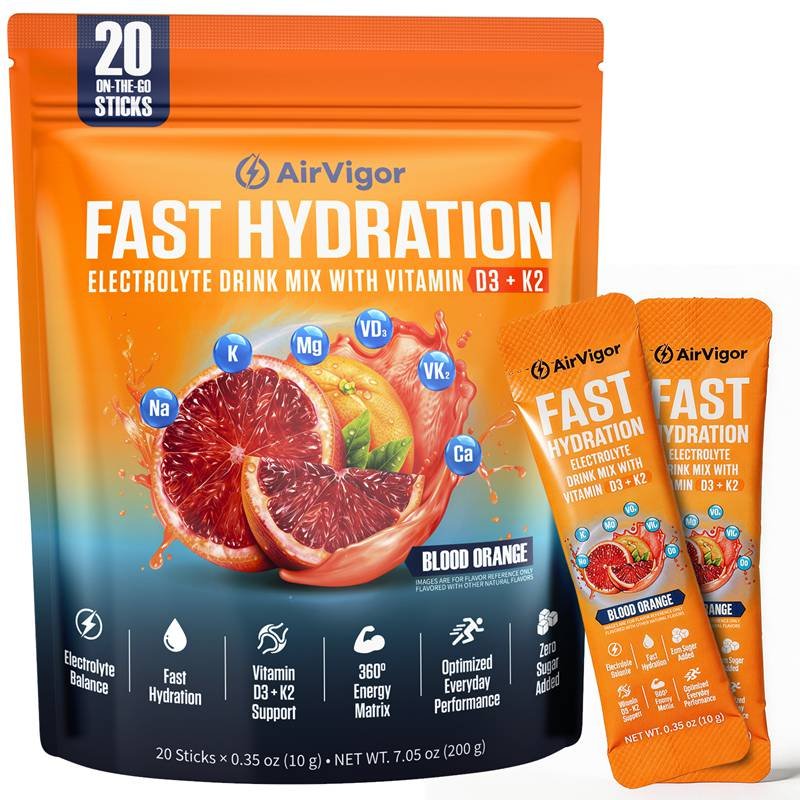
Once you understand what Vitamin K2 really does, Recovery Electrolyte with D3K2 becomes easier to evaluate. K2 is not there to replace hydration ingredients. It is there because some customers want a formula that feels more complete than a plain electrolyte powder. In that context, K2 helps give the D3K2 pairing a real reason to exist, especially in products aimed at daily use, indoor lifestyles, and broader active-lifestyle support.
That matters for both end users and brand owners.
For end users, the real questions are:
| Question | Why it matters |
|---|---|
| Does this product only hydrate, or does it support a broader routine? | Helps match product to real needs |
| Does the K2 amount make sense in my daily stack? | Prevents overlap and confusion |
| Does the D3K2 pairing feel purposeful? | Helps judge formula quality |
| Do I need to think about medication interactions? | Critical for warfarin users |
For businesses, Vitamin K2 is one of the clearest ways to move a formula from “plain electrolyte” to “broader recovery and mineral-support product.” But it only works when the positioning is honest, and the target customer is clear. A strong formulation process should answer practical questions such as:
- Is the product meant for daily use or occasional recovery only?
- Does the K2 dose make sense next to the D3 dose?
- Is the target customer interested in broader mineral-support logic?
- Does the formula need a lighter hydration identity or a more premium wellness position?
- Is K2 solving a real customer need, or only making the label longer?
Based on the company profile you provided, AirVigor is well-positioned to support both finished-product ordering and custom formula development. With in-house R&D, internal testing systems, manufacturing standards, OEM/ODM capabilities, and broad market supply experience, AirVigor can help build recovery electrolyte products that combine real hydration function with broader nutrient-support logic, including D3K2 positioning for the right market.
So whether you are looking to order AirVigor branded products, develop a private-label recovery electrolyte, or build a custom D3K2 electrolyte formula for a defined audience, the next step is to define the actual use case clearly. Is the product for office workers? Indoor fitness users? Daily recovery support? Broader lifestyle hydration? Once that is clear, the right K2 level, D3 pairing, electrolyte balance, flavor direction, and packaging format become much easier to design well.
If you want to explore product ordering, OEM/ODM development, or custom formula pricing, contacting the AirVigor team is the most practical next step. The best Vitamin K2 recovery formula is not the one with the longest ingredient list. It is the one whose ingredients genuinely match the people who will use it.