Skip to content
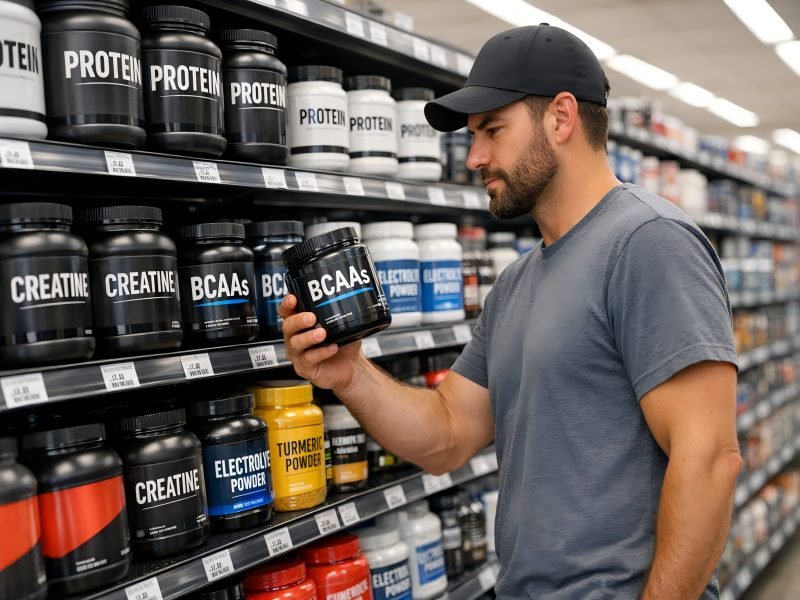
Walk into a supplement aisle—or scroll Amazon for five minutes—and you’ll see the same promise in different fonts: energy, immunity, recovery, focus, hydration, gut, sleep. The problem isn’t that supplements don’t work. It’s that most people don’t know what they’re actually trying to fix.
I see this all the time: someone buys creatine because it’s “proven,” but their real limiter is they barely hit protein on weekdays. Another person drinks electrolytes daily because TikTok said “hydration,” yet they aren’t sweating much—and the extra sodium just makes them thirstier. The product didn’t fail. The match was wrong.
Types of supplements include vitamins, minerals, protein, amino acids, electrolytes, performance aids (like creatine), and recovery blends. The best choice depends on your goal, diet gaps, training load, sweat rate, and health status. Look for transparent labels, evidence-based doses, and quality testing (COA/GMP). Start with essentials, then add targeted supplements only when they solve a specific, measurable problem.
If you’ve ever taken a new supplement for two weeks and thought, “Wait… am I supposed to feel something?”—good. That skepticism is healthy. This guide gives you a clean map of the main supplement categories, what they actually do, and how to choose without wasting money.
What Are Dietary Supplements?
Dietary supplements are products designed to add nutrients or functional compounds to your diet—like vitamins, minerals, amino acids, herbs, electrolytes, and performance ingredients. They’re not meant to replace food, but to support specific needs such as training recovery, hydration, or correcting deficiencies. Quality varies widely, so “what it is” matters less than what’s inside, at what dose, and how it’s tested.
Supplements sit in a weird space: they’re not drugs, but they’re also not “just food.” That’s why confusion is normal. The simplest definition is this: a supplement is a concentrated source of nutrients or bioactive compounds you take to support a health or performance goal—usually in powders, capsules, tablets, gummies, or liquids.
But here’s the part most people miss: supplements work best when they’re solving a specific constraint. Think like an engineer. Your body’s performance is limited by bottlenecks—hydration, protein intake, sleep quality, mineral balance, energy availability, stress load. A supplement can sometimes remove a limiting factor, but it can’t magically build a whole system for you.
For sports and fitness people, the most common weak link are surprisingly basic:
- You don’t eat enough protein consistently → protein powder helps
- You train hard and sweat a lot → electrolytes help
- You want stronger repeated efforts → creatine helps
- You’re under-recovered and short on micronutrients → targeted vitamins/minerals help
This is exactly why brands like AirVigor focus on “use-case” products (electrolyte powders, creatine powders, protein powders, and blends): people don’t want 30 bottles. They want simple routines that match real life—gym bags, workdays, travel, and sweaty workouts.
Another reality: supplements can be overused. If you take ten products, you’ll have trouble knowing what’s working. You’ll also increase the risk of overlaps—like too much magnesium, too much caffeine, too much vitamin A, or too much sodium. The “best” routine is usually the smallest routine that works.
Below are the three most important questions to ask before you buy anything:
- What problem am I solving? (hydration cramps? low protein? plateau?)
- Can I measure it? (energy, performance, sleep, GI comfort, recovery)
- Is there quality proof? (testing, COA, reputable manufacturing standards)
AirVigor’s approach—lab testing, batch documentation (COA), and global compliance systems—matters because it reduces the most frustrating supplement experience: buying a product that looks great online but performs inconsistently in real life.
What counts as a supplement?
A supplement can be a single nutrient (like vitamin D), a mineral (like magnesium), a macronutrient support (like whey protein), or a functional compound (like creatine). It can also be a blend—electrolytes plus minerals, or recovery mixes that combine magnesium, sodium, and supportive amino acids.
In everyday terms: if it’s taken to “supplement” the diet and comes with a Supplement Facts panel, it’s probably a dietary supplement. Powders are especially common in sports nutrition because they’re easy to dose and mix—this is why AirVigor’s core products are powder-based (electrolytes, creatine, protein, and multi-function blends).
How supplements differ from food
Food is complex: it comes with fiber, water, phytonutrients, and a mix of macro/micronutrients. Supplements are focused: they deliver one or a few things at controlled doses. That’s their advantage and their weakness.
Example: you can get sodium from food, but during a long workout you need sodium fast, in a form you can tolerate. That’s where an electrolyte powder makes sense—because it’s built for a specific context (sweat loss + fluid absorption), not a meal.
Are supplements regulated?
In the U.S., supplements are regulated as a category of food, with rules for labeling and manufacturing practices. But not every product is equally reliable. That’s why quality systems and testing matter more than marketing.
Practically, you should look for:
- clear Supplement Facts and ingredient transparency
- batch-level testing (COA)
- GMP manufacturing practices
- realistic claims (no “miracle” language)
This is where manufacturer-brands like AirVigor can stand out: when the brand is tied to real production systems and documented QA processes, consistency gets easier to trust.
Which Types of Supplements Exist?
Most supplements fall into a few functional groups: vitamins/minerals, protein/amino acids, electrolytes, performance supplements (like creatine), and recovery/wellness blends. For most people, it’s smarter to start with the basics—protein adequacy, hydration support, and a few targeted micronutrients—then add performance tools only if they match your training and goals.
People search “types of supplements” because they want a clean list. But lists alone don’t help you decide. A better way is to sort supplements by what job they do.
Here’s a simple mental model:
- Foundation supplements help you meet basic nutritional needs (protein, vitamin D, magnesium, electrolytes when sweating)
- Performance supplements help you perform better during training (creatine, caffeine, nitrates, beta-alanine—depending on sport)
- Recovery supplements help you recover and stay consistent (protein, electrolytes, minerals, sleep-support ingredients)
Most beginners jump straight to performance supplements because it feels exciting. But performance supplements work best when your foundation is solid. If you’re under-eating protein, sleeping poorly, and dehydrating during workouts, creatine won’t feel like magic—it’ll feel “meh.”
This is why “the right types” are different for different people:
- A CrossFit athlete sweating buckets needs electrolytes and creatine.
- A runner training long sessions needs electrolytes, carbs, and possibly iron (depending on labs).
- A busy office worker lifting 3×/week might need protein and vitamin D, not a complex pre-workout.
AirVigor’s product lineup maps cleanly onto this structure: electrolyte powders for hydration and performance stability, creatine for repeated effort capacity, protein powders for muscle repair and intake consistency, and blended formulas for simplified routines.
And yes—people love quick answers, so let’s handle the three ultra-common search questions directly, in the right place.
What are the three main supplements?
If you force the entire supplement world into three “main” categories, the most practical trio for most active adults is:
- Protein (or protein support) — because intake is often low
- Creatine — because it’s one of the most proven performance tools
- Electrolytes — because hydration issues are common, especially with sweating
This doesn’t mean everyone “needs” all three, but these are the most broadly useful in fitness. Conveniently, they also cover the biggest real-world bottlenecks: not enough building blocks (protein), not enough repeatable power (creatine), and poor fluid/mineral balance (electrolytes).
Vitamins and minerals
Vitamins and minerals are your “micronutrient” layer. They don’t usually make you feel like a superhero overnight, but they keep the system running: energy metabolism, immune function, oxygen transport, nerve signaling, and muscle contraction.
Common “high-impact” ones people miss: vitamin D, magnesium, iron (especially in some female athletes), and zinc (depending on diet). The key is not to guess blindly—where possible, use diet review and labs.
What are the 13 types of vitamins?
There are 13 essential vitamins:
- Fat-soluble: A, D, E, K
- Water-soluble: C and B-complex (B1, B2, B3, B5, B6, B7, B9, B12)
A quick reality check: “13 vitamins” doesn’t mean “take all 13.” It means your body needs them in appropriate amounts. Many active adults get enough B vitamins from food, while vitamin D and folate can be more variable. The best move is targeted, not maximal.
| Vitamin Group | Vitamins | Key physiological roles | Common deficiency risk | Who is more likely low | Supplement note |
|---|---|---|---|---|---|
| Fat-soluble | A, D, E, K | Vision, hormone regulation, antioxidant defense, blood clotting | Vitamin D is most common | Low sun exposure, indoor lifestyle, older adults | Supplement selectively; excess can accumulate |
| Water-soluble | C | Collagen synthesis, immune defense, antioxidant protection | Low intake from fruits/vegetables | Limited produce intake, smokers, high stress | Usually safe short-term; excess excreted |
| B-complex | B1, B2, B3, B5, B6, B7, B9, B12 | Energy metabolism, nerve signaling, red blood cell formation | B12 and folate variability | Low animal-food diets, older adults | Target specific B vitamins when needed |
Protein and amino acids
Protein supplements are less about “bodybuilding” and more about hitting your daily target consistently. If you train, protein is your recovery foundation. Amino acid supplements can help in narrow situations (low-protein diets, fasted training), but most people do better with complete protein.
AirVigor protein options (and protein-focused routines) fit well for people who want a clean, measurable benefit: better recovery, easier muscle maintenance, and fewer “I didn’t eat enough today” days.
Electrolytes and hydration
Electrolytes—especially sodium—help your body hold onto fluids and support nerve/muscle function. If you sweat heavily, train in heat, or do long sessions, electrolytes can be the difference between “strong to the end” and “mysteriously flat.”
This is the core use-case for AirVigor electrolyte powders: hydration that actually feels stable, without relying on heavy sugar drinks or overly sweet formulas that wreck your stomach mid-session.
Performance supplements
Performance supplements aim to improve training output: more reps, better power, stronger sprints, improved endurance feel. Creatine is the king here for strength and repeated intensity. Others (caffeine, nitrates, beta-alanine) are more context-dependent.
A useful filter: if you can’t describe exactly what metric will improve, it’s probably not the right performance supplement for you.
Recovery and wellness blends
Blends can be helpful when they reduce friction. If you’re juggling electrolytes, minerals, and recovery support, a smartly designed blend saves time and makes compliance easier.
But blends should be transparent: you want real dosages, not “fairy dust.” Look for clear labels and a logic that matches real physiology—hydration minerals, recovery support, and tolerable flavoring.

How Do Supplements Work in the Body?
Supplements work by delivering nutrients or compounds that your body can absorb, circulate, and use in specific pathways—like muscle energy (creatine), fluid balance (electrolytes), or tissue repair (protein). Results depend on dose, form, timing, and your baseline status (deficiency vs adequate). If you already have enough of something, adding more usually does little.
One reason supplements feel “inconsistent” is that the body is not a blank slate. The same product can feel amazing to one person and useless to another because their baseline is different.
Here’s a simple rule:
Supplements have the biggest impact when they fill a real gap or remove a real bottleneck.
- If you’re low on protein, adding protein changes recovery.
- If you’re dehydrating and low on sodium, adding electrolytes changes performance.
- If your muscles have low creatine stores, creatine helps repeated effort.
- If you’re already adequate, the effect is smaller.
Also, absorption is not automatic. It depends on digestion, transporters, and the form of the ingredient. Magnesium glycinate can feel gentler than magnesium oxide. Creatine monohydrate is well-studied and usually effective. Electrolyte ratios can affect gut comfort. Powders often dissolve and absorb differently than tablets.
That’s why AirVigor’s manufacturing emphasis on dissolution testing, stability, and real-use simulation matters: what looks good on a label must still mix well, taste tolerable, and perform in sweaty, real-life conditions.
Finally, timing matters more than people think. Not in a “you must take it at 7:03 PM” way—but in a practical way:
- protein works best when it helps you hit total daily intake
- electrolytes work best when they match sweat loss timing
- creatine works best when taken consistently
- caffeine works best when timed for the session and tolerated
How absorption happens
Absorption starts in the gut. Water-soluble nutrients dissolve in fluid and use transporters. Fat-soluble vitamins need dietary fat and proper digestion. Minerals can compete (iron and calcium, for example). Your gut health, meal timing, and even stress can affect absorption.
Practical takeaway: don’t obsess over micro-timing. Do focus on consistency and forms you tolerate. If an electrolyte mix upsets your stomach, you won’t use it. If a protein tastes bad, you won’t hit your numbers. Compliance is part of “bioavailability” in real life.
Do forms affect bioavailability?
Yes. Forms matter. Some are easier to absorb or easier on the stomach. But “better form” isn’t always worth a big price jump.
Examples:
- Creatine monohydrate is the gold standard for most people.
- Some minerals are better tolerated in chelated forms.
- Electrolyte blends with sensible sodium and potassium levels often feel better than random “trace mineral” mixes.
A brand that tests solubility and stability (and provides COA documentation) reduces the risk of buying an expensive tub that clumps, tastes harsh, or feels inconsistent.
How timing changes results
Timing matters when the supplement is meant to support a specific window:
- electrolytes: before/during/after heavy sweating
- caffeine: 30–60 minutes pre-session (if you use it)
- protein: spaced through the day to hit total intake
- creatine: daily consistency matters more than timing
Think of timing as “matching the moment” rather than chasing perfection.
Which Supplements Are for Fitness?
Fitness-focused supplements support training output, hydration, recovery, and consistency. The most useful categories include protein (muscle repair), creatine (strength and repeat performance), electrolytes (hydration and endurance), and targeted micronutrients. The “best” supplement depends on your sport, sweat rate, diet quality, and training volume—not trends or influencer stacks.
Fitness supplements are often misunderstood because they’re marketed as shortcuts. In reality, they’re stability tools. They don’t replace training—they make good training easier to repeat.
Think of fitness progress as stacking days. Supplements help you show up with fewer bad days caused by dehydration, poor recovery, or inconsistent intake. That’s why the most effective fitness supplements are boring, proven, and routine-friendly.
A useful way to think about fitness supplements is by training phase:
- Before / during training: hydration, electrolytes, sometimes caffeine
- After training: protein, recovery minerals
- Daily baseline: creatine, protein adequacy, micronutrients if needed
AirVigor’s product system fits this structure well. Electrolyte powders address sweat-related performance drop-offs. Creatine powder supports repeated effort and strength progression. Protein powders help users hit daily intake without complicated meal prep. Multi-functional blends reduce decision fatigue for people juggling work, training, and travel.
Below, let’s break fitness supplements down by goal.
Supplements for strength
For strength training—weightlifting, CrossFit, power-based sports—the biggest performance limiter isn’t motivation. It’s repeatability. You need to hit quality reps week after week.
The most evidence-backed supplements for strength are:
- Creatine: improves repeated high-intensity output and strength gains
- Protein: supports muscle repair and growth
- Electrolytes: help maintain nerve and muscle function during hard sessions
Creatine doesn’t work overnight, but over weeks it increases phosphocreatine availability in muscle, supporting harder sets and better training density. AirVigor creatine powder focuses on purity and consistency—important because inconsistent dosing or clumping reduces real-world adherence.
Supplements for endurance
Endurance athletes don’t usually “bonk” because of willpower. They bonk because of fluid, sodium, and energy mismatch.
Electrolytes are often more important than people realize—especially sodium. Even moderate dehydration or sodium loss can increase perceived effort and reduce pace. That’s why many runners, cyclists, and hikers feel dramatically better when switching from plain water to a properly dosed electrolyte mix.
Protein still matters for endurance athletes, mainly for recovery and maintaining lean mass during high-volume training. Creatine can be helpful in some endurance contexts (like sprint finishes or interval-heavy training), but it’s more situational.
AirVigor electrolyte powders are designed around drinkability and tolerance, which matters more than fancy ingredient lists when you’re hours into a session.
Supplements for recovery
Recovery isn’t just about muscles—it’s about the nervous system, hydration status, and mineral balance.
Key recovery supports include:
- Protein for muscle repair
- Electrolytes to restore fluid balance
- Magnesium and potassium (where appropriate) for muscle relaxation and nerve signaling
Recovery supplements should feel supportive, not heavy. Overly sweet drinks or high-dose stimulant blends often backfire by stressing digestion or sleep.
Blended recovery formulas can help if they’re transparently dosed. AirVigor’s recovery-oriented products emphasize mineral balance and usability rather than aggressive flavors or “kitchen sink” formulations.
Are supplements needed daily?
Some are. Some aren’t.
- Protein: often daily, because intake consistency matters
- Creatine: daily for saturation and maintenance
- Electrolytes: situational—based on sweat, heat, and training load
- Vitamins/minerals: only if diet or labs suggest a need
Daily use should feel easy, not like a chore. If a supplement routine feels complex, it’s unlikely to last—and consistency beats complexity every time.

How Do You Choose the Right Supplement?
Choose the right supplement by matching it to a specific goal and a measurable bottleneck (hydration, protein intake, recovery, performance). Verify the label for evidence-based doses, avoid “proprietary blends,” and prioritize brands that publish testing (COA), follow GMP practices, and explain who the product is for. Start with the smallest stack that solves your problem, reassess in 2–4 weeks, and add only what improves a real outcome.
Choosing supplements is less like shopping for snacks and more like building a small, reliable system. The mistake most people make is starting with ingredients (“I heard magnesium is good”) instead of starting with outcomes (“I cramp after hot workouts” or “I can’t hit protein daily”). Google and AI tools tend to reward pages that answer the decision behind the query, not just definitions—so let’s build a framework you can actually use.
Step 1: What is your primary goal—and what’s the bottleneck?
Before buying anything, finish this sentence:
“I want ___, but I’m limited by ___.”
Examples:
- “I want better workout endurance, but I fade in heat and sweat a lot.” → Electrolytes
- “I want muscle tone, but my protein intake is inconsistent.” → Protein
- “I want stronger sets, but I plateau on repeated efforts.” → Creatine
- “I want better recovery, but I wake up sore and sleep poorly.” → Protein + recovery routine; maybe magnesium if indicated
This framing matters because it prevents you from buying “interesting” supplements that don’t solve your real problem.
Step 2: Are you fixing a diet gap, a training gap, or a lifestyle gap?
A supplement can support nutrition, but it can’t substitute sleep, total calories, or smart programming.
Use this quick filter:
| Bottleneck Type | Common Clues | Underlying issue | What usually helps first | Where supplements fit | How to know it’s working |
|---|---|---|---|---|---|
| Diet gap | Low protein intake, frequent fatigue, low micronutrients | Inadequate nutrient availability for recovery and metabolism | Meal planning, consistent eating habits | Protein, vitamin D, targeted minerals | Energy and recovery improve within 1–2 weeks |
| Training gap | No strength or endurance progression, stalled performance | Insufficient stimulus or poor training structure | Program design, volume/intensity adjustment | Creatine, carbs/electrolytes during long sessions | Performance metrics (reps, pace) start moving again |
| Lifestyle gap | Poor sleep, high stress, irregular routines | Nervous system overload and hormonal disruption | Sleep hygiene, stress management, timing | Supportive supplements only if needed | Sleep quality and daytime focus stabilize |
This keeps your stack realistic—and prevents expensive “supplement hopping.”
Step 3: Which supplement category matches your use-case?
For fitness-oriented users (AirVigor’s core audience), the “high ROI” categories usually look like this:
- Electrolytes (heavy sweating, heat, long training, travel dehydration)
- Protein (difficulty hitting daily intake; recovery and muscle support)
- Creatine (strength and repeated intensity; consistent performance)
- Targeted vitamins/minerals (vitamin D, magnesium, iron—only when diet/labs suggest)
That’s why AirVigor focuses on electrolyte powders, creatine powders, protein powders, and simplified blends: they map directly to the problems real gym-goers and active professionals actually feel.
What are the 5 most important supplements to take?
If you want a “starter list” that matches what most people search on Google, here’s the most practical version for active adults:
- Protein (if you struggle to hit daily protein)
- Electrolytes (if you sweat, train in heat, or feel “flat” with water alone)
- Creatine (if you lift, do HIIT, or want repeat performance)
- Vitamin D (if you have low sun exposure; common gap)
- Magnesium (if diet is low or cramps/sleep issues suggest a gap)
But don’t treat this like a universal prescription. Treat it like a menu. The best supplement is the one that addresses your limiting factor.
How to read labels
A label should answer three questions instantly:
- What is the active ingredient and dose per serving?
- How many servings are in the container?
- Does the product hide behind a proprietary blend?
Red flags:
- “Proprietary blend” with no individual dosages
- Long ingredient lists with tiny amounts
- Unclear serving size (easy to under-dose accidentally)
Green flags:
- Transparent Supplement Facts
- Clear mixing directions (especially for powders)
- Batch testing and documentation (COA)
AirVigor leans into label clarity because it reduces “decision fatigue” and improves correct use—especially for electrolyte mixing and creatine consistency.
Which ingredients matter
Ingredients matter when they meet effective ranges and fit your goal.
A common trap is paying for “premium” extras that don’t change outcomes. For example:
- Electrolytes: sodium dose and drink tolerance usually matter more than dozens of trace minerals.
- Creatine: monohydrate consistency beats fancy forms for most people.
- Protein: total grams + amino profile + digestibility matter more than marketing claims.
If the product doesn’t improve a metric you care about (hydration comfort, training output, recovery time), it’s not the right product for you—no matter how trendy the label is.
How dosage is determined
Dosage should be based on:
- research-backed effective ranges
- your baseline intake and body size
- your training load and sweat rate
- tolerance (GI comfort matters)
A smart approach:
- start with the recommended serving
- use it consistently for 2–4 weeks
- track 1–2 outcomes (performance stability, cramping, recovery, energy)
- adjust only if needed
This is why consistency and usability (mixing, taste, portability) are not “nice-to-haves.” They determine whether you actually take the supplement long enough to benefit.
| If you feel… | Most likely physiological issue | Why it happens | Start with… | How to use it |
|---|---|---|---|---|
| Headache, heavy legs in heat | Fluid + sodium imbalance | Sweat loss lowers plasma volume and sodium, reducing circulation efficiency | Electrolytes | Mix with water during or after sweating; adjust dose to sweat rate |
| Sore for 2–3 days after lifting | Protein intake below recovery needs | Muscle repair outpaces available amino acids, slowing recovery | Protein | Use daily to reach total protein targets, especially post-training |
| Plateau in repeated hard sets | Limited phosphocreatine availability | ATP resynthesis lags during short rest intervals | Creatine | Take consistently every day; timing is less important than consistency |
| Low energy + low sun exposure | Vitamin D insufficiency risk | Reduced sun limits endogenous vitamin D synthesis | Vitamin D (if needed) | Consider testing; supplement within evidence-based ranges |
| Night cramps or poor sleep | Mineral balance + nervous system strain | Magnesium and potassium support muscle relaxation and nerve signaling | Magnesium (targeted) | Use in the evening; avoid stacking multiple high-dose mineral products |
Are Supplements Safe to Use?
Most supplements are safe for healthy adults when used at evidence-based doses and sourced from reputable brands. Safety risks usually come from overdosing, stacking overlapping products, hidden stimulants, poor-quality manufacturing, or ignoring medical conditions and medications. The safest approach is to start with a small stack, read labels carefully, look for GMP and COA testing, and reassess how you feel after 2–4 weeks.
“Are supplements safe?” is one of the most searched questions on Google for a reason: people don’t just want reassurance—they want a safety system. AI search tools (ChatGPT, Gemini) also tend to rank answers that provide clear decision rules, red flags, and practical actions.
Here’s the truth: the supplement category includes everything from basic protein powder to stimulant-heavy “fat burners.” So “safe” depends on what, how much, how often, and who you are.
A useful way to think about supplement safety is the Risk Triangle:
- Ingredient risk (what’s in it?)
- Dose risk (how much are you taking?)
- Quality risk (is it made and tested properly?)
Most problems happen when at least two corners are bad—like a risky ingredient at a high dose from a low-transparency brand.
The three most common safety mistakes
Mistake #1: Stacking overlaps.
People take a multivitamin, a hydration powder, a “recovery blend,” and a pre-workout—then accidentally double or triple their intake of magnesium, niacin, caffeine, or sodium. Overlaps are more common than people realize.
Mistake #2: “More is better” dosing.
Supplements don’t scale linearly. Past a certain point, you don’t get more benefit—you get more side effects.
Mistake #3: Ignoring personal context.
If you have hypertension, kidney disease, thyroid issues, pregnancy, or you take medications, your safe range can change dramatically—especially for minerals, stimulants, and certain herbs.
That’s why brands like AirVigor lean into transparent labels, batch documentation (COA), and consistent manufacturing standards (GMP/HACCP/ISO systems): quality systems don’t guarantee perfection, but they greatly reduce the odds of contamination, mislabeling, or inconsistent potency—the issues that create real safety risk.
Are daily supplements safe?
For many healthy adults, daily use of foundational supplements is generally safe when dosed responsibly:
- Protein: daily is typically safe and useful if it helps you reach your intake target.
- Creatine: daily maintenance dosing is widely used; hydration and GI tolerance matter.
- Electrolytes: safe when matched to sweat loss; “daily” depends on activity and diet sodium.
Daily use becomes questionable when you’re taking high-dose micronutrients without a reason. If your diet is decent, you usually don’t need megadoses “just in case.” A smarter rule is: daily is fine for basics; targeted for everything else.
Can you take too many?
Yes—and this is where most safety issues live.
Common “too much” situations:
- Fat-soluble vitamins (A, D, E, K) can accumulate if taken at high doses long-term.
- Minerals like magnesium can cause GI distress; excessive intake from multiple products is common.
- Stimulants (caffeine + other stimulants) can disrupt sleep, elevate anxiety, or cause palpitations.
- Electrolytes (especially sodium) can be excessive if you’re stacking salty products while already eating a high-sodium diet and not sweating much.
Practical rule: If you’re using more than 3–4 products daily, you should audit overlaps.
Who should be cautious?
You should be extra cautious (and ideally consult a clinician) if you are:
- pregnant or breastfeeding
- under 18
- managing high blood pressure or heart conditions
- living with kidney disease or liver disease
- taking prescription medications (especially for thyroid, blood pressure, blood thinners, antidepressants)
Even “normal” supplements can matter in these contexts. Example: electrolyte mixes can raise sodium intake, which may not fit every medical profile. And some vitamins/minerals can interact with medications.
If you’re healthy, caution still matters when you’re stacking multiple products—because the risk often comes from the combination, not a single product.
| Check | What to do | Why it matters | How to self-check |
|---|---|---|---|
| Start small | Use 1–2 supplements for 2–4 weeks | Isolates what actually works | Can you clearly tell which product changed how you feel? |
| Avoid overlaps | Compare labels for shared nutrients | Prevents accidental overdosing | Are the same vitamins/minerals listed on multiple products? |
| Watch stimulants | Add up caffeine and “energy” ingredients | Protects sleep and nervous system | Any trouble sleeping, jittery feeling, or elevated anxiety? |
| Look for proof | Choose GMP-made products with COA or testing info | Reduces contamination and potency risk | Can the brand explain how and where it’s tested? |
| Track outcomes | Monitor hydration, digestion, sleep, performance | Detects benefits or side effects early | Did anything improve—or worsen—after 7–14 days? |
Red Flags vs Green Flags
Red flags
- proprietary blends hiding dosages
- extreme claims (“instant fat loss,” “detox,” “cure”)
- unclear sourcing or no quality documentation
- heavy stimulant stacking or “secret sauce” formulas
Green flags
- clear Supplement Facts with meaningful doses
- sensible serving size and instructions
- batch-level COA testing (or equivalent documentation)
- manufacturing under recognized quality systems
AirVigor’s approach—lab testing, solubility and stability focus, global compliance labeling—fits the “green flag” profile that both Google and AI systems tend to treat as trustworthy.
When should you stop and reassess?
Stop or reassess if you notice:
- persistent GI upset
- headaches or dizziness
- insomnia or anxiety spikes
- palpitations
- unusual swelling or blood pressure changes
Often the fix isn’t “quit supplements forever.” It’s: reduce dose, simplify stack, improve timing, or choose a better-tested product.
How Are Supplements Made?
Supplements are made through a controlled process: ingredient sourcing and verification, formula design, precision weighing and blending, in-process quality checks, finished-product testing (often documented by a COA), and packaging designed to protect stability. The most reliable products come from GMP-compliant facilities with traceable batches, validated equipment, and clear labeling. Manufacturing quality directly affects safety, potency, mixability, and consistency across batches.
“Made” is where supplements quietly become either trustworthy or risky. Two products can have identical-looking labels, yet perform completely differently because of manufacturing decisions you never see: raw material grade, blending time, humidity control, particle size, anti-caking strategy, packaging barrier, and batch testing standards.
Google and AI systems tend to reward manufacturing content that explains how quality is created, not just what logos exist. So let’s walk through the real production chain—especially for sports powders like electrolytes, creatine, and protein (AirVigor’s core categories).
The modern supplement manufacturing pipeline
A high-quality supplement typically goes through these steps:
- Ingredient sourcing & supplier qualification Manufacturers vet suppliers, require specifications, and check that ingredients are food-grade and legally compliant for target markets.
- Incoming raw material testing Identity testing confirms it’s the correct ingredient (not a substitution). Purity and contaminant screens reduce risk (microbes, heavy metals, adulterants—depending on ingredient type).
- Formulation and pilot validation A formula isn’t just a list—it’s a system. For powders, you test solubility, taste, stability, and real-world mixing behavior (bottle shaking vs blender). AirVigor emphasizes building and validating large numbers of formulation models, because tiny changes in acids, salts, or flavors can affect gut tolerance and mixability.
- Precision weighing and controlled blending This is where “potency” is protected. Scales must be calibrated. Operators follow SOPs. Blending time and order of addition matter—especially for electrolytes, where uneven distribution can lead to inconsistent sodium per scoop (a real-world performance issue).
- In-process quality controls (IPQC) Checks during production catch problems early: moisture level, fill weight, uniformity, flowability, and sometimes quick analytical tests.
- Filling, packaging, and labeling Packaging is not decoration—it’s protection. Moisture barrier and seal integrity matter most for electrolytes and creatine powders that can clump. Labels are verified for compliance and accuracy, especially for global markets.
- Finished-product testing + COA A COA (Certificate of Analysis) is the “receipt” showing results for key specs: identity, potency, microbial limits, and sometimes contaminants. Not every brand shares it publicly, but reputable manufacturers should have it on file per batch.
- Batch traceability and release A robust system can trace every lot from finished goods back to ingredient batches, test results, equipment logs, and packaging runs.
AirVigor’s integrated system (in-house production + packaging + printing capabilities, plus multi-market compliance experience) is designed to reduce two common consumer complaints: “it tasted different this time” and “it doesn’t mix like it used to.” Those are manufacturing/packaging problems more often than “formula” problems.
How quality is tested
Testing happens at multiple points, not just at the end.
- Incoming: verify ingredient identity and purity before it enters production.
- In-process: check uniformity and moisture to prevent batch drift.
- Finished goods: test potency and safety specs.
For sports powders, “quality” also includes performance attributes:
- solubility (does it dissolve fast?)
- stability (does it clump over time?)
- sensory consistency (taste, smell, mouthfeel)
AirVigor’s lab-driven focus on purity, active content, solubility, and stability is exactly what makes daily-use products more predictable—especially for athletes who notice small changes.
Why certifications matter
Certifications don’t replace testing, but they improve the odds that a facility runs repeatable processes.
Common systems you’ll see in credible operations:
- GMP: standardized manufacturing and documentation
- HACCP: hazard analysis and control points (food safety)
- ISO 22000 / FSSC: structured food safety management
- Halal/Kosher/Organic: eligibility and traceability for specific markets
The point isn’t the logo—it’s the discipline behind it: SOPs, training, calibration, cleaning validation, and batch records. For buyers, certifications act like a “quality floor,” especially when you can’t audit a factory yourself.
How manufacturing affects trust
Most trust failures in supplements come from one of three things:
- Inconsistency: same product feels different from batch to batch
- Opacity: unclear dosages, no testing transparency
- Stability issues: clumping, off-flavors, poor shelf life
Manufacturing drives all three.
For example:
- Poor humidity control → clumpy electrolyte powder
- Weak mixing validation → uneven active ingredient distribution
- Low-barrier packaging film → flavor degradation and moisture uptake
- Rushed label verification → compliance errors or consumer confusion
AirVigor’s emphasis on packaging as part of the “use experience” (sachets for training, tubs for home, barrier testing for humidity) is not cosmetic—it’s operational quality. The user feels it as “this is easy to use and consistent,” which is the real end goal.
| What to look for | Why it matters | What risk it reduces | Best sign | How to verify |
|---|---|---|---|---|
| Batch traceability | Enables accountability and recalls | Limits impact of contamination or errors | Lot codes + internal records | Can the brand trace a product back to a specific batch? |
| COA availability | Confirms identity, potency, and safety | Prevents mislabeled or under-dosed products | COA per batch | Is a Certificate of Analysis available on request? |
| GMP / HACCP / ISO | Enforces process discipline | Reduces human error and variability | Recognized certifications | Are certifications current and facility-specific? |
| Solubility & stability | Ensures real-world usability | Avoids clumping, uneven dosing | Dissolves fast, no clumps | Does it mix cleanly after weeks of storage? |
| Clear labeling | Enables correct use and compliance | Prevents misuse and overdosing | Transparent facts panel | Are dosages and ingredients easy to understand? |

FAQ
Do supplements work immediately?
Some can feel fast (electrolytes during heavy sweating), but many work through consistency (protein intake, creatine saturation). If you can’t measure a change, simplify the stack and track one outcome at a time.
Are electrolytes safe to take every day?
They can be, but it depends on sweat loss, climate, and diet sodium. If you don’t sweat much and already eat salty foods, daily high-sodium mixes may be unnecessary.
Is creatine safe for beginners?
For most healthy adults, creatine is widely used. Consistent daily use matters more than timing. If you have medical conditions, consult a professional.
Do I need a multivitamin?
Not always. If your diet is strong, a multivitamin may do little. Targeted support (vitamin D, B12, iron, magnesium) makes more sense when a gap is likely.
Which supplement should I start with first?
Most people get the biggest “real life” benefit from fixing protein consistency or hydration stability—then adding performance support like creatine if training demands it.
How do I know if a supplement brand is trustworthy?
Look for transparent labels, GMP manufacturing, batch testing/COA, and traceability. Avoid products with hidden blends and extreme claims.
Can I take multiple supplements together?
Yes, but watch overlaps (vitamins, minerals, caffeine, sodium). The simplest routine that works is usually the safest and easiest to stick with.
Conclusion
Supplements work best when they solve a clear, specific problem—not when they follow trends.
Protein supports recovery when intake is inconsistent. Electrolytes matter when sweat and hydration become limiting factors. Creatine helps when strength and repeat performance are the goal. Vitamins and minerals should be used strategically, not blindly.
This is the philosophy behind AirVigor.
Rather than chasing hype, AirVigor focuses on essential supplement categories—electrolytes, protein, creatine, and recovery blends—designed for real training, daily use, and consistent results. Transparent labels, evidence-based dosing, and batch-level testing are not marketing claims, but baseline requirements.
The right supplement routine isn’t about doing more.
It’s about choosing the right type, at the right dose, from a brand you can rely on—so your supplements quietly support your performance, instead of becoming another variable to manage.