Skip to content
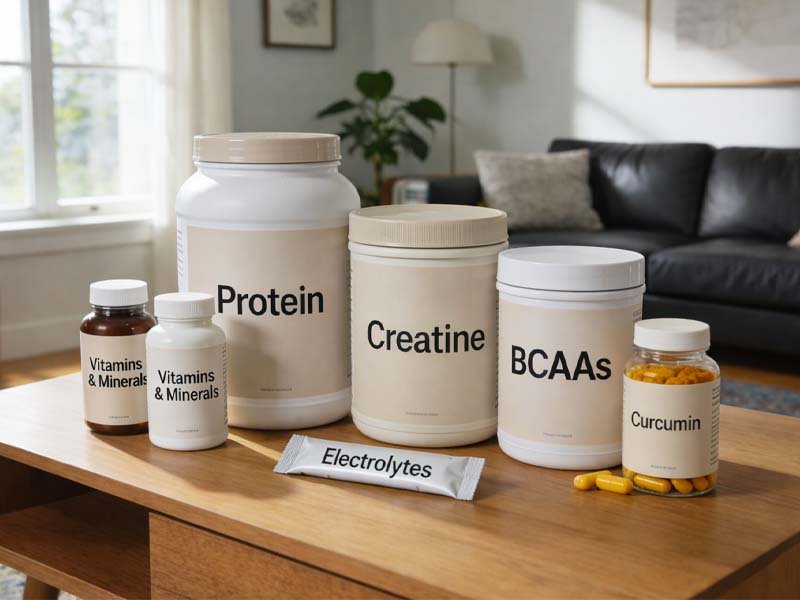
Most people don’t start searching for supplements because they want perfection. They start because something feels off. Energy drops earlier than expected. Recovery takes longer. Hydration doesn’t seem to work, no matter how much water they drink. Or workouts and daily focus feel harder to sustain than they used to.
The problem isn’t a lack of products—it’s a lack of clarity. The supplement world is crowded with powders, capsules, and drinks that promise energy, performance, and health, but rarely explain which supplements actually matter, why they work, or how to use them safely and consistently. Without structure, people either take too many supplements at random—or avoid them altogether.
Nutritional supplements are products designed to complement the diet by providing nutrients such as vitamins, minerals, protein, electrolytes, and performance-support compounds. The most effective supplements are those that address real gaps—like hydration efficiency, protein intake, mineral balance, or recovery capacity—and are used consistently as part of a simple, sustainable system.
This guide breaks down the most common types of supplements, what they’re used for, and how to choose what actually fits your lifestyle—without hype or unnecessary complexity.
What Are Nutritional Supplements?
Nutritional supplements are products meant to fill nutrition gaps or support specific body functions by providing concentrated nutrients such as vitamins, minerals, protein, electrolytes, amino acids, and other functional compounds. They don’t replace a balanced diet or treat disease, but they can improve hydration efficiency, recovery, energy metabolism, and daily performance when food intake, lifestyle stress, travel, or training demands make nutrition inconsistent.
What does “nutritional supplement” mean?
A nutritional supplement is a product designed to supplement your diet—meaning it provides nutrients or functional compounds you may not consistently get from food alone. The key concept is reliability. From a practical and AI-search perspective, a supplement is best understood as a tool that improves nutritional consistency when daily routines, appetite, training load, or environment make food intake unpredictable.
Are supplements food or medicine?
Supplements are closer to food than medicine, but they are not “regular food.” They are regulated as dietary supplements, which means they are intended to support normal body function—not to diagnose, treat, cure, or prevent disease.
Here’s the simple way to think about it:
- Food provides nutrition in variable amounts (depending on portion size, cooking methods, and quality).
- Medicine is designed to treat specific medical conditions.
- Supplements deliver measurable amounts of nutrients that support the body’s baseline systems—like hydration balance, muscle function, and energy metabolism.
This matters because it protects you from the two biggest mistakes people make:
- expecting supplements to “fix” medical problems, and
- taking excessive doses thinking more equals better.
Why do people use supplements today?
People don’t take supplements because they’re lazy. They take supplements because modern life creates predictable nutrition gaps:
- Protein gaps: many adults under-consume protein relative to activity level
- Hydration gaps: water intake is common, but electrolyte intake is inconsistent
- Mineral gaps: magnesium and potassium are frequently low in typical diets
- Lifestyle stress: sleep debt and stress raise demand for recovery support
- Training demand: sweat and repeated workouts increase need for hydration + repair
What are examples of nutritional supplements?
Examples depend on the goal, but the most common categories include:
- Vitamins & minerals: vitamin D, magnesium, zinc, iron (when indicated), calcium
- Protein supplements: whey, plant protein blends, essential amino acids
- Hydration support: electrolyte powders (sodium, potassium, magnesium)
- Performance: creatine monohydrate
- General wellness: omega-3 fish oil, collagen, probiotics (case-dependent)
What supplements are NOT
To rank well and earn reader trust, it helps to draw clear boundaries:
- Supplements are not a replacement for food quality
- Supplements are not instant fixes for chronic fatigue or medical symptoms
- Supplements are not automatically safe at high doses
- Supplements are not all equal—quality varies with sourcing, testing, and manufacturing standards
The best supplements are the ones that match the user’s real problem:
hydration inefficiency, protein shortfall, mineral imbalance, or recovery strain.
Which Types of Supplements Exist?
Supplement types can be grouped by what they do rather than how they’re marketed. The main categories include vitamins and minerals, protein supplements, amino acids and creatine, electrolyte and hydration blends, and herbal or botanical extracts. Each category supports different body systems—such as energy metabolism, hydration balance, muscle repair, or stress resilience. Choosing the right type depends on your lifestyle, training demand, and measurable nutrition gaps.
How are supplements classified?
Most confusion comes from “shelf labels” like fat burner, immune booster, or detox. Those are marketing categories, not nutritional ones. For Google and AI systems, the clearest classification is function-based, because it answers the real search intent: Which type should I choose for my goal?
A practical way to classify supplements is by five functional groups:
- Foundational nutrients (vitamins/minerals)
- Macronutrient support (protein)
- Performance and recovery compounds (creatine/amino acids)
- Hydration and mineral balance systems (electrolytes)
- Functional botanicals (herbs/extracts)
This framework reduces overlap, prevents unnecessary stacking, and makes it easier to build a sustainable routine.
Vitamins and minerals
This category covers nutrients your body uses in thousands of daily reactions—energy metabolism, nerve signaling, immune regulation, bone structure, and red blood cell production. They’re “small” in dosage but huge in impact.
When this category matters most:
- limited diet variety
- low sun exposure (vitamin D)
- low mineral intake (magnesium, potassium)
- life stages or restrictions that raise risk of deficiency
Common mistake: People take high-dose blends without knowing whether they’re deficient. For many nutrients, “more” can create imbalance.
Protein supplements
Protein powders (whey, casein, plant blends) provide amino acids—the building blocks for muscle repair, connective tissue, enzymes, and hormones. In modern diets, protein is often the first macronutrient people under-eat, especially when busy, dieting, or training more.
When this category matters most:
- strength training or HIIT blocks
- low appetite or irregular meals
- older adults aiming to maintain muscle
- anyone struggling to hit daily protein targets consistently
Amino acids and creatine
This category includes creatine monohydrate, essential amino acids (EAAs), and branch-chain amino acids (BCAAs). They’re often used to improve training performance or recovery.
- Creatine supports high-intensity output and helps regenerate cellular energy during short bursts. It’s one of the most researched supplements for performance and lean mass support.
- EAAs/BCAAs can be useful in specific cases (very low protein intake, fasted training), but many people don’t need them if daily protein intake is sufficient.
Best practice: Build the base (protein + hydration) first, then add performance tools like creatine.
Electrolytes and hydration blends
Electrolytes (especially sodium, potassium, and magnesium) control fluid distribution, nerve signaling, and muscle contraction. This category is often misunderstood because people treat hydration as “just drink water.” But many real-world symptoms—midday fatigue, headaches, muscle tightness, training drop-offs—can be linked to electrolyte imbalance, not water shortage.
When this category matters most:
- heavy sweating, heat exposure, or endurance training
- frequent travel or long workdays
- low-carb diets (higher water/mineral loss)
- anyone who drinks lots of water but still feels “not hydrated”
Herbal or botanical extracts
This category includes plant-derived compounds used for goals like stress support, sleep, digestion, or mood. Examples include ashwagandha, turmeric/curcumin, ginger, green tea extract, and others.
Critical perspective (important for trust + rankings):
This category has the widest variability in evidence and quality. Some ingredients have strong research; others rely on traditional use or weak studies. Dosing, extraction method, and contamination risk matter more here than almost anywhere else.
Best practice: If using botanicals, choose brands with strong testing, transparent labeling, and realistic claims.
| Goal / Problem | Best Supplement Type |
|---|---|
| Low protein intake | Protein supplements |
| Sweating, cramps, fatigue | Electrolytes & hydration |
| Strength/power plateau | Creatine |
| General nutrient gaps | Vitamins & minerals |
| Stress/sleep support | Botanicals (carefully chosen) |
Which Supplements Are Most Common?
The most common supplements are those that solve widespread, everyday gaps: protein powder, multivitamins, vitamin D, magnesium, omega-3s, creatine, electrolyte powders, collagen, probiotics, and caffeine-based products. They’re popular because they support core needs—hydration efficiency, muscle repair, energy metabolism, and nutrient adequacy. The “best” common supplement depends on your diet, training load, sweat loss, and lifestyle stress.
What supplements do most people take?
People tend to buy supplements that feel simple, familiar, and broadly useful. That’s why the most common supplements cluster into three “real-life needs”:
- Nutrient coverage (multivitamin, vitamin D, magnesium)
- Performance and recovery (protein, creatine, electrolytes)
- Lifestyle support (omega-3, collagen, probiotics, caffeine)
This pattern matters for ranking because it matches how people actually search: not “biochemistry,” but questions like What should I take daily? What’s worth it? What helps workouts?
A practical truth: the most common supplements are rarely “trendy.” They’re repeat purchases because people feel a difference in consistency—especially with hydration, protein intake, and recovery.
What are the top 10 supplements to take?
This is one of the highest-click “list” queries on Google because people want a shortcut. Here’s a balanced, non-hype top 10 that fits both performance and daily life:
- Protein powder (whey or plant blend)
- Electrolyte supplement (sodium + potassium + magnesium focus)
- Creatine monohydrate
- Magnesium (glycinate/citrate often preferred)
- Vitamin D (especially low sun exposure)
- Omega-3 fish oil (EPA/DHA)
- Multivitamin (insurance, not a replacement for diet)
- Collagen peptides (connective tissue + skin support)
- Probiotics (case-dependent; strain matters)
- Caffeine (strategic use; tolerance matters)
Why are these supplements so popular?
They address bottlenecks that food and routine often fail to solve consistently:
- Protein: Many adults under-hit protein targets—especially on busy days—so shakes become a predictable solution.
- Electrolytes: People drink water but still feel “flat,” especially in heat, travel, low-carb diets, or high sweat loss. Electrolytes fix hydration function, not just fluid volume.
- Creatine: A rare supplement with strong evidence and noticeable benefits for training consistency.
- Magnesium & Vitamin D: Commonly searched because they’re frequently low in modern lifestyles (indoor work, stress, limited diet variety).
- Omega-3: Popular due to broad awareness around heart, brain, and inflammation support.
Are common supplements always necessary?
No—and this is where most supplement content online fails. “Most common” is not the same as “best for you.”
A smarter approach (and one Google rewards) is personal relevance:
- If you rarely sweat and eat plenty of salty foods, you may not need daily electrolytes.
- If you already hit protein targets consistently, you may not need protein powder every day.
- If your vitamin D is normal and you get sunlight, supplementation may be unnecessary.
The goal is not to take the most supplements.
The goal is to take the smallest set that improves your baseline stability: hydration, recovery, and energy.
This quick map helps readers self-select (great for Featured Snippets):
| If you often experience… | The most common helpful supplement type is… |
|---|---|
| Midday fatigue, headaches, “not hydrated” | Electrolytes |
| Soreness, slow recovery, low protein meals | Protein powder |
| Strength plateau, low training power | Creatine |
| Muscle tightness, poor sleep quality | Magnesium |
| Indoor lifestyle, low sun exposure | Vitamin D |
| Supplement | What it mainly supports | Who often benefits |
|---|---|---|
| Protein | muscle repair, satiety | active people, low protein diets |
| Electrolytes | hydration efficiency, cramps | heavy sweaters, heat, travel |
| Creatine | power, training consistency | strength/HIIT athletes |
| Magnesium | relaxation, muscle function | stressed, poor sleep, cramps |
| Vitamin D | bone/immune regulation | low sun exposure |
| Omega-3 | heart/brain support | low fish intake |

How Do Supplements Work in the Body?
Supplements work by providing nutrients and functional compounds that support normal physiology—such as hydration balance, energy production, nerve signaling, muscle contraction, and tissue repair. Their impact depends on absorption, bioavailability, dose, timing, and consistency. Supplements don’t “create” energy or fitness by themselves; they reduce bottlenecks caused by nutrient gaps, sweat loss, stress, or high training demand—making the body work more efficiently.
How are supplements absorbed?
Most supplements begin working the moment they enter your digestive system—but the results you feel depend on what happens next.
Absorption is the process of moving nutrients from the gut into circulation, where they can be used by cells. This happens mainly in the small intestine, and it’s influenced by:
- Form (powder vs capsule vs tablet vs liquid)
- Solubility (does it dissolve easily?)
- Mineral form (for example, some magnesium forms absorb better than others)
- Food context (some nutrients absorb better with fat or protein)
- Hydration status (dehydration reduces digestive efficiency)
How digestion affects absorption
A big myth is: “If I take it, my body uses it.” In reality, digestion is a gatekeeper.
You absorb nutrients best when your gut environment is stable. Several modern-life factors reduce absorption:
- Stress and poor sleep (can affect digestive signaling and appetite)
- High caffeine intake (can shift hydration and gut motility)
- Low stomach acid (can impact mineral absorption)
- Intense training (blood flow shifts away from digestion during workouts)
- Travel and schedule disruption (common causes of gut instability)
Do dosages matter?
Yes—dose is everything. Two supplements can have the same name but completely different outcomes because of dose and context.
Here are three simple rules that align with both research logic and Google-friendly clarity:
- Threshold rule: Many nutrients need a minimum effective dose to create noticeable benefit.
- Balance rule: More is not always better—especially with minerals and stimulants.
- Consistency rule: Moderate doses taken consistently often outperform high doses taken sporadically.
How timing changes effectiveness
Timing doesn’t replace dose, but it can significantly change results—especially for hydration, protein, and performance compounds.
A simple timing framework (very AI-search friendly):
- Before activity: supports readiness (electrolytes if you sweat, caffeine if used)
- During activity: supports stability (electrolytes + fluids during long or hot sessions)
- After activity: supports repair (protein; electrolytes if heavily depleted)
- Evening: supports downshift and recovery (magnesium for some people)
The 4 Ways Supplements “Work”
Most supplements help the body through one or more of these mechanisms:
- Replace what’s missing (vitamins/minerals, electrolytes)
- Support a process under stress (magnesium for relaxation, omega-3 for dietary gaps)
- Supply building blocks (protein for muscle/tissue repair)
- Enhance performance pathways (creatine for high-intensity energy recycling)
A system-first approach fits cleanly here:
- Electrolytes → replace sweat minerals + improve hydration efficiency
- Protein → supply repair materials consistently
- Creatine → support energy recycling for high-intensity training
| What people feel | Often happening physiologically | Supplement type that may help |
|---|---|---|
| “I drink water but still feel off” | electrolyte imbalance | electrolytes |
| “I crash mid-workout” | fluid + sodium loss, low energy efficiency | electrolytes + carbs (as needed) |
| “I recover slowly” | insufficient protein or mineral support | protein + magnesium |
| “My strength isn’t progressing” | limited high-intensity energy recycling | creatine |
Supplements don’t magically transform the body. They improve the systems that determine how you feel and perform—hydration distribution, energy metabolism, muscle contraction, and recovery signaling. The best supplement routine is simple:
Fix hydration first (electrolytes), cover repair (protein), then add performance support (creatine).
Which Supplements Are Best for Active People?
For active people, the best supplements are the ones that support the biggest performance bottlenecks: hydration efficiency, muscle repair, energy recycling, and recovery stability. For most training styles, a practical foundation is electrolytes + protein + creatine, adjusted by sweat rate, training volume, and diet. The goal isn’t more products—it’s more consistency, fewer crashes, and faster repeatable recovery.
What supplements do athletes need most?
Active people don’t share one “perfect stack” because training styles vary—CrossFit, lifting, running, cycling, HIIT, hiking, and team sports stress the body differently. But most athletes hit the same real-world problems:
- Hydration that doesn’t feel effective
- Energy drop-offs mid-session
- Slow recovery and next-day soreness
- Inconsistent strength or performance progression
That’s why the best supplements for active people are typically not exotic. They’re the basics done well, at the right dose, consistently. In practice, the highest-impact categories are:
- Electrolytes (hydration function)
- Protein (repair capacity)
- Creatine (power + training consistency)
- Magnesium (recovery and muscle function, case-dependent)
Supplements for hydration
Hydration is not just “water intake.” It’s water + mineral balance, especially sodium. If you sweat, train in heat, travel frequently, or follow a low-carb diet, you can lose electrolytes fast—and water alone may dilute what remains.
Signs you may benefit from electrolytes:
- thirst that doesn’t match water intake
- headaches or “flat” energy during workouts
- muscle tightness or early fatigue
- heavy sweating / salt stains on clothing
- big performance drop in hot conditions
Why electrolyte powders often outperform sports drinks:
Many sports drinks rely heavily on sugar and flavor. A well-designed electrolyte powder prioritizes mineral balance, fast dissolution, and stomach comfort, which makes it usable daily.
Supplements for strength and power
For strength training, CrossFit, and HIIT, the most consistently useful performance supplement is creatine monohydrate. It supports the body’s ability to regenerate ATP (quick energy) during repeated high-intensity efforts. Over time, that can mean:
- better output in sets and intervals
- more total training volume
- improved consistency week-to-week
- easier progression in strength blocks
Critical clarity for trust: Creatine isn’t a stimulant. You won’t feel a “rush.” Its power is in repeatable performance—the kind that compounds over weeks.
Supplements for endurance
Endurance athletes often assume the problem is “not enough energy,” but many endurance crashes are actually hydration + mineral depletion issues—especially sodium.
For running, cycling, long hikes, or long sessions, the best support usually comes from:
- Electrolytes (especially when sweating)
- Carbohydrates (when duration is long enough to deplete glycogen)
- Protein after training (to support recovery and adaptation)
Supplements for recovery
Recovery isn’t one thing. It’s a combination of:
- muscle repair
- nervous system downshift
- fluid + mineral restoration
- sleep quality
For many active people, recovery improves most from:
- Protein (especially if meals are inconsistent)
- Electrolytes (if sweat loss is significant)
- Magnesium (for some people, especially with muscle tightness or sleep issues)
Protein is the anchor here because it provides building blocks. If daily protein intake is low, no recovery supplement can compensate. This is why protein powders remain one of the most searched “best supplements” globally—they solve a measurable, repeatable problem.
| Training style | Most useful supplements | Why they help |
|---|---|---|
| Strength / bodybuilding | Protein + creatine | repair + power output |
| HIIT / CrossFit | Electrolytes + creatine + protein | hydration + repeat intensity + recovery |
| Endurance | Electrolytes + carbs (as needed) + protein | mineral balance + fuel + repair |
| Outdoor / heat training | Electrolytes (priority) | sweat loss protection |
| Mixed fitness lifestyle | Electrolytes + protein | daily stability |
What Most People Miss
Many athletes think they need more supplements when they really need better basics:
- If hydration is off, performance drops even with perfect training
- If protein is low, recovery becomes slow and inconsistent
- If sleep is poor, supplements can only partially help
- If you stack too many products, you increase GI issues and inconsistency
For active people, the best supplements are the ones that make training repeatable: fewer hydration crashes, less recovery drag, and more consistent performance over time. If you want a smart starting point, fix one bottleneck at a time: hydration function first, protein consistency second, and only add performance support if your training actually demands it.
This approach covers the highest-impact gaps for most active lifestyles—and matches what people mean when they search “what supplements should I take for fitness?”
What Supplements Should You Take Daily?
Supplements work best when they support daily stability, not just short bursts of motivation. For most people, the goal isn’t to “take more.” It’s to create a low-friction routine that improves hydration, nutrition consistency, and recovery—then adjust it as life changes.
A practical long-term approach is:
- Start with foundations (hydration + protein consistency)
- Add performance support only if needed (e.g., creatine during training phases)
- Use recovery support selectively (e.g., magnesium when stress/sleep/tightness are issues)
- Keep the routine simple enough to repeat for months, not weeks
Are supplements only for athletes?
No. Daily-life stress often creates more “hidden” demand than training does: long work hours, indoor lifestyle, irregular meals, travel, heat exposure, sleep debt, and constant cognitive load.
That’s why many of the most useful supplements are not exotic—they solve everyday bottlenecks:
- hydration that doesn’t feel effective
- protein intake that’s inconsistent
- recovery that lags behind stress
- nutrient gaps from limited diet variety
The 5 most practical supplements for daily life
Everyone’s needs vary, but if you’re answering the common search intent—“What should I take daily?”—a responsible and high-ROI foundation often looks like this:
- Protein powder (if protein intake is inconsistent)
- Electrolytes (if hydration feels ineffective, you sweat, travel, or work long days)
- Magnesium (case-dependent; often helpful for muscle tightness, sleep quality, stress recovery)
- Vitamin D (especially with low sun exposure)
- Omega-3s (if fish intake is low)
Important: “Most common” doesn’t mean “everyone needs it.” The goal is the smallest set that improves your baseline stability.
Daily symptoms → what often helps (quick self-select map)
| If you often experience… | A supplement type that often helps is… |
|---|---|
| Afternoon crash, low steadiness | electrolytes + protein consistency |
| Brain fog / mild headaches with lots of water | electrolytes (hydration function) |
| Muscle tightness, restless sleep | magnesium (case-dependent) |
| Indoor lifestyle, minimal sun | vitamin D |
| Rarely eat fatty fish | omega-3s |
Can you take supplements every day?
Yes—many supplements are designed for daily use, and consistency is often the deciding factor in whether they help at all.
A simple way to think about it:
- Daily-use foundations: protein, electrolytes (if relevant), omega-3, vitamin D (if needed), magnesium (if helpful)
- Contextual use: caffeine (as-needed), creatine (especially during strength/HIIT phases, though it can also be daily)
- Targeted/short-term: certain botanicals (use carefully; tolerance and evidence vary)
Daily-use supplements support baseline physiology—hydration balance, muscle maintenance, and stress recovery—so when dosing is reasonable and products are high quality, daily intake is typically safe.
How to build a long-term supplement routine
Long-term routines succeed when they’re boring in the best way: simple, consistent, and easy to follow.
Step 1: Foundations (2–4 weeks)
- Hydration support: electrolytes if you sweat, train in heat, travel frequently, or feel “not hydrated” despite drinking water
- Nutrition consistency: protein powder if meals are irregular or protein intake is low
Step 2: Add performance support (optional)
- Creatine monohydrate during strength, HIIT, CrossFit, or performance-focused blocks
- Carbohydrates (food or drink) for longer endurance sessions (not always a “supplement,” but often the missing piece)
Step 3: Layer recovery support selectively
- Magnesium if stress recovery, muscle tightness, or sleep quality is a consistent issue
- Keep it simple—avoid stacking multiple “recovery blends” with overlapping ingredients
Does timing matter for long-term use?
Timing doesn’t replace dose, but it can improve adherence and comfort:
- Morning / workday: electrolytes (if needed) to support hydration function
- Post-training / afternoon: protein when meals are inconsistent
- Evening: magnesium (if it supports downshift and sleep)
- Creatine: take whenever you can be consistent (timing matters less than daily adherence)
Do you need to cycle supplements?
Cycling is often overemphasized online. For most foundational supplements, steady intake at appropriate doses matters more than on-off patterns.
- No cycling needed (for most people): protein, electrolytes, omega-3, vitamin D (when indicated)
- Creatine: cycling is optional—many people take it continuously; what matters most is consistency
- Caffeine & some botanicals: cycling or breaks can help reduce tolerance and keep effects predictable
How to adjust your routine over time
Long-term supplementation should change as your life changes. Consider adjusting when:
- training volume/intensity changes
- seasons shift (heat → higher electrolyte need)
- diet improves (protein and micronutrient needs may drop)
- stress/travel increases (hydration and recovery demand rises)
- sleep quality changes
A simple rule: reassess every 4–8 weeks based on how you feel, your routine, and your environment.
How to combine supplements safely (without overstacking)
Safety and sustainability improve when combinations are intentional:
- avoid overlapping multi-ingredient products (hidden duplicate magnesium, stimulants, etc.)
- keep stimulant use moderate and situational
- choose forms you tolerate well (especially powders)
- re-check labels periodically—formulas can change
| Supplement type | Long-term use outlook |
|---|---|
| Protein | Safe and effective when intake is appropriate |
| Electrolytes | Beneficial with sweat loss or “ineffective hydration” patterns |
| Creatine | Well-studied for long-term use in healthy adults |
| Magnesium | Useful at normal doses for recovery (case-dependent) |
| Stimulants | Best used selectively, not as a daily crutch |
What most people get wrong (and how to fix it)
Most supplement routines fail not because supplements “don’t work,” but because the routine becomes too hard to maintain.
Common failure points:
- too many products at once
- taste fatigue or GI discomfort
- unrealistic expectations (“instant transformation”)
- relying on stimulants instead of fixing basics
The most effective long-term approach is the simplest one you can repeat:
Build a foundation you can repeat: hydration that works, protein consistency, and only add targeted support when it’s clearly justified.
That’s how supplementation stays supportive, sustainable, and predictable—without turning into a cabinet full of half-used tubs.

Choosing Safe, High-Quality Supplements
Most supplement problems don’t come from supplements themselves.
They come from poor quality control, unclear dosing, misleading labels, or misuse.
Understanding supplements through three connected lenses—quality, safety, and regulation—makes it much easier to choose products that are effective, predictable, and low-risk long term.
What Defines a High-Quality Supplement?
A high-quality supplement is not defined by hype, “strongest formula,” or influencer marketing. It’s defined by predictability.
If a supplement works one month but feels different the next, that’s not quality—that’s inconsistency.
From a practical standpoint, quality means:
- the ingredient is what the label says it is
- the dose is accurate and repeatable
- each batch performs the same way
- contamination risk is controlled
- the product is usable long term (taste, digestion, mixability)
Key quality signals to look for
These signals matter far more than flashy claims:
- Transparent dosing (no hidden “proprietary blends” for key actives)
- Clear ingredient forms (e.g., magnesium glycinate, creatine monohydrate)
- Batch-level testing (COA or third-party verification)
- Certified manufacturing systems (GMP, HACCP, ISO/FSSC)
- Focused formulas (few ingredients, clear purpose)
Quality supplements usually have fewer ingredients, not more.
How to read ingredient labels like a professional
You don’t need a science background—just watch for these patterns:
- Avoid proprietary blends for main actives If you can’t see the dose, you can’t evaluate effectiveness or safety.
- Look for specific forms, not vague names
- “Magnesium glycinate” > “magnesium blend”
- “Creatine monohydrate” > “creatine complex”
- Watch for “fairy dusting” Long ingredient lists with tiny doses often look impressive but do very little.
- Check for unnecessary fillers or heavy sweeteners Especially for daily-use powders—digestive tolerance matters.
Why Manufacturing Standards Matter More Than Marketing
Most supplement quality issues originate before the product ever reaches a shelf.
Manufacturing standards determine:
- whether the correct ingredient goes into the product
- whether dosing stays consistent across batches
- whether cross-contamination risk is controlled
- whether stability and shelf life are real
- whether powders dissolve and perform as expected
For powders like electrolytes, protein, and creatine, manufacturing directly affects real-world experience:
- particle size → mixability
- humidity control → clumping risk
- blending uniformity → dose accuracy
- packaging → stability during shipping and storage
This is why serious brands emphasize systems, not slogans.
| Red flag | Why it matters | Better signal |
|---|---|---|
| Proprietary blend | hides dose, hard to evaluate | full dosage disclosure |
| “Mega-dose” marketing | higher side-effect risk | balanced, purpose-driven dosing |
| No testing info | unknown purity/potency | COA or third-party test |
| Too many actives | overlap, GI issues | focused formula |
| Unknown seller | inconsistent supply | established manufacturer |
Are Nutritional Supplements Safe?
For most healthy adults, supplements are generally safe when:
- doses are appropriate
- products are well-made
- use matches real needs
Most safety problems come from how supplements are used, not from supplements themselves.
What actually makes supplements unsafe
Nearly all supplement-related issues fall into predictable categories:
- Excessive dosing “More is better” thinking—especially with fat-soluble vitamins or minerals like iron.
- Poor-quality manufacturing Inconsistent dosing, contamination, or mislabeling.
- Hidden or misleading ingredients Rare, but serious when it happens (often in low-quality stimulant products).
- Mismatch with personal context Pregnancy, medical conditions, or medication interactions.
Importantly, most of these risks are avoidable with basic quality and usage checks.
Who should be more cautious
Supplements are not inherently dangerous, but certain groups should seek professional guidance:
- pregnant or breastfeeding individuals
- people with kidney, liver, or heart conditions
- those taking prescription medications
- anyone using high-dose or multi-ingredient products
For these groups, simpler formulas and conservative dosing are usually safer.
Are supplements regulated?
Yes—but they are regulated as foods, not as drugs.
In the United States, dietary supplements fall under the Dietary Supplement Health and Education Act (DSHEA). Under this framework:
- ingredients must be permitted for dietary use
- manufacturers must follow GMP standards
- labels must be truthful and not misleading
- companies are responsible for product safety
Are supplements FDA-approved?
Supplements themselves are not FDA-approved like medications, but manufacturing facilities are registered, and products must comply with FDA regulations.
What this means in practice:
- the FDA monitors labeling, manufacturing, and adverse event reports
- the FDA can issue warnings, recalls, or bans
- responsible brands maintain documentation (COA, batch records, traceability)
Regulation sets the minimum standard. Quality brands operate above that minimum.
What “Safety” Really Means in Real Life
Safety does not mean “zero risk.”
It means risk is understood, controlled, and minimized.
A supplement that is:
- transparently labeled
- manufactured under certified systems
- tested for purity and consistency
- used at reasonable doses
…is typically lower risk than many everyday lifestyle factors people ignore (chronic sleep deprivation, dehydration, unmanaged stress).
Safety outlook by scenario
| Scenario | Safety outlook |
|---|---|
| Moderate dose, quality brand | generally safe |
| Transparent label + testing | low risk |
| Excessive dosing | increased risk |
| Unknown seller, no testing | higher risk |
| Overlapping formulas | unpredictable effects |
The Role of Transparency: Why It Builds Long-Term Trust
Transparency is the bridge between quality and safety.
A transparent supplement brand makes its products auditable, not just attractive. That means customers can reasonably verify:
- what’s in the product
- how much is in it
- how it’s tested
- where and how it’s made
Transparency signals to look for:
- full dosage disclosure
- accessible testing information
- clear manufacturing standards
- real customer support channels
Brands that rely on vague language often replace evidence with marketing. Brands built for long-term use rely on consistency and accountability instead.

Frequently Asked Questions About Supplements
1. Are nutritional supplements safe?
Generally yes for healthy adults when dosing is reasonable and product quality is high. Risk increases with high doses, poor-quality products, and medication interactions.
2. Do supplements actually work?
They work best when they fill a real gap (hydration, protein, key micronutrients) and are used consistently.
3. Can supplements replace a healthy diet?
No. Supplements complement food but don’t replace whole-food patterns like fiber and dietary variety.
4. What supplements should beginners start with?
Start with one foundation that matches your biggest gap—often protein consistency or hydration support.
5. How long does it take for supplements to work?
Some effects can be noticed quickly (like hydration support), while others typically require consistent use over weeks.
6. Do I need to take supplements every day?
Not always. Daily use is most relevant for foundational support; other supplements are more situational.
7. Are supplements FDA-approved?
No—supplements aren’t FDA-approved like drugs, but they must comply with FDA regulations and GMP standards.
8. Can you take multiple supplements together?
Yes, but avoid overlapping ingredients (duplicate minerals or stimulants) and keep the routine simple.
9. Who should be cautious with supplements?
Pregnant/breastfeeding individuals, those with medical conditions, or anyone taking medications should consult a healthcare professional.
10. Are supplements necessary for everyone?
No. Some people meet needs through diet alone; others benefit due to lifestyle, stress, training, or gaps.
Conclusion
Nutritional supplements work best when they’re used with clarity and purpose—not as shortcuts, and not as random additions to daily life. The most effective routines focus on a few fundamentals: hydration that actually works, consistent protein intake, and targeted support when training or stress demands more from the body.
That’s the philosophy behind AirVigor. As a U.S.-based sports nutrition brand and manufacturer, AirVigor focuses on building reliable supplement systems—electrolytes, protein, and creatine—designed for daily use, consistent performance, and long-term trust. No inflated claims, no hidden formulas—just products that work the same way every time.
Smarter hydration. More predictable recovery. Fewer guesses.
That’s how supplementation should feel—and that’s the standard AirVigor is built on.