Skip to content
How Electrolyte Powder Works for Hydration
# Your Trusted Dietary Supplement Brand In US
- Emily

Table of Contents
Most people do not buy electrolyte powder because they want a lesson in mineral physiology. They buy it because they want to feel less wiped out. That may happen after a hard workout, a hot afternoon outside, a long travel day, or simply a day when plain water does not seem to do enough. The confusion starts when different products all promise “better hydration” but use very different formulas. Some are mostly sodium. Some add potassium and magnesium. Some feel like sports drinks. Others are marketed as light daily support. That leaves many customers asking the same question: what is electrolyte powder actually doing once it is in the body?
Electrolyte powder works by adding minerals such as sodium, potassium, magnesium, calcium, and chloride to water. MedlinePlus explains that electrolytes are minerals in body fluids that carry an electric charge and help regulate the amount of water in the body, blood acidity, and nerve and muscle function. In practical terms, that means electrolyte powder does not replace the need for water. It makes water more useful in situations where fluid loss and mineral loss happen together.
That difference matters because better hydration is not always about drinking more. Sometimes it is about replacing the right things after sweat, heat, fatigue, or repeated physical stress. Once you understand that, the category becomes easier to judge. You stop looking only at flavor or marketing claims, and you start looking at whether the formula fits the situation. That is where the best products begin to stand out.
What Does Electrolyte Powder Do?
Electrolyte powder helps support hydration by adding charged minerals that regulate fluid balance and help muscles and nerves function normally. It is most useful when the body has lost both water and minerals through sweat, heat, or illness, and when plain water no longer feels like a complete solution.
What does electrolyte powder do in the body?
The simplest answer is that electrolyte powder helps the body manage water, muscles, and nerves more effectively in situations where mineral loss matters. MedlinePlus explains that electrolytes affect the amount of water in the body, blood pH, nerve function, and muscle function. That sounds technical, but the customer-facing meaning is straightforward: when you lose fluid and minerals at the same time, plain water may not fully restore how your body feels.
This is why electrolyte powder often feels different from flavored water. A flavored drink may help you drink more, but electrolyte powder adds minerals that are directly tied to fluid regulation. That matters after sweating, after time in the heat, and in physically demanding routines where hydration has to do more than just satisfy thirst.
Customers usually notice this through experience rather than scientific words. They say things like:
- “Water helped, but I still felt off.”
- “I felt less heavy after drinking this.”
- “It worked better after the gym or after being outside.”
Those reactions make sense because hydration strain is rarely only about water volume. The body is also dealing with mineral balance, and that is exactly where electrolyte powder earns its place.
How does electrolyte powder help hydration?
Electrolyte powder helps hydration by making the water you drink more functional in harder situations. MedlinePlus notes that sodium helps control the amount of fluid in the body, while potassium and magnesium also support important cell, nerve, and muscle functions. So when electrolyte powder is mixed into water, the drink is no longer just fluid. It becomes a fluid-plus-mineral system.
This is most helpful when the body has been under some real hydration stress, such as:
- prolonged sweating
- hot weather
- long outdoor activity
- repeated workouts
- mild dehydration after travel
- illness-related fluid loss
That does not mean everyone needs electrolyte powder all day. Cleveland Clinic describes sports drinks and electrolyte beverages as specialty tools rather than default drinks for ordinary thirst. The smarter way to explain it is this: water is still the base, but electrolyte powder becomes more useful when the day has been more dehydrating than usual.
That is also why good formulas feel different from overloaded ones. A strong hydration product should help the body feel more restored without becoming too sweet, too heavy, or too intense for repeat use.
Why does electrolyte powder feel different from water?
It feels different because it changes both the taste experience and the body response. Water is still the first choice for ordinary hydration in many situations, but electrolyte powder starts to feel more effective when plain water seems too light for what the body has just been through. MD Anderson points to situations such as heavy sweating, prolonged exercise, illness with vomiting or diarrhea, and long exposure to extreme heat as times when electrolyte beverages may be helpful.
Customers often describe the difference in practical terms:
- water relieves thirst
- electrolyte powder feels more restoring
- water feels fine for normal days
- electrolyte powder feels more satisfying after sweat or heat
That difference is one reason this category keeps growing. People are not only looking for “hydration.” They are looking for hydration that feels more complete when stress on the body rises.
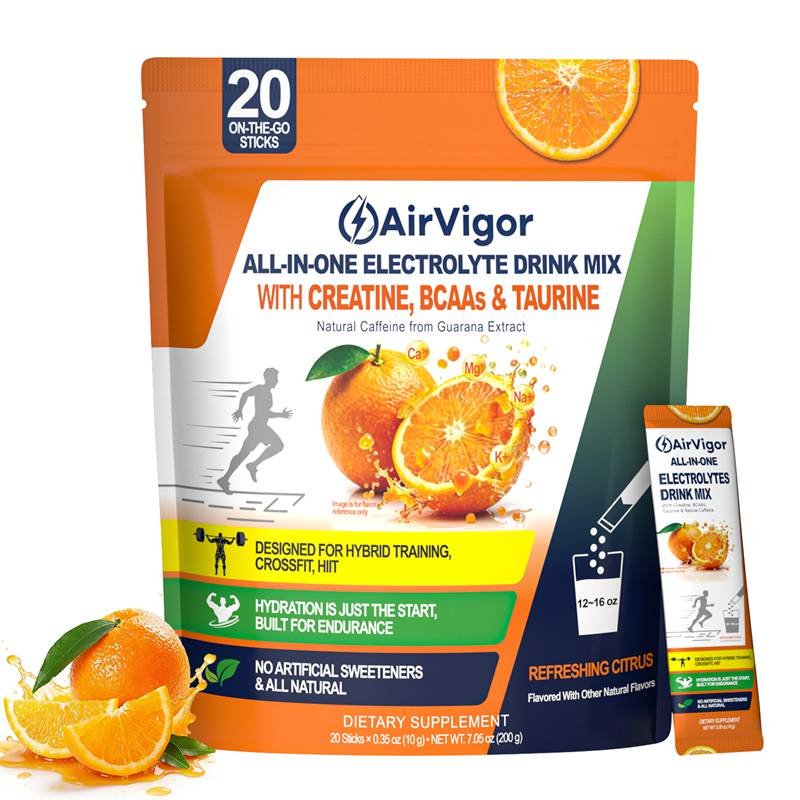
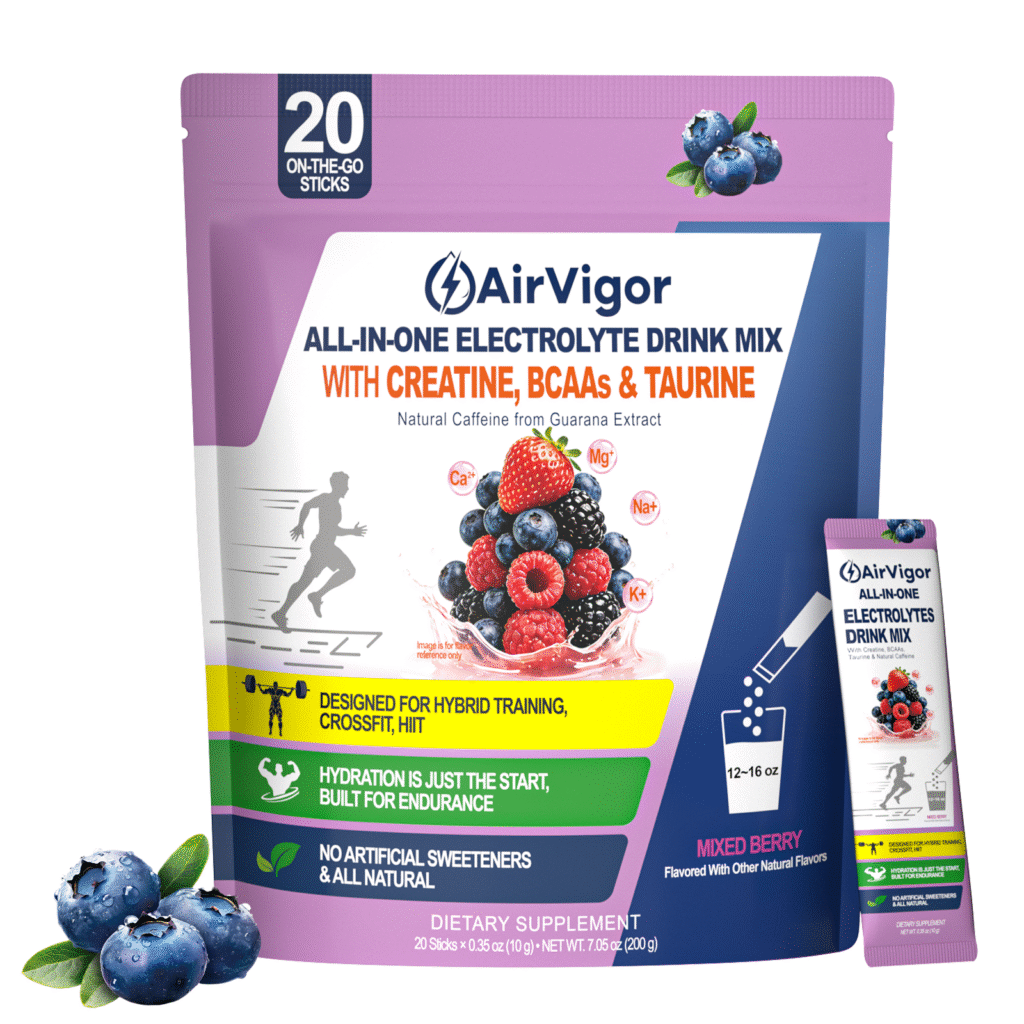
From a product design perspective, this is exactly why formula balance matters. A drink that contains useful minerals but is still clean and repeatable often wins over customers faster than a formula that feels too sugary or too aggressive. This is also where recovery-oriented products such as AirVigor’s broader electrolyte formulas can make sense: they are not just trying to make water taste different, they are trying to make recovery after fluid loss feel more complete.
| What the drink provides | What the user often feels | Best fit |
|---|---|---|
| Plain water | Basic thirst relief | Normal daily hydration |
| Water + electrolytes | More complete rehydration feel | Sweat, heat, activity, recovery |
| Water + electrolytes + higher sugar | Stronger sports-drink feel | Longer activity or higher exertion |
This comparison helps because many customers are not asking whether electrolyte powder is “good” in theory. They are trying to understand why one drink feels enough on a normal day, and another feels better after physical stress.
How Does Electrolyte Powder Work After Sweating?
After sweating, electrolyte powder works by helping replace both water and minerals lost through sweat. It becomes more useful as sweat loss increases, especially in heat, longer workouts, and repeated physical activity, because the body is no longer losing fluid alone.
How does electrolyte powder replace sweat loss?
Sweat is not just water leaving the body. It also carries minerals out with it. Mayo Clinic Sports Medicine notes that when you sweat, the body loses fluid along with electrolytes such as sodium and chloride. That is one of the clearest reasons electrolyte powder exists in the first place.
This matters because many people still think the post-sweat question is just “How much water should I drink?” In reality, the more useful question is:
- How much fluid did I lose?
- How much mineral support do I probably need back?
- Was this light sweating or meaningful sweat loss?
Once sweating becomes heavier, longer, or more frequent, plain water can start to feel incomplete. That does not mean water stops mattering. It means the body may now benefit from water plus minerals instead of water alone.
This is also why the same product does not fit every situation. A person finishing a short indoor workout may need very little beyond water. A person doing a long run in summer heat may need a much stronger hydration response. The formula has to match the level of loss.
Why does electrolyte powder help after heat or workouts?
Heat and workouts often increase hydration strain in the same way: they raise sweating and push fluid loss higher. MD Anderson specifically lists prolonged exercise, heavy sweating, and long exposure to extreme heat as situations when electrolyte beverages may help. Cleveland Clinic makes a similar point by noting that electrolyte drinks can help the body rehydrate and recover after a tough workout or illness.
Customers usually do not describe this as “electrolyte depletion.” They describe it more simply:
- “I feel drained after the heat.”
- “Water helps, but not enough after training.”
- “I recover more slowly when I sweat a lot.”
- “My body feels flat after long outdoor days.”
That language is useful because it reflects what people are actually trying to solve. They want to feel steadier after physical stress. That is why electrolyte powder often feels more valuable after heat or workouts than it does during a normal desk day.
This is also where broader formulas can become more attractive. A product that combines sodium, potassium, magnesium, calcium, and chloride often gives a stronger “recovery support” impression than one built around only one or two minerals. That wider support story is part of what makes recovery-oriented formulas easier to trust.
When does electrolyte powder work better than water?
Electrolyte powder generally works better than water when the body has lost both fluid and minerals in a meaningful way. The easiest situations to remember are:
- long workouts
- repeated sweating
- high heat exposure
- travel days with poor hydration
- stomach illness with fluid loss
MD Anderson and the Cleveland Clinic both support this situational view, rather than treating electrolyte drinks as something everyone needs constantly. That is important because the category gets oversimplified in both directions. Some brands make it sound like everyone should drink electrolytes all day. Other people dismiss them as unnecessary for anyone except elite athletes. Neither view is very helpful.
The more honest answer is this:
- water is enough for many normal situations
- electrolyte powder is better when sweating, heat, or illness changes the hydration problem
That is a much more useful framework for customers, because it tells them when the product matters instead of just telling them the product is great.
| Situation | Water only | Electrolyte powder |
|---|---|---|
| Normal office day | Usually enough | Often unnecessary |
| Short light activity | Often enough | Sometimes optional |
| Long workout or heavy sweating | May feel incomplete | Often more useful |
| High heat exposure | May not fully restore balance | Often more supportive |
| Illness-related fluid loss | Helpful but limited | More structured support may help |
This table gives readers something practical to act on. The point is not that electrolyte powder wins every time. The point is that it becomes a better tool when the body is dealing with more than thirst alone.
What customers usually notice after sweat loss
After sweating, customers often do not think in terms of sodium, chloride, or potassium levels. They think in terms of how they feel. Common descriptions include:
- still thirsty after drinking water
- feeling heavy or depleted
- slower recovery than expected
- less comfort after time in the heat
- needing something more “effective” than plain water
That is exactly why situational hydration products are growing so quickly. People want a response that fits what their body is actually going through. A good electrolyte powder does that by connecting fluid intake with mineral replacement in a format that is easier to use than building the whole solution manually.
This is also where well-positioned products can stand out more naturally. A formula like AirVigor’s can speak not just to hydration, but to post-sweat recovery, daily active use, and broader mineral support. That is a stronger and more believable message than simply saying “drink this for hydration.”

How Does Electrolyte Powder Support Muscles?
Electrolyte powder supports muscles by helping maintain the mineral balance needed for normal muscle contraction, relaxation, and nerve signaling. That is why it often feels more useful after sweating, training, heat exposure, or long physical days, when plain water may replace fluid but not fully support how the body feels afterward.
How does electrolyte powder support muscle function?
Most people first think of electrolyte powder as a hydration product. But in real life, many customers reach for it because they are trying to solve a muscle-related problem.
They may be dealing with:
- heavy legs after a workout
- muscle tightness in hot weather
- a drained feeling after sweating
- reduced comfort during recovery
- that “flat” feeling when plain water does not seem to help enough
This is where electrolyte powder becomes more interesting.
Muscles do not work with water alone. They rely on mineral balance. When a person sweats, they do not lose only fluid. They also lose part of the mineral system that supports how muscles and nerves work together. That is why rehydration sometimes feels incomplete if it only focuses on water volume.
From a customer’s point of view, the value of electrolyte powder is not that it “builds muscle.” That is not its job. Its value is that it helps support the body conditions that make movement, exercise, and recovery feel smoother.
A better way to explain it is this:
- water helps restore fluid
- electrolytes help support the system that uses that fluid well
- a broader mineral profile often makes recovery feel more complete
This is especially important in settings such as:
- workouts in hot environments
- repeated sweating during the week
- hiking or outdoor sports
- physically demanding work
- long days with poor hydration habits
That is also why customers often say a good electrolyte powder feels like more than hydration. What they usually mean is that the product seems to help them feel steadier, less depleted, and more functional after physical strain.
Why can electrolyte powder help with cramps or fatigue?
This is one of the biggest reasons people start searching for electrolyte powder in the first place.
They may not search for “mineral balance.”
They search for:
- muscle cramps
- heat fatigue
- post-workout heaviness
- slower recovery
- tired legs
- feeling wiped out after sweating
That matters because it shows what customers are really trying to solve.
Electrolyte powder can help in these situations when fluid loss and mineral loss are part of the problem. It is not a cure-all, and not every cramp comes from electrolyte imbalance. But when sweating, heat, or repeated exertion are clearly involved, a well-designed electrolyte formula often feels more useful than plain water alone.
This is where a balanced explanation is important.
A weaker explanation sounds like this:
“Electrolytes stop cramps.”
A better explanation sounds like this:
“Electrolyte powder can support better rehydration and mineral balance in situations where sweat loss may be contributing to fatigue, tightness, or reduced comfort.”
That second version is more believable, and customers trust it more.
In practice, people often notice the value of electrolyte powder when:
- they sweat a lot and recover poorly with water alone
- they feel more drained in the heat than expected
- they want fewer post-workout recovery dips
- they need more support without switching to a heavy sugary sports drink
This is one reason recovery-focused electrolyte powders feel so appealing. Customers are often not just thirsty. They are trying to feel more normal again. A broader electrolyte formula can help make that transition smoother.
Which minerals in electrolyte powder matter most?
Customers usually know sodium is important, but the strongest formulas often go beyond sodium alone.
Here is a simple way to understand the main minerals:
| Mineral | Why It Matters | What Customers Often Associate It With |
|---|---|---|
| Sodium | Supports fluid balance after sweating | Rehydration strength |
| Potassium | Supports broader electrolyte balance | Feeling more steady |
| Magnesium | Supports muscle and nerve-related balance | Less tightness, better recovery feel |
| Calcium | Adds broader mineral support | More complete formula impression |
| Chloride | Works with sodium in fluid balance | Stronger hydration structure |
This table helps because many customers do not want a scientific lecture. They want to know why one formula feels more complete than another.
A sodium-heavy product may work well when sweat loss is the main issue. But a broader formula with potassium, magnesium, calcium, and chloride often feels more recovery-oriented.
That difference matters a lot in customer decision-making.
A basic formula may feel like:
- hydration first
- functional but narrow
- more suitable for intense sweat replacement only
A broader formula may feel like:
- hydration plus support
- more balanced
- more useful after the activity
- easier to justify for daily active use
This is exactly why wider mineral profiles often create a stronger premium impression. Customers may not say “I want a five-electrolyte system,” but they do respond to formulas that feel more complete and more thoughtfully built.
That is also where products like AirVigor’s electrolyte powder can naturally stand out. A broader mineral structure gives the product a stronger role: not just helping after sweat, but supporting a more complete recovery experience.
Is Electrolyte Powder Better Than Water?
Electrolyte powder is not always better than water. Water is still enough for many normal daily hydration needs. Electrolyte powder becomes the better choice when sweating, heat, travel, or illness creates a situation where the body has lost both fluid and minerals, not just fluid alone.
Is electrolyte powder better than water for daily hydration?
For normal daily hydration, water is usually still the starting point.
That is important to say clearly because many customers now see electrolyte powder everywhere and start wondering whether plain water is somehow “not enough.” In most ordinary situations, it is enough.
If someone is:
- sitting most of the day indoors
- doing light activity
- not sweating much
- eating and drinking normally
plain water often covers the need just fine.
So why does electrolyte powder sometimes feel better?
Because daily life is not always ordinary.
Some people live in hot climates.
Some people sweat easily.
Some people travel often.
Some people work long hours and forget to hydrate.
Some people are active almost every day and want support that feels more complete than plain water.
That is where the answer changes.
For those users, electrolyte powder may feel better not because water is “bad,” but because their routine creates more strain than basic hydration alone can address.
A simple way to compare it looks like this:
| Situation | Water | Electrolyte Powder |
|---|---|---|
| Normal desk day | Usually enough | Often optional |
| Light daily movement | Often enough | Sometimes helpful |
| Hot weather or repeated sweating | May feel incomplete | Often more useful |
| Post-workout recovery | Sometimes enough | Often feels more complete |
| Travel fatigue or dehydration | Helpful | May feel more supportive |
This is one reason the category keeps growing. People are not replacing water. They are looking for something that fills the gap between plain water and a full sports drink.
When is water enough without electrolyte powder?
Water is enough in many situations, and saying that clearly actually improves trust.
Customers appreciate brands more when they do not pretend that a product is necessary for every moment.
Water is usually enough when:
- sweat loss is low
- activity is short and light
- weather is mild
- fluid intake has been regular
- there is no major strain from illness, heat, or physical output
This matters because overuse can create confusion. Some people begin using electrolyte powder constantly, even when the body does not really need that level of support. Then they stop noticing a meaningful difference.
The smarter framework is this:
Use water as the base. Use electrolyte powder when the day creates a reason for more support.
That reason may be:
- a hard workout
- heavy sweating
- summer heat
- an outdoor event
- travel dehydration
- stomach illness
- repeated physical activity over several hours
This kind of explanation gives customers a practical decision tool. It helps them stop thinking of electrolyte powder as either essential for everyone or pointless for everyone.
It is neither.
It is situational.
And that is exactly why it works so well in the right context.
When is electrolyte powder the better choice?
Electrolyte powder becomes a better choice when the hydration problem includes more than thirst.
That usually means the body is dealing with:
- fluid loss
- mineral loss
- heat stress
- sweat-related fatigue
- recovery strain
- repeated physical output
This is why customers often feel the difference most in situations like:
- long runs in hot weather
- workouts with heavy sweating
- days spent outdoors
- flights and travel-heavy routines
- post-illness hydration
- physically demanding workdays
In these moments, plain water may help, but you still feel like it is missing something. Electrolyte powder often feels more supportive because it addresses a wider problem.
A helpful way to frame it is this:
- if the goal is ordinary hydration, water usually wins
- if the goal is rehydration after sweat or strain, electrolyte powder often makes more sense
That distinction is incredibly important for customer education.
It also explains why product positioning matters so much. A formula designed for recovery after sweating should not be sold the same way as a formula designed for casual sipping. The best product is the one that matches the real use case.
This is where AirVigor’s electrolyte powder can make more sense for certain customers. A broader mineral profile with a recovery-oriented structure naturally fits users who want:
- post-sweat support
- daily active hydration
- muscle-related mineral balance
- a cleaner alternative to very sugary sports drinks
That is a stronger position than simply saying “this hydrates better.” It gives the formula a more practical role in real life.
Why the better question is not “Which is best?”
A lot of customers ask:
Is electrolyte powder better than water?
But the better question is:
When is electrolyte powder better than water?
That small difference changes everything.
It shifts the conversation from hype to fit.
Instead of choosing the most aggressively marketed product, customers can ask:
- What kind of day did I have?
- How much did I sweat?
- Am I trying to rehydrate or just drink more?
- Do I want a light formula or a stronger recovery formula?
That is how better buying decisions happen.
The goal is not to prove that electrolyte powder beats water every time.
The goal is to understand when it solves a problem that water does not fully solve on its own.
And once customers understand that, the category becomes much easier to trust.
Who Should Use Electrolyte Powder?
Electrolyte powder is most useful for people whose daily routine includes enough sweating, heat, physical strain, or fluid loss that plain water may not always feel like enough. It is not only for athletes, and it is not something every person needs all day. The best use case is when hydration becomes more than a simple “drink more water” situation.
Who needs electrolyte powder most often?
The people who tend to benefit most are those who regularly lose fluid and minerals through sweating or physically demanding conditions.
That often includes:
- runners and cyclists
- gym users and fitness classes
- hikers and campers
- outdoor workers
- people living in hot climates
- frequent travelers
- festival goers
- people who sweat heavily during normal daily routines
- people recovering from stomach illness or temporary dehydration
This matters because many customers still think electrolyte powder belongs only in sports nutrition. In reality, the category has become much broader. A person does not need to be an endurance athlete to benefit from better rehydration support.
For example, someone can benefit from electrolyte powder after:
- spending several hours outdoors in summer
- walking all day while traveling
- working in a warm environment
- sweating through repeated workouts during the week
- feeling depleted after a long day when water alone seems too light
This is one reason the category keeps growing. The need is not just performance. It is also convenient, restorative, and feeling more restored after situations that drain the body more than usual.
A useful way to think about it is this:
Electrolyte powder is not just for people who train hard. It is for people whose day pulls more fluids and minerals out of them than normal.
Is electrolyte powder useful for non-athletes too?
Yes, very often.
In fact, many of the most practical use cases involve people who do not identify as athletes at all.
Some examples include:
- office workers who dehydrate easily in dry environments
- travelers dealing with flights, jet lag, and inconsistent hydration
- parents are constantly on the move
- people working in the heat or standing for long hours
- adults who simply feel more drained than plain water seems to solve after hot days
This is important because it changes how the category should be explained.
A weaker message says:
- “Electrolytes are for sports.”
A much stronger and more realistic message says:
- “Electrolytes are for situations where fluid loss and mineral loss matter.”
That second explanation is far more useful for customers because it matches real life.
A non-athlete may still need electrolyte support when:
- the weather is hot
- meals and hydration have been inconsistent
- physical output has been high
- recovery feels slower than expected
- they want a cleaner alternative to sugary sports drinks
This is also why lower-sugar and daily-use electrolyte powders are growing in popularity. They speak to people who want functional hydration without making the product feel like an intense training drink.
That kind of positioning is often easier to trust, because it reflects how most people actually live.
Which daily situations make electrolyte powder more helpful?
Customers usually understand electrolyte powder best when it is linked to daily situations they already know.
The most common ones include:
- after workouts with noticeable sweating
- after time in extreme heat
- during or after long outdoor activities
- on travel days with poor hydration
- during physically demanding work
- after stomach illness or fluid loss
- when plain water seems to help, but not enough
These are all moments when the body may be dealing with more than ordinary thirst.
That distinction matters because one of the biggest mistakes customers make is using electrolyte powder without asking what problem they are trying to solve.
A better decision framework looks like this:
| Situation | Is Water Often Enough? | Is Electrolyte Powder Often More Helpful? |
|---|---|---|
| Normal indoor day | Yes | Usually optional |
| Short light activity | Usually yes | Sometimes helpful |
| Long workout with heavy sweat | Sometimes not | Often yes |
| Hot weather exposure | Sometimes not | Often yes |
| Travel dehydration | Sometimes not | Often yes |
| Illness-related fluid loss | Limited | More useful in many cases |
This kind of table helps because it shifts the conversation away from hype and toward fit.
Customers do not need electrolyte powder just because it is trending.
They need it when their day has created a real reason for it.
That is the most practical way to explain the category.

What Should You Look For in Electrolyte Powder?
The best electrolyte powder is not simply the one with the most ingredients or the biggest marketing claims. A better formula is usually the one that matches the customer’s real needs in terms of mineral balance, sugar level, drinkability, and repeat use. In other words, a good product should make sense both on the label and in daily life.
What makes electrolyte powder feel more complete?
A more complete electrolyte powder usually combines:
- a meaningful sodium level
- supportive minerals such as potassium and magnesium
- sometimes calcium and chloride for a broader mineral balance
- a taste profile that is easy to repeat
- a formula that clearly fits a specific use case
That last point is especially important.
Customers often trust a product more when they can quickly understand what it is for:
- heavy sweating
- workout recovery
- hot weather hydration
- travel support
- daily active use
A formula feels incomplete when it is missing obvious logic.
For example:
- too little sodium for a sweat-focused product
- too much sugar for a daily-use formula
- strong hydration claims with a weak mineral profile
- a heavy flavor system that makes repeat use difficult
By contrast, a more complete formula feels balanced.
Here is a simple comparison:
| Formula Style | What It Often Feels Like |
|---|---|
| Basic sodium-focused mix | Functional but narrow |
| Sodium + potassium + magnesium | More balanced |
| Five-electrolyte formula | More complete and premium |
| Five-electrolyte + clean taste profile | More repeatable and practical |
This is one reason broader formulas often create a better first impression. Customers may not know every mineral in detail, but they do notice when a formula feels more thoughtfully built.
Which electrolyte powder works best for recovery?
The best recovery-focused electrolyte powder usually does more than simply replace what was lost during sweat. It also fits the way people actually recover.
After sweating, customers often want a product that feels:
- more complete than plain water
- less sugary than a sports drink
- supportive without being too heavy
- easy to drink even when tired or overheated
That is why recovery positioning matters so much.
A recovery-focused product usually works better when it combines:
- enough sodium to feel effective
- potassium and magnesium for a more balanced feel
- a broader mineral structure for post-sweat support
- a taste profile that stays drinkable after exertion
For many people, recovery is not only about what happened during the activity. It is about how they feel in the next hour or the next day.
This is one reason broader formulas often stand out in the market. They help the product feel less like a one-dimensional sports formula and more like something designed for:
- recovery after sweating
- muscle-related mineral support
- daily active lifestyles
- repeated use across different situations
Here is a practical comparison:
| Product Type | What It Feels Best For |
|---|---|
| Plain water | Basic hydration |
| Sports drink | Energy + hydration during longer activity |
| Basic electrolyte powder | Simple sweat replacement |
| Recovery-focused electrolyte powder | Hydration plus broader post-sweat support |
That last category is where many customers now see more value, because it feels more aligned with modern routines.
How can AirVigor electrolyte powder fit daily support?
This is where product structure becomes especially important.
A daily-support electrolyte powder has to do something difficult:
- feel useful enough to matter
- feel light enough to repeat
- feel complete without becoming too heavy or too sugary
That balance is what separates a product people try once from one they keep using.
AirVigor’s electrolyte powder approach fits well here because the formula direction is broader than a very basic hydration mix. Instead of focusing only on one or two electrolytes, it is designed around a wider mineral structure that supports a stronger recovery story.
For customers, that means the product can feel relevant in more situations, such as:
- after workouts
- after sweating in the heat
- during travel
- during busy, active days
- when hydration support needs to feel more complete than plain water
This kind of product is easier to position because it is not limited to one narrow moment. It can speak to recovery, daily use, and active lifestyle support at the same time.
For business clients, that creates a stronger OEM / ODM opportunity as well. A better formula is easier to build into a marketable product when the logic is clear:
- hydration
- broader electrolyte balance
- recovery support
- cleaner daily usability
That kind of structure gives the formula more commercial value because it feels easier to explain and easier to trust.
What should customers check first on the label?
Most customers start with flavor and price, but the smarter reading order is usually:
- Sodium level — does it match the sweat or heat situation?
- Broader electrolyte profile — are potassium, magnesium, calcium, and chloride included?
- Sugar level — is it a daily-use formula or more of a sports-style product?
- Sweetener system — will the taste work for repeated use?
- Use case — is it clearly built for workouts, heat, travel, or everyday support?
- Overall balance — does the formula feel coherent or just crowded?
A simple buying checklist looks like this:
| What to Check | Why It Matters |
|---|---|
| Sodium level | Shows rehydration strength |
| Potassium and magnesium | Improves support feel |
| Calcium and chloride | Adds broader formula depth |
| Sugar content | Helps match product to daily vs performance use |
| Flavor system | Strongly affects repeat purchase |
| Intended use | Prevents mismatched buying decisions |
This matters because many products sound good on the front label, but only some make sense once the full formula is reviewed.
A better product is rarely the loudest one.
It is usually the one that fits daily life best.
Final Thoughts
Electrolyte powder works because it helps the body deal with situations where hydration is no longer only about water. Once sweat, heat, travel, or illness increase fluid loss and mineral loss, a drink with the right electrolyte balance can feel much more supportive than plain water alone.
That does not mean electrolyte powder replaces water.
It means it becomes more useful when the body needs more than water.
This is the key idea customers should remember:
- water is still the everyday base
- electrolyte powder becomes more relevant when hydration stress rises
- the best formula is the one that matches the situation
That is why product design matters so much.
A better electrolyte powder should feel:
- functional
- balanced
- easy to repeat
- suitable for real routines
This is also where products like AirVigor’s electrolyte powder fit naturally. A broader mineral profile and a more recovery-oriented structure make the product feel more complete for customers who want support after sweating, during heat, through travel, and across active daily life.
Looking to Source a Better Electrolyte Powder or Build Your Own?
If you are looking for:
- a more complete recovery-focused electrolyte powder
- a cleaner daily hydration formula
- a broader electrolyte system
- a sugar-free or lower-sugar option
- an OEM / ODM partner for custom electrolyte development
AirVigor can support both:
- finished branded products
- private label and custom formulation projects
Whether your goal is a daily hydration product, a workout recovery formula, or a more complete electrolyte powder designed around real customer needs, AirVigor offers a practical starting point for both product sourcing and new formula development.
Share:
Contact Expert Team
At AirVigor, performance becomes effortless. We transform advanced nutrition science into clean, effective supplements that help you hydrate, recover, and feel stronger every day. Shop AirVigor Supplements on Amazon and experience athlete-trusted formulas—backed by real science and supported by our world-class R&D and production capabilities.
Trust AirVigor
At AirVigor, turning your performance goals into reality is no longer a struggle—it’s a science-driven journey we build together. Whether you’re a runner, lifter, cyclist, yogi, outdoor athlete, or someone simply seeking better daily energy, AirVigor transforms advanced nutrition research into clean, effective, and trustworthy supplements you can feel.
Backed by our U.S. scientific team, global certifications, and world-class production standards, every formula is engineered to deliver real hydration, real recovery, and real performance. And when you’re ready to experience the difference, you’ll find AirVigor products available on Amazon and other major platforms—fast shipping, consistent quality, and a community of athletes already seeing results.
Behind the scenes, our R&D and manufacturing ecosystem also supports specialized formulation development, ensuring AirVigor continues to lead with innovation while keeping quality and safety uncompromised. But at the core, everything we create is built for you—your health, your performance, your momentum.
Choose AirVigor. Feel the science. Elevate your every day.


Subscribe to our newsletter
Sign up to our newsletter and we’ll keep you up to date with the latest arrivals.