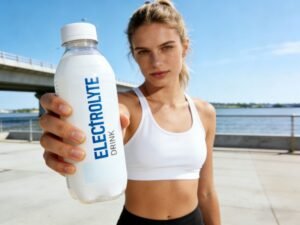
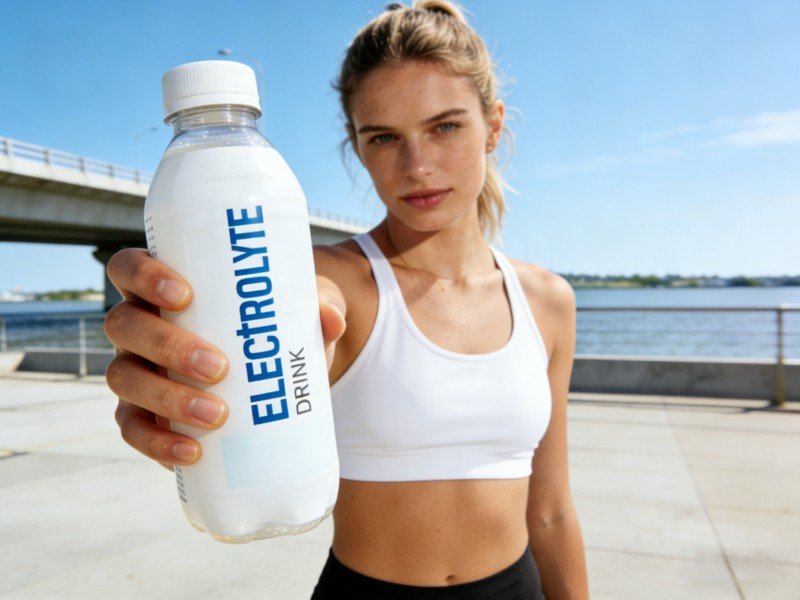
Hydration advice often sounds deceptively simple: drink more water. Yet for many active and health-conscious people, that advice quietly fails. You may start a workout feeling fine, only to lose energy halfway through, or hydrate carefully after training and still wake up sore, sluggish, or light-headed the next day. For others, long workdays, heat exposure, frequent travel, or sustained stress seem to drain energy no matter how much water they drink. In these cases, the issue isn’t just fluid intake—it’s the balance between water and electrolytes, the minerals that regulate hydration efficiency, muscle function, and recovery.
Most active adults can safely consume one electrolyte drink per day, and up to two on high-sweat or intense training days. Daily use makes sense if you train frequently, sweat regularly, or live in hot environments. Problems usually occur only when intake exceeds actual electrolyte loss, especially with high-sodium or high-sugar formulas. Smart hydration depends on balance, formulation, and context—not frequency alone.
Understanding why this guideline works—and when it doesn’t—is what separates intentional hydration from guesswork. Let’s break it down properly.
What Are Electrolyte Drinks?
Electrolyte drinks are hydration beverages formulated with minerals such as sodium, potassium, magnesium, calcium, and chloride. These electrolytes help regulate fluid balance, muscle contraction, nerve signaling, and energy stability. Unlike plain water, electrolyte drinks replace minerals lost through sweat, making hydration more effective during exercise, heat exposure, illness, or prolonged physical and mental stress.
What defines an electrolyte drink
At a basic level, electrolyte drinks are designed to solve a problem that water alone cannot:
mineral depletion caused by sweat and stress.
When you sweat, your body does not lose water evenly. It loses electrically charged minerals in a predictable order:
- Sodium and chloride are lost first and in the largest amounts
- Potassium follows, affecting muscle and nerve signaling
- Magnesium and calcium are lost more slowly but are critical for recovery
An electrolyte drink is defined not by flavor or branding, but by its ability to replace these minerals in usable amounts. If a beverage contains only trace electrolytes or relies mostly on sugar for “energy,” it functions more like flavored water than true electrolyte support.
This distinction is crucial for users who rely on electrolyte drinks for recovery, endurance, or daily hydration consistency.
How electrolytes support hydration at the cellular level
Hydration is not just about how much fluid you drink — it’s about where that fluid goes.
Electrolytes help:
- Pull water from the digestive tract into the bloodstream
- Maintain proper blood volume during exertion
- Move fluid into muscle cells rather than flushing it out
- Stabilize nerve impulses that control muscle movement
Without adequate electrolytes, drinking large amounts of water can actually dilute blood sodium levels, leading to symptoms such as fatigue, weakness, or headaches — even when total fluid intake is high.
This is why people often say they feel “hydrated but not better.”
The issue is not water — it’s electrolyte balance.
Key electrolytes commonly found in electrolyte drinks
A well-formulated electrolyte drink typically includes the following minerals, each serving a distinct physiological role:
- Sodium – Regulates fluid retention, blood pressure, and nerve transmission
- Chloride – Works with sodium to maintain fluid and acid–base balance
- Potassium – Supports muscle contraction, heart rhythm, and nerve signaling
- Magnesium – Promotes muscle relaxation, energy metabolism, and a calm nervous system
- Calcium – Required for muscle contraction and cellular communication
Some modern recovery-focused formulas also include vitamin D3 and K2, which help improve calcium and magnesium absorption and support long-term musculoskeletal and immune health, designed for regular use rather than one-off performance spikes.
Electrolyte drinks vs plain water
| Dimension | Plain Water | Electrolyte Drinks |
|---|---|---|
| Primary Function | Replaces fluid volume | Replaces fluid and lost minerals |
| Electrolyte Content | None | Sodium, potassium, magnesium, calcium, chloride |
| Hydration Efficiency | Effective only when electrolyte loss is minimal | More efficient when sweating or under physical stress |
| Fluid Retention | Lower (fluid may be excreted quickly) | Higher (electrolytes help retain and distribute water) |
| Muscle Function Support | Indirect | Directly supports muscle contraction & relaxation |
| Nerve Signal Stability | Limited | Supports stable nerve transmission |
| Best Use Scenarios | Short, low-intensity activity; cool environments | Exercise, heat exposure, heavy sweating, long workdays |
| Recovery Support | Minimal | Helps reduce fatigue and next-day soreness |
| Risk When Overused | Can dilute electrolytes if consumed excessively | Discomfort if intake exceeds sweat loss |
| Daily Use Suitability | Yes, universally | Yes, when matched to activity and sweat loss |
Why electrolyte drinks are not just for athletes
Although electrolyte drinks are often marketed to athletes, electrolyte loss is not limited to sports.
Electrolyte depletion can occur during:
- Outdoor work or travel in hot climates
- Long workdays with low fluid intake
- High mental stress combined with dehydration
- Illness involving fever, vomiting, or diarrhea
For these situations, electrolyte drinks serve as a functional hydration tool, not a performance enhancer.
This is why most brands design electrolyte products that are low in sugar, moderate in sodium, and suitable for daily use, making them accessible to both active individuals and everyday users who simply want hydration that actually works.
Electrolyte drinks are not just flavored hydration products. They are functional mineral delivery systems designed to help your body absorb, distribute, and retain fluids efficiently.
Understanding what electrolyte drinks are — and what they are not — is the foundation for answering more practical questions, such as how many you need per day, whether daily use is appropriate, and how to choose between drinks and powders.
How Many Electrolyte Drinks Are Enough for Active Individuals?
For most active individuals, 1 electrolyte drink per day is sufficient to support hydration and recovery. On days involving heavy sweating, intense training, long-duration exercise, or hot environments, intake may increase to 2 servings per day. Consuming more without corresponding electrolyte loss can lead to discomfort or imbalance. The ideal amount depends on sweat rate, activity duration, and climate—not habit alone.
Why activity level—not frequency—determines electrolyte needs
One of the most common mistakes people make is assuming electrolyte intake should be routine-based (“I drink one every day, no matter what”). In reality, electrolyte needs are loss-based, not schedule-based.
Electrolytes are primarily lost through:
- Sweat
- Prolonged physical exertion
- Heat exposure
- Extended periods of dehydration
If your activity causes minimal sweating—such as light stretching, casual walking, or short workouts in cool environments—plain water may be sufficient. In these cases, adding electrolytes daily may provide little benefit.
However, for individuals who:
- Train moderately to hard most days
- Sweat visibly or heavily
- Exercise longer than 45–60 minutes
- Perform physical work or outdoor activity
Electrolyte replenishment becomes necessary to maintain fluid balance, muscle function, and energy stability.
This is why most active individuals fall into the 1 serving per day range, with flexibility on higher-demand days.
Practical intake guidelines based on real-world activity
Rather than a single rule, it’s more helpful to think in tiers:
| Activity & Conditions | Suggested Intake |
|---|---|
| Light exercise, little sweat | Water or occasional electrolytes |
| Regular training (3–5×/week) | 1 electrolyte drink/day |
| Intense or endurance sessions | 1–2 electrolyte drinks/day |
| Hot, humid, or outdoor work | Up to 2/day, spaced |
| Multiple training sessions | 1 per session (as needed) |
These ranges work because they align intake with electrolyte depletion, not marketing-driven recommendations.
Recovery-focused formulations of electrolyte powders are intentionally designed for this type of flexible use—moderate sodium, full-spectrum minerals, and low sugar—making them suitable for both daily hydration and higher-demand days.
What happens if you drink too many electrolyte drinks
Electrolytes are essential—but more is not always better.
Excess intake, especially when not sweating heavily, may result in what people describe as “electrolyte overload.” While rarely dangerous in healthy individuals, it can feel uncomfortable.
Common signs include:
- Persistent thirst despite drinking fluids
- Bloating or water retention
- Headaches unrelated to exertion
- Mild nausea or stomach heaviness
- Feeling “salty” or overly dry
These symptoms are most often linked to:
- Multiple servings in low-activity days
- Very high-sodium formulas
- Combining electrolyte drinks with salty diets
The solution is not avoidance, but appropriate dosing and choosing balanced formulas rather than aggressive, competition-only products.
Why formulation matters as much as quantity
Two electrolyte drinks are not the same—even if the label says “electrolytes.”
Key differences that affect how many servings you can comfortably consume include:
- Sodium concentration per serving
- Presence of magnesium and calcium (often underdosed)
- Added sugars or stimulants
- Mineral bioavailability (citrate vs oxide forms)
Products designed for daily or recovery use, electrolyte blends, typically:
- Use moderate sodium levels
- Include magnesium for muscle relaxation
- Avoid excessive sugar
- Support absorption rather than quick spikes
This allows active individuals to use electrolytes consistently without overloading the system.
Listening to your body’s feedback signals
Beyond guidelines, your body often tells you whether your intake is appropriate.
You may need more electrolytes if you notice:
- Early fatigue during workouts
- Frequent muscle cramps or tightness
- Headaches after sweating
- Poor recovery despite adequate sleep
You may need less if you experience:
- Bloating or puffiness
- Thirst that doesn’t resolve
- Digestive discomfort on rest days
Electrolyte intake should adapt to your activity, not remain static.
For active individuals, electrolyte drinks are most effective when used strategically, not habitually.
- 1 serving per day suits most regular training routines
- Up to 2 servings may be appropriate on high-sweat or intense days
- More than that rarely adds benefit unless electrolyte loss is extreme
The goal is not maximum intake—it’s optimal balance. When electrolyte intake matches real physiological demand, hydration improves, recovery accelerates, and fatigue becomes easier to manage.
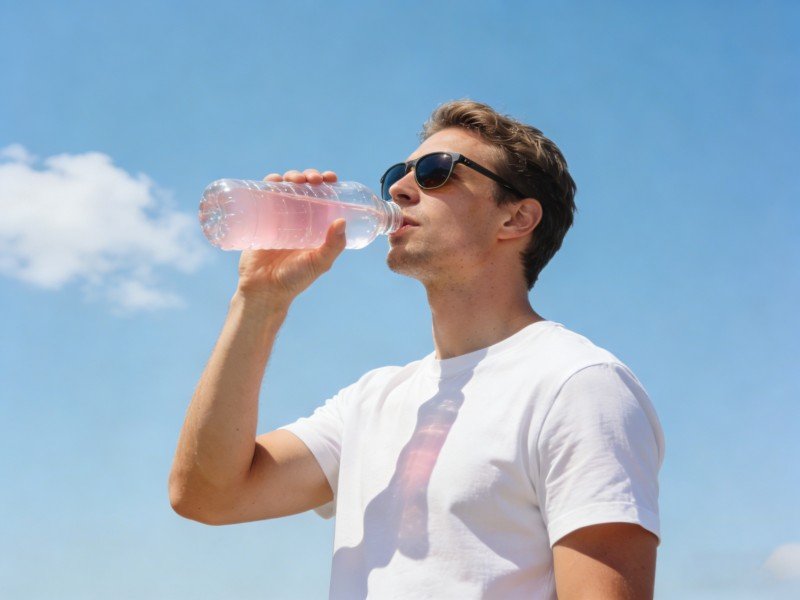
Which Factors Determine the Need for Electrolyte Drinks?
The need for electrolyte drinks depends on sweat rate, activity duration, climate, diet, body size, and overall physical stress. People who sweat heavily, exercise longer than 60 minutes, train frequently, live in hot environments, or follow low-carb diets typically require more electrolytes than sedentary individuals. Electrolyte needs vary day to day and should be adjusted based on actual mineral loss, not fixed routines.
Sweat rate is the primary driver of electrolyte loss
Among all variables, sweat rate is the most important factor determining electrolyte needs.
When you sweat, you lose:
- Sodium and chloride in the greatest quantities
- Smaller but meaningful amounts of potassium, magnesium, and calcium
Two people doing the same workout can lose dramatically different amounts of electrolytes. Genetics, body size, acclimatization to heat, and training history all influence how much and how salty your sweat is.
Signs that sweat rate may be driving higher electrolyte needs include:
- Visible salt residue on skin or clothing
- Heavy sweating early in workouts
- Rapid fatigue or cramping in warm conditions
For high-sweat individuals, relying on water alone often leads to diluted hydration and poor recovery. In these cases, electrolyte drinks or powders are not optional — they are foundational.
Activity duration and training frequency
Electrolyte depletion is not only about intensity — time under stress matters.
- Workouts longer than 45–60 minutes
- Multiple training sessions in one day
- Consecutive training days with limited recovery
all increase cumulative mineral loss.
Even moderate exercise, when repeated frequently, can create a slow but persistent electrolyte deficit. This is why many active individuals feel progressively more fatigued over a training week, despite adequate calories and sleep.
Climate, temperature, and humidity
Environmental conditions strongly affect electrolyte requirements.
Hot or humid environments:
- Increase sweat volume
- Accelerate sodium and chloride loss
- Reduce the effectiveness of plain water hydration
This applies not only to outdoor athletes, but also to:
- Outdoor workers
- Travelers in warm climates
- Indoor training in poorly ventilated spaces
In these situations, electrolyte drinks help stabilize hydration and reduce heat-related fatigue, dizziness, and performance drop-off.
Diet and metabolic context
Your diet significantly influences electrolyte balance.
People following:
- Low-carbohydrate or ketogenic diets
- Diets low in processed foods
- High-protein or calorie-restricted plans
often excrete more sodium and water through urine. This can lead to symptoms such as:
- Low energy
- Headaches
- Muscle tightness
- Light-headedness
In these cases, daily electrolyte supplementation often improves overall well-being, even without intense exercise. This is one reason electrolyte drinks are increasingly used for daily hydration support, not just sports performance.
Body size, age, and recovery capacity
Larger individuals generally lose more total fluid and electrolytes simply due to greater body surface area and sweat volume.
Age also plays a role:
- As people get older, recovery efficiency declines
- Magnesium and potassium needs may become more noticeable
- Muscle relaxation and sleep quality become more sensitive to mineral balance
For these populations, electrolyte drinks can support recovery quality, not just hydration quantity.
Overall physical and mental stress
Electrolyte loss is not limited to physical exercise.
High mental stress, long work hours, poor sleep, and dehydration can all disrupt fluid and mineral balance. Stress hormones influence kidney function and fluid excretion, increasing the likelihood of subtle electrolyte depletion.
This is why some people experience benefits from electrolyte drinks during:
- Long workdays
- Travel and jet lag
- High cognitive demand
In these cases, the benefit comes not from stimulation but from restoring physiological balance.
Electrolyte needs are dynamic, not fixed.
They are shaped by:
- How much do you sweat
- How long and how often you are active
- Where you live and train
- What and how you eat
- How well your body recovers
Understanding these factors allows you to use electrolyte drinks intelligently, adjusting intake based on real demand rather than habit. When electrolyte replenishment matches actual loss, hydration becomes more efficient, recovery improves, and fatigue becomes easier to manage.

How Do Electrolyte Drinks Help With Muscle Recovery and Fatigue?
Electrolyte drinks support muscle recovery and reduce fatigue by restoring minerals lost through sweat, especially sodium, potassium, magnesium, and calcium. These electrolytes regulate muscle contraction and relaxation, nerve signaling, fluid distribution, and cellular energy balance. When replenished properly, electrolyte drinks help reduce soreness, prevent cramping, stabilize energy levels, and allow the body to transition more efficiently from physical stress to recovery.
Muscle recovery depends on electrical signaling, not just hydration
Muscle recovery is often misunderstood as a purely mechanical process — muscle fibers tear, then rebuild. In reality, neuromuscular signaling plays an equally important role.
Every muscle contraction and relaxation cycle depends on an electrical impulse generated by electrolyte gradients across cell membranes. When electrolytes are depleted:
- Muscles may contract but struggle to fully relax
- Nerve signals become less precise
- Muscles remain in a semi-activated state
This is why soreness and stiffness can persist even when hydration and calories are adequate.
Electrolyte drinks restore the electrical environment muscles need to reset properly after exertion.
Sodium and potassium restore fluid balance and muscle responsiveness
Sodium and potassium work together to regulate fluid movement in and out of muscle cells.
After intense activity or heavy sweating:
- Sodium loss reduces blood volume and fluid retention
- Potassium imbalance disrupts muscle firing patterns
Electrolyte drinks help re-establish this balance, allowing:
- Water moves into the muscle tissue instead of being excreted
- Nutrients and oxygen to reach recovering muscles more efficiently
This improves the quality of recovery, not just the speed.
Magnesium reduces muscle tension and post-exercise fatigue
Magnesium is one of the most underappreciated recovery minerals.
It plays a key role in:
- Muscle relaxation after contraction
- ATP (energy) production
- Nervous system down-regulation
Low magnesium levels are commonly associated with:
- Muscle tightness
- Cramping
- Persistent fatigue
- Poor sleep quality after training
Recovery-focused electrolyte formulations, such as those developed by AirVigor, intentionally include magnesium in bioavailable forms to support relaxation and recovery, not just performance output.
Calcium supports the contraction–relaxation balance
Calcium is required for muscle contraction, but its role in recovery is often overlooked.
When calcium signaling is poorly regulated:
- Muscles may remain overly sensitive
- Coordination suffers
- Recovery feels incomplete
Balanced electrolyte drinks ensure calcium works in harmony with magnesium, supporting smooth contraction–relaxation cycles instead of stiffness or twitching.
Electrolytes reduce fatigue by stabilizing the nervous system
Post-exercise fatigue is not only muscular — it is also neurological.
Electrolyte depletion increases the stress load on the nervous system by:
- Disrupting nerve signal transmission
- Forcing the body to compensate for a fluid imbalance
- Increasing perceived effort for simple tasks
By restoring electrolyte balance, electrolyte drinks help the nervous system shift out of a heightened stress state, making fatigue feel lighter, shorter-lasting, and easier to recover from.
This is why many users report feeling “normal again” sooner after proper electrolyte replenishment — not stimulated, but stable.
Why electrolyte drinks improve next-day recovery
Next-Day Recovery: Mechanism-Based Comparison Table
| Recovery Factor | Without Electrolytes (Water Only) | With Electrolyte Drinks |
|---|---|---|
| Fluid Distribution Overnight | Water may be excreted quickly | Electrolytes help retain and distribute fluids |
| Muscle Relaxation After Training | Muscles may remain partially contracted | Magnesium supports full muscle relaxation |
| Nerve Signal Reset | Slower normalization of nerve firing | Electrolytes stabilize neuromuscular signaling |
| Risk of Night Cramps or Tightness | Higher, especially after heavy sweating | Reduced due to balanced mineral availability |
| Sleep Quality Impact | Possible restlessness or dehydration-related waking | More stable hydration supports deeper sleep |
| Morning Muscle Stiffness | More common, especially in legs and back | Reduced stiffness and easier morning mobility |
| Perceived Fatigue on Waking | Lingering heaviness or sluggishness | Faster return to baseline energy |
| DOMS (Delayed-Onset Muscle Soreness) | May feel more pronounced | Often milder or resolves sooner |
| Readiness for Next Training Session | Recovery may feel incomplete | Higher readiness and consistency |
When used appropriately, electrolyte drinks turn recovery from a passive waiting period into an active, supported process, allowing muscles and energy systems to reset more completely between sessions.
What Are the Benefits of Regularly Consuming Electrolyte Drinks?
Regularly consuming electrolyte drinks helps maintain efficient hydration, reduce cumulative fatigue, support muscle recovery, and stabilize energy levels in people who sweat or experience frequent physical or mental stress. When used appropriately, electrolytes prevent gradual mineral depletion, improve workout consistency, enhance recovery quality, and support overall physiological balance beyond what water alone can provide.
Preventing small electrolyte deficits from accumulating
One of the most overlooked aspects of hydration is that electrolyte loss is often subtle and cumulative, not sudden.
You don’t need to feel severely dehydrated to experience electrolyte depletion. Small daily losses from:
- Regular workouts
- Light but frequent sweating
- Warm indoor environments
- Long workdays with inconsistent hydration
can quietly add up over time.
Without regular replenishment, these minor deficits may lead to:
- Gradual energy decline
- Reduced exercise tolerance
- Lingering muscle tightness
- Slower recovery between sessions
Regular electrolyte consumption helps close these small gaps daily, preventing them from turning into noticeable performance or recovery issues.
Improving hydration efficiency, not just fluid intake
Drinking more water does not always result in better hydration.
Electrolytes improve hydration efficiency by:
- Helping the body absorb water from the digestive tract
- Retaining fluids in circulation and muscle tissue
- Preventing rapid fluid loss through urination
As a result, people who regularly use electrolyte drinks often notice:
- More stable hydration throughout the day
- Less bloating from excessive water intake
- Reduced thirst fluctuations
This is particularly beneficial for individuals who struggle to stay hydrated despite drinking large amounts of water.
Supporting consistent workout performance and training quality
An inconsistent electrolyte balance can make training feel unpredictable.
You may experience:
- Strong starts followed by early fatigue
- Variable endurance from session to session
- Difficulty maintaining intensity late in workouts
Regular electrolyte intake helps stabilize:
- Muscle contraction efficiency
- Nerve signal transmission
- Blood volume and oxygen delivery
This doesn’t necessarily make workouts “harder” — it makes them more repeatable, which is critical for long-term progress.
Reducing muscle soreness and recovery variability
Recovery is rarely identical from one day to the next. Variability in soreness and fatigue is often linked to inconsistent mineral replenishment.
Regular electrolyte use can:
- Reduce next-day stiffness
- Improve muscle relaxation post-exercise
- Support more predictable recovery timelines
Magnesium and potassium play a particularly important role here, helping muscles fully relax and restoring normal neuromuscular signaling after exertion.
The result is not the elimination of soreness, but less disruption to daily activity and training plans.
Stabilizing energy levels without stimulants or sugar
Unlike energy drinks or high-sugar sports beverages, electrolyte drinks do not rely on stimulants to create a perceived energy boost.
Instead, they support energy by:
- Maintaining fluid balance
- Supporting nerve and muscle efficiency
- Reducing physiological stress
This leads to:
- Fewer energy crashes
- More stable focus
- Better tolerance for physical and mental workloads
Low-sugar electrolyte powders are especially suitable for regular use because they avoid unnecessary calories while still supporting physiological balance.
Supporting daily function beyond exercise
The benefits of regular electrolyte consumption extend beyond workouts.
Many people report improvements during:
- Long workdays
- Travel or jet lag
- Heat exposure
- Periods of high cognitive demand
In these situations, electrolyte drinks act as a baseline support system, helping the body maintain equilibrium rather than pushing performance.
This makes them useful not only for athletes, but also for:
- Office workers
- Outdoor workers
- Frequent travelers
- Individuals managing high stress levels
Regularly consuming electrolyte drinks helps maintain hydration efficiency, recovery consistency, and energy stability — especially for people with active or demanding lifestyles.
Rather than treating electrolytes as an occasional fix, using them consistently and appropriately allows the body to:
- Recover more predictably
- Perform more consistently
- Handle physical and mental stress with less strain
When electrolyte intake matches real-world demand, hydration becomes a supportive daily habit, not a reactive solution.
How to Choose the Right Electrolyte Drink for Your Needs?
To choose the right electrolyte drink, look for a balanced electrolyte profile (sodium, potassium, magnesium, calcium), moderate sodium levels, low or no added sugar, and transparent labeling. The best option depends on how much you sweat, how often you’re active, and whether you need performance support or daily recovery. Recovery-focused formulas prioritize balance and absorption over sweetness or stimulants.
Start with electrolyte balance, not branding
Many electrolyte drinks market themselves aggressively, but branding does not determine effectiveness — formulation does.
A well-designed electrolyte drink should include:
- Sodium for fluid retention and hydration efficiency
- Potassium for muscle and nerve signaling
- Magnesium for muscle relaxation and fatigue reduction
- Calcium for contraction–relaxation balance
Products that emphasize only sodium or rely heavily on sugar often fail to support recovery and daily use. Balance across multiple electrolytes is what allows a drink to support hydration without creating new imbalances.
Choose sodium levels that match your sweat loss
Sodium is the most critical — and most misunderstood — electrolyte.
- Too little sodium → poor hydration efficiency
- Too much sodium → bloating, thirst, discomfort on rest days
For most active individuals:
- 200–500 mg of sodium per serving is effective for hydration and recovery
- Higher amounts are typically reserved for extreme endurance or heat exposure
If you train regularly but are not competing in ultra-endurance events, moderate sodium levels are safer and more sustainable for frequent use.
Don’t overlook magnesium and calcium
Many electrolyte drinks underdose magnesium and calcium due to cost, taste, or formulation challenges.
However:
- Magnesium supports muscle relaxation, nervous system recovery, and sleep quality
- Calcium supports muscle contraction and cellular signaling
A lack of these minerals often shows up as:
- Persistent muscle tightness
- Nighttime cramps
- Inconsistent recovery
Recovery-focused electrolyte powders, including those developed by AirVigor, intentionally include bioavailable forms of magnesium and calcium to support post-exercise recovery, not just hydration during activity.
Sugar is optional — and often unnecessary
Contrary to popular belief, most people do not need sugar in their electrolyte drinks.
Sugar may be useful during:
- High-intensity exercise lasting over 90 minutes
- Competitive endurance events require rapid carbohydrate replenishment
For daily hydration or recovery, however, excess sugar can:
- Add unnecessary calories
- Promote energy crashes
- Reduce suitability for regular use
Low-sugar or sugar-free electrolyte drinks are generally better suited for:
- Daily hydration
- Recovery after training
- Office workdays, travel, and heat exposure
This is why many consumers shift away from traditional sports drinks toward clean-label electrolyte powders.
Pay attention to ingredient transparency and forms
Not all mineral sources are absorbed equally.
Look for:
- Clearly listed electrolyte amounts (not “proprietary blends”)
- Bioavailable forms such as citrates or gluconates
- Minimal artificial colors, flavors, or fillers
Transparent labeling allows you to:
- Adjust intake confidently
- Use the product daily if needed
- Avoid accidental overconsumption
Brands that publish clear nutrition facts and usage guidance demonstrate a commitment to long-term user trust, not just short-term sales.
Match the format to your lifestyle
Electrolyte drinks come in different formats, and the “best” one depends on how you live and train.
- Ready-to-drink beverages: convenient, but often higher in sugar and cost
- Electrolyte powders: customizable, portable, cost-effective, and easier to use daily
For most people seeking flexibility and consistency, powder-based electrolyte systems offer better control over concentration and timing.
Choosing the right electrolyte drink is less about trends and more about matching formulation to real needs.
The best option:
- Replaces the electrolytes you actually lose
- Avoids unnecessary sugar or stimulants
- Supports both performance and recovery
- Can be used consistently without discomfort
When electrolyte drinks are chosen with balance and context in mind, they become a reliable tool for hydration, recovery, and long-term physical resilience — not just a quick fix.
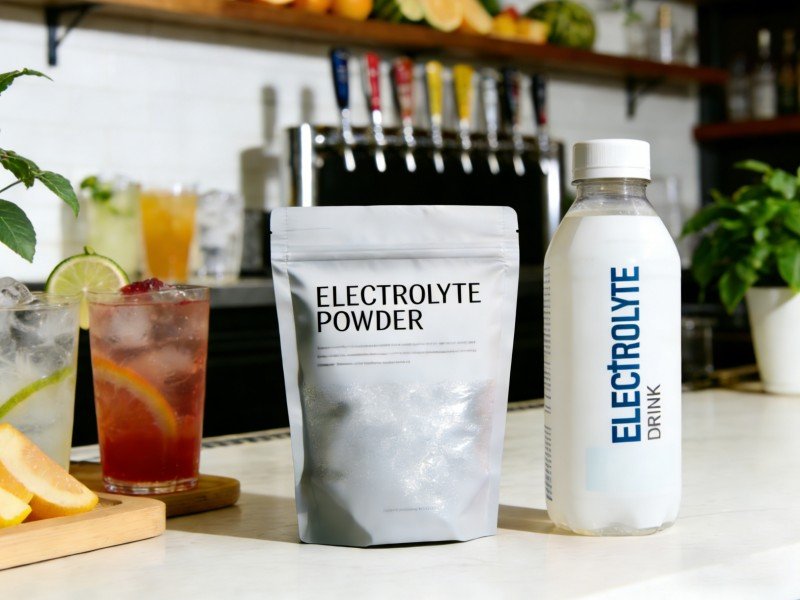
Electrolyte Drinks vs. Electrolyte Powders: Which Is Better for You?
Electrolyte drinks are pre-mixed hydration solutions ready to consume, while electrolyte powders are concentrated formulas you mix with water. Powders generally offer greater customization, lower sugar, better cost efficiency, and broader use scenarios than ready-to-drink beverages. Drinks are convenient for on-the-go use, but powders provide flexible personalization, cleaner profiles, and long-term hydration support.
Format differences — what defines drinks vs. powders
At the simplest level:
- Electrolyte Drinks:
- Pre-mixed and ready to sip
- Often packaged in bottles or cans
- Usually positioned for exercise or on-the-go hydration
- Electrolyte Powders:
- Sold in sachets or tubs
- Mixed into water at need
- Typically used for training, recovery, or daily hydration
Both formats aim to replenish electrolytes lost through sweat or stress, but the user experience and physiological fit differ significantly.
Convenience and portability — when drinks win
There’s no debate that electrolyte drinks are ultra-convenient:
- No mixing needed
- Easy to carry in gym bags, cars, or backpacks
- Useful in spontaneous or unpredictable situations
For:
- Quick hydration after unexpected exertion
- Travel when mixing tools aren’t available
- Athletes who prefer zero-prep solutions
Pre-mixed drinks can be appealing — especially for casual users or beginners.
However, convenience must be balanced against nutritional control (which we’ll explore next).
Customization and control — powders take the lead
Electrolyte powders shine because they allow users to dial in concentration based on:
- Sweat rate
- Activity intensity
- Climate
- Personal tolerance and goals
For example:
- A long endurance athlete might mix a higher concentration
- A casual gym-goer may mix a lighter solution
- Someone with sensitive digestion may choose low-sodium
This level of personalization is difficult — if not impossible — with fixed pre-mixed drinks.
This adaptability is particularly helpful for:
- Daily hydration
- Multi-session training days
- Travel with fluctuating activity
Sugar, calories, and formula clarity
Pre-mixed electrolyte drinks (especially mainstream sports beverages) often contain added sugars or carbohydrates:
- To provide quick energy
- To enhance taste
- To position the product as both an electrolyte + energy drink
While this makes them suitable for short, high-intensity exercise, it also means:
- Extra calories that may not be needed
- Blood sugar fluctuations
- Slower recovery if overused
Electrolyte powders — especially low-sugar or sugar-free formulas — allow:
- Minimal calories
- Stable hydration
- Better use for daily recovery
- Less risk of sugar-related energy crashes
This is why many active individuals prefer powder formats for regular use rather than “performance only” consumption.
Cost and sustainability considerations
Cost per serving often differs dramatically:
| Format | Typical Cost per Serving | Convenience | Sugar Content | Customization |
|---|---|---|---|---|
| Electrolyte Drinks | Higher | Very High | Often High | Low |
| Electrolyte Powders | Lower | High | Usually Low/None | High |
Powders are typically more cost-effective for regular users because:
- One container yields many servings
- No premium packaging costs
- You control portion size
For long-term hydration strategies, powders often deliver better value — both financially and nutritionally.
Use cases — when each format is ideal
Electrolyte Drinks work best for:
- Immediate, spontaneous hydration
- Situations with no mixing tools
- Short-term exercise or sudden fatigue
- Casual users who prefer convenience
Electrolyte Powders work best for:
- Daily hydration routines
- Recovery after training or competition
- Adjusting electrolyte concentration
- Cost-conscious, health-focused users
For many people, a combination makes sense:
- A pre-mixed drink when away from home
- A powder mix for planned workouts, recovery, and daily use
Why powders are often better for recovery and daily use
Ready-to-drink beverages are convenient for acute use, but they are often not optimized for long-term recovery hydration because they:
- Have fixed electrolyte ratios
- Tend to be higher in sugar
- Lack recovery-supporting minerals like magnesium and calcium at meaningful doses
In contrast, powders — particularly those designed with recovery in mind — allow inclusion of:
- Balanced sodium/potassium ratios
- Magnesium for muscle relaxation
- Calcium for contraction–relaxation balance
- Vitamin D3 + K2 for mineral absorption support, as seen in AirVigor recovery-focused electrolyte powders
This makes powders a more versatile platform for daily, pre-session, and post-session hydration — without excess calories or unnecessary additives.
Neither electrolyte drinks nor powders are inherently “better”; the right choice depends on your:
- Daily rhythm
- Training style
- Sweat rate
- Recovery goals
- Dietary preferences
For convenience and spontaneous hydration, pre-mixed drinks are fine.
For long-term hydration, recovery support, and flexible dosing, electrolyte powders usually offer more advantages.
And for most active individuals looking for sustainable, recovery-focused hydration — especially those training frequently or in varied environments — powder formats balanced electrolyte solutions provide the best combination of performance, cost-effectiveness, and flexibility.
Is It Okay to Drink Electrolyte Drinks Every Day?
Yes, it is generally safe to drink electrolyte drinks every day if intake matches your activity level, sweat loss, and overall diet. Daily use is appropriate for people who exercise regularly, sweat frequently, live in hot climates, or follow low-carb diets. Problems usually arise only when consuming excessive sodium, high-sugar formulas, or multiple servings without corresponding electrolyte loss.
Why daily electrolyte use can make sense
Electrolytes are not stimulants or drugs — they are essential minerals your body uses every day to regulate:
- Fluid balance
- Muscle contraction and relaxation
- Nerve signal transmission
- Blood pressure and circulation
If your lifestyle includes regular sweat loss or dehydration risk, daily electrolyte intake can help maintain baseline physiological balance rather than constantly “catching up” after fatigue appears.
Daily use is most beneficial for people who:
- Train or exercise 3+ times per week
- Sweat easily or train in warm or humid environments
- Perform outdoor or physically demanding work
- Travel frequently or experience dehydration from long days
- Follow low-carbohydrate or ketogenic diets
In these cases, electrolytes function as preventive support, not a performance enhancer.
When daily use may not be necessary
Not everyone needs electrolytes every day.
Daily use may be unnecessary if you:
- Are largely sedentary
- Exercise lightly and infrequently
- Sweat very little
- Live in cool environments
- Consume a mineral-rich diet and hydrate well
For these individuals, plain water and dietary minerals may be sufficient most days, with electrolytes reserved for occasional higher-demand situations.
The key distinction is electrolyte loss, not lifestyle labels like “athlete” or “non-athlete.”
What makes daily use safe vs problematic
Daily electrolyte consumption becomes problematic not because of frequency, but because of formulation and dosing.
Issues typically arise when people consume:
- Very high-sodium formulas daily without sweating heavily
- Sugar-loaded sports drinks as routine beverages
- Multiple servings stacked throughout low-activity days
These patterns can lead to:
- Bloating or water retention
- Persistent thirst
- Digestive discomfort
- Unnecessary calorie intake
In contrast, balanced, low-sugar electrolyte formulations are designed specifically for regular use, with moderate sodium and a full mineral spectrum that supports daily hydration without overload.
How much electrolyte intake is appropriate for daily use
For most active adults, daily intake guidelines are straightforward:
| Lifestyle & Conditions | Daily Electrolyte Use |
|---|---|
| Regular training or sweating | 1 serving per day |
| High-intensity or long workouts | 1–2 servings |
| Hot climate or outdoor work | 1–2 servings |
| Light activity / rest days | Optional or reduced |
Using electrolytes daily does not mean drinking them continuously. One well-timed serving is usually sufficient.
Signs you may be using electrolytes too often
Your body often provides clear feedback when intake exceeds need.
You may be overusing electrolytes if you notice:
- Thirst that doesn’t resolve after drinking
- Puffy hands, face, or ankles
- Stomach heaviness or nausea
- Headaches unrelated to exertion
These signs usually indicate a mismatch, not toxicity — meaning intake is exceeding actual loss.
Adjusting frequency or concentration typically resolves the issue quickly.
Electrolytes vs daily sports drinks
A critical distinction must be made between electrolyte drinks and sports drinks.
- Many sports drinks contain high sugar levels, designed for acute energy during competition
- Daily consumption of these beverages can disrupt blood sugar balance and add unnecessary calories
Electrolyte powders or drinks designed for hydration and recovery, rather than energy spikes, are far better suited for daily use.
This is why many consumers transition from traditional sports drinks to clean-label electrolyte powders as part of their everyday hydration routine.
Drinking electrolyte drinks every day is safe and beneficial when it aligns with your real hydration needs.
Daily use works best when:
- You sweat or train regularly
- You choose balanced, low-sugar formulas
- Intake matches activity rather than habit
Electrolytes are not something to fear — but they are also not something to consume mindlessly. When used with context and moderation, daily electrolyte intake becomes a low-burden foundation for hydration, recovery, and consistent energy, not a risk.
Final Thoughts: Smarter Hydration Starts With Context
Hydration isn’t about following rules — it’s about responding to what your body actually loses.
Electrolyte drinks are powerful when used with intention. When matched to activity, climate, and recovery needs, they support consistency, resilience, and long-term performance.
That’s why AirVigor approaches electrolytes not as a quick fix, but as part of a sustainable nutrition system — built on transparency, balanced formulations, and real-world usability.
Ready to Take the Next Step?
- View AirVigor Electrolyte Powder on Amazon US Explore ingredients, serving sizes, flavors, and verified customer reviews with fast Prime delivery.
- Looking for OEM / ODM or Custom Formulation? Contact or call us to discuss private label, bulk orders, or tailored electrolyte solutions.
Hydrate with purpose. Recover with clarity. Train consistently.