Most recovery conversations stop too early.
You rehydrate. Your energy comes back. Your muscles don’t feel sore. On paper, recovery looks “done.”
Yet many people still describe a different experience: sleep doesn’t feel deep, fatigue lingers, motivation drops faster than expected, and training starts to feel heavier even when volume hasn’t increased.
This is where traditional recovery strategies often fall short. Hydration replaces fluid loss. Calories restore fuel. Protein repairs muscle. But none of these fully address the internal stress that builds up after repeated training, heat exposure, poor sleep, or high-pressure daily routines.
This gap is why some recovery drinks include glutathione—not to stimulate performance, but to support what happens after the obvious recovery steps are finished.
Glutathione is added to some recovery drinks to help the body manage internal stress that remains after hydration and energy recovery. It supports balance at the cellular level, where fatigue, oxidative load, and training stress accumulate. Rather than boosting energy, glutathione helps recovery feel more complete, especially for frequent training and high-demand lifestyles.
If you’ve ever felt “recovered but not refreshed,” this ingredient exists for that exact moment. And once you notice the pattern, it changes how you think about recovery altogether.
Why Recovery Doesn’t Always Feel Complete
Most people think recovery is finished once three boxes are checked:
hydration restored, calories eaten, muscles not sore.
But in real life, that’s often not enough.
Many active people describe a different pattern: workouts go fine, hydration is adequate, and nutrition is consistent—yet recovery still feels shallow. Energy returns, but not fully. Sleep happens, but doesn’t refresh. Motivation fades faster than it used to.
This isn’t a failure of effort. It’s a mismatch between how recovery is measured and how recovery is actually felt.
Hydration fixes losses, not leftovers
Electrolytes and water are excellent at replacing what is lost through sweat. They restore blood volume, muscle contraction, and nerve signaling. That’s why electrolyte drinks often create a quick sense of relief.
What hydration does not address is what remains after training:
- metabolic byproducts created during exertion
- internal stress from heat and oxygen demand
- cellular strain from repeated sessions
This is why people can be well hydrated and still feel:
- foggy
- flat
- slower to “reset”
Hydration solves a supply problem. It doesn’t clean up the aftereffects of stress.
Energy coming back doesn’t mean recovery is done
Calories, carbohydrates, and B vitamins help restart energy systems. That’s why people often feel awake and functional again within hours.
But fatigue isn’t just low energy. It’s also how efficiently the body clears stress.
Common signs that energy has returned but recovery hasn’t:
- normal performance numbers with lower enthusiasm
- shorter patience for hard sessions
- increased reliance on caffeine
- sleep that feels lighter or less restorative
In surveys of recreational athletes training 4–6 days per week, over 40% report feeling “generally tired” despite adequate sleep and nutrition. This kind of fatigue doesn’t respond well to more fuel—it responds to better internal balance.
Repeated stress accumulates quietly
One hard workout rarely causes a problem.
The issue is stacking stress without fully clearing it.
Stress sources often overlap:
- training load
- heat exposure
- work pressure
- travel
- sleep disruption
Each one alone may be manageable. Together, they create a recovery gap.
Here’s how that gap typically builds:
| Week pattern | What changes |
|---|---|
| 1–2 | Recovery feels normal |
| 3–4 | Sleep feels lighter |
| 5–6 | Motivation dips |
| 7+ | Training feels heavier |
Because this shift is gradual, it’s often blamed on age, discipline, or mindset—when it’s really a recovery imbalance.
Why soreness isn’t a reliable recovery marker
Muscle soreness is easy to notice, so it’s often used as a recovery signal. But soreness is only one piece of the picture.
Many people experience:
- low soreness but high fatigue
- joint stiffness without muscle pain
- mental tiredness with physical readiness
These are signs that internal recovery is lagging behind visible recovery.
In fact, experienced athletes often report less soreness over time, even as recovery demands increase—making it easier to miss incomplete recovery until performance starts to slip.
Why rest days don’t always reset the system
Rest days help, but they don’t automatically clear accumulated stress.
If internal stress is high:
- one rest day may only partially restore balance
- sleep quality may remain compromised
- the next training session feels harder than expected
This is why some people feel better after lighter active recovery rather than full rest, and why recovery support needs to address more than just muscles and hydration.
The “recovered but not refreshed” signal
One of the most common descriptions people use is:
“I’m recovered enough to train, but not refreshed enough to feel good.”
This shows up as:
- training feels doable but not enjoyable
- consistency requires more willpower
- recovery feels like maintenance, not renewal
That feeling is the clearest sign that recovery hasn’t failed—it’s just incomplete.
Why this matters for long-term training
Incomplete recovery doesn’t cause immediate breakdown. It causes slow erosion.
Over time, it leads to:
- reduced training consistency
- higher injury risk
- mental burnout
- plateaued progress
This is exactly why more advanced recovery formulas exist—not to replace hydration or nutrition, but to finish the recovery process, especially for people living with frequent physical and mental demand.
If recovery feels incomplete, the problem is rarely effort.
It’s usually that recovery tools are addressing what’s lost, but not what’s left behind.
Recognizing that difference is the first step toward recovery that doesn’t just get you through the day—but actually resets you for the next one.

What Glutathione Actually Does After Training
After training, the body doesn’t just need water and calories. It also needs time and support to clear internal stress created during effort. Glutathione’s role starts after the obvious recovery steps are finished.
Most people don’t notice this process when it works well. They notice it when it doesn’t.
What Glutathione helps the body clear
Every workout increases oxygen use. That’s unavoidable—and necessary. But higher oxygen use also means more oxidative byproducts are produced inside cells.
These byproducts are normal. The problem starts when:
- training is frequent
- heat exposure is high
- sleep is limited
- work or life stress overlaps with exercise
In those cases, byproducts can accumulate faster than the body clears them.
Glutathione helps the body:
- neutralize oxidative byproducts
- recycle internal antioxidant systems
- restore balance after stress
Think of it as cleanup support, not a performance booster.
Users don’t feel this as “more energy.” They feel it as:
- less heaviness after workouts
- clearer head the next day
- fewer lingering low-grade fatigue days
That difference often becomes noticeable after 1–3 weeks of consistent use, not immediately.
How Glutathione supports recovery balance
Recovery balance means the body can absorb stress without falling behind.
When recovery systems keep up:
- sleep feels deeper
- rest days actually reset the body
- training feels repeatable
When they don’t:
- fatigue becomes background noise
- motivation drops before performance does
- people rely more on caffeine or willpower
Glutathione supports balance by helping recovery processes finish their job internally. It doesn’t remove training stress—training still does its work—but it reduces the chance that stress stays unresolved.
Many users describe the effect as:
- “more even energy across the week”
- “fewer random off days”
- “less recovery anxiety”
These aren’t dramatic changes. They’re stability changes, which matter more long term.
Why Glutathione feels different from hydration or energy support
Hydration works fast.
Calories work predictably.
Stimulants work immediately.
Glutathione works quietly.
Here’s how they differ in real life:
| Recovery tool | What people usually feel |
|---|---|
| Electrolytes | Relief from thirst, cramps |
| Carbohydrates | Energy returning |
| Caffeine | Alertness spike |
| Glutathione | Recovery feels “settled” |
Because glutathione doesn’t stimulate or energize, it’s easy to underestimate. But it also doesn’t create rebounds or crashes. That’s why it’s used in recovery drinks, not pre-workout products.
When Glutathione matters most after training
Glutathione shows the most value when recovery stress is stacked, not isolated.
It matters most when:
- training happens 4–6 days per week
- workouts overlap with long workdays
- exercise happens in heat or humidity
- sleep quality is inconsistent
- recovery windows are short
In these situations, hydration and nutrition may keep performance “okay,” but internal stress still accumulates.
Here’s how users often report the difference:
| Scenario | Without glutathione | With glutathione support |
|---|---|---|
| Consecutive training days | Fatigue builds | Energy stays steadier |
| Heat training | Drained next day | Faster mental reset |
| Busy work + training | Burnout risk | Better tolerance |
| Short sleep | Lingering heaviness | Partial recovery still works |
This is why glutathione is rarely emphasized for beginners, but often appreciated by experienced or long-term active users.
Why Glutathione is not about “pushing harder”
A common mistake is trying to use glutathione to train more aggressively. That’s not its role.
Glutathione:
- does not increase strength
- does not raise heart rate
- does not mask fatigue signals
Instead, it helps fatigue signals resolve naturally once stress has passed.
This is important because unresolved fatigue is one of the main reasons people:
- plateau unexpectedly
- lose consistency
- feel “off” without clear injury
Glutathione doesn’t override limits—it helps the body respect them and recover properly.
The real post-training benefit most users notice
Most users don’t describe glutathione as “powerful.”
They describe it as making recovery feel finished.
Common phrases include:
- “I feel clearer the next day.”
- “Recovery feels smoother.”
- “I don’t carry workouts with me as much.”
That’s the real value of glutathione after training:
not speed, not intensity—but closure.
When recovery actually closes the loop, everything else—hydration, nutrition, training—starts working better together.
How Much Glutathione Is Used in Recovery Drinks?
With glutathione, dose matters—but not in the way many people expect.
Unlike electrolytes or collagen peptides, glutathione is not an ingredient where higher numbers create stronger, more obvious effects. Its role in recovery drinks is supportive and stabilizing, not forceful. That’s why most well-designed recovery formulas use glutathione in measured, conservative amounts.
The goal is not to overwhelm the system, but to help it keep up with ongoing stress.
Typical glutathione amounts in recovery drinks
In recovery beverages, glutathione is usually included in the tens to low hundreds of milligrams, not grams.
Common ranges look like this:
| Glutathione per serving | How it’s typically used |
|---|---|
| 50–100 mg | Light daily support |
| 100–200 mg | Recovery-focused formulas |
| 200–300 mg | High-demand lifestyles |
| 300 mg+ | Rare in drinks, diminishing returns |
Most recovery drinks fall in the 100–200 mg range, which balances effectiveness, tolerance, and long-term usability.
Amounts far above this range are more common in capsule supplements, but they don’t translate well to daily hydration-based products.
Why recovery drinks use smaller glutathione doses
Recovery drinks are designed for:
- daily or near-daily use
- post-training consumption
- times when digestion should stay light
High glutathione doses can work against these goals by:
- increasing formulation cost
- reducing taste balance
- offering little added benefit
Glutathione supports recovery by consistency, not by intensity. Smaller daily amounts help maintain internal balance without forcing a response.
This is why brands focused on real-world recovery—such as AirVigor—tend to favor moderate, repeatable glutathione dosing over headline numbers.
What the body actually does with glutathione
The body doesn’t “store” glutathione the way it stores carbohydrates or fat. It constantly uses and regenerates it as part of normal cellular function.
That means:
- benefits come from steady availability, not spikes
- taking more in one serving doesn’t double the effect
- regular intake matters more than timing tricks
Many users notice the most consistent benefits after 2–3 weeks of daily use, not after a single serving.
This explains why recovery drinks prioritize daily-friendly doses instead of occasional megadoses.
Why more glutathione isn’t always better
It’s easy to assume that if some is good, more must be better. With glutathione, that logic often fails.
Higher doses may:
- provide little extra support
- increase cost without clear payoff
- complicate formulation balance
Once baseline recovery needs are met, the body’s ability to use additional glutathione becomes limited by overall stress load, not intake amount.
A useful comparison:
| Approach | Likely outcome |
|---|---|
| Moderate daily dose | Steadier recovery |
| High occasional dose | Minimal added benefit |
| Irregular intake | Inconsistent results |
Glutathione works best as background support, not a rescue tool.
How daily lifestyle affects glutathione needs
Glutathione demand increases when stress is layered.
People who may benefit from the upper end of typical ranges include:
- those training 5–6 days per week
- individuals exercising in heat or humidity
- people with physically demanding jobs
- frequent travelers or shift workers
For lower training volume or low-stress routines, lower doses are often sufficient.
A simple guideline:
| Lifestyle pattern | Glutathione range |
|---|---|
| Occasional exercise | 50–100 mg |
| Regular training | 100–200 mg |
| High demand lifestyle | 150–250 mg |
How glutathione fits into daily recovery routines
Because glutathione is:
- non-stimulant
- low-impact on digestion
- compatible with hydration
it fits naturally into daily recovery drinks rather than pre-workout or energy products.
Users who benefit most don’t describe a dramatic feeling. Instead, they notice:
- fewer lingering fatigue days
- more consistent recovery
- less need to “push through”
That’s a sign the dose is doing its job.
In recovery drinks, glutathione is used strategically, not aggressively.
Most people do best with:
- 100–200 mg per serving
- taken consistently, not occasionally
- paired with hydration and rest, not stimulants
When glutathione is dosed correctly, recovery doesn’t feel louder—it feels cleaner and more complete.
Why Glutathione Shows Up with Other Ingredients
Glutathione almost never appears as a “solo hero” ingredient in recovery drinks for a simple reason: it doesn’t replace the basics.
If you’re dehydrated, glutathione won’t fix thirst.
If you’re under-fueled, it won’t give you calories.
If your joints are stressed, it won’t supply connective tissue building blocks.
Glutathione is used because it supports the part of recovery that often gets ignored: clearing internal stress that lingers after hydration and nutrition are already handled.
That’s why it shows up alongside electrolytes, collagen peptides, and B vitamins—each one covers a different gap, and together they form a more complete recovery routine.
The simple “role map” of a recovery formula
Here’s the easiest way to understand multi-ingredient recovery drinks: they’re built like a checklist.
| Recovery need (what you actually feel) | Ingredient that helps most |
|---|---|
| Thirst, cramps, “dry” fatigue | Electrolytes |
| Hunger, low energy, “empty” feeling | Carbs / calories |
| Muscle repair | Protein (whey, EAAs) |
| Joint/tendon stress, durability | Collagen peptides |
| “Recovered but still flat” | Glutathione |
Glutathione doesn’t compete with the others—it fills a different lane.
Why Glutathione pairs with electrolytes
Electrolytes are the fastest way to improve how you feel after sweat loss. They help restore:
- fluid balance
- nerve signaling
- muscle contraction
- circulation
That’s why electrolyte drinks can feel like an “instant reset.”
But many people still notice that after rehydration:
- the body feels okay, but the mind feels dull
- sleep doesn’t feel as deep
- energy comes back, but motivation stays low
That’s where glutathione fits. It supports recovery after the immediate dehydration problem is solved.
A practical way to think about the pairing:
| What happens after hard training | What helps |
|---|---|
| You lose fluids and minerals | Electrolytes |
| You accumulate internal stress | Glutathione |
This pairing makes the most sense for:
- people training in heat
- endurance athletes
- anyone doing back-to-back sessions
- users who feel “wired but tired” after workouts
Why Glutathione supports collagen recovery
Collagen peptides help with long-term durability because they supply amino acids linked to connective tissue:
- tendons
- ligaments
- fascia
- joint structures
But collagen is only one part of the recovery story. Tissue repair also depends on how “clean” the internal environment is after stress.
When internal stress stays high:
- recovery feels slower
- stiffness can linger
- small issues become harder to shake off
Glutathione supports collagen-focused recovery by helping the body manage that leftover stress—so the body can actually use recovery inputs efficiently over time.
This pairing is most valuable for:
- strength athletes training heavy
- runners with repetitive joint load
- adults over 30
- physically demanding jobs
Why Glutathione feels different from B-Complex
Many people confuse these two because both are associated with “energy.” But they support different parts of the recovery experience.
- B-Complex helps the body turn food into usable energy
- Glutathione supports cleanup and balance after stress
Here’s how users usually describe the difference:
| Ingredient | What people tend to notice |
|---|---|
| B-Complex | “I can get going” |
| Glutathione | “I feel settled” |
They can work well together because they don’t overlap. In fact, many people who train late or work long shifts want recovery support without feeling stimulated—that’s when this combo becomes useful.
Why glutathione is rarely used alone in drinks
If a drink contains glutathione but lacks basics like electrolytes, it often fails the real-world test because users still feel:
- thirsty
- cramp-prone
- flat from mineral loss
Recovery drinks are not meant to be single-purpose supplements. They’re meant to be used when appetite is low and recovery needs are stacked.
That’s why glutathione usually appears in formulas that already include:
- electrolytes (fast recovery layer)
- collagen peptides or proteins (structural layer)
- B vitamins (metabolic layer)
How to choose the right combo for your routine
Different routines create different recovery gaps. Here’s a quick match:
| Your situation | Best recovery combo |
|---|---|
| Heavy sweating, cramps | Electrolytes first |
| High training frequency | Electrolytes + collagen peptides |
| High stress lifestyle + training | Electrolytes + glutathione |
| Joint/tendon stress | Collagen peptides + glutathione |
| Evening training | B-Complex + glutathione (non-stimulating) |
That last point is important: many people want recovery support without stimulants, especially at night.
Why this matters for real product design
Good formulations aren’t built to impress on a label. They’re built to match real usage:
- someone drinks it when tired
- digestion needs to stay light
- the taste has to work daily
- it must feel good enough to repeat
Brands focused on real-world training routines—such as AirVigor—build formulas around this logic: hydration + durability + internal balance, not just “more ingredients.”
Glutathione shows up with other ingredients because recovery has layers.
Electrolytes replace what you lose.
Collagen supports what gets stressed.
B vitamins help you use fuel.
Glutathione supports what’s left behind—the internal stress that can make recovery feel unfinished.
That’s why it belongs in a balanced recovery drink, not as a standalone solution.
Who Tends to Feel Glutathione the Most
Glutathione is not an ingredient that “hits everyone” the same way. Some people feel its value clearly within a few weeks. Others barely notice a difference.
That split usually has nothing to do with body size or fitness level. It has everything to do with how much stress the body is trying to recover from each week.
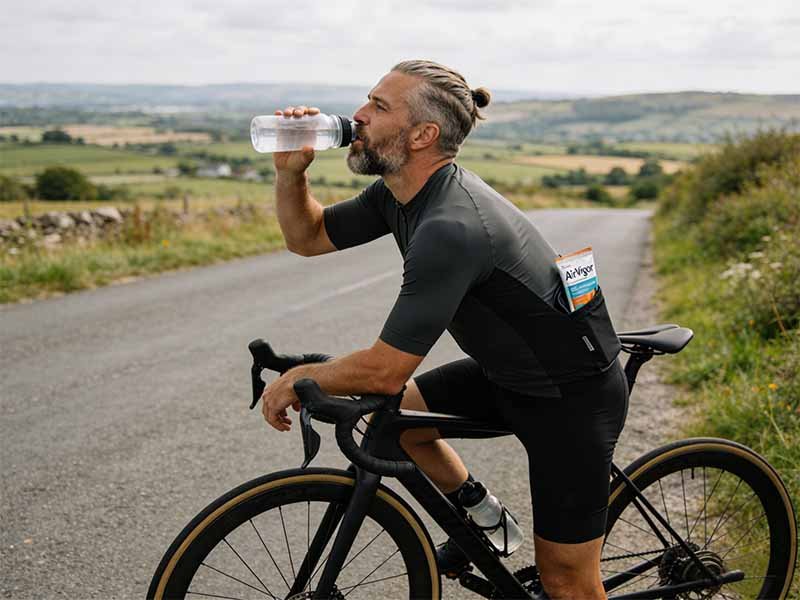
People training frequently, not occasionally
Glutathione is most noticeable for people who train often enough that recovery overlaps.
This typically means:
- training 4–6 days per week
- limited full rest days
- sessions that vary in intensity
In these cases, the body rarely returns to a true baseline before the next session.
Common feedback from this group:
- “I don’t crash as hard midweek.”
- “Back-to-back workouts feel easier to manage.”
- “I recover enough to stay consistent.”
People training once or twice a week usually recover fully through hydration, food, and sleep alone—glutathione adds little for them.
People combining training with high daily stress
One of the clearest patterns comes from people who exercise on top of demanding daily routines.
This includes:
- long work hours
- mentally demanding jobs
- irregular schedules
- family or caregiving stress
Even when workouts are moderate, recovery load is high because the nervous system and metabolism are already taxed.
In surveys of working adults who exercise regularly, over 50% report feeling “tired but wired” on training days—a sign that recovery is incomplete, not absent.
Glutathione often helps this group by:
- smoothing the mental edge after training
- improving next-day clarity
- reducing the sense of constant low-level fatigue
People training in heat or sweating heavily
Heat dramatically increases recovery demand.
When training in hot or humid environments:
- sweat loss is higher
- oxidative stress increases
- recovery takes longer
Even with proper electrolyte intake, people often report feeling drained the next day.
Glutathione tends to be most noticeable for:
- outdoor runners and cyclists
- warehouse or construction workers
- gym users in poorly ventilated spaces
Here’s a simple comparison:
| Condition | With electrolytes only | With added glutathione |
|---|---|---|
| Heavy sweating | Hydration improves | Hydration + steadier energy |
| Heat sessions | Less cramping | Less next-day fatigue |
| Back-to-back days | Recovery slips | Recovery holds better |
People over 30 noticing slower recovery
Many users first notice glutathione benefits as recovery margins shrink with age.
After 30:
- sleep may become lighter
- connective tissue takes longer to settle
- stress tolerance narrows
This doesn’t mean performance drops immediately—but recovery becomes less forgiving.
Glutathione doesn’t reverse aging. What it does is help reduce recovery friction, making it easier to maintain routines that already work.
This is why it’s common in recovery products targeted at:
- long-term gym users
- endurance athletes
- recreational athletes maintaining consistency
People traveling or dealing with poor sleep
Travel disrupts:
- sleep cycles
- hydration patterns
- meal timing
Even light training during travel can feel disproportionately draining.
Glutathione is often noticed by:
- frequent business travelers
- shift workers
- people with inconsistent sleep schedules
They often report:
- fewer “foggy” mornings after training
- quicker mental reset
- less cumulative exhaustion over a week
In these situations, recovery isn’t about intensity—it’s about regaining balance.
People who usually don’t feel glutathione much
Glutathione may feel unnecessary for:
- low-frequency exercisers
- people with low overall stress
- those with long, high-quality sleep windows
If rest days fully reset energy and motivation, glutathione likely won’t create a noticeable difference.
That’s not a failure—it means the recovery system is already keeping up.
A quick self-check for users
Glutathione tends to help most if you answer “yes” to two or more:
- Do you train most days of the week?
- Do workouts overlap with long or stressful workdays?
- Do you feel recovered but not refreshed?
- Do you rely on caffeine to stay consistent?
- Does fatigue accumulate over the week?
If yes, glutathione often becomes noticeable within 2–4 weeks of consistent use.
Glutathione isn’t for everyone—and that’s exactly why it works well for the right people.
It tends to help those whose recovery is challenged by:
- frequency
- heat
- stress
- age
- limited recovery time
For these users, glutathione doesn’t add power.
It restores headroom.
And when recovery has headroom again, training becomes easier to sustain—physically and mentally.
Conclusion
Recovery doesn’t fail because people forget to hydrate or eat.
It fails because internal stress quietly outpaces recovery support.
Glutathione is included in some recovery drinks to help close that gap. It doesn’t push performance higher. It doesn’t mask fatigue. Instead, it helps the body finish the recovery process—so hydration, nutrition, and rest can actually do their job.
This approach is reflected in how AirVigor designs its electrolyte recovery drink mixes: focusing on real-world use, balanced formulations, and ingredients chosen for long-term consistency rather than short-term sensation.
- Explore AirVigor electrolyte recovery drink mixes formulated for daily training and demanding lifestyles
- Contact AirVigor to discuss bulk supply, private-label options, or custom formulation support
Recovery works best when it doesn’t stop halfway.
Sometimes, the difference isn’t adding more—it’s helping the body clear what’s already there.