Skip to content
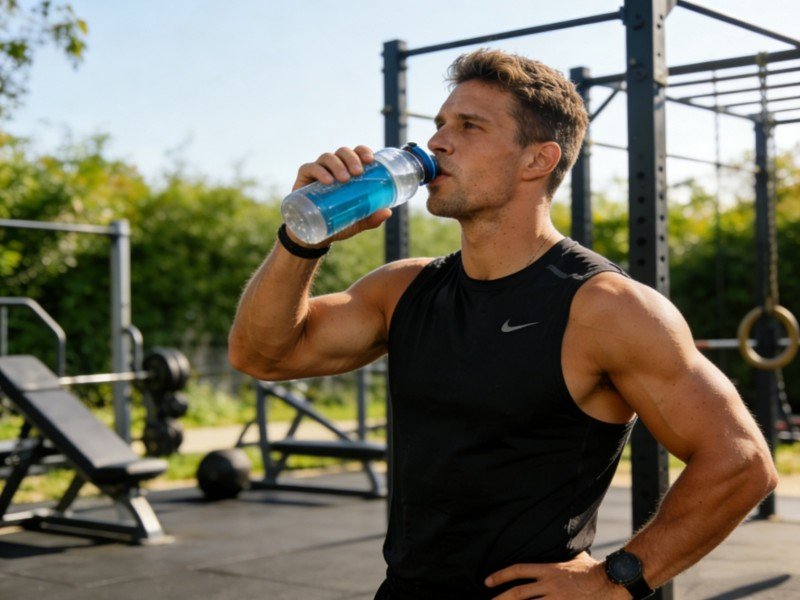
A lot of people wait until after a workout to think about hydration. By then, they are already reacting to sweat loss instead of preparing for it. That approach can still help, but it is not always the smartest one—especially when the workout will be long, the weather is hot, or the person already starts the session a little underhydrated. Sports-hydration guidance has said for years that fluid intake before exercise matters because the goal is to begin activity in a normal hydration state, not to spend the first part of the workout trying to catch up. Pre-exercise fluid guidance commonly includes about 500 mL around 2 hours before exercise or, in body-weight terms, about 5–7 mL/kg around 4 hours before exercise, with additional fluid if urine is still dark or limited.
Recovery Electrolyte with D3K2 works best before training when it is used as a measured pre-workout hydration tool, not as a random drink. For many people, one serving mixed into about 400–700 mL of water is a practical starting point, used before sessions that are likely to involve sweat loss, heat, or longer duration. A pre-workout electrolyte drink is usually more useful than plain water when the session is expected to last more than 60 minutes, takes place in hot conditions, or begins after a day of low fluid intake.
That is what makes this topic so useful. The product itself may be good, but the real outcome depends on how you drink it: too little water and it may feel too strong, too close to training and it may feel inconvenient, too much when the session is light, and it may be unnecessary. If you have ever started a workout already thirsty, already feeling flat, or already playing catch-up, this guide is built to help you fix that before the first rep or first mile even begins.
What Is Recovery Electrolyte with D3K2 Before Training?
Before training, Recovery Electrolyte with D3K2 is best understood as a pre-hydration tool. It is not a stimulant, not a high-caffeine pre-workout, and not a replacement for a meal. Its main job is to help you begin activity in a better fluid and electrolyte state, especially before sessions where sweat loss, heat exposure, or low daytime fluid intake make plain water less dependable on its own. Sports-hydration guidance emphasizes beginning activity euhydrated, with normal fluid and electrolyte status, rather than trying to fix a deficit after the session has already started.
What Does Recovery Electrolyte with D3K2 Do?
Before a workout, this kind of formula is there to support hydration readiness. That means it helps turn vague advice like “drink more water before exercise” into something more concrete and repeatable.
In practical terms, Recovery Electrolyte with D3K2 can help users:
- start exercise better hydrated
- make pre-workout fluid intake easier to plan
- support fluid and electrolyte balance before sweat loss begins
- fit hydration into real routines, especially before evening or warm-weather activity
This is especially relevant for people who do not think of themselves as “serious athletes” but still run into real hydration problems. Office workers, light exercisers, walkers, casual runners, and outdoor users often do not need an aggressive sports-drink strategy. What they do need is a simple way to avoid starting already behind. Pre-exercise hydration recommendations exist for exactly that reason.
A simple product-positioning view looks like this:
| Product type | Main job before exercise |
|---|---|
| Plain water | General fluid intake |
| High-stimulant pre-workout | Energy and alertness |
| Recovery Electrolyte with D3K2 | Pre-exercise hydration support |
The value is not that the label looks impressive. The value is that it gives the user a more reliable way to start the session well.
Why Drink Recovery Electrolyte with D3K2 Before Training?
The shortest answer is this: it is easier to start hydrated than to catch up later.
Once exercise begins, especially in heat, fluid deficits can build faster than many people realize. Pre-hydration is not only about preventing severe dehydration. It is also about reducing the chance that the session starts with an avoidable disadvantage. Guidance from ACSM- and NATA-linked sources supports planned fluid intake before exercise, particularly when the session is likely to be long, hot, or sweaty. ACSM also notes the goal of prehydration is to begin activity euhydrated and with normal plasma electrolyte levels.
This matters most when:
- the workout is longer than about 45–60 minutes
- the weather is hot or humid
- fluid intake earlier in the day was low
- the session starts early in the morning
- you may not have good fluid access once activity begins
For many users, the reason to drink it before training is not extreme performance. It is simply to avoid starting dry, flat, or not quite ready.
A practical use table makes this easier to judge:
| Situation before training | Is a pre-workout electrolyte more useful? |
|---|---|
| Well-hydrated day, short cool session | Usually less important |
| Long workday, then evening workout | More useful |
| Morning run after low overnight intake | More useful |
| Hot-weather outdoor session | Strongly useful |
| 60+ minute session with sweat expected | Strongly useful |
That is the real-world reason these products make sense before training.
Is Recovery Electrolyte with D3K2 Better Than Water?
Sometimes yes, sometimes no. The right answer depends on the workout and the person’s baseline hydration.
Water is often enough for short, low-sweat exercise. Mayo Clinic guidance says water is generally the best way to replace lost fluids, while sports drinks become more useful once exercise lasts more than 60 minutes, especially because they help support electrolyte balance. That does not mean water is ineffective. It means water alone becomes less complete as session length, sweat loss, and heat go up.
A more useful comparison looks like this:
| Training situation | Plain water | Recovery Electrolyte with D3K2 |
|---|---|---|
| 20–30 min easy indoor session | Usually enough | Often unnecessary |
| 45–60 min moderate training | Sometimes enough | Sometimes useful |
| 60+ min session | May feel incomplete | Usually more useful |
| Hot-weather activity | Less targeted | Usually more useful |
| Low daytime fluid intake before training | Less structured | More useful |
So the better question is not “Is it always better than water?” The better question is “Will this session make hydration planning matter more than usual?” If the answer is yes, the formula usually makes more sense.
Which Workouts Need Recovery Electrolyte with D3K2?
The strongest fit is not always the most intense workout. It is the workout where hydration is more likely to become a limiting factor.
That often includes:
- longer runs or brisk walks in warm weather
- light-to-moderate exercise in summer heat
- 45–90 minute gym sessions with noticeable sweat
- outdoor activity where fluid access may be limited
- evening workouts after a low-fluid workday
This is one reason the formula can fit light-to-moderate users well. Someone does not need to be doing advanced endurance training to benefit from a more structured pre-hydration routine.
A practical fit guide:
| Session type | Need before training |
|---|---|
| Easy indoor mobility | Low |
| Light indoor walk | Low |
| Brisk walk or jog in heat | Moderate to high |
| 60-minute moderate session | Moderate to high |
| Outdoor activity in summer | High |
| 60+ minute endurance session | High |
That is also why product positioning matters. This is not only a “serious athlete” use case. It is often most useful for people whose training is manageable, but whose hydration habits are inconsistent.
How Much Recovery Electrolyte with D3K2 Should You Drink?
Before a workout, the amount should match your likely sweat loss, your current hydration status, and the size of the session ahead. For many people, one serving mixed into about 400–700 mL of water is a practical starting point. Broader pre-exercise hydration guidance often suggests around 500–600 mL 2–3 hours before exercise, with another 200–300 mL closer to the session if needed, or roughly 5–7 mL/kg about 4 hours before exercise. That means the smartest pre-workout plan is usually not “drink as much as possible.” It is “drink enough, early enough, and in a form you can actually tolerate before moving.”
How Much Recovery Electrolyte with D3K2 Per Serving?
For most everyday pre-workout situations, one serving is enough.
That usually works well when:
- the session is light to moderate
- sweat is expected but not extreme
- the user has had at least some fluids during the day
- the workout is under about 90 minutes
- the goal is better pre-exercise hydration, not emergency catch-up
A simple use table helps:
| Pre-workout situation | Good starting use |
|---|---|
| Light session, well hydrated | Often optional |
| Moderate session, some sweat expected | 1 serving |
| Warm-weather workout | 1 serving usually makes sense |
| Longer session | 1 serving to start, then reassess total fluids |
The key is that one serving is a starting point, not a rigid rule for every person and every workout.
How Much Water for Recovery Electrolyte with D3K2?
Water amount changes both how the drink feels and how likely people are to finish it before training.
A stronger mix is not always better before exercise. If the drink feels too concentrated, some users will simply drink less of it or avoid using it at all. A more balanced mix often works better in real life because it is easier to finish and easier on the stomach before movement.
A practical range is:
- 400–500 mL for a stronger mix
- 500–700 mL for balanced everyday pre-workout use
- a smaller additional plain-water top-up later, if needed
A useful table:
| Water amount | What it usually feels like |
|---|---|
| 400–500 mL | Stronger, more concentrated |
| 500–700 mL | Balanced, easier for most users |
| 700+ mL | Lighter, but may be more than needed before movement |
For many users, especially office workers and light exercisers, the best mix is the one they can drink comfortably before the session, not the one that looks strongest on paper.
How Much Recovery Electrolyte with D3K2 Before Heavy Sweat?
If the workout will be hot, long, or obviously sweaty, pre-workout fluid planning matters more. NATA-linked guidance recommends 500–600 mL 2–3 hours before exercise and 200–300 mL 10–20 minutes before exercise. ACSM-linked guidance also supports planned prehydration several hours before exercise to allow fluid absorption and urine output to normalize.
For a heavier-sweat session, a practical plan often looks like this:
- Use 1 serving earlier in the pre-workout window
- Mix it into 500–700 mL of water
- Add a smaller amount of plain water later if needed
- Avoid using an overly strong last-minute mix instead of earlier planning
A practical comparison:
| Heavy-sweat scenario | Better strategy |
|---|---|
| Warm 60-minute workout | 1 serving before training |
| Long run in heat | 1 serving before, then continue fluid planning |
| Hot outdoor work/activity | 1 serving before can be very useful |
| Already dehydrated before training | Start earlier, not stronger |
The better answer is usually more total fluid planning, not simply more powder.
Can You Drink Too Much Recovery Electrolyte with D3K2?
Yes. Overuse usually happens in one of three ways:
- taking multiple servings before a light session
- mixing too much powder into too little water
- drinking a large volume too close to movement
Pre-workout hydration should make the session smoother, not heavier or less comfortable. Guidance on pre-exercise fluid intake is built around moderate planned intake, not forcing large amounts immediately before activity.
A better decision table:
| Pre-workout pattern | Better or worse idea |
|---|---|
| 1 serving before a warm, sweaty session | Usually appropriate |
| 1 serving before a short light workout | Sometimes unnecessary |
| Multiple servings right before exercise | Often too much |
| Planned fluid earlier in the window | Better strategy |
For most users, the smartest rule is simple: match the amount to the session, not to the product label alone.

What Is Recovery Electrolyte with D3K2 Before Training?
Before training, Recovery Electrolyte with D3K2 is best understood as a pre-hydration tool. It is not a stimulant, not a high-caffeine pre-workout, and not a replacement for a meal. Its main job is to help you begin activity in a better fluid and electrolyte state, especially before sessions where sweat loss, heat exposure, or low daytime fluid intake make plain water less dependable on its own. Sports-hydration guidance emphasizes beginning activity euhydrated, with normal fluid and electrolyte status, rather than trying to fix a deficit after the session has already started.
What Does Recovery Electrolyte with D3K2 Do?
Before a workout, this kind of formula is there to support hydration readiness. That means it helps turn vague advice like “drink more water before exercise” into something more concrete and repeatable.
In practical terms, Recovery Electrolyte with D3K2 can help users:
- start exercise better hydrated
- make pre-workout fluid intake easier to plan
- support fluid and electrolyte balance before sweat loss begins
- fit hydration into real routines, especially before evening or warm-weather activity
This is especially relevant for people who do not think of themselves as “serious athletes” but still run into real hydration problems. Office workers, light exercisers, walkers, casual runners, and outdoor users often do not need an aggressive sports-drink strategy. What they do need is a simple way to avoid starting already behind. Pre-exercise hydration recommendations exist for exactly that reason.
A simple product-positioning view looks like this:
| Product type | Main job before exercise |
|---|---|
| Plain water | General fluid intake |
| High-stimulant pre-workout | Energy and alertness |
| Recovery Electrolyte with D3K2 | Pre-exercise hydration support |
The value is not that the label looks impressive. The value is that it gives the user a more reliable way to start the session well.
Why Drink Recovery Electrolyte with D3K2 Before Training?
The shortest answer is this: it is easier to start hydrated than to catch up later.
Once exercise begins, especially in heat, fluid deficits can build faster than many people realize. Pre-hydration is not only about preventing severe dehydration. It is also about reducing the chance that the session starts with an avoidable disadvantage. Guidance from ACSM- and NATA-linked sources supports planned fluid intake before exercise, particularly when the session is likely to be long, hot, or sweaty. ACSM also notes the goal of prehydration is to begin activity euhydrated and with normal plasma electrolyte levels.
This matters most when:
- the workout is longer than about 45–60 minutes
- the weather is hot or humid
- fluid intake earlier in the day was low
- the session starts early in the morning
- you may not have good fluid access once activity begins
For many users, the reason to drink it before training is not extreme performance. It is simply to avoid starting dry, flat, or not quite ready.
A practical use table makes this easier to judge:
| Situation before training | Is a pre-workout electrolyte more useful? |
|---|---|
| Well-hydrated day, short cool session | Usually less important |
| Long workday, then evening workout | More useful |
| Morning run after low overnight intake | More useful |
| Hot-weather outdoor session | Strongly useful |
| 60+ minute session with sweat expected | Strongly useful |
That is the real-world reason these products make sense before training.
Is Recovery Electrolyte with D3K2 Better Than Water?
Sometimes yes, sometimes no. The right answer depends on the workout and the person’s baseline hydration.
Water is often enough for short, low-sweat exercise. Mayo Clinic guidance says water is generally the best way to replace lost fluids, while sports drinks become more useful once exercise lasts more than 60 minutes, especially because they help support electrolyte balance. That does not mean water is ineffective. It means water alone becomes less complete as session length, sweat loss, and heat go up.
A more useful comparison looks like this:
| Training situation | Plain water | Recovery Electrolyte with D3K2 |
|---|---|---|
| 20–30 min easy indoor session | Usually enough | Often unnecessary |
| 45–60 min moderate training | Sometimes enough | Sometimes useful |
| 60+ min session | May feel incomplete | Usually more useful |
| Hot-weather activity | Less targeted | Usually more useful |
| Low daytime fluid intake before training | Less structured | More useful |
So the better question is not “Is it always better than water?” The better question is “Will this session make hydration planning matter more than usual?” If the answer is yes, the formula usually makes more sense.
Which Workouts Need Recovery Electrolyte with D3K2?
The strongest fit is not always the most intense workout. It is the workout where hydration is more likely to become a limiting factor.
That often includes:
- longer runs or brisk walks in warm weather
- light-to-moderate exercise in summer heat
- 45–90 minute gym sessions with noticeable sweat
- outdoor activity where fluid access may be limited
- evening workouts after a low-fluid workday
This is one reason the formula can fit light-to-moderate users well. Someone does not need to be doing advanced endurance training to benefit from a more structured pre-hydration routine.
A practical fit guide:
| Session type | Need before training |
|---|---|
| Easy indoor mobility | Low |
| Light indoor walk | Low |
| Brisk walk or jog in heat | Moderate to high |
| 60-minute moderate session | Moderate to high |
| Outdoor activity in summer | High |
| 60+ minute endurance session | High |
That is also why product positioning matters. This is not only a “serious athlete” use case. It is often most useful for people whose training is manageable, but whose hydration habits are inconsistent.
How Much Recovery Electrolyte with D3K2 Should You Drink?
Before a workout, the amount should match your likely sweat loss, your current hydration status, and the size of the session ahead. For many people, one serving mixed into about 400–700 mL of water is a practical starting point. Broader pre-exercise hydration guidance often suggests around 500–600 mL 2–3 hours before exercise, with another 200–300 mL closer to the session if needed, or roughly 5–7 mL/kg about 4 hours before exercise. That means the smartest pre-workout plan is usually not “drink as much as possible.” It is “drink enough, early enough, and in a form you can actually tolerate before moving.”
How Much Recovery Electrolyte with D3K2 Per Serving?
For most everyday pre-workout situations, one serving is enough.
That usually works well when:
- the session is light to moderate
- sweat is expected but not extreme
- the user has had at least some fluids during the day
- the workout is under about 90 minutes
- the goal is better pre-exercise hydration, not emergency catch-up
A simple use table helps:
| Pre-workout situation | Good starting use |
|---|---|
| Light session, well hydrated | Often optional |
| Moderate session, some sweat expected | 1 serving |
| Warm-weather workout | 1 serving usually makes sense |
| Longer session | 1 serving to start, then reassess total fluids |
The key is that one serving is a starting point, not a rigid rule for every person and every workout.
How Much Water for Recovery Electrolyte with D3K2?
Water amount changes both how the drink feels and how likely people are to finish it before training.
A stronger mix is not always better before exercise. If the drink feels too concentrated, some users will simply drink less of it or avoid using it at all. A more balanced mix often works better in real life because it is easier to finish and easier on the stomach before movement.
A practical range is:
- 400–500 mL for a stronger mix
- 500–700 mL for balanced everyday pre-workout use
- a smaller additional plain-water top-up later, if needed
A useful table:
| Water amount | What it usually feels like |
|---|---|
| 400–500 mL | Stronger, more concentrated |
| 500–700 mL | Balanced, easier for most users |
| 700+ mL | Lighter, but may be more than needed before movement |
For many users, especially office workers and light exercisers, the best mix is the one they can drink comfortably before the session, not the one that looks strongest on paper.

How Much Recovery Electrolyte with D3K2 Before Heavy Sweat?
If the workout will be hot, long, or obviously sweaty, pre-workout fluid planning matters more. NATA-linked guidance recommends 500–600 mL 2–3 hours before exercise and 200–300 mL 10–20 minutes before exercise. ACSM-linked guidance also supports planned prehydration several hours before exercise to allow fluid absorption and urine output to normalize.
For a heavier-sweat session, a practical plan often looks like this:
- Use 1 serving earlier in the pre-workout window
- Mix it into 500–700 mL of water
- Add a smaller amount of plain water later if needed
- Avoid using an overly strong last-minute mix instead of earlier planning
A practical comparison:
| Heavy-sweat scenario | Better strategy |
|---|---|
| Warm 60-minute workout | 1 serving before training |
| Long run in heat | 1 serving before, then continue fluid planning |
| Hot outdoor work/activity | 1 serving before can be very useful |
| Already dehydrated before training | Start earlier, not stronger |
The better answer is usually more total fluid planning, not simply more powder.
Can You Drink Too Much Recovery Electrolyte with D3K2?
Yes. Overuse usually happens in one of three ways:
- taking multiple servings before a light session
- mixing too much powder into too little water
- drinking a large volume too close to movement
Pre-workout hydration should make the session smoother, not heavier or less comfortable. Guidance on pre-exercise fluid intake is built around moderate planned intake, not forcing large amounts immediately before activity.
A better decision table:
| Pre-workout pattern | Better or worse idea |
|---|---|
| 1 serving before a warm, sweaty session | Usually appropriate |
| 1 serving before a short light workout | Sometimes unnecessary |
| Multiple servings right before exercise | Often too much |
| Planned fluid earlier in the window | Better strategy |
For most users, the smartest rule is simple: match the amount to the session, not to the product label alone.
Who Should Drink Recovery Electrolyte with D3K2?
Recovery Electrolyte with D3K2 makes the most sense for people who are likely to start activity less hydrated than they realize, or for people whose workout or workday is likely to create noticeable sweat loss soon after they begin. In practice, that usually means people dealing with heat, longer sessions, low daytime fluid intake, or repeated activity across the week. Pre-exercise hydration guidance is built around this exact idea: do not wait until thirst shows up during the session if you already know the day is likely to challenge fluid balance.
That does not mean everyone needs it before every workout. Many people can do perfectly well with plain water before short, easy, indoor sessions. The strongest fit is usually someone whose routine creates a predictable hydration gap: an office worker heading to the gym after a long desk day, a runner going out in warm weather, a light exerciser doing a long brisk walk in summer, or an outdoor worker preparing for heat exposure. The weaker fit is someone doing very light activity in cool conditions after already drinking well all day. In other words, the product is best used when the day creates a reason, not just because the workout exists.
Who Benefits Most From Recovery Electrolyte with D3K2?
The people who usually benefit most are those who regularly run into one or more of these situations:
- they train after a long workday with low fluid intake
- they exercise in heat or humidity
- they do early morning activity after an overnight fluid loss
- their sessions last long enough for sweat to matter
- they want a simple pre-workout hydration habit they can repeat
These users are often not looking for a stimulant or a “performance boost.” They usually want something more practical:
- to start exercising feeling less dry
- to avoid the flat or sluggish first part of the session
- to make pre-workout hydration easier to remember
- to improve consistency rather than chase intensity
A practical fit guide looks like this:
| User type | How strong the fit usually is | Why |
|---|---|---|
| Runners in warm weather | High | Longer duration and sweat loss make early hydration more useful |
| Office workers training after work | High | Many begin sessions underhydrated from the day |
| Outdoor workers | High | Heat exposure and long activity windows increase pre-hydration value |
| Light exercisers in summer | Moderate to high | Heat can raise hydration needs even when intensity is moderate |
| Well-hydrated users doing short indoor sessions | Low to moderate | Plain water is often enough |
For these groups, the product usually helps most by making the start of the session feel more stable and less reactive.
Who May Not Need Recovery Electrolyte with D3K2?
Not every workout needs a pre-workout electrolyte routine.
Many people may not need it before:
- a short indoor walk
- a 20-minute easy workout
- light mobility work
- a short gym session in cool conditions
- a session that follows a day of already solid water intake
This is where many people overcomplicate hydration. If the environment is mild, the session is short, sweat loss will be low, and the person has already been drinking normally, plain water is usually enough. Electrolyte planning becomes more useful as session length, heat, and sweat risk go up. When those are low, the need is usually lower too.
A simple decision table makes this easier:
| Situation | Is pre-workout Recovery Electrolyte with D3K2 usually needed? |
|---|---|
| Easy indoor mobility | Often no |
| 20-minute light workout | Often no |
| Well-hydrated user, short indoor session | Sometimes unnecessary |
| 60-minute warm-weather session | Often useful |
| Hot outdoor activity | Usually useful |
That is the better standard: use it when the day actually creates a hydration reason, not automatically before every movement session.
Who Should Be Careful With Recovery Electrolyte with D3K2?
Most healthy adults can use a moderate-dose electrolyte drink without much trouble, but some people should be more careful, especially because this kind of formula may include potassium along with other electrolytes.
The main caution groups include:
- people with chronic kidney disease
- people with reduced kidney function
- people with a history of high blood potassium
- people taking medications that raise potassium
This matters because potassium balance depends heavily on kidney function, and some medicines can reduce potassium excretion or raise blood potassium more easily than expected. That does not make the product unsafe by default. It means the product should match the user’s health situation, not just the training situation.
A practical caution guide:
| Health situation | Practical guidance |
|---|---|
| Healthy adult, normal kidney function | Usually reasonable |
| Healthy active user in heat | Usually reasonable |
| Chronic kidney disease | Needs caution |
| History of high potassium | Needs medical review |
| Potassium-raising medications | Review first |
For these users, the right question is not only “Will this help before training?” It is also “Is this appropriate for me overall?”
Is Recovery Electrolyte with D3K2 Safe for Daily Use?
For most healthy adults, daily use can make sense if daily need is real. That usually means people who train often, exercise in heat, work outdoors, or regularly begin sessions with less-than-ideal hydration. The better question is not “Can I drink it every day?” but “Does my schedule create enough repeated hydration demand to justify daily use?”
Daily use makes more sense when:
- you train several times per week
- you sweat regularly
- you work in hot environments
- you often start sessions a little underhydrated
- you use the product in a measured, not excessive, way
Daily use makes less sense when:
- sessions are short and low-sweat
- conditions are cool
- plain water already works well
- the product is used out of habit instead of need
A simple daily-use table:
| Pattern | Daily pre-workout use fit |
|---|---|
| Frequent training with sweat loss | Good fit |
| Outdoor activity in heat | Good fit |
| Desk job + after-work training + low daytime intake | Good fit |
| Light exercise with good daily hydration | Often unnecessary |
| No clear sweat or hydration demand | Weak fit |
The smartest rule is simple: use it daily when your routine creates a daily reason for it.

Working With AirVigor
Once you understand how much to drink, how much water to use, and when to use it, Recovery Electrolyte with D3K2 becomes much easier to position correctly. It is not only an after-workout product. It can also work as a practical before-workout hydration tool, especially for light-to-moderate activity, office workers heading into evening training, warm-weather runners, outdoor users, and people who want a more structured pre-activity routine than plain water alone.
That matters for both consumers and brands.
For end users, the product has to feel practical:
- the serving has to be easy to understand
- the water amount has to be realistic
- the timing has to fit real schedules
- the use case has to match the workout or workday
For businesses, the same logic matters even more. A serious pre-workout hydration product is not built by combining ingredients randomly. It has to answer real questions such as:
- What should one serving look like before a normal session?
- What water range makes the drink easy to finish before movement?
- Is the formula better suited to runners, office workers, light exercisers, or outdoor users?
- How should sodium, potassium, and the rest of the formula be balanced for repeat use?
- Which packaging format works best for real routines: stick packs, tubs, or refill pouches?
Based on the company profile you provided, AirVigor is positioned to support both finished-product ordering and custom product development. With its in-house R&D structure, internal testing systems, manufacturing standards, OEM/ODM support, and multi-market supply capabilities, AirVigor is well-suited to help build products that are not only technically sound but also practical for real users in real channels.
So whether you are:
- looking to order AirVigor branded products
- developing a private-label pre-workout hydration product
- planning a custom Recovery Electrolyte with D3K2 formula for your market
The next useful step is to define the use case clearly. Is the product meant for after-work gym users, warm-weather walkers, morning runners, office workers who train at night, or outdoor workers who need steady hydration before a hot shift? Once that use case is clear, the right serving size, water amount, flavor strength, timing guidance, and packaging format become much easier to build correctly.
If you want to explore product ordering, OEM/ODM development, or custom formula pricing, contacting the AirVigor team is the most practical next step. The best hydration product is not the one with the most complicated label. It is the one people can use correctly, consistently, and confidently before the sessions that actually demand it.