Walk down the supplement aisle—or scroll through Amazon—and electrolyte powder brands blur together fast. Bright tubs promise “instant hydration,” packets claim “elite performance,” and every label seems to say it’s cleaner, smarter, or more advanced than the last. Yet many people who regularly buy electrolyte powders still feel unsure: Am I choosing the right one? Do I even need this every day? And why do some work while others don’t?
Electrolyte powders sit at the intersection of hydration, performance, and daily health. They are used by athletes, office workers, travelers, and people simply trying to feel less drained by heat, stress, or long days. But popularity has outpaced understanding. Many brands market aggressively without explaining how electrolytes actually work, how formulations differ, or who should use them—and when.
Electrolyte powder brands differ significantly in formulation quality, electrolyte balance, ingredient sourcing, and safety standards. The best electrolyte powder is not defined by hype or extreme dosing, but by how well it matches your sweat loss, activity level, and daily needs. Understanding electrolyte ratios, usage frequency, and formulation transparency helps you choose a brand that supports hydration without unnecessary risks.
At its core, choosing an electrolyte powder brand is not about finding “the strongest” product. It’s about finding one that works with your body, not against it. And once you understand what separates thoughtful formulations from generic mixes, the noise fades quickly—and the right choice becomes clearer.
What Are Electrolyte Powder Brands?
Electrolyte powder brands produce hydration-focused supplements designed to replace essential minerals lost through sweat, environmental stress, and everyday metabolism. Unlike traditional beverages, these products allow users to control both electrolyte dose and fluid volume, making hydration more precise and adaptable to different situations.
At a functional level, electrolyte powders support core physiological processes such as fluid balance, nerve transmission, and muscle contraction. Depending on formulation and usage, they can serve as light daily hydration support or as targeted tools for high-sweat, high-demand conditions. Their growing relevance reflects a broader shift toward intentional hydration rather than passive fluid intake.
What makes an electrolyte powder different from sports drinks?
Electrolyte powders emerged because traditional sports drinks solve hydration inefficiently for most modern users. Sports drinks were originally designed for endurance athletes who needed both rapid carbohydrate energy and electrolyte replacement during prolonged activity. To achieve this, they rely heavily on sugar as a delivery vehicle.
For everyday use, this approach often creates unintended drawbacks. High sugar content adds unnecessary calories, contributes to blood sugar fluctuations, and can make hydration feel heavy or unpleasant—especially outside of intense training.
Electrolyte powders separate hydration from energy delivery. Users can add minerals to water without excess sugar and adjust concentration based on actual sweat loss rather than fixed serving sizes. This flexibility makes powders suitable for a much wider range of scenarios, from light daily hydration to demanding training sessions.
Transparency is another key distinction. Most electrolyte powders list exact milligram amounts of sodium, potassium, magnesium, and other minerals. Many sports drinks rely on proprietary blends or generalized claims, making it harder for users to understand what they are consuming or to adjust intake appropriately.
Are electrolyte powders supplements or hydration products?
Electrolyte powders occupy a unique space. Legally, they are often classified as dietary supplements. Functionally, they behave more like hydration tools. They do not stimulate energy systems, suppress appetite, or directly alter hormonal responses. Instead, they support foundational physiological mechanisms that enable the body to use water effectively.
Viewing electrolyte powders as “hydration infrastructure” helps clarify their role. They are not meant to override the body’s signals or create artificial performance boosts. Used correctly, they help maintain normal function under stress, heat, or prolonged activity. Used excessively or without context, they can disrupt the very balance they are meant to support.
This distinction is critical when evaluating brands. Responsible electrolyte powder brands focus on education—clearly explaining when electrolytes are useful, how much to use, and when plain water is sufficient—rather than positioning their products as universally necessary.
Why have electrolyte powder brands grown so fast globally?
The rapid growth of electrolyte powder brands is driven by a convergence of lifestyle, awareness, and access. First, lifestyle dehydration has become increasingly common. Climate heat, air travel, indoor climate control, long work hours, caffeine consumption, and stress all increase fluid and mineral loss, even in people who are not actively training.
Second, consumers are more ingredient-literate than in the past. People want to understand not just that something works, but why. Electrolyte powders offer a clear, controllable alternative to sugary drinks, aligning with broader trends toward transparency and reduced unnecessary ingredients.
Finally, global e-commerce has removed distribution barriers. Brands can now design products for specific use cases—such as high-intensity training, hot yoga, frequent travel, or daily office hydration—and reach those audiences directly. As a result, electrolyte powders have evolved from a niche sports nutrition product into a mainstream wellness category with diverse applications.
Top Electrolyte Powder Brands in the USA (Example List)
Below is a list of widely recognized electrolyte powder brands and products available in the U.S., including options for daily hydration, performance support, and active recovery. Not ranked by performance; listed as market-recognized examples
- LMNT Electrolyte Drink Mix High-sodium, minimalist electrolyte formula popular among athletes, endurance users, and low-carb or keto communities. Often chosen for heavy sweat conditions.
- Dr. Berg Electrolyte Powder Potassium-focused electrolyte blend frequently used for daily mineral balance and muscle support, particularly among wellness-oriented consumers.
- Nuun Sport Electrolyte Powder Fast-dissolving hydration powder designed for general fitness and endurance training, known for convenience and mild flavor profiles.
- Liquid I.V. Hydration Multiplier A widely recognized mainstream hydration powder combining electrolytes with added vitamins, commonly used for travel, heat exposure, and general dehydration.
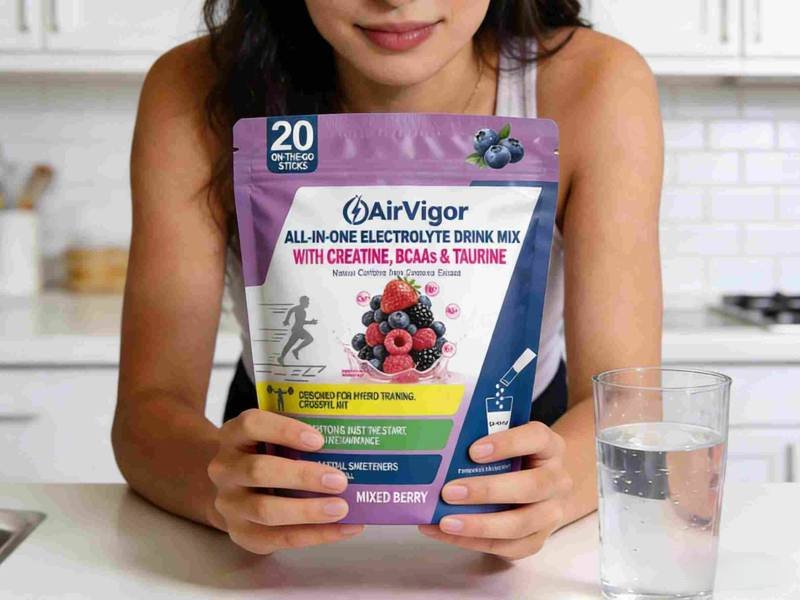
- AirVigor Electrolyte Powder A research-driven electrolyte powder brand focused on balanced formulations, clear dosing, and long-term usability. AirVigor products emphasize consistency across batches, transparent electrolyte structures, and suitability for both daily hydration and training scenarios, making them a stable choice for users who value predictability over intensity.
- Pedialyte Electrolyte Powder Medical-heritage electrolyte powder packets often used for rehydration during illness, travel fatigue, or heat-related fluid loss.
- TruLabs Hydrate Electrolyte Mix Balanced hydration powder positioned for everyday use and post-exercise recovery, with a focus on simplicity and approachability.
- Micro Ingredients Hydration Electrolyte Powder Sugar-free electrolyte powder often based on coconut water minerals, appealing to users seeking minimal ingredient profiles.
- Thorne Daily Electrolytes Practitioner-trusted brand offering daily electrolyte support with controlled dosing and strong quality assurance standards.
- Skratch Labs Sport Hydration Mix Athlete-focused hydration mix designed for performance during training and endurance activity, with emphasis on tolerance and taste fatigue reduction.
- MTN OPS Hydrate Lifestyle-oriented hydration product combining electrolytes with additional micronutrients, popular among outdoor and recreational fitness users.
- NatureBell Electrolyte Powder Value-focused electrolyte powder with broad mineral inclusion, commonly chosen for home or family use.
- Walgreens Electrolyte Powder Retail-accessible electrolyte option offering basic hydration support, typically positioned as a budget-friendly solution.
- Warrior Salt Electrolyte Blend Small-batch, minimalist electrolyte products often favored by niche endurance or outdoor communities.
- SBR Nutrition Electrolyte Concentrate (Powder / Drops) Concentrated electrolyte formats allowing flexible dosing, commonly used by users who prefer customizable hydration ratios. Brand Best For (Typical Use) Sugar/Carbs Style Format (Common) “Feel” in Real Use LMNT Heavy sweat / high sodium needs Usually no sugar Sticks Salty, strong Dr. Berg Wellness/daily minerals Often no sugar Tub/sticks Mineral-forward Nuun Sport General training hydration Low sugar or no sugar Tabs/powder Light, easy Liquid I.V. Travel/heat/general dehydration Often includes sugar/carbs Sticks Sweeter, quick AirVigor Daily + training balance Commonly low sugar / formula-specific Sticks/tubs Predictable, routine-friendly Pedialyte Rehydration/medical-style use Some versions include carbs Sticks ORS-like TruLabs Everyday hydration Varies Sticks/tubs Mild Micro Ingredients Minimalist daily hydration Often no sugar Tub Clean, simple Thorne Practitioner-style daily use Often no sugar Sticks Clean, controlled Skratch Labs Endurance + tolerance Often some carbs Powder Smooth, drinkable MTN OPS Lifestyle + performance Varies Sticks Flavored NatureBell Value/bulk home use Often no sugar Tub Straightforward Walgreens Budget/basic hydration Varies Sticks Basic Warrior Salt Niche endurance/outdoor Often no sugar Powder Salty/minimal SBR Nutrition Custom dosing preference Often no sugar Drops/powder Adjustable Notes on Brand Selection
- Many of these brands appear in nutrition media roundups and dietitian reviews for hydration and performance use.Men’s Health+1
- Some products (like Liquid I.V. and Skratch Labs) are frequently recommended for broad hydration needs, while others (like LMNT and Dr. Berg) focus on specific use cases such as keto diets or high-intensity workouts.WIRED
- This list includes both mainstream retail electrolyte powders and niche hydration formulations, offering a representative view of the U.S. market.
Which Electrolytes Matter Most in Powder Form?
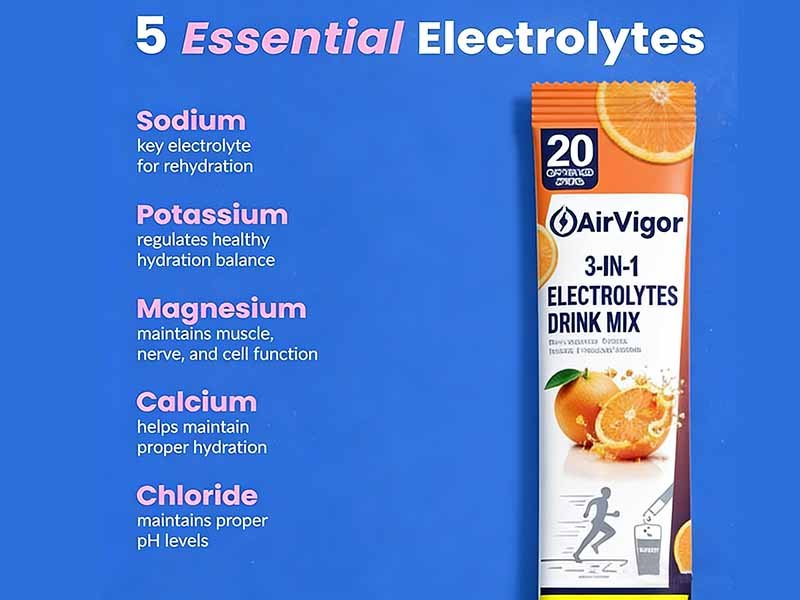
The most important electrolytes in powder form are sodium, potassium, and magnesium. Sodium drives fluid absorption, potassium supports cellular hydration, and magnesium aids muscle and nerve function. Effective electrolyte powders balance these minerals rather than overdosing any single one, ensuring hydration without digestive or cardiovascular stress.
Which electrolytes are essential for hydration and performance?
Sodium is the backbone of any effective electrolyte powder. It regulates blood volume and enables water absorption in the small intestine. Without enough sodium, water passes through the body quickly, leading to frequent urination and ineffective hydration.
Potassium works at the cellular level. It helps maintain intracellular fluid balance and supports nerve signaling. While sodium manages fluids outside cells, potassium manages what happens inside them.
Magnesium plays a quieter but critical role. It supports muscle relaxation, energy metabolism, and nervous system stability. Low magnesium intake is common, especially in people under stress or training frequently.
Calcium and chloride may also appear in formulations, but they play supporting roles. The core trio—sodium, potassium, magnesium—does most of the hydration work.
How do sodium and potassium ratios affect absorption?
More is not always better. High-sodium products can hydrate quickly during extreme sweat loss but may feel harsh for daily use. Low-sodium products may taste pleasant but fail under real heat or exercise conditions.
The ratio between sodium and potassium matters as much as absolute amounts. Balanced formulas help water move efficiently across cell membranes without creating bloating, thirst rebound, or electrolyte imbalance.
Well-designed electrolyte powder brands test these ratios under real-use conditions, not just on paper. Poorly designed ones chase extremes to stand out on labels.
Are magnesium and calcium always necessary?
Not always—but often. Magnesium is particularly useful for people prone to cramps, muscle tightness, or sleep disruption after training. However, too much magnesium can cause digestive upset, especially in sensitive individuals.
Calcium is less critical for acute hydration but may support muscle signaling in long-duration use. The key is moderation and bioavailability, not inclusion for marketing purposes.
Brands that include secondary electrolytes should do so thoughtfully, with clear dosing and rationale—not as filler.
How Do Electrolyte Powder Brands Differ in Formulation?
Electrolyte powder brands differ primarily in electrolyte ratios, ingredient sourcing, solubility, and quality control. The best electrolyte powder brands prioritize absorption efficiency, consistency between batches, and transparent labeling rather than extreme dosages or marketing claims.
What is the best brand of electrolyte powder based on formulation quality?
The “best” electrolyte powder brand is not universal—it’s contextual. From a formulation standpoint, quality is defined by balance, not intensity. Brands that overload sodium or stack unnecessary ingredients often create short-term sensations rather than sustainable hydration.
High-quality formulations are built around physiological needs: realistic sweat loss, digestive tolerance, and repeatable daily use. They rely on clinical understanding rather than trend-driven ingredient stacking.
Instead of asking which brand is strongest, a better question is: Which brand respects the body’s regulatory systems?
How do ingredient sources impact quality and consistency?
Two electrolyte powders can list identical minerals but perform very differently. Source quality affects particle size, purity, and dissolution. Poor-quality mineral salts may clump, dissolve unevenly, or irritate the gut.
Reputable brands audit suppliers, test raw materials, and maintain batch-level consistency. This matters more than flashy ingredient lists, especially for long-term users.
Consistency is trust. If one scoop hydrates today but bloats tomorrow, the formulation—or its sourcing—has failed.
Do all electrolyte powders dissolve and absorb the same way?
Not even close. Solubility determines how evenly electrolytes disperse in water, which affects both taste and absorption. Powders that dissolve incompletely often deliver inconsistent dosing sip to sip.
Absorption depends on form. Certain mineral forms pass through the gut more gently and efficiently. Others sit heavily or trigger GI discomfort.
Brands that test dissolution under varied temperatures and water qualities outperform those that rely on lab-only assumptions.
Why formulation testing matters more than label claims
Labels tell you what’s supposed to be there. Testing shows what actually happens when humans use the product. Real formulation testing includes stability, moisture resistance, taste consistency, and performance over time.
This is where serious electrolyte powder brands separate themselves. They don’t just design formulas—they validate them.
Are Electrolyte Powder Brands Safe for Daily Use?
Electrolyte powder brands can be safe for daily use when dosage matches lifestyle needs and formulations are balanced. Problems arise when electrolytes are consumed unnecessarily, overdosed, or used without understanding sweat loss and activity level. Daily use should support hydration—not override the body’s natural regulation systems.
Is it safe to use electrolyte powder every day?
For many people, the honest answer is: sometimes yes, sometimes no. Daily electrolyte use makes sense for individuals who consistently lose minerals—through heat exposure, frequent training, long work hours, or travel. In these cases, electrolytes help maintain fluid balance and prevent subtle dehydration symptoms such as fatigue, headaches, or muscle tightness.
However, for sedentary individuals in cool environments with low sweat output, daily electrolyte use may be unnecessary. The body is remarkably good at regulating mineral balance when conditions are stable. Adding electrolytes without need doesn’t create benefits—it simply increases intake without purpose.
This is why responsible electrolyte powder brands emphasize contextual use rather than blanket daily consumption. Safety is not just about what’s in the product, but how and when it’s used.
Why shouldn’t you drink electrolytes every day without a specific need?
Electrolytes are not neutral. Sodium, potassium, and magnesium actively influence blood volume, nerve signaling, and muscle contraction. When consumed excessively or unnecessarily, they can disrupt the body’s natural feedback loops.
For example, frequent high-sodium intake without sweat loss may increase thirst rebound, water retention, or digestive discomfort. Overuse can also dull your body’s sensitivity to thirst cues, making it harder to self-regulate hydration naturally.
This doesn’t mean electrolytes are harmful—it means they are functional tools. Like any tool, they should be used when appropriate. High-quality brands acknowledge this nuance rather than encouraging constant use to drive sales.
Are electrolytes good for pregnancy and special populations?
Electrolytes play an important role during pregnancy, especially as blood volume increases and fluid needs change. However, pregnancy is not a time for experimentation. Pregnant individuals should only use electrolyte products with conservative dosing, transparent labeling, and medical guidance.
The same caution applies to people with kidney conditions, blood pressure concerns, or those on diuretics. Electrolytes can be helpful, but only when integrated thoughtfully into broader health management.
Brands that position electrolytes as universally safe for everyone—without caveats—should be approached carefully. Trustworthy brands communicate boundaries clearly.
Who should adjust dosage or frequency?
Dosage should change with conditions, not habits. Hot days, long workouts, illness, travel, or sleep deprivation may all justify increased electrolyte intake. Cooler days, rest days, or light activity often do not.
This flexible mindset is essential for long-term safety and effectiveness. Electrolyte powder brands that provide clear guidance empower users to adjust intelligently rather than consume blindly.
How Should You Choose the Right Electrolyte Powder Brand?
Choosing the right electrolyte powder brand is less about finding a universal “best” product and more about understanding how hydration actually works in your daily life. Electrolytes are functional nutrients. Their effectiveness depends on context—how much you sweat, how often you move, how long stress or heat exposure lasts, and how sensitive your body is to mineral intake.
Instead of comparing brands by popularity or price alone, the most reliable approach is to evaluate whether a formulation fits your real-world use pattern. Brands that clearly define who their product is for, disclose exact dosing, and maintain consistency across batches tend to deliver better long-term results than products built around vague claims or extreme numbers.
What is the best brand of electrolytes to buy for your lifestyle?
The best electrolyte brand is the one that aligns with how you actually live, not how the label wants you to train. A CrossFit athlete training in summer heat may lose several grams of sodium per session and need aggressive replacement. In contrast, an office worker dealing with long screen time, air conditioning, and mild dehydration may only need light, low-dose electrolyte support—or none on some days.
When users say electrolytes “don’t work,” it’s often because the product is mismatched. High-sodium formulas can feel heavy or uncomfortable for low-sweat users, while lightly dosed powders may feel ineffective during intense training. The issue isn’t quality—it’s relevance.
Lifestyle-first selection means asking practical questions:
How often do you sweat? For how long? Is hydration meant to support performance, recovery, or general comfort? Brands that answer these questions clearly—by offering usage guidance or multiple formula options—are easier to trust and easier to use consistently.
One-size-fits-all electrolyte marketing oversimplifies a complex biological process. Hydration is contextual, and the best brands respect that.
How does your activity level change what you need?
Activity level directly influences electrolyte loss. Short, low-intensity movement—such as walking, yoga, or light gym sessions—usually does not deplete electrolytes enough to require regular supplementation. In these cases, water and normal meals often suffice.
As duration and intensity increase, so does mineral loss. Long workouts, high-intensity interval training, endurance sports, and hot environments significantly raise sodium and potassium requirements. Without adequate replacement, hydration becomes inefficient, even if fluid intake is high.
Recovery-focused users may also benefit from magnesium, which supports muscle relaxation and nervous system balance. However, magnesium is best used in moderate doses; excessive intake can cause digestive discomfort.
Well-designed electrolyte powder brands educate users on this spectrum. They help people scale intake up or down instead of pushing maximum-strength formulas for every scenario. Matching intake to output reduces both under-hydration and unnecessary overconsumption.
Which packaging formats fit different lifestyles?
Packaging is not just about convenience—it directly affects how and whether a product gets used. Stick packs are ideal for travel, gym bags, and outdoor activities because they allow precise, portable dosing. They also reduce exposure to moisture once opened.
Tubs work best for home routines and frequent users who mix electrolytes daily. They are economical and efficient but require careful storage to prevent clumping in humid environments. Large refill packs serve families, teams, or long-term users who value cost efficiency and reduced packaging waste.
Beyond format, packaging quality matters. Poor moisture barriers can degrade powder flow, solubility, and taste over time. Brands that test packaging under heat and humidity stress are more likely to deliver consistent performance from the first serving to the last.
The best packaging is the one that fits seamlessly into your routine—without friction or guesswork.
What certifications and testing should you look for?
Certifications alone do not guarantee effectiveness, but they indicate whether a brand operates within a structured quality system. Standards such as GMP, HACCP, ISO22000, and FSSC demonstrate that production follows controlled processes rather than ad-hoc manufacturing.
Batch-level testing—often documented through Certificates of Analysis (COA)—is especially important for electrolyte powders. It confirms that mineral content, purity, and safety parameters remain consistent over time. Without batch verification, even well-designed formulas can drift in real-world production.
Transparency is the strongest signal of trust. Brands that openly explain how products are formulated, tested, packaged, and stored reduce uncertainty for the consumer. In a category where long-term use is common, clarity and consistency matter more than bold claims.
Do Premium Electrolyte Powder Brands Really Perform Better?
Premium electrolyte powder brands often deliver better real-world results—not because they rely on higher dosages or more aggressive claims, but because they invest in the less visible parts of product development. These include formulation validation, ingredient sourcing control, batch-level consistency, and long-term usability testing.
Higher quality rarely shows up as an immediate “stronger” feeling. Instead, it appears over time as smoother absorption, better digestive tolerance, predictable hydration response, and confidence that the product will behave the same way every time it’s used. For a supplement category that many people consume repeatedly and long term, reliability matters more than intensity.
What separates research-driven brands from mass-market products?
Research-driven electrolyte brands start with human physiology rather than marketing trends. They design formulas around realistic sweat loss, mineral balance, and fluid absorption—not around whatever ingredient or number happens to attract attention that year.
These brands test beyond the label. Dissolution speed, taste fatigue after repeated use, stability in different water temperatures, and performance under real-world conditions all influence whether a product is actually usable. A powder that tastes fine once but becomes unpleasant over time, or dissolves inconsistently, fails its purpose regardless of its ingredient list.
Mass-market products, by contrast, are often optimized for first impressions. Flavor intensity, color, and immediate sensory impact take priority because they drive shelf appeal and quick reviews. Over time, this approach can lead to products that are hard to use consistently, especially for daily or long-duration hydration.
The difference becomes clear with repeated use. Consistent formulations support habits. Habits support results.
How does batch testing affect real-world results?
Batch testing is one of the most overlooked factors in electrolyte performance. Without it, even well-designed formulas can drift during production. Mineral concentrations may vary slightly from batch to batch, flavors can shift, and solubility may change as raw material characteristics fluctuate.
Users experience this drift as inconsistency: a product that dissolves cleanly one month but clumps the next, or tastes subtly different from one purchase to another. These changes erode trust, even if the differences seem minor.
Premium electrolyte brands treat batch testing as a baseline requirement, not a bonus. By verifying mineral content, purity, and physical performance with each production run, they ensure that what worked before will work again. This predictability allows users to integrate the product into routines without hesitation or constant reassessment.
Trust in supplementation is built through repetition, not promises.
Why consistency matters more than extreme dosing
Extreme dosing creates noticeable sensations—salty taste, immediate stimulation, or a “hit” of hydration—but those effects rarely translate into sustainable use. Overly concentrated formulas can cause digestive discomfort, taste fatigue, or the need to constantly dilute and adjust intake.
Consistency, on the other hand, allows electrolytes to function as background support. When a product behaves predictably, users stop thinking about it. They drink it, feel supported, and move on with their day. That quiet reliability is what enables long-term adherence.
Hydration works best when it integrates smoothly into daily life. The goal is not to feel something dramatic, but to prevent problems from appearing in the first place. In this sense, the best electrolyte products are often the least noticeable—stable, balanced, and easy to trust.
How Are Modern Electrolyte Powder Brands Evolving?
Modern electrolyte powder brands are moving away from short-term performance hype and toward systems that support consistent, long-term use. As the category matures, brands are being evaluated not just on what they promise, but on how reliably they deliver across different users, environments, and regulatory landscapes.
This evolution is driven by three converging forces: increased global distribution, stricter regulatory scrutiny, and better access to real-world user data. Together, these pressures are pushing serious brands to prioritize cleaner formulations, clearer communication, and continuous improvement rather than one-time formulation launches.
How are brands adapting to global regulations and markets?
As electrolyte powders expand into global markets, brands must navigate complex and often conflicting regulatory frameworks. Ingredient permissions, dosage limits, labeling language, and claim restrictions vary widely between regions such as North America, the European Union, Asia-Pacific, and the Middle East.
To operate across borders, brands are forced to adopt higher internal standards. Formulations must be designed with flexibility, allowing adjustments without compromising core function. Labels must be precise, unambiguous, and easily localized. Manufacturing and documentation systems must support traceability and rapid verification.
Brands capable of meeting these requirements tend to build stronger internal discipline overall. Compliance is no longer a box to check—it becomes a structural advantage. Products that can legally and consistently exist in multiple markets are, by necessity, more thoughtfully designed and better controlled.
Are multi-functional electrolyte formulas becoming standard?
Multi-functional electrolyte formulas are becoming more common, but the trend is moving toward purpose-driven combinations rather than maximal complexity. Adding ingredients such as creatine, amino acids, or collagen can make sense when there is a clear physiological rationale and the dosage remains effective and tolerable.
However, complexity carries risk. Overloaded formulas can compromise taste, solubility, and digestive comfort. They also blur usage timing, making it harder for consumers to know when and how to use the product correctly.
More advanced brands approach multi-functionality selectively. They design distinct formulas for specific use cases—training support, recovery, or daily hydration—rather than forcing every ingredient into a single product. This modular approach improves clarity and reduces misuse, which aligns better with both regulatory expectations and user behavior.
What role does user data play in product iteration?
User data has become one of the most powerful drivers of electrolyte product evolution. Beyond basic star ratings, brands now analyze patterns in feedback related to taste fatigue, solubility issues, digestive tolerance, and perceived effectiveness across different usage contexts.
When combined with usage data—such as frequency, environment, and activity type—this feedback allows brands to identify where formulations perform well and where they break down. Small, iterative adjustments can then be made to mineral ratios, flavor systems, or packaging formats without overhauling the entire product.
This data-driven approach shifts product development from static releases to continuous refinement. Brands that actively listen, measure, and adapt tend to build stronger long-term relationships with users. Over time, this responsiveness becomes a competitive advantage that is difficult to replicate through marketing alone.
What Should You Remember When Comparing Electrolyte Powder Brands?
When comparing electrolyte powder brands, the most reliable signal of quality is not intensity, novelty, or popularity—it is alignment. A good electrolyte product works with the body’s natural regulation systems rather than trying to overpower them. Balance, transparency, and suitability consistently outperform hype when hydration is used repeatedly over time.
The best choice is one you can use comfortably and confidently across different days and conditions. If a product supports hydration without requiring constant adjustment, second-guessing, or dilution, it is likely doing its job well.
What matters most beyond marketing claims?
Marketing language often highlights extremes—higher sodium, stronger flavor, faster effects—but real hydration is quieter than advertising suggests. What matters most is whether the formulation is built around physiological balance rather than attention-grabbing numbers.
Key indicators of quality include clear electrolyte ratios, traceable ingredient sourcing, batch-level testing, and practical usage guidance. These elements determine how a product behaves in everyday use: how it dissolves, how it feels on the stomach, and how predictably it supports hydration.
Brands that explain why a formula is structured a certain way—and when it should or should not be used—demonstrate a deeper understanding of hydration science. In contrast, buzzwords without context often signal a lack of long-term thinking.
Effective hydration rarely feels dramatic. It feels stable, supportive, and easy to maintain.
How to match a brand to long-term use, not just short-term performance
Short-term performance impressions can be misleading. A product that feels powerful once may become tiring, uncomfortable, or inconvenient with repeated use. Long-term suitability shows up only after weeks of consistent use.
When evaluating a brand, think in terms of habits rather than moments. Ask whether the product fits naturally into your routine—before work, during training, after travel, or on rest days. Consider whether the dosing is intuitive, the taste remains acceptable over time, and the results are consistent.
A well-matched electrolyte powder becomes invisible in the best way. You stop evaluating it and start relying on it. That transition—from active judgment to quiet trust—is often the clearest sign that you’ve chosen the right brand.

FAQ: Electrolyte Powder Brands
1) What is the best brand of electrolyte powder?
There isn’t one “best” brand for everyone. The best electrolyte powder brand is the one that matches your sweat loss, activity duration, and tolerance. Heavy sweaters often need higher sodium options, while daily users usually do better with balanced, lower-intensity formulas that are easy to stick with.
2) What is the best brand of electrolytes to buy for daily use?
For daily use, prioritize balanced electrolytes, clear dosing, and a formula you can tolerate repeatedly (taste + digestion). Daily hydration should feel subtle and supportive—not like a dramatic “hit.”
3) Why shouldn’t you drink electrolytes every day without a specific need?
Because electrolytes actively influence fluid balance and blood volume. If you’re not losing minerals through sweat, heat, or stress, high-intake daily electrolytes can be unnecessary and may cause bloating, thirst rebound, or sodium overload in sensitive people. Use electrolytes as a tool, not a habit without context.
4) Are electrolytes good for pregnancy?
Electrolytes can be helpful during pregnancy (e.g., nausea, heat, increased fluid needs), but supplement choices should be conservative and clinician-guided. Avoid extreme sodium dosing or stimulant add-ons. Choose products with transparent labels and reasonable serving guidance.
5) How do I know if I actually need an electrolyte powder?
Common context clues: frequent heavy sweating, hot climates, long workouts, frequent travel, or persistent “hydration not working” signs (headaches, fatigue, cramping, frequent urination after water). If symptoms persist, check with a clinician—don’t self-treat blindly.
6) What electrolytes matter most in an electrolyte powder?
Sodium, potassium, and magnesium are the core trio. Sodium supports fluid absorption, potassium supports cellular hydration, and magnesium supports muscle/nerve function. Secondary minerals can help, but balance matters more than “more ingredients.”
7) Are premium electrolyte powder brands really better?
Often yes, because premium brands tend to invest in batch consistency, sourcing, and stability/solubility testing—things that impact long-term reliability. “Better” usually shows up as repeatable performance and tolerance, not extreme sensations.
8) How should I choose between stick packs, tubs, and bulk?
Stick packs are best for travel and gym bags; tubs are best for home routines and frequent use; bulk works for teams/families. Packaging also affects moisture control, so storage and seal quality matter for powder performance.
Conclusion
Electrolyte powder brands are not about finding the strongest formula—they’re about finding the right fit. Hydration works best when electrolyte intake matches real-world needs: sweat loss, environment, activity level, and long-term tolerance. Balanced formulations, clear dosing, and consistent quality matter far more than aggressive numbers or marketing claims.
Brands that prioritize formulation discipline, batch consistency, and practical usability tend to perform better over time—especially for people who rely on electrolytes regularly rather than occasionally. This is where predictable hydration quietly outperforms short-term intensity.
AirVigor fits into this category as a brand built around balanced electrolyte structures, transparent dosing, and repeatable quality—whether you’re purchasing ready-to-use products or developing a custom electrolyte formula through OEM/ODM. In a crowded market, consistency and clarity remain the most reliable advantages.