

Hydration is often treated as a simple habit — drink more water and move on.
But if you’ve ever started a workout feeling strong, only to hit a sudden wall halfway through… or woken up the next day feeling unusually sore, heavy, and drained, hydration alone may not be the real issue.
In many cases, the missing piece is electrolyte balance.
This is where understanding electrolyte powder benefits becomes essential — especially for people who train, sweat, and stay active without being professional athletes. When you lose fluids through sweat, you also lose key minerals that regulate muscle contraction, nerve signaling, and fluid distribution.
Electrolytes don’t just help you feel hydrated. They help your body maintain performance during activity, recover more efficiently afterward, and adapt to repeated physical stress over time — so each session builds on the last instead of breaking you down.
What Are Electrolytes — and Why Do They Matter for Recovery?
Electrolytes are minerals that carry an electrical charge when dissolved in water. That “electrical” function is what allows your body to control hydration at a cellular level — including how muscles contract, how nerves communicate, and how fluids move in and out of tissues.
The most important electrolytes for training and recovery include:
- Sodium
- Potassium
- Magnesium
- Calcium
- Chloride
Together, they form the foundation of neuromuscular function, hydration balance, and recovery capacity.
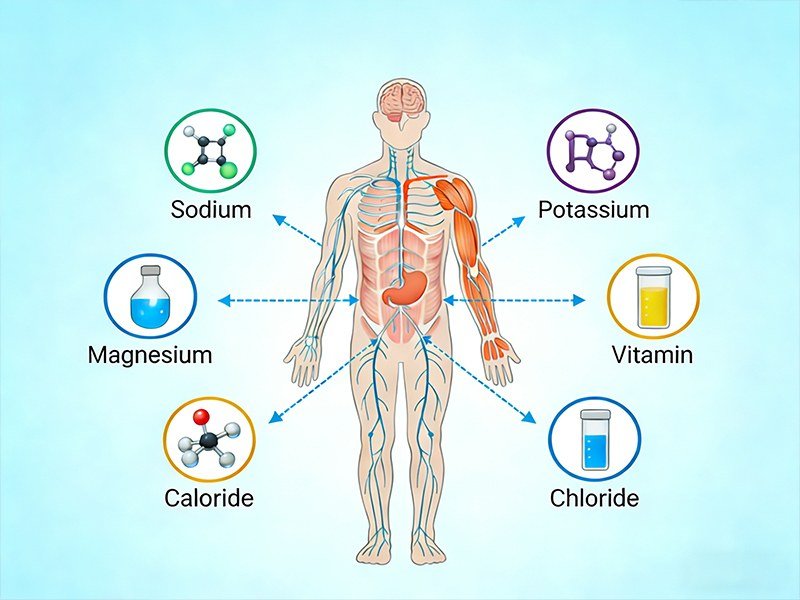
Electrolytes vs Water: What’s the Difference
Water helps restore fluid volume — but electrolytes help your body use that fluid effectively.
When you sweat, you lose not only water but also sodium, chloride, potassium, and other minerals. If you replace fluids without replacing electrolytes, you may notice:
- You still feel tired or “flat.”
- Muscles feel heavy or uncoordinated
- Cramps or tightness appear more easily
- Recovery feels slower than it should
Electrolytes help your body absorb, distribute, and retain the water you drink, which is especially important after exercise.
How Each Electrolyte Supports Recovery
- Sodium supports fluid absorption and helps maintain blood volume for circulation and performance.
- Potassium works with sodium to support muscle contraction/relaxation and nerve impulses.
- Magnesium supports muscle relaxation, energy metabolism, and nervous system regulation.
- Calcium is required for muscle contraction and normal neuromuscular signaling.
- Chloride supports overall electrolyte balance and helps maintain proper fluid equilibrium.
Recovery depends on balance, not excess. These minerals work best when replenished together in practical amounts.
Electrolytes and the Recovery–Adaptation Cycle
Training is the stimulus. Recovery is where adaptation happens.
When electrolyte balance is restored:
- Muscles relax and reset more effectively
- Fluid balance stabilizes
- The nervous system shifts away from “stress mode.”
- Next-day training quality is easier to maintain
In simple terms:
You don’t get stronger during the workout — you get stronger when recovery is supported properly.
Key Electrolyte Powder Benefits
Electrolyte powders do more than replace fluids. A well-designed formula helps support muscle function, recovery quality, and fatigue resistance — especially when sweating is frequent.
1) Better Hydration Efficiency
Electrolytes support fluid absorption and retention, helping water actually reach the places you need it — especially after sweat loss.
2) Fewer Cramps and Less Muscle “Tightness.”
Balanced sodium, potassium, magnesium, and calcium support the contraction-relaxation cycle that helps reduce spasms and tightness after hard efforts.
3) Faster Post-Workout Recovery
Replenishing minerals after training helps muscles and nerves return to baseline sooner, which can reduce next-day “drag” and improve training consistency.
4) More Stable Energy (Without Sugar Spikes)
Many people don’t need a high-sugar sports drink for recovery. Electrolyte-focused hydration supports steadier output without relying on sugar highs and crashes.
5) Better Resilience During Busy Training Weeks
When training volume rises (or stress is high), hydration + electrolyte balance becomes more important for staying consistent and feeling less run-down.
Who Benefits Most From Electrolyte Powder
Electrolyte powder benefits aren’t only about thirst — they’re about recovery quality and repeatable performance.

Who Benefits Most From Electrolyte Powder?
Electrolyte powder can benefit anyone who sweats — but it matters most when sweat loss is frequent, prolonged, or paired with training stress.
| Group | Why They Need It | Most Relevant Benefits | Recommended For |
|---|---|---|---|
| Athletes | High sweat loss and repeated training sessions increase mineral depletion. | Hydration efficiency, fewer cramps, better recovery consistency. | Runners, cyclists, strength athletes, team sports. |
| HIIT / Cross-training | Short, intense sessions can cause heavy sweating and rapid fatigue. | Better performance stability, smoother recovery between sessions. | HIIT, CrossFit-style training, circuits. |
| Endurance training | Long duration increases cumulative electrolyte loss. | Reduced cramping risk, steadier late-session output. | Long runs, long rides, hiking. |
| Outdoor work & active lifestyle | Heat exposure + activity raises sweat loss. | Less fatigue, better hydration on hot days. | Construction, landscaping, travel, festivals. |
| Hot/humid climates | Sweat loss increases even with “normal” activity. | Better fluid balance, less heat-related fatigue. | Summer training, tropical travel. |
| Low-carb / keto | Electrolyte loss can increase due to fluid shifts. | Reduced fatigue, fewer cramps/tightness. | Keto / low-carb routines. |
| Post-illness dehydration | Fluid + mineral loss can occur after GI illness. | More complete rehydration support. | Recovery phases (as tolerated). |
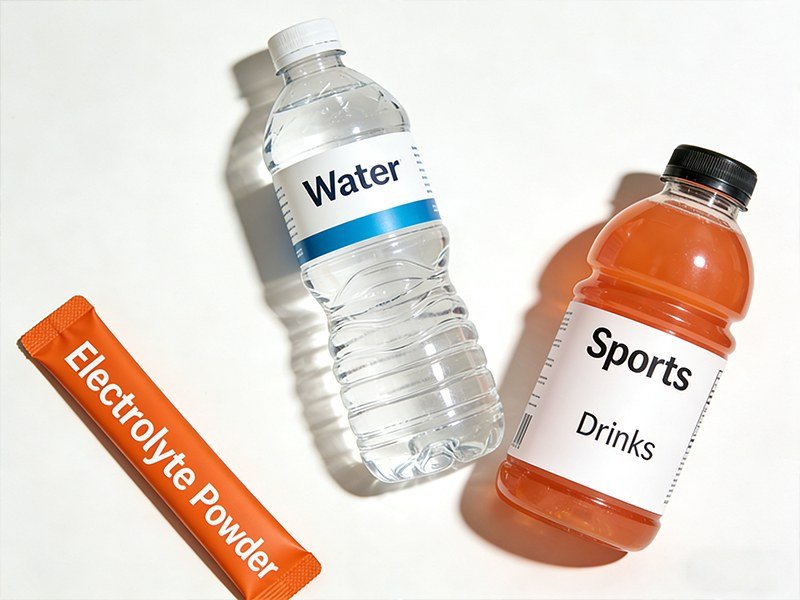
Electrolyte Powder vs Water vs Sports Drinks: Which Is Best?
Different hydration options solve different problems.
| Option | Best For | Pros | Limitations |
|---|---|---|---|
| Water | Daily hydration, light activity | Simple, calorie-free | Doesn’t replace minerals lost in sweat |
| Sports drinks | Short-term energy + hydration | Electrolytes + carbs | Often high sugar / calories |
| Electrolyte powder | Sweat loss + recovery support | Electrolytes without unnecessary sugar | Quality depends on formula |
How to choose quickly
- If you’re not sweating much, water is usually enough.
- If you need quick carbs during intense sessions, a sports drink can help.
- If your goal is hydration + recovery (without sugar overload): electrolyte powder is often the cleanest fit.
How to Choose a High-Quality Recovery Electrolyte Powder
Not all electrolyte powders are built for recovery. Look for signals that the formula is designed for balanced hydration + neuromuscular support, not just flavor.
1) A complete electrolyte spectrum
Prioritize formulas containing sodium, potassium, magnesium, calcium, and chloride — not just salt alone.
2) Practical sodium
For most active, non-professional users, a moderate range (often ~200–500 mg sodium per serving) supports hydration without pushing into “very salty” territory.
3) Bioavailable mineral forms
Citrate and gluconate forms are commonly used for absorption-friendly formulas.
4) Low sugar (or no sugar)
For recovery-focused hydration, you usually don’t need high sugar content.
5) Transparent labeling
Avoid vague “proprietary blends” that don’t disclose key mineral amounts.
A Practical Recovery-Focused Electrolyte Option
Many electrolyte products are designed for generic hydration. A recovery-focused option is built to support the “after” — fatigue resistance, muscle reset, and consistent output across sessions.
What a recovery-focused formula looks like
Below is an example of a balanced recovery approach using the exact, correct numbers you provided:
| Ingredient | Amount (per serving) | Why It Matters for Recovery |
|---|---|---|
| Sodium (from 550 mg sodium chloride) | 220 mg | Supports fluid absorption and hydration efficiency after sweating. |
| Chloride (from sodium chloride & potassium chloride) | 350 mg | Works with sodium to maintain fluid equilibrium and hydration function. |
| Potassium (potassium citrate & potassium chloride) | 60 mg | Supports neuromuscular signaling and helps reduce cramp-prone fatigue. |
| Magnesium (magnesium citrate & magnesium gluconate) | 60 mg | Supports muscle relaxation and recovery comfort after training. |
| Calcium (calcium citrate & calcium gluconate) | 20 mg | Supports normal muscle contraction and neuromuscular function. |
| Vitamin D3 | 25 µg | Supports calcium utilization and overall training resilience. |
| Vitamin K2 | 20 µg | Complements D3 to support mineral handling in the body. |
When to use it
| Use Case | Timing | What You’ll Notice |
|---|---|---|
| Hard workouts | Within ~30 minutes after | Faster rehydration feel, smoother recovery |
| Endurance sessions | During + after | Steadier hydration and reduced cramp risk |
| Hot days / heavy sweating | As needed | Less “flat” feeling and better hydration consistency |
| Active lifestyle | Any time you sweat | More stable daily hydration support |
See ingredients, flavor options (Blood Orange / Watermelon), and verified customer reviews on Amazon US.
Can Electrolyte Powder Help With Muscle Soreness and Fatigue?
Electrolytes won’t “erase” soreness overnight — but electrolyte imbalance can amplify fatigue and make recovery feel heavier than it needs to. A recovery-focused electrolyte powder supports the fundamentals that influence soreness and fatigue perception:
How it helps in real life
- The hydration function improves (water actually gets utilized)
- Neuromuscular signaling stabilizes (less tightness and cramp-prone feel)
- Post-exercise fatigue becomes more manageable (less “drained” sensation)
- Recovery consistency improves (you feel more ready for the next session)
If your soreness and fatigue are worse when you sweat heavily or train repeatedly, electrolyte support is a practical lever to improve recovery quality.
Can You Use Electrolyte Powder Every Day?
Yes — electrolyte powder can be used daily, but daily use makes the most sense when you regularly sweat or train.
Daily use makes sense if you
- Train multiple times per week
- Sweat easily or live in warm climates
- Do long sessions, outdoor work, or frequent activity
- Often feel “flat,” cramp-prone, or slow to recover
Daily use may be unnecessary if you
- Sweat very little
- Do low-intensity activity only
- Already get sufficient minerals from diet and hydration habits
Practical guideline
- Many active people do well with 1 serving on training/high-sweat days.
- Increase only when activity duration and sweat loss meaningfully increase.
Choosing a balanced, low-sugar formula is the simplest way to keep daily use “low-burden” and consistent.

FAQ: Quick Answers People Search For
Is electrolyte powder good for recovery?
Yes. A balanced electrolyte powder supports hydration efficiency and neuromuscular recovery — especially after sweating or frequent training.
Is electrolyte powder better than sports drinks?
Often, yes, for recovery-focused hydration — especially if you want minerals without high sugar. Sports drinks can be useful when you specifically need carbs.
Can electrolyte powder help with muscle cramps?
It can help reduce cramp-prone conditions by supporting electrolyte balance (especially sodium/potassium/magnesium), particularly during prolonged sweating.
How often should you take electrolyte powder?
Most active people use it after workouts or on high-sweat days. Frequency should match sweat loss, climate, and training volume.
What should you avoid in electrolyte powders?
Overly high sugar, unclear labeling, and formulas that rely on “salt only” without a broader electrolyte profile.
Final Thoughts: Feel the Evolution in Every Rep
Electrolyte powder benefits go far beyond hydration. When formulated for recovery, electrolytes support the systems that determine whether training builds you up or wears you down: fluid balance, neuromuscular function, and recovery consistency.
Progress isn’t always dramatic — it’s often the small wins: finishing strong, waking up less sore, and showing up ready again.
That’s the evolution you feel rep by rep, week by week.
Feel the evolution in every rep.
Recover smarter. Train consistently. Build sustainable performance.
Content Credibility Note
This article is for general educational purposes. Individual hydration needs vary by activity level, sweat rate, climate, and diet. If you have medical conditions or take medications, consult a qualified healthcare professional.
For readers who want to explore a recovery-focused electrolyte option, you can review ingredient details, serving amounts, flavor options, and verified customer feedback on Amazon US.