Skip to content
Creatine Before or After Workout: Best Time to Take It
# Your Trusted Dietary Supplement Brand In US
- Emily

Table of Contents
Many people searching for creatine are not asking whether it works. They are trying to understand how to use it correctly. One of the most common questions is whether creatine should be taken before or after a workout. This matters because most users want better strength, better recovery, and better workout consistency, but they do not want to waste time on the wrong routine. The good news is that creatine is not a complicated supplement when the core principle is understood.
Creatine works by increasing the amount of stored phosphocreatine in muscle, which helps the body regenerate ATP during repeated high-intensity effort. In simple terms, it supports the energy system used during lifting, sprinting, and demanding training sessions. For most healthy adults, the exact timing matters less than taking 3–5 grams every day. While post-workout use may fit more naturally into a recovery routine, the real driver of results is consistent daily intake over time.
That is why this topic deserves a clear answer. Many workouts do not break down at the beginning. They break down in the middle, when power drops, reps slow, and fatigue builds faster than expected. Creatine does not act like a stimulant, but it can help reduce that performance drop-off when used correctly. Understanding when to take it is useful, but understanding how to use it consistently is what turns creatine from a popular supplement into a practical long-term tool.
What Is Creatine Before or After Workout?
Creatine before or after workout refers to the timing of daily creatine intake relative to a training session. In both cases, the purpose is the same: to increase creatine stored in muscle cells so the body can regenerate energy more efficiently during repeated high-intensity effort. For most users, the difference between before and after is small. What matters more is maintaining a consistent daily intake of 3–5 grams to keep muscle creatine levels stable over time.
What does creatine actually do?
Creatine increases phosphocreatine availability in muscle cells, helping regenerate ATP during short bursts of high-intensity activity such as lifting or sprinting.
In practical terms, creatine supports the body’s ability to sustain repeated efforts. ATP is the primary energy source for short-duration, high-output movements, but it is depleted quickly—often within 8–12 seconds of intense activity. Creatine helps restore ATP more efficiently between efforts, which is especially relevant in workouts involving multiple sets or intervals.
This mechanism becomes more noticeable in structured training:
- resistance training with moderate to heavy loads
- interval-based cardio or sprint training
- repeated explosive movements
A simplified comparison:
| Energy System Factor | Without Creatine Support | With Creatine Support |
|---|---|---|
| ATP regeneration speed | Slower | Faster |
| Short-burst performance | Declines quickly | Better maintained |
| Recovery between sets | Less efficient | More efficient |
For customers, this translates into more consistent performance across a session rather than a higher peak in a single effort.
How does creatine support workouts?
Creatine supports training by reducing performance decline across sets, allowing users to maintain more consistent strength and output throughout a session.
Most training sessions follow a predictable pattern:
- initial sets feel controlled and strong
- mid-session output begins to drop
- later sets show clear fatigue and reduced performance
Creatine helps reduce the rate of this decline. Over time, users may observe:
- more stable repetition counts across sets
- improved control in later stages of training
- slightly higher total training volume
This effect is particularly relevant for sessions lasting 45 minutes or longer, where cumulative fatigue becomes a limiting factor.
A practical example:
| Workout Phase | Typical Output Without Support | Output With Creatine Support |
|---|---|---|
| First 2–3 sets | Strong | Strong |
| Mid-session | Noticeable decline | More stable |
| Final sets | Reduced reps, slower pace | Better maintained output |
Rather than increasing maximum strength in a single moment, creatine helps preserve usable strength throughout the session.
Which creatine works best?
Creatine monohydrate remains the most reliable and widely used form due to its consistent performance, stable absorption, and well-established research support.
While multiple creatine variations are marketed, most do not show a clear advantage over monohydrate in practical use. For customers, the key considerations are not novelty, but reliability and consistency.
| Creatine Type | Key Characteristics | Practical Consideration |
|---|---|---|
| Creatine Monohydrate | Well-studied, stable, effective | Suitable for most users |
| Creatine HCL | Higher solubility, higher cost | Limited practical advantage |
| Buffered Creatine | Marketed as advanced form | No consistent performance benefit |
More important than the form itself are factors related to product quality:
- accurate dosage per serving
- purity of raw materials
- consistency across production batches
Inconsistent formulations can lead to uneven intake, which affects how effectively muscle creatine levels are maintained. For long-term users, this has a direct impact on results.
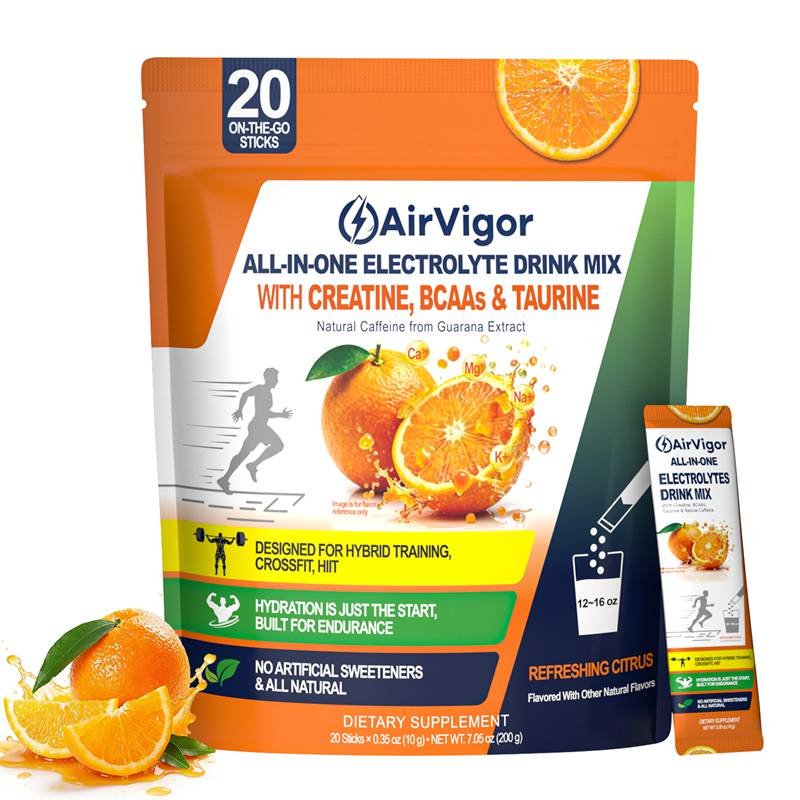
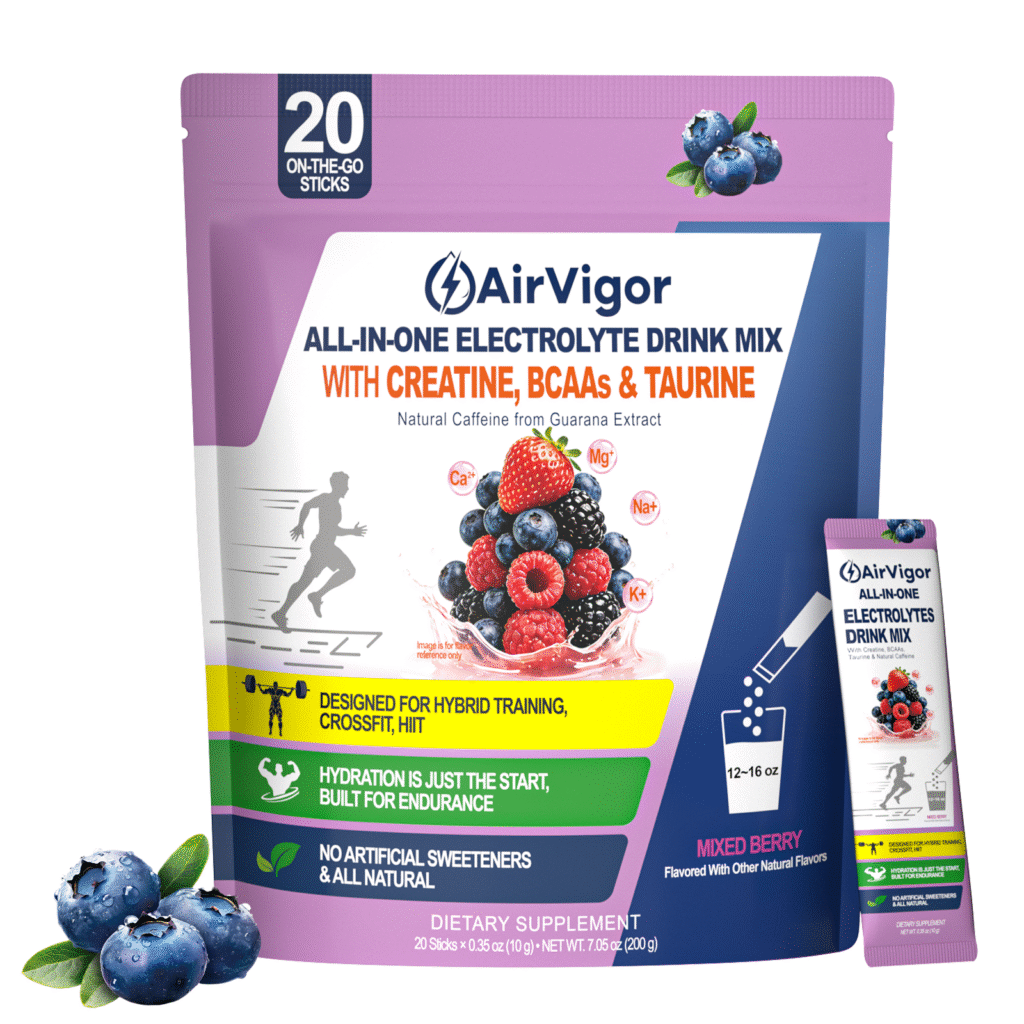
Brands that focus on controlled sourcing, clear formulation, and stable manufacturing processes—such as AirVigor—are designed to reduce this variability. For customers, this means a more predictable experience when integrating creatine into a daily routine.
How does timing fit into real use?
The difference between taking creatine before or after a workout is less about biological impact and more about how well the timing fits into a repeatable routine.
Creatine functions through accumulation. Muscle stores increase gradually with daily intake and remain elevated with consistent use. Because of this:
- taking creatine before training does not create an immediate performance spike
- taking creatine after training does not dramatically accelerate results
- missing doses has a greater impact than choosing the “wrong” timing
A practical comparison:
| Usage Pattern | Expected Outcome |
|---|---|
| Daily intake (any timing) | Stable muscle saturation and consistent performance |
| Only before workouts | Inconsistent levels if rest days are skipped |
| Only after workouts (no daily use) | Partial benefit |
| Irregular intake | Reduced effectiveness over time |
For most users, timing should be selected based on convenience:
- before workout if already part of a pre-training routine
- after workout if combined with recovery nutrition
- at a fixed time daily if schedule varies
This approach improves adherence, which is the main factor influencing long-term results.
How long does it take for creatine to work?
Creatine requires time to build up in muscle tissue. Results are not immediate and should be evaluated over several weeks rather than days.
The rate of saturation depends on intake strategy:
| Intake Method | Time to Reach Effective Levels |
|---|---|
| Loading phase (20g/day) | 5–7 days |
| Standard intake (3–5g/day) | 3–4 weeks |
Once saturation is reached, the body maintains elevated creatine levels with continued daily intake.
In real use, customers often report:
- minimal noticeable change in the first week
- improved training consistency after 2–3 weeks
- more stable performance and strength improvements after 4–6 weeks
The most consistent feedback is not a sudden increase in strength, but a reduction in fatigue and more reliable output during training sessions.
Creatine Before or After Workout — Which Is Better?
For most users, both options work. Taking creatine before a workout and taking it after a workout can both help improve training performance, as long as daily intake is consistent. The real issue is not whether the serving is taken 30 minutes earlier or later. The real issue is whether muscle creatine stores stay high enough, week after week, to support repeated strength output, better training volume, and more stable recovery. For most healthy adults, a daily intake of 3–5 grams matters more than chasing a narrow timing window. That said, timing still affects convenience, routine adherence, and how easily creatine fits into a person’s actual lifestyle. That is why this question remains important for customers making a real buying decision.
Does timing really matter?
Timing matters, but not as much as many people expect. Creatine does not work like caffeine or a high-stimulant pre-workout. A person does not take one serving and suddenly feel a fast surge in energy. Creatine works by gradually increasing the amount of stored creatine inside muscle tissue. Once those muscle stores rise, the body has a larger reserve available to help regenerate ATP during repeated high-intensity efforts.
That difference is important because it changes how users should think about “best timing.” With creatine, the body benefits from:
- regular daily intake
- sustained muscle saturation
- repeated use over weeks rather than single-use timing
A practical way to understand this is to compare creatine with other common supplements:
| Supplement Type | How It Works | What Matters Most |
|---|---|---|
| Caffeine-based pre-workout | Acute effect | Timing before training |
| Electrolytes | Acute and ongoing support | Timing plus hydration status |
| Creatine | Cumulative effect | Daily consistency |
This is why many users overestimate the importance of timing. In real use, the following pattern is more accurate:
- A user taking 3–5 grams every day will usually get better long-term results
- A user taking creatine only on workout days may see weaker and less stable results
- A user who constantly changes timing but misses doses will usually underperform compared with a consistent user
For customers, this matters because timing often becomes a distraction. The more useful question is not “What is the perfect minute to take creatine?” but “Can I keep using this product every day without routine failure?”
Why daily intake usually matters more than pre- or post-workout timing
Creatine works best when muscle stores remain elevated. That is why daily intake matters so much. If creatine is used only occasionally, the body does not maintain the same level of stored support, and performance benefits become less reliable.
This is especially relevant for users who:
- train three to five days per week
- have irregular work schedules
- skip supplements on weekends
- only use supplements when they “feel needed”
A lot of customers assume creatine only matters on training days. In practice, rest days are also important because they help maintain the muscle creatine pool that supports future workouts.
Here is a simple comparison:
| Intake Pattern | Likely Outcome |
|---|---|
| Daily use including rest days | More stable muscle saturation |
| Only on training days | Slower and less stable support |
| Irregular use | Reduced long-term effectiveness |
| Daily use with hydration | Better support for performance and recovery |
This is one of the most important points for customer education. Many users do not fail because creatine “doesn’t work.” They fail because their routine is not stable enough for creatine to work fully.
Is creatine after workout better?
For many users, post-workout intake is the more practical option. It is not necessarily dramatically more effective in a biological sense, but it often fits more naturally into a repeatable routine. After training, many users already consume:
- a protein shake
- a recovery meal
- water or hydration support
- other post-workout supplements
Adding creatine at that point is simple. That matters because the easiest routine is usually the one people follow consistently for months.
Post-workout intake may also be preferred for practical reasons:
- training is finished, so there is less chance of forgetting
- it pairs well with protein or carbohydrate intake
- it feels like part of a recovery habit rather than another separate task
- it avoids the false expectation of an immediate “boost” before training
For customers, this is often the strongest reason to choose post-workout timing. It reduces friction.
A realistic comparison looks like this:
| Timing Choice | Practical Advantage | Real Limitation |
|---|---|---|
| Before workout | Easy if part of a fixed pre-training routine | Users may wrongly expect immediate effects |
| After workout | Easy to pair with shakes or meals | Not dramatically superior if daily use is already strong |
| Fixed daily time | Best for irregular schedules | Less connected to training habit |
The main point is that post-workout timing is often better because it is easier to repeat, not because it transforms creatine into a different ingredient.
Can before-workout creatine still work well?
Yes. Before-workout creatine can work perfectly well if the user takes it consistently. For people who already have a strong pre-training routine, taking creatine before a workout may be the easiest option.
This is especially true for users who:
- always train at the same time
- already use a shaker bottle before the gym
- combine creatine with a low-stimulant pre-workout formula
- prefer to keep post-workout nutrition simple
In these cases, before-workout timing may improve adherence just as effectively as post-workout timing improves it for others.
What customers need to understand is that before-workout creatine should not be judged by immediate sensation. Creatine is not meant to “feel strong” in the same way that caffeine does. Users who expect a fast pre-workout effect often misunderstand what creatine is designed to do.
Here is where confusion commonly happens:
| Customer Expectation | What Actually Happens |
|---|---|
| “I should feel it before I train” | Creatine builds over time |
| “If I don’t notice it today, it is not working” | Benefits become clearer over weeks |
| “Before workout must be better for performance” | Daily saturation matters more |
This is why product education matters. A creatine product should help the customer understand not only how much to take, but what kind of result to expect and when to expect it.
Which option is better for beginners?
For beginners, the best choice is usually the one they can follow every day without thinking too hard about it. Most beginners do not need advanced timing strategies. They need a stable routine.
Common beginner mistakes include:
- using creatine only after “hard” workouts
- skipping it on rest days
- changing dose and timing too often
- stopping too early because results are not immediate
A much better beginner approach is to keep the system simple:
- choose creatine monohydrate
- take 3–5 grams daily
- attach it to one repeatable habit
- keep hydration consistent
- assess progress over several weeks, not several days
A useful guide looks like this:
| User Level | Best Timing Strategy | Why It Works |
|---|---|---|
| Beginner | Any fixed daily timing | Builds consistency |
| Intermediate | Often post-workout | Easy to pair with recovery nutrition |
| Advanced | Based on full nutrition routine | Works when schedule is highly structured |
For a beginner, routine strength matters more than timing precision. A supplement that is easy to mix, clearly labeled, and easy to keep in a daily schedule is usually more valuable than a product with complicated claims.
What do real customers usually care about?
Most customers are not asking this question because they want a laboratory answer. They are asking because they want a routine that makes sense in normal life. They want to know:
- Will this help me perform better?
- Will this fit into my day without becoming annoying?
- Will I actually remember to take it?
- Will I get results that justify buying it again?
That means the best timing recommendation should match customer behavior, not just theory.
Different users often need different practical answers:
| Customer Type | Most Practical Timing |
|---|---|
| Office worker training after work | Post-workout with dinner or shake |
| Early morning gym user | With breakfast if post-workout is rushed |
| Frequent traveler | Same fixed time every day |
| High-volume athlete | Post-workout or integrated into full recovery routine |
This is where product usability becomes commercially important. The easier creatine is to use, the better the long-term customer outcome tends to be.
Important usability factors include:
- clearly marked serving size
- good solubility
- low routine complexity
- packaging suited to daily or travel use
- formula transparency
For a brand, this directly affects reorders. Customers are much more likely to continue buying a creatine product that feels easy and dependable than one that creates confusion.
How should customers actually decide?
A customer deciding between before and after workout should use a practical framework rather than an overly technical one.
A good decision process looks like this:
Choose before-workout timing if:
- training time is fixed
- a pre-workout drink is already part of the routine
- post-workout schedule is rushed
- consistency is easier before leaving for the gym
Choose after-workout timing if:
- a shake or meal is already planned after training
- supplements are easier to remember once training ends
- recovery nutrition is already structured
- a simpler post-gym routine improves adherence
Choose a fixed daily time unrelated to training if:
- workout times change often
- schedule is irregular
- travel or work makes training unpredictable
- routine simplicity is the top priority
How to Use Creatine Before or After Workout
Using creatine effectively depends less on precise timing and more on correct daily intake, proper hydration, and a routine that can be maintained over time. Most users achieve consistent results by taking 3–5 grams per day, regardless of whether it is consumed before or after training. Post-workout timing is often easier to maintain because it fits into an existing recovery routine, but the key factor is keeping muscle creatine levels stable through continuous use.
How much creatine per day?
A daily intake of 3–5 grams is sufficient for most users to maintain muscle creatine saturation and support performance over time.
For a typical adult, this dosage range supports:
- steady phosphocreatine availability in muscle
- improved ATP regeneration during repeated effort
- long-term strength and performance consistency
There are two common intake strategies:
| Strategy | Daily Intake | Duration | Outcome |
|---|---|---|---|
| Standard intake | 3–5 g | Continuous | Gradual saturation |
| Loading phase | 20 g (split doses) | 5–7 days | Faster saturation |
Most customers prefer the standard approach because it is simpler and easier to follow. While loading may accelerate early saturation, long-term results are similar when daily intake is maintained.
How to take creatine correctly?
Creatine should be mixed with sufficient fluid and taken daily, ideally alongside a meal or post-workout nutrition to support consistent intake and practical routine adherence.
Basic intake guidelines include:
- mix with 250–400 ml of water or a beverage
- avoid taking creatine without fluid
- use a consistent daily timing
- do not rely on “as needed” intake
Hydration plays an important role because creatine increases water retention inside muscle cells. Without adequate fluid intake, users may experience reduced effectiveness or mild discomfort.
A practical hydration guideline:
| Body Weight | Daily Water Intake |
|---|---|
| 60–70 kg | 2.0–2.5 liters |
| 70–85 kg | 2.5–3.0 liters |
| 85 kg+ | 3.0 liters or more |
Creatine can also be taken with:
- protein shakes
- carbohydrate-containing meals
- electrolyte drinks
These combinations do not change creatine’s core function, but they can make it easier to integrate into daily habits.
How long before results show?
Creatine requires consistent use over time before noticeable performance changes occur, as muscle creatine levels increase gradually rather than immediately.
Most users experience results in stages:
| Time Period | Typical Observation |
|---|---|
| First 7 days | Minimal visible change |
| 2–3 weeks | Improved workout consistency |
| 4–6 weeks | Strength and endurance improvements |
| 8+ weeks | Stable performance and recovery support |
The most common feedback is not a sudden increase in strength, but a reduction in performance decline during workouts.
Users often notice:
- less fatigue in later sets
- more stable repetition performance
- improved recovery between sessions
These changes become clearer when training is consistent and structured.
How should creatine be used before a workout?
Taking creatine before a workout can be effective when it is part of a consistent pre-training routine, especially for users who already follow a fixed preparation habit.
Before-workout use is practical for users who:
- train at the same time each day
- already prepare a drink before training
- prefer a structured pre-workout routine
Typical before-workout approach:
- take 3–5 grams with water 30–60 minutes before training
- combine with a light meal or pre-workout drink if desired
- maintain daily intake even on rest days
However, it is important to understand that creatine does not provide an immediate performance sensation. Users should not expect a noticeable energy increase before training.
How should creatine be used after a workout?
Taking creatine after a workout is often the most practical option because it aligns with recovery nutrition and reduces the chance of missing a daily dose.
Post-workout use is common because:
- it fits naturally with protein intake
- it becomes part of a consistent recovery habit
- it is easier to remember after training is complete
Typical post-workout approach:
- take 3–5 grams immediately after training
- mix with a protein shake or water
- combine with carbohydrates if part of the routine
For many users, this method improves adherence, which directly impacts long-term results.
What mistakes should users avoid?
Incorrect usage patterns are one of the main reasons users fail to see expected results from creatine.
Common mistakes include:
- taking creatine only on workout days
- inconsistent daily intake
- using excessive doses unnecessarily
- neglecting hydration
- expecting immediate effects
These issues reduce the effectiveness of creatine by preventing proper muscle saturation.
A clearer comparison:
| Mistake | Impact on Results |
|---|---|
| Skipping rest days | Reduced creatine levels |
| Irregular intake | Inconsistent performance support |
| Overdosing | No added benefit, possible discomfort |
| Low water intake | Reduced effectiveness |
Correct use is based on consistency, not intensity.
How does routine affect results?
Creatine results depend heavily on whether the user can maintain a stable routine over time. A simple and repeatable system is more effective than a complex but inconsistent one.
Users who see the best results typically:
- take creatine at the same time each day
- combine it with an existing habit
- use products that are easy to mix and consume
- avoid changing protocols frequently
Routine stability has a direct impact on outcomes:
| Routine Type | Result |
|---|---|
| Simple and consistent | Reliable performance improvement |
| Complex and irregular | Reduced effectiveness |
| Daily fixed timing | Stable muscle saturation |
| Occasional use | Limited benefit |
This is where product design becomes important. A creatine product that is easy to use, clearly labeled, and consistent in formulation is more likely to be used regularly.
AirVigor focuses on these aspects by ensuring:
- clear dosage instructions
- stable formulation standards
- practical usability for daily routines
For customers, this reduces uncertainty and improves the likelihood of maintaining long-term use.

Should You Take Creatine Before or After Workout Daily?
Creatine should be taken every day, not only on workout days. The reason is simple: creatine works by maintaining a stable level inside muscle tissue. When daily intake is consistent, muscle creatine stores remain elevated, supporting energy production during training. When intake is irregular, those levels gradually decline, reducing its effectiveness. On rest days, timing is flexible. The priority is maintaining a routine that keeps intake consistent over weeks and months.
Do you need creatine on rest days?
Yes, creatine should be taken on rest days to maintain muscle saturation and ensure consistent performance support during future workouts.
Creatine is stored in muscle cells and used during high-intensity activity. When intake stops, those stores do not disappear immediately, but they begin to decline over time. This process is gradual but measurable.
In practical terms:
- skipping one day has minimal impact
- skipping multiple days reduces stored creatine levels
- irregular use leads to unstable performance support
A simplified comparison:
| Usage Pattern | Muscle Creatine Level | Performance Support |
|---|---|---|
| Daily use (training + rest days) | Stable | Consistent |
| Only workout days | Fluctuating | Less reliable |
| Irregular use | Declining | Reduced effectiveness |
Rest days are not “inactive” for creatine. They are maintenance days that help preserve the internal environment needed for consistent training output.
When to take creatine on off days?
On rest days, creatine can be taken at any convenient time, as timing does not significantly affect its function when no training session is involved.
The goal is to integrate creatine into a predictable daily habit. The most effective timing is the one that reduces the chance of forgetting.
Common options include:
- with breakfast
- with lunch
- with another daily supplement
- at a fixed time each day
| Daily Routine Type | Recommended Timing |
|---|---|
| Structured schedule | Same time every day |
| Flexible schedule | With first main meal |
| Busy lifestyle | Attach to existing habit |
The key is to remove decision-making. When creatine becomes automatic, consistency improves.
How does skipping days affect results?
Skipping creatine occasionally is not harmful, but frequent gaps reduce its effectiveness by lowering muscle creatine levels over time.
Creatine does not work on a single-day basis. Its effect depends on accumulated levels. When intake becomes inconsistent, the body cannot maintain optimal saturation.
Typical pattern:
- consistent intake → gradual increase in muscle creatine
- missed days → gradual decline
- repeated inconsistency → reduced long-term benefit
| Frequency of Skipping | Expected Impact |
|---|---|
| 1–2 days occasionally | Minimal |
| Several days per week | Noticeable reduction in effect |
| Long breaks (1–2 weeks) | Loss of saturation |
For customers, this explains why some people report “creatine stopped working.” In many cases, the issue is not the ingredient, but inconsistent use.
How to build a consistent creatine routine?
A consistent routine is the most important factor for achieving reliable results with creatine over time. Users who maintain daily intake typically follow simple systems rather than complex protocols.
Effective strategies include:
1. Attach creatine to an existing habit
- after brushing teeth
- with breakfast
- after workout
2. Keep the process simple
- use the same dose every day
- avoid changing timing frequently
- minimize preparation steps
3. Make it visible and accessible
- store near commonly used items
- keep a portion in a gym bag
- use portable formats when needed
Routine strength can be summarized as:
| Routine Type | Result |
|---|---|
| Simple and repeatable | High consistency |
| Complex and variable | Low adherence |
| Fixed daily timing | Stable results |
| Occasional use | Limited benefit |
This is why usability matters as much as formulation.
Does daily timing need to be exact?
Daily timing does not need to be exact, as long as intake remains consistent. Small variations in timing do not significantly affect creatine’s function.
Unlike fast-acting supplements, creatine does not depend on precise timing to deliver benefits. It works based on stored levels within the muscle.
This means:
- taking creatine in the morning one day and evening the next is acceptable
- minor timing shifts do not reduce effectiveness
- consistency across days matters more than exact timing within a day
A practical comparison:
| Timing Approach | Effectiveness |
|---|---|
| Same time daily | Ideal for habit formation |
| Slight variation daily | Still effective |
| Irregular intake | Reduced results |
For most users, flexibility improves adherence, which ultimately improves outcomes.
What does daily use look like in real life?
In real-world use, creatine routines vary depending on lifestyle, work schedule, and training habits. The most effective routine is one that fits naturally into daily life.
Examples:
| User Scenario | Practical Approach |
|---|---|
| Office worker training after work | Take creatine after workout with dinner |
| Morning gym user | Take creatine with breakfast |
| Frequent traveler | Take creatine at a fixed daily time |
| Irregular training schedule | Take creatine with first meal |
These approaches work because they prioritize consistency over optimization.
Why routine design affects long-term results
The effectiveness of creatine depends not only on the ingredient itself, but also on how easily it can be used every day.
Customers are more likely to maintain intake when the product is:
- easy to measure
- easy to mix
- clearly labeled
- compatible with existing routines
If a product requires too many steps or creates inconvenience, adherence drops.
This is where product design becomes important. AirVigor focuses on:
- clear dosage guidance
- stable formulation quality
- easy integration into daily routines
For customers, this reduces friction and improves the likelihood of consistent use.
What to Combine With Creatine Before or After Workout
Creatine can be combined with other supplements such as protein, carbohydrates, electrolytes, and pre-workout formulas to support different aspects of performance and recovery. These combinations do not reduce creatine effectiveness. Instead, they can improve convenience, support hydration, and help users maintain a consistent routine. The most effective approach is not to stack as many ingredients as possible, but to combine creatine with supplements that match real training needs and daily habits.
Can you take creatine with protein?
Creatine can be taken with protein to support both performance and recovery within the same routine, especially after training when muscle repair and nutrient intake are already a priority.
This combination is widely used because it aligns with how most people structure their post-workout nutrition. Protein provides amino acids for muscle repair, while creatine supports energy availability for future sessions.
Practical benefits include:
- reduced need for separate supplement timing
- easier daily consistency
- improved recovery routine structure
A common approach:
- 20–30 g whey protein
- 3–5 g creatine
- 300–500 ml water or milk
| Combination | Purpose |
|---|---|
| Protein + Creatine | Recovery + energy support |
| Protein only | Muscle repair |
| Creatine only | Energy system support |
For many users, combining creatine with protein is the simplest and most sustainable method.
Can you combine creatine with carbohydrates?
Creatine can be combined with carbohydrates to support uptake, as carbohydrate intake increases insulin response, which may assist nutrient transport into muscle cells.
This does not mean carbohydrates are required, but they can be useful in certain situations:
- after intense training sessions
- during bulking phases
- when overall calorie intake is high
A typical example:
- 30–60 g carbohydrates
- 3–5 g creatine
| Intake Type | Effect |
|---|---|
| Creatine alone | Effective |
| Creatine + carbs | May support uptake |
| High-carb + creatine | More relevant for high-volume training |
For users focused on fat loss or lower carbohydrate intake, creatine still works effectively without added carbohydrates.
Can you mix creatine with pre-workout?
Creatine can be mixed with pre-workout supplements, but the two serve different roles and should not be confused.
Pre-workout formulas are designed for short-term effects such as:
- increased alertness
- improved focus
- temporary performance stimulation
Creatine, on the other hand, supports long-term energy availability.
Key distinction:
| Supplement | Primary Role |
|---|---|
| Pre-workout | Immediate effect |
| Creatine | Long-term support |
Some products include creatine inside pre-workout formulas, but this is often for convenience rather than performance necessity.
Users should understand:
- creatine does not enhance pre-workout stimulation
- taking creatine with pre-workout is acceptable
- daily intake still matters more than timing
Can creatine be combined with electrolytes?
Creatine works well with electrolytes because they support complementary functions: energy production and hydration balance.
During training, especially in high-sweat conditions, performance decline is often linked to both energy depletion and fluid imbalance.
Electrolytes help regulate:
- fluid distribution
- muscle contraction
- nerve signaling
Creatine helps maintain:
- ATP regeneration
- energy availability during repeated effort
| Component | Function |
|---|---|
| Creatine | Energy regeneration |
| Sodium | Fluid balance |
| Potassium | Muscle contraction |
| Magnesium | Muscle relaxation |
This combination is particularly useful for:
- long-duration workouts (45–90 minutes)
- high-temperature environments
- high sweat rates
For many users, combining creatine with electrolytes improves overall training stability rather than just strength output.
Should creatine be combined with multiple supplements at once?
Creatine can be combined with multiple supplements, but adding too many components can reduce practicality and make routines harder to maintain.
A common mistake is overcomplicating supplementation:
- multiple powders
- different timing rules
- inconsistent daily use
A more effective approach is to keep combinations simple and purpose-driven.
| Routine Type | Outcome |
|---|---|
| Simple (1–2 combinations) | High consistency |
| Complex (multiple stacks) | Lower adherence |
| Integrated formulas | Easier routine |
For most users, combining creatine with one or two complementary supplements is enough.
What combination works best for different goals?
The best combination depends on training goals, lifestyle, and dietary habits.
Different users benefit from different setups:
| Goal | Recommended Combination |
|---|---|
| Strength training | Creatine + protein |
| Endurance / HIIT | Creatine + electrolytes |
| Muscle gain (bulk) | Creatine + protein + carbohydrates |
| Fat loss | Creatine + protein |
| General fitness | Creatine + basic hydration |
This approach keeps supplementation aligned with actual needs rather than unnecessary complexity.
Why combination strategy affects long-term results
The way creatine is combined with other supplements affects how consistently it is used. A routine that is easy to follow leads to better long-term outcomes than one that is technically optimal but difficult to maintain.
Key factors that improve consistency:
- fewer steps in preparation
- clear serving sizes
- compatibility with existing habits
- minimal decision-making
If a user needs to prepare multiple drinks at different times, adherence usually decreases over time.
This is why integrated formulations are becoming more common. Products that combine creatine with hydration support or recovery components reduce routine complexity.
AirVigor focuses on this practical approach by developing formulations that:
- combine performance and hydration support
- maintain clear and accurate dosing
- fit into daily routines without additional complexity
For customers, this means a higher likelihood of maintaining consistent use, which directly impacts results.
Is Creatine Before or After Workout Safe?
Creatine is considered safe for healthy adults when used at a daily dose of 3–5 grams and combined with adequate hydration. Its safety does not depend on whether it is taken before or after a workout. Most concerns come from misunderstanding dosage, hydration, or pre-existing medical conditions. When sourced from a reliable manufacturer and used consistently, creatine is one of the most stable and well-tolerated supplements in regular training use.
Is creatine safe for long-term use?
Long-term daily use of creatine at recommended doses is generally well tolerated in healthy adults, with no consistent evidence of harmful effects on major organ systems.
In practical monitoring, users maintaining 3–5 grams per day typically show stable health markers over time:
| Health Indicator | Observed Trend in Regular Users |
|---|---|
| Kidney-related markers | Remain within normal range |
| Liver enzymes | Stable |
| Hydration status | Improved intracellular fluid retention |
| Lean body mass | Gradual increase with training |
Much of the confusion around safety comes from creatinine, a normal metabolic byproduct of creatine. Blood creatinine may rise slightly with supplementation, but this reflects increased turnover, not kidney damage in healthy individuals.
For customers, the key factors are:
- staying within recommended dosage
- maintaining hydration
- using consistent, quality-controlled products
Who can benefit from creatine safely?
Creatine is suitable for individuals who perform repeated high-intensity effort and want to maintain stable training output over time.
Common user groups include:
- strength training participants
- high-intensity interval training users
- endurance athletes with sprint or power phases
- individuals with physically demanding work routines
In everyday use, creatine is not limited to competitive athletes. Many customers use it to support:
- consistent workout performance
- reduced fatigue during longer sessions
- better recovery between training days
A simple guideline:
If training involves repeated effort and noticeable fatigue buildup, creatine can be a practical addition.
Who should use creatine with caution?
Creatine should be used carefully by individuals with certain medical conditions or those advised to monitor protein or metabolic intake.
Groups that should seek medical guidance include:
- individuals with diagnosed kidney conditions
- those under treatment affecting fluid balance
- pregnant or breastfeeding individuals
In addition, incorrect usage can create avoidable discomfort:
| Usage Issue | Possible Outcome |
|---|---|
| Excessive intake (above 10 g daily long-term) | Digestive discomfort |
| Low fluid intake | Reduced effectiveness, possible dehydration feeling |
| Irregular dosing | Inconsistent results |
Most safety concerns are linked to misuse rather than the ingredient itself.
Does timing affect safety?
Taking creatine before or after a workout does not significantly change its safety profile when used within recommended guidelines.
The body processes creatine based on total intake and muscle storage rather than exact timing. Whether consumed before training, after training, or at another time of day, the metabolic pathway remains the same.
This means:
- before-workout intake is safe
- after-workout intake is safe
- rest-day intake is equally important
The main variables that influence safety are:
- total daily dosage
- hydration level
- individual health condition
Timing is not a primary safety factor.
How does hydration affect creatine safety?
Hydration plays an important role in how creatine functions and how comfortable it feels during use.
Creatine increases water retention inside muscle cells, which supports performance but also increases the body’s need for fluid balance.
Recommended daily water intake:
| Body Weight | Suggested Intake |
|---|---|
| 60–70 kg | 2.0–2.5 liters |
| 70–85 kg | 2.5–3.0 liters |
| 85 kg+ | 3.0 liters or more |
Adequate hydration helps:
- support creatine transport into muscle
- reduce risk of digestive discomfort
- maintain overall fluid balance
Most user complaints such as bloating or discomfort are often linked to low water intake rather than creatine itself.
What side effects do users actually report?
Most users tolerate creatine well when taken correctly. Reported side effects are usually mild and related to dosage or hydration.
Common feedback includes:
- slight water weight increase in early stages
- temporary feeling of fullness in muscles
- mild digestive discomfort if taken in large doses
These effects are typically:
- dose-dependent
- temporary
- manageable by adjusting intake
| Side Effect | Cause | Adjustment |
|---|---|---|
| Bloating | High dose or loading phase | Reduce to 3–5 g daily |
| Stomach discomfort | Insufficient fluid | Increase water intake |
| Weight increase | Water retention in muscle | Normal physiological response |
Understanding these responses helps customers set realistic expectations and avoid unnecessary concern.
Why product quality affects safety
The safety and reliability of creatine depend not only on dosage but also on the quality of the product being used.
Key quality factors include:
- raw material purity
- accurate dosing per serving
- manufacturing consistency
- absence of contamination
Low-quality products may introduce:
- inconsistent dosing
- impurities
- reduced effectiveness
A stable product should provide:
- clear labeling
- consistent serving size
- reliable sourcing
AirVigor focuses on these aspects by maintaining:
- strict raw material selection
- controlled production standards
- consistent batch quality
For customers, this reduces variability and supports a safer, more predictable experience.

Conclusion
Creatine can work well before or after a workout, but the bigger factor is daily consistency. For most users, taking 3–5 grams per day, staying hydrated, and following a routine that is easy to maintain will have a greater impact than trying to perfect timing.
For a simple and reliable approach, many users choose to take creatine after training because it fits naturally into a shake or recovery meal. Others prefer a fixed daily time that works with their schedule. Both can be effective when the product is accurately dosed and used consistently.
For customers looking for a dependable option, AirVigor focuses on clear formulation, practical daily use, and stable quality standards. In the long run, the best creatine routine is the one that is easy to follow and easy to trust.
Share:
Contact Expert Team
At AirVigor, performance becomes effortless. We transform advanced nutrition science into clean, effective supplements that help you hydrate, recover, and feel stronger every day. Shop AirVigor Supplements on Amazon and experience athlete-trusted formulas—backed by real science and supported by our world-class R&D and production capabilities.
Trust AirVigor
At AirVigor, turning your performance goals into reality is no longer a struggle—it’s a science-driven journey we build together. Whether you’re a runner, lifter, cyclist, yogi, outdoor athlete, or someone simply seeking better daily energy, AirVigor transforms advanced nutrition research into clean, effective, and trustworthy supplements you can feel.
Backed by our U.S. scientific team, global certifications, and world-class production standards, every formula is engineered to deliver real hydration, real recovery, and real performance. And when you’re ready to experience the difference, you’ll find AirVigor products available on Amazon and other major platforms—fast shipping, consistent quality, and a community of athletes already seeing results.
Behind the scenes, our R&D and manufacturing ecosystem also supports specialized formulation development, ensuring AirVigor continues to lead with innovation while keeping quality and safety uncompromised. But at the core, everything we create is built for you—your health, your performance, your momentum.
Choose AirVigor. Feel the science. Elevate your every day.


Subscribe to our newsletter
Sign up to our newsletter and we’ll keep you up to date with the latest arrivals.