Skip to content

Liquid supplements feel like the “adult version” of a shortcut: swallow less, absorb faster, feel it sooner. That’s the promise you see everywhere—especially in sports nutrition where nobody wants extra steps before training. But here’s the twist: faster doesn’t automatically mean better, and “liquid” doesn’t automatically mean “more absorbable.” In reality, the best supplement form depends on what you’re taking, why you’re taking it, and how you’ll actually stick with it for weeks—not just one day.
If you train hard, sweat a lot, travel often, or hate swallowing pills, liquid formats can genuinely make supplementation easier. But liquids also come with tradeoffs: stability, dosing accuracy, preservatives, sugar/alcohol carriers, and ingredient interactions that don’t magically disappear just because something is in a bottle.
Liquid supplements are dietary supplements delivered in a ready-to-drink liquid, shot, syrup, or concentrated drop form. They can feel faster and easier to take because they don’t require tablet breakdown, and they’re convenient for hydration and training routines. However, liquid supplements aren’t always “more effective”—results depend on the ingredient, dose, stability, and timing. Choose liquids when they improve consistency, digestion comfort, or on-the-go use.
If that sounds like a boring “it depends,” keep reading—because the real advantage of liquid supplements isn’t hype. It’s execution. And a few small mistakes (like combining the wrong minerals at the same time) can quietly cancel out the benefits you thought you were paying for.
What Are Liquid Supplements?
Liquid supplements are dietary supplements delivered in liquid form, such as ready-to-drink beverages, concentrated shots, syrups, or liquid drops. They provide nutrients in a dissolved or suspended state, making them easier to consume and often more convenient than pills or capsules. Liquid supplements do not automatically absorb better, but they can improve consistency, hydration efficiency, and ease of use—especially for active or on-the-go users.
What Is a Liquid Supplement?
A liquid supplement is a dietary supplement in which vitamins, minerals, amino acids, electrolytes, or other functional nutrients are delivered through a liquid medium rather than a solid dosage form such as tablets, capsules, or powders.
From a regulatory and nutritional standpoint, liquid supplements are not a separate category of supplements—they are simply a different delivery format. In the United States and most global markets, liquid supplements are still classified as dietary supplements as long as they meet labeling, ingredient, and safety requirements.
Common liquid supplement formats include:
- Ready-to-drink (RTD) liquids – bottled electrolyte drinks, protein shakes, functional beverages
- Liquid shots – small-volume, concentrated servings (often used for energy or recovery)
- Droppers or liquid drops – typically used for vitamins like D or B12
- Syrups – often flavored liquids used to improve palatability
What defines a liquid supplement is not speed or absorption, but the physical state of the product at the moment of consumption.
How Are Liquid Supplements Different From Other Forms?
The main difference between liquid supplements and other formats is how the nutrients are delivered—not how the body ultimately uses them.
Liquid supplements differ from capsules, tablets, and powders in several practical ways:
- No disintegration step Tablets must break down before nutrients are released. Liquids bypass this step, which can make intake feel “faster,” even if total absorption is similar.
- Higher user convenience Liquids are often easier to take during activity, travel, or situations where swallowing pills is inconvenient.
- Greater formulation constraints Liquids must remain stable in water, which introduces challenges such as oxidation, microbial growth, flavor masking, and shelf-life limitations.
- More flexible—but riskier—dosing Liquids allow partial servings and flexible intake, but they also increase the chance of inaccurate dosing if measuring is unclear.
From a formulation perspective, liquids require more careful balancing of stability, taste, and nutrient compatibility than dry powders or capsules.
Are Liquid Supplements Dietary Supplements?
Yes. Liquid supplements are legally considered dietary supplements, not beverages, as long as they are marketed and labeled accordingly.
To qualify as a dietary supplement, a liquid product must:
- Contain dietary ingredients (vitamins, minerals, amino acids, etc.)
- Use a Supplement Facts panel (not a Nutrition Facts panel)
- Follow dosage-based consumption guidance, not casual beverage use
- Avoid disease-treatment claims
This distinction matters because many products marketed as “functional drinks” blur the line. For consumers, the safest approach is to evaluate label structure, dosing clarity, and ingredient transparency, not marketing language.
For globally distributed brands like AirVigor, liquid supplements also require:
- Region-specific labeling adjustments
- Stability testing under different climate conditions
- Clear storage and usage instructions
This is one reason many professional sports nutrition brands prioritize powder-based liquids (mix-when-needed) for performance products, while reserving fully liquid formats for specific convenience-driven use cases.
What Types of Liquid Supplements Exist?
Liquid supplements can be broadly divided into two functional categories:
1. Ready-to-Consume Liquids
These include bottled electrolyte drinks, protein shakes, and functional beverages.
Primary advantage: zero preparation
Primary limitation: weight, shelf-life, and added ingredients (sweeteners, preservatives)
2. Concentrated Liquids (Mix or Measure)
These include drops, shots, or concentrates that are diluted before use.
Primary advantage: portability and dosing flexibility
Primary limitation: user error and taste challenges
| Format | What It Is | Key Advantage | Key Tradeoff |
|---|---|---|---|
| Liquid (RTD) | Pre-mixed drink | Immediate convenience | Stability, sugar, transport |
| Liquid (concentrate) | Drops or shots | Flexible dosing | Measuring accuracy |
| Powder (mix) | Dry, mixed before use | Stability + customization | Requires water |
| Capsule/Tablet | Solid dose | Precision, shelf life | Swallowing difficulty |
How Do Liquid Supplements Work?
Liquid supplements work by delivering nutrients in a dissolved or suspended form that does not require tablet breakdown before digestion. This can make intake feel faster and easier, especially during activity or when appetite is low. However, liquid supplements do not bypass digestion or guarantee better absorption. How well they work depends on the nutrient type, dose, formulation stability, timing, and individual digestive conditions.
How Are Liquid Supplements Absorbed?
Despite common marketing claims, liquid supplements do not skip the digestive system. They follow the same biological pathway as other supplement forms:
- Ingestion – the liquid enters the stomach
- Gastric processing – stomach acid and enzymes begin nutrient release
- Intestinal absorption – nutrients are absorbed primarily in the small intestine
- Transport and utilization – nutrients enter the bloodstream and are used or stored
The key difference is that liquid supplements do not require a disintegration step, which tablets and capsules do. This means the nutrients are already available in solution or suspension, reducing one mechanical barrier—but not changing the body’s absorption limits.
For most healthy individuals, this difference is modest. The intestine regulates absorption based on need, transport proteins, and competition from other nutrients, regardless of form.
Do Liquid Supplements Absorb Faster?
Liquid supplements can feel faster, but “faster” does not always mean “more effective.”
Liquids may reach the intestine slightly sooner because:
- There is no capsule shell or tablet matrix to dissolve
- Gastric emptying of liquids is generally faster than solids
However, absorption speed is ultimately constrained by:
- Transporter saturation (e.g., minerals, glucose)
- Fat solubility (fat-soluble vitamins require dietary fat)
- Nutrient interactions (some minerals compete for uptake)
For example:
- Electrolytes and simple carbohydrates can act quickly during exercise
- Vitamins and minerals often show no immediate perceptible effect, regardless of form
This is why liquid supplements are best understood as logistically faster, not biologically superior by default.
Do Liquid Supplements Work Better Than Pills?
Not inherently.
Liquid supplements may work better in practice when they improve:
- Consistency (you take them regularly)
- Timing accuracy (you take them when needed)
- Digestive comfort (fewer GI issues)
But they can work worse when:
- Dosing is unclear or inconsistent
- Stability is compromised by heat, light, or oxygen
- Excess sugars or carriers interfere with long-term use
Clinical nutrition research consistently shows that dose and consistency matter more than format for most micronutrients. If two products deliver the same bioavailable dose, outcomes are often similar over time.
How Does Timing Affect Liquid Supplement Effectiveness?
Timing matters more than form in many real-world scenarios.
Liquid supplements are especially useful when:
- During training – hydration and electrolytes need rapid intake
- Immediately post-workout – appetite is low but replenishment matters
- Fasted or early morning use – liquids are easier to tolerate
For daily micronutrients, timing should consider:
- With food vs empty stomach
- Spacing minerals to avoid absorption conflicts
- Consistent daily timing to support steady levels
This is why performance-oriented brands often emphasize use scenarios rather than claiming superior absorption.
Do Liquid Supplements Reduce Digestive Stress?
Often—but not always.
Liquids can reduce digestive discomfort because:
- They distribute nutrients more evenly in the stomach
- They reduce localized irritation caused by tablets
- They allow dilution to control concentration
However, digestive stress can increase if:
- Osmolality is too high (over-concentrated liquids)
- Sweeteners or alcohol-based carriers are used
- Users stack multiple liquids together
The key variable is formulation quality, not the liquid format itself.
What Actually Determines How Well Liquid Supplements Work
| Factor | Why It Matters More Than Form |
|---|---|
| Nutrient type | Minerals, vitamins, and macros absorb differently |
| Dose | Too little or too much reduces effectiveness |
| Stability | Degraded nutrients do not perform |
| Timing | Match intake to physiological need |
| Consistency | Long-term use drives outcomes |
| Individual digestion | Gut health affects all formats |
Liquid supplements work best when they remove friction, not when they promise shortcuts.
They are most effective when:
- The nutrient is needed during activity or hydration
- The user struggles with pills
- The format improves adherence to a routine
They are not automatically better—and when poorly formulated, they can underperform compared to simpler powder or capsule options.
For brands like AirVigor, this is why liquid and powder formats are treated as context-specific tools within a broader supplementation system, rather than as universal upgrades.

Which Nutrients Come as Liquids?
Many nutrients are available in liquid supplement form, including vitamins (such as B12, D, and C), minerals and electrolytes (sodium, potassium, magnesium), protein, amino acids, and certain performance ingredients. Liquid formats are chosen for convenience, hydration compatibility, or ease of intake—not because all nutrients work better as liquids. The best format depends on nutrient stability, dosing accuracy, taste, and how the supplement is used.
Which Vitamins Are Commonly Available as Liquids?
Vitamins are among the most common nutrients found in liquid supplements, mainly because they are required in relatively small doses and can often be dissolved or suspended without major stability issues.
The most frequently used liquid vitamins include:
- Vitamin B12 (drops, sprays, sublingual liquids) Popular for users who dislike pills or follow plant-based diets.
- Vitamin D (oil-based drops) Often delivered in liquid oil carriers to support absorption.
- Vitamin C (liquid or effervescent concentrates) Used for immune support, though high doses can increase acidity.
- Liquid multivitamins Designed for convenience but often require flavoring, sweeteners, and preservatives due to mineral content.
Liquid multivitamins often trade taste and shelf life for convenience. Because multiple vitamins and minerals interact chemically, liquid multis are harder to stabilize than capsule-based formulas.
Are Minerals Effective in Liquid Form?
Minerals can be effective in liquid supplements, but they are more challenging than vitamins due to taste, absorption competition, and gastrointestinal tolerance.
Common liquid minerals include:
- Magnesium (often citrate, chloride, or glycinate forms)
- Calcium (lower doses due to taste and solubility limits)
- Iron (typically syrups or drops under medical guidance)
- Trace minerals (zinc, selenium, iodine in small amounts)
Minerals share intestinal absorption pathways, meaning timing and combinations matter more than format. Taking multiple minerals together—especially in liquid form—can reduce absorption efficiency.
This is why many professional formulations separate minerals across servings or recommend spacing intake.
Which Electrolytes Are Used in Liquid Supplements?
Electrolytes are one of the most logical nutrients to use in liquid form because they are inherently linked to hydration.
Common liquid electrolytes include:
- Sodium
- Potassium
- Magnesium
- Calcium (small amounts)
Electrolyte liquids are widely used for:
- Exercise and endurance training
- Hot environments and heavy sweating
- Travel and dehydration recovery
However, many high-quality electrolyte products are actually powders mixed into liquid at the time of use, rather than pre-bottled liquids. This approach improves stability, reduces shipping weight, and allows users to adjust concentration based on sweat rate.
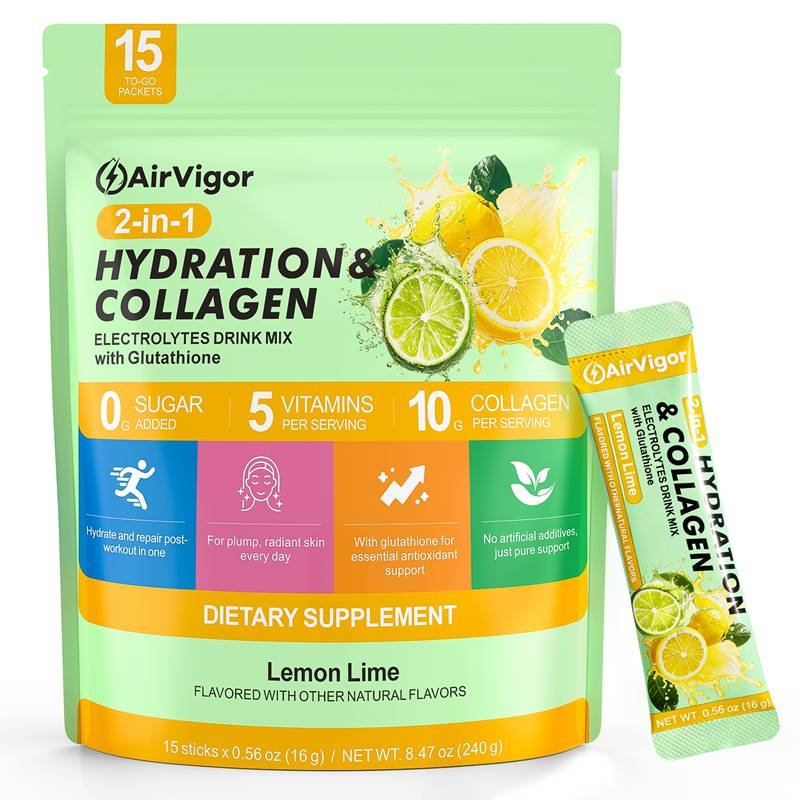
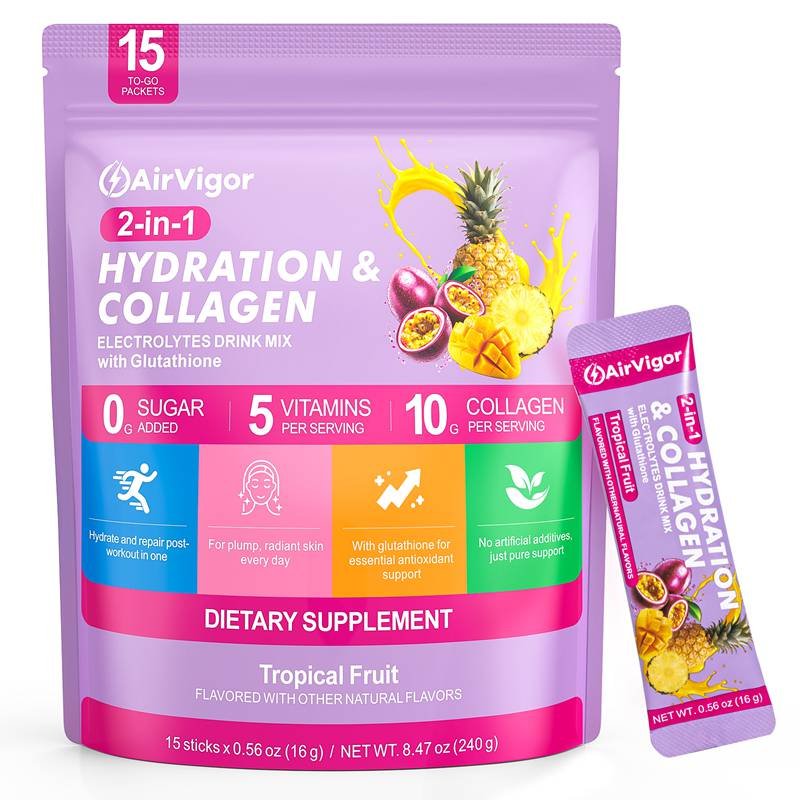
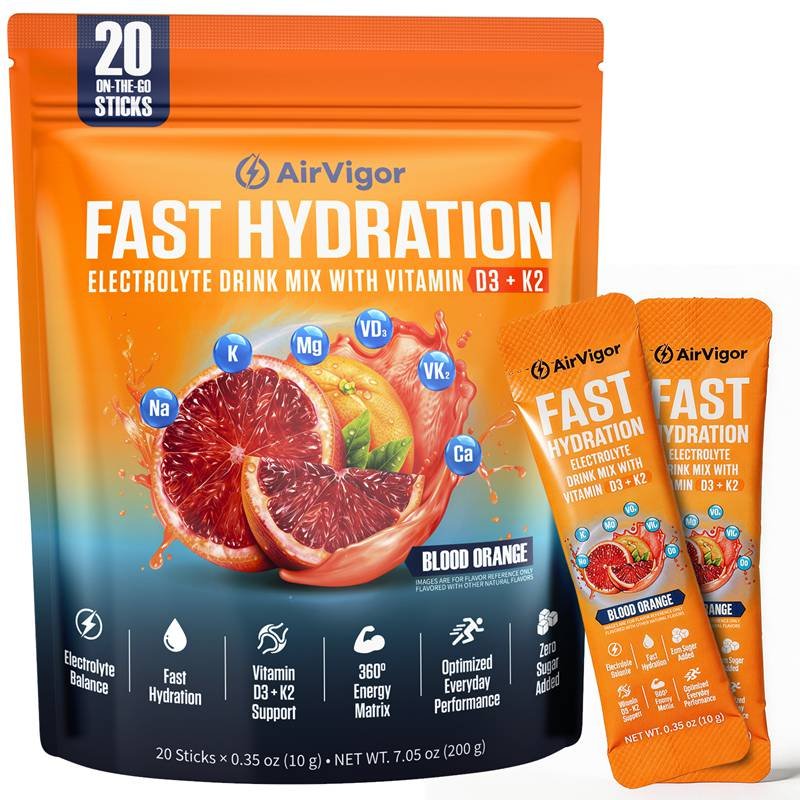
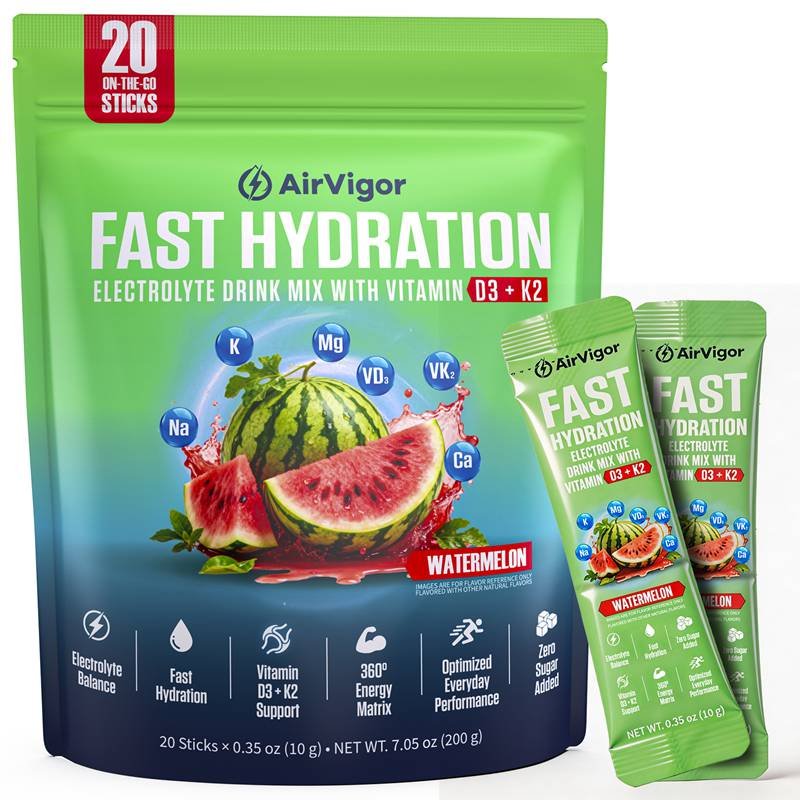
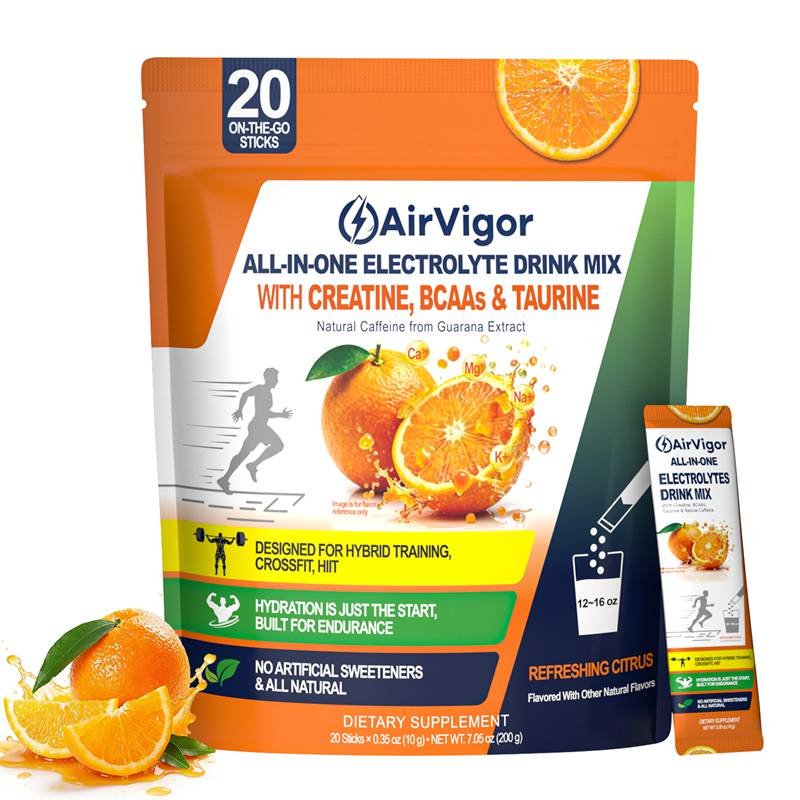
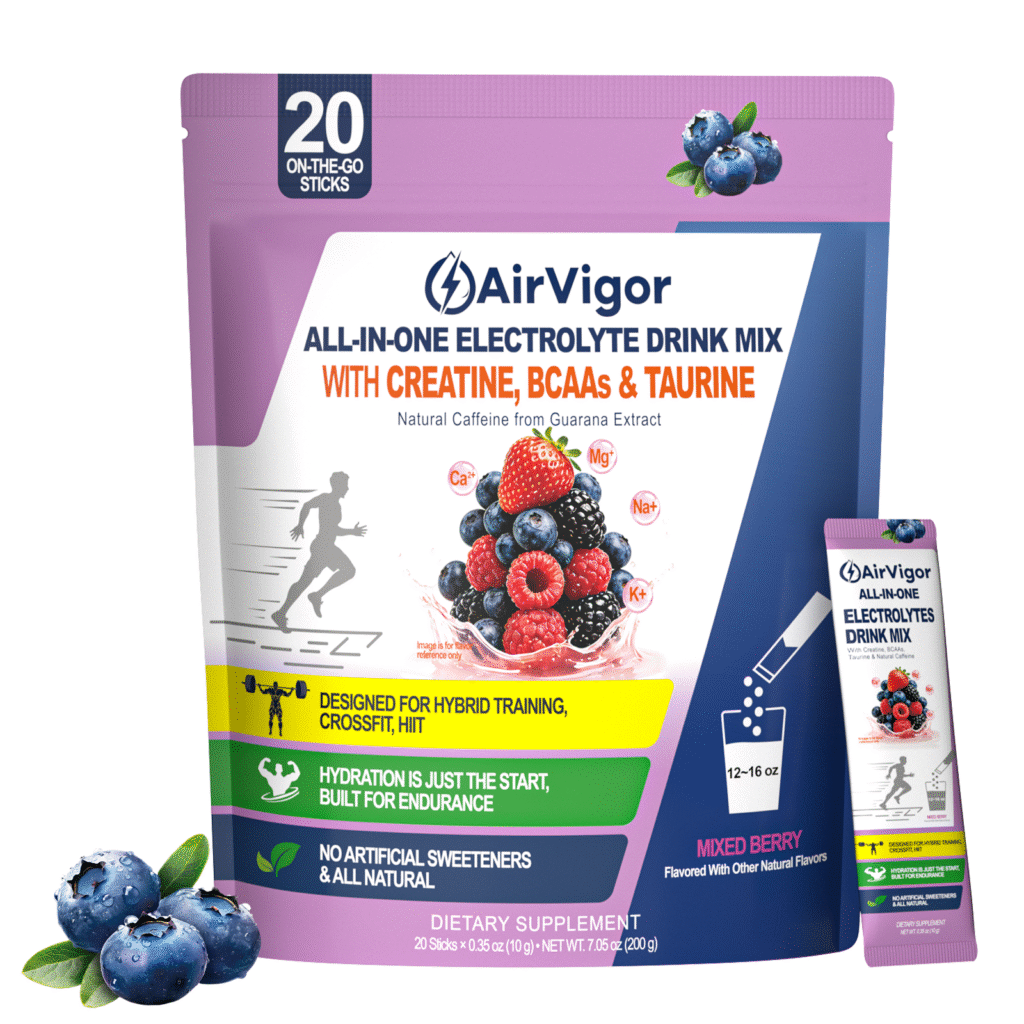
This is why brands like AirVigor prioritize electrolyte powders designed specifically to be mixed into water, achieving the same functional result as liquid supplements—without long-term storage risks.
Can Protein Be Taken as a Liquid Supplement?
Yes, protein is commonly consumed as a liquid, but the distinction matters.
Protein liquids fall into two categories:
- Ready-to-drink protein shakes
- Protein powders mixed into liquid before use
While both are “liquid at consumption,” powders dominate long-term use because they:
- Offer better shelf stability
- Allow dose flexibility
- Avoid excessive stabilizers and emulsifiers
Liquid protein shakes are best for immediate convenience, not necessarily for daily cost-effective supplementation.
Are Amino Acids Available as Liquids?
Amino acids (such as BCAAs and EAAs) are often sold as:
- Ready-to-drink beverages
- Liquid concentrates
- Powders mixed into water
Liquid amino acid products are popular during workouts because they are easy to sip and digest. However, amino acids are highly soluble, making powder-based liquids equally effective when mixed properly.
Again, the advantage is use-case convenience, not absorption superiority.
Which Performance Ingredients Use Liquid Formats?
Some performance-related ingredients are commonly delivered in liquid or semi-liquid form, including:
- Caffeine (liquid shots)
- Carbohydrates (sports drinks)
- Certain herbal extracts or adaptogens
These are chosen for rapid intake and ease of use, not because liquids bypass biological limits.
Nutrients Commonly Found in Liquid Supplements
| Nutrient Category | Typical Liquid Format | Best Use Case | Key Limitation |
|---|---|---|---|
| Vitamins (B12, D, C) | Drops, liquids | Daily convenience | Stability, taste |
| Electrolytes | RTD or mix-in | Training, hydration | Over/under dosing |
| Minerals | Syrups, liquids | Pill intolerance | Absorption competition |
| Protein | RTD shakes | On-the-go nutrition | Cost, additives |
| Amino acids | RTD or mix | Intra-workout | Not superior to powders |
| Caffeine/carbs | Liquid shots/drinks | Quick energy | Overuse risk |
Most nutrients can be delivered as liquids—but not all should be.
Liquid supplements work best when:
- Hydration is involved
- Intake needs to happen during activity
- Swallowing pills is a barrier
- Flexibility and convenience matter more than long-term storage
For nutrients requiring precise dosing, long shelf life, or minimal additives, powder or capsule formats often remain the better choice, even though they are eventually consumed as liquids.
This is why performance-focused brands like AirVigor design supplement systems that prioritize nutrient-appropriate formats, rather than forcing every ingredient into a liquid just to follow trends.
Are Liquid Supplements Better?
Liquid supplements are not inherently better than capsules, tablets, or powders. They can be more effective in practice when they improve convenience, digestion comfort, or timing—such as during workouts or for people who dislike pills. However, liquid supplements may also be less stable, harder to dose precisely, and more dependent on formulation quality. Effectiveness depends on the nutrient, dosage, use scenario, and long-term consistency, not the liquid form itself.
Are Liquid Supplements Better for Athletes?
For athletes, “better” usually means easier to execute under physical stress, not scientifically superior absorption.
Liquid supplements often work well in athletic contexts because they:
- Are easier to consume during or immediately after training
- Combine naturally with hydration
- Reduce the friction of swallowing pills when breathing is elevated
This is especially true for electrolytes, carbohydrates, and amino acids, where intake timing overlaps directly with training or sweating. In these cases, liquid intake supports performance simply because it fits the moment.
However, most experienced athletes rely on powders mixed into liquid, not fully bottled liquids. Powders allow:
- Adjusting concentration based on sweat rate or training intensity
- Avoiding unnecessary sugars and preservatives
- Better shelf stability and transport convenience
So while liquids may be “better” at the point of use, they are not automatically better as purchased products.
Are Liquid Supplements More Bioavailable?
This is one of the most common—and misunderstood—questions.
In healthy individuals, there is limited evidence that liquid supplements are consistently more bioavailable than capsules or powders when doses and ingredient forms are equivalent. The body regulates absorption through transporters and enzymes that do not dramatically change based on supplement format.
Liquids may appear more bioavailable when:
- Tablets fail to disintegrate properly
- Users have low stomach acid or difficulty swallowing
- The liquid improves adherence (you take it daily)
But when capsules dissolve normally and dosing is consistent, long-term outcomes are often comparable.
Bioavailability is influenced more by ingredient form (e.g., citrate vs oxide) and dose timing than by whether a supplement is liquid.
Are Liquid Supplements Easier on Digestion?
Often—but not universally.
Liquid supplements can reduce digestive discomfort because they:
- Distribute nutrients evenly across the stomach
- Avoid concentrated contact points from tablets
- Allow dilution to control osmotic load
This can benefit users who experience nausea, bloating, or reflux from pills.
However, liquid supplements may increase digestive issues if:
- They contain high sugar levels
- Osmolality is too high (over-concentrated solutions)
- Artificial sweeteners or alcohol carriers are used
For digestion-sensitive users, simple, lightly flavored liquids or powders mixed to proper dilution tend to work best.
When Are Liquid Supplements Not Better?
Liquid supplements are often not the best choice in the following situations:
- Long-term daily micronutrient use Capsules and tablets typically offer better stability and precise dosing.
- Travel or heat exposure Liquids degrade faster under temperature and light stress.
- Exact dosing requirements Measuring errors are more common with liquids than with fixed-dose capsules.
- Stacking multiple supplements Mixing many liquids together increases interaction and dosing risks.
In these scenarios, liquid supplements can add complexity without adding real benefit.
Liquid Supplements vs Other Formats
| Goal or Scenario | Are Liquids Better? | Why |
|---|---|---|
| Intra-workout hydration | Yes | Easy intake, timing matters |
| Pill intolerance | Yes | Improves consistency |
| Fasted morning use | Often | Easier on stomach |
| Daily vitamins | Sometimes | Similar outcomes if doses match |
| Long-term storage | No | Stability concerns |
| Precise dosing | No | Higher user error risk |
Liquid supplements are tools, not upgrades.
They are “better” when they:
- Remove barriers to use
- Match the timing of physiological need
- Improve adherence over weeks or months
They are not better when chosen solely for marketing claims or perceived speed.
For performance-focused brands like AirVigor, this is why liquid formats are used selectively—primarily where hydration, timing, and user experience clearly justify them—while powders and other formats remain the backbone of long-term, stable supplementation systems.

Who Should Use Liquid Supplements?
Liquid supplements are best for people who value convenience, struggle with pills, need hydration or nutrients during activity, or benefit from flexible dosing. Athletes, frequent travelers, high-sweat individuals, and beginners often benefit most. For others, powders or capsules may be equally effective with fewer tradeoffs.
Who Benefits Most From Liquid Supplements?
Liquid supplements make the most sense for:
- Athletes & high-sweat users Hydration and electrolytes are time-sensitive. Liquids reduce friction during training.
- Busy professionals & travelers Droppers, sticks, or RTDs are easier than managing multiple pill bottles.
- People with swallowing difficulties This includes many older adults and some beginners new to supplementation.
- Users who need flexible dosing Liquids allow half-servings or gradual titration.
The common thread: execution matters more than theoretical efficiency.
Are Liquid Supplements Good for Daily Use?
They can be—but daily use demands scrutiny.
Daily liquid use should prioritize:
- Low sugar or sugar-free formulas
- Clear dosing instructions
- Minimal preservatives
- Stable ingredients
Daily electrolyte use, for example, makes sense for people who sweat daily or live in hot climates—but not necessarily for sedentary users with low sodium loss.
This is where brands like AirVigor emphasize use-scenario clarity rather than “everyone should take this daily” messaging.
Are Liquid Supplements Suitable for Beginners?
Yes—often more than capsules.
Beginners benefit from:
- Easier intake
- Faster habit formation
- Clear “mix + drink” routines
But beginners are also more vulnerable to overuse. Clear labeling and conservative dosing are essential.
Are Liquid Supplements Safe?
Liquid supplements are generally safe when they are properly formulated, clearly labeled, and used according to dosage instructions. Safety risks are not caused by the liquid form itself, but by issues such as overdosing, ingredient interactions, excessive sugars or carriers, and improper storage. Long-term safety depends on ingredient quality, dosing accuracy, and whether the supplement matches the user’s actual needs.
Are Liquid Supplements Safe for Daily Use?
Liquid supplements can be safe for daily use, but daily use places higher demands on formulation quality and user discipline.
From a safety perspective, daily liquid supplementation should meet four conditions:
- Appropriate daily dosage Liquids often feel “lighter” than pills, which can lead users to underestimate their potency. A supplement that is safe at one serving may become problematic if users casually exceed the recommended dose.
- Low metabolic burden Daily-use liquids should avoid excessive sugars, artificial sweeteners, alcohol-based carriers, or unnecessary stimulants, which can create long-term metabolic or digestive stress.
- Stable formulation Liquids must remain chemically stable over time. Degraded vitamins or minerals may lose effectiveness or cause irritation.
- Clear use instructions Confusing serving sizes (e.g., “one capful” without ml measurement) increase misuse risk.
For these reasons, many performance-focused brands reserve liquid formats for contextual use (hydration, training windows) rather than indiscriminate daily intake.
What Are the Main Safety Risks of Liquid Supplements?
The safety risks associated with liquid supplements are behavioral and formulation-based, not inherent to the format.
Common risks include:
- Overconsumption Liquids are easy to drink quickly, making accidental overdosing more likely—especially with minerals, caffeine, or fat-soluble vitamins.
- Hidden sugars or calories Some liquid supplements contain significant sugar to improve taste, which may be unsuitable for long-term daily use.
- Ingredient stacking Users may unknowingly combine multiple liquid supplements with overlapping ingredients (e.g., magnesium + electrolytes + multivitamins).
- Storage-related degradation Heat, light, and oxygen exposure can reduce potency or alter ingredient behavior.
Importantly, these risks apply to both ready-to-drink liquids and concentrates—not just bottled products.
What Two Supplements Should Not Be Taken Together?
This is one of the most important safety questions and one that is often misunderstood.
Certain nutrients compete for absorption or interfere with each other when taken together—regardless of whether they are liquid or solid.
Common examples include:
| Supplements Taken Together | Why It’s a Problem |
|---|---|
| Calcium + Iron | Calcium reduces iron absorption |
| Magnesium + Zinc (high doses) | Compete for intestinal transport |
| Iron + Coffee/Tea | Polyphenols inhibit iron uptake |
| High-dose electrolytes + diuretics | Can disrupt fluid balance |
| Multiple mineral liquids at once | Increases GI stress and reduces absorption |
Liquid form does not eliminate these interactions. In fact, faster intake may increase competition if everything is consumed at once.
Space mineral supplements by several hours unless specifically formulated to be taken together.
Do Liquid Supplements Increase the Risk of Overdosing?
Yes—if dosing controls are poor.
Liquid supplements increase overdose risk when:
- Serving sizes are unclear
- Measuring tools are inaccurate or missing
- Concentrates are “free-poured”
- Users assume “more hydration = more benefit”
This risk is highest for:
- Electrolytes (especially sodium and magnesium)
- Fat-soluble vitamins (A, D, E, K)
- Stimulants (caffeine-containing liquids)
Well-designed products mitigate this risk through:
- Pre-measured stick packs
- Conservative serving sizes
- Clear ml-based dosing
- Prominent usage warnings
How Does Storage Affect Liquid Supplement Safety?
Storage plays a much larger role in liquid supplement safety than many consumers realize.
Improper storage can lead to:
- Nutrient degradation
- Flavor breakdown (leading users to discard or overconsume)
- Microbial growth in poorly preserved products
Key storage considerations:
- Avoid prolonged heat exposure (cars, direct sunlight)
- Seal containers tightly after opening
- Follow “use within X days after opening” guidance
Powder supplements mixed into liquid only at the time of use often avoid many of these risks, which is why they remain the preferred format for long-term use in sports nutrition.
Liquid Supplement Safety
| Safety Factor | Why It Matters |
|---|---|
| Dosage clarity | Prevents accidental overuse |
| Ingredient interactions | Affects absorption and tolerance |
| Sugar & carriers | Impacts long-term metabolic health |
| Storage stability | Preserves potency and safety |
| User behavior | Most safety issues are misuse-related |
Liquid supplements are not unsafe by default, but they demand more attention from both manufacturers and users.
They are safest when:
- Used for specific scenarios (hydration, training, pill intolerance)
- Doses are clearly defined and respected
- Ingredients are simple and transparent
- Storage instructions are followed
They become risky when:
- Multiple products are stacked casually
- Dosing is vague or ignored
- Convenience replaces intention
For brands like AirVigor, safety is addressed not by claiming “liquid is better,” but by designing supplements around real usage patterns, conservative dosing, and clarity—so users get benefits without unintended side effects.

How to Choose a Liquid Supplement
To choose a liquid supplement, focus on ingredient quality, clear dosing, formulation stability, and whether the liquid format genuinely fits your lifestyle. Avoid products with vague serving sizes, excessive sugars, or unsupported claims. The best liquid supplement is one that matches your use scenario—such as hydration, training, or pill intolerance—while remaining safe, stable, and easy to use consistently.
Start With the Use Scenario, Not the Format
The most common mistake consumers make is choosing a liquid supplement because it’s liquid, rather than because it solves a specific problem.
Before looking at ingredients, ask:
- When will I take this? (during training, daily, post-workout, travel)
- Why liquid? (hydration, convenience, digestion, pill intolerance)
- How often will I use it? (occasionally vs daily)
Liquid supplements are best suited for:
- Hydration-related needs (electrolytes, carbohydrates)
- Time-sensitive intake (during or immediately after activity)
- Users who struggle with pills
If your goal is long-term daily micronutrient intake with precise dosing, capsules or powders may be a better default.
Check Ingredient Transparency and Dosing Clarity
A high-quality liquid supplement should make dosing unambiguous.
Look for:
- Exact active ingredient amounts per serving (not just per bottle)
- Serving sizes stated in milliliters (ml), not vague terms like “one cap”
- Clearly identified ingredient forms (e.g., magnesium citrate vs “magnesium blend”)
Be cautious of:
- Proprietary blends without disclosed amounts
- “Concentrated” liquids without clear dilution instructions
- Labels that emphasize benefits more than composition
Liquid supplements increase the risk of overuse if dosing is unclear, so transparency is non-negotiable.
Evaluate the Formulation, Not Just the Ingredients
In liquid supplements, formulation quality matters as much as ingredient selection.
Key formulation factors include:
- Stability – Will the nutrients remain active over the product’s shelf life?
- Compatibility – Do ingredients interact negatively when dissolved together?
- Osmolality – Is the liquid gentle on digestion when consumed as directed?
- Taste masking strategy – Is sweetness achieved through excessive sugar?
High-quality products minimize unnecessary carriers and sweeteners while maintaining stability and palatability.
This is why many performance-oriented brands prefer powders mixed into liquid at the time of use, especially for electrolytes and protein.
Watch for Hidden Sugars, Stimulants, and Carriers
Liquid supplements often rely on added ingredients to improve taste and texture.
Check carefully for:
- Added sugars or syrups (especially in daily-use products)
- Artificial sweeteners that may cause GI discomfort
- Alcohol-based carriers in liquid extracts
- Caffeine or stimulants included “for energy” without clear disclosure
A liquid supplement that tastes good but adds unnecessary metabolic load may undermine its long-term usefulness.
Match Packaging Type to Your Lifestyle
Packaging directly affects usability, dosing accuracy, and safety.
| Packaging Type | Best For | Tradeoff |
|---|---|---|
| Ready-to-drink bottles | Immediate convenience | Weight, sugar, storage |
| Stick packs | Travel, precision dosing | Higher cost |
| Droppers | Micro-dosing | User error risk |
| Concentrates | Flexible use | Requires dilution discipline |
Choose packaging that reduces friction, not one that creates new steps or confusion.
Look for Quality Systems and Verification
Reliable liquid supplements are backed by manufacturing and quality controls, not just marketing claims.
Look for:
- GMP-compliant manufacturing
- Batch testing or COA availability
- Clear shelf-life and storage instructions
- Regulatory-appropriate labeling for your market
Brands that operate globally—such as AirVigor—must design products that remain consistent across regions, climates, and logistics systems. This often leads to more conservative, safety-first formulation decisions.
Quick Checklist for Choosing a Liquid Supplement
| Question | Why It Matters |
|---|---|
| Is the dose clearly defined? | Prevents overuse |
| Does liquid format fit my use case? | Improves consistency |
| Are sugars/carriers minimal? | Supports long-term use |
| Is storage guidance clear? | Maintains potency |
| Is the brand transparent? | Builds trust |
Conclusion
Liquid supplements are not about chasing trends or promising shortcuts. They work best when they fit real routines, real training schedules, and real hydration needs. Once you understand how liquid supplements work, which nutrients actually benefit from liquid intake, and how to choose a safe, well-formulated product, the next step is simple: pick a solution you can use consistently without second-guessing it.
That’s exactly why many active users choose AirVigor.
AirVigor products are designed for people who train, sweat, travel, and live busy lives—where convenience matters, but clarity and stability matter more. Every formula is built around clear dosing logic, transparent ingredient disclosure, and use scenarios that make sense in daily life. There’s no need to decode complicated labels or guess how much to take.
If you’re looking for:
- Electrolyte and performance supplements available now
- Fast Amazon delivery with stable inventory
- Clear instructions, consistent taste, and reliable formulation
- Products designed for training, recovery, and daily hydration
For brands, gyms, or partners with custom requirements, AirVigor also offers OEM/ODM formulation and packaging support. This option is best suited for businesses with defined needs and longer timelines—but for individual users, Amazon-ready products remain the fastest and most practical choice.
The best supplement isn’t the one with the loudest claims.
It’s the one you understand, trust, and actually use—day after day.
If liquid supplements make your routine easier, hydration smoother, or training more consistent, start with a product that’s already proven, already available, and already optimized for real use.