Skip to content

Most workouts don’t fall apart at the start—they fall apart in the second half. The first 10–15 minutes feel great, then your pace fades, your grip feels weaker, or you start taking longer breaks than you planned. A lot of athletes blame motivation, caffeine “tolerance,” or not eating enough. But in real training, performance usually drops because multiple systems drift out of range at the same time: hydration, nerve signaling, and muscle fuel availability.
That’s where BCAAs sit in the pre-workout conversation. Not as a magic muscle builder, and not as an outdated bodybuilding trend—but as a training-time support tool that can help keep output steadier when intensity is high and hydration is stressed.
BCAAs in a peak performance pre-workout help support training consistency by reducing perceived fatigue and supporting muscle signaling during hard sessions. They don’t “build muscle” by themselves, but they may help you hold pace, push through later sets, and tolerate longer workouts—especially in HIIT, CrossFit, endurance training, or fasted sessions. When paired with electrolytes, they support both performance and drinkability.
If you’ve ever started a session strong and then “mysteriously” faded—despite having the same plan, the same playlist, and the same willpower—keep reading. The reason is usually more mechanical than personal.
What Are BCAAs in a Pre-Workout?
In a pre-workout, BCAAs are used to help athletes train longer and more consistently, especially when workouts are intense, sweaty, or done with limited fuel. They are not there to replace protein or build muscle directly. Their real value shows up when fatigue starts to limit performance before strength does.
What does BCAA actually do in a pre-workout drink?
Most people first encounter BCAAs through bodybuilding marketing, where they’re often described as “muscle builders.” That framing causes confusion—because that’s not what BCAAs are mainly doing in a pre-workout context.
In real training scenarios, BCAAs are used to support training execution, not muscle construction.
Here’s how that plays out for actual users:
- You start a session feeling fine
- Around the halfway point, effort starts to feel higher than expected
- Pace slows, rest times creep up, or reps drop earlier than planned
- The workout doesn’t fail—but it becomes less productive
BCAAs are included in pre-workout formulas to help delay that slide, especially in sessions where:
- intensity is high (HIIT, CrossFit, circuits)
- duration exceeds ~45 minutes
- sweating and hydration loss are significant
- training is done fasted or under-fueled
They don’t give you a sudden boost. What users notice instead is fewer late-session breakdowns and more predictable output.
What are BCAAs made of and why these three matter?
BCAAs are three essential amino acids:
| Amino Acid | What it mainly supports during training | Why athletes notice it |
|---|---|---|
| Leucine | Muscle signaling under load | Helps muscles stay responsive during repeated sets |
| Isoleucine | Energy utilization | Supports glucose uptake when intensity rises |
| Valine | Fatigue tolerance | Associated with steadier output over longer sessions |
They’re called “branched-chain” because of their chemical structure, but what matters to users is this:
- they absorb quickly
- they don’t require digestion like protein
- they’re generally easy on the stomach during movement
That makes them practical for pre- or intra-workout drinks, especially compared to protein shakes, which many people avoid before intense sessions due to bloating or heaviness.
Why use BCAAs in pre-workout instead of just protein?
This is one of the most common and reasonable questions buyers ask.
Protein and BCAAs are not interchangeable. They solve different problems at different times.
| Goal | Protein | BCAAs |
|---|---|---|
| Build muscle over time | Essential | Incomplete |
| Recover after training | Yes | Limited |
| Support training during the workout | Often too heavy | Practical |
| Easy to drink while sweating | NO | YES |
Protein is about growth and recovery over hours and days.
BCAAs are about supporting performance over the next 60–90 minutes.
That’s why many athletes:
- eat protein with meals
- use BCAAs only around demanding training sessions
The two are complementary, not competing.
Why are BCAAs commonly paired with electrolytes?
From a customer perspective, this pairing makes sense for one simple reason:
Fatigue rarely comes from one thing going wrong.
During hard training:
- electrolytes manage hydration and nerve function
- BCAAs support muscle signaling and fatigue tolerance
When hydration drops, performance falls quickly—even if strength is still there.
When muscle signaling degrades, output drops—even if hydration is fine.
Putting BCAAs into an electrolyte-based pre-workout drink helps address both limits at once.
This is especially relevant for users who:
- train in hot climates
- sweat heavily
- do long or repeated sessions
- want one drink instead of multiple powders
From a usability standpoint, combining them into a single, drinkable formula often leads to better compliance than asking users to manage several supplements at once.
What BCAAs are not doing in a pre-workout
To avoid disappointment and misuse, it helps to be explicit:
BCAAs in pre-workout are not:
- a replacement for daily protein intake
- a shortcut to muscle growth
- a stimulant or energy substitute
- necessary for every workout
They are a situational tool—most useful when training stress is high and consistency matters.
How users typically decide if BCAAs are worth it
From customer feedback patterns, people who end up valuing BCAAs often say things like:
- “My workouts don’t fall apart as early.”
- “The second half feels more controllable.”
- “I don’t feel as wiped between sessions.”
People who don’t notice much difference usually train:
- briefly
- at low intensity
- fully fed
- with minimal sweating
That distinction helps buyers decide realistically, instead of buying based on hype.
If your workouts often fade before you want them to, BCAAs in a pre-workout—especially alongside electrolytes—may help stabilize performance.
If your training is short, light, or already well-fueled, they may not change much—and that’s okay.
Understanding why BCAAs are used is what separates smart supplementation from guesswork.
How Do BCAAs Work During Pre-Workout Training?
During pre-workout training, BCAAs help slow the buildup of fatigue and support muscle responsiveness when intensity, duration, or sweat loss starts to drag performance down. They don’t increase strength instantly. What they do is help you hold output longer, especially in the second half of hard sessions.
What actually happens in your body during a hard workout?
Most people imagine fatigue as “running out of fuel.”
In reality, performance usually drops before fuel is completely gone.
What typically breaks first is:
- coordination
- muscle responsiveness
- mental drive to keep pace
- tolerance to repeated effort
That’s why many athletes say things like:
- “My strength is there, but it feels harder to use.”
- “I didn’t gas out—I just couldn’t keep the same rhythm.”
- “Everything slowed down after the midpoint.”
BCAAs are used in pre-workout formulas to help delay that breakdown, not to override it.
How BCAAs influence fatigue
There are two main ways BCAAs matter during training, and both are context-dependent.
1. BCAAs and perceived fatigue
During long or intense sessions, fatigue isn’t just muscular—it’s also neurological.
As training continues:
- perceived effort rises faster than actual workload
- motivation drops even if the body isn’t fully exhausted
- pacing becomes harder to control
BCAAs are often associated with slowing this perceived fatigue, especially in workouts that involve:
- intervals
- long steady efforts
- repeated high-intensity sets
What users usually report is not more energy, but:
- less mental resistance late in the workout
- fewer moments where effort suddenly spikes
- better ability to stick to planned pace or reps
This is why endurance athletes and HIIT/CrossFit athletes tend to notice BCAAs more than casual gym-goers.
2. BCAAs and muscle responsiveness under repeated load
In workouts with repeated sets, circuits, or intervals, muscles don’t suddenly fail—they gradually lose responsiveness.
BCAAs, especially leucine, are involved in muscle signaling pathways that help muscles stay “responsive” under stress.
What that means in practice:
| Without support | With BCAAs (when they help) |
|---|---|
| Reps slow unexpectedly | Reps slow more gradually |
| Longer rest needed late | Rest stays closer to plan |
| Sudden drop-off after mid-session | Smoother decline in output |
| Workout quality fades | Workout quality holds longer |
Again, this is not strength gain.
It’s output preservation.
That distinction matters, because many customers expect BCAAs to “add power” and feel disappointed—when the real benefit is not losing power as quickly.
Do BCAAs build muscle during the workout?
This needs to be stated plainly, because it affects buying decisions.
No. BCAAs do not directly build muscle during training.
Muscle growth requires:
- all essential amino acids
- sufficient total protein
- recovery over time
BCAAs only contain three amino acids. They cannot complete muscle protein synthesis on their own.
So why do people associate them with muscle?
Because they can help you:
- finish planned volume
- maintain intensity late in sessions
- recover well enough to train again soon
That’s an indirect effect—and for many athletes, it’s still valuable.
When BCAAs are most noticeable during training
From real user patterns and formulation data, BCAAs tend to feel most useful when at least two or more of these are true:
| Training factor | Why BCAAs matter more |
|---|---|
| Session >45–60 min | Fatigue accumulates gradually |
| High-intensity intervals | Repeated stress on signaling |
| Heavy sweating | Hydration stress amplifies fatigue |
| Fasted training | Less immediate fuel available |
| High weekly frequency | Recovery margin is thinner |
When none of these apply—short, easy, fully fed sessions—BCAAs often feel unnecessary. That’s not a failure; it’s correct use.
Why BCAAs are used with electrolytes, not alone
Fatigue during training rarely has a single cause.
- Low electrolytes → cramps, dizziness, weak contractions
- Poor muscle signaling → slower reps, coordination loss
- Dehydration → higher perceived effort
Electrolytes handle hydration and nerve function.
BCAAs support muscle signaling and fatigue tolerance.
Together, they address both sides of the problem.
This is why many athletes prefer:
- one drink that covers hydration + fatigue support instead of:
- juggling water, electrolytes, and separate powders
From a usability standpoint, one drink that gets finished works better than three supplements that don’t.

What Is the Right BCAA Dosage in Pre-Workout?
For most people, 2–5 grams of BCAAs per pre-workout serving is the range that actually works. Below 2 g, most users feel little difference. Above 5 g, benefits rarely increase and drinkability often gets worse. The “right” dose depends more on how long, how hard, and how sweaty your training is than on body size or calorie phase.
Why more BCAAs don’t automatically work better
A common mistake is assuming BCAAs behave like protein or creatine—where more intake can sometimes lead to more effect.
BCAAs don’t work that way during training.
Once muscle signaling and fatigue pathways are “supported enough,” adding more grams mainly adds:
- bitterness
- heavier mouthfeel
- slower drinking
- higher chance of stomach discomfort during movement
In a pre-workout drink, finishability matters. If the drink tastes worse or feels heavy, people drink less—hydration drops, and performance suffers.
That’s why most well-designed pre-workout electrolyte formulas cap BCAAs around 5 g.
BCAA dosage by training type
This table reflects what actually shows up in practical formulations and user tolerance—not lab extremes.
| Training style | Typical BCAA dose | Why this range works |
|---|---|---|
| Short / light sessions (≤30 min) | ~2 g | minimal fatigue, light support |
| Strength + accessories | 2–3 g | supports later sets without heaviness |
| HIIT / CrossFit | 3–5 g | repeated effort, high fatigue |
| Endurance (≥60 min) | 4–5 g | duration + mental fatigue |
| Fasted morning training | 3–5 g | limited fuel, higher perceived effort |
If your training doesn’t consistently hit the middle or right side of this table, BCAAs may not feel noticeable—and that’s expected.
Does body weight change BCAA needs?
Surprisingly, body weight is not a major driver of BCAA effectiveness in pre-workout use.
Why?
Because BCAAs aren’t being used as building material in this context. They’re supporting signaling and fatigue tolerance, which are influenced more by:
- session length
- intensity
- hydration loss
- frequency of training
A 140-lb runner and a 200-lb CrossFit athlete doing the same 60-minute interval session often land in a similar 3–5 g range.
BCAA ratios: do they matter for dosing?
Most pre-workout products use a 2:1:1 ratio (leucine:isoleucine:valine). Some use variations like 3:1:1 or higher leucine ratios.
For most users:
- ratio differences matter less than total dose
- extremely high leucine ratios don’t improve training feel
- balanced ratios tend to be easier on digestion
What users tend to notice more is:
- total amount per serving
- how the drink feels during training
- whether it pairs well with electrolytes
In other words, a tolerable 4 g beats an aggressive 8 g with a fancy ratio.
Is BCAA dosage different for bulking vs cutting?
This is one of the most misunderstood questions.
BCAA dosage does not need to change between bulking and cutting.
What changes is how much stress the workout creates.
During a calorie surplus:
- energy availability is higher
- fatigue builds more slowly
- BCAAs may feel less noticeable
During a calorie deficit:
- energy is limited
- fatigue builds faster
- late-session drop-off is more common
That’s why people often notice BCAAs more while cutting—but the dose doesn’t need to increase.
A better way to think about dosing:
| Old thinking | Better thinking |
|---|---|
| “Bulking dose vs cutting dose” | “Low-stress vs high-stress sessions” |
| “More BCAAs when dieting” | “Same dose, smarter timing” |
Timing matters more than micro-adjusting the dose
For most users, when BCAAs are consumed matters more than adding or subtracting 1 gram.
Common effective patterns:
- 15–30 minutes before training, especially if fasted
- Sipped during training, mixed with electrolytes
- Split dose (half before, half during) for long sessions
What matters is maintaining a steady presence during the workout, not front-loading everything at once.
Signs your BCAA dose is probably too high
These are common user complaints when dosing overshoots usefulness:
- drink tastes overly bitter
- stomach feels heavy during movement
- you avoid finishing the bottle
- hydration drops late in the session
If any of these happen, reducing the dose often improves performance, not worsens it.
Practical “dial-in” approach
If you want a simple way to dial in your own dose:
- Start at 3 g in a pre-workout electrolyte drink
- Use it for your hardest sessions for 1–2 weeks
- If workouts still fade late, try 4–5 g
- If taste or stomach comfort drops, go back down
Most users settle somewhere between 3–4 g and never need to go higher.
The right BCAA dose in a pre-workout is the lowest amount that helps you hold performance without hurting hydration or comfort.
For most people, that’s 2–5 grams, driven by training stress—not by hype, body weight, or calorie phase.
Used this way, BCAAs become a tool, not a gamble.
Do BCAAs Really Work in Pre-Workout?
Yes—BCAAs can work in a pre-workout, but only in the right situations. They don’t create explosive strength or instant energy. Where they actually help is fatigue control and performance stability, especially in longer, harder, or sweat-heavy training. If your workouts fade late, BCAAs are more likely to matter. If they don’t, you may not feel much at all—and that’s normal.
Why results with BCAAs feel “inconsistent” for many people
One reason people argue about BCAAs online is simple:
they don’t work equally well for every workout.
BCAAs are not a baseline nutrient like water or sodium. They’re a conditional support—their value increases only when fatigue becomes the limiting factor.
This creates three common user experiences:
- “They helped a lot in some sessions.”
- “I barely noticed them in others.”
- “I stopped using them because I expected more.”
All three can be true at the same time.
When BCAAs are most likely to work
Across endurance athletes, CrossFitters, and high-frequency gym users, BCAAs tend to feel useful when at least two of the following are true:
| Training condition | Why BCAAs matter more |
|---|---|
| Sessions >45–60 minutes | Fatigue builds gradually, not instantly |
| Repeated high-intensity efforts | Muscle signaling degrades over time |
| Heavy sweating / heat | Hydration stress amplifies fatigue |
| Fasted or low-carb training | Less immediate fuel available |
| Training 4–6 days/week | Recovery margin is thinner |
In these scenarios, users most often report:
- steadier pace late in workouts
- fewer sudden “drop-offs”
- less mental resistance during the last third of a session
Not dramatic changes—but repeatable, noticeable ones.
When BCAAs usually don’t feel like they work
Just as important is understanding when BCAAs are unlikely to change much.
BCAAs often feel unnecessary when:
- workouts are under 30–40 minutes
- intensity stays moderate
- hydration needs are low
- a full meal with protein was eaten shortly before training
In these cases, the body already has enough support to complete the session. Adding BCAAs doesn’t fix a problem—because there isn’t one yet.
This doesn’t mean BCAAs “don’t work.”
It means they’re being used outside their useful window.
Why research results on BCAAs look mixed
People often point out that studies on BCAAs show inconsistent outcomes. That’s true—but it’s also expected.
Many studies test BCAAs under conditions like:
- short exercise duration
- controlled lab environments
- adequate protein and calories
Under those conditions, fatigue never becomes severe enough for BCAAs to matter.
But in real training—where:
- sessions run long
- intensity fluctuates
- hydration is imperfect
- athletes train again the next day
fatigue is a bigger variable. And that’s where BCAAs tend to show practical value, even if the effect size isn’t dramatic.
Think of BCAAs less like a “performance booster” and more like wear-and-tear reduction.
What BCAAs do not do
A lot of disappointment with BCAAs comes from expecting the wrong outcome.
BCAAs do not:
- increase max strength instantly
- replace protein for muscle growth
- act like caffeine or stimulants
- fix poor hydration or nutrition
If someone expects a “kick,” they’ll be underwhelmed.
If someone expects less decline, they’re more likely to appreciate them.
How users can tell if BCAAs are actually helping them
Instead of asking “Did I feel something?”, a better question is:
“Did my workout fall apart later than usual?”
Useful self-checks after 1–2 weeks of use:
- Are late sets closer to early sets than before?
- Is pacing more consistent across intervals?
- Do I need fewer unplanned breaks?
- Does recovery between sessions feel easier?
If the answer to most of these is “yes,” BCAAs are likely doing their job.
If everything feels the same, they’re probably not needed for that training style.
BCAAs vs “just drinking more water”
Another common question is whether BCAAs are doing anything beyond hydration.
Hydration alone fixes:
- dizziness
- cramping
- weak contractions
But many athletes stay hydrated and still experience:
- coordination loss
- rising perceived effort
- late-session performance fade
That’s where BCAAs can add value—after hydration is already handled.
This is why BCAAs work best with electrolytes, not instead of them.
BCAAs really do work in pre-workout—but only when fatigue is the thing holding you back.
If your workouts:
- are long
- push intensity
- involve heavy sweating
- or leave you fading late
BCAAs may help stabilize performance.
If your workouts are short, light, or already well-supported by food and hydration, they may not add much—and that’s not a failure.
Used with the right expectations, BCAAs are a useful tool, not a miracle—and tools only work when you use them in the right job.
How Do BCAAs Fit With Other Pre-Workout Ingredients?
BCAAs don’t replace other pre-workout ingredients—they fill a different role. Electrolytes keep your body functioning, creatine supports short-term power, carbs provide fuel, and caffeine boosts alertness. BCAAs sit in between: they help reduce fatigue buildup and support muscle responsiveness during the session, especially when workouts are long or demanding. They work best as part of a system, not alone.
Why most pre-workout “confusion” comes from mixing roles
A lot of frustration around supplements comes from assuming everything should do the same job.
In reality, different pre-workout ingredients address different failure points in training:
- dehydration
- lack of immediate fuel
- loss of muscle responsiveness
- mental fatigue
- short-term power drop
If you don’t know which limit you’re hitting, it’s easy to feel like something “didn’t work.”
BCAAs are not there to:
- hydrate you
- spike energy
- increase max strength
They’re there to help delay fatigue-related decline once training is underway.
BCAAs + Electrolytes: why this pairing makes sense
Electrolytes are the foundation of any serious pre-workout drink.
They handle:
- fluid balance
- nerve signaling
- muscle contraction
Without adequate electrolytes, athletes commonly experience:
- cramps
- dizziness
- weak or “flat” muscle contractions
- early fatigue despite effort
But hydration alone doesn’t solve everything.
Many athletes are well-hydrated and still notice:
- coordination dropping late
- reps slowing more than expected
- pacing becoming harder to control
That’s where BCAAs come in.
| What electrolytes fix | What BCAAs support |
|---|---|
| cramps and dizziness | fatigue tolerance |
| nerve firing | muscle responsiveness |
| fluid balance | repeat effort consistency |
Together, they cover both the mechanical and fatigue-related sides of performance. That’s why BCAAs are most useful inside electrolyte-based pre-workouts—not as standalone powders.
BCAAs vs creatine: not a competition
This is one of the most common questions users ask, and it’s usually framed the wrong way.
BCAAs are not “better” or “worse” than creatine. They do different jobs.
| Ingredient | What it mainly does | When you feel it |
|---|---|---|
| Creatine | Improves short-term power and strength | Heavy lifts, sprints, first reps |
| BCAAs | Supports fatigue control | Mid-to-late workout |
| Electrolytes | Maintain hydration and nerve function | Throughout the session |
Creatine works through saturation over days and weeks. Missing one dose doesn’t matter much.
BCAAs work acutely during the session. If they help, you notice it that day.
That’s why many athletes use:
- creatine daily
- electrolytes in every sweaty session
- BCAAs only when training is long, intense, or fasted
They’re complementary, not interchangeable.
BCAAs + carbs: when fuel matters more than signaling
Carbohydrates and BCAAs often get lumped together, but they solve different problems.
Carbs:
- provide immediate fuel
- help maintain blood glucose
- are especially useful in endurance or very long sessions
BCAAs:
- don’t provide calories
- don’t replace carbs
- help with fatigue tolerance when fuel is limited
In practice:
- If you’re doing long endurance training, carbs usually matter more than BCAAs.
- If you’re doing short-to-medium, high-intensity training, BCAAs may matter more than carbs.
- If sessions are very long and intense, both together often work best.
Many athletes who train fasted or low-carb find BCAAs useful because they provide support without adding calories or stomach heaviness.
BCAAs + caffeine: avoiding the “fake energy” trap
Caffeine is effective—but it comes with trade-offs.
Caffeine:
- increases alertness
- reduces perceived effort
- can mask fatigue
BCAAs:
- don’t stimulate
- don’t raise heart rate
- don’t create a “rush”
When used together in moderate amounts:
- caffeine helps you feel ready
- BCAAs help you hold performance once fatigue sets in
When caffeine is pushed too hard without fatigue support:
- early energy spikes
- late-session crashes
- shaky or jittery feeling
That’s why many athletes prefer lower caffeine + hydration + BCAAs, especially for evening training or multi-day programs.
Common user mistakes when combining ingredients
Based on user feedback, these are the most frequent issues:
- Stacking everything at max dose → poor tolerance, bad hydration
- Using BCAAs without electrolytes → fatigue improves slightly, but cramps or dizziness remain
- Expecting BCAAs to replace food → poor results, unnecessary disappointment
- Judging BCAAs by “feeling something” → misunderstanding their role
Better results come from balancing ingredients, not maximizing them.
What a balanced pre-workout system looks like
Instead of asking “Do I need this ingredient?”, a better question is:
What usually causes my workouts to fall apart?
| If your limiter is… | Prioritize |
|---|---|
| dehydration / cramps | electrolytes |
| early fatigue | BCAAs |
| lack of power | creatine |
| low energy / focus | carbs or light caffeine |
Many athletes don’t need everything—but those who train hard, often, and under stress usually benefit from a few complementary pieces working together.
BCAAs fit best in pre-workout formulas that already handle hydration and basic fueling. They’re not a standalone solution—and they’re not meant to replace creatine, carbs, or caffeine.
Used correctly, BCAAs help smooth the middle and back end of a workout, which is where most sessions quietly lose quality.
When you understand what each ingredient does—and doesn’t do—you stop guessing and start building a pre-workout that actually matches your training.

Who Should Use BCAAs in a Pre-Workout?
BCAAs in a pre-workout are most useful for people whose training regularly pushes them into fatigue before strength or motivation runs out. If your workouts fade late, feel harder than expected, or are limited by recovery rather than effort, BCAAs are more likely to help. If your sessions are short, light, and fully fueled, you may not notice much—and that’s normal.
People who are most likely to benefit
Based on training patterns and long-term user feedback, BCAAs tend to help specific types of athletes, not everyone equally.
1. HIIT and CrossFit-style athletes
These workouts combine:
- high intensity
- repeated efforts
- short rest intervals
The most common complaint in these sessions isn’t lack of strength—it’s losing output halfway through.
Typical user feedback:
- “Round 1 felt fine, round 4 felt way heavier.”
- “My engine was there, but I couldn’t keep the same pace.”
BCAAs can help here by supporting fatigue tolerance and muscle responsiveness, making later rounds feel more manageable—even if they’re still hard.
2. Endurance and hybrid athletes
In longer sessions, fatigue builds gradually. Small differences late in the workout matter more than early effort.
Endurance athletes who notice BCAAs often report:
- steadier pacing after the 40–60 minute mark
- less mental resistance to maintaining rhythm
- fewer “bonk-adjacent” feelings when hydration is stressed
BCAAs don’t replace carbs in endurance training, but they can help delay the point where effort suddenly spikes, especially in hot or humid conditions.
3. Fasted or early-morning trainers
People who train first thing in the morning often do so:
- without a full meal
- with limited time to digest food
- on slightly dehydrated systems
In these cases, fatigue can show up earlier than expected.
BCAAs are often chosen here because:
- they’re light on the stomach
- they don’t require digestion
- they can be combined with electrolytes for hydration
Users commonly say early sessions feel “less flat” and more controllable when BCAAs are included.
4. High-frequency trainers
When training frequency is high, small performance drops add up.
Even if each workout only loses 5–10% quality late in the session, over a week that can affect:
- volume progression
- recovery between sessions
- overall training consistency
BCAAs can help by:
- reducing how fast fatigue accumulates
- improving tolerance to repeated training days
This is especially noticeable during dense training blocks or busy work periods when recovery time is limited.
5. Athletes training in heat or sweating heavily
Heavy sweating doesn’t just drain water—it increases overall stress on the system.
When sweat loss is high:
- hydration demands rise
- perceived effort climbs faster
- fatigue hits earlier
BCAAs don’t fix dehydration (electrolytes do), but once hydration is addressed, they can help support muscle signaling and fatigue control under thermal stress.
This is why users in hot climates often notice BCAAs more than those training in cool, controlled environments.
People who usually don’t need BCAAs
Just as important is knowing when BCAAs are unlikely to make a noticeable difference.
1. Short, low-intensity workouts
If your sessions:
- last under 30 minutes
- stay mostly aerobic or technical
- don’t involve heavy sweating
fatigue rarely becomes the limiting factor. In these cases, hydration alone is usually enough.
2. Fully fed, low-stress training days
When you’ve eaten a solid meal with protein and carbs within a few hours of training, your body already has plenty of resources.
BCAAs don’t add much on top of that unless:
- sessions run long
- intensity is unusually high
Many users stop noticing BCAAs once training stress drops—and that’s expected.
3. People looking for a “noticeable feeling”
BCAAs don’t provide:
- a rush
- a buzz
- an energy spike
If someone judges supplements purely by how strongly they feel them, BCAAs often get written off—even if they’re quietly doing their job.
A quick self-check: should you try BCAAs?
Answer “yes” to two or more of the following:
- My workouts often fade late.
- I train for 45 minutes or longer.
- I sweat heavily or train in heat.
- I train fasted or low-carb.
- I train 4+ days per week.
If so, BCAAs may be worth testing.
If not, they’re probably optional.
What users often say after using BCAAs correctly
Instead of dramatic claims, the most consistent feedback sounds like this:
- “I don’t crash as hard late in sessions.”
- “My pacing feels easier to control.”
- “I can train hard again the next day without feeling wiped.”
These are consistency benefits, not instant performance boosts—and that’s exactly how BCAAs are meant to be used.
BCAAs in a pre-workout aren’t for everyone—and that’s a good thing.
They’re best suited for athletes who train hard enough that fatigue, not effort, becomes the limiter. If that describes you, BCAAs—especially combined with electrolytes—can help keep training quality predictable.
If it doesn’t, you’re not missing anything.
Understanding where you fall saves time, money, and frustration—and leads to smarter supplementation.
What Should You Check on a BCAA Pre-Workout Label?
A good BCAA pre-workout label makes it easy to see how much you’re actually getting, how it fits into hydration, and whether you can realistically drink it during training. If the label hides amounts, pushes extreme numbers, or ignores hydration, it’s usually designed for marketing—not real workouts.
1. Can you clearly see the total BCAA amount per serving?
This is the first thing to check—and the most commonly hidden.
A trustworthy label tells you:
- total grams of BCAAs per serving
- serving size (one scoop, one stick, etc.)
- how many servings are in the container
What to be cautious of:
- “BCAA complex” without a gram amount
- proprietary blends that list ingredients but not quantities
If you can’t tell whether you’re getting 2 g or 8 g, you can’t judge whether the formula fits your training.
Practical reference range:
| What you see on the label | What it usually means |
|---|---|
| <2 g per serving | Likely too low to notice |
| 2–5 g per serving | Common, usable range |
| 6–10 g+ per serving | Often harder to drink, diminishing returns |
More isn’t automatically better—especially in a drink you’re supposed to finish while moving.
2. Are the BCAA ratios reasonable—or just flashy?
Most functional pre-workout formulas use a 2:1:1 ratio (leucine:isoleucine:valine). Some labels push higher leucine ratios like 3:1:1 or 4:1:1.
What actually matters to users:
- total BCAA dose
- how the drink feels during training
- whether it causes stomach discomfort
Extremely high leucine ratios:
- don’t noticeably improve training feel for most people
- can increase bitterness
- may reduce drinkability
If the label emphasizes ratio more than total amount and usability, that’s often a red flag.
3. Does the product actually support hydration?
A common mistake is treating BCAAs as a standalone solution.
If the label:
- focuses heavily on BCAAs
- but lists little or no sodium, potassium, or magnesium
then the product may not support real training conditions, especially if you sweat.
Quick hydration check:
| Electrolyte | Useful presence for training |
|---|---|
| Sodium | Most important for sweat loss |
| Potassium | Supports muscle contraction |
| Magnesium | Helps with neuromuscular function |
A BCAA pre-workout that ignores electrolytes forces users to stack more products, which reduces compliance.
4. Is the serving size realistic for one workout?
Some labels look good until you check the serving size.
Examples to watch for:
- “10 g BCAAs” per serving—but the serving requires 3 scoops
- electrolyte levels spread across multiple servings
Ask yourself:
“Would I actually take this much during one workout?”
If not, the real dose you consume is lower than what the label suggests.
5. Does the label prioritize drinkability?
This matters more than most people expect.
High BCAA doses increase:
- bitterness
- chalky mouthfeel
- lingering aftertaste
If the label pushes extreme BCAA numbers without addressing:
- flavoring approach
- mixing volume
- solubility
there’s a good chance users won’t finish the drink—which undermines both hydration and performance.
A well-designed label usually:
- suggests a reasonable water volume (e.g., 16–24 oz)
- avoids stacking too many bitter ingredients together
- keeps total actives within a drinkable range
6. Are there unnecessary “add-ons” that don’t match the use case?
Some pre-workouts try to do everything at once.
Be cautious if the label stacks:
- very high caffeine
- large amounts of stimulants
- excessive BCAAs
- minimal electrolytes
This combination often leads to:
- early energy spikes
- late-session crashes
- stomach discomfort
For many users—especially those training in the evening or multiple days in a row—moderate, balanced formulas work better than aggressive ones.
7. Can you tell when and how it’s meant to be used?
A good label makes usage obvious:
- before training
- during training
- mixed with how much water
If the instructions are vague or missing, it’s harder to use the product consistently—and consistency is what drives results.
A simple “good label vs bad label” comparison
| Feature | Good BCAA Pre-Workout Label | Weak Label |
|---|---|---|
| BCAA amount | Clearly stated (e.g., 3–5 g) | Hidden in blends |
| Electrolytes | Present and visible | Missing or minimal |
| Serving size | One scoop / one stick | Multiple scoops |
| Drinkability | Designed to finish | Overloaded |
| Use instructions | Clear and specific | Vague |
When reading a BCAA pre-workout label, don’t ask:
“How big are the numbers?”
Ask:
“Can I realistically drink this during my hardest workouts—and will it actually support what limits me?”
Clear dosing, hydration support, and realistic serving sizes matter more than flashy ratios or extreme claims.
If the label helps you understand what you’re taking and why, it’s probably built for real training—not just marketing.

Conclusion
BCAAs are not a shortcut to strength, and they’re not a replacement for solid nutrition. Their real value in a pre-workout shows up in how training holds together under stress—when sessions run long, sweat loss is high, or fatigue starts to creep in before effort runs out. Used in the right context, BCAAs help smooth the second half of a workout, support more consistent pacing, and make hard training feel more controllable rather than chaotic.
What matters most is not chasing extreme numbers or trendy claims, but choosing formulas that are balanced, drinkable, and designed for real training conditions. Clear dosing, sensible BCAA amounts, and proper electrolyte support consistently outperform aggressive, overbuilt products in long-term use. When performance drops because fatigue accumulates—not because motivation is lacking—supporting the system makes a measurable difference.
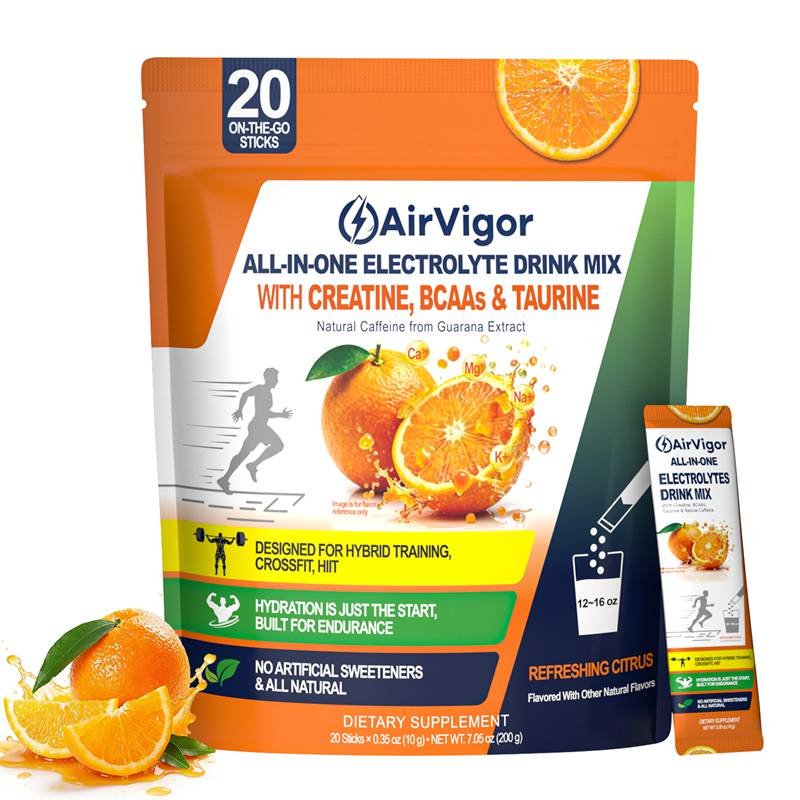
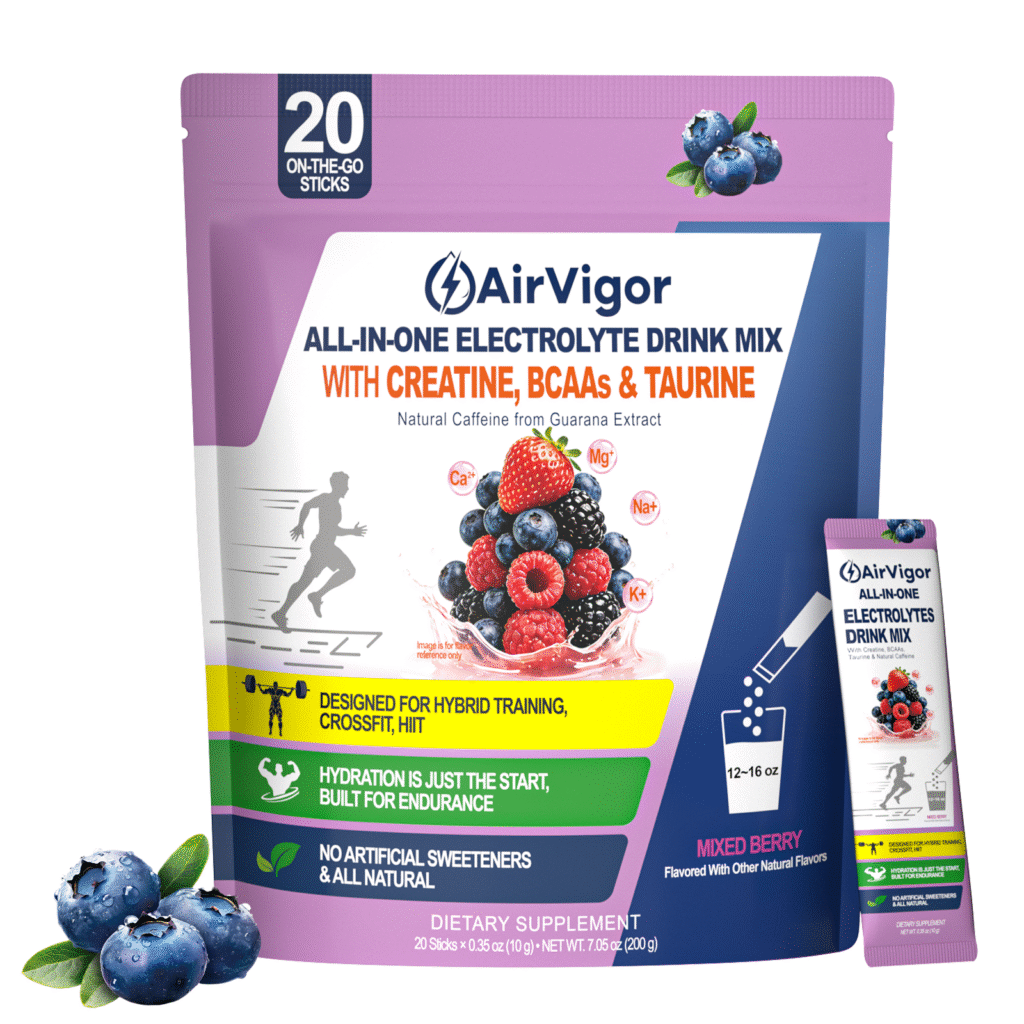
This is the approach behind AirVigor. Our pre-workout and electrolyte formulas are built around practical training realities: transparent labels, moderate but effective BCAA dosing, and hydration systems that athletes can actually use session after session. Whether you’re selecting a ready-to-use product or exploring a tailored formulation for your market, the goal remains the same—stable performance, predictable recovery, and training that stays consistent over time.
Turning Information Into Better Training
Understanding what BCAAs do—and what they don’t do—helps cut through a lot of noise in the supplement space.
If your training regularly pushes into the zone where fatigue and hydration limit performance, a well-balanced pre-workout electrolyte formula that includes BCAAs can make sessions feel more stable and repeatable.
AirVigor focuses on building these kinds of practical, training-first formulations—with transparent dosing, reliable quality, and formats designed for real use, not just label appeal.
If you’re looking to:
- source ready-to-use electrolyte or pre-workout products, or
- develop a custom BCAA + electrolyte formula for your brand, gym, or market
you can reach out to AirVigor to discuss available products, formulation options, and production timelines.
Performance doesn’t come from one ingredient.
It comes from systems that work every time you train.