Skip to content
Does Creatine Help Endurance Athletes : Science, Myths, and Real Use Cases
# Your Trusted Dietary Supplement Brand In US
- Emily

Table of Contents
Most endurance athletes don’t lose races because their aerobic engine is “missing.” They lose them when the race stops being steady: the surge, the hill, the gap you must close, the last 300 meters when everyone suddenly finds a gear. That’s exactly why creatine keeps showing up in endurance searches—because it’s not an “endurance fuel,” it’s an ATP buffering tool that may improve the moments where intensity spikes and repeat efforts decide outcomes.
Here’s the clean takeaway: creatine is not a guaranteed boost for steady time-trials, but it can help endurance athletes who rely on intervals, hills, repeated accelerations, and finishing kicks—often by improving training quality and reducing late-session power drop-off. If you’ve ever felt “fit but unable to respond,” this guide will show who benefits most, what downsides to watch (weight/GI), and how to dose creatine without messing up hydration.
What Is Creatine Really For?
Creatine is primarily used to increase muscle creatine and phosphocreatine stores, helping your body recycle ATP faster during high-intensity efforts. It’s best known for improving repeated high-output work (sprints, intervals, hard surges) rather than steady, continuous endurance. For endurance athletes, it matters because real training and real races often include short anaerobic spikes layered on an aerobic base.
What does creatine do in cells?
Creatine works like a rapid-response energy buffer. In muscle, it exists as free creatine and phosphocreatine (PCr). When you suddenly push hard—accelerating, sprinting, climbing—ATP demand rises instantly. PCr helps regenerate ATP quickly so your muscles can keep contracting powerfully in those short bursts. This is why creatine is consistently associated with improvements in high-intensity exercise capacity and repeated efforts.
The important endurance takeaway: creatine doesn’t replace carbs or fat as fuel. It supports the rapid energy turnover moments when intensity spikes. If your sport never spikes, you may feel less impact. If it spikes constantly (which most competitive endurance does), creatine becomes much more relevant.
Is creatine only for strength?
Creatine’s reputation comes from strength sports because its benefits are obvious there—more reps, more power, more total work. But endurance sports aren’t “only aerobic.” Even marathoners do strides and hills; cyclists surge and climb; rowers and swimmers often train in hard repeat sets. A large body of research and consensus statements emphasize creatine as a top ergogenic aid for high-intensity capacity, and reviews of repeated-sprint/repeated-effort performance frequently show meaningful improvements in power maintenance across bouts.
So the better framing is: creatine isn’t a “strength supplement.” It’s a high-intensity repeatability supplement. Strength athletes just happen to live in that zone more often.
Should I take creatine if I’m an athlete?
If you’re an athlete, the decision should be built around your bottleneck, not hype.
Creatine is typically worth considering if:
- Your sport includes surges (pack racing, tactical events, group rides)
- Your training includes intervals (threshold, VO₂, hills, repeats)
- You want better quality in hard sessions without relying on stimulants
- You can take it consistently and monitor your response
Creatine is less compelling if:
- You compete in highly controlled, steady pacing with minimal intensity spikes
- You’re extremely weight-sensitive and any mass increase is a clear disadvantage
- You’re unwilling to run a structured trial (tracking outcomes)
Where AirVigor fits naturally: endurance athletes don’t just need “a tub of creatine.” They need predictable training support—consistent product quality, clear dosing, and a stack that doesn’t wreck the stomach. AirVigor is positioned as a US-based sports supplement brand and manufacturer with formal quality systems (GMP/HACCP/ISO) and batch documentation such as COAs—exactly the boring details that protect athletes from inconsistency and contamination risk. (That matters even more if you compete under tested conditions.)
Do Endurance Athletes Use Creatine?
Yes—many endurance athletes use creatine, especially those in sports with repeated accelerations (cycling, middle-distance running, triathlon surges, tactical racing). The best rationale is not “higher VO₂max,” but improved repeat-effort performance and better training output over time. Evidence for steady time-trial endurance is mixed, so individual goals and race demands should drive the decision. (PMC)
Should endurance runners take creatine?
Runners often hesitate for one reason: weight. Creatine can increase body mass—often early—largely from water stored inside muscle cells rather than fat. That can feel like a downside if you’re optimizing for running economy.
But here’s the runner-specific reality: many running outcomes are decided by pace changes. Hills, surges, and end kicks are common, especially in competitive fields. The 2023 endurance-focused review highlights that creatine may be more effective for efforts involving surges and end spurts. (PMC)
So the runner question becomes: are you a steady pacer or a surge responder? If your limiter is “I’m fit, but I can’t respond when the race changes,” creatine becomes more interesting. If your limiter is “I’m already weight-optimized and race perfectly steady,” it may offer less.
Practical runner advice: trial creatine during a training block (not peak race week), monitor body mass, interval performance, and how your last reps feel. If it helps training quality without harming your feel, it might be a net positive.
Do runners and cyclists benefit differently?
Cyclists typically have an easier “yes” case because cycling is inherently variable: corners, climbs, attacks, bridging gaps, sprint finishes. Even in long events, the decisive moments often require repeated high power.
For cyclists, creatine’s potential value can show up as:
- Better ability to repeat surges without “blowing up”
- Stronger short climbs and accelerations
- More consistent interval power across sets
For runners, value often shows up in:
- Repeatability of track or hill reps
- Stronger closing kick in workouts
- Less drop-off late in hard sessions
Neither guarantee is absolute. But the sport mechanics make the cycling case more intuitive.
Are endurance sports partly anaerobic?
Yes—and this is the part that often gets skipped in “aerobic vs anaerobic” arguments.
Endurance performance sits on an aerobic base, but competitive outcomes often hinge on anaerobic contributions: short accelerations and recruitment of fast-twitch fibers when fatigue is high. That’s why creatine’s best endurance fit is typically described as “surge and end spurt” performance, not steady-state time trial improvement.
| Endurance Scenario | Intensity Spikes? | Likely Creatine Fit | Why |
|---|---|---|---|
| Flat steady time trial | Low | Lower | Minimal anaerobic spikes |
| Group ride / pack racing | High | Higher | Frequent surges + sprint finishes |
| Hilly races | Medium–High | Higher | Repeated climbs and accelerations |
| Intervals / hill repeats | High | Higher | Repeat-effort demand |
| Ultra steady pacing | Low–Medium | Mixed | Benefits less consistent |
How Creatine Affects Endurance?
Creatine may help endurance athletes mainly by improving repeat-effort performance, reducing power drop-off across hard intervals, and supporting stronger surges or end spurts. Evidence for improving steady endurance time-trial outcomes is mixed; some systematic reviews report little or no benefit in trained populations for classic endurance tests. Treat creatine as a tool for “gears and repeatability,” not a replacement for fueling and aerobic training.
Does creatine help improve stamina?
“Stamina” is one of the most searched words around endurance—and also one of the least precise. Most athletes mean one of these:
- “I fade late in hard sessions.”
- “I can’t hold my surge pace.”
- “My intervals fall apart halfway through.”
- “I’m aerobically fit but lack snap.”
Creatine does not directly increase the size of your aerobic engine the way training does, and it doesn’t replace carbohydrates for long efforts. But it may support the high-intensity work that feels like stamina: the ability to keep producing power when efforts are repeated and fatigue is rising.
This matches how the endurance-focused literature often frames it: time-trial outcomes can be mixed, while performance involving surges or end spurts may improve.
So yes—creatine can help what many athletes call stamina, but it’s usually stamina under change, not stamina under perfect steady pacing.
How creatine supports repeat efforts?
This is creatine’s home turf: repeated high-intensity efforts.
Repeated sprint exercise and repeated high-power outputs have been shown in many studies to benefit from creatine supplementation, often by improving mean power output or reducing decline across bouts.
For endurance athletes, repeated efforts show up as:
- Interval sets (e.g., 6×800m, 5×5 minutes, hill reps)
- Surges in pack racing
- Attacks, bridging, and sprinting
- “Over-under” workouts
- Finishing kick practice
Even if your race is long, training quality often comes from these sets. If creatine helps you maintain output across reps, it can indirectly improve your long-term adaptation—because you can do the work more consistently.
Does creatine help late-stage endurance?
Late-stage endurance performance is a cocktail:
- rising perceived effort
- neuromuscular fatigue
- glycogen depletion (sometimes)
- reduced recruitment efficiency
Creatine won’t replace fueling or pacing discipline, but it may support your ability to recruit and produce high force when fatigue is already high—especially in those final minutes where a surge or kick decides outcomes. Again, the endurance-specific review suggests a stronger fit for end spurts than for steady time trials.
Reality check: if your late-stage failure is “I bonk because I under-fueled,” creatine won’t fix that. If your late-stage failure is “I can’t produce a high gear anymore,” creatine might help.

Which Endurance Athletes Benefit Most?
Endurance athletes most likely to benefit from creatine are those who train or race with intervals, surges, hills, and finishing kicks, including cyclists, tactical runners, hybrid athletes, and many triathletes. Athletes doing purely steady-state endurance may see smaller or inconsistent effects. The best approach is a structured trial with clear metrics (interval output, late-session power, sprint/kick ability).
Hybrid and interval athletes
Hybrid athletes live at the intersection of aerobic base + high-intensity work: CrossFit-style conditioning, HIIT-heavy endurance, tactical fitness, or athletes who combine strength and endurance training.
Creatine’s evidence base is strongest for improving high-intensity capacity and repeated efforts, which maps well to hybrid training.
If your training includes frequent “red zone” intervals, creatine is often one of the most practical, low-drama supplements to trial.
Long races with surges
Not all long races are steady. Many are decided by short changes:
- a climb that forces a spike
- a windy section where the group strings out
- an attack you need to respond to
- a tactical acceleration late
These events reward athletes who can repeatedly access high power without crashing. That’s why creatine is often discussed as potentially useful for “race dynamics” even when steady endurance tests don’t show robust improvements.
Training vs race benefits
Here’s the conversion-friendly truth most athletes appreciate: even if creatine doesn’t guarantee a “race day endurance boost,” it may still pay off if it improves training quality.
Better training quality can mean:
- higher average power/speed across interval sets
- less drop-off in later reps
- more consistency week-to-week
- better overall tolerance of hard blocks
Over time, that’s how performance compounds.
| Your main limiter | Creatine likely helps? | Why |
|---|---|---|
| Intervals fade early | Often yes | Repeat-effort support |
| No finishing kick | Often yes | End-spurt relevance |
| Pure steady pacing | Mixed/unclear | Time-trial results mixed |
| Weight is everything | Depends | Water-weight tradeoff |
| GI-sensitive athlete | Depends | Dosing strategy matters |
How Should Endurance Athletes Take Creatine?
Most endurance athletes do well with 3–5 g/day of creatine monohydrate taken consistently. Loading (higher doses for 5–7 days) is optional and may increase GI upset for some; long-term results are typically similar if you stay consistent. Timing matters less than daily adherence. Pairing creatine with smart hydration is practical for heavy sweaters and hot training.
Daily dose for endurance athletes
The simplest effective strategy is the one athletes actually follow: 3–5 grams per day, every day.
The ISSN position stand on creatine (2017) supports creatine monohydrate as the most studied and effective form for performance contexts, and emphasizes safety at recommended use patterns.
If you want to be extra practical:
- smaller athletes often start at 3 g/day
- larger athletes often use 5 g/day
- consistency is the multiplier
Is loading necessary or not?
Loading is a fast-track method: often ~20 g/day split across 4 doses for 5–7 days, followed by maintenance dosing. It can saturate stores faster, but it’s not required—and it can increase the chance of stomach upset, especially if you do it carelessly. Popular health summaries note GI issues are more common with loading and higher doses.
Most endurance athletes prefer no loading because:
- fewer GI surprises
- easier routine
- less “water-weight shock” in the first week
A no-loading approach still works; it just takes longer to fully saturate.
Timing with workouts
Timing is not where athletes win or lose. What matters is daily total intake and consistency.
The easiest rule: take creatine at a time you won’t forget. Many athletes take it:
- with breakfast
- post-workout with protein
- in a daily shaker routine
If you’re GI-sensitive, take it with food and plenty of water. If you’re traveling or training early, keep it simple.
Should creatine combine electrolytes?
Creatine doesn’t “require” electrolytes, but endurance athletes often do better when hydration is handled like a system.
Why?
- endurance training + heat + sweat loss can cause dehydration and performance drop
- athletes who start supplementing creatine often train harder (more workload)
- better hydration routines reduce headaches, fatigue, and “why do I feel off?”
Also, myths about creatine causing dehydration have been heavily debated; multiple reviews and discussions conclude evidence does not support dehydration and cramping claims.
In real life, pairing creatine with a consistent hydration strategy is simply a good athlete habit.
| Training scenario | Creatine | Electrolytes | Fuel | Why it works |
|---|---|---|---|---|
| Intervals (≤60 min) | 3–5 g/day | Optional | Optional | Focus on repeat output |
| Long session (90+ min) | 3–5 g/day | Yes | Yes | Supports hydration + fueling |
| Hot weather training | 3–5 g/day | Yes | Yes | Sweat losses are performance-limiting |
| Two-a-days / hard blocks | 3–5 g/day | Often yes | Yes | Improves consistency + recovery routines |
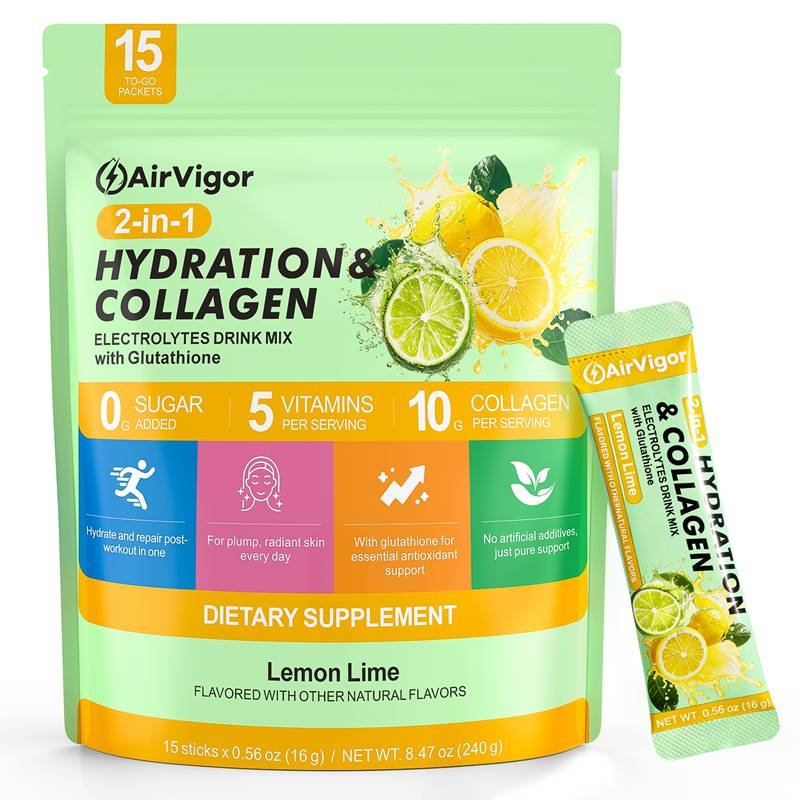
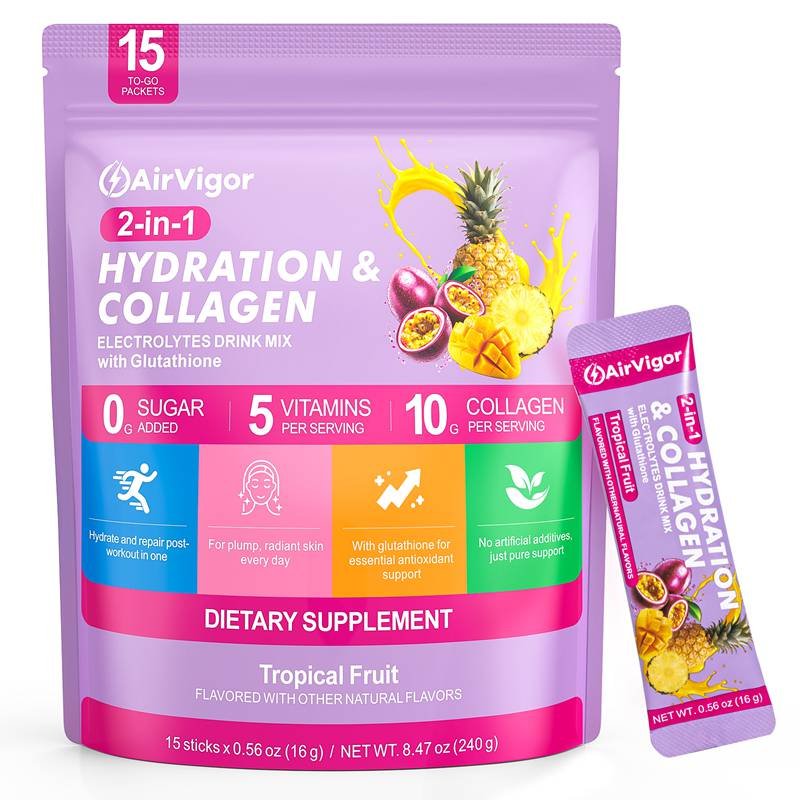
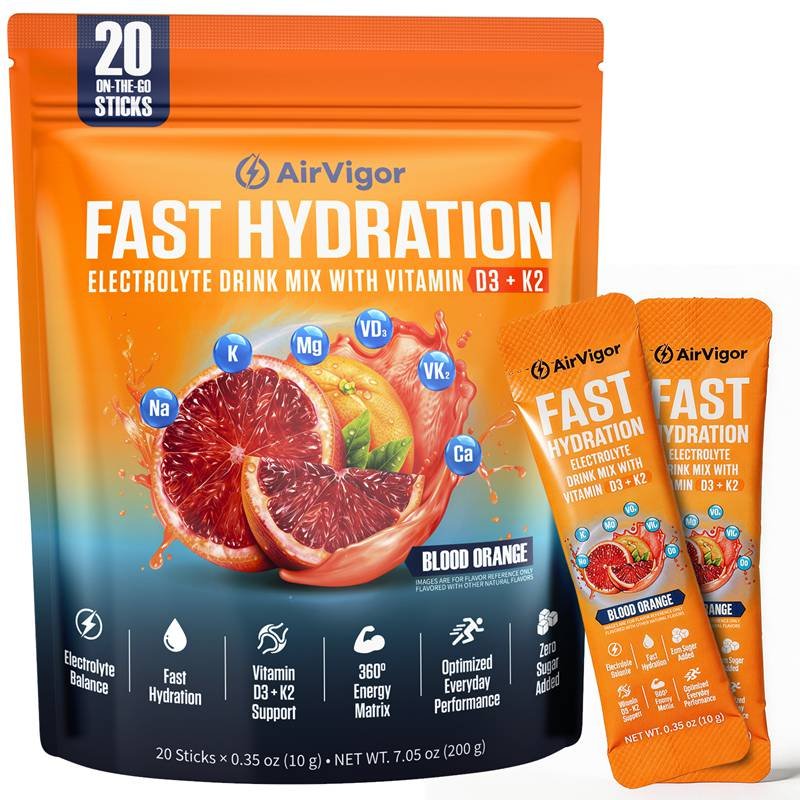
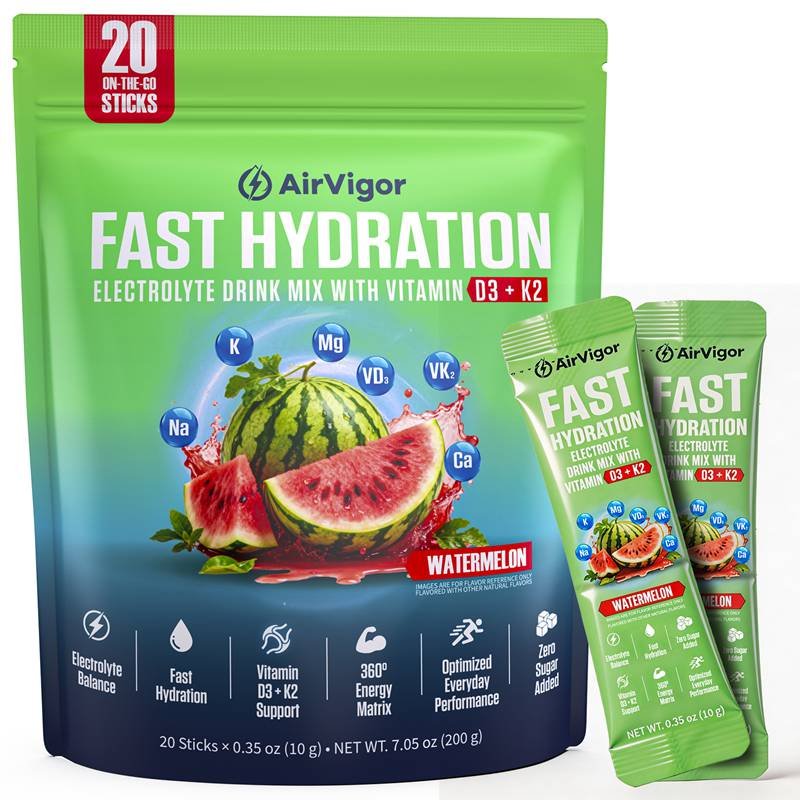
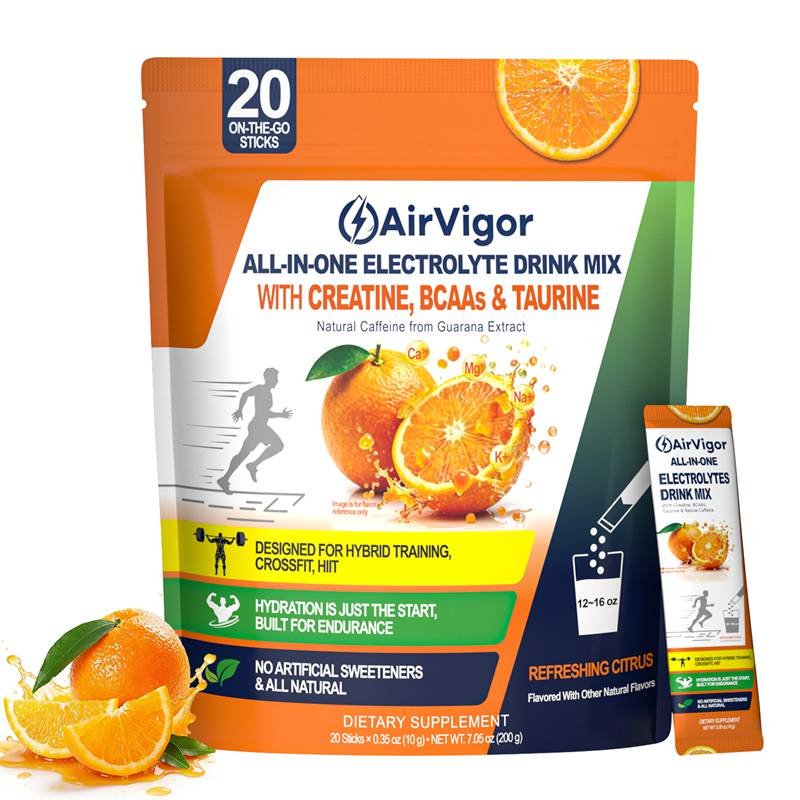
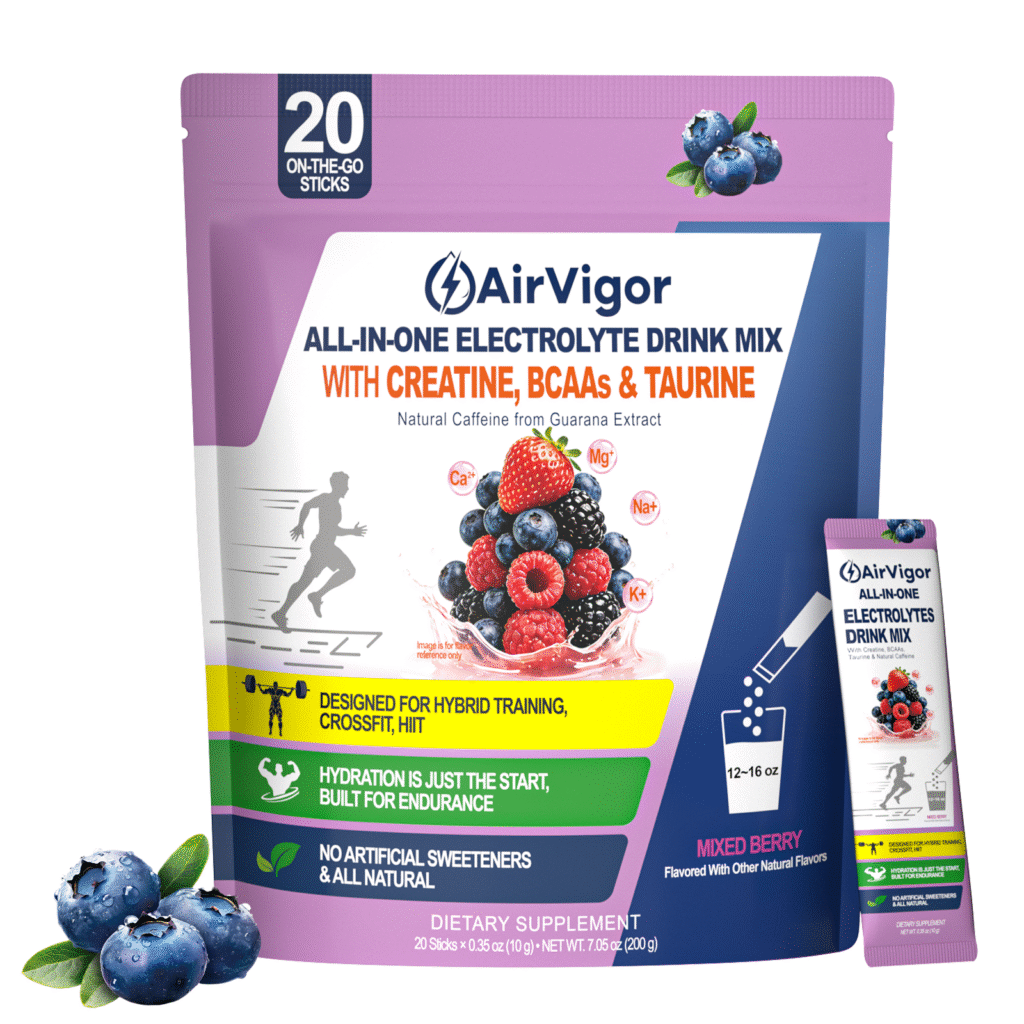
Where AirVigor fits: this is exactly where AirVigor’s product ecosystem makes sense for endurance athletes—creatine, electrolytes, and protein designed to be used together, with clear labeling and consistent mixing experience. Athletes don’t want three different brands with three different tastes, dose scoops, and GI effects.
Is Creatine Safe for Endurance Use?
For healthy adults, creatine monohydrate is widely regarded as safe at recommended doses, and evidence does not support claims that it increases dehydration, heat illness, or cramps. Common downsides are water-weight increase and occasional GI upset (often from high dosing). Kidney-related concerns are mainly relevant to people with existing kidney disease; lab interpretation can also be confusing because creatine affects creatinine markers.
What is the downside of creatine?
The real downsides are mostly practical:
- Water weight
- GI upset if dosing is aggressive
- Confusion around lab markers (creatinine)
- Quality risk if you buy low-trust products
A 2025 safety review in the literature explicitly notes that evidence does not support claims that creatine increases dehydration, heat illness, or muscle cramps, and suggests kidney function assessment should consider biomarkers independent of creatinine when interpreting labs. (PMC)
The key: safe use is not only about the ingredient. It’s also about the product quality and labeling accuracy—one reason serious athletes gravitate toward brands with transparent documentation and manufacturing systems.
Does creatine cause weight gain?
Creatine can increase body mass, especially early, largely from water retained inside muscle due to osmotic shifts. Health summaries commonly describe this as the most frequent “side effect,” especially during loading phases.
For endurance athletes, weight gain is not automatically bad—it depends on your event and body type. Some athletes feel “heavier.” Others find the training quality benefit worth it.
Practical approach:
- Track body mass weekly
- Track interval output and late-session fade
- Make a decision based on data, not vibes
Is creatine dehydrating or not?
This myth is extremely persistent, but multiple publications describe the “dehydration/cramps” fear as unsupported. A paper specifically framed as “putting to rest the myth” discusses the issue in hot/humid conditions and notes evidence refuting the dehydration claim.
The 2021 “common questions and misconceptions” paper similarly concludes research does not validate the claim that creatine causes dehydration and cramping.
Still, endurance athletes should treat hydration seriously. Creatine doesn’t replace fluids, sodium, or smart race fueling.
Long-term safety evidence
The ISSN position stand (2017) is one of the most cited consensus documents on creatine’s safety and efficacy in sport and medicine.
More recent reviews continue to evaluate safety concerns (including kidney function interpretation and cramp myths).
Important note: if you have kidney disease, are under medical supervision for chronic conditions, or you’re unsure about your health status, talk to a clinician before starting creatine.
About the ISSN 2025 PDF: I attempted to screenshot the PDF for deeper analysis, but the tool returned a validation error. I relied on the text extraction view instead, which includes the February 12, 2025 release date and summary statements.

Conclusion
Creatine is best viewed as an endurance “gear” supplement—not a steady-state stamina miracle. If your training and racing include intervals, surges, hills, and a finishing kick, a simple trial is worth it: 3–5 g/day of creatine monohydrate for 4–6 weeks, track interval consistency and late-session fade, and monitor body weight and GI comfort. Hydration matters too—especially for heavy sweaters—so pairing creatine with a consistent electrolyte routine can make the experience smoother.
If you want a straightforward system you can actually stick with, AirVigor fits naturally: creatine as the daily foundation, and electrolytes for sweat-heavy training days—built for endurance athletes who care about predictable performance, not supplement drama.
Ready to Buy or Build With AirVigor?
If you want a simple, practical endurance supplement system (not a random pile of powders), AirVigor is built around exactly what endurance athletes use most:
- Creatine powder for repeat-effort support
- Electrolyte powders for sweat-heavy training and heat
- Protein powders for recovery and consistency
- Combo formulations for athletes who want fewer products and clearer routines
1) Buy AirVigor (in-stock)
If you want fast delivery and the easiest buying path, purchase AirVigor’s in-stock products through Amazon.
2) Want a custom product quote?
If you’re building your own brand—or you’re a coach, gym, distributor, or e-commerce seller—AirVigor can support:
- custom creatine formulas (flavored/unflavored, blend strategies)
- electrolyte formulas for endurance and heat
- protein + creatine combos
- compliant labels for different markets
To request pricing, send:
- target market (US/EU/JP, etc.)
- flavor preference and sweetener approach
- serving size and daily dosing plan
- desired certifications and label claims
- packaging form (sticks, tubs, stand-up pouches)
Creatine is best viewed as an endurance “gear” supplement—not a steady-state stamina miracle. If your training and racing include intervals, surges, hills, and a finishing kick, a simple trial is worth it: 3–5 g/day of creatine monohydrate for 4–6 weeks, track interval consistency and late-session fade, and monitor body weight and GI comfort. Hydration matters too—especially for heavy sweaters—so pairing creatine with a consistent electrolyte routine can make the experience smoother.
If you want a straightforward system you can actually stick with, AirVigor fits naturally: creatine as the daily foundation, and electrolytes for sweat-heavy training days—built for endurance athletes who care about predictable performance, not supplement drama.
Share:
Contact Expert Team
At AirVigor, performance becomes effortless. We transform advanced nutrition science into clean, effective supplements that help you hydrate, recover, and feel stronger every day. Shop AirVigor on Amazon and experience athlete-trusted formulas—backed by real science and supported by our world-class R&D and production capabilities.
Trust AirVigor
At AirVigor, turning your performance goals into reality is no longer a struggle—it’s a science-driven journey we build together. Whether you’re a runner, lifter, cyclist, yogi, outdoor athlete, or someone simply seeking better daily energy, AirVigor transforms advanced nutrition research into clean, effective, and trustworthy supplements you can feel.
Backed by our U.S. scientific team, global certifications, and world-class production standards, every formula is engineered to deliver real hydration, real recovery, and real performance. And when you’re ready to experience the difference, you’ll find AirVigor products available on Amazon and other major platforms—fast shipping, consistent quality, and a community of athletes already seeing results.
Behind the scenes, our R&D and manufacturing ecosystem also supports specialized formulation development, ensuring AirVigor continues to lead with innovation while keeping quality and safety uncompromised. But at the core, everything we create is built for you—your health, your performance, your momentum.
Choose AirVigor. Feel the science. Elevate your every day.


Subscribe to our newsletter
Sign up to our newsletter and we’ll keep you up to date with the latest arrivals.