Skip to content
Electrolytes are more than just minerals; they are the foundation of your body’s ability to perform at its best. From maintaining hydration levels to supporting muscle function and nerve signaling, electrolytes are crucial for both everyday health and peak physical performance. Whether you’re an athlete pushing yourself in the gym, a professional tackling a long workday, or simply trying to stay hydrated, electrolytes play an essential role in your well-being. In this article, we’ll dive deep into the world of electrolytes — breaking down what they are, how they impact your body, and offering practical tips on how to keep them balanced for better health and performance.
Electrolytes are minerals with an electrical charge, vital for maintaining fluid balance, muscle function, and nerve signaling. They play a key role in hydration, muscle performance, and recovery, making them essential for overall physical function and well-being during exercise and daily activities. Proper electrolyte balance supports efficient body function and helps prevent dehydration, cramping, and fatigue.
Imagine you’re midway through a long workout, feeling strong, but suddenly, your muscles start to cramp, and fatigue sets in. You might think it’s just exhaustion—but it could be a sign of electrolyte imbalance. Understanding the role of electrolytes could make the difference between optimal performance and injury. Keep reading as we uncover the science behind these vital nutrients and how AirVigor’s electrolytes can help you stay at your best.
What Are Electrolytes?
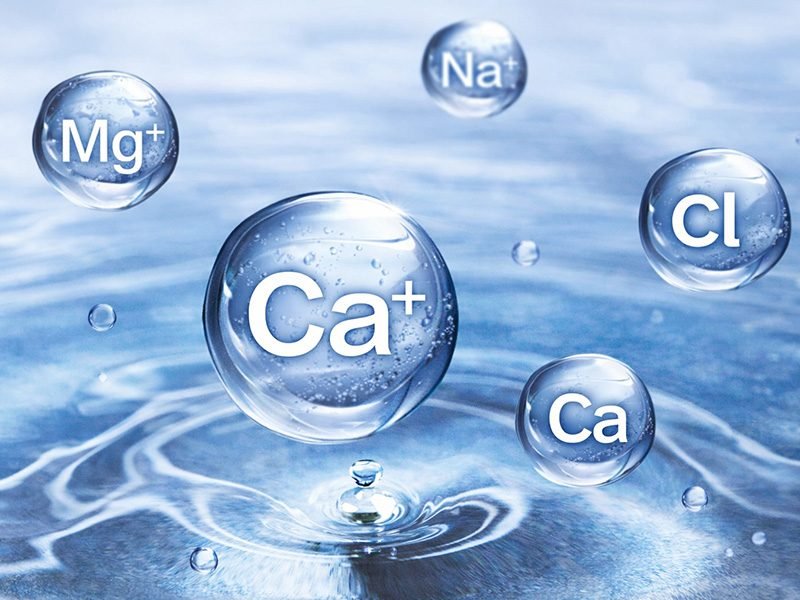
Electrolytes are essential minerals found in your body that carry an electrical charge. These minerals, which include sodium, potassium, calcium, magnesium, chloride, phosphate, and bicarbonate, play crucial roles in various physiological processes. From regulating fluid balance to supporting nerve function and muscle contraction, electrolytes are vital for overall health and performance. Without them, the body would struggle to maintain equilibrium, affecting everything from heart function to muscle movement.
In this section, we’ll explore the role of electrolytes in the body, their key functions, and why maintaining the right balance is crucial for health and performance.
The Definition and Function of Electrolytes
Electrolytes are charged particles, or ions, that facilitate a variety of biological functions. They are present in your blood, cells, and tissues, and are found in fluids such as sweat, urine, and saliva. The body uses electrolytes to control the flow of water in and out of cells, transmit nerve signals, maintain blood pressure, and support other vital processes.
Here’s a breakdown of the main electrolytes and their key functions:
| Electrolyte | Electrical Charge | Main Function |
|---|---|---|
| Sodium | Positive (Na+) | Regulates fluid balance, nerve function, and blood pressure. |
| Potassium | Positive (K+) | Supports muscle contractions, nerve signaling, and fluid balance. |
| Calcium | Positive (Ca2+) | Essential for muscle contraction, bone health, and blood clotting. |
| Magnesium | Positive (Mg2+) | Supports muscle relaxation, nerve function, and energy production. |
| Chloride | Negative (Cl-) | Works with sodium to maintain fluid balance and acid-base balance. |
| Bicarbonate | Negative (HCO3-) | Helps maintain the body’s pH balance by neutralizing excess acids. |
Key Functions of Electrolytes in the Body
- Fluid Balance One of the primary functions of electrolytes is regulating the body’s fluid balance. Sodium, for example, helps control the amount of water inside and outside cells. Potassium works alongside sodium to ensure proper hydration, keeping cells hydrated while preventing excessive water retention. Chloride, which works closely with sodium, also helps maintain the fluid balance in the body.
- Nerve Function Electrolytes are essential for proper nerve function, as they carry electrical signals between cells. This is especially critical for muscle function, heartbeat regulation, and communication between the brain and other organs. The movement of sodium, potassium, and calcium in and out of nerve cells facilitates the transmission of nerve impulses, allowing the body to respond to stimuli.
- Muscle Function Electrolytes play a vital role in muscle contraction and relaxation. For muscles to contract, calcium must be released inside muscle cells. After contraction, potassium helps muscles relax. If the balance of electrolytes is off, it can lead to muscle cramps, weakness, or spasms.
- Acid-Base Balance The body maintains a delicate pH balance to ensure that the blood remains at the optimal pH level, which is essential for enzyme function and metabolic processes. Bicarbonate and chloride play key roles in this process by helping neutralize acids that accumulate in the body, thus preventing acidosis (too much acid) or alkalosis (too little acid).
- Heart Function Electrolytes, particularly potassium, sodium, and calcium, are crucial for maintaining normal heart rhythm. Electrolyte imbalances can lead to arrhythmias (irregular heartbeats) and other cardiovascular issues. Potassium, for example, helps regulate the electrical activity of the heart and prevents irregular heartbeats.
Why Electrolyte Imbalance Can Be Harmful
An imbalance of electrolytes in the body, whether too high or too low, can lead to significant health issues. For example, dehydration or excessive fluid loss from sweating, vomiting, or diarrhea can cause a decrease in electrolytes, leading to dehydration, fatigue, and muscle cramps. On the other hand, consuming too many electrolytes, particularly sodium or potassium, can lead to conditions like hypernatremia or hyperkalemia, both of which can be life-threatening.
Maintaining the right balance is critical, as too much or too little of any electrolyte can disrupt normal body functions, leading to symptoms such as muscle weakness, fatigue, irregular heartbeats, dizziness, or even seizures.
Electrolytes and Their Role in Hydration
One of the most important aspects of electrolytes is their role in hydration. Proper hydration goes beyond just drinking water; it’s about maintaining the right balance of fluids and electrolytes in the body. When you exercise or sweat, your body loses electrolytes, which can lead to dehydration if not replenished. Water alone cannot replenish these vital minerals — this is where electrolyte supplements come in, helping to restore your electrolyte levels and improve hydration.
| Hydration Factor | How Electrolytes Help |
|---|---|
| Fluid Retention | Sodium helps retain water in your cells, preventing dehydration. |
| Cellular Hydration | Potassium aids in absorbing water into cells for better hydration. |
| Muscle Function During Activity | Magnesium and calcium help prevent cramps and muscle fatigue. |
Electrolytes in Sports and Physical Activity
During intense exercise, the body loses electrolytes through sweat. This can lead to dehydration, muscle cramps, and early fatigue. Electrolyte imbalance during exercise is a common problem for athletes and those engaging in prolonged physical activity. Replenishing lost electrolytes through sports drinks or supplements can help optimize performance, prevent cramping, and aid in quicker recovery after a workout.
For example, AirVigor’s electrolyte supplements are formulated to replace lost electrolytes efficiently, ensuring you stay hydrated and perform at your peak. With a balanced blend of sodium, potassium, magnesium, and calcium, AirVigor ensures that your body is properly replenished, promoting better endurance and faster recovery.
Understanding Electrolytes for Better Health and Performance
Electrolytes are crucial for overall health, performance, and recovery. They regulate fluid balance, enable muscle contractions, and support nerve signaling, all of which are vital for daily bodily functions. By maintaining a balanced electrolyte profile, you can optimize your physical performance, prevent dehydration, and recover faster after exercise.
Incorporating electrolytes into your diet, through both food and supplements like AirVigor’s electrolyte powder, is essential for maintaining health and supporting an active lifestyle. Whether you’re training for a marathon, lifting weights, or just staying hydrated throughout the day, electrolytes play an indispensable role in helping your body function optimally.
Which Electrolytes Are Vital for Your Health?
Electrolytes are essential for a wide range of bodily functions, including fluid balance, muscle contraction, and nerve signaling. While all electrolytes play important roles, some are especially critical for maintaining health and physical performance. In this section, we will explore the key electrolytes your body needs, their functions, and why they are vital for optimal health and performance.
The four most vital electrolytes for your health are sodium, potassium, magnesium, and calcium. Together, they help regulate hydration, maintain nerve function, support muscle contractions, and prevent cramps and fatigue during exercise.
Let’s take a closer look at each of these essential electrolytes and understand why they are so crucial for your body’s daily functions and athletic performance.
Sodium, potassium, magnesium, and calcium are the four most critical electrolytes needed for bodily functions. These electrolytes are responsible for fluid balance, muscle function, nerve signaling, and overall health. Maintaining the right balance of these electrolytes is essential for staying hydrated, avoiding cramps, and optimizing physical performance.
Vital Electrolytes for Optimal Health
| Electrolyte | Main Functions | Common Food Sources |
|---|---|---|
| Sodium | Regulates fluid balance, maintains blood pressure, aids nerve transmission | Salt, processed foods, canned soups, sports drinks |
| Potassium | Regulates muscle contractions, nerve function, and fluid balance | Bananas, spinach, sweet potatoes, oranges |
| Magnesium | Supports muscle relaxation, bone health, nerve function, and energy production | Leafy greens, nuts, seeds, whole grains |
| Calcium | Vital for bone health, muscle contractions, blood clotting, and nerve function | Dairy products, fortified plant-based milk, tofu, broccoli |
1. Sodium: Essential for Fluid Balance and Nerve Function
Sodium is one of the most critical electrolytes in the body. It plays a vital role in maintaining fluid balance by controlling the amount of water in your cells, tissues, and blood. Sodium helps regulate blood pressure and is essential for nerve transmission and muscle function.
- Fluid Balance: Sodium helps your body maintain water retention, ensuring proper hydration. It does this by attracting and holding onto water, preventing dehydration.
- Nerve Function: Sodium is crucial for the transmission of nerve impulses. Without sodium, your nervous system would struggle to communicate, impairing everything from muscle contraction to brain function.
- Blood Pressure Regulation: Sodium works to balance your body’s blood pressure. However, too much sodium can lead to high blood pressure (hypertension), so moderation is key.
Foods High in Sodium: Processed foods like canned soups, salty snacks, and some restaurant foods are high in sodium. While sodium is essential, consuming too much can lead to fluid retention and other health issues. Therefore, it’s important to maintain a balanced intake of sodium, especially for active individuals or athletes.
2. Potassium: Vital for Muscle and Nerve Function
Potassium is another electrolyte that is vital for heart function, muscle contractions, and nerve signaling. It works alongside sodium to maintain fluid balance in cells, tissues, and organs.
- Muscle Contraction: Potassium is crucial for muscle function, helping muscles contract and relax properly. This is particularly important for athletes or anyone engaging in physical activity, as potassium helps prevent muscle cramps.
- Nerve Function: Potassium helps transmit electrical signals along nerves, allowing your body to move and respond to stimuli. Without enough potassium, your muscles and nerves cannot function efficiently.
- Fluid Balance: Potassium helps regulate the amount of fluid inside your cells, helping to maintain cellular hydration and support optimal physical performance.
Foods High in Potassium: Potassium is abundant in fruits and vegetables, especially bananas, oranges, sweet potatoes, and spinach. It’s also found in dairy products, beans, and some fish, such as salmon. Potassium-rich foods are essential for maintaining heart health, reducing the risk of muscle cramps, and supporting overall hydration.
3. Magnesium: Supporting Muscle Relaxation and Bone Health
Magnesium is a vital electrolyte that supports muscle relaxation, nerve function, and energy production. It also plays an essential role in maintaining bone health and regulating calcium levels.
- Muscle Relaxation: Magnesium works by balancing the effects of calcium in muscle function. While calcium stimulates muscle contraction, magnesium helps muscles relax. This makes it a key electrolyte for preventing cramps and spasms.
- Bone Health: Magnesium is essential for maintaining bone health, as it helps regulate calcium and supports bone density. Magnesium also works in synergy with vitamin D to help the body absorb calcium efficiently.
- Nerve Function: Magnesium plays a role in transmitting nerve signals and preventing overstimulation, making it crucial for nervous system health.
- Energy Production: Magnesium is involved in the production of ATP (adenosine triphosphate), the body’s main energy molecule. Low magnesium levels can lead to fatigue and reduced exercise performance.
Foods High in Magnesium: Magnesium is found in leafy green vegetables, nuts, seeds, and whole grains. Almonds, sunflower seeds, and spinach are particularly high in magnesium, making them great additions to an electrolyte-balancing diet.
4. Calcium: Essential for Bone Health and Muscle Contractions
Calcium is best known for its role in supporting bone health, but it also plays a crucial role in muscle function and nerve signaling. It is essential for muscle contractions, blood clotting, and maintaining heart health.
- Bone Health: Calcium is the most abundant mineral in the body and is essential for bone structure and strength. Adequate calcium intake helps prevent bone loss and supports overall skeletal health.
- Muscle Contractions: Calcium is necessary for muscle contraction. When a muscle is stimulated by nerve signals, calcium is released to trigger the muscle fibers to contract. Without calcium, muscles would be unable to contract properly.
- Heart Function: Calcium helps regulate heart function by assisting in the contraction and relaxation of the heart muscle. It’s also essential for maintaining normal heart rhythm.
Foods High in Calcium: Dairy products like milk, cheese, and yogurt are excellent sources of calcium. Plant-based sources include fortified plant milks (such as almond or soy milk), tofu, and leafy greens like kale and broccoli. Ensuring you get enough calcium is essential for overall health, particularly for bone density and muscle function.
Vital Electrolytes for Health and Performance
To summarize, the four most critical electrolytes for maintaining overall health and physical performance are sodium, potassium, magnesium, and calcium. Each of these electrolytes has a unique and important role in fluid balance, muscle function, nerve signaling, and overall health. Understanding their functions and sources can help you better manage your electrolyte intake, whether through diet or supplements.
| Electrolyte | Main Function | Health Implications |
|---|---|---|
| Sodium | Fluid balance, nerve transmission, blood pressure control | Essential for hydration, too much can raise blood pressure |
| Potassium | Muscle contraction, nerve function, fluid balance | Supports muscle function, prevents cramps |
| Magnesium | Muscle relaxation, bone health, energy production | Prevents muscle cramps, supports bone density |
| Calcium | Bone health, muscle contraction, heart function | Prevents bone loss, supports heart and muscle health |
The Importance of Electrolytes for Optimal Health
Maintaining a proper balance of sodium, potassium, magnesium, and calcium is essential for both general health and peak performance, particularly during exercise. These electrolytes work together to keep your muscles functioning, your heart beating, and your body hydrated. Consuming a balanced diet rich in electrolyte-rich foods and supplements — like AirVigor’s electrolyte powder — ensures that your body has the right nutrients to perform at its best.
By understanding the roles of these vital electrolytes, you can take proactive steps to ensure that your body stays hydrated, performs optimally, and recovers quickly. For active individuals and athletes, electrolytes are not just a supplement — they are a crucial component of your daily health regimen.
How Do Electrolytes Affect Your Physical Performance?
Electrolytes are essential to physical performance, playing a critical role in hydration, muscle function, nerve transmission, and energy regulation. During exercise, the body’s demand for electrolytes increases due to sweat, muscle contractions, and the stress of physical exertion. Maintaining proper electrolyte balance is crucial for sustaining performance, preventing fatigue, and ensuring a safe recovery. Let’s explore how electrolytes directly influence your physical performance, from hydration to muscle contractions and recovery.
Electrolytes are vital for physical performance as they regulate fluid balance, muscle contractions, and nerve signaling. Proper electrolyte balance enhances endurance, prevents cramps, and supports recovery, making them crucial for athletes and active individuals.
Electrolytes and Their Role in Physical Performance
| Performance Factor | How Electrolytes Help | Specific Electrolytes Involved |
|---|---|---|
| Hydration | Electrolytes help regulate fluid balance between cells, tissues, and organs, ensuring proper hydration at a cellular level. This allows the body to maintain optimal fluid distribution. | Sodium (Na⁺), Potassium (K⁺), Magnesium (Mg²⁺) |
| Muscle Function | Electrolytes are essential for muscle contraction and relaxation. They prevent cramps by ensuring that muscles can contract efficiently and then relax after exercise. | Calcium (Ca²⁺), Magnesium (Mg²⁺), Sodium (Na⁺) |
| Energy Production | Electrolytes are involved in the production of ATP, the body’s energy molecule. This supports sustained physical performance, especially in high‑intensity exercises like sprinting or weightlifting. | Sodium (Na⁺), Potassium (K⁺), Magnesium (Mg²⁺) |
| Nerve Function | Electrolytes transmit electrical impulses that allow for proper nerve signaling, which is essential for controlling muscle movement and coordination, especially during complex exercises. | Potassium (K⁺), Sodium (Na⁺), Calcium (Ca²⁺) |
| Recovery | After intense physical activity, electrolytes help restore the minerals lost in sweat, improving the body’s ability to repair muscles and reduce recovery time. | Sodium (Na⁺), Magnesium (Mg²⁺), Potassium (K⁺) |

Electrolytes and Hydration: Key for Endurance
Hydration is one of the most important factors in physical performance, and electrolytes are crucial in regulating it. While water is vital for maintaining body temperature and fluid balance, electrolytes are the key to ensuring that water is absorbed and retained by cells in the body. This is especially important during intense physical activity or in hot conditions where you sweat more heavily.
- Role of Sodium in Fluid Retention Sodium is the primary electrolyte involved in fluid balance. It helps your body retain water, keeping your cells hydrated. Without enough sodium, your body can’t hold onto water, leading to dehydration and early fatigue. This can significantly impact endurance, especially during long runs, intense workouts, or hot weather conditions.
- Potassium and Cellular Hydration Potassium helps regulate water inside your cells. It ensures that water moves into cells and maintains proper fluid balance. Proper potassium levels prevent dehydration at the cellular level and ensure your body has the hydration it needs for sustained physical activity.
In practice: If you are running a marathon or lifting weights in a hot gym, your body loses electrolytes rapidly through sweat. Replenishing sodium and potassium helps you maintain hydration, which supports endurance and keeps you going longer.
| Hydration Factor | Electrolyte’s Role | Impact on Performance |
|---|---|---|
| Fluid Retention | Sodium helps retain water in your body’s cells | Prevents dehydration, improves endurance |
| Cellular Hydration | Potassium ensures water absorption into cells | Helps with sustained physical activity |
| Electrolyte Imbalance | Lack of electrolytes hinders proper hydration | Causes early fatigue, cramping, and reduced endurance |
Preventing Muscle Cramps and Fatigue During Exercise
Muscle cramps and fatigue are common symptoms of electrolyte imbalances, especially during prolonged physical activity. Electrolytes are responsible for controlling muscle contractions and preventing overstimulation or underactivity.
- Sodium and Potassium for Muscle Function Sodium and potassium work together to help your muscles contract and relax. Sodium helps initiate muscle contractions, while potassium ensures muscles relax after contraction. An imbalance in these electrolytes can lead to muscle cramps, weakness, and an inability to continue physical activity.
- Magnesium’s Role in Muscle Relaxation Magnesium is a critical electrolyte for muscle relaxation. When magnesium levels are too low, muscles can become tense and prone to cramps. Magnesium helps muscles relax after they contract, ensuring smooth and controlled movements.
- Calcium for Muscle Contraction Calcium plays a direct role in muscle contraction. It triggers muscle fibers to contract when the body signals movement. However, too much calcium can cause muscles to contract too tightly, leading to cramps.
By maintaining a proper balance of sodium, potassium, magnesium, and calcium, athletes can significantly reduce the risk of muscle cramps, ensuring smoother, more effective workouts.
| Muscle Function Factor | How Electrolytes Help | Impact on Performance |
|---|---|---|
| Muscle Contractions | Sodium triggers muscle contractions | Enables movement, prevents cramps |
| Muscle Relaxation | Potassium and magnesium ensure muscles relax after contraction | Reduces fatigue, prevents muscle spasms and cramping |
| Efficient Muscle Function | Calcium supports muscle contraction | Ensures effective movement without cramping |
Electrolytes and Energy Production
Physical activity increases the body’s energy demand. Electrolytes play a key role in energy production and metabolism, especially during exercise. Magnesium and potassium are directly involved in ATP (adenosine triphosphate) production, the body’s primary energy source.
- Magnesium’s Role in Energy Magnesium is essential for the conversion of food into energy. It is a cofactor in ATP production, helping your body efficiently use the energy from carbohydrates, fats, and proteins. Without sufficient magnesium, your muscles may tire more quickly, and recovery after exercise can be slower.
- Sodium and Potassium’s Impact on Energy Levels Sodium helps maintain blood volume and pressure, which supports efficient circulation during physical activity. Potassium helps maintain heart function, ensuring that your body can deliver oxygen and nutrients to muscles during exercise. This optimal circulation supports energy production, helping you power through longer workouts.
| Energy Production Factor | Electrolyte’s Role | Impact on Performance |
|---|---|---|
| ATP Production | Magnesium is vital for ATP synthesis | Supports sustained energy and reduces fatigue |
| Oxygen and Nutrient Delivery | Sodium and potassium maintain circulation | Helps muscles get oxygen and nutrients during exercise |
| Energy Efficiency | Electrolytes help optimize energy use | Increases stamina, reduces early fatigue |
Electrolytes for Recovery Post-Workout
Recovery is just as important as performance, and electrolytes play a crucial role in restoring the body’s balance after physical activity. After a workout, the body needs to replenish the electrolytes lost through sweat, maintain hydration, and repair muscle tissue. Proper electrolyte replenishment can reduce the duration of fatigue, speed up muscle recovery, and prevent post-exercise dehydration.
- Sodium and Potassium for Replenishment After exercise, sodium and potassium help restore the body’s fluid balance. Sodium helps retain water, while potassium ensures that fluid is absorbed into cells. These electrolytes help speed up the recovery process, preventing dehydration and promoting optimal muscle function.
- Magnesium and Calcium for Muscle Repair Magnesium supports muscle relaxation and repair, while calcium aids muscle contraction. Both are essential for preventing post-workout soreness and muscle tightness.
By replenishing electrolytes with the right products, such as AirVigor’s electrolyte powder, athletes can significantly improve their recovery times, helping them feel less fatigued and ready for their next workout.
| Recovery Factor | Electrolyte’s Role | Impact on Recovery |
|---|---|---|
| Replenishing Fluid | Sodium and potassium help restore fluid balance | Reduces recovery time, prevents dehydration |
| Muscle Relaxation | Magnesium relaxes muscles and supports repair | Reduces soreness, prevents muscle tightness |
| Muscle Function Post-Workout | Calcium aids muscle contractions and repairs | Prevents muscle cramps and supports recovery |
Electrolytes Are Essential for Peak Physical Performance
Electrolytes are fundamental to every aspect of physical performance, from maintaining hydration and preventing cramps to ensuring energy production and aiding recovery. Maintaining the right electrolyte balance is crucial for athletes and anyone who engages in regular physical activity.
For active individuals, staying hydrated and replenishing electrolytes lost during exercise is key to optimizing performance and preventing fatigue. Whether you’re an athlete, fitness enthusiast, or just staying active, AirVigor’s electrolyte powder can help keep your body balanced, hydrated, and performing at its best.
Ready to enhance your physical performance? Order AirVigor’s electrolyte powder today or contact us for more information on our custom products designed to meet your unique needs. Whether you’re training for a marathon, lifting weights, or just staying active, our electrolyte supplements are your go-to solution for hydration and recovery.
Do Electrolyte Imbalances Affect Health and Performance?
Electrolyte imbalances can significantly impact both physical health and performance, especially during intense physical activity, hot weather, or illness. Electrolytes, including sodium, potassium, magnesium, calcium, and chloride, are crucial for regulating fluid balance, muscle function, nerve signaling, and energy production. When these electrolytes become unbalanced, even slightly, the effects can range from fatigue and muscle cramps to more serious complications like irregular heart rhythms, dehydration, and impaired cognitive function.
In this section, we’ll explore the symptoms and consequences of electrolyte imbalances, how they affect physical performance, and the health risks they pose.
Electrolyte imbalances, whether due to dehydration, excessive intake, or health conditions, can negatively affect both physical performance and overall health. Symptoms like muscle cramps, fatigue, dizziness, and irregular heartbeats are common signs of imbalance. Maintaining electrolyte balance is crucial for performance, hydration, and long-term health.
Symptoms and Consequences of Electrolyte Imbalance
| Electrolyte Imbalance | Common Symptoms | Impact on Health and Performance |
|---|---|---|
| Sodium Imbalance | Fatigue, confusion, swelling, headaches, high blood pressure | Impaired nerve function, fluid retention, and dehydration |
| Potassium Imbalance | Muscle cramps, weakness, irregular heartbeats (arrhythmias) | Decreased muscle strength, fatigue, risk of heart failure |
| Magnesium Imbalance | Muscle spasms, cramps, anxiety, tremors | Reduced muscle relaxation, poor recovery, nerve dysfunction |
| Calcium Imbalance | Muscle spasms, tingling sensations, fatigue | Weak bones, poor muscle function, irregular heart rhythms |
| Chloride Imbalance | Dehydration, fluid retention, metabolic acidosis or alkalosis | Disrupts acid-base balance, impacts overall hydration |
1. Sodium Imbalance: The Role of Sodium in Fluid Regulation and Nerve Function
Sodium is crucial for regulating fluid balance and blood pressure. It helps maintain the right amount of fluid inside and outside of your cells. A sodium imbalance can occur when there’s too much or too little sodium in the body, commonly caused by dehydration, overhydration, or excess salt consumption.
- Too Low Sodium (Hyponatremia) When sodium levels drop too low, typically due to excessive sweating without adequate replenishment or drinking too much water, it can lead to hyponatremia. This condition dilutes the sodium in the blood, causing water to flow into cells, potentially causing swelling and leading to headaches, nausea, confusion, and even seizures. In extreme cases, it can be life-threatening.
- Too High Sodium (Hypernatremia) Conversely, hypernatremia occurs when sodium levels are too high, often due to dehydration or overconsumption of salty foods. Symptoms include high blood pressure, fluid retention, fatigue, and confusion. The body struggles to retain water, and blood pressure rises, leading to cardiovascular strain.
How it Affects Performance: Sodium imbalance can impair hydration and muscle function, leading to early fatigue, decreased endurance, and poor recovery. During exercise, it can result in muscle cramps, dizziness, and impaired performance.
2. Potassium Imbalance: Essential for Muscle Function and Heart Health
Potassium is essential for regulating muscle contractions, nerve signals, and maintaining fluid balance. A potassium imbalance can significantly affect physical performance and health, especially in athletes who lose large amounts of potassium through sweat during exercise.
- Too Low Potassium (Hypokalemia) Low potassium levels, known as hypokalemia, often result from excessive sweating, vomiting, diarrhea, or a potassium-poor diet. Symptoms of hypokalemia include muscle cramps, weakness, and fatigue. In severe cases, it can lead to arrhythmias (irregular heartbeats), dizziness, and even paralysis.
- Too High Potassium (Hyperkalemia) Hyperkalemia, or high potassium levels, is less common but can occur with kidney issues or excessive potassium supplementation. It can cause irregular heartbeats, fatigue, nausea, and muscle weakness. In extreme cases, hyperkalemia can lead to heart failure or cardiac arrest.
How it Affects Performance: Potassium is vital for muscle contraction and nerve signaling. An imbalance can lead to muscle cramps, weakness, and even dangerous arrhythmias, compromising performance, especially during endurance sports or heavy lifting.
3. Magnesium Imbalance: Supporting Muscle Relaxation and Nerve Function
Magnesium is involved in over 300 biochemical reactions in the body, including energy production, muscle relaxation, and nerve function. Magnesium imbalances can disrupt these vital processes.
- Too Low Magnesium (Hypomagnesemia) A deficiency in magnesium, hypomagnesemia, is common in athletes due to excessive sweat loss and inadequate dietary intake. Symptoms include muscle spasms, cramps, and fatigue. Magnesium also plays a crucial role in stabilizing the heart’s electrical rhythm, and its deficiency can cause irregular heartbeats.
- Too High Magnesium (Hypermagnesemia) While rare, hypermagnesemia occurs when magnesium levels become too high, often due to kidney disease or excessive supplementation. Symptoms include low blood pressure, nausea, difficulty breathing, and heart block (a type of arrhythmia).
How it Affects Performance: Magnesium helps muscles relax after contraction. Low magnesium levels can cause muscle cramps, poor recovery, and fatigue, limiting your endurance and strength during workouts.
4. Calcium Imbalance: Vital for Muscle Function and Bone Health
Calcium is essential for muscle contractions, nerve function, and bone health. Both too high and too low calcium levels can impair muscle function and contribute to bone-related problems.
- Too Low Calcium (Hypocalcemia) Calcium deficiency, hypocalcemia, is often associated with muscle spasms, tingling sensations, and even tetany (severe muscle spasms). It can also increase the risk of osteoporosis and fractures over time. Additionally, low calcium can interfere with muscle contractions, leading to weakness and cramps during physical activity.
- Too High Calcium (Hypercalcemia) Excessive calcium, known as hypercalcemia, typically results from overuse of calcium supplements or certain medical conditions. Symptoms include nausea, vomiting, fatigue, kidney stones, and weakened muscles. In severe cases, hypercalcemia can lead to heart arrhythmias.
How it Affects Performance: Calcium is needed for muscle contractions. If calcium levels are too low, muscles become weak and fatigued, impacting athletic performance. In contrast, high calcium levels can cause fatigue, muscle weakness, and impaired cardiovascular function.
5. Chloride Imbalance: Supporting Acid-Base Balance and Fluid Regulation
Chloride is a key electrolyte that works in tandem with sodium to maintain fluid balance in the body. It also helps regulate the body’s acid-base balance by preventing metabolic acidosis or alkalosis.
- Too Low Chloride (Hypochloremia) Low chloride levels, or hypochloremia, can result from excessive vomiting, diarrhea, or dehydration. It leads to symptoms such as weakness, fatigue, and difficulty breathing due to impaired acid-base balance.
- Too High Chloride (Hyperchloremia) High chloride levels, or hyperchloremia, can be caused by kidney disease or excessive salt intake. Symptoms include dehydration, rapid breathing, and metabolic acidosis, which disturbs the body’s pH levels.
How it Affects Performance: Chloride helps maintain proper hydration and fluid balance. An imbalance can affect your body’s ability to regulate water and electrolytes, impairing performance, especially in endurance athletes or those working in hot climates.
The Impact of Electrolyte Imbalances on Cognitive Function and Mental Clarity
Electrolytes don’t just affect physical performance; they also influence cognitive function and mental clarity. Sodium, potassium, and calcium are essential for proper nerve function and brain activity.
- Cognitive Impact of Sodium and Potassium Imbalance Both low sodium and low potassium levels can lead to confusion, dizziness, and difficulty concentrating. These imbalances disrupt nerve function, making it harder to think clearly and react quickly. This is particularly dangerous for athletes who rely on focus and decision-making during sports.
- Calcium and Magnesium for Brain Function Calcium and magnesium are involved in neurotransmitter release and nerve signal transmission, which are essential for mood regulation, cognitive function, and memory. Imbalances in these electrolytes can lead to anxiety, irritability, and difficulty concentrating.
Maintaining Electrolyte Balance for Health and Performance
Electrolyte imbalances can significantly affect your health, leading to symptoms such as fatigue, muscle cramps, dizziness, and irregular heartbeats. Whether you’re an athlete or simply staying active, ensuring that you maintain proper electrolyte balance is essential for optimal performance, recovery, and overall health.
If you’re experiencing symptoms of electrolyte imbalance, it’s crucial to replenish lost electrolytes through diet or supplementation. AirVigor’s electrolyte powder is scientifically formulated to restore the balance of essential electrolytes like sodium, potassium, magnesium, and calcium. By using AirVigor, you can support hydration, improve performance, and accelerate recovery, ensuring that you stay at your best.
Ready to optimize your electrolyte balance and enhance your performance? Order AirVigor’s electrolyte powder today or contact us for custom product inquiries to meet your specific needs.

How Can You Maintain Electrolyte Balance Through Diet and Supplements?
Maintaining proper electrolyte balance is essential for optimal health and performance. Whether you’re an athlete engaging in intense physical activity, a busy professional, or someone looking to stay hydrated and healthy, your body requires a consistent supply of key electrolytes like sodium, potassium, magnesium, and calcium. While a balanced diet can provide many of these nutrients, sometimes, supplementation is necessary to ensure you’re meeting your body’s demands, especially during intense exercise, hot weather, or illness.
In this section, we will explore how to maintain electrolyte balance through diet and supplements. We’ll also highlight why supplements are often necessary for active individuals or those experiencing high electrolyte loss.
Electrolyte balance can be maintained through a diet rich in whole foods and, when needed, through targeted supplements. Sodium, potassium, magnesium, and calcium are the primary electrolytes that need to be replenished. While whole foods can provide a significant amount of electrolytes, supplementation can help fill gaps, particularly for athletes or those with high sweat losses.
Maintaining Electrolyte Balance with Diet and Supplements
| Electrolyte | Dietary Sources | Supplementation |
|---|---|---|
| Sodium | Salt, processed foods, sports drinks, soups | Electrolyte powders, oral rehydration solutions |
| Potassium | Bananas, sweet potatoes, spinach, oranges, beans | Potassium supplements, electrolyte powders |
| Magnesium | Leafy greens, nuts, seeds, whole grains, avocado | Magnesium capsules, electrolyte powders |
| Calcium | Dairy products, fortified plant milks, tofu, broccoli | Calcium supplements, electrolyte powders, fortified foods |
1. Sodium: The Role of Sodium in Fluid Balance and Hydration
Sodium is the most abundant electrolyte in the extracellular fluid (outside your cells). It plays a vital role in regulating fluid balance, nerve transmission, and muscle function. The body needs sodium to maintain blood pressure and ensure that water is retained properly in the bloodstream.
- Dietary Sources of Sodium Sodium is commonly found in salt (sodium chloride), processed foods, canned soups, and salty snacks. While sodium is necessary for hydration and performance, it’s important to monitor intake to avoid excessive consumption, which can lead to high blood pressure and kidney strain. Most people consume more sodium than necessary, so it’s important to balance sodium intake with other electrolytes like potassium.
- When to Supplement Sodium If you’re engaging in extended physical activity, such as long-distance running or intense outdoor sports, you will lose significant amounts of sodium through sweat. In such cases, sodium supplementation can help maintain electrolyte balance and prevent dehydration. AirVigor’s electrolyte powder is formulated with balanced sodium to ensure optimal hydration during high-intensity workouts or hot conditions.
How to Supplement Sodium
- Drink sports drinks or electrolyte solutions that contain sodium and other electrolytes to prevent hyponatremia (low sodium levels) during exercise.
- Use electrolyte powders like AirVigor’s that offer balanced amounts of sodium without excessive added sugars.
2. Potassium: Vital for Muscle Function and Preventing Cramps
Potassium is one of the most important electrolytes for maintaining muscle function and preventing cramps. Potassium works alongside sodium to regulate fluid balance inside and outside cells, enabling proper nerve signaling and muscle contractions.
- Dietary Sources of Potassium Potassium is naturally abundant in fruits and vegetables, especially bananas, sweet potatoes, spinach, and oranges. Beans, tomatoes, and leafy greens are also excellent sources of potassium. Since potassium is lost during exercise, consuming potassium-rich foods or drinks can help replenish lost levels.
- When to Supplement Potassium If you’re experiencing muscle cramps or fatigue during exercise, or if you’re on a diet low in potassium-rich foods, supplementation may be necessary. Potassium supplements are commonly used by athletes and individuals who lose large amounts of potassium through sweating.
How to Supplement Potassium
- Look for potassium supplements or electrolyte powders that contain potassium and sodium in balanced amounts to prevent imbalances.
- Consuming natural sources of potassium-rich foods regularly is the best approach for long-term maintenance.
3. Magnesium: Essential for Muscle Relaxation and Energy Production
Magnesium plays a pivotal role in muscle relaxation, nerve function, and the production of ATP (adenosine triphosphate), the primary energy molecule in the body. It also supports bone health, making it a critical electrolyte for both athletic performance and overall well-being.
- Dietary Sources of Magnesium Magnesium is abundant in leafy greens, nuts, seeds, and whole grains. Avocados, dark chocolate, and legumes are also great sources of magnesium. However, modern diets often lack sufficient magnesium, which can result in symptoms like muscle spasms, cramps, and fatigue.
- When to Supplement Magnesium Magnesium supplementation may be necessary if you are experiencing muscle cramps or poor recovery after exercise. Athletes who sweat excessively or engage in high-intensity workouts may be at risk of magnesium deficiency. Supplementing magnesium can help improve muscle relaxation and prevent cramps.
How to Supplement Magnesium
- Magnesium supplements can be taken in capsule or powder form. AirVigor’s electrolyte powder includes magnesium, which supports muscle function and enhances post-workout recovery.
- For those who experience leg cramps or spasms, magnesium citrate or magnesium glycinate are highly absorbable forms of magnesium.
4. Calcium: Crucial for Bone Health and Muscle Contraction
Calcium is well-known for its role in bone health, but it also plays a critical role in muscle contraction, nerve function, and blood clotting. Adequate calcium intake is essential for maintaining muscle function, especially during intense physical activity.
- Dietary Sources of Calcium Calcium is found in dairy products like milk, cheese, and yogurt. It is also present in fortified plant-based milks (such as almond or soy milk), tofu, broccoli, and leafy greens. While many people get enough calcium through their diet, individuals with lactose intolerance or those following plant-based diets may need to focus on fortified foods or supplements.
- When to Supplement Calcium Calcium supplementation is often necessary for individuals with low dietary intake or those at risk of osteoporosis. It is particularly important for athletes involved in weight-bearing activities or those who have increased calcium needs due to intense training.
How to Supplement Calcium
- Consider taking a calcium supplement, especially if you’re unable to get enough through your diet. Calcium citrate is a highly absorbable form of calcium.
- If you’re engaging in strenuous workouts or experiencing muscle spasms, magnesium and calcium supplements taken together can help promote muscle relaxation and prevent cramps.
How Supplements Can Help Maintain Electrolyte Balance
While a balanced diet can provide a significant amount of electrolytes, supplementation is often necessary to meet the higher demands of active individuals, athletes, and those experiencing excessive electrolyte loss through sweating, illness, or dehydration.
- Targeted Supplementation for Active Individuals During prolonged physical activity, especially in hot conditions, the body loses electrolytes through sweat. In such cases, electrolyte supplements help restore lost minerals quickly, supporting hydration and muscle function. AirVigor’s electrolyte powder is formulated to provide a balanced mix of sodium, potassium, magnesium, and calcium, ensuring your body has the electrolytes it needs to perform at its best.
- Choosing the Right Supplement When selecting an electrolyte supplement, choose one that includes a balanced mix of electrolytes and is free from added sugars and artificial ingredients. Products like AirVigor offer clean, high-quality formulations designed for athletes, fitness enthusiasts, and anyone looking to maintain optimal hydration levels.
Maintaining Electrolyte Balance for Health and Performance
Maintaining electrolyte balance is vital for sustaining hydration, preventing muscle cramps, supporting energy production, and optimizing performance during physical activity. While a diet rich in fruits, vegetables, and whole grains can provide many of the necessary electrolytes, supplements are often necessary to fill gaps, especially for athletes or individuals experiencing heavy electrolyte loss through sweat, heat, or illness.
By supplementing with high-quality electrolyte powders, such as AirVigor, you can ensure your body stays hydrated, recover faster from intense exercise, and support muscle function and overall health. Ready to optimize your hydration and performance? Order AirVigor’s electrolyte powder today or contact us for custom product inquiries tailored to your needs.

Is AirVigor’s Electrolyte Supplement the Best Choice for You?
Electrolyte supplements can range from basic hydration drinks to fully optimized performance formulas. AirVigor’s three electrolyte powders are distinctly designed to meet different user goals — from high‑intensity performance to recovery and daily hydration — offering more comprehensive benefits than ordinary electrolytes on the market.
Below is a detailed, separate introduction for each AirVigor formula, focusing on core functions, benefits, mechanisms, and why it’s superior to standard electrolyte products.
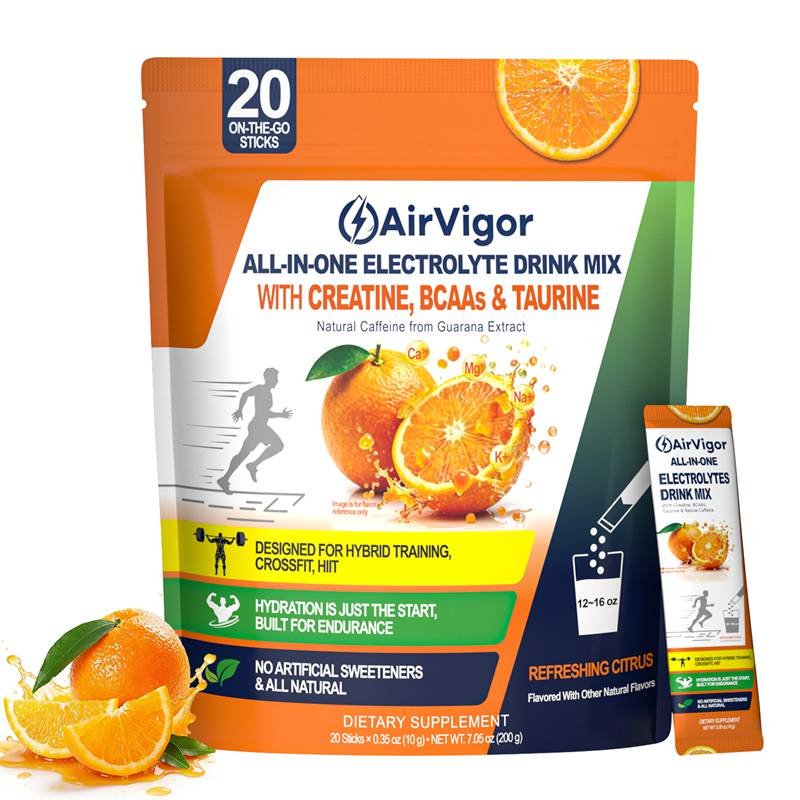
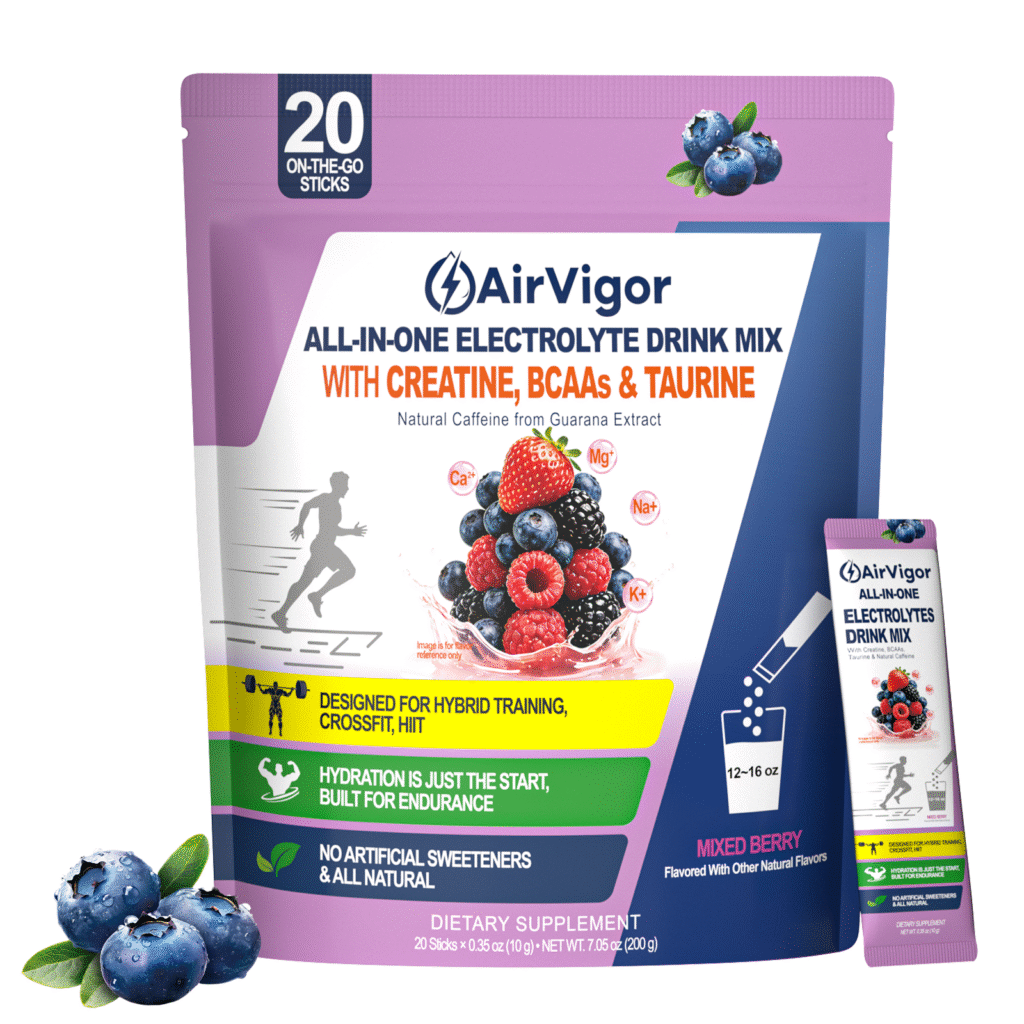
1. AirVigor All-In-One Electrolyte Powder
Designed for athletes and high‑intensity trainers who want maximum output, endurance, and energy while maintaining hydration and recovery support throughout exercise.
Core Benefits
| Performance Need | AirVigor Solution |
|---|---|
| Endurance & stamina | Creatine + Citrulline + Electrolytes |
| Muscle stimulation | BCAAs + Taurine |
| Hydration balance | Full spectrum electrolytes (Na⁺, K⁺, Mg²⁺, Ca²⁺) |
| Mental focus & energy | Natural Guarana + Citrulline |
Key Ingredients
- Creatine (2000mg) – Supports ATP regeneration and peak power output.
- BCAAs + Amino Acid Complex – Promotes muscle performance and reduces exercise‑induced muscle breakdown.
- Taurine + Citrulline – Enhances cellular hydration and blood flow for delayed fatigue and improved pump.
- Full Electrolyte Matrix (Na⁺, K⁺, Mg²⁺, Ca²⁺) – Rapid hydration and balanced mineral replenishment.
- Natural Guarana Extract – Provides clean, focused energy without sugar crash.
Target Users
- CrossFit & HIIT athletes
- Endurance runners, triathletes, and cyclists
- Strength and power lifters
- Fitness enthusiasts training 4+ days/week
- People who want performance and hydration in one
Performance Outcomes
- Improved endurance capacity
- Sustained power output
- Faster muscle recovery during a workout
- Reduced muscle fatigue and cramping
- Better hydration + mental clarity during training
What Common Electrolyte Powders Cannot Do
Most standard electrolyte powders only support hydration (replacing Na⁺/K⁺), but they cannot:
- Enhance muscular strength
- Support high‑intensity energy output
- Improve peak performance
- Provide muscle energy substrates (BCAAs/Creatine)
AirVigor Pre‑Workout uniquely blends performance nutrients + hydration electrolytes — giving you more than just water balance.
Real Consumer Pain Points & Solutions
| Pain Point | AirVigor Solution |
|---|---|
| Mid‑workout fatigue | Creatine + Taurine for sustained energy |
| Loss of focus | Natural Guarana extract for alertness |
| Muscle cramps | Balanced electrolytes with Mg²⁺ support |
| Poor endurance | Citrulline amplifies blood flow & oxygen delivery |
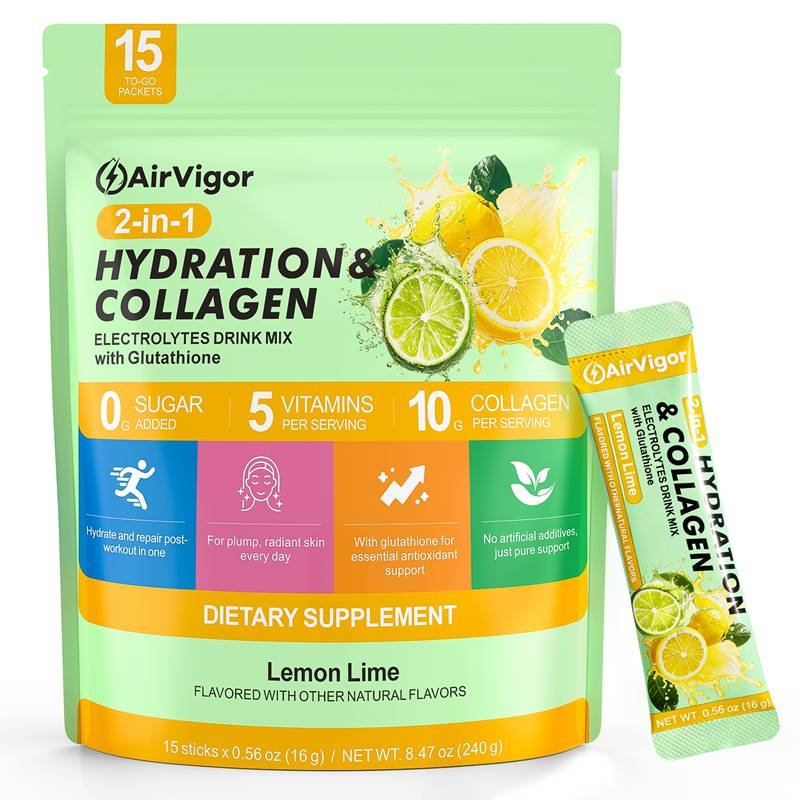
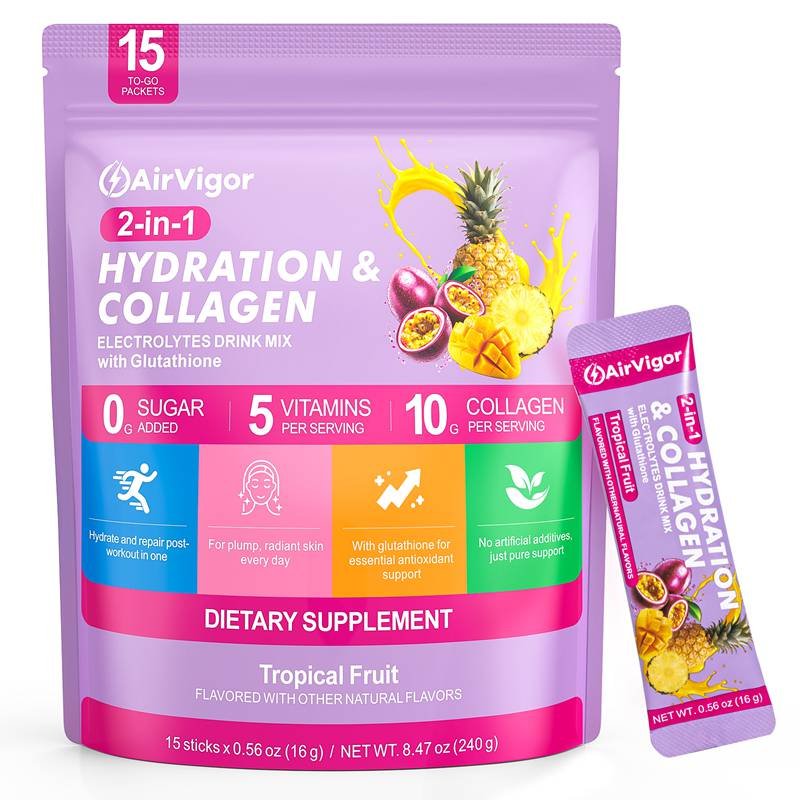
2. AirVigor 2-in-1 Post-Workout Rehydration
Targeted at post‑workout recovery and daily hydration, blending electrolytes with collagen and essential vitamins to repair muscle, improve recovery speed, and maintain hydration.
Core Benefits
| Recovery Need | AirVigor Solution |
|---|---|
| Fast post‑exercise recovery | Collagen + Electrolytes |
| Muscle tissue repair | Protein building blocks + glutathione |
| Immune & metabolic support | Vitamin C + B Vitamins |
| Comfortable taste | Flavor balance with sweet leaf and fruit powders |
Key Ingredients
- Collagen Blend (Beef + Fish) – Provides amino acids to support muscle tissue repair and connective tissue health.
- Electrolytes (Na⁺, K⁺, Mg²⁺) – Supports rapid rehydration and mineral balance.
- Vitamin C & B Complex – Boosts immune function and energy metabolism.
- Glutathione – Helps reduce oxidative stress after intense exercise.
Target Users
- Fitness lovers needing full recovery
- Those who feel hungry + dehydrated after workouts
- Daily active adults (yoga, pilates, walking)
- People who need muscle + hydration support
- Office workers with daily sweat loss or tiredness
Recovery Outcomes
- Reduced DOMS (Delayed Onset Muscle Soreness)
- Faster muscle repair
- Better hydration absorption
- Improved immune resilience
- Balanced post‑workout nutrition in one drink
What Common Electrolyte Powders Cannot Do
Standard electrolyte powders focus on fluid balance only:
- They do not offer protein support.
- They do not support muscle reconstruction.
- They do not provide immune support.
AirVigor’s Recovery formula bridges hydration + nutrition — helping you recover, rebuild, and feel ready for next training.
Real Consumer Pain Points & Solutions
| Pain Point | AirVigor Solution |
|---|---|
| Post‑workout hunger & thirst | Collagen + electrolytes |
| Muscle soreness & stiffness | Collagen + protein building amino acids |
| Daily fatigue / energy deficit | B vitamins help energy pathways |
| Slow recovery after workout | Synergistic recovery blend |
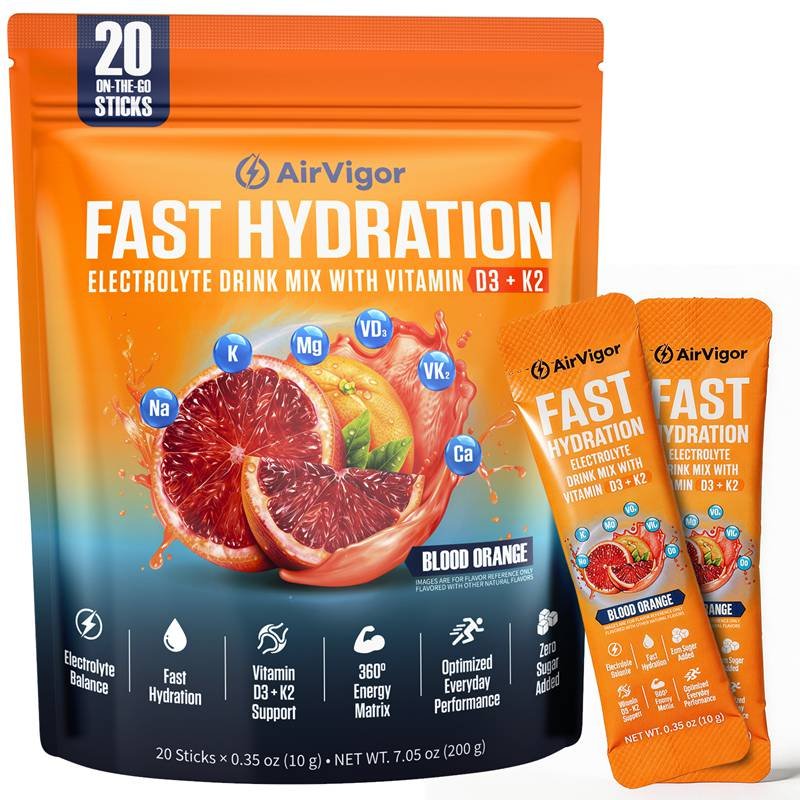
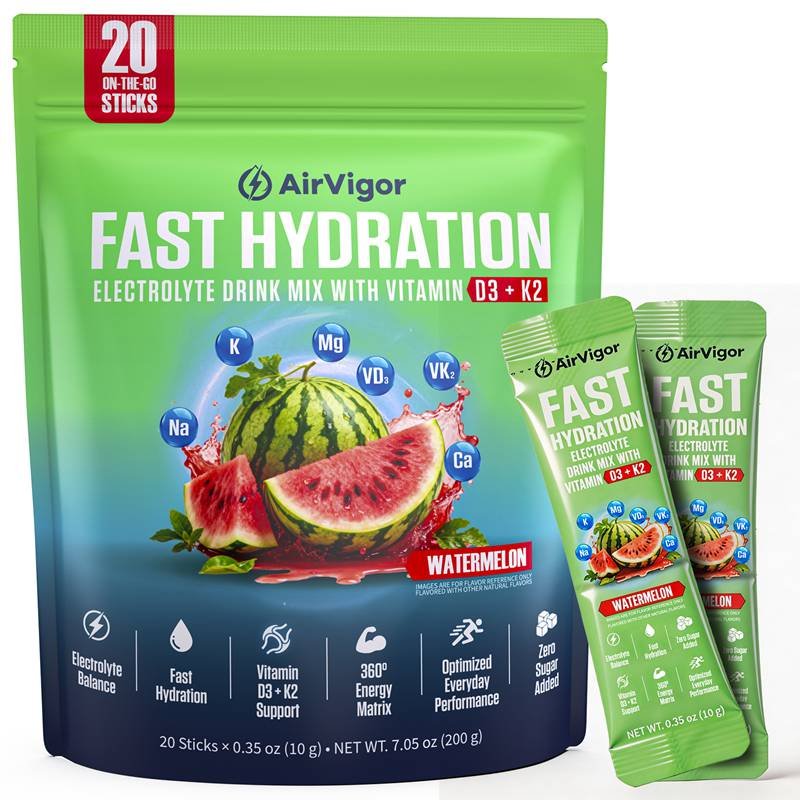
3. AirVigor Fast Hydration & Daily Recovery Electrolyte Powder
Designed for everyday hydration, muscle fatigue relief, and ideal for non‑professional athletes, this formula provides balanced hydration support while also aiding fatigue reduction and immune health.
Core Benefits
| Daily Need | AirVigor Solution |
|---|---|
| Everyday hydration | Complete electrolyte spectrum (Na⁺, K⁺, Mg²⁺, Ca²⁺, Cl⁻) |
| Muscle fatigue relief | Magnesium + Calcium + Vitamin D3/K2 Combination |
| Immune support | Vitamin D3 + K2 contribute to immune modulation |
| Gentle taste | Refreshing fruit flavors (Watermelon, Blood Orange, Icy Lemon) |
Key Ingredients
- Balanced Electrolyte Spectrum – Maintains fluid balance and nerve/ muscle signal transmission.
- Magnesium + Calcium – Reduces cramping and supports muscle relaxation.
- Vitamin D3 + K2 – Strengthens immunity, supports energy levels, and aids calcium utilization.
- Natural Fruit Flavors & Sweet Leaf – Easy daily drinking experience.
Target Users
- Beginners & moderate trainers
- Runners/cyclists/hikers
- Weekend sports participants
- Anyone with daily sweat loss or mild dehydration
- People who want long‑term daily hydration support
Fatigue & Hydration Outcomes
- Balanced mineral levels throughout the day
- Reduced muscle fatigue
- Support for immune and bone health
- Rapid hydration recovery after sweat loss
- Long‑lasting hydration without sugar crash
What Common Electrolyte Powders Cannot Do
Many basic electrolyte products provide only sodium and potassium — sometimes with poor taste or artificial sweeteners.
AirVigor’s Anti‑Fatigue formula includes:
- Magnesium to support muscle relaxation
- Vitamin D3 & K2 for immune + metabolic synergy
- Natural fruit flavor profiles — no sugar crash
Real Consumer Pain Points & Solutions
| Pain Point | AirVigor Solution |
|---|---|
| Mid‑day fatigue / lack of energy | Balanced electrolytes + Vitamin D support |
| Muscle cramping from work or exercise | Magnesium + calcium help relaxation |
| Daily dehydration | Full spectrum electrolyte hydration |
| Lack of refreshing flavor | Natural fruit extraction formula |
AirVigor vs. Ordinary Electrolyte Powders — Quick Comparison
| Feature | AirVigor (All 3 Formulas) | Regular Electrolyte Powders |
|---|---|---|
| Full Electrolyte Spectrum | ✔ Na⁺, K⁺, Mg²⁺, Ca²⁺, Cl⁻ | ✘ Often only Na⁺ + K⁺ |
| Performance Enhancement | ✔ Yes (All-In-One only) | ✘ No |
| Muscle Recovery Support | ✔ Yes (2-in-1) | ✘ No |
| Anti‑Fatigue Daily Support | ✔ Yes (Daily Recovery Formula) | ✘ No |
| Added Nutrients (Vitamins/Protein) | ✔ Yes (Collagen, B vitamins, Vitamin D) | ✘ No |
| Natural Flavoring & Low/Zero Sugar | ✔ Yes | ✘ Often high sugar or artificial sweeteners |
| Multi‑Scenario Use | ✔ Pre‑Workout + Recovery + Daily Hydration | ✘ Single weak scenario (hydration only) |
AirVigor Electrolyte Powders Comparison
| Feature | All-In-One Electrolyte Powder | 2-in-1 Post-Workout Rehydration | Fast Hydration & Daily Recovery Electrolyte Powder |
|---|---|---|---|
| Core Focus | High‑intensity performance & endurance | Post‑workout recovery & hydration | Daily hydration & fatigue support |
| Formula (Serving Size) | 10g/Stick × 20 Sticks | 16g/Stick × 15 Sticks | 10g/Stick × 20 Sticks |
| Main Electrolytes | Na⁺, K⁺, Ca²⁺, Mg²⁺ | Na⁺, K⁺, Partial Mg²⁺ | Na⁺, K⁺, Ca²⁺, Mg²⁺, Cl⁻ |
| Additional Functional Ingredients | Creatine, Taurine, BCAAs (Amino Acids), Citrulline, Guarana | Collagen (Beef + Fish), Vitamin C, Niacin, Vitamin B Complex, Glutathione | Vitamin D3 + K2, Citric Acid, Natural Fruit Powder |
| Flavor Options | Mixed Berry, Citrus | Lemon-Lime, Tropical Fruit | Blood Orange, Watermelon |
| Sweetener / Additives | Stevia, Polydextrose | Stevia, Fruit Powder | Stevia, Fruit Powder |
| Key Selling Point | Endurance + Performance + Hydration + Strength Boost | Hydration + Muscle Repair + Immune Support | Daily Hydration + Anti-Fatigue + Muscle Relief |
Conclusion
Throughout this article, we’ve explored the vital role electrolytes play in maintaining hydration, supporting muscle function, enhancing energy production, and ensuring proper nerve signaling. We’ve seen that electrolytes like sodium, potassium, magnesium, and calcium are essential for our bodies to perform at their best, whether you’re engaging in high‑intensity workouts, recovering post‑exercise, or simply staying hydrated throughout the day.
AirVigor’s electrolyte powders go beyond just rehydration. Each formula is carefully designed to address different needs: pre‑workout performance, post‑workout recovery, and daily hydration. Packed with scientifically backed ingredients such as creatine, BCAAs, and collagen, AirVigor offers a complete solution to enhance physical performance, accelerate recovery, and combat fatigue.
By providing clean, effective formulations, AirVigor ensures that you’re not only staying hydrated but also optimizing your muscle health and overall performance. Whether you’re training hard, recovering, or just staying active, AirVigor is the superior choice for anyone serious about hydration, recovery, and performance.
Ready to Hydrate Better?
- Buy AirVigor Electrolyte Powders on Amazon or Major Retailers
- Contact Us for Custom Formula & Bulk Orders (OEM/ODM)