Skip to content

Creatine is one of those rare supplements that shows up everywhere—from gym locker rooms to physical therapy clinics—yet it’s still misunderstood. Some people think it’s a steroid (it isn’t). Others worry it “hurts your kidneys” (the evidence for healthy adults doesn’t support that at recommended doses). And then there’s the constant confusion about weight gain: is it “bad weight,” muscle, or just water?
Here’s the real reason creatine keeps surviving trend cycles: it helps your body recycle energy fast, especially during hard, repeated efforts—think heavy sets, sprints, CrossFit-style intervals, and the “last 10 minutes” of a workout where you normally fade. That’s why major sports nutrition organizations and decades of research keep circling back to the same conclusion: creatine monohydrate is the most studied, most reliable form for performance and lean mass support when paired with training.
Creatine is a natural compound stored mostly in muscle that helps regenerate ATP—the body’s quick energy currency—during high-intensity effort. Supplementing with creatine (typically 3–5 g/day) can increase strength, power, training volume, and lean mass over time, especially with resistance training. Creatine monohydrate is the best-researched form and is considered safe for healthy adults at recommended doses, with specific cautions for people with kidney disease.
And if you’ve ever felt that “sudden drop” mid-workout—where your muscles are willing but your output falls off a cliff—this article is basically the science-backed explanation for that moment… and what you can do about it.
What Is Creatine?
Creatine is a naturally occurring compound found in the human body and certain foods that helps regenerate ATP, the body’s primary source of short-term energy. It is not a protein, hormone, or steroid. Creatine supports high-intensity physical performance by increasing phosphocreatine stores in muscle, allowing faster energy recycling during activities like strength training, sprinting, and HIIT. Supplementation can raise muscle creatine levels beyond what diet alone provides.
Creatine is one of the most researched and misunderstood nutrients in sports nutrition. To understand whether it’s useful—or even relevant—for you, it’s important to strip away marketing language and start with biology.
At its core, creatine is a nitrogen-containing organic compound that plays a direct role in cellular energy metabolism. Roughly 95% of the body’s creatine is stored in skeletal muscle, with the remainder found in the brain and other tissues. Its primary physiological role is to support the rapid regeneration of ATP (adenosine triphosphate)—the molecule your body uses for immediate energy.
This is why creatine is especially relevant during short, high-intensity efforts, such as lifting weights, sprinting, jumping, or repeated bursts of activity.
Is Creatine a Protein or an Amino Acid?
No—creatine is not a protein, and it is not classified as an amino acid either.
This confusion is extremely common because creatine is made from amino acids (mainly glycine, arginine, and methionine). However, the final compound is structurally and functionally different from protein.
A simple way to understand this:
- Protein = structural and functional building material (muscle fibers, enzymes, hormones)
- Creatine = an energy-support compound that helps muscles do work
Protein helps repair and build muscle tissue. Creatine helps muscles produce energy faster so that training can be performed at higher quality and intensity. They serve complementary but very different roles.
Is Creatine a Steroid or Drug?
No. Creatine is not a steroid, hormone, stimulant, or drug.
- It does not alter hormone levels
- It does not act on the nervous system like caffeine
- It is not banned by major sports organizations
- It does not cause dependency
Creatine exists naturally in the human body and in everyday foods. Supplementation simply increases muscle creatine stores beyond baseline dietary levels, similar to how carbohydrate loading increases glycogen.
Is Creatine Naturally Found in the Human Body?
Yes. The human body produces creatine daily, primarily in the liver, kidneys, and pancreas. Once synthesized, creatine is transported through the bloodstream and stored in tissues with high energy demand—mainly muscles.
However, endogenous production + normal diet often do not fully saturate muscle creatine stores, especially in:
- People who train frequently or intensely
- Individuals with higher muscle mass
- Vegetarians or low–red-meat diets
- Older adults with reduced synthesis efficiency
This is why supplementation can have a noticeable effect, even though creatine already exists in the body.
What Foods Contain Creatine Naturally?
Creatine is found almost exclusively in animal-based foods, especially:
- Red meat (beef, pork)
- Fish (salmon, tuna, herring)
The challenge is quantity and consistency.
To reach commonly studied supplemental intakes (3–5 g/day), a person would need to consume large amounts of cooked meat daily, which is impractical for many people and inconsistent with many dietary preferences.
Additionally, cooking and processing reduce creatine content, making it harder to rely on food alone for stable intake.
Why Do People Supplement with Creatine If the Body Already Makes It?
This is a key question—and the answer explains why creatine remains relevant after 30+ years of research.
The body tightly regulates baseline creatine production for survival, not for performance optimization. Supplementation increases intramuscular phosphocreatine availability, which:
- Improves short-duration power output
- Supports repeated high-intensity efforts
- Helps maintain performance as fatigue accumulates
In practical terms, creatine doesn’t make you superhuman—it helps you maintain output closer to your potential, especially when training intensity is high or recovery time is limited.
Who Is Creatine Relevant For—Beyond Bodybuilders?
Although creatine is often associated with bodybuilding, its mechanism is not aesthetic—it is energetic.
This makes creatine relevant for:
- Strength and resistance training
- HIIT and CrossFit-style workouts
- Team sports with repeated sprints
- Physically demanding jobs or outdoor work
- Older adults aiming to preserve muscle function
In all cases, the common factor is repeated demand for rapid energy, not muscle size alone.
What Creatine Actually Is
Creatine is best understood as:
A naturally occurring energy-support compound that helps muscles recycle ATP faster during high-intensity activity.
It is not protein.
It is not a steroid.
It is not a shortcut.
It is a tool—and like any tool, its value depends on how and why it’s used.
How Does Creatine Work in the Body?
Creatine works by increasing phosphocreatine levels in muscle cells, which helps rapidly regenerate ATP—the body’s primary energy molecule—during short, high-intensity activity. This allows muscles to sustain power output for longer and recover faster between repeated efforts. As a result, creatine supports strength, power, training volume, and performance consistency, especially in resistance training, HIIT, and sprint-based exercise.
To understand how creatine works, it helps to step away from “supplement thinking” and look at basic human energy physiology. Creatine does not stimulate the nervous system, alter hormones, or directly build muscle tissue. Its role is much more fundamental—and that’s exactly why it works so reliably.
What Does Creatine Do to the Body at the Cellular Level?
Every physical movement you make—lifting a barbell, standing up, sprinting, even gripping—requires ATP (adenosine triphosphate). ATP is the body’s immediate energy currency, but it exists in very limited supply inside cells.
During high-intensity effort, ATP is depleted within seconds.
This is where creatine comes in.
Creatine is stored in muscle primarily as phosphocreatine (PCr). When ATP breaks down into ADP (adenosine diphosphate), phosphocreatine donates a phosphate group to rapidly regenerate ATP. This process happens much faster than energy systems based on carbohydrates or fat.
In simple terms:
Creatine acts as a rapid energy buffer, allowing muscles to maintain output before fatigue forces performance to drop.
This mechanism is especially relevant during:
- Heavy resistance training
- Short sprints
- Repeated high-intensity intervals
- Explosive movements
How Does Creatine Improve Strength and Power Output?
Creatine does not make muscles stronger overnight. Instead, it improves the capacity to express strength repeatedly.
Here’s how that plays out in real training:
- Slightly more ATP availability →
- Ability to complete extra reps, sets, or maintain bar speed →
- Higher total training volume or quality over time →
- Greater stimulus for strength and muscle adaptation
This is why creatine consistently shows benefits in:
- Maximal strength (1–5 rep range)
- Power-based movements
- Repeated sprint or lift performance
Creatine improves the quality of the work you can perform, and better work leads to better results over weeks and months.
How Does Creatine Affect Fatigue During Training?
Creatine does not “eliminate” fatigue—but it delays the onset of performance-limiting fatigue during short-duration, high-intensity tasks.
Without sufficient phosphocreatine:
- ATP regeneration slows
- Power output drops
- Rest periods feel insufficient
- Performance declines earlier in the session
With higher creatine availability:
- ATP is recycled faster
- Muscles maintain force production longer
- Recovery between sets or intervals improves
This is why many users describe creatine as helping them feel more “stable” across a workout rather than suddenly “hitting a wall.”
Does Creatine Affect Muscle Hydration and Cell Volume?
Yes—indirectly.
Creatine increases intracellular water content by drawing water into muscle cells. This is sometimes misunderstood as “water weight,” but inside muscle tissue, this process is normal and not harmful.
From a physiological perspective:
- Increased cell volume may support an anabolic environment
- Proper hydration inside muscle cells supports function and contraction
- This is not the same as subcutaneous water retention
Importantly, this is one reason creatine works best when overall hydration and electrolyte balance are adequate. Creatine supports energy recycling, but muscles still require minerals and fluids to function efficiently.
Does Creatine Help With Recovery?
Creatine is not a recovery supplement in the traditional sense—it doesn’t directly reduce inflammation or soreness like some recovery-focused compounds.
However, creatine can support recovery indirectly by:
- Reducing the extent of performance drop-off within sessions
- Allowing more predictable energy output
- Helping maintain training consistency over time
If workouts are less chaotic and fatigue accumulates more gradually, recovery between sessions often becomes easier to manage—even if creatine itself is not acting as a “recovery agent.”
How Creatine Fits Into the Bigger Energy System Picture
Creatine primarily supports the ATP–phosphocreatine system, which dominates during:
- Efforts lasting ~1–10 seconds
- Repeated high-intensity bursts
It does not replace:
- Carbohydrates (for longer efforts)
- Fat metabolism (for endurance)
- Electrolytes (for fluid and muscle contraction balance)
Instead, creatine works best as part of a layered energy strategy, especially for people who train hard, sweat heavily, or rely on repeated efforts rather than steady-state activity.
How Creatine Works in the Body
Creatine works by:
- Increasing phosphocreatine availability in muscle
- Speeding up ATP regeneration during intense effort
- Supporting strength, power, and repeated performance
- Improving training quality rather than acting as a stimulant
It does not:
- Act like caffeine
- Burn fat directly
- Build muscle without training
Creatine’s power lies in its simplicity—it supports the most basic requirement of performance: energy when you need it most.

What Are the Different Types of Creatine?
There are several types of creatine supplements, but creatine monohydrate is the most researched and consistently proven form. Other types—such as creatine HCl, buffered creatine, and creatine ethyl ester—are marketed for better absorption or fewer side effects, but current evidence does not show superior performance outcomes compared to monohydrate. For most people, purity, dosage, and consistency matter more than creatine type.
If you search “types of creatine” online, you’ll quickly encounter a long list of names—many sounding technical, premium, or “next generation.” This creates a natural question for consumers:
If creatine monohydrate has been around for decades, why are there so many new versions?
Because creatine works—and where something works, product differentiation follows.
Which Type of Creatine Is Most Researched and Proven?
Creatine monohydrate is, by a wide margin, the most studied form of creatine in human research.
It has been used in:
- Strength and hypertrophy studies
- Sprint and power performance trials
- Long-term safety evaluations
- Research involving young adults, older adults, and clinical populations
Across decades of data, creatine monohydrate has repeatedly demonstrated the ability to:
- Increase intramuscular creatine and phosphocreatine stores
- Improve high-intensity exercise capacity
- Support gains in strength and lean mass when paired with training
Because of this evidence base, creatine monohydrate is often used as the reference standard against which all other forms are compared.
From an evidence-based perspective, if a newer form does not outperform monohydrate under controlled conditions, it is difficult to justify claims of superiority—regardless of price or branding.
What Is Creatine Monohydrate, Exactly?
Creatine monohydrate consists of:
- One creatine molecule
- One water molecule (the “mono-hydrate” part)
This structure is stable, well-absorbed, and effective at raising muscle creatine levels when taken consistently. It does not require special delivery systems, chemical modification, or co-factors to work.
From a practical standpoint, creatine monohydrate offers:
- Predictable dosing
- High bioavailability
- Excellent cost-to-benefit ratio
- A long track record of safety
This is why it remains the default recommendation in most scientific reviews and professional guidelines.
Are Other Creatine Forms Better Absorbed?
Many alternative creatine forms are marketed around the idea of improved absorption, reduced water retention, or fewer side effects. Common examples include:
- Creatine hydrochloride (HCl)
- Buffered creatine (e.g., Kre-Alkalyn®)
- Creatine ethyl ester
- Creatine nitrate
- Liquid creatine formulations
While some of these forms may dissolve more easily in water or feel gentler for certain individuals, current research does not consistently show that they increase muscle creatine stores or performance outcomes more than monohydrate.
In other words:
- Better solubility ≠ better results
- Higher price ≠ higher effectiveness
If a form improves personal tolerance or adherence (for example, less stomach discomfort for a specific user), it may be useful for that individual—but that is different from being universally superior.
Why Creatine Ethyl Ester and “Liquid Creatine” Are Often Discouraged
Some forms deserve special clarification.
Creatine ethyl ester was designed to enhance absorption, but research suggests it may actually be less stable and convert to creatinine more readily before reaching muscle tissue.
Liquid creatine products often suffer from stability issues. Creatine degrades in solution over time, which means:
- The labeled dose may not reflect what you actually ingest
- Effectiveness can be inconsistent
These forms are less commonly recommended in evidence-based practice.
Does Creatine Type Matter More Than Dose and Consistency?
For most users, no.
What consistently determines results is:
- Total daily dose (typically 3–5 g/day)
- Consistency over time
- Training quality and intensity
Creatine type becomes secondary once those fundamentals are met.
This is why many experienced practitioners focus less on “which creatine” and more on:
- Purity and contaminant testing
- Transparent labeling
- Reliable manufacturing standards
A basic creatine monohydrate that is clean, correctly dosed, and taken daily will outperform a “premium” form used inconsistently.
Creatine Types
| Creatine Type | Research Support | Key Notes | Best Use Case |
|---|---|---|---|
| Creatine Monohydrate | Strong, decades of data | Most reliable, cost-effective | Most people, most goals |
| Creatine HCl | Limited vs monohydrate | May dissolve better | Users sensitive to GI discomfort |
| Buffered Creatine | No clear advantage | Claims pH stability | Marketing-driven differentiation |
| Creatine Ethyl Ester | Weak / negative | Less stable | Generally not recommended |
| Liquid Creatine | Poor stability | Degradation risk | Avoid for long-term use |
Choosing the Right Creatine Type
From a science-first perspective:
Creatine monohydrate remains the benchmark—not because it’s old, but because it works.
Other forms may exist for niche preferences, but they do not replace the fundamentals:
- Adequate dosing
- Daily consistency
- Verified purity
- Integration into a real training routine
When evaluating creatine products, it’s often wiser to ask “Is this tested and transparent?” rather than “Is this new?”.
What Are the Benefits of Creatine?
Creatine helps improve strength, power, and high-intensity exercise performance by supporting rapid ATP regeneration in muscle. When combined with resistance or interval training, it can increase training volume, support gains in lean mass over time, and improve performance consistency. Creatine does not directly burn fat, but it may indirectly support body composition by helping users train harder and recover more predictably.
Creatine’s benefits are often oversimplified into slogans like “builds muscle fast” or “adds size.” In reality, creatine’s value lies in how it supports performance mechanics, not cosmetic outcomes.
A more accurate way to think about creatine is this:
Creatine improves your capacity to perform high-quality work.
Better work → stronger training signal → better long-term results.
Below, we break down the benefits that are consistently supported by research and real-world use.
Does Creatine Increase Strength and Power?
Yes—this is the most established and consistently observed benefit of creatine.
Creatine supplementation increases phosphocreatine availability in muscle, allowing faster ATP regeneration during short, intense efforts. Practically, this can lead to:
- Higher force output in strength exercises
- Better maintenance of power across multiple sets
- Improved performance in explosive movements
These effects are most evident in:
- Resistance training (1–10 rep ranges)
- Sprinting and jumping
- High-intensity interval work
Importantly, creatine does not create strength by itself. It supports the expression of strength during training, which over time contributes to measurable gains.
Does Creatine Help Build Muscle Mass?
Creatine can support increases in lean mass, but it’s important to understand how.
There are two components often observed:
- Early increases in muscle water content
- Creatine draws water into muscle cells
- This is intracellular (inside muscle), not subcutaneous “bloating”
- Longer-term increases in muscle tissue
- Enabled by improved training volume and intensity
- More quality reps → stronger hypertrophic stimulus
Creatine does not override the need for:
- Adequate protein intake
- Progressive overload
- Recovery and sleep
Think of creatine as a performance amplifier, not a growth hormone.
Can Creatine Improve Training Volume and Consistency?
This is one of the most underrated benefits—and one that resonates strongly with everyday users.
By supporting faster ATP recycling, creatine can:
- Reduce early performance drop-off within a session
- Improve recovery between sets or intervals
- Allow planned workouts to be completed more consistently
For many people, the biggest benefit isn’t a dramatic PR—it’s that workouts feel more repeatable and less fragile. Over weeks and months, this consistency compounds.
This benefit is especially relevant for:
- Busy professionals with limited training time
- People training after work or late at night
- Individuals prone to “hitting a wall” mid-session
Does Creatine Benefit HIIT, CrossFit, and Mixed Training Styles?
Yes. Creatine is particularly well-suited for mixed-modal and interval-based training, where repeated high-intensity efforts dominate.
Examples include:
- HIIT circuits
- CrossFit-style WODs
- Team sports with repeated sprints
- Hybrid strength–conditioning programs
These formats rely heavily on the ATP–phosphocreatine system, which creatine directly supports. While creatine won’t replace carbohydrates for endurance, it can significantly improve the repeatability of intense efforts, especially late in a workout.
Does Creatine Improve Endurance Performance?
Creatine is not primarily an endurance supplement, but it can still be useful in endurance-adjacent contexts.
Potential benefits include:
- Better sprint capacity at the end of long sessions
- Improved power during climbs, surges, or attacks
- Support for interval-based endurance training
For pure steady-state endurance (e.g., long slow runs), creatine’s direct effect is limited. However, many endurance athletes still use creatine strategically during strength blocks or off-season training.
Will Creatine Burn Fat or Reduce Belly Fat?
No—creatine does not directly burn fat or target belly fat.
Creatine does not:
- Increase metabolic rate
- Stimulate fat oxidation
- Act as a thermogenic agent
However, creatine may indirectly support fat loss efforts by:
- Preserving strength during calorie deficits
- Supporting training intensity while dieting
- Reducing performance drop-off that often leads to inconsistency
In fat loss phases, creatine’s real value is muscle and performance preservation, not fat burning.
Does Creatine Offer Benefits Beyond Muscle and Performance?
Emerging research is exploring creatine’s role beyond sports, including:
- Muscle function in older adults
- Neuromuscular performance
- Cellular energy support in high-demand tissues
While these areas are still developing, they reinforce a key idea: creatine is not just a “gym supplement,” but a foundational energy-support compound.
Creatine Benefits
| Benefit Area | What Creatine Can Do | What It Cannot Do |
|---|---|---|
| Strength & power | Improve high-intensity output | Replace training |
| Muscle mass | Support lean mass gains over time | Build muscle without effort |
| Training consistency | Reduce mid-workout drop-off | Eliminate fatigue entirely |
| Fat loss | Indirect support via training quality | Burn fat directly |
| Endurance | Help with sprints & intervals | Replace carbs for long efforts |
The Real Benefits of Creatine
Creatine’s benefits are functional, not cosmetic.
It helps you:
- Train harder
- Maintain output
- Stay consistent
- Support long-term progress
It does not promise shortcuts—but it reliably supports the work that produces results.

Is Creatine Safe to Use?
Creatine is considered safe for healthy adults when taken at recommended doses. It is one of the most extensively studied dietary supplements, with research showing no harmful effects on kidney or liver function in individuals without pre-existing disease. Daily use is supported by evidence, and creatine has also been studied in older adults. People with kidney disease or specific medical conditions should consult a healthcare professional before use.
Creatine safety is one of the most searched—and most misunderstood—topics in sports nutrition. Despite decades of research, outdated myths continue to circulate online, often fueled by confusion around lab markers, anecdotal reports, or misuse.
A science-based safety discussion starts with one key point:
Creatine is not new, experimental, or weakly studied.
It is one of the best-researched supplements in human nutrition.
Below, we address the most important safety questions in a clear, evidence-aligned way.
Is Creatine Safe for Long-Term Daily Use?
Yes—long-term daily creatine use is considered safe for healthy individuals when consumed at recommended doses (typically 3–5 g per day).
Creatine has been studied in:
- Short-term trials (weeks)
- Medium-term trials (months)
- Long-term protocols lasting multiple years
Across these studies, researchers consistently report no adverse effects on kidney, liver, or cardiovascular health markers in healthy adults.
One reason creatine stands out is that it is endogenously produced by the human body. Supplementation increases existing creatine stores rather than introducing a foreign compound with unknown metabolic pathways.
Importantly, there is no evidence-based requirement to “cycle” creatine for safety reasons. Daily, continuous use aligns with how creatine functions physiologically—by maintaining muscle saturation over time.
Is It Safe to Take Creatine Every Day?
Not only is daily use safe—it is how creatine is intended to be used.
Creatine does not act like a stimulant or hormone that requires breaks to “reset sensitivity.” Instead, its benefits depend on maintaining elevated intramuscular creatine levels, which requires consistent intake.
Skipping days frequently may:
- Delay muscle saturation
- Reduce performance benefits
- Create inconsistent results
From a safety perspective, there is no evidence that daily intake within recommended ranges causes cumulative harm in healthy individuals.
Does Creatine Damage the Kidneys or Liver?
This is the most persistent creatine myth—and also the most important to clarify.
Creatine does not damage the kidneys or liver in healthy individuals.
Why the confusion exists:
Creatine supplementation can increase blood creatinine levels. Creatinine is a breakdown product of creatine metabolism and is commonly used as a marker of kidney function.
However:
- Elevated creatinine ≠ kidney damage
- In creatine users, higher creatinine often reflects increased creatine turnover, not impaired filtration
Multiple controlled studies and reviews show no decline in kidney function (e.g., GFR, clearance markers) in healthy users taking creatine at recommended doses.
Who should be cautious:
- Individuals with diagnosed kidney disease
- People taking medications that affect renal function
- Anyone under medical supervision for kidney-related conditions
For these groups, professional guidance is appropriate—not because creatine is inherently dangerous, but because baseline risk is already elevated.
Is Creatine Safe for Seniors and Older Adults?
Yes—creatine has been studied specifically in older adult populations, and interest in this area is increasing.
As people age:
- Muscle mass and strength naturally decline (sarcopenia)
- Energy production efficiency decreases
- Recovery from exercise becomes slower
Research suggests that creatine, when combined with resistance training, may help older adults:
- Improve strength gains from training
- Preserve lean mass
- Maintain functional performance
Importantly, age alone is not a contraindication. Health status matters more than chronological age. Older adults without kidney disease generally follow the same safety considerations as younger users.
Are There Any Side Effects From Creatine?
Creatine is generally well tolerated. When side effects occur, they are usually mild and dose-related.
Possible effects include:
- Gastrointestinal discomfort (often from high single doses)
- Temporary weight increase due to intracellular water retention
These effects are typically minimized by:
- Using moderate daily doses (3–5 g)
- Splitting doses if sensitive
- Ensuring adequate hydration
There is no strong evidence that creatine causes:
- Dehydration
- Muscle cramps
- Hair loss
- Hormonal disruption
Many of these claims originate from anecdotal reports or misattributed causes rather than controlled research.
Is Creatine Safe for Women?
Yes. Creatine safety and effectiveness apply to both men and women.
Women may experience:
- Improved training performance
- Better strength adaptation
- Similar safety outcomes as men
Concerns about “bulking” are largely unfounded—creatine does not override calorie balance or training stimulus.
Safety Summary: What the Evidence Actually Supports
| Safety Question | Evidence-Based Answer |
|---|---|
| Long-term use | Safe in healthy adults |
| Daily intake | Safe and recommended |
| Kidney damage | No evidence in healthy users |
| Liver damage | No evidence at recommended doses |
| Seniors | Studied and generally safe |
| Women | Safe and effective |
Is Creatine Safe?
For healthy individuals, creatine is one of the safest and most studied supplements available.
It is:
- Naturally produced by the body
- Supported by decades of research
- Safe for daily use at recommended doses
The real risks around creatine usually come not from the compound itself, but from:
- Poor-quality products
- Misinformation
- Ignoring pre-existing medical conditions
Used correctly, creatine is a low-risk, high-evidence tool for supporting performance and training consistency.
How Do You Take Creatine Correctly?
Creatine is typically taken at a dose of 3–5 grams per day, consistently, to maintain muscle creatine saturation. A loading phase is optional and not required for results. Creatine can be taken at any time of day, with water, food, protein, or electrolytes. Daily consistency matters more than timing, and long-term use at recommended doses is considered safe for healthy individuals.
Taking creatine “correctly” doesn’t mean following complicated rules. In fact, simplicity and consistency are the two most important principles. Most mistakes people make—poor results, stomach discomfort, confusion—come from overcomplicating a very straightforward supplement.
Let’s break down how creatine actually works in the body and translate that into clear, usable guidance.
How Much Creatine Should You Take Per Day?
For the vast majority of people, the evidence-based daily dose is 3–5 grams.
- 3 g/day: sufficient for many recreational trainees and lighter individuals
- 5 g/day: commonly used, well-studied, and appropriate for most active adults
Higher doses do not produce proportionally better results and are more likely to cause gastrointestinal discomfort. Creatine works through muscle saturation, not acute spikes, so taking more than needed offers little benefit.
Bodyweight-based dosing is sometimes discussed, but in practice, a flat 3–5 g daily dose is effective and far easier to maintain long term.
Is a Creatine Loading Phase Necessary?
No. A loading phase is optional, not required.
A traditional loading protocol involves:
- ~20 g/day (split into 4 doses) for 5–7 days
- Followed by a maintenance dose of 3–5 g/day
Loading can increase muscle creatine stores faster, but it also:
- Increases the risk of stomach discomfort
- Adds complexity
- Does not improve long-term outcomes compared to consistent daily dosing
If you skip loading and take 3–5 g/day from the start, muscle saturation will still occur—just more gradually over a few weeks. For most people, adherence beats speed.
Is It Important to Take Creatine Every Day?
Yes. Daily intake is one of the most important factors for results.
Creatine does not act like caffeine or pre-workout stimulants. It works by maintaining elevated creatine and phosphocreatine levels inside muscle over time. Skipping days frequently can:
- Delay or reduce muscle saturation
- Lead to inconsistent performance benefits
On training days and rest days alike, taking creatine daily helps maintain stable intramuscular levels.
A useful mindset:
Treat creatine like a daily nutrient, not a “workout-only” supplement.
When Is the Best Time to Take Creatine?
There is no single best time that universally outperforms others.
Research comparing pre-workout vs post-workout timing shows minimal differences when total daily intake is matched. What matters far more is taking it consistently.
That said, practical timing options include:
- Post-workout (easy habit pairing with hydration or meals)
- With a meal (may improve tolerance for some people)
- Same time every day (best for adherence)
If you often forget supplements, choose the timing that fits naturally into your routine.
Should Creatine Be Taken With Water, Protein, or Electrolytes?
Creatine does not require a special “transport system” to work, but how you take it can affect comfort and practicality.
With water:
- Perfectly effective
- Minimum requirement is adequate hydration
With protein or meals:
- Can improve tolerance
- Fits well into post-workout nutrition
With electrolytes:
- Useful during heavy sweat or high-volume training
- Supports muscle contraction and hydration alongside energy recycling
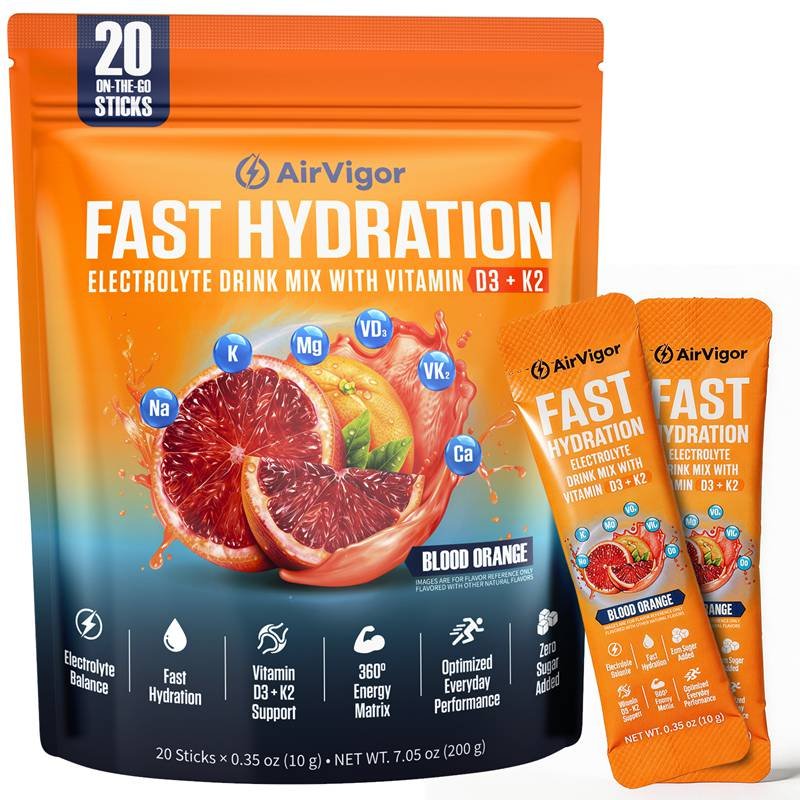
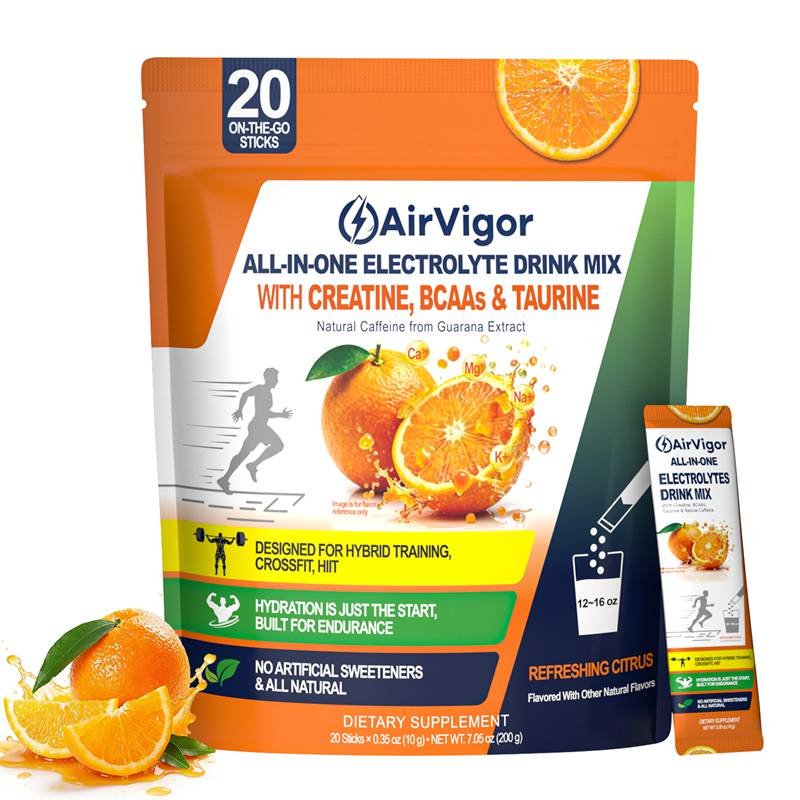
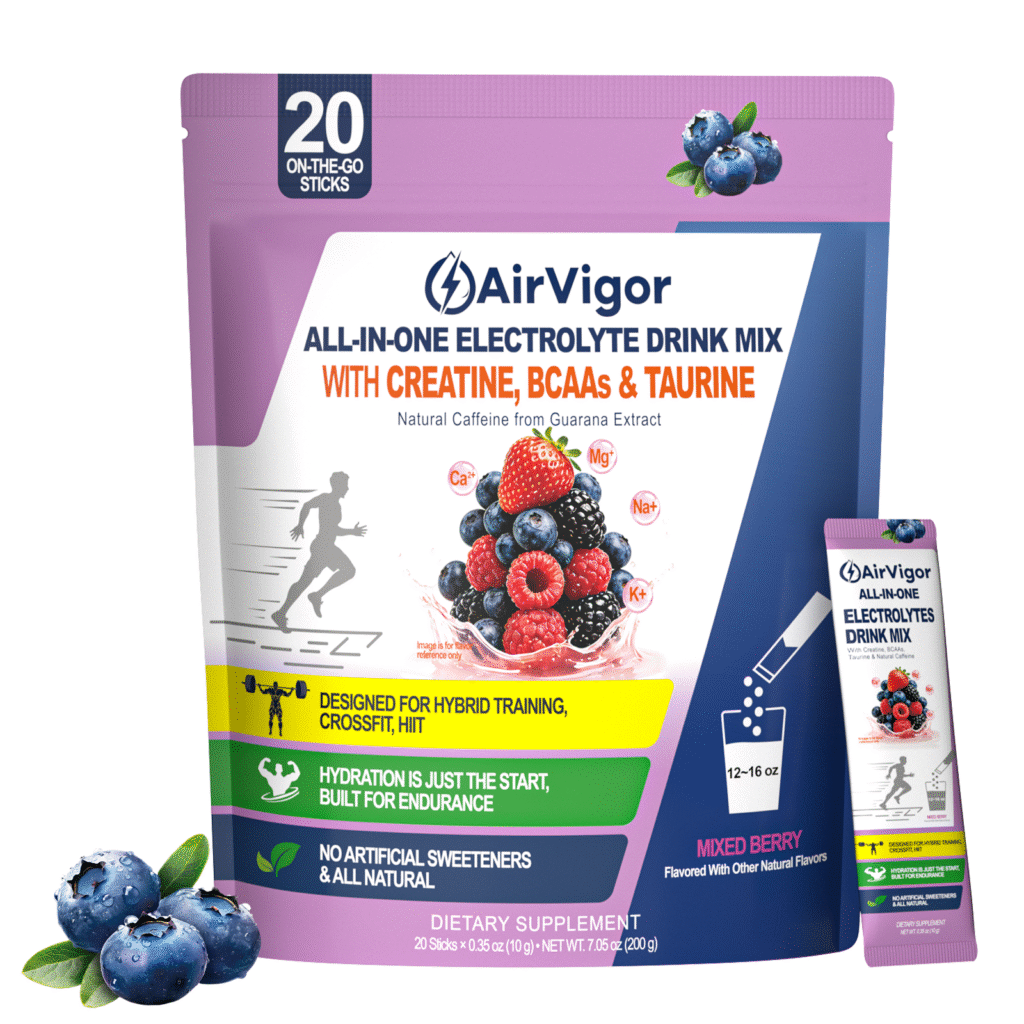
This is why many athletes prefer combining creatine with electrolyte drinks or post-workout recovery mixes. For example, performance systems designed by brands like AirVigor often integrate creatine into broader hydration or recovery protocols to reduce “supplement juggling.”
Does Creatine Need to Be Cycled?
No. There is no evidence-based requirement to cycle creatine for safety or effectiveness.
Cycling is sometimes suggested due to confusion with stimulants or hormones, but creatine does not downregulate receptors or disrupt endocrine function.
You may choose to stop temporarily for personal reasons, but cycling is not necessary and does not enhance results.
What About Mixing, Solubility, and Form?
Creatine monohydrate does not need to dissolve completely to be effective, but better mixability improves user experience.
Tips:
- Use warm water if solubility is an issue
- Stir well or shake
- Avoid letting creatine sit dissolved for long periods
Poor-quality creatine or unstable liquid products can degrade over time, which is why powdered, tested creatine is generally preferred.
Common Creatine Mistakes to Avoid
- Taking random large doses “when you remember”
- Expecting fat loss or stimulant-like effects
- Blaming creatine for dehydration while under-drinking fluids
- Choosing untested products with unclear labeling
Creatine works best when used boringly well.
Creatine Use Summary
| Question | Evidence-Based Answer |
|---|---|
| Daily dose | 3–5 g |
| Take every day? | Yes |
| Loading phase | Optional |
| Best timing | Any time you’ll remember |
| With food? | Optional |
| With electrolytes? | Useful in heavy training |
| Need to cycle? | No |
How to Take Creatine Correctly
Taking creatine correctly is not about hacks—it’s about habits.
- Use a moderate daily dose
- Take it consistently
- Pair it with hydration and real training
- Choose quality over hype
Done right, creatine becomes a background support system—quietly improving your ability to train, recover, and stay consistent over time.

Who Should Use Creatine and Who Should Not?
Creatine is suitable for people who perform high-intensity or repeated-effort activities, including strength training, HIIT, and mixed sports, as well as older adults aiming to preserve muscle function. It is not limited to bodybuilders. Individuals with kidney disease, those taking kidney-affecting medications, or people under medical supervision should consult a healthcare professional before using creatine.
Creatine is often marketed as a “gym supplement,” which causes many people to self-exclude—or assume it’s only for extreme athletes. In reality, creatine suitability is determined by energy demand and lifestyle, not by how muscular or competitive someone is.
A useful framing is this:
If your activities require repeated bursts of effort or maintaining output under fatigue, creatine is likely relevant.
Below, we break this down by user type.
Who Should Consider Using Creatine?
1. Strength Training and Resistance Exercise Participants
Creatine is particularly well-suited for people who lift weights, whether casually or seriously.
These users benefit because creatine:
- Supports repeated high-force contractions
- Helps maintain performance across multiple sets
- Improves training quality over time
This applies to:
- Gym beginners learning progressive overload
- Recreational lifters training 2–4 times per week
- Experienced strength athletes
Creatine does not require elite-level training to be effective—it supports the basic energy system used in lifting.
2. HIIT, CrossFit, and Mixed-Modal Training Enthusiasts
Creatine is highly relevant for training styles that involve:
- Short, intense efforts
- Limited rest periods
- Repeated rounds or intervals
Examples include:
- HIIT circuits
- CrossFit-style WODs
- Functional fitness and bootcamp training
In these contexts, creatine helps stabilize output when fatigue would otherwise accumulate rapidly. Many users report fewer “sudden drop-offs” mid-session, making workouts more predictable and repeatable.
3. Team Sport and Sprint-Based Athletes
Sports such as soccer, basketball, hockey, tennis, and combat sports rely heavily on:
- Repeated sprints
- Explosive movements
- Short recovery windows
Creatine supports the ATP–phosphocreatine system that underpins these demands. While it won’t replace conditioning or skill work, it can help athletes express power more consistently throughout training and competition.
4. Older Adults Focused on Strength, Function, and Aging Well
Creatine is increasingly studied in older adult populations, not for aesthetics but for functional health.
Potential benefits for older adults include:
- Better response to resistance training
- Support for muscle strength and lean mass retention
- Improved training tolerance
Age alone is not a reason to avoid creatine. In fact, for older adults engaging in supervised resistance training, creatine may help maximize the return on effort, provided there are no underlying medical contraindications.
5. Busy Professionals and Lifestyle Trainees
Many people don’t train to compete—they train to stay functional, energized, and consistent.
Creatine may be useful for individuals who:
- Train after long workdays
- Have limited weekly training time
- Struggle with mid-workout fatigue
For these users, the benefit isn’t maximal strength—it’s reliability. Creatine can help workouts feel less fragile and more repeatable, which is often the deciding factor in long-term adherence.
Who Might Not Need Creatine?
1. Purely Low-Intensity or Passive Activity Lifestyles
If someone:
- Does not engage in resistance training
- Does not perform high-intensity or repeated-effort activity
- Is mostly sedentary
Then creatine may offer limited noticeable benefit. Creatine supports energy systems that are rarely challenged in low-intensity daily movement.
That said, this doesn’t make creatine unsafe—just potentially unnecessary until activity levels change.
2. People Expecting Fat Loss or Stimulant Effects
Creatine is not appropriate for users seeking:
- Immediate weight loss
- Fat-burning or appetite suppression
- A caffeine-like energy boost
Creatine does not act on metabolism or the nervous system. If expectations are misaligned, disappointment—not physiology—is the real issue.
3. Who Should Be Cautious or Consult a Professional First?
Individuals With Kidney Disease
People with diagnosed kidney disease or impaired renal function should not self-supplement with creatine without medical guidance.
This is not because creatine is inherently toxic, but because:
- Creatine metabolism affects creatinine levels
- Kidney markers require careful interpretation
- Baseline risk is already elevated
Medical oversight ensures appropriate decision-making.
4. People Taking Medications That Affect Kidney Function
Certain medications (e.g., some diuretics, nephrotoxic drugs) can alter kidney workload. In these cases, consultation is prudent before adding creatine or any supplement.
5. Pregnant or Breastfeeding Individuals
While creatine exists naturally in the body, supplementation during pregnancy or breastfeeding has not been sufficiently studied to make firm recommendations. As a precaution, professional guidance is advised.
Is Creatine Safe for Women and Beginners?
Yes.
Creatine is:
- Safe for women
- Safe for beginners
It does not cause unwanted “bulking” without a calorie surplus and training stimulus. For beginners, creatine can be viewed as optional but permissible—useful once consistent training habits are established.
Creatine Suitability Summary
| User Type | Likely Benefit |
|---|---|
| Strength training participants | High |
| HIIT / CrossFit trainees | High |
| Team sport athletes | Moderate to high |
| Older adults (with training) | Moderate |
| Sedentary individuals | Low |
| Fat-loss–only users | Low |
| Kidney disease patients | Medical consultation required |
Who Should Use Creatine?
Creatine is not about body type, age, or athletic identity.
It’s about energy demand.
If your lifestyle or training regularly asks your muscles to produce force repeatedly—especially under fatigue—creatine is likely a useful, low-risk tool. If not, it’s optional.
For those choosing to supplement, selecting tested, transparent products from science-driven brands like AirVigor helps ensure both safety and reliability.
What Should You Look for in a High-Quality Creatine Supplement?
A high-quality creatine supplement should contain pure creatine monohydrate, provide a clear daily dose (typically 3–5 g), and be produced under GMP-compliant manufacturing standards. Look for third-party or batch-level testing such as a Certificate of Analysis (COA), transparent labeling without proprietary blends, and good solubility. Quality assurance and traceability matter more than novel creatine forms or marketing claims.
Creatine is chemically simple—but not all creatine products are equal. The biggest differences between a reliable creatine supplement and a poor one are not about “advanced forms” or flashy packaging. They come down to purity, testing, transparency, and manufacturing discipline.
Below is a practical framework you can use to evaluate creatine products with confidence.
1. Does It Use Creatine Monohydrate With Clear Dosage?
The first quality signal is surprisingly basic:
Does the label clearly state “creatine monohydrate” and the exact amount per serving?
High-quality creatine supplements:
- Use creatine monohydrate as the primary (or only) active ingredient
- Provide a clearly stated dose, usually 3–5 grams per serving
- Avoid hiding creatine inside proprietary blends
Because creatine monohydrate is so well researched, there is little justification for obscuring dosage information. If you cannot easily determine how much creatine you’re taking, that’s a transparency problem—not a formulation advantage.
2. Is There Evidence of Purity and Contaminant Testing?
Creatine itself is safe—but impurities are the real risk.
A high-quality supplement should be supported by:
- Certificate of Analysis (COA) for finished batches
- Heavy metal screening (lead, mercury, arsenic, cadmium)
- Microbial testing to ensure hygiene and safety
These tests confirm that what’s on the label matches what’s in the product—and that it meets acceptable safety thresholds. Brands that invest in testing usually make this information available upon request or summarize it clearly.
If a brand avoids discussing testing entirely, that’s often a red flag.
3. Is the Product Manufactured Under GMP or Equivalent Standards?
Manufacturing quality matters as much as ingredient choice.
Look for creatine produced under:
- GMP (Good Manufacturing Practice) standards
- HACCP- or ISO-aligned quality systems
- Controlled batch production and traceability
These systems reduce the risk of:
- Cross-contamination
- Inconsistent dosing
- Poor hygiene or storage conditions
From a user perspective, GMP doesn’t make creatine “stronger”—it makes it predictable and safe, especially for long-term daily use.
4. Is the Label Transparent and Easy to Understand?
High-quality creatine products are usually boringly clear.
Good labels typically include:
- Ingredient name (creatine monohydrate)
- Exact dose per serving
- Suggested use instructions
- Allergen disclosures (if applicable)
Warning signs include:
- Proprietary blends
- Vague ingredient descriptions
- Overstated claims like “instant muscle growth” or “fat burning”
Transparency is not just about honesty—it directly affects how correctly the supplement is used, which influences both safety and results.
5. Does Solubility and Formulation Support Daily Use?
Creatine monohydrate does not need to dissolve perfectly to work, but user experience still matters.
High-quality creatine:
- Mixes reasonably well with water
- Does not cause excessive clumping
- Is less likely to cause stomach discomfort
Poor processing, inconsistent particle size, or degraded raw material can make creatine unpleasant to use—leading to skipped doses and inconsistent intake. Over time, adherence beats theoretical absorption advantages.
6. Is the Product Free From Unnecessary Additives?
Creatine does not require:
- Sugars
- Artificial colors
- Stimulants
- “Proprietary absorption enhancers”
While flavored or blended products can be convenient, pure creatine supplements should ideally keep formulations simple unless there is a clear functional reason (e.g., combining creatine with electrolytes for heavy training days).
Minimalism in formulation often signals confidence in the ingredient itself.
7. Does the Brand Show Commitment to Long-Term Quality?
Beyond the product itself, brand behavior matters.
Reliable creatine brands tend to:
- Publish or provide testing documentation
- Maintain consistent labeling across markets
- Emphasize education over hype
- Design products for daily, long-term use
Science-driven companies like AirVigor, for example, focus on ingredient traceability, batch-level verification, and GMP-aligned manufacturing—not because it sounds impressive, but because creatine is often used every day, for years.
Common Marketing Claims to Treat With Caution
- “No water retention” (misrepresents normal muscle hydration)
- “Superior absorption” without comparative data
- “New generation creatine” with no outcome evidence
- “Fat-burning creatine”
These claims often distract from what actually determines quality.
High-Quality Creatine Checklist
| Quality Factor | What to Look For |
|---|---|
| Creatine type | Creatine monohydrate |
| Daily dose | 3–5 g clearly stated |
| Testing | COA, heavy metals, microbes |
| Manufacturing | GMP / HACCP / ISO systems |
| Labeling | Transparent, no proprietary blends |
| Additives | Minimal or none |
| Brand behavior | Education, traceability, consistency |
How to Choose a High-Quality Creatine Supplement
A high-quality creatine supplement is not defined by novelty—it’s defined by reliability.
When evaluating creatine products, prioritize:
- Verified purity
- Clear dosing
- Manufacturing standards
- Long-term usability
If a creatine supplement is transparent, tested, and boringly consistent, that’s usually a good sign.

Is Creatine Right for Your Training Goals?
Creatine is most beneficial for training goals that involve strength, power, or repeated high-intensity efforts, such as weightlifting, HIIT, and mixed training styles. It can also support older adults aiming to preserve muscle function. Creatine is less impactful for purely low-intensity or steady-state endurance goals. Whether creatine is right for you depends on your training intensity, consistency, and performance priorities.
A common mistake in supplement decisions is asking “Is creatine good?” instead of “Is creatine good for what I’m actually trying to do?”
Creatine does not deliver the same value across all goals. Its effectiveness depends on how much your training relies on short-duration energy output and repeated effort. Below, we map creatine’s role to the most common training objectives.
Is Creatine Right for Strength and Muscle-Building Goals?
Yes—this is where creatine fits most naturally.
If your goals include:
- Increasing maximal or near-maximal strength
- Progressing in compound lifts
- Building or maintaining lean muscle mass
Creatine is highly aligned with these objectives. By supporting faster ATP regeneration, creatine helps you:
- Maintain force output across sets
- Accumulate higher-quality training volume
- Reduce early session drop-off
Over time, these effects support strength progression and muscle adaptation when paired with proper training and nutrition.
Who benefits most:
Recreational lifters, gym regulars, strength-focused athletes, and anyone using progressive overload.
Is Creatine Useful for HIIT, CrossFit, and Hybrid Training?
Very much so.
Training styles like:
- HIIT
- CrossFit
- Functional fitness
- Bootcamp-style conditioning
are defined by repeated bursts of high effort with limited rest. This is exactly where the ATP–phosphocreatine system dominates.
Creatine may help:
- Sustain output across multiple rounds
- Reduce sudden performance crashes
- Improve consistency in later stages of workouts
For many hybrid trainees, creatine’s biggest benefit is not higher peak performance—but more stable performance across the entire session.
Is Creatine Right for Endurance and Cardio-Focused Goals?
It depends on the type of endurance.
Creatine is not ideal for pure steady-state endurance, such as long-distance jogging at a constant pace. These activities rely more on carbohydrate and fat metabolism than rapid ATP recycling.
However, creatine may still be useful if your endurance training includes:
- Interval training
- Sprints or surges
- Hill climbs or finishing kicks
- Strength blocks during off-season training
In these scenarios, creatine supports the high-intensity components layered within endurance programs.
Can Creatine Support Fat Loss or Body Recomposition Goals?
Creatine does not directly cause fat loss, and it should not be chosen for that purpose alone.
That said, creatine can still be valuable during fat-loss phases because it may:
- Help preserve strength while in a calorie deficit
- Support training intensity despite reduced energy intake
- Reduce the likelihood of performance-driven training drop-off
For body recomposition goals (fat loss + muscle retention), creatine’s role is protective rather than aggressive.
Is Creatine Suitable for Beginners?
Yes—but it’s optional.
Beginners benefit most from:
- Learning correct movement patterns
- Establishing training consistency
- Building basic strength
Creatine will not compensate for poor technique or inconsistent training. However, once a beginner is training regularly, creatine can help:
- Improve tolerance to training volume
- Reduce early fatigue
- Make workouts feel more manageable
In this sense, creatine can be seen as a support tool, not a requirement.
Is Creatine Right for Older Adults and Long-Term Fitness Goals?
Creatine is increasingly relevant for long-term fitness and aging well.
For older adults engaged in resistance or functional training, creatine may help:
- Improve responsiveness to strength training
- Support muscle function and lean mass retention
- Maintain physical capacity over time
Creatine is not about chasing PRs in this context—it’s about preserving capability and maximizing the return on effort as recovery capacity changes with age.
When Creatine May Not Be the Best Fit
Creatine may offer limited value if:
- Your activity level is consistently low-intensity
- Your primary goal is relaxation, mobility, or light movement
- You are seeking stimulant-like energy or fat-burning effects
In these cases, creatine is not harmful—but it may simply be unnecessary.
Training Goal vs. Creatine Fit
| Training Goal | Creatine Fit |
|---|---|
| Strength & muscle building | Excellent |
| HIIT / CrossFit / hybrid | Excellent |
| Team sports | Good |
| Endurance with intervals | Moderate |
| Pure steady-state endurance | Low |
| Fat loss only | Indirect support |
| Sedentary lifestyle | Minimal |
Is Creatine Right for You?
Creatine is not a universal supplement—but it is a highly reliable one when matched to the right goals.
Ask yourself:
- Do my workouts involve repeated effort or intensity?
- Do I want better training consistency and output?
- Am I training often enough to benefit from improved energy recycling?
If the answer is yes, creatine is likely a good fit.
When choosing to supplement, prioritize tested, transparent products designed for long-term use—such as those developed by science-driven brands like AirVigor—so that performance support aligns with safety, clarity, and consistency.
Choose Reliable Creatine, Backed by Real Systems
If you’re ready to use creatine the right way—with transparent dosing, verified quality, and formulations designed for real training scenarios—AirVigor offers:
- In-stock creatine and performance supplements on Amazon (Prime-ready)
- Electrolyte + creatine systems built for sweat-heavy, high-intensity training
- Custom formulation & OEM/ODM services for brands, gyms, and distributors
- Full documentation: COA, GMP, HACCP, ISO22000, FDA-aligned processes
Buying on Amazon (In-Stock): If you’re ready to start with a simple, daily creatine routine (or pair it with hydration support for training in heat), you can purchase AirVigor’s in-stock products on Amazon and build a repeatable plan you’ll actually follow.
Custom Wholesale Quote: If you need custom creatine blends, reach out to AirVigor for a fast quotation and sampling timeline.
Train smarter. Recover better. Build consistency—with science you can verify.