Skip to content

NMN has quickly moved from laboratory discussions into mainstream wellness conversations. People searching for NMN are often trying to answer a practical question: can one dietary supplement help the body maintain the cellular systems that naturally become less efficient with age? The science begins with NAD+, a coenzyme required for energy metabolism, cellular signaling, DNA-related processes, and the activity of enzymes involved in stress responses.
NMN, or nicotinamide mononucleotide, is a naturally occurring molecule the body uses to produce NAD+. Enzymes convert NMN into NAD+, which cells need for energy metabolism, DNA-related functions, mitochondrial activity, and cellular maintenance. Human studies show that oral NMN can raise blood NAD+ levels, although evidence for broader benefits such as improved energy, metabolism, physical performance, or slower aging remains limited and mixed.
That difference is important. Increasing a measurable biological marker is not the same as guaranteeing that every user will feel younger, sleep better, lose weight, or experience immediate energy. NMN is better understood as one component in a complex metabolic system.
Consider two NMN products sitting on the same shelf. One promises to “reverse aging” without clearly listing its dose. The other explains the exact ingredient, amount per serving, testing process, storage conditions, and limits of current research. The second product may use quieter language, but it gives customers far more useful information for making a responsible decision.
What Is NMN and Why Does It Matter?
NMN is a vitamin B3-related molecule that appears naturally in human metabolism. It matters because NMN sits close to the final stage of NAD+ production, allowing the body to use it as direct material for maintaining an essential cellular coenzyme.
What Does NMN Stand For?
NMN stands for nicotinamide mononucleotide, a nucleotide made from nicotinamide, ribose, and a phosphate group. Its chemical structure allows it to serve as an immediate precursor in NAD+ production.
The name becomes easier to understand when divided into its individual parts. “Nicotinamide” refers to a compound related to vitamin B3. “Mono” means one, while “nucleotide” describes a molecule containing a nitrogen-containing component, a sugar, and a phosphate group.
NMN is not a stimulant and does not work like caffeine. Caffeine blocks adenosine receptors and can create a noticeable feeling of alertness within a relatively short time. NMN works as metabolic material. The body processes it through enzymatic pathways that help maintain NAD+ availability.
This means users should not judge an NMN supplement only by whether they feel an immediate sensation. Some people may not notice a clear short-term change even when NAD+-related markers increase. Others may report subjective improvements, but these experiences can also be affected by sleep, exercise, diet, expectations, stress, and other supplements.
A scientifically responsible NMN product should therefore be marketed around its role in NAD+ production rather than presented as an instant energy product.
Where Is NMN Found Naturally?
NMN occurs in small amounts in certain vegetables, fruits, dairy foods, and animal-derived foods. The body also creates NMN internally as part of its normal NAD+ recycling system.
Foods often discussed as natural NMN sources include broccoli, cabbage, cucumber, avocado, tomato, mushrooms, edamame, and some dairy products. However, the actual amount of NMN in a normal serving is much lower than the doses commonly used in supplementation studies.
For example, eating vegetables supports overall nutrition, but it is unlikely to provide hundreds of milligrams of NMN. Human studies frequently use supplemental amounts ranging from approximately 150 to more than 1,000 milligrams per day. Reaching those quantities through food alone would generally be unrealistic.
The body also produces NMN from other NAD+ precursors. Nicotinamide can be recycled into NMN through the salvage pathway, while nicotinamide riboside can be converted into NMN through a separate enzymatic step.
Natural occurrence confirms that NMN is part of normal biology, but it does not automatically establish the ideal supplemental dose. Safety, purity, exposure duration, health status, and product quality still need to be considered.
Is NMN a Form of Vitamin B3?
NMN is closely related to vitamin B3, but it is more accurately described as a vitamin B3-derived metabolite rather than a basic dietary form of niacin.
Vitamin B3 is an umbrella term connected with several compounds, including nicotinic acid and nicotinamide. These compounds can enter different pathways that eventually contribute to NAD+ production.
NMN sits farther along the pathway. Instead of requiring several conversion stages, NMN can be converted into NAD+ through NMNAT enzymes. This metabolic proximity is one reason NMN has attracted attention in healthy-aging research.
However, being closer to NAD+ does not automatically mean NMN is always more effective than niacin, nicotinamide, or NR. Each compound differs in absorption, metabolism, clinical evidence, tolerability, cost, and regulatory history.
| Compound | Relationship to Vitamin B3 | Steps Before NAD+ | Important Consumer Note |
|---|---|---|---|
| Nicotinic acid | Traditional vitamin B3 form | Multiple | May cause flushing at higher doses |
| Nicotinamide | Non-flushing vitamin B3 form | Several | Long history of nutritional use |
| NR | Vitamin B3-related precursor | Usually converted to NMN first | Separate human evidence base |
| NMN | Vitamin B3-related nucleotide | One main enzymatic step | Growing but still limited long-term research |
| NAD+ | Final coenzyme | Already formed | Oral handling differs from precursors |
Consumers should avoid assuming that an identical milligram amount makes these compounds interchangeable. Five hundred milligrams of nicotinamide is not metabolically identical to 500 milligrams of NMN.
How Is NMN Different From NAD+?
NMN is a precursor used to build NAD+, while NAD+ is the completed coenzyme that performs essential work within cells.
A useful comparison is to think of NMN as a partially assembled component and NAD+ as the finished tool. NMN can be converted into NAD+ by adding an adenylyl group through NMNAT enzymes. Once formed, NAD+ can participate in energy metabolism, redox reactions, cellular signaling, and enzyme activity.
This difference matters when reading supplement labels. Products marketed as “NAD boosters” may contain NMN, NR, niacin, nicotinamide, NAD+, or a combination of several ingredients. These formulas should not be assumed to work identically.
Oral NAD+ also faces different digestive and absorption questions than oral NMN. A larger molecule may be broken down, modified, or absorbed differently. Research performed on NMN should not automatically be used to justify claims for an oral NAD+ product unless the formulation and evidence are directly relevant.
Clear labels should identify the actual compound, not simply use “NAD+ support” as a substitute for an ingredient name.
How Does NMN Support NAD+ Production?
NMN supports NAD+ production by supplying a direct substrate for NMNAT enzymes. These enzymes convert NMN into NAD+, although the final result also depends on absorption, tissue distribution, enzyme activity, cellular demand, and the rate at which NAD+ is consumed.
How Is NMN Converted Into NAD+?
NMN is converted into NAD+ by nicotinamide mononucleotide adenylyltransferase enzymes, commonly known as NMNATs. These enzymes add an adenylyl group to NMN to complete the NAD+ molecule.
Humans have several NMNAT enzyme forms located in different parts of the cell. This distribution helps maintain NAD+ pools in areas such as the nucleus, cytoplasm, and mitochondria.
The conversion step may appear straightforward, but NAD+ production is not simply a matter of swallowing NMN and creating an unlimited supply. The body regulates the process according to cellular needs, enzyme availability, nutrient status, and tissue conditions.
NAD+ is also continually consumed. Enzymes involved in DNA responses, inflammatory signaling, cellular stress, and protein regulation use NAD+ as part of their normal activity. A person may therefore produce more NAD+ while simultaneously using more of it.
The useful question is not only whether NMN can become NAD+, but whether the resulting NAD+ remains available long enough and in the right tissues to influence meaningful outcomes.
Which NAD+ Pathway Uses NMN?
NMN plays a central role in the NAD+ salvage pathway, the recycling system the body uses to rebuild NAD+ from nicotinamide released during normal cellular activity.
When NAD+-dependent enzymes use NAD+, nicotinamide is produced as a byproduct. Rather than discarding it, the body can recycle nicotinamide back into NMN through the enzyme NAMPT. NMNAT enzymes then convert NMN into NAD+.
This recycling process is efficient because cells use NAD+ continuously. Without the salvage pathway, the body would need to depend much more heavily on new dietary precursors.
NMN can also be formed from nicotinamide riboside. NR is phosphorylated by nicotinamide riboside kinase enzymes, creating NMN before proceeding to NAD+.
| Starting Material | Main Pathway | Important Intermediate | Final Conversion |
|---|---|---|---|
| Nicotinamide | Salvage pathway | NMN | NMN becomes NAD+ |
| Nicotinamide riboside | NR kinase pathway | NMN | NMN becomes NAD+ |
| Nicotinic acid | Preiss–Handler pathway | NAAD | NAAD becomes NAD+ |
| Tryptophan | De novo pathway | Several intermediates | Multiple steps form NAD+ |
| Supplemental NMN | Direct NMN route | NMN already supplied | NMN becomes NAD+ |
The short pathway explains NMN’s appeal, but fewer conversion steps do not necessarily guarantee better clinical results. Human outcomes still depend on absorption, metabolism, health status, study duration, and dose.
What Role Does NAMPT Play in NMN Production?
NAMPT is an enzyme that converts nicotinamide into NMN. It is often described as a rate-limiting part of the NAD+ salvage pathway.
A rate-limiting enzyme influences how quickly a metabolic pathway can proceed. If NAMPT activity is reduced, the body may recycle nicotinamide into NMN less efficiently. This possibility has helped researchers develop the idea that supplying NMN directly could bypass part of the bottleneck.
The concept is biologically reasonable, but it should not be simplified into a guarantee. Supplemental NMN still needs to move through digestion, absorption, circulation, tissue uptake, and enzymatic conversion.
NAMPT activity can also differ according to tissue, age, circadian rhythm, metabolic condition, inflammation, and energy status. Two people taking the same NMN dose may not experience identical changes in NAD+ metabolism.
Circadian timing is another interesting part of the pathway. NAMPT and NAD+-related processes interact with the body’s daily biological clock. This relationship has led to theories about morning dosing, although human evidence has not established one universally superior time.
How Does NMN Enter Human Cells?
Scientists continue to study whether NMN enters all cells intact or whether part of it is first converted into other compounds, such as nicotinamide riboside.
Some research has proposed dedicated transport mechanisms for NMN. Other findings suggest that extracellular NMN may be dephosphorylated before cellular uptake and then rebuilt inside the cell.
Both processes may occur, and the balance may vary between tissues. Intestinal cells, liver cells, skeletal muscle, blood cells, and brain tissue may not handle NMN in exactly the same way.
This uncertainty does not mean oral NMN is inactive. Human trials show that supplementation can change blood NAD+ and related metabolites. It does mean that marketing claims such as “absorbed directly into every cell” are too absolute unless supported by product-specific evidence.
Customers evaluating NMN products should be cautious when seeing claims such as:
- Complete cellular absorption
- Immediate mitochondrial delivery
- Guaranteed NAD+ restoration
- Direct entry into every tissue
These statements go beyond what current human research can confirm. A stronger product presentation focuses on ingredient identity, dose, stability, and measured NAD+-related activity.

What Does NMN-Produced NAD+ Do?
NAD+ supports energy conversion, redox balance, mitochondrial metabolism, DNA-related responses, and the activity of enzymes such as sirtuins and PARPs. NMN helps provide material for NAD+ production but should not be described as directly performing every NAD+ function.
How Does NAD+ Support Cellular Energy?
NAD+ helps cells convert nutrients from carbohydrates, fats, and proteins into forms of energy that can support normal biological activity.
During glycolysis, the citric acid cycle, and fatty-acid oxidation, NAD+ accepts electrons and becomes NADH. NADH then carries those electrons to processes connected with mitochondrial ATP production.
This relationship is sometimes reduced to the phrase “NAD+ gives you energy,” but the biology is more precise. NAD+ supports energy metabolism; it is not energy itself. It also does not act like a stimulant.
A person can have adequate NAD+ metabolism and still feel tired because fatigue has many causes. Poor sleep, iron deficiency, thyroid problems, chronic stress, infection, dehydration, low calorie intake, medication effects, mood disorders, and chronic illness can all affect daily energy.
For this reason, an NMN supplement should not be positioned as a replacement for medical evaluation when fatigue is persistent or severe. Its more appropriate role is supporting NAD+ production within a broader routine that includes sleep, nutrition, activity, and healthcare.
How Does NAD+ Support DNA Repair?
NAD+ serves as a substrate for enzymes involved in recognizing and responding to certain forms of DNA damage.
PARP enzymes are among the best-known examples. When DNA damage occurs, PARPs use NAD+ while coordinating repair-related signaling and recruiting other cellular components.
This does not mean NAD+ physically repairs DNA on its own. It provides material needed by enzymes participating in the response. It also does not mean NMN can prevent all damage caused by smoking, ultraviolet exposure, alcohol, pollution, inflammation, or normal aging.
The relationship involves balance. Moderate PARP activity can support appropriate repair responses. Excessive activation may consume large amounts of NAD+, potentially affecting cellular energy availability.
Marketing language such as “NMN repairs damaged DNA” removes too many important steps. A more accurate statement is that NMN supports NAD+ production, while NAD+ is required by enzymes involved in DNA maintenance and cellular stress responses.
This wording remains meaningful without creating an unrealistic medical promise.
How Does NAD+ Activate Sirtuins?
Sirtuins are enzymes that require NAD+ to regulate proteins involved in metabolism, stress responses, mitochondrial function, and gene expression.
Humans have several sirtuin enzymes located in different cellular areas. Each has distinct roles, so discussing “sirtuin activation” as one uniform event can be misleading.
Sirtuins became popular in healthy-aging discussions because experimental studies linked them with calorie restriction, metabolic adaptation, and longevity-related pathways. However, pathway activation is not the same as proven lifespan extension in humans.
Increasing NAD+ availability may influence sirtuin activity, but the effect depends on tissue location, baseline NAD+ status, enzyme expression, and the overall metabolic environment.
A rise in blood NAD+ does not demonstrate that every sirtuin increased equally in the brain, liver, muscle, skin, and other tissues. Long-term human trials would be needed to connect these biological changes with meaningful aging outcomes.
For consumers, sirtuins are one reason NMN is scientifically interesting, not proof that NMN has been shown to reverse aging.
Why Does NAD+ Decline With Age?
NAD+ availability appears to decline with age in certain tissues and biological samples, although the size and consistency of the decline vary between people and studies.
Several processes may contribute. NAMPT activity can change, reducing the efficiency of nicotinamide recycling. Chronic inflammation may increase CD38 activity, while accumulated DNA damage may increase PARP-related NAD+ consumption.
Mitochondrial changes, disrupted sleep patterns, metabolic disease, sedentary behavior, and reduced nutrient quality may also influence NAD+ balance.
| Factor | Possible Effect on NAD+ |
|---|---|
| Reduced NAMPT activity | Less efficient recycling of nicotinamide into NMN |
| Increased CD38 activity | Greater NAD+ consumption |
| DNA damage | Higher PARP activity and NAD+ use |
| Metabolic dysfunction | Altered NAD+ and NADH balance |
| Circadian disruption | Changes in NAD+-related enzyme regulation |
| Chronic inflammation | Increased cellular demand and turnover |
Age should not be treated as the only explanation. Two adults of the same age may have different NAD+ metabolism because of fitness, sleep, body composition, medication use, diet, inflammation, and chronic health conditions.
Commercial NAD+ blood testing is also not yet a universally standardized method for deciding whether every person needs NMN supplementation.
How Does Lifestyle Affect NAD+ Levels?
Exercise, sleep, nutrition, alcohol intake, body composition, and metabolic health can all influence pathways related to NAD+ production and consumption.
Regular exercise encourages mitochondrial adaptation and may support enzymes involved in NAD+ metabolism. Consistent sleep helps maintain circadian rhythms that interact with NAMPT and other metabolic systems.
A balanced diet supplies niacin, nicotinamide, tryptophan, protein, and micronutrients involved in cellular metabolism. Excessive alcohol intake, chronic sleep loss, and prolonged inactivity may place additional pressure on metabolic health.
NMN should therefore be treated as an optional addition rather than a replacement for healthy habits. A useful foundation includes:
- Consistent sleep and wake times
- Regular resistance and aerobic exercise
- Adequate protein and micronutrient intake
- Moderate alcohol consumption
- Medical evaluation of persistent fatigue
A supplement may support one pathway, but lifestyle determines the broader environment in which that pathway operates. Customers are more likely to make informed decisions when products explain this relationship clearly.
What Does NMN Research Show?
Human studies consistently indicate that oral NMN can raise blood NAD+ or related metabolites. Findings for glucose control, muscle performance, sleep, body composition, and healthy aging are less consistent because many trials remain small, short, and population-specific.
Can NMN Increase NAD+ Levels?
Raising blood NAD+ is currently the most consistent result found across human NMN trials.
Several randomized studies have reported increases in NAD+ or related metabolites after daily supplementation. Research doses have ranged from a few hundred milligrams to more than 1,000 milligrams per day, with study periods commonly lasting several weeks.
This provides evidence that oral NMN is biologically active in humans. The ingredient does not simply pass through the body without interacting with NAD+ metabolism.
However, the meaning of the change needs careful interpretation. An increase in blood NAD+ confirms a measurable biochemical response. It does not prove that NAD+ increased equally in muscle, brain, liver, skin, or mitochondria.
It also does not guarantee that participants experienced noticeable improvements. Biomarkers can change without producing a large difference in daily symptoms or long-term health.
The most accurate conclusion is that NMN can support NAD+ availability, while the practical importance of that increase is still being investigated.
Does NMN Support Metabolic Health?
Research on insulin sensitivity, glucose control, and lipid metabolism has produced encouraging signals in some groups but inconsistent overall results.
One frequently discussed study evaluated postmenopausal women with prediabetes and found improved muscle insulin sensitivity after NMN use. This finding was important because it suggested that NAD+ support might influence a functional metabolic outcome.
However, the result cannot automatically be applied to healthy young adults, men, people with established diabetes, or every person with insulin resistance.
When several studies are analyzed together, the overall effects on fasting glucose, fasting insulin, HbA1c, insulin-resistance measurements, cholesterol, and triglycerides are often small or statistically uncertain.
| Metabolic Outcome | Current Evidence |
|---|---|
| Blood NAD+ | Generally increases |
| Fasting glucose | No consistent overall improvement |
| HbA1c | Insufficient evidence of meaningful change |
| Insulin sensitivity | Positive findings in selected populations |
| Cholesterol | Results remain mixed |
| Body weight | No reliable weight-loss effect established |
NMN should not replace diabetes medication, medical monitoring, exercise, nutrition care, or weight-management treatment. Its metabolic potential remains an area of research rather than an established treatment claim.
Can NMN Support Muscle Function?
Some NMN studies have examined walking speed, grip strength, endurance, fatigue, and muscle-related metabolic markers.
Results have not been uniform. Certain trials reported improvement or maintenance in selected performance measurements, while others found no meaningful difference compared with placebo.
Study design plays a major role. Older adults with lower baseline function may respond differently than active younger participants. A supplement may also be difficult to evaluate when exercise routines, protein intake, sleep, and rehabilitation are not controlled.
Short trials may detect changes in NAD+ metabolites before they can detect meaningful changes in strength or muscle mass. Building muscle and improving mobility usually require weeks or months of structured activity.
NMN should not be described as a substitute for resistance training, physical therapy, adequate protein, or treatment of mobility problems.
The most reasonable interpretation is that NMN may support pathways involved in muscle metabolism, while evidence for consistent improvements in physical performance remains incomplete.
Does NMN Support Healthy Aging?
NMN is connected with healthy-aging research because NAD+ participates in several biological systems that change over time.
These systems include mitochondrial function, cellular energy, DNA responses, inflammation, sirtuin activity, and metabolic regulation. Animal studies have produced many positive findings, but human aging is more complex and takes much longer to study.
Healthy aging is also not one measurable outcome. It may include mobility, cognitive function, sleep, cardiovascular health, independence, immune function, appearance, and quality of life.
A 12-week trial may show a change in blood NAD+ or walking speed, but it cannot establish whether NMN extends human lifespan or prevents age-related disease over several decades.
Responsible product language can include support for NAD+ production, cellular metabolism, and healthy-aging routines. Claims such as “reverses aging,” “restores youth,” or “adds years to life” are not supported by current human evidence.
Customers benefit more from realistic explanations than dramatic promises that cannot be measured or verified.
What Are the Limits of NMN Research?
NMN research is promising, but several limitations prevent broad conclusions about long-term health outcomes.
Many studies include fewer than 100 participants. Intervention periods often range from a few weeks to three months. Participants also differ in age, sex, health status, baseline NAD+ levels, exercise habits, and diet.
Different trials use different doses and outcome measurements, making direct comparisons difficult. A study measuring blood NAD+ cannot answer the same question as one measuring insulin sensitivity or walking endurance.
Other limitations include:
- Limited long-term safety data
- Few large multicenter trials
- Limited direct NMN-versus-NR comparisons
- Inconsistent tissue-level NAD+ measurements
- Possible industry funding or investigator conflicts
- Limited research in younger adults and diverse populations
| Research Question | Current Position |
|---|---|
| Can NMN raise blood NAD+? | Supported by several short human studies |
| Does NMN reliably improve daily energy? | Not established |
| Does NMN treat metabolic disease? | Not established |
| Does NMN improve exercise performance? | Mixed evidence |
| Does NMN reverse aging? | Not demonstrated |
| Is NMN safe for several years? | Insufficient long-term data |
The evidence should not be interpreted as either complete proof or complete failure. NMN clearly interacts with NAD+ biology, while the scale and relevance of broader benefits remain under investigation.

How Do You Choose and Use NMN?
Choose NMN by checking the ingredient identity, dose, batch testing, manufacturing standards, packaging protection, storage instructions, and claim quality. Follow the product directions rather than assuming that a larger dose automatically produces a better result.
What NMN Dosage Has Been Studied?
Human NMN studies have evaluated daily doses ranging from approximately 150 milligrams to 2,000 milligrams, although many trials use amounts between 250 and 1,200 milligrams.
These research doses should not be interpreted as a universal recommendation. Studies use different populations, durations, formulations, and health outcomes.
A higher dose may increase blood NAD+ more strongly in some cases, but that does not prove a proportional improvement in energy, metabolism, sleep, or physical performance.
| Daily Dose | Use in Human Research | Important Limitation |
|---|---|---|
| 150–250 mg | Used in several short studies | May not suit every study objective |
| 300 mg | Studied for NAD+ and functional outcomes | Does not guarantee noticeable effects |
| 600 mg | Included in dose-ranging trials | Not proven twice as useful as 300 mg |
| 900–1,200 mg | Used in some adult trials | Long-term superiority is unclear |
| Up to 2,000 mg | Examined in limited short-term research | Not a standard target for all adults |
Customers should follow the labeled serving size and avoid combining several NAD+ products without calculating the total dose. People with medical conditions should discuss supplementation with a healthcare professional.
When Should You Take NMN?
There is no universally proven best time to take NMN. Morning use is common because it fits daily routines and reflects theories about circadian NAD+ metabolism.
Consistency may be more important than an exact clock time. Taking NMN at the same time each day makes it easier to remember and evaluate personal tolerance.
Some people prefer taking it with breakfast. Others use it on an empty stomach based on product instructions. Human research has not clearly established that one method always produces better outcomes.
The complete formula also matters. An NMN product containing caffeine, guarana, green tea extract, or other stimulating ingredients may be less suitable in the evening. A single-ingredient capsule may have different timing considerations from a liquid stick or multi-ingredient formula.
Users who experience stomach discomfort may consider taking the product with food, provided the label permits it. Timing should remain simple enough to support long-term consistency.
Is NMN Safe for Daily Use?
Short-term human studies generally report that NMN is well tolerated at the studied doses, but long-term daily safety data remain limited.
Reported adverse events in studies are usually mild and are not always clearly caused by NMN. However, controlled research lasting several weeks cannot confirm safety over several years.
Certain groups should be especially cautious, including:
- Pregnant or breastfeeding individuals
- Children and adolescents
- People with severe liver or kidney conditions
- Individuals receiving cancer treatment
- People using multiple prescription medications
- Anyone with an unexplained or serious health condition
NAD+ supports normal cells, but NAD+ metabolism is also relevant to many rapidly dividing cell types. People undergoing cancer treatment should discuss any NAD+ precursor with their oncology team rather than making an independent decision.
Daily supplementation should also be reevaluated periodically. Consumers can review whether the product still fits their goals, whether the dose remains appropriate, and whether any new medication or health change affects its suitability.
How Does NMN Compare With NR?
NMN and NR are both NAD+ precursors, but they enter the production pathway at slightly different points.
NR is generally converted into NMN by nicotinamide riboside kinase enzymes. NMN can then be converted into NAD+. This means NMN is one enzymatic step closer to NAD+.
That pathway difference does not prove NMN produces better clinical outcomes. NR has a longer history in human supplementation research, while NMN studies have expanded more recently.
| Feature | NMN | NR |
|---|---|---|
| Full name | Nicotinamide mononucleotide | Nicotinamide riboside |
| Position in pathway | Direct NAD+ precursor | Usually converted to NMN first |
| Human evidence | Growing rapidly | Longer supplementation history |
| Blood NAD+ response | Commonly observed | Commonly observed |
| Proven superiority | Not established | Not established |
| Best choice depends on | Dose, quality, testing, format | Dose, quality, testing, format |
Consumers should compare actual products rather than molecule names alone. A well-tested NR product may be preferable to a poorly labeled NMN product, while a stable and transparent NMN formula may be preferable to an underdosed NR blend.
What Should an NMN Supplement Label Show?
A quality NMN label should clearly identify the ingredient, amount per serving, serving size, directions, additional ingredients, manufacturer information, storage instructions, and relevant warnings.
The front label should not display a large number that represents the total blend while hiding the actual NMN amount. Proprietary blends make it difficult to compare the product with human research.
Customers should look for information related to:
- NMN identity and purity
- Exact milligrams per serving
- Heavy-metal and microbial testing
- Batch or lot traceability
- Manufacturing quality controls
- Moisture- and heat-protective packaging
- Realistic structure-and-function claims
| Quality Check | What to Look For | Why It Matters |
|---|---|---|
| Ingredient identity | Clearly stated NMN or β-NMN | Confirms what the formula contains |
| Dose | Exact amount per serving | Allows comparison with research |
| Testing | COA and relevant contaminant checks | Supports purity and consistency |
| Manufacturing | Documented GMP-based controls | Reduces batch variation |
| Packaging | Sealed and moisture resistant | Helps protect stability |
| Storage | Clear temperature and humidity guidance | Supports product quality |
| Claims | No disease or age-reversal promises | Indicates responsible communication |
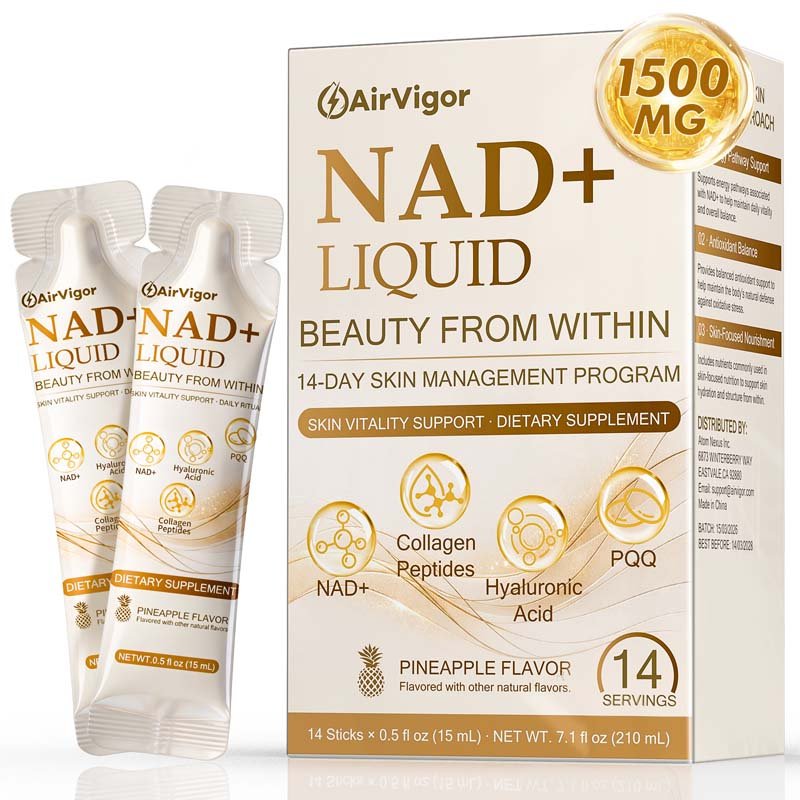
AirVigor applies these principles through ingredient review, formulation evaluation, label checks, manufacturing coordination, packaging assessment, and finished-product testing. The objective is to create formulas that customers can understand without relying on vague blends or exaggerated claims.
Conclusion
NMN is a naturally occurring molecule that plays a direct role in NAD+ production. Human research shows that oral NMN can increase blood NAD+ or related metabolites, providing evidence that the ingredient is biologically active. However, broader benefits involving energy, glucose control, muscle function, sleep, and healthy aging remain less consistent.
A responsible NMN decision begins with clear expectations. The ingredient should be viewed as a tool for supporting NAD+ metabolism, not as a proven method for reversing aging or treating disease. Dose, purity, testing, manufacturing, storage, and overall lifestyle all influence the value of a finished product.
AirVigor develops dietary supplement concepts around transparent ingredient presentation, appropriate dosage review, traceable raw materials, production controls, and packaging stability. Consumers can use these same standards when evaluating any NMN or NAD+ formula.
For supplement brands, distributors, online sellers, and wellness companies, AirVigor can also support NMN, NR, NAD+, and cellular-wellness product development through formula review, ingredient sourcing, dosage-form selection, flavor development, packaging, labeling, and OEM or ODM production. Standard project minimums can begin from 500 pieces, while sampling and production timelines depend on the selected ingredients, product format, packaging structure, and destination market.
The strongest NMN product is not the one that makes the loudest promise. It is the product that clearly explains what it contains, provides a meaningful dose, protects the ingredient throughout production and storage, and gives customers enough reliable information to make a confident decision.