Skip to content
Can You Take Creatine and Electrolytes Together:A complete guide
# Your Trusted Dietary Supplement Brand In US
- Emily

Table of Contents
Creatine and electrolytes are often treated as two separate supplements, but in real training, they support two problems that usually happen at the same time: falling energy output and unstable hydration. Many people do not struggle at the beginning of a workout. The bigger issue is what happens later, when strength drops, muscles feel less responsive, and the session becomes harder to control. In many cases, this is not simply a training problem. It is a support problem.
Yes, creatine and electrolytes can be taken together, and for many active people, this combination is more practical than using either one alone. Creatine helps support repeated power and strength output, while electrolytes help maintain fluid balance, muscle contraction, and nerve signaling. Used together, they can help improve workout consistency, especially during longer sessions, high sweat conditions, or demanding weekly training routines.
If you have ever felt strong in the first half of a workout but noticeably weaker in the second half, this is exactly where the combination becomes relevant. The real value is not just helping you start strong, but helping you stay more stable from start to finish.
What Are Creatine and Electrolytes?
Creatine and electrolytes are often discussed separately, but in real use, they affect how your body performs at the same time. One supports how your body produces energy. The other supports how your body manages fluid, muscle contraction, and nerve signals. Most people don’t notice the difference until something starts to feel off—like losing strength halfway through a workout or feeling tired even after drinking enough water.
What Is Creatine and Electrolytes Support
Creatine is primarily used to support short-duration, high-effort activities. This includes lifting, sprinting, interval training, and any type of exercise where you need to produce force repeatedly.
Your body naturally stores a small amount of creatine, but it is often not enough to maintain consistent output during demanding sessions. Supplementing creatine helps increase these stores.
In real-world terms, this usually shows up as:
- being able to complete more reps before fatigue
- less drop in strength between sets
- more stable performance in the second half of a workout
- slightly faster recovery between sets
Most users take 3–5 grams per day, and results are typically noticed after 7–14 days of consistent use, depending on body size and activity level. Electrolytes, on the other hand, are involved in everyday body functions, not just workouts. The three most relevant for active people are sodium, potassium, and magnesium. They control how fluids move in your body and how muscles contract and relax.
Here is what most users actually experience when electrolyte balance is off:
| Situation | What It Feels Like |
|---|---|
| Low sodium after sweating | Light fatigue, lower endurance, dizziness |
| Low potassium | Muscle weakness, reduced coordination |
| Low magnesium | Tightness, cramps, poor recovery |
Electrolytes are lost through sweat, and the loss can be significant.
For example:
| Activity Type | Estimated Sodium Loss per Hour |
|---|---|
| Light workout | 200–400 mg |
| Moderate training | 400–800 mg |
| High-intensity or heat | 800–1,500 mg+ |
This is why many people feel fine at the start of a workout but struggle later—it is not just energy, it is fluid and mineral balance changing over time.
Why Creatine and Electrolytes Matter Together
Most people assume that if they are drinking enough water, hydration is not an issue. In reality, hydration depends on both fluid intake and mineral balance.
Creatine increases the amount of water stored inside muscle cells. This is part of how it supports performance. However, this also means your body needs to manage water more efficiently.
If electrolyte intake is too low, you may notice:
- drinking more water but still feeling tired
- reduced performance despite taking creatine
- less “fullness” or pump during training
- faster fatigue in longer sessions
This is a common situation:
A person starts taking creatine, drinks more water. But does not adjust electrolyte intake
The result is often:
- unstable hydration
- inconsistent performance
- confusion about whether creatine is working
A more balanced approach looks like this:
| Approach | What Happens |
|---|---|
| Creatine only | Supports energy, but hydration may limit results |
| Electrolytes only | Supports hydration, but no direct energy support |
| Water only | May dilute electrolyte balance in heavy sweating |
| Creatine + Electrolytes | Supports both output and stability |
Another important factor is training duration.
Short workouts (under 30 minutes) may not show a big difference. But once sessions go beyond 45–60 minutes, especially with sweating, the interaction becomes more noticeable.
This is particularly true for:
- people training multiple muscle groups in one session
- combination workouts (lifting + cardio)
- high-rep or high-volume programs
- hot environments or poor ventilation gyms
For these users, the goal is not just to feel strong at the beginning. It is to maintain that level of performance throughout the session. That is where combining creatine and electrolytes becomes practical.
Can You Take Creatine and Electrolytes Together?
Yes, creatine and electrolytes can be taken together, and for many people, this combination works better than using either one alone. There is no conflict between the two. Instead, they support different parts of how the body performs during training and daily activity.
Creatine mainly helps with repeated strength and power output. Electrolytes help maintain hydration, fluid balance, and muscle function. When both are in place, workouts tend to feel more stable rather than starting strong and fading halfway through.
Is Creatine and Electrolytes Safe Daily
For healthy adults, taking creatine and electrolytes together on a daily basis is generally well tolerated when the amounts are reasonable and matched to activity level.
Creatine is typically used at 3–5 grams per day, and long-term use at this level is common among active individuals. The key factor is consistency. Taking it daily helps maintain muscle creatine levels, which is what supports performance over time.
Electrolyte needs are more variable. They depend on:
- how much you sweat
- how long you train
- environmental temperature
- daily hydration habits
- diet (especially sodium intake)
Below is a practical reference for active individuals:
| Component | Common Daily Intake Range | When You May Need More |
|---|---|---|
| Creatine | 3–5 g | Higher body weight or intense training |
| Sodium (from supplements) | 300–700 mg per serving | Heavy sweating, hot climate |
| Potassium | 100–300 mg | Long sessions or muscle fatigue |
| Magnesium | 50–150 mg | Recovery, muscle tightness |
For example:
- A person doing light training in a cool environment may only need a small amount of added electrolytes
- A person training 60–90 minutes in heat may need significantly more sodium to maintain performance
Most issues come from imbalance, not from combining the two.
Common mistakes users make:
- taking creatine but not increasing fluid intake
- drinking more water but not replacing electrolytes
- using very low-dose electrolyte products that don’t match sweat loss
- taking supplements inconsistently
When these issues are corrected, most people find that creatine performs more reliably.
People who should be more cautious include:
- those with kidney conditions
- individuals on sodium-restricted diets
- people with specific medical conditions requiring mineral control
For everyone else, the combination is widely used in real-world training and daily routines.
Can You Mix Creatine and Electrolytes
Yes, creatine and electrolytes can be mixed in the same drink, and many users prefer this because it simplifies their routine.
The biggest challenge with supplements is not whether they work—it’s whether people can stick to using them consistently. Combining creatine and electrolytes into one drink reduces the number of steps and makes daily use easier.
From a practical standpoint, users tend to stay more consistent when:
- everything can be taken in one serving
- the product mixes easily
- the taste is balanced and not overly sweet
- the serving size matches real use
Here is what most customers actually look for in a combined product:
| Feature | Why It Matters |
|---|---|
| Good solubility | Avoids clumping and improves daily use |
| Clear dosing | Helps users know exactly what they are taking |
| Balanced sodium content | Supports real hydration needs |
| Moderate flavor | Makes it easier to drink regularly |
| Transparent label | Builds trust and reduces confusion |
In lower-quality products, common problems include:
- underdosed creatine (less than effective range)
- very low electrolyte content despite “hydration” claims
- excessive fillers or artificial ingredients
- poor mixing performance
- unclear labeling
This leads to a common situation where users feel the product is not effective, even though the issue is formulation, not the concept itself. From a business perspective, this is also where product differentiation happens.
Customers today are paying more attention to:
- whether ingredient amounts are clearly listed
- whether the formula matches real use conditions
- whether the product delivers consistent experience across batches
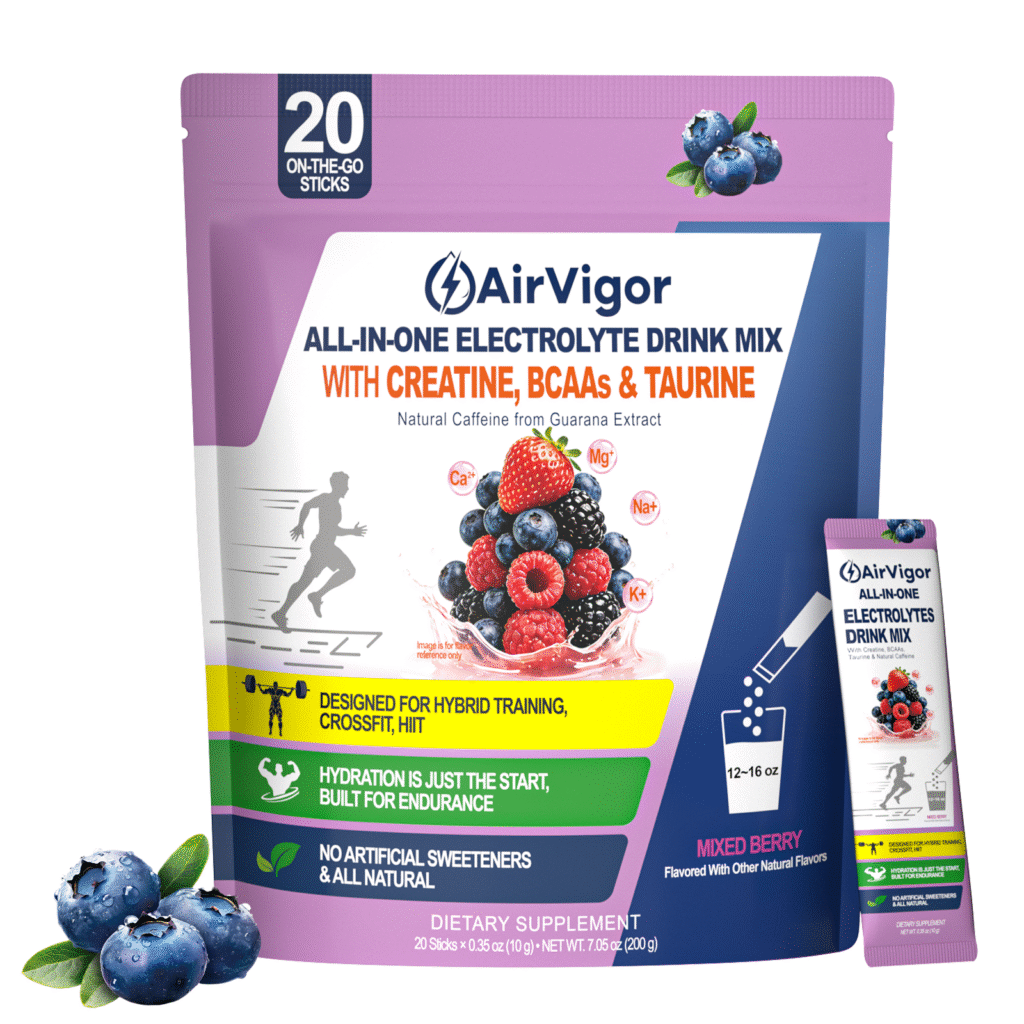
This is where companies like AirVigor position themselves differently.
Instead of focusing only on individual ingredients, the focus is on:
- combining components based on how they are actually used together
- ensuring ingredient purity and stability
- maintaining consistent quality through controlled manufacturing systems
For end users, this means a simpler and more reliable routine.
For B2B buyers, this means:
- easier product positioning
- clearer value communication
- better long-term customer retention
What Users Usually Notice After Combining Them
When creatine and electrolytes are used together consistently, the change is usually not dramatic in a single workout. Instead, it shows up over time.
Users often report:
- more stable performance across sessions
- less sudden fatigue in the middle of workouts
- improved consistency in strength output
- better hydration during longer sessions
- fewer “off days” where performance feels unpredictable
A simplified comparison based on user feedback patterns:
| Scenario | Typical Experience |
|---|---|
| Creatine only | Strong start, but hydration may limit later performance |
| Electrolytes only | Better hydration, but no direct strength support |
| Inconsistent use | Unpredictable results |
| Combined and consistent use | More stable and repeatable performance |
This is especially noticeable in:
- workouts longer than 45 minutes
- high-volume training programs
- environments with high temperature or humidity
- users with high sweat rates
For most people, the benefit is not about pushing beyond limits. It is about maintaining performance without early decline.
What This Means for Your Routine
For someone deciding whether to combine creatine and electrolytes, the question is usually not “Is it allowed?” It is “Will it actually make a difference?”
In many cases, the answer depends on your situation:
- If your workouts are short and low intensity, the difference may be small
- If your sessions are longer, more intense, or involve sweating, the difference becomes more noticeable
- If your hydration habits are inconsistent, electrolytes often make a bigger impact than expected
A simple way to approach it:
- Use creatine daily for consistency
- Adjust electrolyte intake based on sweat and environment
- Combine them into one routine to reduce complexity
The goal is to create a system that is easy to follow and works consistently over time.
How Creatine and Electrolytes Work Together
Creatine and electrolytes work together by supporting two things your body must maintain at the same time during any workout: energy output and internal balance. Creatine helps your muscles keep producing force. Electrolytes help your body keep that system stable by controlling hydration, nerve signals, and muscle contraction. When both are in place, performance feels more consistent instead of dropping halfway through.
How Creatine and Electrolytes Improve Performance
Most people think performance is mainly about strength or endurance. In reality, performance usually breaks down because the body cannot maintain stability under repeated effort.
A typical training session often looks like this:
- First 10–15 minutes: everything feels strong and controlled
- Middle phase: fatigue starts to build, rest periods get longer
- Final phase: strength drops, coordination feels off, effort feels higher
This drop is not always because your muscles are “done.” It is often because your system becomes less stable.
Creatine supports the energy side of this process.
It helps regenerate ATP, which is the main energy source for short bursts of effort. This matters most in situations like:
- multiple sets of resistance training
- repeated sprints
- high-intensity intervals
- explosive movements
When creatine levels are sufficient, users typically notice:
- less drop in strength between sets
- more consistent reps (not just the first set being strong)
- slightly shorter recovery time between sets
But energy alone is not enough.
Electrolytes support the control and communication side of performance.
Muscle contraction depends on electrical signals. These signals rely on sodium and potassium levels. Magnesium helps muscles relax after contraction.
When electrolyte levels drop (especially during sweating), the body may experience:
- slower or weaker contraction signals
- reduced coordination
- earlier fatigue
- higher perceived effort
This is why some workouts feel “off” even when energy is available.
Below is a simplified comparison of how performance typically feels:
| Setup | First Half of Workout | Second Half of Workout |
|---|---|---|
| No supplementation | Strong start | Noticeable drop |
| Creatine only | Strong start | Better than baseline, but still declines |
| Electrolytes only | Stable start | Gradual fatigue, less sudden drop |
| Creatine + Electrolytes | Strong start | More stable and controlled |
The key benefit is not just pushing harder. It is maintaining output without early breakdown.
This is especially useful for:
- workouts longer than 45–60 minutes
- training programs with multiple exercises
- people training 4–6 days per week
- combination workouts (lifting + cardio)
How Creatine and Electrolytes Support Hydration
Hydration is not just about how much water you drink. It is about how well your body can use that water. Creatine changes how water is stored in muscle.
It increases intracellular water, meaning more water is pulled into muscle cells. This is one reason why users often notice:
- muscles feel “fuller”
- better pump during training
- improved training capacity
But this also means your body depends more on proper hydration balance.
If hydration is not managed well, users may notice:
- feeling flat or low-energy during workouts
- reduced endurance
- less noticeable benefits from creatine
Electrolytes control how water moves in the body.
- Sodium helps retain water and maintain blood volume
- Potassium helps balance fluid inside cells
- Magnesium supports muscle relaxation and reduces excessive tension
Without enough electrolytes, drinking more water alone may not solve the problem.
For example:
- drinking large amounts of water without sodium can dilute electrolyte levels
- this can lead to fatigue, especially during longer sessions
- some users feel “hydrated but still tired”
A practical comparison:
| Hydration Approach | What Usually Happens |
|---|---|
| Water only | Fluid intake increases, but may not be well retained |
| Creatine only | Higher demand for water inside muscle, but no external balance |
| Electrolytes only | Better fluid balance, but no direct energy support |
| Creatine + Electrolytes | Balanced hydration and better energy support |
This becomes more important in conditions such as:
- sweating heavily (visible sweat loss or salt marks on clothing)
- training in warm environments
- long-duration sessions
- low-carb diets (which can affect electrolyte balance)
In these situations, the combination helps maintain both fluid balance and performance.
How This Feels in Real Use
For most users, the difference is not dramatic in one workout. It becomes noticeable over time.
Instead of thinking “I feel much stronger today,” users often notice:
- fewer sessions where energy drops unexpectedly
- less need to extend rest time
- more consistent performance across the week
- better ability to complete planned workouts
A pattern many users report:
- Week 1–2: little noticeable change
- Week 2–3: more stable energy during sessions
- Week 3+: fewer “bad workouts” where performance drops early
This is especially relevant for people who:
- train regularly but feel inconsistent
- feel strong at the start but fade quickly
- sweat a lot during workouts
- struggle to stay hydrated consistently
Why This Combination Is Becoming More Common
More users are moving away from taking multiple separate products for each function. Instead, they prefer simpler systems that match how their body actually works.
From a product perspective, combining creatine and electrolytes makes sense because:
- they address two limiting factors at the same time
- they can be used in the same routine
- they improve consistency rather than just peak performance
From a user perspective, the benefits are practical:
- fewer products to manage
- easier daily routine
- more consistent results
From a business perspective, this is also where the market is shifting.
Customers are paying more attention to:
- whether ingredient amounts are clearly listed
- whether formulas match real use conditions
- whether products are easy to use daily
- whether results feel consistent over time
This is where companies like AirVigor focus differently.
Instead of treating creatine and electrolytes as separate categories, the focus is on how they work together in real use. That includes:
- selecting higher-purity raw materials
- designing formulas based on actual usage patterns
- ensuring stable performance across batches
- providing clear and transparent labeling

Do Electrolytes Help Creatine?
Electrolytes do not directly make creatine stronger, but they help create the conditions that allow creatine to work more consistently. Creatine depends on proper hydration and fluid balance inside muscle cells. Electrolytes help maintain that balance. When hydration and mineral levels are stable, creatine tends to perform more reliably. When they are not, results may feel inconsistent even if creatine intake is correct.
Do Electrolytes Improve Creatine Absorption
Creatine absorption is not something most users think about, but it affects how quickly and how well creatine builds up in muscle.
After ingestion, creatine needs to:
- move through the bloodstream
- reach muscle tissue
- enter muscle cells
This process is influenced by several factors, including hydration and mineral balance.
Sodium plays an important role in how nutrients move across cell membranes. While creatine does not rely on sodium alone, proper sodium levels help maintain the conditions needed for nutrient transport.
In simple terms:
- good hydration + balanced electrolytes = smoother uptake environment
- poor hydration + low electrolytes = less efficient uptake environment
This does not mean electrolytes act like a “booster.” It means they remove common limitations.
Below is a practical comparison:
| Condition | Likely Outcome |
|---|---|
| Consistent creatine + good hydration | Steady improvement over time |
| Creatine + low fluid intake | Slower or less noticeable results |
| Creatine + heavy sweating without electrolytes | Reduced consistency |
| Creatine + electrolytes + proper hydration | More stable results |
Many users who feel creatine is “not working” often fall into one of these patterns:
- inconsistent daily intake
- low water consumption
- high sweat loss without electrolyte replacement
- irregular training schedule
When hydration and electrolytes are addressed, creatine results tend to become more predictable.
Does Hydration Affect Creatine Results
Hydration has a direct effect on how creatine performs. Creatine works inside muscle cells. These cells depend heavily on water content. When hydration is adequate:
- muscle cells maintain volume
- energy production processes function efficiently
- contractions feel more controlled
When hydration is low, several issues may appear:
- reduced muscle cell volume
- faster fatigue during workouts
- decreased strength consistency
- higher perceived effort
This leads to a common situation:
A user takes creatine consistently, But performance still feels unstable. In many cases, the limiting factor is hydration, not creatine.
Here is a simplified breakdown:
| Hydration Level | What Users Typically Experience |
|---|---|
| Well hydrated | Stable energy, consistent performance |
| Slight dehydration | Mild fatigue, less endurance |
| Moderate dehydration | Noticeable drop in strength and output |
| High dehydration | Significant performance decline, risk of cramps |
Electrolytes help maintain hydration by:
- supporting fluid retention
- maintaining blood volume
- stabilizing muscle contraction signals
This is especially important for:
- workouts longer than 45–60 minutes
- training in warm environments
- individuals who sweat heavily
- people who drink a lot of water but still feel fatigued
Why Some People Don’t Feel Creatine Working
A common complaint is: “I’ve been taking creatine, but I don’t feel much difference.” In many cases, this is not because creatine is ineffective. It is because other factors are limiting its effect.
Common reasons include:
Inconsistent use
Creatine needs daily intake to build up in muscle. Skipping days slows progress.
Low hydration
Creatine increases the body’s demand for water inside muscle cells. Without enough fluid, benefits may be reduced.
Electrolyte imbalance
Especially in people who sweat a lot, low sodium or potassium can affect performance and muscle function.
Short training sessions
If workouts are very short, the difference may be less noticeable.
Poor overall routine
Sleep, nutrition, and training structure still matter.
When these factors are improved, many users start to notice:
- more stable strength across sets
- less mid-workout fatigue
- better overall consistency
When Electrolytes Make the Biggest Difference
Not everyone will notice the same level of benefit from adding electrolytes. The impact depends on lifestyle and training conditions.
Electrolytes tend to make a bigger difference if you:
- sweat heavily (visible sweat, salt stains on clothing)
- train in hot or humid environments
- have workouts longer than 45–60 minutes
- follow low-carb or restrictive diets
- drink large amounts of plain water without mineral intake
- feel fatigued despite adequate calorie intake
Here is a simple self-check:
| Question | If Yes, Electrolytes Likely Help |
|---|---|
| Do you sweat a lot during workouts? | Yes |
| Do you feel weaker in the second half of training? | Yes |
| Do you drink water but still feel tired? | Yes |
| Do you experience muscle tightness or cramps? | Yes |
If you answered “yes” to multiple questions, adding electrolytes alongside creatine is likely to improve how your routine feels.
When to Take Creatine and Electrolytes
Creatine and electrolytes can be taken at different times depending on training demands, hydration status, and daily routine. Creatine works through long-term saturation, so timing is less critical than consistency. Electrolytes act more immediately, supporting hydration and fluid balance during activity. A structured intake approach helps maintain stable performance, especially in sessions involving high intensity, long duration, or significant sweat loss.
Creatine and Electrolytes Before or After Workout
Taking creatine and electrolytes before training supports energy availability and hydration readiness, while post-workout intake helps restore fluid balance and maintain recovery efficiency after sweat loss.
Before training, combining creatine with electrolytes helps prepare both energy and hydration systems. This is particularly useful for early sessions or situations where food and fluid intake are limited. Starting a workout with adequate sodium levels helps maintain blood volume and delays early fatigue. Creatine, when taken consistently, ensures that muscle stores are already available to support repeated effort.
During training, electrolyte intake becomes more relevant than creatine timing. Sweat loss varies significantly between individuals, but research and field data show that most active individuals lose between 400 and 1,000 mg of sodium per hour during moderate to intense exercise. In hot environments or high-sweat conditions, losses can exceed 1,500 mg per hour. Without replacement, this may lead to reduced performance stability, increased heart rate, and earlier onset of fatigue.
After training, both creatine and electrolytes can support recovery. Electrolytes help restore fluid balance and improve rehydration efficiency, while creatine continues to support muscle energy systems. Rehydration is more effective when sodium is included, as it improves fluid retention compared to water alone. This is especially relevant for individuals training more than once per day or those with limited recovery time.
A practical structure often used by experienced users is outlined below:
| Timing | Creatine | Electrolytes | Purpose |
|---|---|---|---|
| Before training | Yes | Yes | Prepare energy and hydration |
| During training | Optional | Yes | Maintain fluid balance |
| After training | Yes | Yes | Support recovery and rehydration |
This structure is not rigid, but it reflects how the body’s needs shift across a training session.
Creatine and Electrolytes on Rest Days
On rest days, creatine intake remains important. Skipping intake can gradually reduce muscle creatine levels, especially over multiple days. Consistent daily intake of 3–5 grams helps maintain stable levels, which supports performance when training resumes.
Electrolyte needs on rest days are more variable. While sweat loss may be lower, hydration is still influenced by factors such as climate, diet, and daily activity. For example, individuals in warm environments or those with high sodium loss may still benefit from moderate electrolyte intake even without formal exercise.
Common scenarios where electrolytes may still be useful on rest days include:
- long work hours with low fluid intake
- travel, especially flights or dry environments
- high-protein diets that increase fluid requirements
- mild dehydration from the previous day’s training
In these cases, a lower but consistent intake can help maintain hydration stability.
A simple rest-day approach is shown below:
| Factor | Recommendation |
|---|---|
| Creatine | Maintain daily intake (3–5 g) |
| Electrolytes | Adjust based on hydration and environment |
| Water intake | Keep consistent rather than reactive |
Users who maintain consistency across both training and rest days often report more stable weekly performance, fewer fluctuations in energy, and smoother recovery patterns.
Who Needs Creatine and Electrolytes
Creatine and electrolytes are most useful for individuals whose daily routine places consistent demand on both energy output and hydration balance. This includes people who train regularly, sweat frequently, or experience noticeable drops in performance or energy during the day. The combination is not limited to athletes; it is relevant to anyone dealing with physical fatigue, inconsistent hydration, or long periods of mental and physical load.
Creatine and Electrolytes for Training
Individuals who train multiple times per week or perform high-effort sessions are the most direct users of this combination. Training creates two simultaneous demands: maintaining energy output and managing fluid loss. When either one becomes unstable, performance drops.
In strength training, the main limitation is often a decline in output across sets. For example, a user may complete 10 repetitions in the first set but only 6–7 repetitions in later sets, even with sufficient rest. Creatine helps reduce this drop by supporting ATP regeneration. Electrolytes help maintain contraction efficiency and reduce the likelihood of early fatigue caused by fluid imbalance.
In high-intensity or hybrid training, such as combining lifting and cardio, the demand increases further. These sessions often last 45–75 minutes and involve both energy depletion and significant sweat loss. In these conditions, sodium loss alone can range from 500 to 1,200 mg per hour. Without replacement, users may experience reduced endurance, decreased coordination, and a noticeable increase in perceived effort.
A simplified breakdown:
| Training Type | Common Limitation | Benefit of Combination |
|---|---|---|
| Strength training | Output drops across sets | More stable strength and recovery |
| HIIT / circuits | Rapid fatigue buildup | Improved pacing and control |
| Endurance training | Fluid and mineral loss | Better hydration and sustained effort |
| Hybrid sessions | Multiple stress factors | Balanced performance across phases |
This group benefits most because their performance is repeatedly tested under load, making small improvements in stability more noticeable.
Creatine and Electrolytes for High Sweat and Heat Conditions
Individuals who sweat heavily or train in warm environments often experience faster performance decline, even if their fitness level is high. Sweat does not only remove water; it also removes sodium and other electrolytes that are essential for maintaining blood volume and muscle function.
Average sweat rates vary, but many active individuals lose between 0.5 to 1.5 liters of fluid per hour during moderate to intense exercise. Along with this, sodium loss can range from 400 mg to over 1,500 mg per hour depending on the individual.
When these losses are not replaced, the body may respond with:
- increased heart rate at the same workload
- reduced strength and endurance
- earlier onset of fatigue
- muscle tightness or cramping
In these conditions, electrolytes help maintain fluid retention and support stable circulation. Creatine continues to support energy output, but its effectiveness becomes more dependent on hydration status.
Typical indicators that this group may benefit include:
- visible salt marks on clothing after training
- frequent thirst despite drinking water
- noticeable drop in performance in the second half of workouts
- discomfort or tightness during longer sessions
For these individuals, combining creatine with electrolytes is often a practical adjustment rather than an optional addition.
Creatine and Electrolytes for Busy Lifestyles
Not all users are athletes. Many people experience fatigue and inconsistency due to lifestyle rather than structured training.
Common patterns include:
- long working hours with limited fluid intake
- irregular meal timing
- frequent travel or commuting
- extended periods of sitting
- reliance on caffeine for energy
In these cases, the issue is often not a lack of effort, but a lack of stability in hydration and energy availability.
For example, office workers may consume less than 1.5 liters of water per day without realizing it. Combined with air-conditioned environments and low mineral intake, this can lead to mild but persistent dehydration. Symptoms may include:
- low energy in the afternoon
- difficulty maintaining focus
- muscle stiffness or discomfort
- reduced physical readiness after work
Electrolytes help improve hydration efficiency by supporting fluid balance and nerve function. Creatine may support cellular energy availability, which can contribute to overall physical resilience.
This group often benefits from simple, repeatable routines rather than complex supplement schedules. Combining creatine and electrolytes into one daily intake can reduce friction and improve consistency.
Creatine and Electrolytes for Recovery and Daily Stability
Some users are less focused on peak performance and more focused on maintaining a stable daily condition. This includes individuals who want to reduce variability in how they feel from day to day.
Recovery is not only about muscle repair. It also involves restoring hydration, electrolyte balance, and energy systems after daily stress. This applies to both physical and mental load.
Situations where this becomes relevant include:
- consecutive training days
- poor sleep quality
- high workload or stress
- travel across time zones
- inconsistent hydration habits
In these cases, users often report:
- fatigue that carries over between days
- slower recovery from workouts
- difficulty maintaining a consistent routine
Electrolytes support fluid balance and help stabilize muscle and nerve function. Creatine helps maintain energy availability at the cellular level. Together, they support a more stable baseline rather than short-term peaks.
A simple use case comparison:
| User Focus | Primary Need | Role of Combination |
|---|---|---|
| Performance-focused | Maintain output | Supports consistency across sessions |
| Hydration-focused | Improve fluid balance | Enhances water retention and usage |
| Recovery-focused | Reduce fatigue carryover | Supports daily stability |
| Lifestyle-focused | Simplify routine | Combines multiple needs into one step |
This combination becomes more valuable as daily demands increase. Rather than solving one isolated problem, it helps reduce the number of factors that can disrupt performance and recovery.

Conclusion
Creatine and electrolytes work well together because they support two connected needs: energy output and hydration stability. Creatine helps maintain repeated muscular performance, while electrolytes help the body manage fluid balance and muscle function under real training conditions.
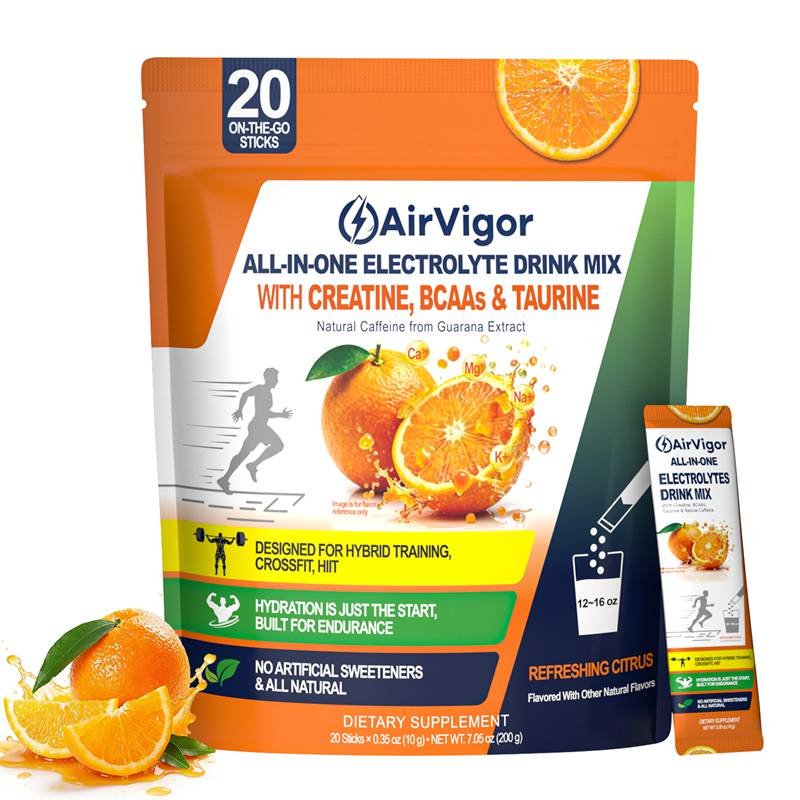
For users who train hard, sweat regularly, or want a more reliable daily routine, this combination is often more practical than treating each issue separately. AirVigor focuses on clear formulation logic, real ingredient inclusion, and stable product quality, making it a strong choice for both ready-to-sell products and customized supplement solutions.
Share:
Contact Expert Team
At AirVigor, performance becomes effortless. We transform advanced nutrition science into clean, effective supplements that help you hydrate, recover, and feel stronger every day. Shop AirVigor Supplements on Amazon and experience athlete-trusted formulas—backed by real science and supported by our world-class R&D and production capabilities.
Trust AirVigor
At AirVigor, turning your performance goals into reality is no longer a struggle—it’s a science-driven journey we build together. Whether you’re a runner, lifter, cyclist, yogi, outdoor athlete, or someone simply seeking better daily energy, AirVigor transforms advanced nutrition research into clean, effective, and trustworthy supplements you can feel.
Backed by our U.S. scientific team, global certifications, and world-class production standards, every formula is engineered to deliver real hydration, real recovery, and real performance. And when you’re ready to experience the difference, you’ll find AirVigor products available on Amazon and other major platforms—fast shipping, consistent quality, and a community of athletes already seeing results.
Behind the scenes, our R&D and manufacturing ecosystem also supports specialized formulation development, ensuring AirVigor continues to lead with innovation while keeping quality and safety uncompromised. But at the core, everything we create is built for you—your health, your performance, your momentum.
Choose AirVigor. Feel the science. Elevate your every day.


Subscribe to our newsletter
Sign up to our newsletter and we’ll keep you up to date with the latest arrivals.